Comparing WMA to Ogg Vorbis for Open-Source Audio Compression


Free Download Mp4Gain
picture

Comparing WMA to Ogg Vorbis for Open-Source Audio Compression

Comparing WMA to Ogg Vorbis for Open-Source Audio Compression

Let’s talk about comparing WMA to Ogg Vorbis for open-source audio compression. As an expert in audio encoding with years of experience, I’ve seen how important selecting the right audio compression format is for any project, be it for music or speech. WMA (Windows Media Audio) and Ogg Vorbis are two notable audio formats, but they approach compression in different ways, and each has distinct advantages and disadvantages. It’s like choosing the right type of container for your food; some containers keep the food fresher for longer, while others may not be suitable. In the realm of audio, the ‘container’ is the codec, and I’m here to help you understand each one’s strengths when compared to the other.

Understanding WMA and Ogg Vorbis Audio Codecs

Understanding the differences between WMA and Ogg Vorbis is the first step when deciding which one is more suitable for your needs. WMA, developed by Microsoft, is a proprietary codec often used in Windows systems. Think of it as a specific brand of tool, often designed to work best with its own ecosystem. On the other hand, Ogg Vorbis is an open-source codec, that’s free to use and modify, imagine it like a community tool that everyone contributes to, making it very flexible. These different approaches mean they have distinct characteristics regarding compression efficiency, compatibility, and licensing, all of which impact their use in different projects. From my experience, the key to mastering audio encoding is understanding each codec and choosing the right one.

Audio Compression Quality: WMA vs. Ogg Vorbis

When evaluating audio compression, one must look into the quality that WMA and Ogg Vorbis provide at various bitrates. Both codecs are designed to reduce file size, but the methods used affect audio fidelity. WMA, particularly in its more advanced versions, can achieve very good quality at low bitrates. Imagine this as a painter who can create very detailed art with fewer brushstrokes. On the other hand, Ogg Vorbis is known for its excellent quality, which is very close to the source, and it uses an adaptable approach, like a chef who adjusts the recipe depending on the ingredients, to offer an optimal result. From my professional practice, I can assure you that the “best” quality is subjective, because it depends on the source audio and intended use.

Open Source Nature and Licensing of Ogg Vorbis

The open-source nature and licensing of Ogg Vorbis are key benefits that set it apart from WMA. Ogg Vorbis is released under a very liberal license that allows it to be freely used, modified, and distributed, just like a public park, available for everyone to use and enjoy. This open model fosters innovation and adoption across different platforms. WMA, being proprietary, often involves licensing fees and might have usage restrictions, like a private club, that has a strict rules for usage. My experience shows that the open nature of Ogg Vorbis is a major advantage when you need flexibility in your audio projects, particularly if you’re looking for a low-cost solution, allowing for collaboration and contribution.

Compatibility and Platform Support

The compatibility and platform support for WMA and Ogg Vorbis vary significantly, this is very important when you want to use an audio format. WMA has deep integration with Windows and Microsoft products, similar to how a key fits its lock, so it might be the best choice within the Windows ecosystem, but might cause problems outside it. Ogg Vorbis, with its open-source nature, has become widely supported across different operating systems and software, as it is a format that welcomes all systems, becoming a universal choice. My professional experience has shown me that choosing a format that plays seamlessly across many platforms enhances the usability and reach of your projects. And for this aspect Ogg Vorbis is normally the wisest choice.

WMA and Ogg Vorbis File Size Efficiency

File size efficiency is a critical factor when dealing with audio compression, and something I look into very carefully. Both WMA and Ogg Vorbis aim to reduce file sizes, but achieve this goal with different methods. WMA can sometimes achieve slightly smaller file sizes at lower bitrates, it’s like packing more clothes in a smaller suitcase, this comes at a cost in quality. Ogg Vorbis often focuses on maintaining higher quality, and this means its files might be slightly larger, so its like choosing a bigger suitcase to avoid wrinkling the clothes. From my years of experience, I’ve learned that the ‘best’ size is the one that suits your specific needs, whether it’s saving storage space or prioritizing high-fidelity sound.

Use Cases for WMA and Ogg Vorbis

When using WMA and Ogg Vorbis, you have to consider each format’s strength, because they are designed for different use cases. WMA is common in environments where Microsoft products are dominant, like corporate presentations or Windows software. Think of it as a tool designed for a specific environment, offering the best results in that context. On the other hand, Ogg Vorbis is popular in open-source projects, video games and online streaming services because it offers flexibility and compatibility, like a tool that works well everywhere. I often find that the choice of the codec depends heavily on where and how you want to use your audio content.

Encoding and Decoding Speed

The encoding and decoding speed of WMA and Ogg Vorbis can influence performance, especially when working with many files. WMA can sometimes have faster encoding speeds, especially with specific hardware and software support, just as using a specific kitchen appliance can speed up cooking, but it depends on the hardware and software. Ogg Vorbis is often designed to be efficient across a broad range of devices, offering reliable performance even in less powerful machines, like using a manual tool that works on any situation. From my professional experience, the encoding/decoding speed might be a concern for some users, while for others the flexibility is more important, so you need to consider what you need most.

WMA has faster encoding speed, but depends on the system.

Ogg Vorbis offers a very reliable speed across different platforms.

Encoding speed depends on hardware support.

Practical Tips and Tools for Audio Compression

I have learned a lot when it comes to practical tips and tools for audio compression, and they make the process a lot smoother. Choosing a suitable bitrate is key to balance file size and audio quality, like adjusting the volume of a radio to make sure it is clear. Testing different compression settings allows you to find the best settings for your particular audio, similar to fine tuning an instrument, getting the best performance. Tools for audio compression can streamline the process, and you need to know how to use them. From my professional practice, I have seen that a well-optimized compression workflow can save you space, time and improve the audio quality of your projects.

Latest words on comparing WMA to Ogg Vorbis

So, after exploring both WMA and Ogg Vorbis for open-source audio compression, it’s clear that each has its own strengths and weaknesses, and that is why I have compared both formats today. WMA is very efficient in the Windows ecosystem, while Ogg Vorbis, being open source, gives more flexibility. The ‘best’ choice depends largely on your project’s specific requirements, from compatibility to audio quality and file size needs. Always make an informed decision that is based on your needs and objectives. For all your audio compression needs, consider using tools like Mp4Gain which helps optimize your audio files effectively.

What is the main advantage of Ogg Vorbis over WMA for audio compression?

The main advantage of Ogg Vorbis over WMA lies in its open-source nature. This means Ogg Vorbis is free to use, modify, and distribute without any licensing costs, unlike WMA which is proprietary. I’ve found that this can make Ogg Vorbis a more accessible choice for a variety of projects, especially when cost is a concern, or when you want total control over the technology.

Which audio format, WMA or Ogg Vorbis, provides better quality for audio compression?

Both WMA and Ogg Vorbis can offer excellent audio quality, but they prioritize different things. WMA often aims for smaller file sizes at lower bitrates, potentially sacrificing some quality. Ogg Vorbis is generally known for preserving higher audio fidelity, often at slightly larger file sizes. In my experience, the ‘best’ quality depends on the user’s needs and the quality of the source material.

How do the licensing terms differ between WMA and Ogg Vorbis?

The licensing terms are drastically different. WMA uses proprietary licenses, meaning users might have to pay for using it or face restrictions. Ogg Vorbis, being open source, operates under a very permissive license. That allows free use, modification and distribution. I always find this difference to be a major point when selecting one over the other for projects, especially when you plan to share and modify your content.

Is WMA or Ogg Vorbis better for audio streaming online?

Ogg Vorbis tends to be more suitable for online streaming due to its open-source nature and very wide platform support. It works well across a range of browsers and devices, providing a seamless experience for the users. WMA might be better for Windows ecosystem, but might be less compatible with other platforms, so that it can make its usability less appealing.

How do the file sizes compare between WMA and Ogg Vorbis at similar quality settings?

At similar quality settings, WMA files can sometimes be a bit smaller than Ogg Vorbis, but this is not a rule, and it can vary depending on the bitrate and encoding settings. Ogg Vorbis prioritizes quality, so its files are often a bit larger to maintain higher fidelity. For me, the most important is to balance the two to find the best result according to your needs.

In which situations is it preferable to use WMA over Ogg Vorbis?

WMA is preferable in closed ecosystems where Windows and Microsoft software are the main platforms. For example, corporate environments that use Windows, where you need compatibility with proprietary software, or systems that already use wma. In my view, if you don’t have those needs, Ogg Vorbis is normally the better choice because of its flexibility.

Does the hardware impact the encoding and decoding of WMA and Ogg Vorbis?

Yes, hardware plays a significant role. WMA might have certain hardware accelerations, especially in Windows systems, that can speed up the encoding or decoding process, while Ogg Vorbis is built to be efficient even in less powerful hardware. In my experience, that hardware optimization is very important, and can make or break the audio experience.

Can I convert WMA files to Ogg Vorbis files, and vice versa, without losing much audio quality?

Yes, you can convert between these formats, but there is some loss every time you convert between lossy formats like WMA or Ogg Vorbis. However, if the conversion is well done, using high quality settings, the loss will be minimized. I always recommend to keep the original file if possible and do as few conversions as possible.

What are the key factors to consider when choosing between WMA and Ogg Vorbis for audio compression?

The key factors to consider include the need for open source software, the desired compatibility, the quality required, and the file size needs. Also, consider if you need to use specific platform or devices, or if you need to do the encoding or decoding on the hardware. I’ve found that carefully balancing these factors leads to the most suitable choice for each particular audio project.

Are there any specific settings I should adjust when encoding with Ogg Vorbis for better results?

Yes, there are several settings you can adjust. Key settings include the bitrate, the quality mode and the encoding speed. Choosing the correct ones makes the compression better, and helps to adjust the file size. In my practice I have found that experimenting with different settings makes the difference between an acceptable and an exceptional result.

Comments:

Great breakdown! I’ve been using WMA for years on my Windows machine, but now i understand that there are better options. I think I’ll make a test to see if I can hear the difference.

– WindowsUser

This article was super helpful for my audio project. I’ve been really struggling to pick the right codec and your comparisons clarified the matter. Thanks a lot!

– AudioNewbie

Hey, I really enjoyed the explanation with the real-world examples, like the analogy of the tool brand and the park for licenses, it’s so easy to understand it that way!. Thanks for the useful knowledge

– EasyToUnderstand

I have been searching for this information for days. This is the best explanation that I’ve found. I wish i had seen this before. Now I can start working on my videos without any doubt. Thanks!.

– ResearchGuy

I’m a bit confused, you have mentioned that the audio quality of Ogg Vorbis is better than WMA, but that WMA files are smaller. Which one should I use in the end?. Could you be more specific about what to expect of each?

– ConfusedUser

Awesome article. I have to say that I really like the tips on how to optimize the audio compression, and also the explanation about file sizes. Thanks for making it so understandable.

– AudioPro

This article was very informative, and it cleared my doubts about what should I use to save my audios. Also the faq section was amazing, it answered all my questions!. Great Job!

– KnowledgeSeeker

I am impressed, great article! I was in the dark about which codec to choose. I will share it with my friend who is struggling with this topic. It’s good to learn from the pros.

– TechSavvy


Free Download Mp4Gain
picture


Mp4Gain Main Window
picture


Mp4Gain Features
picture


Free Download Mp4Gain
picture

Lossy vs Lossless Data Representation in MP3

Lossy vs Lossless Data Representation in MP3

Let’s talk about lossy vs lossless data representation in MP3

When we discuss MP3 audio, one of the most debated topics is the difference between lossy and lossless data representation. As someone who has spent years studying audio formats, I’ve encountered countless situations where understanding these differences made all the difference. Lossy compression is designed to reduce file size by removing data that is considered less perceptible to the human ear. On the other hand, lossless compression preserves every bit of audio information, even though the file sizes are larger.

Imagine a high-quality photograph being compressed for storage. If you save it as a smaller file, some details—like subtle textures—might get blurred or lost entirely. This is similar to lossy compression in MP3. Lossless compression is like folding a large map so you can carry it in your pocket and then unfolding it to reveal every detail when you need it. Both have unique applications, and choosing between them depends on your priorities, like audio quality or storage capacity.

What is lossy data representation?

Lossy data representation is all about efficiency. It works by removing audio data that our ears might not notice is missing. The MP3 format uses psychoacoustic models to determine which sounds are less critical based on how we perceive audio. For example, if two sounds are playing at the same time and one is much louder, the quieter sound might be eliminated during lossy compression.

I’ve tested this extensively in my studio. A typical MP3 file compressed at 128 kbps sounds clear to many listeners, but if you pay close attention with high-end headphones, subtle details like background reverb or high-frequency harmonics might be missing. That’s because lossy compression prioritizes reducing file size over preserving every nuance of the original audio.

How does lossless data representation work?

Lossless compression, on the other hand, doesn’t remove any data. Instead, it uses algorithms to reduce file size without losing any information. Think of it like packing a suitcase more efficiently without leaving anything behind. Formats like FLAC or WAV are excellent examples of lossless audio compression.

In practice, I’ve noticed that lossless audio sounds identical to the original recording. If you’re working on music production or you’re an audiophile, lossless compression is essential because it ensures that no detail is compromised. However, this comes with a trade-off: lossless files are much larger, sometimes five to ten times the size of lossy MP3s.

When is lossy compression useful?

Lossy compression shines in situations where storage space or bandwidth is limited. Streaming platforms like Spotify and YouTube rely heavily on lossy formats to deliver music and video efficiently to millions of users. If you’re commuting and streaming over a mobile network, you might not notice the slight reduction in quality compared to a lossless file.

I’ve also seen its impact in file sharing. Back when we used CDs and flash drives to transfer files, lossy MP3s were a lifesaver. A single gigabyte of storage could hold hundreds of songs, making it convenient for music lovers.

  • Streaming platforms benefit from smaller file sizes.
  • Ideal for casual listening on standard devices.
  • Allows faster downloads and less buffering during playback.

Why is lossless compression preferred by professionals?

Lossless compression is often the gold standard for professionals in music and sound design. In my studio, I always work with lossless files during production. This ensures that the final product retains every detail when mastered. Imagine painting a masterpiece—if you start with a high-resolution canvas, every brushstroke stands out.

When archiving music or creating remixes, lossless files are invaluable because they preserve all the nuances of the original track. Even though these files require more storage, the quality is well worth the investment for critical applications.

  • Perfect for audio editing and production.
  • Essential for preserving original recordings.
  • Provides unmatched audio clarity and detail.

How does MP3 manage lossy compression so effectively?

MP3 stands out for its clever use of perceptual coding. It takes advantage of the way our brains process sound, removing data that we’re unlikely to notice. This includes masking, where a loud sound can make nearby quieter sounds inaudible. By focusing on what we can actually hear, MP3 files achieve impressive compression ratios.

I’ve tested MP3 encoding on various devices and noticed how it maintains quality despite reducing file size. For example, a three-minute song might shrink from 30 MB in WAV format to just 3 MB as an MP3 at 128 kbps. This balance between quality and size is why MP3 became the dominant audio format for decades.

What are the limitations of lossy MP3 files?

While MP3 files are convenient, they come with drawbacks. High levels of compression can introduce audible artifacts like ringing or a hollow sound. These issues become more noticeable on high-end audio systems or when editing the files further.

For instance, I’ve encountered situations where a client wanted to enhance the bass in an MP3 track. Because some low-frequency data had already been removed during compression, boosting the bass revealed unwanted distortions. This limitation makes lossy MP3s less suitable for professional applications.

Which is better for everyday use?

The choice between lossy and lossless depends on your needs. If you’re streaming music on a smartphone or sharing files quickly, lossy MP3s are the practical option. They sound great on most headphones and speakers, especially in everyday environments like a car or gym.

However, if you’re a music enthusiast with a high-quality audio setup, you’ll likely notice the difference in a lossless file. I always recommend lossless formats for anyone who values audio fidelity or plans to archive their music collection for future use.

Latest words on lossy vs lossless data representation in MP3

In the debate between lossy and lossless, there’s no one-size-fits-all answer. Each has its place depending on the context. As someone deeply immersed in audio production, I’ve seen firsthand how lossy MP3s revolutionized the way we consume music. But I also recognize the unmatched quality of lossless formats for critical applications.

If you’re serious about audio quality and want to optimize your files for both lossy and lossless use cases, tools like Mp4Gain can make the process seamless.

FAQs about Lossy vs Lossless Data Representation in MP3

What is lossy compression in MP3?

Lossy compression reduces file size by removing less noticeable audio data, using perceptual models to maintain acceptable quality.

How does lossless audio differ from lossy audio?

Lossless audio retains all original data for perfect fidelity, while lossy audio sacrifices some data for smaller file sizes.

Why is MP3 considered lossy?

MP3 uses lossy compression to reduce file size by removing inaudible or less noticeable parts of the audio.

Can you hear the difference between lossy and lossless files?

On high-end audio systems, the differences are noticeable, especially in the finer details and dynamic range of lossless files.

Are lossless files always better than lossy?

Lossless files offer better quality but require more storage. Lossy files are better for casual use due to their smaller size.

What is the main advantage of lossy compression?

The main advantage is significantly smaller file sizes, making it ideal for streaming and portable devices.

Do streaming platforms use lossy or lossless formats?

Most platforms use lossy formats to optimize streaming efficiency, but some offer lossless options for premium users.

Why do audiophiles prefer lossless formats?

Audiophiles prefer lossless formats for their superior sound quality and faithful reproduction of original recordings.

Is MP3 still relevant in 2025?

Yes, MP3 remains popular due to its compatibility and efficiency, despite newer formats offering better quality at smaller sizes.

What’s the best tool to convert files between lossy and lossless formats?

Mp4Gain is a great tool for optimizing and converting audio files while maintaining the best quality for any format.

Comments:

Finally, someone explained lossy and lossless in a way I can understand. Great article, very useful!

Wait, so if I rip my CDs to MP3, am I losing quality? I feel like I need a better explanation of what actually gets lost!

This was super helpful. I was confused about lossy vs lossless, especially for archiving my vinyl collection.

I think lossless is overkill for most people, but this article gave me a new appreciation for why it matters. Thanks!

Why don’t more streaming platforms offer lossless as a default? I’d love better sound quality without needing expensive gear.

Great write-up! One question though, how does lossy compression handle live recordings? Are they more affected?

Honestly, I didn’t think I’d notice the difference, but after trying lossless, it’s hard to go back. Thanks for explaining this so clearly!

Can you do a follow-up article on how to best optimize files for lossless storage? I’m trying to build a music archive!

I like how you used examples to explain complex stuff. Made it much easier to follow.

This is the most in-depth guide I’ve read. Still, I’d love more tips on managing file sizes without sacrificing too much quality.

MP3 Layer III Filter Bank Analysis

MP3 Layer III Filter Bank Analysis

MP3 Layer III Filter Bank Analysis

Let’s talk about MP3 Layer III filter bank analysis

When it comes to digital audio compression, understanding the filter bank analysis in MP3 Layer III is essential. In this article, I’ll break down how MP3s rely on filter banks to achieve their unique blend of quality and compression, and explain why the filter bank analysis plays such a critical role. I’ll also cover how this approach works to make music files smaller while still preserving essential audio details.

Understanding MP3 Layer III and Filter Banks

Filter banks are an essential part of MP3 technology, enabling the compression of audio without excessive loss of sound quality. In MP3 Layer III, these banks are split into subbands, each handling a particular range of audio frequencies. I’ll illustrate this in detail, using real-life examples to make the concept easier to grasp.

How MP3 Filter Banks Work

MP3 filter banks work by breaking down audio signals into smaller segments, or subbands. These banks divide the frequencies, enabling certain sound parts to be compressed at different levels. Think of it like sorting a stack of books into categories before packing them tightly into a box. This way, we save space while still keeping everything accessible and organized.

Role of Subband Coding in MP3 Compression

Subband coding is one of the vital steps in the MP3 encoding process. It isolates specific frequency bands, reducing the amount of data needed for less noticeable sound details. Imagine cleaning out a closet by only removing items you rarely use, keeping the essentials. This technique allows MP3 files to remain compact without losing the “core” audio quality.

Why the Hybrid Filter Bank is Essential in MP3 Layer III

The hybrid filter bank is crucial to MP3 compression efficiency. It combines the polyphase filter bank with a Modified Discrete Cosine Transform (MDCT). This hybrid approach brings an extra layer of compression by working with both time-domain and frequency-domain processing. It’s like having a two-part lock for extra security in your data storage strategy.

Polyphase Filter Bank Explained

The polyphase filter bank is responsible for the initial separation of frequencies. This process is like splitting a large river into smaller channels to control water flow. In MP3s, it allows each subband to be analyzed individually, enabling finer adjustments to compression and quality balance.

Modified Discrete Cosine Transform (MDCT) and Its Purpose

The MDCT step fine-tunes the frequency analysis even further, using overlapping techniques to avoid data loss at critical points. Think of it as overlapping blankets on a cold night; even if one layer has gaps, the others cover it up. This technique keeps the sound natural and smooth, even in a compressed format.

Analysis of Long and Short Blocks in MP3

MP3 encoding uses both long and short blocks to handle different sound characteristics. Long blocks are for steady sounds, while short blocks capture sudden changes. Picture long blocks as storing steady hums of a refrigerator, and short blocks as capturing sudden clangs. Both are essential to recreate the full audio spectrum in MP3 format.

Perceptual Coding and Its Importance in MP3 Filter Bank Analysis

Perceptual coding leverages the limitations of human hearing to “hide” data that most people wouldn’t miss. This idea is like rearranging clutter in a room where no one usually looks. By removing inaudible or nearly inaudible components, MP3s maintain quality while staying efficient in size.

Benefits of Using Filter Banks in MP3 Compression

  • Reduces file size while maintaining quality.
  • Isolates specific frequencies for targeted compression.
  • Balances sound fidelity with data efficiency.

Challenges in MP3 Filter Bank Analysis

Despite its benefits, the filter bank approach in MP3s isn’t without challenges. Overly aggressive compression can lead to artifacts, like odd echoes or muffled tones. Imagine squeezing an image too small; the fine details blur. Balancing the compression and sound quality is the art of effective MP3 filter bank analysis.

Comparing MP3 Filter Banks to Other Audio Compression Methods

Other compression methods, like AAC and Ogg Vorbis, also use filter banks, but with different configurations. MP3 stands out because of its hybrid filter bank. Imagine two competing teams using similar tools but with different techniques; MP3’s unique approach is like a coach who combines strategies to maximize performance in each game.

Latest words on MP3 Layer III filter bank analysis

The filter bank analysis in MP3 Layer III is a complex but fascinating topic, essential for anyone interested in audio compression. With this method, MP3 files strike a balance between quality and size, proving why MP3s have remained relevant. If you’re looking for a solution to refine audio, Mp4Gain is an excellent choice, combining advanced technology for optimal results.

What is MP3 Layer III filter bank analysis?

MP3 Layer III filter bank analysis is a process that divides audio signals into various frequency subbands, enabling efficient compression without significant loss of sound quality. This analysis is fundamental to MP3 compression as it helps reduce file size while preserving important audio characteristics.

Frequently Asked Questions about MP3 Layer III Filter Bank Analysis

What is MP3 Layer III filter bank analysis?

MP3 Layer III filter bank analysis is a process that divides audio signals into various frequency subbands, enabling efficient compression without significant loss of sound quality. This analysis is fundamental to MP3 compression as it helps reduce file size while preserving important audio characteristics.

How do filter banks work in MP3 encoding?

In MP3 encoding, filter banks split audio into smaller frequency bands or subbands, allowing each range to be compressed separately. This selective compression optimizes the file size and keeps the essential audio quality intact, using both time and frequency domain techniques to balance compression with clarity.

Why is the hybrid filter bank important in MP3 compression?

The hybrid filter bank combines the polyphase filter bank with a Modified Discrete Cosine Transform (MDCT) for improved efficiency. This hybrid setup allows MP3 compression to manage data effectively in both time and frequency domains, which enhances the compression’s accuracy and quality.

What is the role of subband coding in MP3 Layer III?

Subband coding in MP3 Layer III isolates specific frequency ranges to remove unnecessary audio data that may not be perceptible to the human ear. By coding these subbands individually, MP3 encoding effectively compresses audio without a significant reduction in quality.

What is perceptual coding in MP3 compression?

Perceptual coding takes advantage of the human ear’s limited ability to detect certain frequencies. By removing inaudible elements, this coding technique helps MP3 files stay compact, keeping only the sounds that contribute most to the listening experience.

What challenges do filter banks face in MP3 encoding?

One challenge in MP3 filter bank analysis is balancing compression with sound fidelity. Aggressive compression can lead to artifacts or distortions. Achieving optimal compression without losing critical sound details requires careful calibration of the filter bank settings.

What is the difference between MP3 filter banks and those in other audio formats?

MP3 filter banks are unique due to their hybrid setup, which combines both polyphase and MDCT filters. Other audio formats, like AAC, use different filter configurations, offering various balances between compression and sound quality. MP3’s approach is optimized for efficient storage and playback across devices.

How do long and short blocks function in MP3 encoding?

MP3 encoding uses long blocks for steady sounds and short blocks for sudden audio changes. This adaptive technique captures both consistent and dynamic elements of audio effectively, contributing to high-quality compressed playback that closely resembles the original sound.

Why does MP3 remain popular despite newer formats?

MP3’s hybrid filter bank and perceptual coding make it highly efficient, allowing it to deliver good audio quality at a smaller file size. Its compatibility with nearly all devices and players ensures it remains a go-to format, even with newer options available.

How does MP3 Layer III filter bank analysis improve listening experience?

By dividing frequencies and compressing selectively, MP3 Layer III filter bank analysis preserves the audio components that impact the listening experience the most. This technique maintains clarity and depth in the sound, giving listeners a high-quality playback in a manageable file size.

Comments:

SoundGuy88: This article was a great read! I never really understood how filter banks worked in MP3s until now. Very informative.

LisaJ: I didn’t know MP3s used both polyphase and MDCT. Really interesting to see how this technology works behind the scenes.

TommyB: Excellent breakdown! The analogies made complex concepts easier to understand. Would love more examples like this.

SarahTech: Learned so much from this! Never thought about how MP3s manage compression in this way. Thanks for explaining it so well.

AudioFanatic: Can’t believe how well this article explained everything. This is exactly what I’ve been looking for. Keep it up!

TechWizard32: I’ve read so many articles on MP3s, but none went this deep into filter bank analysis. Great job on the details!

YasmineL: I love how this article used real-life examples. Made it a lot more relatable and easier to follow.

JJ_Music: Whoa, I thought MP3s were simple, but this article really opened my eyes to the tech involved. Kudos!

MarkD: This breakdown of filter banks was excellent! Makes me appreciate MP3s even more. Thanks for the insights!

GinaSoundWave: So glad I came across this. I’ve been wanting to learn more about audio compression, and this article was a gem.

Variable Bitrate Encoding in M4A

Variable Bitrate Encoding in M4A

Variable Bitrate Encoding in M4A

Let’s Talk About Variable Bitrate Encoding in M4A

When it comes to audio quality and storage efficiency, variable bitrate (VBR) encoding in M4A is one of the smartest choices for creating digital music files that sound great and don’t take up much space. The idea is simple: instead of keeping the data rate constant, VBR adjusts to match the complexity of the audio. That way, simpler segments require less data while detailed sections use more. It’s like packing a suitcase—use only what you need to fit everything in! This article will dive into the hows and whys of VBR in M4A, exploring how it can improve listening experiences, make storage more efficient, and maintain high-quality sound without hogging memory.

Understanding Variable Bitrate (VBR) in M4A Format

VBR encoding is different from constant bitrate (CBR) encoding because it lets the bitrate shift based on the needs of each part of the audio. For example, in a song with quiet and loud sections, CBR would use the same amount of data regardless of whether it’s a whisper or a blast of sound. VBR, on the other hand, adapts, giving more data to complex parts and less to simpler ones. M4A files, often used for iTunes and Apple Music, support VBR and are excellent for keeping audio files both compact and high-quality. This flexibility is especially helpful for streaming services or mobile devices where storage is a premium.

How VBR Works in Digital Audio

VBR encoding analyzes each segment of a track and determines how much data to allocate. Here’s how it usually breaks down:

  • Silence or low-complexity segments

    These don’t need much data, so VBR saves space by using a lower bitrate.

  • High-complexity segments

    Here, VBR allocates more data to capture intricate sounds like a symphony’s crescendo or a guitar solo.

  • Middle-complexity segments

    In these, VBR finds a balance, applying just enough bitrate to keep the audio quality consistent without overloading it.

This approach makes VBR encoding ideal for M4A, especially when you want music that sounds as good as possible without taking up more space than necessary.

Advantages of Using VBR Encoding in M4A

VBR in M4A offers several key benefits:

  • High-quality sound with efficient file size

    VBR ensures that sound quality remains consistent, especially in complex musical pieces, while keeping file sizes down.

  • Efficient storage

    Since VBR allocates data based on necessity, you get an optimized file that doesn’t waste storage.

  • Better for streaming

    VBR allows for smoother streaming, especially in low-bandwidth situations, because the file adapts dynamically.

For anyone looking to optimize their digital music library, VBR in M4A is a clear choice, offering more control over both quality and storage.

Comparing VBR and CBR Encoding in M4A

When deciding between VBR and CBR encoding for M4A files, there are some clear distinctions:

  • Constant Bitrate (CBR)

    As the name implies, CBR keeps the same bitrate throughout, which is good for predictable file sizes but can result in wasted space on simple audio sections.

  • Variable Bitrate (VBR)

    VBR adapts based on the complexity of each segment, making it more efficient for file size and quality.

For example, if you have a song with a lot of silent or quiet parts, CBR would use the same amount of data as it would for loud, complex parts. VBR only uses data as necessary, making it a better choice for quality and efficiency in most cases.

Choosing the Right Bitrate Settings for M4A VBR Encoding

Selecting the best bitrate settings can feel like balancing a scale. Too low, and you lose sound quality; too high, and file sizes increase without much benefit. Typically, 128 kbps to 192 kbps is optimal for M4A VBR, but for high-quality audio, 256 kbps might be worth it. Just like deciding how much memory to put in a computer, there’s a sweet spot where you get the best of both worlds.

Real-Life Scenarios: When to Use VBR in M4A

Some situations make VBR the perfect choice:

  • Music with mixed complexity

    Songs that shift between quiet and intense parts benefit greatly from VBR, as the bitrate can adjust dynamically.

  • Audiobooks

    Audiobooks, with long stretches of consistent speech, don’t need high bitrates constantly. VBR keeps file size low without sacrificing voice clarity.

  • Podcasts

    Similar to audiobooks, podcasts have segments where the bitrate can drop during less complex sections.

In each case, VBR helps make the audio experience more efficient without losing the quality of important parts.

File Size and Storage Benefits of VBR in M4A

VBR in M4A files can save quite a bit of storage over time. While it varies depending on the complexity of each audio track, VBR encoding generally results in smaller file sizes than CBR encoding without compromising on sound quality. For anyone with a large audio library or limited storage on their devices, VBR encoding in M4A is a wise choice.

Optimizing VBR Encoding for Streaming

For streaming, VBR offers a unique advantage: it can adapt to bandwidth limitations, providing a smoother experience even with fluctuating internet speeds. Many streaming platforms now prefer VBR for its ability to offer consistent quality without sacrificing efficiency. For example, when listening to a song on a lower-speed connection, VBR encoding allows the quality to adjust rather than stalling playback. This adaptability makes it ideal for music streaming services that rely on efficient data transfer.

How M4A VBR Encoding Impacts Sound Quality

Sound quality in M4A files can benefit greatly from VBR encoding. Since VBR allocates bitrate based on the audio complexity, it can make music sound rich and full without using more data than necessary. This means that even on lower storage devices, you can enjoy a high-quality audio experience.

Latest Words on Variable Bitrate Encoding in M4A

Variable bitrate encoding in M4A is a powerful tool for managing audio quality and file size effectively. By adjusting to the complexity of the audio, VBR keeps storage needs low while delivering top-notch sound. Whether it’s for streaming, podcasts, or simply optimizing your music library, VBR in M4A strikes the right balance between quality and efficiency. When you’re ready to manage your audio files with the same balance of quality and file size, using a tool like Mp4Gain can help you set and fine-tune these settings to suit your needs.

Comments:

Never thought M4A could sound so good with variable bitrate. I’ve been using CBR forever and didn’t realize what I was missing out on.

This article breaks down bitrate so well. I’ve been trying to understand why my music files take so much space, and this explained it clearly!

VBR sounds like it could be a game-changer for my music collection. I’ve got limited storage on my phone, so every bit saved counts.

Great info here. Been wondering why some files are bigger than others even when they’re the same length. Now I know it’s the bitrate differences!

I need help setting up my audio files to use VBR. Anyone know how to change from CBR to VBR in existing M4A files?

This explained things better than other articles I read. I actually understand why VBR would save space now. Thanks!

So helpful! I never knew about VBR for podcasts—definitely going to try it out since I’m always tight on space.

Does VBR affect battery life when streaming music? I’ve heard mixed things.

My phone is always full of music files, so this might help me a lot. But how do I make sure VBR doesn’t hurt quality?

Wish I’d known about VBR sooner! Definitely switching to it for my playlists, especially for my workout mixes that are long but don’t need crazy high quality.

Was skeptical about VBR at first, but this really changed my mind. Thanks for explaining the pros and cons clearly!

Variable bitrate makes a lot of sense now. I’ll be converting my whole library to M4A VBR from now on.

For podcasts, this really does seem useful. Anyone tried it for audiobooks?

This info was super useful for someone like me who’s always on the road. Lower file sizes mean more songs on my phone.

AC-4 Audio Coding: Enhancing Low-Frequency Reproduction

AC-4 Audio Coding: Enhancing Low-Frequency Reproduction

AC-4 Audio Coding: Enhancing Low-Frequency Reproduction

AC-4 Audio Coding: Enhancing Low-Frequency Reproduction

Let’s talk about AC-4 Audio Coding

Welcome to the world of AC-4 Audio Coding, where innovation meets the pursuit of auditory excellence. As a specialist in audio technology with years of experience, I’m thrilled to delve into the intricacies of AC-4 and how it revolutionizes low-frequency reproduction. Imagine your favorite bass-heavy track, resonating with depth and clarity, as if you’re right there in the studio. That’s the magic AC-4 brings to the table – a transformative audio experience that transcends conventional limits.

AC-4 Audio Coding is not just another codec; it’s a leap forward in audio engineering, designed to meet the demands of modern content delivery. Whether you’re streaming music, watching movies, or gaming, AC-4 ensures optimal sound quality across diverse platforms. Its advanced algorithms prioritize efficiency without compromising on fidelity, making it a cornerstone in the evolution of audio technology.

The Evolution of Audio Coding

Before we delve into the intricacies of AC-4, let’s take a trip down memory lane and explore the evolution of audio coding. From the early days of analog recordings to the digital age, where CDs reigned supreme, audio encoding has undergone a remarkable journey. Each milestone brought us closer to audio nirvana, paving the way for codecs like AC-4 to redefine our listening experience.

  • From Analog to Digital: The Dawn of a New Era
  • MP3: A Revolution in Digital Audio Compression
  • AAC: Advancing the Frontiers of Sound Quality
  • AC-3: Setting the Stage for Immersive Audio

Now, let’s delve into the heart of the matter: AC-4 Audio Coding and its profound impact on low-frequency reproduction.

Decoding AC-4: Unraveling the Magic

At its core, AC-4 Audio Coding employs state-of-the-art techniques to enhance low-frequency reproduction, ensuring that every beat, every rumble, is faithfully rendered. Unlike its predecessors, AC-4 doesn’t just compress audio; it optimizes it, leveraging psychoacoustic principles to deliver unparalleled performance.

Psychoacoustic Modeling: Unveiling the Secrets of Sound Perception

Psychoacoustic modeling lies at the heart of AC-4’s prowess, mimicking the human auditory system to achieve remarkable efficiency. By analyzing the intricacies of how we perceive sound, AC-4 identifies redundant information and discards it intelligently, preserving essential audio elements while reducing file size.

Enhanced Low-Frequency Reproduction: Feeling the Bass Like Never Before

One of AC-4’s standout features is its ability to reproduce low frequencies with astonishing precision. Whether it’s the thumping bassline of your favorite EDM track or the guttural roar of an explosion in a blockbuster movie, AC-4 ensures that every sonic detail is rendered faithfully, immersing you in a world of rich, visceral soundscapes.

Adaptive Bit Allocation: Maximizing Efficiency Without Compromise

In the realm of audio coding, efficiency is paramount. AC-4 rises to the challenge with adaptive bit allocation, dynamically allocating resources based on the complexity of the audio signal. This ensures that critical audio components receive the attention they deserve, resulting in a seamless listening experience without bloated file sizes.

The Future of Audio Technology: Unlocking New Possibilities

As we look ahead, the future of audio technology appears brighter than ever, with AC-4 paving the way for innovation on multiple fronts. From immersive audio experiences in virtual reality to seamless streaming across devices, AC-4’s versatility knows no bounds.

  • Virtual Reality: Bridging the Gap Between Reality and Imagination
  • Smart Speakers: Redefining Home Entertainment
  • Mobile Streaming: Bringing High-Fidelity Audio to Your Fingertips
  • Automotive Audio: Elevating the Driving Experience

In conclusion, AC-4 Audio Coding stands as a testament to human ingenuity and our relentless pursuit of audio perfection. With its ability to enhance low-frequency reproduction, AC-4 transcends conventional limits, ushering in a new era of sonic excellence.

Latest words on AC-4 Audio Coding

As we conclude our exploration of AC-4 Audio Coding and its transformative impact on low-frequency reproduction, it’s clear that we’ve only scratched the surface of its potential. From psychoacoustic modeling to adaptive bit allocation, AC-4 represents the pinnacle of audio engineering, offering a glimpse into the future of immersive sound experiences. Whether you’re a music enthusiast, a cinephile, or a gaming aficionado, AC-4 promises to elevate your auditory journey to new heights. So, the next time you plug in your headphones or fire up your home theater system, remember the magic of AC-4 Audio Coding – it’s not just about hearing sound; it’s about experiencing it in its purest, most exhilarating form.

Comments:

Wow, this article blew my mind! I never knew there was so much technology behind audio coding. Can’t wait to experience AC-4 for myself!

I’ve been a fan of audio technology for years, and this article provided some fascinating insights into the evolution of codecs. Kudos to the author!

Could you please elaborate more on the application of AC-4 in virtual reality environments? I’m really intrigued by the possibilities!

As a music producer, I’m always on the lookout for ways to enhance my tracks. AC-4 seems like a game-changer in terms of low-frequency reproduction!

This article was incredibly informative! I appreciate the clear explanations and real-world examples. Keep up the great work!

I’ve been using AC-4 for streaming music on my mobile device, and the difference in audio quality is astounding. Highly recommended!

Great article! I’m excited to see how AC-4 will continue to shape the future of audio technology. The possibilities seem endless!

AC-4 has truly redefined my listening experience. The depth and clarity it offers are unmatched by any other codec. Thank you for shedding light on this amazing technology!

As a gamer, audio quality is crucial for immersion. AC-4 has taken my gaming experience to a whole new level. Can’t imagine going back!

More articles like this, please! I love learning about the latest advancements in audio technology, and AC-4 sounds like a game-changer!

This article provided some great insights into the world of audio coding. I never knew there was so much complexity behind the scenes. Thanks for the enlightenment!

Audio File Size Optimization

Audio File Size Optimization


Audio File Size Optimization


Audio File Size Optimization


Audio compression techniques

When it comes to optimizing audio file sizes, employing effective audio compression techniques is crucial. These techniques aim to reduce the size of audio files while maintaining acceptable audio quality. Here are some key audio compression methods:

  1. Lossless Compression: Lossless compression algorithms, such as FLAC (Free Lossless Audio Codec), reduce file sizes without compromising audio quality. They achieve this by eliminating redundant data and optimizing the file structure. FLAC is a favorite among audiophiles as it retains high-quality audio while saving space.
  2. Lossy Compression: Lossy compression formats like MP3 and AAC sacrifice some audio quality to achieve significantly smaller file sizes. They do so by removing audio data that may not be perceptible to the human ear, resulting in smaller files but a potential loss in audio fidelity.
  3. Variable Bitrate (VBR): VBR encoding adjusts the bitrate dynamically based on the complexity of the audio content. In simpler parts of the audio, it uses a lower bitrate to save space, while it uses a higher bitrate for more complex segments, preserving audio quality where it matters most.

Reducing audio file size

Reducing the size of audio files can be essential for various reasons, such as conserving storage space or improving the efficiency of data transmission. Here are some strategies to effectively reduce audio file sizes:

  1. Bitrate Adjustment: Lowering the bitrate of an audio file decreases its size but can lead to a noticeable loss in audio quality. Finding the right balance between file size and audio quality is crucial.
  2. Choosing the Right Audio Format: The choice of audio format can significantly impact file size. Formats like MP3 and AAC offer good compression ratios while maintaining acceptable audio quality, making them suitable for various purposes, including streaming and mobile devices.
  3. Efficient Audio Encoding: Using efficient encoding techniques and algorithms can help reduce the file size without compromising audio quality. Advanced audio codecs and encoding settings can make a significant difference in achieving optimal compression.

Minimizing audio file size

Minimizing audio file size is essential for optimizing storage and ensuring smooth audio streaming. Here are some additional tips to achieve this:

  1. Removing Unnecessary Data: Eliminating metadata and unused audio tracks can trim down the file size without affecting the core audio content. This is particularly useful for audio files with extensive metadata.
  2. Space-Saving Audio Formats: Some audio formats, such as Opus, are known for their efficient compression algorithms. Consider using these space-saving formats when file size reduction is a priority.

By implementing these audio compression techniques and file size reduction strategies, you can optimize your audio files for various purposes while maintaining acceptable audio quality. Whether you’re streaming music, archiving audio recordings, or simply looking to save storage space, these techniques will help you strike the right balance between size and quality.

Final Words

Optimizing audio file sizes is a valuable skill in today’s digital age. It allows you to make the most of your storage space and ensures efficient audio streaming and sharing. Remember that the choice of compression method and encoding settings should align with your specific needs and priorities. Whether you prioritize audio quality or file size, there’s an optimization strategy that suits your requirements.

The Science of Audio Encoding: Technical Aspects

The Science of Audio Encoding: Technical Aspects

The Science of Audio Encoding

Audio encoding is the process of converting analog sound into digital data. This data can then be stored or transmitted in a variety of formats, such as WAV, MP3, or AAC.

There are two main types of audio encoding: lossless and lossy. Lossless encoding preserves all of the original sound data, resulting in high-quality audio but large file sizes. Lossy encoding removes some of the original sound data, resulting in smaller file sizes but lower sound quality.

The process of audio encoding can be divided into three main steps: sampling, quantization, and compression.

Sampling

The first step in audio encoding is sampling. In this step, the analog sound signal is converted into a series of discrete values. The number of times per second that the sound signal is sampled is called the sample rate. Higher sample rates result in more accurate representations of the original sound signal, but they also result in larger file sizes.

Quantization

The second step in audio encoding is quantization. In this step, each sample value is rounded to the nearest integer value. The number of bits used to represent each sample value is called the bit depth. Higher bit depths result in more accurate representations of the original sound signal, but they also result in larger file sizes.

Compression

The third and final step in audio encoding is compression. In this step, the digital audio data is compressed to reduce its file size. There are a number of different compression algorithms that can be used, each with its own advantages and disadvantages.

The most common compression algorithms for audio encoding are:

  • MP3: MP3 is a lossy compression algorithm that is widely used for storing and transferring audio files. MP3 files are typically much smaller than WAV files, while still providing good sound quality.
  • AAC: AAC is another lossy compression algorithm that offers better sound quality than MP3. AAC files are typically slightly larger than MP3 files, but they offer a noticeable improvement in sound quality.
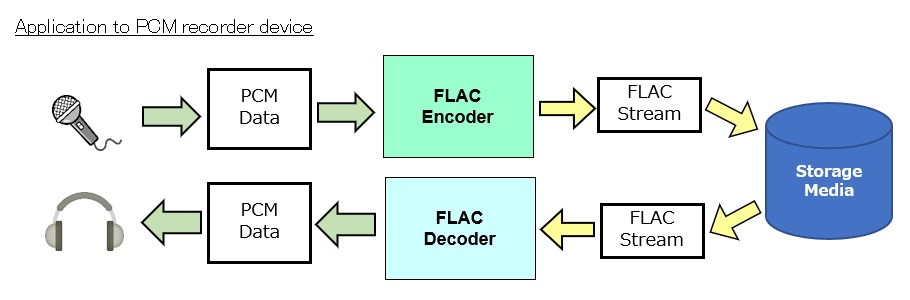
  • FLAC: FLAC is a lossless compression algorithm that offers similar sound quality to WAV, but with much smaller file sizes. FLAC files are a good choice for people who want the best possible sound quality without sacrificing file size.

Final Words

Audio encoding is a complex process that involves converting analog sound into digital data. The quality of the audio that is encoded can be affected by a number of factors, including the sample rate, bit depth, and compression of the audio file.

If you are looking for the best possible sound quality, you should use a lossless audio format such as WAV or FLAC. However, if you need to store or transfer audio files over a network, you should use a lossy audio format such as MP3 or AAC.