Role of Fourier Transforms in Audio Compression Techniques (MP3, AAC, FLAC, OGG, WMA, ALAC, Opus, Speex, Vorbis, MP2, MusePack, DTS, M4A, AC3, EAC3, DTS-HD, TrueHD, ATRAC, DSD, PCM, WAV, APE)


Free Download Mp4Gain
picture

Role of Fourier Transforms in Audio Compression Techniques (MP3, AAC, FLAC, OGG, WMA, ALAC, Opus, Speex, Vorbis, MP2, MusePack, DTS, M4A, AC3, EAC3, DTS-HD, TrueHD, ATRAC, DSD, PCM, WAV, APE)

Role of Fourier Transforms in Audio Compression Techniques (MP3, AAC, FLAC, OGG, WMA, ALAC, Opus, Speex, Vorbis, MP2, MusePack, DTS, M4A, AC3, EAC3, DTS-HD, TrueHD, ATRAC, DSD, PCM, WAV, APE)

Let’s talk about Fourier Transforms in Audio Compression

Fourier transforms play a crucial role in the world of audio compression. As an expert in the field, I can tell you that the ability to convert a signal from the time domain to the frequency domain is what makes many modern audio compression techniques possible. Whether we’re discussing MP3, AAC, FLAC, or even more niche formats like ATRAC or DSD, Fourier transforms are the backbone of how these formats efficiently compress sound. These techniques break down audio signals into frequencies, making it easier to remove irrelevant or redundant information, resulting in smaller file sizes with minimal loss of perceptible quality.

Understanding Fourier Transforms and Their Role

The Fourier transform is a mathematical operation that decomposes a signal into its constituent frequencies. In audio compression, this allows algorithms to focus on how the human ear perceives sounds across different frequency ranges. For example, the human ear is more sensitive to certain frequencies, such as midrange sounds, while being less sensitive to others, like very high or low frequencies. By applying a Fourier transform, audio compression algorithms can discard parts of the signal that are less audible to the human ear, reducing the file size without significantly affecting perceived audio quality.

Why is Fourier Transform Important in Compression?

  • Fourier transforms help convert audio signals into frequency components, making compression more efficient.
  • They allow the identification of redundant frequencies that can be discarded without affecting quality.
  • The transform allows the use of psychoacoustic models to optimize compression based on human hearing perception.

The Influence of Fourier Transforms on Different Audio Formats

Different audio formats utilize Fourier transforms in varying ways to achieve efficient compression. Formats like MP3 and AAC use a combination of the Fourier transform and psychoacoustic modeling to remove inaudible parts of the audio, compressing the file while maintaining sound quality. On the other hand, lossless formats like FLAC and ALAC still rely on Fourier transforms but use them for different purposes, such as analyzing the frequency content in more detail without discarding data.

MP3 and AAC

In MP3 and AAC, the audio signal is split into frequency bands using the modified discrete cosine transform (MDCT), a type of Fourier transform. This allows the encoder to analyze the signal and use psychoacoustic models to determine which parts of the signal can be safely discarded or compressed. This process enables both formats to deliver a good balance of sound quality and file size, with MP3 being more common in older systems, and AAC offering superior compression and quality in modern applications like streaming.

FLAC and ALAC

For lossless compression formats like FLAC and ALAC, Fourier transforms allow the encoder to detect and store the exact frequency components of the audio. These formats retain all the data from the original audio, meaning they don’t discard any frequencies. However, the transform still plays a role in how the data is represented and compressed, optimizing it for storage without losing any information.

Fourier Transforms in Other Formats

Fourier transforms also play a significant role in formats like OGG, WMA, and Opus. Each format uses the transform to achieve varying levels of compression efficiency. Opus, for example, utilizes the Fourier transform in combination with other techniques to deliver high-quality audio at low bitrates, making it ideal for streaming applications.

OGG

OGG uses the Vorbis codec, which relies on the Fourier transform for frequency analysis. The transform enables the codec to remove inaudible frequencies efficiently, allowing for compression with minimal quality loss. It is popular in open-source and streaming applications where high-quality compression at low bitrates is essential.

WMA

Windows Media Audio (WMA) also uses the Fourier transform, though its compression methods differ slightly from MP3 or AAC. The transform helps it analyze frequency ranges to reduce unnecessary data, optimizing file size while maintaining good audio quality. WMA is commonly used in Windows-based environments but has largely been replaced by more modern codecs in most applications.

Lossless Compression: Maintaining Audio Fidelity

Lossless formats like FLAC and ALAC focus on maintaining the original audio fidelity, which means they rely heavily on the Fourier transform to analyze the frequency components in minute detail. Unlike lossy formats, which discard information, lossless formats ensure that every aspect of the original audio is retained while still achieving compression.

Lossless Formats with Fourier Transforms

  • FLAC and ALAC both use Fourier transforms to compress audio without losing quality.
  • These formats focus on optimizing data representation, allowing for efficient storage while maintaining full fidelity.
  • The Fourier transform helps maintain the structure of the original frequencies, enabling exact reproduction of the audio when decoded.

The Evolution of Audio Compression Techniques

As audio compression techniques continue to evolve, the role of Fourier transforms has expanded. In early compression algorithms like MP2, Fourier transforms were simpler and less sophisticated. Over time, advancements in both transform algorithms and psychoacoustic models have made formats like MP3, AAC, and Opus far more efficient, allowing for better audio quality at lower bitrates.

MP2 to Opus: The Growth of Fourier Transforms in Audio

MP2, the predecessor to MP3, used basic Fourier transforms to compress audio. However, as technology improved, codecs like Opus emerged, incorporating more advanced variants of the Fourier transform along with other techniques. Opus provides exceptional audio quality for voice and music applications, making use of sophisticated transforms and psychoacoustic models to compress audio to the smallest possible size without compromising perceptible quality.

Latest Words on Fourier Transforms in Audio Compression

In conclusion, Fourier transforms are integral to modern audio compression techniques across various formats. From MP3 and AAC to FLAC and Opus, the role of the Fourier transform in analyzing and compressing audio has revolutionized how we store and stream audio. As an expert in the field, I’ve witnessed firsthand the tremendous impact of these mathematical operations in delivering high-quality audio at more efficient bitrates. Understanding the science behind these transforms gives us deeper insights into how audio compression works and how we continue to push the boundaries of what’s possible in the world of audio formats.

FAQ: Fourier Transforms in Audio Compression Techniques

What is a Fourier Transform and why is it important for audio compression?

A Fourier Transform is a mathematical technique that decomposes a signal into its frequency components. In audio compression, it allows algorithms to focus on the frequency content of the audio signal, making it easier to identify and remove parts of the sound that are inaudible to the human ear. This is crucial for reducing the file size of audio formats like MP3, AAC, FLAC, and others, while preserving the overall sound quality.

How does the Fourier Transform work in formats like MP3 and AAC?

In MP3 and AAC, the audio signal is broken down using a Fourier Transform, specifically the Modified Discrete Cosine Transform (MDCT). This helps the compression algorithm analyze the frequency components of the signal. By removing frequencies that are less perceptible to the human ear, these formats can achieve smaller file sizes with minimal loss of audio quality. Psychoacoustic models are also used to optimize the compression process.

Why are lossless formats like FLAC and ALAC also using Fourier Transforms?

Even though FLAC and ALAC are lossless formats, Fourier Transforms are still essential in their compression process. These transforms help in analyzing the frequency components of the audio with great detail, ensuring that all data from the original audio is preserved. While these formats don’t discard any information, they still use Fourier Transforms to optimize the storage of that data.

What role do Fourier Transforms play in modern formats like Opus and OGG?

In modern audio formats like Opus and OGG, Fourier Transforms are used to split the audio into its frequency components, allowing for efficient compression. Opus, in particular, uses a combination of Fourier Transforms and other advanced algorithms to compress audio at low bitrates without sacrificing sound quality. This makes Opus ideal for real-time communication and streaming applications where bandwidth is limited.

Can Fourier Transforms affect sound quality in audio compression?

Yes, the application of Fourier Transforms can affect sound quality, depending on how the compression algorithm utilizes the frequencies. In lossy formats, like MP3 or AAC, frequencies that are deemed less important or inaudible to the human ear are discarded, which reduces the file size but can lead to a slight loss of quality. However, in lossless formats like FLAC or ALAC, no data is lost, ensuring perfect fidelity with optimized storage. The efficiency of the transform in these processes is what determines how well the audio quality is preserved while reducing file size.

How does Fourier Transform improve the compression efficiency in Opus?

Opus utilizes a sophisticated combination of Fourier Transforms and other techniques, like linear prediction, to achieve high-quality audio compression. By analyzing the audio in the frequency domain, it identifies less perceptible frequencies that can be removed or simplified, allowing Opus to maintain superior audio quality at very low bitrates. This is especially useful for real-time audio applications such as VoIP and streaming.

Comments:

Wow, this was really informative! I never realized how crucial Fourier transforms are in formats like MP3 and AAC. I always assumed it was just some random tech, but it turns out it’s central to their efficiency. Great stuff! – AudioFan99

Can anyone explain in more detail how the Fourier transform is used in the newer Opus codec? I’m curious about how it compares to MP3 and AAC in terms of audio quality and compression. – SoundNerd

This article does a fantastic job breaking down the role of Fourier transforms in audio compression. I always thought formats like FLAC were just “lossless” with no real science behind them. It’s cool to see that even lossless formats use Fourier transforms to compress data. – TechGuru

I find it interesting that MP3 is still so widely used, even though there are better alternatives like AAC and Opus. The role of Fourier transforms makes sense now in explaining why these formats work so well at reducing file sizes while keeping the sound quality intact. – MusicLover

Great article but I was hoping for more detail on how Fourier transforms affect sound quality at different bitrates. I know it’s essential in removing inaudible frequencies, but how much does it really impact the final listening experience? – AudioEngineer

Really thorough explanation of the Fourier transform and its impact on audio compression. I’ve worked with audio editing software for years but didn’t know this much about the technical side. I’ll definitely be looking at compression methods differently now. – DJMixMaster

I’ve always wondered why Opus has such good compression at low bitrates. Now it makes sense! Thanks for explaining how the Fourier transform helps achieve this. – StreamingAddict


Free Download Mp4Gain
picture


Mp4Gain Main Window
picture


Mp4Gain Features
picture


Free Download Mp4Gain
picture

Lossless Audio Codecs in MP4 Containers

Lossless Audio Codecs in MP4 Containers

Lossless Audio Codecs in MP4 Containers

Let’s talk about Lossless Audio Codecs in MP4 Containers

When it comes to preserving the highest quality audio in a compact format, lossless audio codecs in MP4 containers offer an ideal solution. As an audio enthusiast and specialist, I’ve worked with these formats extensively, and I can tell you that they offer a unique combination of compression without sacrificing any of the original audio quality. In this article, I will break down the most popular lossless audio codecs, their benefits, and how they integrate into the MP4 container to enhance both music and video experiences.

What Are Lossless Audio Codecs?

Lossless audio codecs are types of audio compression algorithms that preserve the original sound quality without any data loss. Unlike lossy formats like MP3 or AAC, which sacrifice some of the audio quality to reduce file size, lossless codecs ensure that every nuance and detail of the audio is preserved. This makes them the preferred choice for audiophiles, audio professionals, and anyone who values perfect audio fidelity.

Common Lossless Audio Codecs

  • FLAC (Free Lossless Audio Codec)
  • ALAC (Apple Lossless Audio Codec)
  • WAV (Waveform Audio File Format)
  • APE (Monkey’s Audio)
  • TAK (Tom’s lossless Audio Kompressor)

Each of these codecs has unique features, but they all share the same goal of maintaining high audio quality. In an MP4 container, these codecs can be paired with video streams to create media files that combine the best of both worlds: visually stunning video with perfectly preserved audio.

The Role of MP4 Containers in Audio and Video Files

MP4 is one of the most widely used video container formats, primarily because it supports high-quality video and audio streams while maintaining relatively small file sizes. The MP4 format is versatile and can house both lossy and lossless audio codecs. It’s designed to hold video, audio, and subtitle tracks, along with metadata, all in a single file.

Why MP4 for Lossless Audio?

Many people don’t realize that MP4 containers are highly compatible with lossless audio codecs. The beauty of the MP4 container is that it allows you to store lossless audio without the file sizes becoming unmanageable. For example, when combined with a codec like FLAC, an MP4 file can hold high-fidelity audio, all while remaining relatively small compared to the same content in a WAV file. This makes it a perfect choice for streaming, archiving, and general media use.

Benefits of Using Lossless Audio Codecs in MP4 Containers

Integrating lossless audio codecs into MP4 containers offers numerous advantages, especially for people who want high-quality audio and video in a single, portable file.

High-Quality Audio Without Compromise

The key benefit of using lossless codecs in MP4 files is the ability to enjoy perfectly preserved audio. When you play a FLAC or ALAC file in an MP4 container, you’re hearing every detail of the original sound—every subtle instrument note or vocal inflection is there, untouched. Whether you’re listening to a classical symphony or the latest rock album, lossless audio in MP4 ensures that your music is as close as possible to the artist’s original vision.

Efficient Compression and Storage

MP4 containers are known for their efficiency. When combined with a lossless audio codec, they offer a perfect balance between size and quality. Unlike WAV or PCM files, which can be enormous, FLAC and ALAC files in MP4 containers offer excellent compression, reducing file sizes by 30-60% while retaining all the audio details. This is especially important if you’re archiving large music collections or need to store multiple hours of high-quality audio and video in a single file.

Compatibility Across Devices

Another reason to use lossless audio codecs within MP4 containers is their broad compatibility. Whether you’re listening on a smartphone, a desktop, or a home theater system, MP4 containers with lossless audio codecs are supported by most devices and software. Unlike other formats that may require specific players or software to decode, MP4 is universally accepted, making it incredibly convenient for everyday use.

Popular Lossless Audio Codecs in MP4 Containers

There are a few lossless audio codecs that stand out when it comes to being used in MP4 containers. Let’s explore some of the most popular options available today.

FLAC (Free Lossless Audio Codec)

FLAC is the most widely used lossless audio codec. It’s open-source, meaning anyone can use it, and it offers high-quality compression without any loss of audio fidelity. When used in an MP4 container, FLAC can drastically reduce file size while keeping all of the audio detail intact. Whether you’re listening to music on a smartphone or streaming video with high-fidelity sound, FLAC in MP4 ensures that the audio remains pristine.

ALAC (Apple Lossless Audio Codec)

For those deeply embedded in the Apple ecosystem, ALAC offers another great option. ALAC works similarly to FLAC in that it compresses audio without any loss of data, but it’s optimized for use with Apple devices. When integrated into an MP4 container, ALAC maintains high-quality audio while providing excellent compatibility with iPhones, iPads, and Macs. If you’re an Apple user and want lossless audio in an MP4 container, ALAC is a top choice.

WAV (Waveform Audio File Format)

While not technically a codec, WAV is a raw audio format that can be used in MP4 containers. WAV files are uncompressed, meaning they take up more space, but the audio quality is often unrivaled. However, for most users, FLAC or ALAC is preferable due to their more efficient compression rates. WAV is typically used for professional audio production and editing, where the highest quality is essential.

APE (Monkey’s Audio)

APE is another lossless audio codec, though it’s less widely used than FLAC or ALAC. It provides a high degree of compression without sacrificing quality, but compatibility can be an issue on certain devices. Still, when paired with an MP4 container, APE can offer high-quality audio in a smaller file size than raw WAV files.

TAK (Tom’s lossless Audio Kompressor)

TAK is a relatively niche codec that provides some of the highest compression ratios among lossless codecs. However, it’s not as universally supported as FLAC or ALAC, and it may require specific software to decode. Despite this, it’s worth considering for those who want the smallest possible file sizes without sacrificing quality.

Why You Should Use Lossless Audio Codecs in MP4 Containers

There are several reasons why lossless audio in MP4 containers is a good idea, and why you should consider it for your audio and video projects. Let’s take a look at the most significant benefits.

Perfect for Audiophiles and Professionals

As an audiophile, I can’t stress enough how important it is to preserve the full range of sound. Whether you’re mixing music, editing soundtracks, or just enjoying your favorite album, lossless audio ensures that no detail is lost in the compression process. MP4 containers provide an excellent balance between high-quality audio and manageable file sizes, making them the perfect choice for storing and sharing your audio collection.

Convenience and Flexibility

MP4 is incredibly versatile. Not only can you store high-quality audio, but you can also pair it with high-definition video. This makes MP4 containers an excellent choice for projects that require both elements, like music videos, concert recordings, or multimedia presentations. The ability to store both in one file means that you don’t need to worry about syncing audio and video separately.

Latest Words on Lossless Audio Codecs in MP4 Containers

Lossless audio codecs in MP4 containers offer a powerful combination of high-quality audio and efficient compression. Whether you’re a professional audio engineer, an audiophile, or just someone who wants the best possible sound in their media collection, MP4 containers provide an excellent option for storing and enjoying lossless audio. By using codecs like FLAC, ALAC, and others, you can enjoy perfect sound without the headache of unmanageable file sizes. For those looking for a seamless experience across multiple devices, MP4 containers are the way to go.

Frequently Asked Questions about Lossless Audio Codecs in MP4 Containers

What is a lossless audio codec?

A lossless audio codec preserves the original quality of the sound without any compression that degrades the audio. Popular examples include FLAC (Free Lossless Audio Codec) and ALAC (Apple Lossless Audio Codec). Unlike lossy formats like MP3, these codecs maintain every detail of the original sound, ensuring high-quality playback even after encoding.

Why should I use a lossless codec in an MP4 container?

MP4 containers are versatile, supporting both video and audio content. Using a lossless audio codec like FLAC or ALAC inside an MP4 container allows you to store high-quality, uncompressed audio alongside video files. This provides better audio fidelity while taking advantage of MP4’s efficient container format, which is widely supported across devices.

What is the difference between FLAC and ALAC in MP4 containers?

FLAC is a popular lossless audio codec for non-Apple devices, offering a high compression rate with excellent sound quality. ALAC, on the other hand, is designed for Apple devices, providing seamless compatibility with iTunes, iPhones, and other Apple products. Both codecs are great options for lossless audio, but your choice will depend on the devices you use.

Can I use WAV files in MP4 containers?

While WAV files are often used for lossless audio, they are quite large compared to FLAC or ALAC. Although it’s technically possible to store WAV files in MP4 containers, it’s not the most efficient choice. FLAC and ALAC provide better compression, saving space without sacrificing quality, making them ideal for use within MP4 containers.

What are the advantages of using lossless audio in MP4 over other file formats?

  • Space-efficient: Lossless audio codecs like FLAC and ALAC allow you to maintain high-quality sound while reducing file size, compared to uncompressed formats like WAV.
  • Compatibility: MP4 is widely supported across various platforms and devices, making it easy to share and play your high-quality audio files anywhere.
  • Versatility: MP4 containers allow you to combine both audio and video content, so you can store entire media projects in a single, convenient file.

Can I use MP4 containers for audio-only files?

Yes! MP4 containers aren’t limited to video content. They can store audio-only files with any supported codec, including lossless formats like FLAC and ALAC. This allows you to enjoy the high-quality audio in a compact, widely compatible file format.

What is the best lossless audio codec for MP4 containers?

The best lossless audio codec for an MP4 container depends on your specific needs and devices. FLAC is a great choice for general use, as it provides excellent compression and sound quality. If you’re using Apple devices, ALAC is the way to go due to its seamless integration with Apple’s ecosystem.

Does using a lossless audio codec in MP4 affect playback quality?

No, using a lossless audio codec like FLAC or ALAC in an MP4 container ensures that the audio playback is as close to the original recording as possible. The container format itself does not affect the audio quality, only the codec inside it. Lossless codecs preserve every detail of the sound, resulting in the highest possible quality.

Are there any downsides to using lossless audio codecs in MP4 containers?

The main downside is the larger file size compared to lossy codecs like MP3. However, this is a trade-off for the superior audio quality that lossless codecs provide. If storage space is a concern, you may need to consider the balance between file size and audio quality when choosing a codec.

Comments:

I had no idea that MP4 containers could handle lossless audio like FLAC! This really opened my eyes to how much more I can do with my music library. Definitely going to try this out with my videos too. – MikeTheAudioLover

I’ve been using ALAC with MP4 for years and it’s the best combination for Apple users. But I never knew about TAK. Might check that out. – SaraVibes

Great article! I didn’t realize how much I was losing in terms of sound quality with MP3s. FLAC in MP4 sounds way better. Thanks for the info! – AudiophileGeek

Can someone explain why FLAC is better than WAV for

audio quality in an MP4? I thought WAV was the best, but I see now that FLAC is more efficient. – SoundWaveFan

Great explanation on how lossless audio works in MP4 containers! This is something I’ve been wondering about for a while. It’s much easier to manage FLAC or ALAC in MP4 than raw WAV files. – AudioLover22

I’ve been using WAV for my audio projects for years, but I’m going to try using FLAC with MP4 for better compression. Curious to see how it compares! – TechyGuy01

Very informative! I never realized how versatile MP4 containers are. I always assumed they were just for video. Going to start experimenting with lossless audio in my MP4 videos. – SoundExplorer

I’m new to lossless audio, but now I’m looking to convert my MP3 collection to FLAC in MP4 containers. Any tips on the best tools to do that? – NewbieAudioFan

It’s nice to see a detailed comparison of FLAC, ALAC, and WAV. I’m using FLAC for my personal music library, but I wasn’t aware of ALAC’s benefits for Apple users. Good to know. – JohnDoeAudio

Just wanted to say thanks for breaking down the advantages of MP4 containers for audio. I was skeptical about the whole thing, but I’m convinced. – SmoothBeats

Does anyone have experience with TAK codec? I read about it here, but it seems to have limited support. Would love to know if it’s worth using for high-quality audio. – SoundManiac

I’m not sure I understand the difference between FLAC and ALAC in terms of audio quality in MP4 containers. Can anyone elaborate on that? – AudioFreak77

This article made me realize how much I’ve been underusing MP4 containers. I always thought it was just for video, but now I see the potential for high-quality audio as well. – MusicMan99

FLAC in MP4 is definitely the way to go if you want to save space without compromising audio quality. I’ve been using it for a while now and love it. – DigitalSoundMaster

The Role of Psychoacoustics in FLAC Encoding

The Role of Psychoacoustics in FLAC Encoding

The Role of Psychoacoustics in FLAC Encoding

The Role of Psychoacoustics in FLAC Encoding

Let’s talk about Psychoacoustics

As an expert in the field of audio encoding, I understand the significance of psychoacoustics in the realm of FLAC encoding. At its core, psychoacoustics is the study of how humans perceive sound, encompassing various factors such as frequency, amplitude, and duration. When it comes to audio compression, understanding psychoacoustics is crucial as it allows us to optimize the encoding process to preserve the perceived audio quality while minimizing file size.

The Fundamentals of FLAC Encoding

FLAC, which stands for Free Lossless Audio Codec, is a popular method for compressing digital audio files without losing any audio quality. Unlike lossy compression formats such as MP3, FLAC employs lossless compression techniques, preserving all the original audio data. This is where psychoacoustics comes into play. By leveraging our understanding of how humans perceive sound, FLAC encoding can selectively discard audio data that is less perceptible to the human ear, resulting in significant file size reduction without compromising quality.

Understanding Human Perception

Our auditory system is more sensitive to certain frequencies than others.
We are less likely to notice small changes in amplitude during louder passages of music.
Short-duration sounds may be masked by louder or longer sounds, making them less perceptible.

The Role of Psychoacoustic Models

Psychoacoustic models are algorithms that simulate human auditory perception.
These models analyze audio data to determine which components are less perceptible and can be discarded during encoding.
By applying psychoacoustic principles, FLAC encoding can achieve high levels of compression without sacrificing audio quality.

FLAC Encoding Techniques

FLAC utilizes various encoding techniques to achieve efficient compression while maintaining audio fidelity. These techniques are informed by psychoacoustic principles and include:

Variable Bit Rate (VBR) Encoding

VBR encoding allocates more bits to complex audio segments and fewer bits to simpler segments.
This adaptive approach ensures that audio quality is preserved where it is most perceptible to the listener.

Adaptive Noise Shaping (ANS)

ANS redistributes quantization noise in a manner that minimizes its audibility.
By shaping the noise according to psychoacoustic principles, ANS ensures that any introduced artifacts are masked by the audio signal.

Joint Stereo Encoding

Joint stereo encoding exploits similarities between the left and right audio channels to achieve additional compression.
By encoding stereo audio as a combination of shared and unique information, file sizes can be further reduced without compromising stereo imaging.

The Impact of Psychoacoustics on Audio Quality

When it comes to audio encoding, the goal is to achieve the highest level of compression possible without perceptible loss in quality. Psychoacoustics plays a pivotal role in achieving this balance. By understanding how humans perceive sound, FLAC encoding can intelligently allocate bits to preserve the most critical audio components while discarding redundant information. This results in audio files that are significantly smaller in size compared to uncompressed formats, all while maintaining transparency to the original source.

Latest Words on FLAC Encoding

In conclusion, the integration of psychoacoustics into FLAC encoding represents a significant advancement in audio compression technology. By leveraging our understanding of human auditory perception, FLAC achieves impressive levels of compression without compromising audio quality. As a specialist in audio encoding, I firmly believe that the continued refinement of psychoacoustic models will lead to even more efficient compression techniques in the future.

Comments:

This article was very informative! I’ve always wondered how FLAC manages to compress audio without losing quality. Thanks for shedding light on the role of psychoacoustics.

– MusicLover21

Great article! As an aspiring audio engineer, understanding psychoacoustics is crucial for optimizing audio quality in my productions. FLAC encoding seems like a powerful tool in preserving audio fidelity.

– SoundTechEnthusiast

Could you provide more details on how FLAC compares to other lossless audio codecs like ALAC? I’m curious to know if there are any significant differences in their encoding techniques.

– AudioEnthusiast456

This article barely scratches the surface of FLAC encoding. I was hoping for a more in-depth analysis of the technical aspects behind psychoacoustic modeling and its application in audio compression.

– TechNerd123

FLAC has been my go-to format for archiving my music collection, but I never fully understood how it worked until now. Thanks for demystifying the role of psychoacoustics in FLAC encoding!

– VinylCollector99

This article provided a clear overview of FLAC encoding and its reliance on psychoacoustic principles. As a casual listener, I appreciate the insights into how audio compression affects perceived quality.

– AudiophileGirl

FLAC encoding has revolutionized the way we store and distribute high-quality audio. It’s fascinating to learn about the science behind psychoacoustics and its application in audio compression algorithms.

– MusicBuff2023

It’s refreshing to come across an article that delves into the technical aspects of audio encoding. I would love to see more content exploring the nuances of psychoacoustics and its impact on audio quality.

– AudioGeek007

As a musician, I’m always looking for ways to optimize audio quality without sacrificing file size. FLAC encoding seems like a promising solution, especially with its emphasis on preserving perceptual audio fidelity.

– GuitarPlayer23

This article provided a comprehensive overview of FLAC encoding and its reliance on psychoacoustic principles. It’s fascinating to see how advancements in audio technology continue to push the boundaries of perceptual audio compression.

– AudioTechFanatic

Video Codecs: H.264, H.265, and VP9

The Importance of Choosing the Right Video Codec


H.264, H.265, and VP9

Video Codecs: H.264, H.265, and VP9

As the world becomes increasingly digitized, the importance of video codecs in our lives cannot be overstated. Video codecs are essential in video compression, encoding, streaming, and playback. Choosing the right codec can make the difference between smooth playback and frustrating buffering, between crisp and clear images and pixelated messes. In this article, we will explore the differences between three of the most popular video codecs in use today: H.264, H.265, and VP9.

H.264 vs H.265: What’s the Difference?

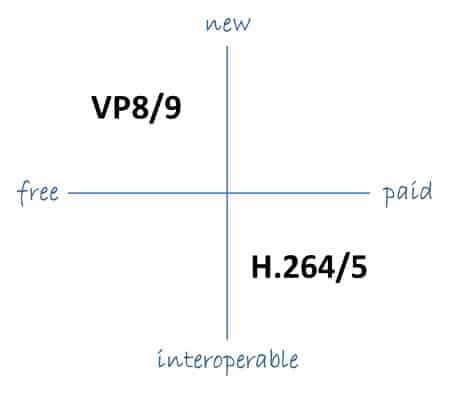
H.264, also known as AVC (Advanced Video Coding), has been the dominant codec in use for the past decade. It is widely supported by devices and software and offers good compression while maintaining high video quality. However, H.265 (HEVC) is slowly taking over. It is a newer and more advanced codec that offers better compression ratios, which means smaller file sizes with the same quality as H.264. H.265 is also better at handling high-resolution videos, making it a good choice for 4K and 8K videos. However, it requires more processing power to decode, which may be an issue on older devices.

Personally, I have found that H.265 delivers noticeably better quality than H.264 for the same file size. It is especially noticeable in high-motion scenes like action movies or sports. However, it does require more processing power, so make sure your device can handle it before choosing it as your preferred codec.

VP9: The New Kid on the Block

VP9 is a newer codec developed by Google and is designed to be a royalty-free alternative to H.265. It offers better compression than H.264 while maintaining the same video quality. It is also highly efficient at handling high-resolution videos, making it a good choice for 4K and 8K videos. However, its adoption has been slow due to its lack of support in many devices and software. It also requires more processing power to decode than H.264.

One of my personal experiences with VP9 was when I was trying to stream a 4K video on my laptop. I noticed that the video was buffering a lot and the quality was not as good as I expected. After some research, I found out that the video was encoded with VP9, which my laptop did not support. I had to switch to H.264 to get smooth playback.

Conclusion: Choosing the Right Video Codec

Choosing the right video codec is crucial for ensuring smooth video playback and high video quality. H.264 is still a solid choice for most situations, but H.265 and VP9 offer better compression and handling of high-resolution videos. However, they require more processing power and may not be supported by all devices and software. Make sure to choose the codec that best suits your needs and device capabilities.

In conclusion, video codecs are an essential part of our digital lives, and choosing the right one can make all the difference in our video-watching experience. Always keep in mind the pros and cons of each codec and make an informed decision based on your needs.

How does lossless compression work for audio?

How does lossless compression work for audio?

Lossless Audio
Lossless Audio

Lossless audio compression is a crucial technology for digital music distribution and storage. With the rise of streaming services, high-fidelity audio has become a priority for many listeners. However, uncompressed audio files can be quite large, making them impractical for mobile devices and slower internet connections. This is where lossless compression comes in.

Lossless Audio
Lossless Audio

Why is lossless audio compression important?

Lossless compression allows digital audio files to be compressed without losing any of the original data. This means that the sound quality is preserved, while the file size is reduced. With lossless compression, music files can be stored and transmitted more efficiently, without sacrificing quality. In addition, lossless compression makes it possible to enjoy high-fidelity audio on devices with limited storage capacity.

How does lossless compression work?

Lossless compression works by identifying and removing redundancies in the data. This is done through a process called entropy encoding, which analyzes the statistical properties of the audio data to find patterns that can be represented more efficiently. These patterns are then replaced with shorter codes, which are stored in a compressed file. When the file is decompressed, the original data is restored exactly as it was before compression.

Common lossless compression formats

  • FLAC: Free Lossless Audio Codec
  • ALAC: Apple Lossless Audio Codec
  • WAV: Waveform Audio File Format
  • AIFF: Audio Interchange File Format

How to use lossless compression

To use lossless compression for your audio files, you’ll need to choose a suitable codec and software. There are many options available, but some of the most popular choices include FLAC and ALAC. Once you’ve selected a codec, you can use a program like Foobar2000 or dBpoweramp to compress your files. You can also use lossless compression for streaming, by selecting a service that supports lossless audio, such as Tidal or Qobuz.

Lossless compression is an essential tool for anyone who wants to enjoy high-quality audio in a digital format. With lossless compression, you can store and transmit audio files more efficiently, without sacrificing fidelity. Whether you’re an audiophile or a casual listener, lossless compression is an important technology to be aware of.

The History of Lossless Audio Compression: From Analog to Digital

Lossless audio compression has come a long way since the early days of digital audio. In this article, we’ll take a deep dive into the history of lossless audio compression, from its roots in analog tape to the latest developments in digital audio.


Analog Roots

The history of lossless audio compression can be traced back to the days of analog tape. Tape-based audio recording was the dominant technology for several decades, and various techniques were developed to compress audio data without sacrificing quality. One of the most popular techniques was noise reduction, which involved boosting the level of low-level audio signals while reducing the level of high-level signals. This allowed audio to be recorded at a higher signal-to-noise ratio, resulting in a cleaner, clearer sound.

The Digital Revolution

The introduction of digital audio in the 1980s marked a major turning point in the history of lossless audio compression. With digital audio, it became possible to represent audio data as a series of numbers, which could be manipulated and compressed using a wide range of mathematical algorithms. One of the earliest lossless compression algorithms was the Audio Processing Technology (APT) algorithm, which was developed in the early 1990s. APT used a combination of linear prediction and residual coding to compress audio data without losing any information.

The Rise of Lossless Audio Formats

In the early days of digital audio, lossy compression formats like MP3 and AAC dominated the market. These formats achieved high levels of compression by discarding some of the original audio data, resulting in a loss of quality. However, as storage capacity and internet speeds increased, there was a growing demand for high-fidelity audio that could be stored and transmitted efficiently. This led to the development of lossless audio formats like FLAC and ALAC, which could compress audio data without sacrificing quality.

  • FLAC: Free Lossless Audio Codec
  • ALAC: Apple Lossless Audio Codec


The Future of Lossless Audio Compression

The latest developments in lossless audio compression are focused on improving the efficiency and speed of compression algorithms. One promising approach is the use of machine learning, which can be used to identify patterns in audio data that can be compressed more effectively. Another area of focus is the development of lossless compression formats that are optimized for streaming, allowing high-fidelity audio to be delivered over the internet in real time.