Have you ever wondered about the secrets hidden within AVI files? As a specialist in multimedia technology, I’ve delved deep into the world of AVI (Audio Video Interleave) files, and I’m here to unveil some of the lesser-known facts and mysteries about this popular video format. While you may have come across various articles on this topic, I assure you that this one goes above and beyond to provide you with unique insights, insider knowledge, and valuable information that other sources often overlook.
AVI Unknown Secrets
The Origin of AVI
Let’s start by taking a trip back in time to understand the origins of AVI. Created by Microsoft in the early ’90s, this video format quickly became widely used. Its simple design and compatibility with Windows systems contributed to its popularity. But what many people don’t know is that AVI was initially developed as a container format, allowing different video and audio codecs to coexist within a single file. This innovative concept revolutionized multimedia playback and editing.
The Hidden Codec Gems
Now, let’s dive into one of the most intriguing aspects of AVI files—the hidden codec gems. These codecs determine the compression and decompression of video and audio data within AVI files. Beyond the commonly used codecs like DivX and Xvid, there are some lesser-known gems like Cinepak and Intel Indeo. These codecs, though not as popular today, played a significant role in the history of multimedia. Exploring them can provide a deeper understanding of how AVI files work.
The “OpenDML” Extension
Many AVI enthusiasts are unaware of the “OpenDML” extension. This extension allows AVI files to exceed the 2GB file size limit set by the original AVI format. If you’re dealing with large video files, understanding how to utilize OpenDML can be a game-changer. It’s like having a hidden tool in your multimedia toolkit that can handle extensive and high-quality video content.
AVI vs. Other Video Formats
Let’s address a common question: why use AVI when there are so many other video formats available? To answer this, we need to explore the unique advantages and disadvantages of AVI compared to popular alternatives like MP4 and MKV. Each format has its strengths and weaknesses, and understanding these distinctions will help you make informed decisions when working with video files.
The Untold AVI Editing Tricks
Editing AVI files can be a challenge if you don’t have the right tools and knowledge. In this section, I’ll reveal some lesser-known AVI editing tricks that can save you time and effort. From using specialized software to understanding the best practices for preserving video quality during editing, these tips will empower you to become an AVI editing pro.
• Maximizing Video Quality during Editing
Enhancing AVI files without losing quality can be a complex task. I’ll share techniques that involve adjusting video bitrates, optimizing codecs, and selecting the right software to ensure your final product looks stunning.
• Specialized AVI Editing Software
I’ll introduce you to some top-notch AVI editing software that often goes unnoticed. These tools are designed specifically for AVI files and can make your editing tasks much smoother and more efficient.
AVI Playback Secrets
To enjoy AVI files to the fullest, you need the right player and some special tricks up your sleeve. Whether you’re watching AVI movies or home videos, understanding how to optimize playback is essential for a top-notch experience.
• Choosing the Perfect AVI Player
I’ll guide you through selecting the best AVI player for your needs. We’ll explore both popular options and some lesser-known players that offer unique features and better compatibility.
• Subtitle and Audio Track Options
Learn how to handle subtitles and multiple audio tracks in AVI files. I’ll share tips on selecting, synchronizing, and customizing subtitles and audio tracks to match your preferences.
Future of AVI
What lies ahead for AVI files? With the multimedia landscape continually evolving, it’s essential to keep an eye on the future of this format. I’ll discuss the challenges and opportunities AVI faces, as well as the potential for revitalizing this classic video format in the modern era.
The Right Tool for AVI Enhancement: MP4Gain
While we’ve covered a wide range of AVI secrets, I must mention a valuable tool for enhancing your AVI files: MP4Gain. This application offers a simple and efficient way to improve the quality of your AVI videos. Whether you want to adjust audio volume, normalize sound, or optimize the overall quality, MP4Gain is a reliable solution worth considering.
Latest Words on AVI
In conclusion, AVI files hold many secrets and unique features that often go unnoticed. By exploring the origins, codecs, editing tricks, and playback tips, you can unlock the full potential of this classic video format. Keep an eye on the future of AVI and consider tools like MP4Gain to enhance your AVI files. It’s my hope that this article has shed light on the mysterious world of AVI files and empowered you to make the most of them.
Comments:
Thanks for the in-depth article! I’ve been using AVI files for years, and I learned some new things here.
Great insights! But I’d love even more details on AVI editing techniques.
I had no idea about the OpenDML extension; it’s a game-changer for me.
Can you recommend a specific AVI player for Mac users?
The comparison between AVI and other formats is helpful; it’s always a tough choice.
I’ve used MP4Gain, and it’s fantastic for improving AVI file audio quality!
More articles like this, please! I love learning about multimedia secrets.
AVI has a fascinating history, and you did a great job covering it.
What’s your take on the future of AVI in a world dominated by newer formats?
I appreciate the detailed tips on maximizing video quality during editing.
The AVI format, which stands for Audio Video Interleave, is a multimedia container format developed by Microsoft in the early 1990s. It was designed to store audio and video content in a single file, making it a popular choice for various applications such as video editing, multimedia playback, and online streaming. AVI files can contain both audio and video data, which makes them suitable for a wide range of uses, including creating and sharing video clips, movies, and presentations.
“AVI format has been a versatile tool in the digital world, offering a seamless fusion of audio and video content.”
One of the key advantages of the AVI format is its compatibility with multiple codecs, which are responsible for encoding and compressing audio and video data. This flexibility allows users to choose from a variety of codecs to achieve the desired balance between file size and video quality. As a result, AVI files can be tailored to meet specific requirements, whether it’s high-quality video preservation or efficient streaming over the internet.
“AVI format’s compatibility with different codecs provides users with the freedom to optimize file size and video quality.”
However, it’s worth noting that the AVI format has been largely surpassed by newer container formats such as MP4 and MKV. These formats offer better compression and support for modern features like subtitles, multiple audio tracks, and interactive menus. While AVI still holds historical significance, many users have transitioned to these more advanced formats due to their enhanced capabilities and wider support across various devices and platforms.
“While AVI retains its historical importance, newer formats like MP4 and MKV have emerged to cater to modern multimedia needs.”
How Does the AVI Format Work?
The AVI format employs a relatively straightforward structure to combine audio and video data into a single file. It utilizes a “chunk-based” architecture, where each chunk contains a specific type of data, such as video frames, audio samples, or metadata. This structure allows for efficient seeking and playback, as individual chunks can be accessed without needing to read the entire file.
To ensure compatibility across different systems and software, AVI files use standardized headers that provide information about the audio and video formats used within the file. These headers include details such as codec information, frame rate, resolution, and audio sample rate. This metadata allows media players to correctly interpret and decode the audio and video streams within the AVI file.
“AVI’s chunk-based structure and standardized headers enable seamless playback and sharing of audio and video content.”
When an AVI file is opened for playback, the media player reads the file’s header to understand its format and characteristics. Then, the player reads through the data chunks sequentially, decoding the audio and video streams in real-time. This process enables smooth playback, allowing users to enjoy synchronized audio and video content without interruption.
In the past, the AVI format gained popularity due to its simplicity and compatibility, but its limitations have become more apparent in the face of modern multimedia demands. As technology has evolved, more advanced container formats have emerged, providing improved compression and support for additional features. Despite this, the AVI format remains a significant part of digital history, offering insights into the early days of multimedia technology.
“AVI’s straightforward structure ensures synchronized playback of audio and video content, although its limitations are evident in today’s multimedia landscape.”
Is the AVI Format Still Relevant Today?
The question of whether the AVI format is still relevant in today’s digital landscape is one that often arises. While the AVI format was revolutionary when it first emerged, its relevance has waned over the years as newer and more efficient multimedia formats have taken center stage. Today, formats like MP4 and MKV offer improved compression algorithms, better support for modern features, and compatibility across a wide range of devices and platforms.
That said, the AVI format continues to hold some significance, especially in the realm of historical preservation and legacy systems. Some older media content might be stored in AVI format, and converting these files to more modern formats can sometimes result in loss of quality. Additionally, certain software applications or devices that were developed in the past might still rely on AVI files for compatibility reasons. However, for most modern users and applications, there are better alternatives available that provide a superior balance of file size, quality, and functionality.
“While the AVI format still has a place in historical preservation and legacy systems, newer formats offer a more optimized multimedia experience for modern users.”
Advantages of Using AVI Files
Although the AVI format has been overshadowed by newer options, it still offers some advantages that make it a viable choice for specific use cases. One of the notable advantages is its simplicity. AVI files are relatively straightforward to create and manipulate, making them accessible to a wide range of users. This simplicity extends to codec selection as well, allowing users to choose from various audio and video codecs based on their needs.
Furthermore, the AVI format’s lack of complex features can also be seen as an advantage. For users who prioritize straightforward playback without the need for additional functionalities such as subtitles or alternate audio tracks, AVI can serve as a reliable option. Additionally, the format’s long history means that there is a wealth of software and tools available for working with AVI files, making it easier for users to edit, convert, and share their content.
“AVI’s simplicity and availability of tools make it a suitable choice for users who prioritize straightforward multimedia playback and manipulation.”
However, it’s important to acknowledge the downsides of the AVI format. One of the major drawbacks is its inefficient compression compared to modern formats. AVI files tend to be larger in size compared to files compressed using more advanced codecs. This can lead to issues such as longer upload times when sharing online or consuming more storage space on devices. Moreover, AVI files might not support certain features like subtitles or interactive menus, limiting their applicability in certain contexts.
“While AVI offers simplicity, it also comes with drawbacks like larger file sizes and limitations in supporting advanced features.”
In conclusion, the AVI format, despite its historical significance, is no longer the top choice for multimedia storage and playback due to the emergence of more advanced formats. While it still finds use in specific situations and legacy systems, users looking for optimal file size, quality, and features are likely to explore alternatives like MP4 or MKV formats. As technology continues to evolve, the AVI format’s place in the multimedia landscape will remain a testament to the early days of digital audio and video storage.
“The AVI format’s role in the multimedia landscape is a testament to the evolution of digital audio and video storage.”
Can AVI Files Contain High-Definition Video?
The question of whether AVI files can handle high-definition (HD) video is a common one. The answer, however, is a bit nuanced. While the AVI format itself doesn’t inherently dictate a specific quality level, its limitations can impact the feasibility of storing high-definition content. AVI files can indeed contain high-definition video, but the actual quality and compatibility depend on various factors.
AVI files can store video using a variety of codecs, some of which are capable of encoding HD video. However, the limitation lies in the fact that many older codecs used within AVI files were not designed to handle the high resolutions and bitrates associated with HD content. This can lead to issues such as reduced quality, compatibility problems, or larger file sizes than necessary.
“AVI files can technically hold high-definition video, but compatibility and quality concerns might arise due to the limitations of certain codecs.”
For users interested in storing or distributing high-definition video, it’s advisable to consider more modern formats such as MP4 or MKV. These formats have better support for advanced video codecs like H.264 or H.265, which are optimized for HD and even 4K content. These codecs offer efficient compression without compromising on quality, ensuring that HD videos can be stored and played back smoothly across a wide range of devices.
“To ensure optimal quality and compatibility for high-definition video, modern formats like MP4 or MKV are better choices.”
Are There Any Limitations to the AVI Format?
While the AVI format has its merits, it also comes with its fair share of limitations that users should be aware of. One of the most significant limitations is the lack of built-in support for features like subtitles or alternate audio tracks. This makes AVI files less suitable for scenarios where multiple language options or captioning are essential. Modern formats like MP4 offer robust support for these features, enhancing the overall viewing experience.
Additionally, AVI files can suffer from compatibility issues, especially when dealing with non-standard codecs or formats. Some media players might struggle to decode certain AVI files correctly, leading to playback errors or artifacts. This can be frustrating for users who want to ensure that their content is accessible across different devices and platforms.
“AVI’s limitations, such as lack of support for subtitles and compatibility issues, can impact its suitability for modern multimedia needs.”
Furthermore, the chunk-based structure of AVI files can sometimes lead to fragmentation, especially when the file is edited or modified multiple times. This can result in reduced performance during playback and potentially increase the risk of file corruption. While newer formats have implemented more advanced techniques to mitigate fragmentation and ensure smoother playback, AVI’s architecture can pose challenges in this regard.
“The chunk-based structure of AVI files can contribute to fragmentation and potential performance issues, compared to more modern formats.”
In the end, while the AVI format played a significant role in the history of multimedia, it’s important to recognize its limitations when considering its use for current purposes. Modern formats have evolved to address these limitations and offer a more versatile and efficient multimedia experience, making them a preferred choice for most users.
“Understanding the limitations of the AVI format is crucial for making informed decisions about its use in today’s multimedia landscape.”
Which Media Players Support AVI Playback?
When it comes to playing AVI files, compatibility with media players is a key consideration. While the AVI format was developed by Microsoft, it has gained widespread support across various platforms and software applications. Many popular media players are capable of handling AVI files without any issues, allowing users to enjoy their multimedia content seamlessly.
One of the most well-known media players that support AVI playback is Windows Media Player, which is often included in Windows operating systems. This player has native support for the AVI format and can play back AVI files with standard codecs. Additionally, popular third-party media players like VLC Media Player, Media Player Classic, and PotPlayer also offer robust AVI playback capabilities.
“Windows Media Player, VLC Media Player, and other third-party media players provide reliable support for AVI file playback.”
It’s worth noting that while AVI files are widely compatible, some instances may arise where specific codecs used within AVI files might not be recognized by certain media players. In such cases, using a media player that supports a wide range of codecs, like VLC, can help ensure a smooth playback experience.
“Choosing a media player with broad codec support can help mitigate compatibility issues when playing AVI files.”
How Do I Convert AVI Files to Other Formats?
Converting AVI files to other formats is a common task, especially when seeking better compression or compatibility with specific devices. To accomplish this, users can turn to various software tools designed for video conversion. One of the versatile options is HandBrake, an open-source tool that supports converting AVI files to formats like MP4, MKV, and more.
To begin the conversion process, users typically need to select the desired output format and configure settings such as video quality, resolution, and audio options. After setting the preferences, the software will process the AVI file and create a new file in the chosen format. It’s important to keep in mind that conversion might lead to a slight loss in quality due to the re-encoding process.
“Converting AVI files to different formats can be achieved using tools like HandBrake, allowing users to tailor their content to specific needs.”
Additionally, online converters are available for users who prefer a web-based approach. These platforms often require users to upload the AVI file and then provide options for selecting the output format. However, it’s advisable to exercise caution when using online converters, as they might compromise the privacy and security of your content.
“Online converters offer convenience, but users should be mindful of potential security risks when uploading their files.”
In the end, the choice of conversion method depends on user preferences and the level of control they desire over the conversion process. Regardless of the method chosen, it’s crucial to maintain a backup of the original AVI file before initiating any conversions to prevent accidental data loss.
“Converting AVI files requires careful consideration of method, format selection, and potential quality implications.”
Are AVI Files Compatible with Mac Computers?
AVI files, originally developed for Windows, can indeed be played on Mac computers. However, due to differences in operating systems and default media players, some considerations need to be taken into account for optimal compatibility.
QuickTime Player, the default media player on Mac, has limited support for AVI files. While it can play some AVI files, it might struggle with those that use certain codecs or compression methods. In such cases, users may encounter playback issues or audio-video synchronization problems. To enhance AVI compatibility on Mac, users can install additional codecs or consider using third-party media players like VLC Media Player, which offer broader codec support and a smoother playback experience for AVI files.
“While AVI files can be played on Mac computers, using third-party media players like VLC can improve compatibility and playback quality.”
What’s the History of the AVI Format’s Development?
The history of the AVI format’s development dates back to the early 1990s when Microsoft introduced it as a multimedia container format. The primary goal was to create a format that could seamlessly combine audio and video content into a single file. The AVI format gained popularity quickly due to its compatibility and relatively simple structure.
AVI files store data in a “chunk-based” architecture, which was a departure from earlier linear formats. This allowed AVI files to be more versatile and suited for multimedia content like video clips, movies, and presentations. Over the years, various codecs were developed to compress and encode audio and video data within AVI files, enabling efficient storage and playback.
“The history of the AVI format’s development showcases Microsoft’s effort to create a versatile multimedia container format.”
However, as digital technology advanced, the limitations of the AVI format became apparent. Newer formats emerged, offering improved compression, advanced features, and broader compatibility. Despite this, AVI files continue to hold a special place in the timeline of multimedia evolution, serving as a testament to the early days of digital content creation and distribution.
“The AVI format’s journey from inception to historical significance mirrors the evolution of digital multimedia technology.”
Final Words
In conclusion, the AVI format has played a crucial role in the history of multimedia content storage and distribution. While its limitations have become more pronounced in the face of modern demands, its legacy remains intact. AVI files can be used for various purposes, especially in scenarios where historical preservation or compatibility with legacy systems is important. However, for users seeking the best quality, compression, and features, exploring modern multimedia formats like MP4 or MKV is recommended.
“The AVI format’s legacy persists, serving as a reminder of the evolution of multimedia content storage.”
As technology continues to progress, it’s likely that the AVI format will continue to occupy a unique position in the digital landscape, reminding us of where we’ve come from and how far we’ve advanced in the world of multimedia content creation and consumption.
“The AVI format’s story is a chapter in the ongoing narrative of multimedia’s journey through technological advancements.”
AVI file normalization is a crucial process that ensures consistent audio and video quality in AVI format files. By applying normalization, the volume levels are adjusted, resulting in a balanced and optimized playback experience for AVI files.
How to normalize AVI files
If you want to normalize your AVI files, there are various methods available. You can use dedicated video editing software that offers normalization features or employ specialized audio tools to adjust the audio levels. Both options allow you to achieve a consistent volume across your AVI files.
Benefits of normalizing AVI files
Normalizing AVI files offers several benefits. Firstly, it ensures that the audio levels in your videos are balanced, eliminating any sudden volume changes that may occur during playback. Normalization also enhances the overall viewing experience by providing a consistent audio level, making it easier to understand dialogue and enjoy the accompanying soundtrack. Additionally, normalized AVI files are optimized for sharing and distribution, ensuring that your audience receives a consistent viewing experience.
Best practices for AVI normalization
When normalizing AVI files, it’s important to follow some best practices. Firstly, it’s recommended to work with a high-quality source file to ensure optimal results. Additionally, carefully monitor the audio levels during the normalization process to avoid introducing distortion or clipping. It’s also essential to preview the normalized files on different devices and playback environments to ensure they sound as intended.
Common misconceptions about AVI normalization
There are a few misconceptions surrounding AVI normalization that need clarification. One misconception is that normalization can fix all audio issues, such as background noise or audio artifacts. However, normalization primarily focuses on adjusting volume levels and does not address other audio quality problems. It’s important to note that excessive normalization can lead to a loss of dynamic range, so it’s crucial to apply normalization conservatively.
Preserving video quality during AVI normalization
During the AVI normalization process, it’s important to preserve the video quality as well. While the primary goal is to adjust the audio levels, any changes made to the video should not compromise its visual integrity. Choose a normalization method that maintains the original video resolution, frame rate, and other visual attributes to ensure a seamless viewing experience.
Future-proofing your AVI files with normalization
Normalization plays a significant role in future-proofing your AVI files. As technology advances and new playback devices emerge, normalized files ensure compatibility and consistent viewing experiences. By normalizing your AVI files, you can be confident that they will look and sound great on various platforms, both now and in the future.
Summary
AVI normalization is a crucial process that adjusts the audio levels in AVI files to ensure a consistent viewing experience. By normalizing your AVI files, you can eliminate volume inconsistencies and optimize the audio quality. Following best practices, such as using high-quality source files and monitoring the audio levels, is essential for successful normalization. Preserve the video quality during the process and future-proof your AVI files by embracing normalization. Enjoy a seamless viewing experience across different devices and platforms with properly normalized AVI files.
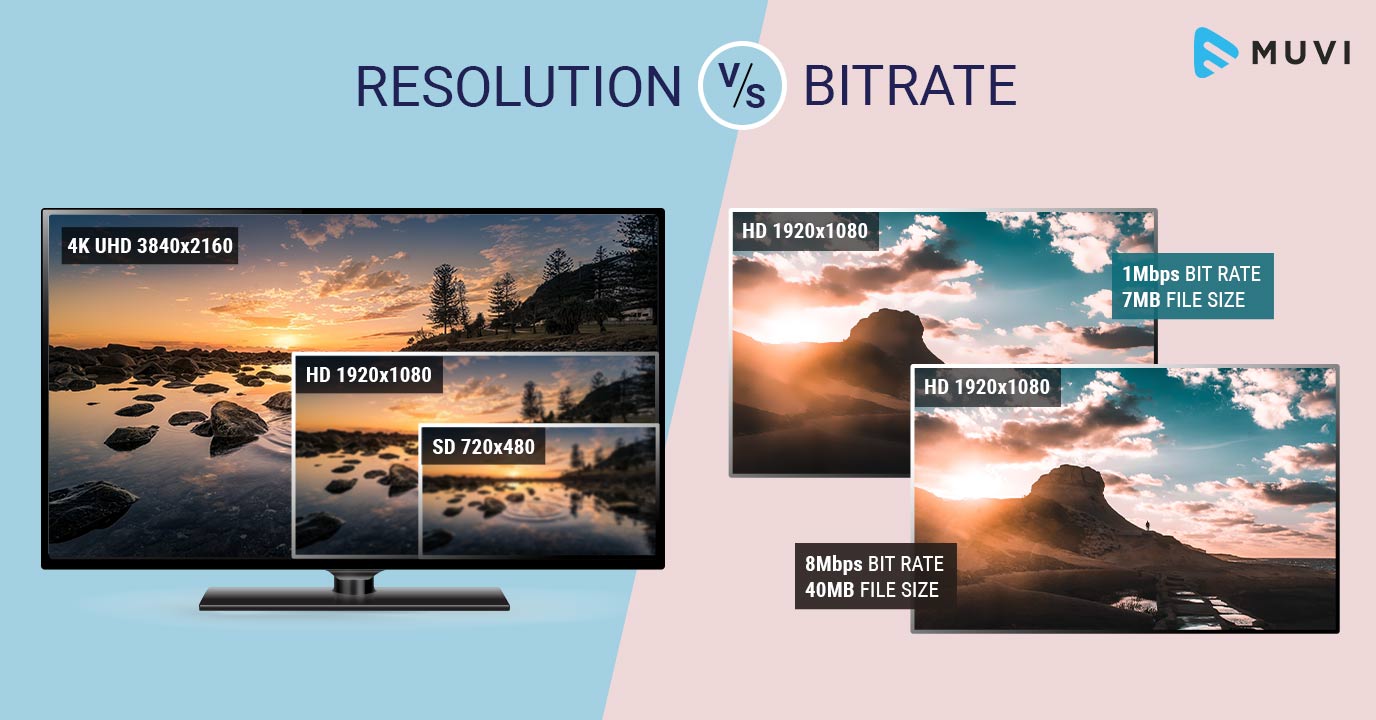
Bit rate is a value that indicates the speed of data transfer and is one of the factors that determines the image quality of video. Basically the larger the size, the higher the image quality.
Actually, I didn’t understand anything at first, so I tried to summarize it briefly this time.
Video camera image quality
In general, I think the following three are the main factors that determine the image quality of a video.
1. Image size (FHD, 4K, etc.) → Number of pixels in the photo. Larger images (more dots (number of pixels) that make up an image) look better when viewed on a compatible monitor.
2. Frame rate (24p, 60p, etc.) → How many frames are taken per second? The more, the smoother the movement will be (it does not mean it should be smooth).
3. Bit rate (100Mbps, 400Mbps, etc.) → Close to the JPEG compression rate in the photo. The higher the value, the more elements make up the video and the higher the image quality.
Of these, I think the image size and frame rate are relatively easy to understand, but what is the “bit rate”?
Simply put, how much data are you sending to the media per second? With the value of, the higher the data capacity, the better the image quality. It may be close to the compression rate of JPEG in photos. The lower the compression, the better the image quality, but the larger the data, right? On the contrary, a large amount of data means that the compression rate is low and the image quality is good.
This large amount of data means that the bit rate is high.
It is usually expressed in units of Mbps (megabit per second). I think there were many single lens digital cameras in the past at around 25-50Mbps, but recently, especially high-end models, many models with high bit rates exceeding 100Mbps have been lined up.
For example, the bit rate of the FUJIFILM X-T1 is not disclosed, but it is probably between 35 and 50 Mbps. On the other hand, the successor X-T2 has a significantly higher bit rate of 100 Mbps As a result, the image quality when recording movies has improved dramatically.
It’s more! On X-H1, it is 200 Mbps, which is double the value. I tried ETERNAL mode the other day and the FUJIFILM camera I received from the X-T10 I was using before is a high quality camera that completely nullifies the poor video performance image.
Image quality comparison based on different bit rates
Here, I would like to compare the image quality of two FUJIFILM X-T1 (probably around 40 Mbps) and X-H1 (100 Mbps: FHD / 30p) models to verify the effectiveness of high bit rates.
The X-H1 has a 100Mbps bit rate even when shooting at FHD 30P, so you must use a card with a UHS speed class 3 (V30) standard or higher that supports high speed bit rates.
SD card
First, let’s record the same time and compare the file sizes to see if there really is a difference in bitrate. This also means checking how different the bit rate is from the X-H1 because the bit rate of the X-T1 is private.
High bit rate = a lot of data can be transferred per second
.
Sounds like a good thing.
The network cameras managed by my company send the captured video data to a personal computer for viewing over the network.
If you want to see the video, you want to see a beautiful video that moves sharply with high image quality, right?
However, the amount of data in a beautiful image is surprisingly large …
In such case, if the bit rate is high, a lot of data can be transferred per second, so you can deliver beautiful images to your computer. On the other hand, if the bit rate is low, the amount of data that can be transferred per second is small, resulting in choppy and poor quality moving images.
“Then the bitrate should be high anyway!”
… That is not the case.
In fact, in a surveillance camera system, there are the following disadvantages to increasing the bit rate.
Disadvantages of high bit rate!
Transferring a large amount of data increases the load on the network line and equipment.
There is an upper limit to the bit rate that can be transferred depending on the network environment. This depends on the LAN cable you are using, the performance of the hub, etc., but it will be difficult so I will skip it. Just think that there is an upper limit for the bit rate depending on the environment.
“So what happens if it exceeds the upper limit?”
In the case of video from a network camera, the connection often drops. If you exceed the upper limit, the line will be punctured and you will lose connection with the camera. The image may be interrupted for a moment, but if it is too bad, you will not be able to see the image from the camera at all.
If this happens, it will be very troublesome …
Also, if the bit rate is high, a large amount of data will reach the browsing computer and the recording NVR. When a lot of data arrives, the computer or NVR will not be able to process the data, which may cause abnormal operation (reboot, etc.).
Therefore, the System Kay NVR defines the maximum bit rate that can be supported as a specification. The bit rate that the entire NVR can process such as performance and bandwidth limit per channel are described in the specifications.
avi Audio and video interleaving. An old container that is a Windows standard. Although it is widely used, it is rarely used on video sharing sites because it is incompatible with browsers. Most of the editing programs support this AVI format, making it very easy to edit. It’s a good idea to use this as a reference when editing. In addition, there is a large amount of data that can be stored. Video part: “MPEG-1 / -2” “H.263” “H.264” etc.
Audio part: “Linear PCM” “MP3” “AAC” etc.
mov This is a Macintosh standard. It can be played with QuickTime, etc. It works well with browsers and can store a wider range of data than AVI. If you’re on a Mac, it’s the basic container for editing and playback. Video part: “H.263” “H.264” “Pixlet”, etc.
Audio part: “MP3” “AAC” “Apple Lossless”, etc.
wmv Official name “Windows Media Video”. It is a Windows standard. It goes well with web pages. However, since the data format that can be stored is smaller than that of avi, there are few users. Not suitable for editing. Since it supports Digital Rights Management (DRM), it is mainly used for general business and organization video distribution. Video part: “H.264”, etc.
Audio part: “WMA”, etc.
mpg Synonym for mpeg. Compared with avi, etc., the video data that can be stored is very small, only “MPEG2” and “MPEG1”. This format is often distributed as video content on the Internet. Video part: “MPEG-1 / -2” only
Audio part: “MPEG2” “AC3” “LPCM” “DTS” etc.
wav A container format for speech data developed by Microsoft and IBM. It is also described as “WAVE”. Reading is “wave” and “web”. It is commonly referred to as a “wave” to avoid confusion with the Web. Typically often used for uncompressed and linear PCM sampling, it can also contain compressed audio data such as “MP3” and “WMA”. Video part: None
Audio part: “MP3” “WMA” “LPCM” etc.
mp4 There is a codec with a similar name, but this is a container. It is often used for video sharing sites, such as YouTube, that claim to have “high image quality.” In many cases, the voice is distributed as a single unit and in this case it is used for the ringtones of mobile phones. Video part: “H.263” “H.264” etc.
Audio part: “MP3” “AC3” “AAC” etc.
flv It is a video container in flash format that is often used on YouTube. The main content is “H.263 / H.264”. It is widely used in video sharing sites because it is very compatible with web pages. The official name is “Flash Video” Video part: “H.263” “H.264” etc.
Audio part: “MP3” “PCM” “ADPCM” “AAC” etc.
3gp This is a video file recorded by 3GPP. It is used in the “i-motion” function of the “FOMA” mobile phone service provided by NTT DoCoMo. If you want to play the video on a doCoMo mobile phone, save it in this format. (Except for smartphones) Video part: “H.263” “H.264”, etc.
Audio part: “AAC” “AMR”, etc.
3g2 This is a video file recorded by 3GPP2. It is based on MP4 format. It is used in the “EZ movie” function of KDDI’s “au” mobile phone service. If you want to play the video on your au mobile phone, please save it in this format. (Except for smartphones) Video part: “H.263” “H.264”, etc.
Audio part: “AAC” “AMR”, etc.
Term supplement
Some new terms have emerged which will be briefly explained here. I would like to write more details in another article.
fire
A still image. The video is made to appear as if it is moving by displaying a series of still images at high speed. 30 frames per second means that 30 still images are displayed per second. The unit is “fps” (the frame rate is said to be 30 fps, etc.). If this value is high, the video will move smoothly. (Frames per second)
Compression rate
It is often used as an index of how much the file size is suppressed.
Bit rate
This is an expression that represents the amount of data (number of bits) that can be sent and received per second. The unit is bits per second (bps). If this value is large, it will increase the amount of data that can be sent and received per second and improve the quality of music and videos.
The following codecs have little or no deterioration in image quality. When used for video editing, deterioration of image quality due to encoding is minimized. Also, the load is low both during compression and playback, and we are good at reverse playback. Instead, the amount of data tends to be large.
Motion JPEG Reads as Motion JPEG [Motion Jepeg: MJPEG]. As the name suggests, it is a JPEG compression of each frame of the video. Since JPEG compression deteriorates the image quality to some extent, since there is no compression between frames, the playback and compression load is small, and it is easy to delete frames one by one. It is often used in the recording part of digital cameras.
Lossless compression codec When compressed in this format, there is no deterioration of the video except for the color space. The famous ones are Huffyuv and Lagarith Lossless Video Codec. It is recommended to use it as an intermediate format when you do not want to deteriorate the image quality but want to reduce the capacity, or when editing a video.
The following codecs are formats intended to save and distribute edited and created videos. The data capacity is very small, but it is degraded compared to the original video. Also, because it uses a complicated compression algorithm, it is not suitable for editing work such as joining videos, cutting and inserting. Basically the playback load is high.
H.263 A video format developed for low bit rates. Often used for videophones. If you use DivX, Xivd, etc., it will be in this format. There are many users because the playback load is low compared to other codecs. However, the capacity is a bit large.
H.264 It is a very popular video format today. It is widely used in terrestrial digital broadcasting, mobile phones, next-generation DVD, etc. It is an excellent codec with a high compression rate and little deterioration in image quality. Good for playing low to medium bit rate videos. Instead, the playback load is quite high, so some machine power is required to reproduce it. Encoding a high-capacity video is likely to cause dropped frames. Sometimes called “MPEG-4”.
MPEG-1 Read as MPEG-1 [Mpegwan]. Created by an organization called Moving Picture Experts Group (MPEG). It is used for video CDs. It was a format that was thought to be able to play VHS quality video on CD, but now that VHS has become obsolete and DVDs and BDs have gone mainstream, it has to be said that there is less need to compress in this format. The playback load is low, but the capacity is high.
MPEG-2 This is the mainstream MPEG videos. Since it is good for playing at medium to high bit rates, it is used on DVDs and digital terrestrial broadcasts that require high picture quality. Since it is a lossy compression, the compression rate is high and the data capacity can be reduced. Since the data transfer rate requires 4 to 15 Mbps for both video and audio during playback, it is not suitable for low bit rate video.
Audio
PCM is an uncompressed audio codec that has been around for a long time. It is one of the methods for converting analog data into digital data, which is called pulse code modulation [PCM]. It can be played on most computers. The sound quality is very high, but the capacity is also great. Most of them are in WAV containers by themselves.
LPCM Read as linear PCM. One of the PCM methods, also uncompressed audio. Since there is no lossy compression, this is also very high quality sound. However, the capacity is also large. It is widely used in the audio part of DVD and BD, games for PlayStation 3, etc.
MP2 MPEG audio codec. The extension is “.mp2” or “.mpc”. It is often used as a set with MPEG1 and MPEG2 videos. Some DVDs are recorded in this format. The compression ratio is neither high nor low.
MP3 is an audio codec that has been exploding since 1998. You may have heard of it. The extremely high compression ratio can reduce the amount of data. Also, since compression is done using human auditory psychology, there is little deterioration in sound quality despite the high compression rate. Due to its excellent format, most devices and software support playback. By the way, the official name is “MPEG Audio Layer-3”.
AAC AAC [Advanced Audio Coding] is a standardized format that aims to achieve high sound quality.
In the past, when it came to video, televisions and camcorders, and audio (music), cassette tapes and CDs didn’t require many standards.
However, now that the Internet has become mainstream, videos have also appeared that can be embedded in web pages. In addition, small portable terminals such as iPod, Walkman and PSP support music and video playback, so it is necessary to have adequate video and audio standards for each one.
As a result, there are now many video and audio standards. Since each has its own characteristics, some devices (software) can be played and some devices (software) cannot. For example, the video format that can be played on the PSP is the MP4 format, and the audio on the iPod and the Walkman is in MP3 format and WMA format.
And it can’t open files other than the supported formats.
Many people want to carry video and audio on their mobile terminals, but as mentioned above, there are various content formats, and the formats supported by the device (software) are different. It is easy for the phenomenon of “I want to play with, but I can’t, I’m in trouble” to occur.
To avoid this, please understand what file format there is in the world along with its characteristics and “convert (encode)” the file to a format that supports playback, or use software that supports playback. You will need to prepare it.
In this article, I will first focus on “containers and codecs”, which are the concepts necessary for proper playback and conversion, and “video / audio formats and characteristics”.
* Since the explanation is quite approximate, the content may be incorrect or too simple to be misleading, so if you want more information, check the specialized site.
Encode decode
Encode has the meaning of “encode”. If you handle the video and audio data as it is, it will be a large amount of data, so the computer will do a lot of calculations, encode it, and reduce the storage capacity. This work is called coding. So the word “compression” is also used.
Decode has the opposite meaning of “decoding”, “decompression” and “playback”. Encoded video and audio can be played back by decoding with a compression / decompression program called “Codec” for each encoding method.
Since playback is the main job, the words “unzip” and “unzip” that are used for archives such as zip are not used.
Container codec
Before we start talking about audio and video standards, let’s talk about “containers” and “codecs”.
Codec
Codec [Codec] refers to devices / software and algorithms that can encode (encode) and decode (decode). As I wrote earlier, it is an item related to video and audio compression / decompression.
Compression and playback methods differ by codec type, and data capacity and playback load also differ, so there are appropriate playback environments for each.
container
To be precise, it is called a “container format”.
A container is a type of file format that defines how audio and video data is stored. Simply put, it is a “box” that contains audio and video data. There are different types of containers (boxes) and the data formats that can be stored in each one are different.
If you want to store the video and audio together, you will need to store the data in this container. Since there are restrictions on the data formats (differences depending on the codec) that can be saved in the container, it is necessary to encode them carefully.
There are various video file formats, but do you know the difference between “AVI” and “MP4” file formats?
“AVI (extension: .avi)” is an abbreviation for “Audio Video Interleave”. It is a standard video file format for Windows developed before 1992 and can use various codecs such as Xvid, Divx, MPEG-4, and H.264. “MP4 (extension: .mp4, .mv4)” is a standard developed based on MOV and standardized in 2001, and it is a container file that stores audio and video as MPEG-4. Comparing AVI and MP4, MP4 has better image quality and smaller file size Basically, there is nowhere that AVI is superior when comparing an AVI format file with an MP4 format file. Since MP4 is a later standard, it is only natural that MP4 is technically superior.
If you have a video file in avi format, you can reduce the file size by converting it to mp4 format. It is possible to convert without deterioration, so if you are interested, please see the article linked below.
How to convert flv / avi / wmv videos to mp4! [No deterioration / easy]
There are various types of video files, such as flv, avi / wmv, etc., as well as mp4, but some programs do not support them and they may not be usable and need to be converted. This time, I will show you how to convert video formats like flv and avi / wmv to mp4.
Thumb
What is the difference between avi, mp4 and H.264?
I explained the difference between AVI and MP4 above, but I think some people may be interested in “H.264”. H.264 (MPEG-4 AVC) is one of the video compression standards and was recommended in 2003. It has more than twice the compression efficiency of MPEG-2 and was a format that was often used when uploading videos to sites. of internet videos circa 2010s.
The difference between AVI, MP4 and H.264 is that H.264 is one of the video codecs in MP4 as explained above. So it is officially one of the standards used in MP4, so keep in mind that it is completely different from AVI and it is one of the MP4 video codecs. Although it is a difference in performance, it is okay to acknowledge that AVI is the worst. The image quality of videos encoded with MP4 (H.264) is better than that of MP4, which does not specify the encoding method. H.264 is now an inferior technology to the latest video compression codecs, but many users still use it
AVI (.avi) This is a standard Windows file format. It is very versatile and this format is the main one for importing and editing videos and converting to other video files on Windows. When encoding or playing an AVI file, you need to be careful about the “codec”. As a result of the development of various compression techniques, many codecs now exist. Even if the AVI file looks the same, it will be different if the codec is different. The AVI itself is a container that stores video and audio compressed with a video codec and an audio codec. If the AVI file cannot be played, it often happens that the codec used for compression is not installed. In that case, you can play it by checking the file’s codec with freeware and installing the codec.
Fast time
QuickTime (.mov) A standard Mac file format that plays in QuickTime Player. It can be played on Windows with QuickTime Player. This format is the main one for editing and playing videos on Mac. Like AVI, QuickTime has several codecs, so you must have the codecs installed to play them.
Mpeg-1
Video Mpeg-1 (.mpg): This is the standard used for CD (VCD) and the image quality is equivalent to VHS. The feature is that you can store a video for about an hour on a CD. Playback is possible on both Windows and Mac (some may not be visible). You can play it in an environment without a DVD drive or burn a video to CD, which is cheaper than DVD.
Mpeg-2
Mpeg-2 (.mpg) A standard used in DVD-Video and digital broadcast, and the image quality is equivalent to DVD. To make a DVD-Video (DVD for playback on a household appliance such as a DVD player) from Mpeg-2, there is a job called “authoring”. Since it cannot be played with Windows Media Player or standard QuickTime Player, if you want to play it on your computer, add a function to the player or install the player that comes with the DVD drive and play it. There are Mpeg-1, Mpeg-2 and Mpeg-4 in Mpeg, but the extension is the same “.mpg”.
WMV (.wmv)
WMV (.wmv) Abbreviation for “Windows Media Video”, a standard used by video distribution sites such as “Gyao” and “Yahoo! Video”. This format is mainstream for video sites distributing copyrighted works because it was developed on the premise of real-time distribution and has a copy protection feature called DRM (Digital Rights Management). Video files can be played with standard Windows Media Player. Playback is possible on Mac by adding a feature to QuickTime Player (some may not be possible). In the case of streaming, it may not be possible to play on Mac or other browsers other than Internet Explorer.
FLV (.flv)
FLV (.flv) A file format developed by Adobe Systems Incorporated, which is used by video publishing sites such as “YouTube” and “Nico Nico Douga”. In streaming distribution, it can be played regardless of environment, such as operating system and browser, and anyone can easily distribute videos, so it has spread explosively. When playing in a browser, play with Adobe Flash Player, which is a plug-in (additional feature) of the browser. Since FLV files alone cannot be played with standard Windows Media Player or QuickTime Player, add features to the player or install and play a player that can play FLV files.
MPEG-4
MPEG-4 (.mp4) Mpeg-1 and Mpeg-2 are combined and the format is suitable for use on the Internet, and the data capacity can be reduced with a high compression rate. It is supported as standard on both recent Windows PCs and Macs, and can be played without installing any software. However, technically, it is not a good format for high-quality videos that are too large.
H.264
H.264 H.264 is also used for digital terrestrial broadcasting and single segment broadcasting, and is a codec format that has become more widespread with the advent of the high definition era. H.264 is much more compressed than traditional codecs. Unlike previous formats, H.264 is a codec, not a file format. In other words, it is a usage called “H.264 codec QuickTime”. What is called MPEG-4 / AVC is synonymous with H.264.
AVCHD AVCHD
AVCHD AVCHD is a format for recording high definition video to DVD or hard drive. It has a different meaning than “file format”, but most modern camcorders record in AVCHD format, so I’ve covered it here. AVCHD is more of a media standard than a WMV or MPEG-4 file format. For example, it can be said that it is close to the “standard” like VHS and DVD-Video.









Comments:
Thanks for the in-depth article! I’ve been using AVI files for years, and I learned some new things here.
Great insights! But I’d love even more details on AVI editing techniques.
I had no idea about the OpenDML extension; it’s a game-changer for me.
Can you recommend a specific AVI player for Mac users?
The comparison between AVI and other formats is helpful; it’s always a tough choice.
I’ve used MP4Gain, and it’s fantastic for improving AVI file audio quality!
More articles like this, please! I love learning about multimedia secrets.
AVI has a fascinating history, and you did a great job covering it.
What’s your take on the future of AVI in a world dominated by newer formats?
I appreciate the detailed tips on maximizing video quality during editing.