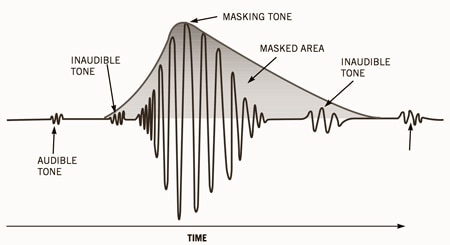
FLAC, or Free Lossless Audio Codec, is a popular format for high-quality digital audio. It uses lossless compression, which means that the audio is compressed without losing any of the original data. This is in contrast to lossy compression, which compresses the audio by removing data that is considered unnecessary. FLAC files typically have a high bit rate, often around 1000 kbps, which allows for the preservation of more audio information.
Why the High Bit Rate?
The reason why FLAC has a high bit rate is that it uses lossless compression. This means that all the audio data is preserved, and the file size is not reduced as much as it would be with lossy compression. While a lossy format like MP3 might have a bit rate of 128 kbps or even lower, FLAC can have a bit rate of up to 5000 kbps or more, depending on the audio content. This high bit rate ensures that the audio is of the highest quality possible.
The Benefits of FLAC
One of the biggest benefits of FLAC is that it offers high-quality audio without sacrificing any of the original data. This means that the audio is reproduced exactly as it was recorded, with no loss of quality. Additionally, FLAC files can be compressed to a smaller size without any loss in quality, which makes them easier to store and share.
The Drawbacks of FLAC
The main drawback of FLAC is that it has a larger file size compared to lossy formats like MP3. This can make it more difficult to store and share, especially when dealing with large collections of audio files. Additionally, not all devices and media players support FLAC playback, which can limit its usefulness in certain situations.
Final Words
In conclusion, the high bit rate of FLAC is a result of its lossless compression, which preserves all the original audio data. While this makes FLAC files larger in size, it also ensures that the audio is of the highest quality possible. Despite its drawbacks, FLAC remains a popular format among audiophiles and music enthusiasts who demand the best possible audio experience.
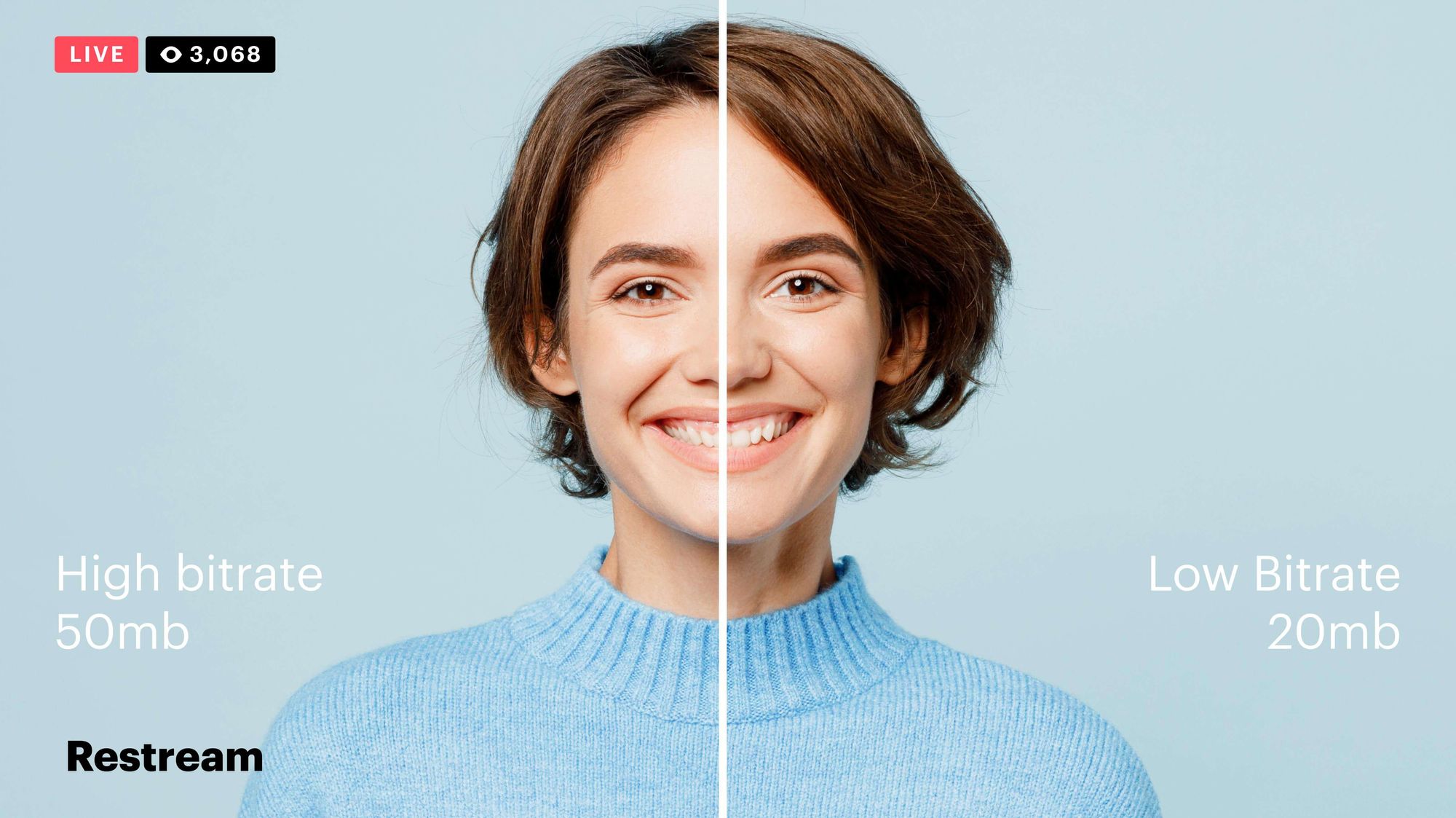
MP4 is a popular video format that is widely used in digital media. It uses a specific compression algorithm to compress video files to make them smaller and easier to share. The bitrate of an MP4 video refers to the amount of data that is used to represent each second of the video. It is typically measured in kilobits per second (kbps) or megabits per second (Mbps). A higher bitrate means that the video will have more data and will be of higher quality, but the file size will also be larger.
Why is MP4 Bitrate Important?
The bitrate of an MP4 video is important because it affects the quality and size of the video file. If the bitrate is too low, the video may appear pixelated or blurry. On the other hand, if the bitrate is too high, the file size will be larger, and it may take longer to upload or download the video. In addition, a higher bitrate requires more bandwidth to stream the video, which may be an issue for viewers with slower internet connections.
How to Choose the Right MP4 Bitrate
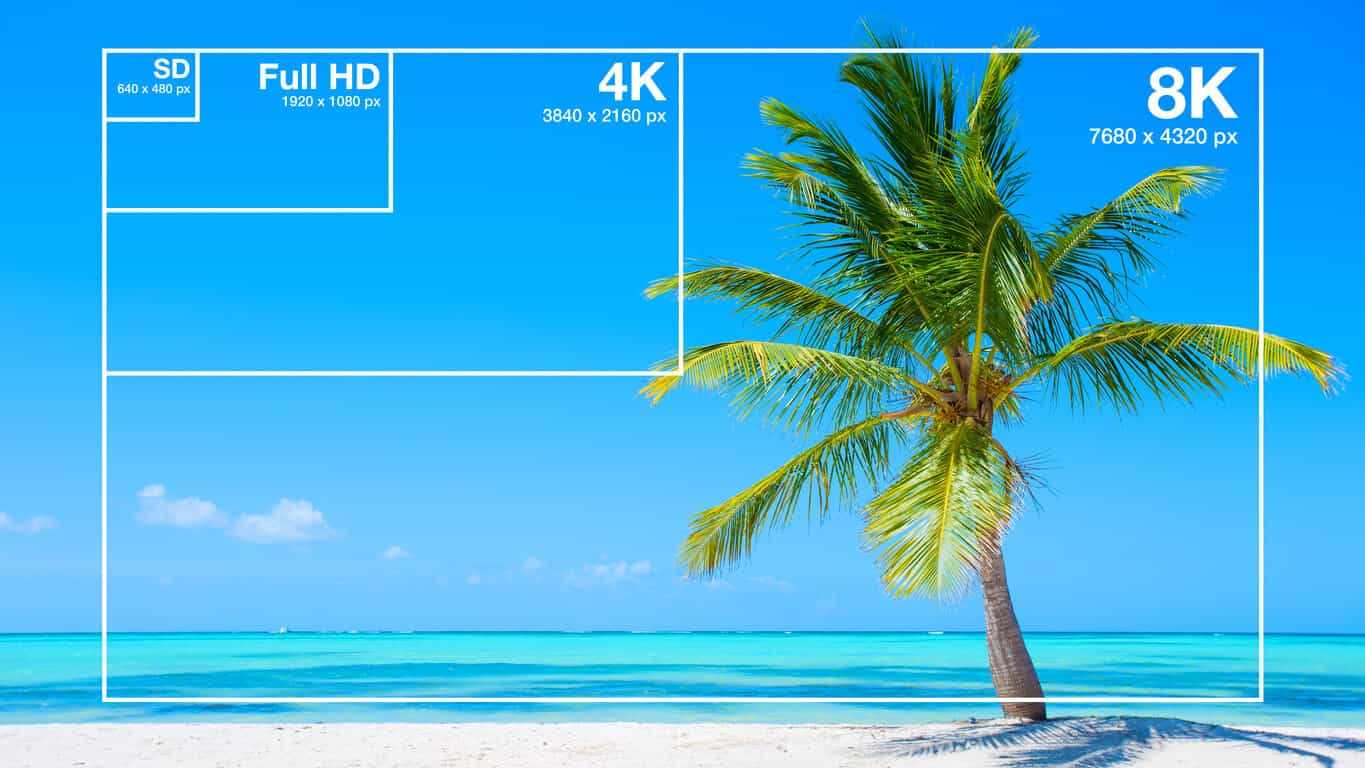
When choosing the bitrate for your MP4 video, you should consider the intended use of the video, the resolution of the video, and the file size. For example, a video that is intended to be viewed on a large screen should have a higher bitrate than a video that will be viewed on a smaller screen. Similarly, a video that has a higher resolution will require a higher bitrate to maintain the same quality as a lower resolution video.
As a general rule of thumb, a bitrate of 5-10 Mbps is suitable for 1080p HD video, while a bitrate of 2-5 Mbps is suitable for 720p HD video. For lower resolution videos, such as 480p or 360p, a bitrate of 1-2 Mbps may be sufficient. It’s also important to consider the file size of the video, as larger files will take longer to upload or download and may be more difficult to share.
How to Change MP4 Bitrate
To change the bitrate of an MP4 video, you will need to use video editing software that allows you to adjust the bitrate settings. There are many different video editing software options available, including Adobe Premiere Pro, Final Cut Pro, and Handbrake. These programs allow you to adjust the bitrate settings and other video parameters to optimize the video for your specific needs.
MP4 Bitrate FAQ
What is the maximum bitrate for MP4 videos?
The maximum bitrate for MP4 videos is 10 Mbps. However, this may vary depending on the specific device or platform where the video will be played.
What is the minimum bitrate for MP4 videos?
The minimum bitrate for MP4 videos will depend on the intended use of the video and the resolution of the video. In general, a bitrate of at least 1 Mbps is recommended for standard definition video, while a bitrate of at least 2 Mbps is recommended for high definition video.
What is the recommended bitrate for streaming MP4 videos?
The recommended bitrate for streaming MP4 videos will depend on the resolution of the video and the available bandwidth. As a general rule of thumb, a bitrate of 5-10 Mbps is suitable for 1080p HD video, while a bitrate of 2-5 Mbps is suitable for 720p HD video. For lower resolution videos, such as 480p or 360p, a bitrate of 1-2 Mbps may be sufficient.
However, it’s important to note that these are just general guidelines, and the optimal bitrate will also depend on factors such as the complexity of the video content, the encoding settings used, and the target audience’s viewing preferences.
For example, videos with fast-moving scenes or complex visual effects may require a higher bitrate to maintain a high level of image quality and avoid compression artifacts, while simpler videos with less motion may be able to use a lower bitrate without sacrificing quality.
Additionally, the target audience’s internet connection speed will also affect the recommended bitrate. For viewers with slower internet connections, a lower bitrate may be necessary to ensure that the video plays smoothly without buffering or interruptions.
What are the advantages of using a higher bitrate?
Using a higher bitrate can result in higher quality video with more detail and fewer compression artifacts. This is because a higher bitrate allows for more data to be transmitted and encoded per second, resulting in a more faithful representation of the original video source.
A higher bitrate can also be beneficial for videos with a lot of movement or detail, as it allows the encoding algorithm to capture more information and produce a more detailed image.
However, it’s important to note that using a higher bitrate will also result in larger file sizes and require more bandwidth to stream or download. This can be a disadvantage for viewers with slower internet connections or limited data plans.
What are the disadvantages of using a lower bitrate?
Using a lower bitrate can result in lower quality video with more compression artifacts, such as blurring or pixelation. This is because a lower bitrate means that less data is being transmitted and encoded per second, resulting in a loss of detail and fidelity.
Lower bitrates may also result in a lower overall resolution or frame rate, which can further degrade the quality of the video.
However, using a lower bitrate can also have benefits, such as smaller file sizes and reduced bandwidth requirements. This can be advantageous for viewers with slower internet connections or limited data plans.
Can the bitrate of an MP4 video be adjusted after it’s been encoded?
Yes, it is possible to adjust the bitrate of an MP4 video after it has been encoded. This can be done using video editing software or specialized tools designed for this purpose, such as MP4Gain.
However, it’s important to note that changing the bitrate of a video after it has been encoded can result in a loss of quality or introduce additional compression artifacts. For best results, it’s recommended to encode the video at the desired bitrate from the beginning.
Conclusion
In summary, the bitrate of an MP4 video is an important factor that can affect its quality, file size, and streaming performance. The optimal bitrate will depend on factors such as the resolution of the video, the complexity of the content, and the available bandwidth.
Using a higher bitrate can result in higher quality video with more detail and fewer compression artifacts, while using a lower bitrate can result in smaller file sizes and reduced bandwidth requirements.
If you need to adjust the bitrate of an MP4 video, it is possible to do so using specialized tools such as MP4Gain. However, it’s recommended to encode the video at the desired bitrate from the beginning for best results.
Overall, understanding how bitrate affects MP4 video quality can help you create and deliver video content that meets your needs and those of your audience.
Image quality, i.e. clarity, is a combination of several factors, in addition to bit rate and resolution, including frame rate.
Video formats basic knowledge quote: We tell you about MKV, MP4, H.265, bitrate, color depth, etc. – 4K Knowledge Encyclopedia – 4K China Forum – 4K123!
This tutorial is meant to cover some basic video and audio concepts and terminology. You can answer the following frequently asked questions in more detail:
do
What is the difference between these MP4/MKV formats? Which image is better?
How is the video bitrate calculated? Why is it the same 1080p video, some big and some small?
In what format is the image information stored in the video? Is it the same red, green and blue as the monitor?
What exactly does 8bit/10bit mean? Why is it necessary to watch 10-bit video on an 8-bit monitor?
yuv420/444 What do these signs mean? Which is better?
What exactly do lines, planes, textures mean? Why does the video have high and low frequency?
The higher the bitrate, the better the video quality?
This tutorial will be described in detail in the following modules:
1. Encapsulation format (MP4/MKV…) vs media format (H.264/FLAC/AAC…)
2. Basic video parameters: resolution, frame rate and bit rate
3 Image rendering method: RGB model vs YUV model
4, color depth
5, medium chroma sampling
6, low frequency and high frequency in space: plane, texture and line
7, low frequency and high frequency over time: dynamic8
, clarity and brief description
image quality 1. Packet format (MP4/MKV…) vs. media format (H.264/FLAC/AAC…)
MP4+MKV is the most common type of video files you download. These files are actually similar to a package and their suffix is the packaging method of the package. These packages contain video (image only), audio (sound only), subtitles, etc. When the player is playing, please unpack the package first.(The professional term is called separation/division), take out the video, audio, etc., and then play it.
Since they’re just one package, that means the suffix doesn’t guarantee what’s inside or how much. Each element of the package, we call it a track, generally has the following:
Video (Video): In general, there should be, but there are exceptions, such as external audio track in mka format, in fact, there is no mkv video. Please note that when we talk about video, we do not include sound.
Audio (audio): Generally speaking, there should be, but in some cases it is muted, so there is no need to bring it.
Chapter: The segment information that came with the original Blu-ray disc. If the file is checked out, you can see the effect with the chapters in the player:
.potplayer right click screen, option-play-show marker/chapter marker in progress bar.mpc -hc
right click screen, option-setting-on Progress bar shows chapter mark subtitles
(Subtitles): Sometimes the file comes with subtitles, and the subtitles are not directly embedded in the hard subtitles of the video, so they are packed together in the packing container.
Others may have attachments etc which are not listed one by one. There is not necessarily a single track for each type, as MKVs with multiple audio tracks are often seen.
Each track has its own format. For example, it is often said that the video is H.264, the audio is AAC, these are the formats of each track.
Common video formats are H.264 (can be subdivided into 8bit/10bit), H.265 (currently also subdivided into 8bit/10bit), RealVideo (common in early rm/rmvb), VC- 1 (Microsoft-led, common in wmv). Basically H.264=AVC=AVC1, H.265=HEVC.
There are four common audio formats: FLAC/ALAC/TrueHD/DTS-HD MA, which are lossless, and AAC/MP3/AC3/DTS (Core), which are four lossy.
MKV vs MP4, the main differences are:
1. MKV supports encapsulation of FLAC as audio, while MP4 does not. But MP4 can also encapsulate lossless audio tracks (like ALAC, although it is generally believed that the efficiency of ALAC is not as good as FLAC)
2. MKV supports encapsulation of subtitles in ASS/SSA format, but MP4 does not. The subtitles produced by the general subtitle group are in ASS format, so internal subtitles are more common in the MKV format.
3. MP4 is an industry standard and its compatibility with video editing software and playback devices is generally better than MKV. That’s why vcb-s basically chooses the MP4 package for those videos that are optimized for mobile devices.
Beyond that, the two formats are largely interchangeable. For example, they all admit
The mp4 video bitrate is usually set to around 800.
The basic algorithm is: bit rate (kbps) = file size (KB) * 8 / time (seconds), for example, D5 disk, the capacity is 4.3G, which takes into account the different audio formats, it is calculated as 600M, (so the remaining capacity is 4.3*1024-600=3803.2M), so the video file should be no more than 3.7G.
And if the capacity of the video file is 3.446G and the length of the video is 100 minutes (6000 seconds), the calculation result: the bit rate is approximately equal to 4818kbps (3.446*1024*1024*8/6000= 4817,857).
Bit Efficiency:
1. The bit rate in sound refers to the amount of binary data per unit time after converting the analog sound signal into a digital sound signal, which is an indicator to indirectly measure the audio quality. The principle of bitrate in video is the same as in sound, both refer to the amount of binary data per unit of time after the analog signal is converted to a digital signal.
2. In channel coding, a source data block of symbol size K is mapped to a codeword of symbol size N through coding, and K/N becomes the code rate, where assumes that the symbol table before and after encoding does not change.
The frame rate of 29.97 is the best.
usually:
1080*720 split resolution is about 5000K;
720*576 resolution is about 3500K;
640*480 resolution is about 1500K.
Extended information:
Some code rate principles:
1. Bitrate is proportional to quality, but file size is also proportional to bitrate.
2. If the bitrate exceeds a certain value, it has little effect on the image quality.
3. DVD capacity is limited, whether it is 4.3G standard, overdubbed or D9, there are limits. The information in the computer is represented by binary 0 and 1, and each 0 or 1 is called a bit, which is represented by a lowercase b, that is, bit (bit); uppercase B is byte, ie byte, one byte = Eight bits, ie 1B=8b; the capital K in front means 1024, that is, 1024 bits (Kb) or 1024 bytes (KB). Indicates the size of the file, usually using bytes (KB) to indicate the size of the file.
The higher the recording bitrate the better, and the higher the audio bitrate the better? Part 2
Re-do supplements and corrections:
to
Correction: Frame count is just the number of frames in the image, and frame rate is what they call it. How much
the higher the frame rate, the smoother it will be, but after a certain number, the human eye can’t see it –
-.
It’s harder to see the difference above 150fps.
Generally the video frame rate should be less than 50, maybe 36, 24 or other bit rates
b
. Some people say that it is the number of bits transmitted per second. Let’s add that the bit rate does not determine the quality of the image. The video bitrate is the resolution of the image, the number of frames, the video’s sound bitrate, its sound bits, and the sampling rate. These elements together determine the total bitrate of the video. The relationship between bitrate and video quality is that bitrate reflects video quality, rather than the general thought that bitrate determines or affects video quality. The concept of
c resolution.
However, it can also reflect the size of the screen, as long as the number of pixels displayed on the video screen is equal to the original effective pixel value, that is, when displayed at 100% scale, it can be considered as the resolution that determines the size of the screen. And the premise of high-resolution pixels is also the same, and it must be played at 100% scale. For example, after the image size of 800 x 600 is reduced to 640 x 480, it may not look any clearer than the image quality that is born with 640 x 480. Due to the compressed pixels, the first will be less than the last.
Therefore, the important premise of these resolutions is to show the original scale
.
The above are only personal opinions and may be arbitrarily criticized or referenced.
What is the bitrate? The bigger the better?
What is the bitrate? The bigger the better?
It’s just a unit, the bigger the film that
you see online
, the film effect is better, but it is easily affected by network speed and easy to get stuck.
Internet speed is calculated in bits, 1M ADSL is actually 1Mb/s
1 megabit
per second
The actual download limit is 1024/8 = 128 KB/s (1 byte = 8 bits
The computer calculates in bytes
and the bandwidth of
network
is marked in bits)
Articles, images, audio, video, and other items on the “Bidding.com” news page are all published or reprinted by proprietary media persons and third party organizations. If the manuscript involves copyright and other issues, please contact us to remove or deal with it, customer service email [email protected], the content of the manuscript is only to convey more information, does not represent the views of this website, nor means that this website agrees with your views or confirms the authenticity of its content.
The higher the recording bitrate the better, and the higher the audio bitrate the better?
Are higher audio bitrates better?
It is logical that yes, the premise is the lossy format. The higher the bitrate, the better the sound quality. Common lossy formats like mp3
aac (m4a)
ogg
wma etc, the most common are the first two, and the one above is wrong, aac is a lossy encoding, audio with aac as an extension is not common now, most of them are m4a
lossless without looking at the bitrate, because the displayed bitrate is also multiplied by a compression ratio, the bitrate of the wav captured on CD is 1411.2 kbps. Since wav is not compressed, it will compress the
general flac of the monkey, there is no point in seeing the rate
bits Show bit rate (kbps)
=
bit rate (bit)
*
sample rate (khz)
*
number of channels
*
compression rate (%)
Also, set the value low. It is possible to convert audio quality files at high bit rate or even lossless, so it is more reliable to look at the spectrum.
Is a higher bitrate better?
Is a higher bitrate better?
The higher the bitrate, the better the sound quality. The highest bit rate is 320 Kb, the middle is 192 Kb, and the second is 128 Kb. If you want to guarantee sound quality, 128 Kb is the most important.
The higher the music bitrate, the better?
The higher the music bitrate, the better?
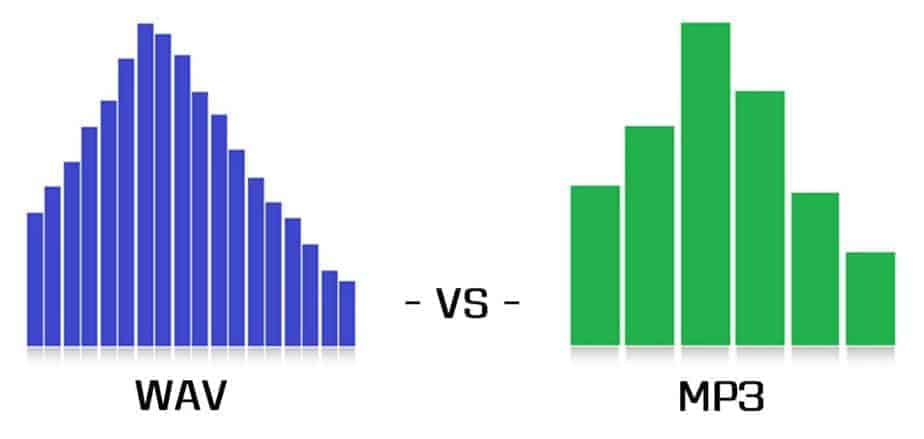
In terms of theory, of course, the higher the bitrate, the better. Relatively more complete data and more details, MP3 encoding audio bitrate can only reach up to 320KBPS, which belongs to the category of lossy audio. MP3 audio above 192 KBPS is really very good. WAV is lossless The size of audio and audio files are bitrate dependent, so high bitrate WAV files are understood to be much larger than MP3. It can convert MP3 to WAV except volume. When a bucket is full of water, it is WAV. You cut half the bucket and the rest is MP3. Of course, the water in it is also less than half. Here, you pour the water into a new bucket, even though it’s a full bucket (WAV). ) But the inner content is different. The sound quality of converted MP3 WAV may not improve due to loss in the conversion process. The same is true for video transcoding, so when transcoding video, low bitrate is forced to high bitrate.
In the case of the same resolution, is the video bitrate higher?
What is the music bitrate for better sound quality? Audio bit rate
How should the bitrate be interpreted in an audio file?
That is, the higher the bitrate, the better the audio and video quality, but the larger the encoded file, the lower the bitrate, the situation is reversed. For example: encode audio and video at 500 Kbps. Where bps is bit 1K=1010=1024 b is bit (bit) s is second (second) p is per (per) So encoding with 500 kbps means that the encoded audio and video data need to use 500K bits per second to Indicates that the bit rate is used to represent the code rate of information transmitted in the baseband transmission system. The bit rate Rb refers to the number of binary bits transmitted per unit of time, and the unit is b/s. For example, the transmission code rate of a computer serial port is up to 115200b/s. The symbol rate or baud rate Rs refers to the number of modulation symbols transmitted per unit of time, that is, the information transmission rate of ternary and more than ternary digital code streams, and the unit is baud/s In M-ary modulation, bit The relationship between the rate Rb and the baud rate Rs is: Rb=Rslog2M In a word, the bit rate indicates the amount of data transmitted per second.
What is the proper bit rate for mp3 music files?
Bitrate is simply the number of bits per second transmitted by the media file and the unit is Kbp/s. The default bit rate of compressed MP3 files is 128 Kbp/s and the sound quality is similar to that of a CD. However, the bit rate of MP3 downloaded from the Internet is usually 192 Kbp/s, the sound quality of 192 Kbp/s is better than 128 Kbp/s, and the space occupied by the file is not too large, so which is widely used. . However, if you want to get better sound quality, the bit rate should be higher than 320Kbp/s, and the sound quality can be really comparable to CD quality. However, the price you pay for doing this is that one song will take up about 10M of hard drive space. Generally speaking, the higher the bitrate, the better the sound quality, but it will take up more disk space.
What does “bitrate” mean in audio?
For example, 128kbps MP3 means that the amount of information per second is 128kb converted into bytes is 16KB 320kbps MP3, so the quality does not improve, on the contrary, it may decrease. There are also lossy compression formats such as MP3, wma, ogg .. These are lossy compression formats, which means that there will be loss in the compression process, but each compression algorithm is different, and the quality of the compressed sound is different. For example, when comparing the same bit rate, the sound quality of different formats is different. Hope it can help you.
Audio Bitrate: What is the music bitrate for best sound quality?
Bit rate refers to the amount of binary data per unit of time after converting an analog sound signal to a digital sound signal.
The higher the bitrate, the better the sound quality (under the same encoding format, different formats cannot be compared). audio bitrate. Bit rate is a benchmark of digital music compression efficiency. Bit rate indicates the rate of the number of bits bps (bit per second, bits per second) transmitted in a unit of time (1 second).
Kbps (in layman’s terms is 1000 bits per second) is usually used as the unit. The bit rate of digital music on CD is 1411.2 kbps (i.e. to burn 1 second of CD music, 1411.2 × 1000 data bits are required), the high bit rate of the music file means that the data must be processed in a unit of time (1 second) The amount (BIT) is large, that is, the sound quality of the music file is good.
However, when the BITRATE is high, the file size increases, which will occupy a large amount of memory capacity. ranges in this sense, most of them are 32-256 Kbps. Of course, the wider the index, the better, but 320 Kbps is the highest level for the moment.
What do sample rate and bit rate mean in a song?
Bit rate Bit rate refers to the sampling rate at which digital sound is converted from analog to digital format. The higher the sampling rate, the better the quality of the restored sound.
The bit rate value is compared with the actual audio: 16 KBPS = phone sound quality 24 KBPS = increase phone sound quality, shortwave transmission, longwave transmission, European standard medium wave transmission 40 KBPS = American Standard Medium Wave Broadcast 56 KBPS = Voice 64 KBPS = Voice Boost (best bitrate for mobile phone ringtones)
setting value, the best setting value of mobile phone mono MP3 player) 112 KBPS = FM radio stereo FM 128 KBPS = tape (best setting value of mobile phone stereo MP3 player, best setting value of low-end MP3 player) 160KBPS=HIFI HIFI (best setting for mid to high end MP3 players) 192KBPS=CD (best setting for high end MP3 players) 256KBPS=Studio Music Studio (for music enthusiasts )
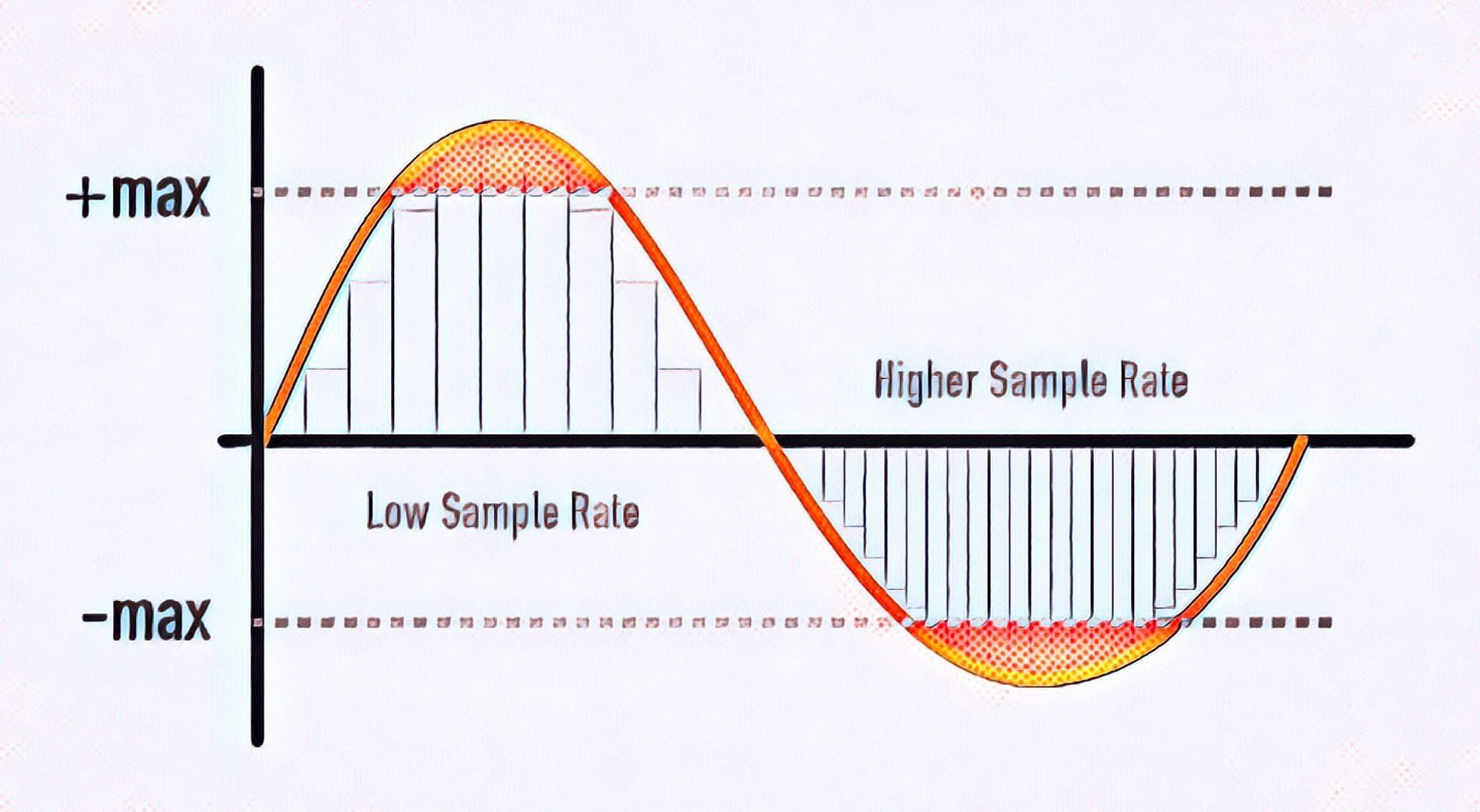
Sampling rate is when the analog signal is converted to a digital signal Sampling rate is related to sound quality. The higher the sample rate, the better the high-frequency restoration of the sound file. The following is the different quality corresponding to different sampling rates 1.11,025Hz
The sound of this sample rate is similar to the sound quality of AM radio 2.22,050Hz The sound of this sample rate is similar to the sound quality of FM radio, but lower than 3.32,000Hz This sample The sound of this frequency is superior to the sound quality of FM 4.44 100 Hz broadcast
The sound of this sampling rate reaches the sound quality of CD audio 5.48,000Hz The sound of this sampling rate reaches the sound quality of DAT audio 6.96,000Hz
Sound of this sample rate reaches DAT audio sound quality The higher the DVD audio sound quality sample rate, the larger the disk space occupied by the final sound file. Usually we can choose 44.1KHZ sampling rate.
Is there a relationship between the frequency, bit rate and sound quality of an MP3? Part 7
Fifth, the compression method, there are vbr-old, vbr-new and two others in the software, but only the first two are easy to use.
Comparing old and new vbr encoding methods, I found that the assumption is that in terms of sound quality, it’s still the old one. Delicate, but the compression speed of the old encoding is very slow, almost equal to 5 or 6 times that of the new encoding method. The production of a song is almost the same. in 3-4 minutes, which is very difficult to use, and the file size is also 10% larger, so it is recommended to use vbr-new for everyone, which is more convenient and easy to use.
In short, we can say that there is an intimate relationship between the sampling rate and the bit rate to directly impact the quality of the audio, especially in formats such as mp3.
We have already said, in other articles, that an mp3 -which is a compression method that discards information- at high sampling rates (48 thousand 0 44100 samples) and a bitrate of 256, is almost impossible to distinguish, for most of them. people, from the original audio without any compression.
The relationship between frequency, bit rate and sound quality of MP3 Part 5
The above is the fixed code rate compression ratio. In lame, this is called CBR (ie non-variable code rate). In fact, the most important feature of lame is that it provides users with a VBR variable code rate compression method.
This method is a very good encoding method in some pauses, and the simple signal will automatically reduce the bitrate and reduce the file size. However, how to choose the lowest and highest VBR bitrate range to get the most appropriate file and sound quality? This is another problem that needs to be solved through experimentation. Considering 128kbps as the base value, we choose 96kbps to 160kbps as the compression range. The compressed file size is 3801kb which is just over 128kbps CBR. 387 kb, but the sound is definitely improved by a great deal. First, the high-frequency distortion is at least half as small. Although there is still a lot of noise in the details, the first listening sensation is much stronger than 128 kbps. The average code after compression speed is 147 kbps, which is also very space efficient. Then experiment with 96kbps to 192kbps, 96kbps to 224kbps, 96kbps to 256kbps, 96kbps to 320kbps, and found that they are very similar to the maximum CBR compression sound quality, i.e. 96kbps to 192kbps vbr sound is similar to 192kbps of cbr, but the former is 192kbps, 4481kb in size and the latter is 5123kb, so as a compromise method looking for higher quality sound and saving space, vbr is really useful. Of course, on the other hand, because the code rate changes, the stability is naturally slightly worse than cbr.
Fourth, in terms of mode parameters, there are stereo, J stereo, forced stereo, and mono. The comparison test shows that standard stereo has the best effect. Although the compressed file size is the largest, the file size difference is smaller, and the difference in sound quality and sense of hearing, I still think stereo is ideal.