How Does the AVI Format Handle Multiple Audio Streams?


Free Download Mp4Gain
picture

How Does the AVI Format Handle Multiple Audio Streams?


AVI Format
AVI Format
AVI
AVI

Understanding the AVI Format

The AVI format is a popular file format used for storing digital video and audio data. It was developed by Microsoft in 1992 and has since become a widely used format for video playback and editing. One of the key features of the AVI format is its ability to handle multiple audio streams, which allows for the inclusion of multiple audio tracks in a single video file.
As a video editor, I have found that understanding the AVI format is crucial in ensuring that the final video output is of high quality and compatible with various playback devices. It is important to consider factors such as audio stream management, synchronization, and selection when working with AVI files.

Handling Multiple Audio Streams in AVI Files

The AVI format allows for the inclusion of multiple audio streams in a single video file. This feature is particularly useful for videos that have multiple audio tracks, such as movies with different language tracks or videos with separate commentary tracks.
As a video editor, I have found that handling multiple audio streams in AVI files can be challenging, particularly when it comes to audio stream synchronization and selection. It is important to ensure that all audio streams are synchronized with the video and that the correct audio stream is selected for playback.
According to the book “Digital Video and Audio Broadcasting Technology” by Walter Fischer, “The synchronization of audio and video is a critical issue in digital video broadcasting.” As a video editor, I always strive to ensure that audio streams are properly synchronized with the video to avoid any issues with playback.

Managing Audio Streams in AVI Files

Managing audio streams in AVI files involves selecting the appropriate audio stream for playback and ensuring that all audio streams are properly synchronized with the video. This can be particularly challenging when working with videos that have multiple audio tracks.
As a video editor, I have found that using video editing software such as Adobe Premiere Pro or Final Cut Pro can greatly simplify the process of managing audio streams in AVI files. These software programs allow for easy selection and synchronization of audio streams, making it easier to create high-quality video output.
According to the book “The Art of Digital Video” by John Watkinson, “The choice of audio codec is critical to the quality of the audio.” As a video editor, I always consider the choice of audio codec when managing audio streams in AVI files to ensure that the final video output is of high quality and compatible with various playback devices.

AVI Audio Channels

Understanding AVI Audio Channels

AVI audio channels refer to the number of audio channels that are included in an AVI file. The most common audio channels are stereo and mono, with stereo being the most widely used.
As a video editor, I have found that understanding AVI audio channels is crucial in ensuring that the final video output is of high quality and compatible with various playback devices. It is important to consider factors such as the intended use of the video and the target audience when choosing the appropriate audio channels for an AVI file.

Impact of AVI Audio Channels on File Size

One important aspect to consider when choosing AVI audio channels is their impact on file size. Higher audio channel counts require more storage space, which can result in larger file sizes. For instance, a stereo audio track will be larger in size than a mono audio track, even if both tracks have the same duration and bitrate.
As a video editor, I always consider the impact of AVI audio channels on file size when choosing the appropriate audio channels for an AVI file. It is important to strike a balance between audio quality and file size, as excessively large video files can be difficult to store and transmit.

Choosing the Right AVI Audio Channels

Choosing the right AVI audio channels depends on various factors such as the intended use of the video, the target audience, and the available playback devices. For instance, if the video is intended for online streaming, it is important to choose audio channels that are compatible with various internet speeds and playback devices.
As a video editor, I always consider the intended use of the video when choosing the appropriate AVI audio channels. It is also important to test the video on various playback devices to ensure that it is compatible and of high quality.
Final Words:
In conclusion, understanding how the AVI format handles multiple audio streams is crucial in ensuring that the final video output is of high quality and compatible with various playback devices. Audio stream management, synchronization, and selection are all important factors to consider when working with AVI files. AVI audio channels are also an important consideration, as they can impact file size and audio quality. As a video editor, I always strive to strike a balance between these factors to ensure that the final video output is of high quality and engaging to the viewer.



Free Download Mp4Gain
picture


Mp4Gain Main Window
picture


Mp4Gain Features
picture


Free Download Mp4Gain
picture

What is the Best Video Format for High Quality?

What is the Best Video Format for High Quality?

Best Video Format
Best Video Format
Best Video Format
Best Video Format


If you’re looking for the best video format for high quality, it’s important to understand the different formats available and their strengths and weaknesses. The best video format will depend on your intended use, whether it’s for streaming, editing, or playback on a specific device.

Best Video Formats for Streaming

Streaming video has become increasingly popular in recent years, with platforms like Netflix and YouTube dominating the market. To ensure the best quality streaming experience, the best video format is one that is optimized for streaming.

The most popular streaming video format is H.264, which is widely supported by most devices and platforms. It offers high-quality video compression with a relatively small file size, making it ideal for streaming. Another popular streaming format is VP9, which is used by YouTube and offers higher quality video at lower bitrates.

Best Video Formats for Editing

If you’re planning to edit your videos, it’s important to choose a format that will retain the highest quality of your footage. The best video formats for editing are those that support high bitrates and high color depths.

One of the most popular formats for editing is ProRes, which is a proprietary format developed by Apple. It offers high-quality compression and is widely supported by most editing software. Another popular format is DNxHD, which is supported by Avid editing software and offers high-quality compression for editing.

Best Video Formats for Playback on Specific Devices

If you’re planning to playback your videos on a specific device, it’s important to choose a format that is compatible with that device. Different devices support different video formats, so it’s important to do your research to ensure compatibility.

For example, if you’re planning to playback your videos on an iPhone or iPad, the best format is H.264, which is supported by Apple devices. If you’re planning to playback your videos on a Samsung device, the best format is MP4, which is widely supported by Android devices.

What about 4K and HDR?

If you’re looking to create or playback 4K or HDR videos, it’s important to choose a format that supports these features. The most popular format for 4K video is HEVC/H.265, which offers high-quality compression with a smaller file size compared to other formats.

For HDR video, the most popular formats are HDR10 and Dolby Vision, which offer improved color depth and contrast compared to standard video formats.

What is the Future of Video Formats?

As technology continues to advance, video formats are also evolving. One of the newest formats is AV1, which is developed by the Alliance for Open Media and offers high-quality compression with a smaller file size compared to other formats.

Another format on the horizon is MPEG-5 Part 1 (EVC), which offers improved compression for HDR video and is expected to become the standard for video compression in the future.

People Also Ask

What is the difference between a container and a codec?

A container is a file format that holds audio, video, and other data together in a single file. A codec is a software that compresses or decompresses audio or video data. The container format and the codec used can affect the quality and compatibility of your videos.

What is the difference between lossy and lossless compression?

Lossy compression is a method of compressing video or audio data by removing some of the data to reduce file size. Lossless compression, on the other hand, compresses the data without losing any information. Lossless compression is preferred for editing

Choosing the Best Video Format for Your Needs

Choosing the Best Video Format for Your Needs

Best Video Format
Best Video Format

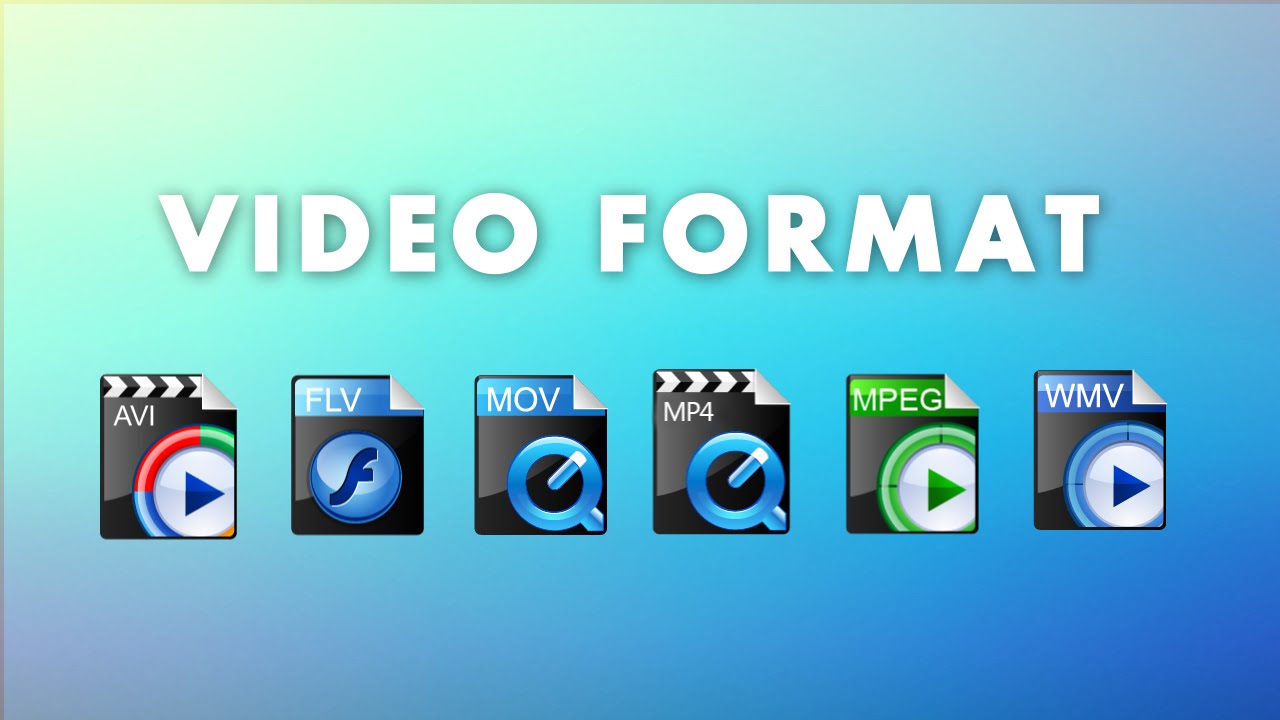
When it comes to video content, choosing the right format is crucial to ensure that your viewers enjoy the best possible experience. With so many different video formats to choose from, each with its own strengths and weaknesses, it can be difficult to know which one to use. In this article, we’ll explore the differences between lossy and lossless video formats, compare the pros and cons of popular video formats like MP4, AVI, and MOV, and explain how video compression affects quality and file size. Finally, we’ll provide some tips on how to choose the right video format for your specific needs.

Best Video Format
Best Video Format

Understanding the Differences Between Lossy and Lossless Video Formats

Before we dive into the specifics of different video formats, it’s important to understand the basics of video compression. Video compression is the process of reducing the size of a video file without sacrificing too much quality. There are two types of video compression: lossy and lossless.

With lossy compression, data is removed from the video file in order to decrease its size. This results in a smaller file size, but the quality of the video is often compromised. Lossy compression is often used when a smaller file size is a priority, such as when uploading videos to the internet or sending them via email.

Lossless compression, on the other hand, maintains the quality of the video while reducing its size by removing any redundant data. However, this often results in a larger file size. Lossless compression is often used when high-quality video is essential, such as when creating a master copy for archiving or when working on a video project that requires the highest possible quality.

Comparing the Pros and Cons of Popular Video Formats

Now that we’ve covered the basics of video compression, let’s take a look at some of the most popular video formats and their pros and cons.

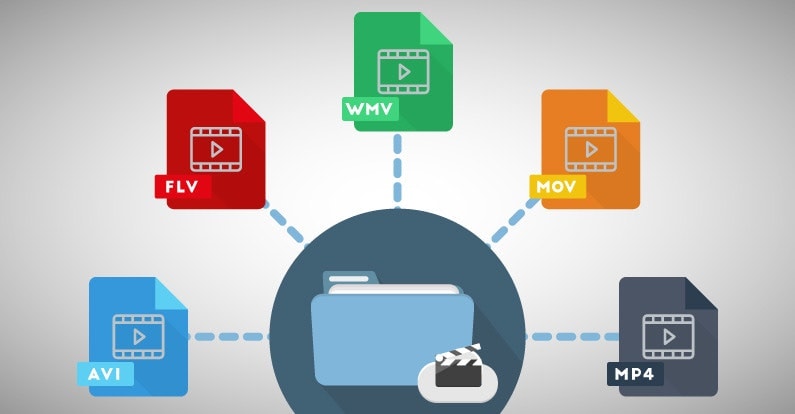
MP4

MP4 is a popular video format that uses lossy compression to strike a good balance between quality and file size. MP4 files can be played on a variety of devices and are widely supported across different platforms. They’re also ideal for uploading to the internet or sending via email due to their smaller file size. However, the quality of the video may suffer if the compression is set too high.

AVI

AVI is an older video format that uses lossless compression to ensure the highest possible quality. This format is often used when the quality of the video is of utmost importance, such as when creating a master copy for archiving. However, the trade-off is a larger file size, which can make AVI files difficult to work with or share.

MOV

MOV is a video format created by Apple that uses lossy compression to achieve a good balance between quality and file size. MOV files are often used in the film and television industry due to their high quality, but they can be difficult to work with on non-Apple devices. They’re also less widely supported on the web than other formats, such as MP4.

FLV

FLV is a video format that was popularized by Adobe Flash Player. FLV files are often used for streaming video on the web due to their small file size and ability to be played back in a web browser. However, the quality of the video may be lower than other formats, and the format itself is becoming less popular as Adobe discontinues support for Flash Player.

WMV

WMV is a video format created by Microsoft that uses lossy compression. It’s often used for streaming video online, as it provides a good balance of quality and file size. However, like MOV, WMV files can be difficult to work with on non-Microsoft devices.

How Does Video Compression Impact Quality and File Size?

As we’ve seen, video compression is essential for reducing file size and ensuring that videos can be easily shared or uploaded to the internet. However, the amount of compression used can have a significant impact on the quality of the video.

When a video is compressed, some of the data is removed in order to reduce the file size. The more data that is removed, the smaller the file size will be, but the quality of the video will suffer. If too much data is removed, the video may become pixelated or blurry, with visible artifacts or distortion.

The amount of compression used can also impact the “burstiness” or variety of the video file. A highly compressed video may have less variation in its color and contrast, which can make it appear less dynamic and engaging to viewers. On the other hand, a less compressed video may have more variation in its color and contrast, which can make it appear more vibrant and visually interesting.

What Video Format is Best for Streaming, Editing, and Archiving?

Now that we’ve covered the basics of video compression and explored some of the most popular video formats, let’s take a closer look at which format is best for specific use cases.

Streaming

For streaming video on the web, MP4 is often the best choice due to its small file size and wide compatibility with different devices and platforms. However, if high-quality video is essential, MOV may be a better choice, despite its limited support outside of Apple devices.

Editing

When it comes to editing video, lossless formats like AVI or MOV are often the best choice. These formats maintain the highest possible quality, which is important when making edits to the video. Once the editing is complete, the video can be exported to a more compressed format like MP4 for sharing or uploading to the internet.

Archiving

If you’re creating a master copy of a video for archiving purposes, a lossless format like AVI is often the best choice. This ensures that the highest possible quality is maintained, which is essential for long-term preservation. However, keep in mind that lossless formats often result in larger file sizes, which may be difficult to store or share.

Using Mp4Gain to Normalize Video Formats

No matter which video format you choose, it’s important to ensure that the audio is normalized to a consistent level. This is where Mp4Gain comes in. Mp4Gain is a tool that allows you to convert between the major video formats and normalize the audio to a consistent level.

By using Mp4Gain, you can ensure that your videos have a consistent level of audio, regardless of the format they were originally recorded in. This can be particularly helpful if you’re working with videos from different sources or if you’ve edited together multiple videos into one project.

Additionally, Mp4Gain can also be used to normalize the audio of music files, which can be especially helpful if you’re creating a playlist or if you’re a DJ who needs to ensure that all the tracks have a consistent volume.

Using Mp4Gain is easy. Simply download the software and choose the video or audio file that you want to normalize. Mp4Gain will automatically analyze the file and adjust the volume to a consistent level. You can then save the file in the format of your choice, with the normalized audio included.

Conclusion

When it comes to video formats, there’s no one-size-fits-all solution. The best format for your needs will depend on a variety of factors, including the intended use of the video, the devices and platforms it will be viewed on, and the desired balance of quality and file size.

However, by understanding the differences between lossy and lossless formats, comparing the pros and cons of popular video formats, and considering the impact of video compression on quality and file size, you can make an informed decision about which format to choose.

Regardless of the format you choose, it’s important to ensure that the audio is normalized to a consistent level. Mp4Gain is a powerful tool that can help you achieve this, while also allowing you to convert between the major video formats. By using Mp4Gain, you can ensure that your videos and audio files have a consistent level of audio, making them more enjoyable and professional.

So whether you’re a videographer, editor, or simply a video enthusiast, consider using Mp4Gain to take your videos to the next level.

Video / Audio Standards -Codec / Container Part 3

Video / Audio Standards -Codec / Container Part 3

AVI

Container type / characteristics

avi

avi Audio and video interleaving. An old container that is a Windows standard. Although it is widely used, it is rarely used on video sharing sites because it is incompatible with browsers. Most of the editing programs support this AVI format, making it very easy to edit. It’s a good idea to use this as a reference when editing. In addition, there is a large amount of data that can be stored. Video part: “MPEG-1 / -2” “H.263” “H.264” etc.
Audio part: “Linear PCM” “MP3” “AAC” etc.
mov This is a Macintosh standard. It can be played with QuickTime, etc. It works well with browsers and can store a wider range of data than AVI. If you’re on a Mac, it’s the basic container for editing and playback. Video part: “H.263” “H.264” “Pixlet”, etc.
Audio part: “MP3” “AAC” “Apple Lossless”, etc.
wmv Official name “Windows Media Video”. It is a Windows standard. It goes well with web pages. However, since the data format that can be stored is smaller than that of avi, there are few users. Not suitable for editing. Since it supports Digital Rights Management (DRM), it is mainly used for general business and organization video distribution. Video part: “H.264”, etc.
Audio part: “WMA”, etc.
mpg Synonym for mpeg. Compared with avi, etc., the video data that can be stored is very small, only “MPEG2” and “MPEG1”. This format is often distributed as video content on the Internet. Video part: “MPEG-1 / -2” only
Audio part: “MPEG2” “AC3” “LPCM” “DTS” etc.
wav A container format for speech data developed by Microsoft and IBM. It is also described as “WAVE”. Reading is “wave” and “web”. It is commonly referred to as a “wave” to avoid confusion with the Web. Typically often used for uncompressed and linear PCM sampling, it can also contain compressed audio data such as “MP3” and “WMA”. Video part: None
Audio part: “MP3” “WMA” “LPCM” etc.
mp4 There is a codec with a similar name, but this is a container. It is often used for video sharing sites, such as YouTube, that claim to have “high image quality.” In many cases, the voice is distributed as a single unit and in this case it is used for the ringtones of mobile phones. Video part: “H.263” “H.264” etc.
Audio part: “MP3” “AC3” “AAC” etc.
flv It is a video container in flash format that is often used on YouTube. The main content is “H.263 / H.264”. It is widely used in video sharing sites because it is very compatible with web pages. The official name is “Flash Video” Video part: “H.263” “H.264” etc.
Audio part: “MP3” “PCM” “ADPCM” “AAC” etc.
3gp This is a video file recorded by 3GPP. It is used in the “i-motion” function of the “FOMA” mobile phone service provided by NTT DoCoMo. If you want to play the video on a doCoMo mobile phone, save it in this format. (Except for smartphones) Video part: “H.263” “H.264”, etc.
Audio part: “AAC” “AMR”, etc.
3g2 This is a video file recorded by 3GPP2. It is based on MP4 format. It is used in the “EZ movie” function of KDDI’s “au” mobile phone service. If you want to play the video on your au mobile phone, please save it in this format. (Except for smartphones) Video part: “H.263” “H.264”, etc.
Audio part: “AAC” “AMR”, etc.
Term supplement
Some new terms have emerged which will be briefly explained here. I would like to write more details in another article.

fire
A still image. The video is made to appear as if it is moving by displaying a series of still images at high speed. 30 frames per second means that 30 still images are displayed per second. The unit is “fps” (the frame rate is said to be 30 fps, etc.). If this value is high, the video will move smoothly. (Frames per second)

Compression rate
It is often used as an index of how much the file size is suppressed.

Bit rate
This is an expression that represents the amount of data (number of bits) that can be sent and received per second. The unit is bits per second (bps). If this value is large, it will increase the amount of data that can be sent and received per second and improve the quality of music and videos.

Video / Audio Standards -Codec / Container Part 2

Video / Audio Standards -Codec / Container Part 2

AVI

Codec types / characteristics
film

AVI

The following codecs have little or no deterioration in image quality. When used for video editing, deterioration of image quality due to encoding is minimized. Also, the load is low both during compression and playback, and we are good at reverse playback. Instead, the amount of data tends to be large.

Motion JPEG Reads as Motion JPEG [Motion Jepeg: MJPEG]. As the name suggests, it is a JPEG compression of each frame of the video. Since JPEG compression deteriorates the image quality to some extent, since there is no compression between frames, the playback and compression load is small, and it is easy to delete frames one by one. It is often used in the recording part of digital cameras.
Lossless compression codec When compressed in this format, there is no deterioration of the video except for the color space. The famous ones are Huffyuv and Lagarith Lossless Video Codec. It is recommended to use it as an intermediate format when you do not want to deteriorate the image quality but want to reduce the capacity, or when editing a video.
The following codecs are formats intended to save and distribute edited and created videos. The data capacity is very small, but it is degraded compared to the original video. Also, because it uses a complicated compression algorithm, it is not suitable for editing work such as joining videos, cutting and inserting. Basically the playback load is high.

H.263 A video format developed for low bit rates. Often used for videophones. If you use DivX, Xivd, etc., it will be in this format. There are many users because the playback load is low compared to other codecs. However, the capacity is a bit large.
H.264 It is a very popular video format today. It is widely used in terrestrial digital broadcasting, mobile phones, next-generation DVD, etc. It is an excellent codec with a high compression rate and little deterioration in image quality. Good for playing low to medium bit rate videos. Instead, the playback load is quite high, so some machine power is required to reproduce it. Encoding a high-capacity video is likely to cause dropped frames. Sometimes called “MPEG-4”.
MPEG-1 Read as MPEG-1 [Mpegwan]. Created by an organization called Moving Picture Experts Group (MPEG). It is used for video CDs. It was a format that was thought to be able to play VHS quality video on CD, but now that VHS has become obsolete and DVDs and BDs have gone mainstream, it has to be said that there is less need to compress in this format. The playback load is low, but the capacity is high.
MPEG-2 This is the mainstream MPEG videos. Since it is good for playing at medium to high bit rates, it is used on DVDs and digital terrestrial broadcasts that require high picture quality. Since it is a lossy compression, the compression rate is high and the data capacity can be reduced. Since the data transfer rate requires 4 to 15 Mbps for both video and audio during playback, it is not suitable for low bit rate video.
Audio
PCM is an uncompressed audio codec that has been around for a long time. It is one of the methods for converting analog data into digital data, which is called pulse code modulation [PCM]. It can be played on most computers. The sound quality is very high, but the capacity is also great. Most of them are in WAV containers by themselves.
LPCM Read as linear PCM. One of the PCM methods, also uncompressed audio. Since there is no lossy compression, this is also very high quality sound. However, the capacity is also large. It is widely used in the audio part of DVD and BD, games for PlayStation 3, etc.
MP2 MPEG audio codec. The extension is “.mp2” or “.mpc”. It is often used as a set with MPEG1 and MPEG2 videos. Some DVDs are recorded in this format. The compression ratio is neither high nor low.
MP3 is an audio codec that has been exploding since 1998. You may have heard of it. The extremely high compression ratio can reduce the amount of data. Also, since compression is done using human auditory psychology, there is little deterioration in sound quality despite the high compression rate. Due to its excellent format, most devices and software support playback. By the way, the official name is “MPEG Audio Layer-3”.
AAC AAC [Advanced Audio Coding] is a standardized format that aims to achieve high sound quality.

Video / audio standards -Codec / Container

Video / audio standards -Codec / Container-

AVI

In the past, when it came to video, televisions and camcorders, and audio (music), cassette tapes and CDs didn’t require many standards.

AVI

However, now that the Internet has become mainstream, videos have also appeared that can be embedded in web pages. In addition, small portable terminals such as iPod, Walkman and PSP support music and video playback, so it is necessary to have adequate video and audio standards for each one.

As a result, there are now many video and audio standards. Since each has its own characteristics, some devices (software) can be played and some devices (software) cannot. For example, the video format that can be played on the PSP is the MP4 format, and the audio on the iPod and the Walkman is in MP3 format and WMA format.

And it can’t open files other than the supported formats.

Many people want to carry video and audio on their mobile terminals, but as mentioned above, there are various content formats, and the formats supported by the device (software) are different. It is easy for the phenomenon of “I want to play with, but I can’t, I’m in trouble” to occur.

To avoid this, please understand what file format there is in the world along with its characteristics and “convert (encode)” the file to a format that supports playback, or use software that supports playback. You will need to prepare it.

In this article, I will first focus on “containers and codecs”, which are the concepts necessary for proper playback and conversion, and “video / audio formats and characteristics”.

* Since the explanation is quite approximate, the content may be incorrect or too simple to be misleading, so if you want more information, check the specialized site.

Encode decode

Encode has the meaning of “encode”. If you handle the video and audio data as it is, it will be a large amount of data, so the computer will do a lot of calculations, encode it, and reduce the storage capacity. This work is called coding. So the word “compression” is also used.

Decode has the opposite meaning of “decoding”, “decompression” and “playback”. Encoded video and audio can be played back by decoding with a compression / decompression program called “Codec” for each encoding method.

Since playback is the main job, the words “unzip” and “unzip” that are used for archives such as zip are not used.

Container codec
Before we start talking about audio and video standards, let’s talk about “containers” and “codecs”.

Codec
Codec [Codec] refers to devices / software and algorithms that can encode (encode) and decode (decode). As I wrote earlier, it is an item related to video and audio compression / decompression.

Compression and playback methods differ by codec type, and data capacity and playback load also differ, so there are appropriate playback environments for each.

container
To be precise, it is called a “container format”.

A container is a type of file format that defines how audio and video data is stored. Simply put, it is a “box” that contains audio and video data. There are different types of containers (boxes) and the data formats that can be stored in each one are different.

If you want to store the video and audio together, you will need to store the data in this container. Since there are restrictions on the data formats (differences depending on the codec) that can be saved in the container, it is necessary to encode them carefully.

Know the “bit rate” that is important in determining the amount of video data and image quality.

Know the “bit rate” that is important in determining the amount of video data and image quality.

Video

This time, we will learn about “bit rate” which is one of the important factors in determining the image quality of video.

VIDEO

It is deeply related to this article, but you can learn more about video screen resolutions and frame rates in another article.

If you are unsure, we recommend that you read the article on screen resolutions and frame rates before reading this article.

Points to consider when deciding the frame rate (fps) of a video
The optimal resolution of the video screen is not always Full HD! Consider the screen resolution of the video.
Table of Contents
What is a bit rate?
Relationship between screen resolution, frame rate, and bit rate
Based on the above, let’s consider the relationship between resolution / frame rate, amount of data, and bit rate.
What to do to improve image quality
Consider the optimal resolution, frame rate, and bit rate for each type of content.
Points for building a video distribution service Free distribution
Production of video content that can be done in-house Learning materials are being distributed

What is a bit rate?
Bit rate is expressed in bps.
Short for bits per second, which indicates how many bits of data a video creates per second.
For example, a 1 Mbps video has 0.125 megabytes of data per second. It will be 7.5 MB in 1 minute.
As with screen resolution and frame rate, you can decide what bit rate you want.

Since 8 bits are 1 byte, it becomes “1 Mbit ÷ 8 = 0.125 Mbytes”.
Relationship between screen resolution, frame rate, and bit rate
Let’s review a bit.

The screen resolution indicates the number of pixels in the video.
The frame rate shows how many images a video is made up of per second.
Bit rate represents the amount of data per second.

Based on the above, let’s consider the relationship between resolution / frame rate, amount of data, and bit rate.
4K resolution is four times the area of ​​Full HD, so more data is required to draw.
A 60fps video has twice as many frames as 30fps, so more data is required to draw.

for instance

If you want to make a “1Mbps Full HD / 30fps” video with the same image quality in “4K / 60fps”

Resolution area 4 times x frame rate 2 times = 8 times

The amount of data required is 8 Mbps in theory.

However, as mentioned above, the bit rate can be set arbitrarily, so it can be set to “1Mbps video at 4K / 60fps”.

There is no point in converting a Full HD / 30fps video into a 4K / 60fps video.
Even if you double the number of 30 videos per frame to 60, the same image will continue for 2 frames and the number of frames will be wasted.
Similarly, when it comes to resolution, it doesn’t make sense to extend what originally only had Full HD resolution to 4K.
Therefore, it is advisable to prepare the video, which is the material for creating video content, with the highest possible resolution and frame rate. It is not in vain when converting to lower numbers.
If you’re not ready, don’t forget to set the resolution and frame rate below the footage video.
What to do to improve image quality
It turned out that the higher the resolution and the bit rate, the better the video cannot be drawn without using a large amount of data.

So to improve the image quality, should the bitrate be increased anyway?
This is not bad, but the article on screen resolutionBut the same thing that I wrote happens.
In other words, the higher the bit rate, the larger the file size.
If the file size is large, the transfer of video data to the viewer will be slow, and in the case of smartphones, the monthly data traffic will soon disappear.

With that in mind, we need to find the best bit rate.
When distributing videos on the Internet, the lower the amount of data, the better.
The correct answer is to aim for a video with a small amount of data and sufficient image quality.

Next, I prepared two videos of the same video with different bit rates. See how the image quality changes with the bit rate.

Both are Full HD, 30 FPS. Compare them in full screen.

What is the difference between avi and mp4?

What is the difference between avi and mp4?

AVI

There are various video file formats, but do you know the difference between “AVI” and “MP4” file formats?

AVI VIDEO

“AVI (extension: .avi)” is an abbreviation for “Audio Video Interleave”. It is a standard video file format for Windows developed before 1992 and can use various codecs such as Xvid, Divx, MPEG-4, and H.264. “MP4 (extension: .mp4, .mv4)” is a standard developed based on MOV and standardized in 2001, and it is a container file that stores audio and video as MPEG-4. Comparing AVI and MP4, MP4 has better image quality and smaller file size Basically, there is nowhere that AVI is superior when comparing an AVI format file with an MP4 format file. Since MP4 is a later standard, it is only natural that MP4 is technically superior.

If you have a video file in avi format, you can reduce the file size by converting it to mp4 format. It is possible to convert without deterioration, so if you are interested, please see the article linked below.

How to convert flv / avi / wmv videos to mp4! [No deterioration / easy]
There are various types of video files, such as flv, avi / wmv, etc., as well as mp4, but some programs do not support them and they may not be usable and need to be converted. This time, I will show you how to convert video formats like flv and avi / wmv to mp4.

Thumb

What is the difference between avi, mp4 and H.264?

I explained the difference between AVI and MP4 above, but I think some people may be interested in “H.264”. H.264 (MPEG-4 AVC) is one of the video compression standards and was recommended in 2003. It has more than twice the compression efficiency of MPEG-2 and was a format that was often used when uploading videos to sites. of internet videos circa 2010s.

The difference between AVI, MP4 and H.264 is that H.264 is one of the video codecs in MP4 as explained above. So it is officially one of the standards used in MP4, so keep in mind that it is completely different from AVI and it is one of the MP4 video codecs. Although it is a difference in performance, it is okay to acknowledge that AVI is the worst. The image quality of videos encoded with MP4 (H.264) is better than that of MP4, which does not specify the encoding method. H.264 is now an inferior technology to the latest video compression codecs, but many users still use it