Raising the volume of an MP4 file can be essential for various reasons, such as when you’re playing it in a noisy environment or when the original recording was too soft. The sound embedded in an MP4 file is often in digital format. This means that the audio is represented by a series of numbers, and increasing the volume involves manipulating these numbers.
However, it’s essential to be cautious. Amplifying an audio signal can introduce distortion, especially if increased beyond the file’s original capacity. To avoid damaging the audio quality, it’s always advised to raise the volume gradually and test the output.
The concept is similar to adjusting the volume on a traditional radio, where turning the dial too high can lead to a crackling sound. The difference here is that once an MP4 file’s audio is distorted, the damage is permanent unless you have a backup of the original.
Try Mp4gain to adjust the volume of most audio and video formats.
“Our lives are defined by opportunities, even the ones we miss.” – The Curious Case of Benjamin Button
What methods are there to make an MP4 sound louder?
While there are many tools and software to amplify MP4 files, understanding the underlying methods can be insightful. One popular method is waveform amplification, where the audio’s waveform is visually represented and manually adjusted. This allows for precise control over which parts of the audio get amplified.
Another method involves compressing the audio dynamic range. This doesn’t mean file compression, but rather, it involves narrowing the gap between the loudest and softest parts of the audio. By doing this, the overall volume can be increased without peaking or distorting the loudest parts.
Finally, audio normalization is a process where the loudest peak of the audio is identified, and the whole track is amplified based on that peak. This ensures the loudest parts don’t clip or distort while maximizing volume.
“The things you own end up owning you.” – Fight Club
Are there manual ways to enhance the audio of an MP4?
Yes, aside from software solutions, there are manual methods to enhance MP4 audio. One can use hardware devices, such as amplifiers, to boost the sound. While these methods are external and don’t alter the MP4 file directly, they can be effective for playback on specific devices.
Another way is to use speaker enhancements. Some speakers come with built-in settings that allow users to adjust the treble, bass, and mid-tones. Manipulating these settings can sometimes produce a louder, clearer audio output when playing the MP4 file.
Lastly, for those who are tech-savvy, it’s possible to extract the audio from the MP4, process it separately using specialized equipment, and then merge it back. This method is intricate and might require some expertise but can yield high-quality results.
“The future belongs to those who believe in the beauty of their dreams.” – Eleanor Roosevelt
Can the loudness of an MP4 file be adjusted without affecting its quality?
Yes, Mp4Gain can do the job for you.
Final words
Increasing the loudness of an MP4 file is not just about amplifying the sound. It’s about understanding the technical aspects, ensuring the audio quality remains intact, and using the right methods for the right situations. Always remember to keep backups of your original files before making any modifications, as it’s easy to introduce unintended distortions.
MP4, also known as MPEG-4 Part 14, is a digital multimedia container format most commonly used to store video and audio. However, it can also store other data such as subtitles and still images. The format streamlines the multimedia files for both streaming and storage purposes. MP4 files are marked by the .mp4 extension and are known for their ability to compress complex multimedia files without significantly degrading quality.
MP4 operates by compressing video and audio files, making them more manageable for playback on various devices. This compression is achieved through codecs, which are algorithms that encode and decode the data.
“The beauty of digital technology is that it lets you compress the impossible into the possible.” – Unknown
Why is MP4 so popular?
MP4’s popularity can be attributed to its versatility and adaptability. It’s universally accepted on most platforms and devices, which means users don’t have to worry about file compatibility. Its efficient compression capability ensures that files retain good quality even when they’re reduced in size, making it ideal for streaming and sharing online.
Another reason for its widespread acceptance is the fact that it can store multiple types of data, including video, audio, subtitles, and even interactive features. This multi-functionality makes it a go-to for various multimedia applications.
“In a world of constant change, the fundamentals are more important than ever.” – Jim Rohn
What are the benefits of using MP4?
Among the many benefits of the MP4 format, some stand out more than others. It offers high-quality video and audio playback, even when the file size is reduced, making it ideal for online streaming. The format’s adaptability means it can be used on virtually any device or platform without compatibility issues.
Moreover, the MP4 format supports advanced features like 3D graphics, menus, and user interactivity, adding more dimension to its usage. It’s also a secure format, offering DRM (Digital Rights Management) support to protect copyrights.
“The essence of strategy is choosing what not to do.” – Michael Porter
How does MP4 compare to other video formats?
When comparing MP4 to other video formats, its versatility and efficiency stand out. While formats like AVI or MOV may offer higher quality, they typically come with larger file sizes. MP4 strikes a balance between quality and size, making it ideal for various applications, from streaming to storage.
The adaptability of MP4 also means it’s less likely users will encounter compatibility issues. This ease of use and wide acceptance give it an edge over other formats in the market.
“Comparison is the death of joy.” – Mark Twain
Can MP4 files contain audio and video?
Yes, MP4 files can contain both audio and video. In fact, this dual capability is one of the reasons for its widespread use. By integrating video and audio into one file, it streamlines the playback process and ensures synchronization between the two. It also means users only need to manage a single file when sharing or transferring content.
“In unity, there is strength.” – Mattie Stepanek
How is the quality of an MP4 video?
The quality of an MP4 video is generally very good, especially considering its compact size. The format uses advanced compression algorithms which ensure that quality isn’t significantly compromised. Of course, like with any compression, there might be some loss of detail, but for most users and applications, MP4 offers a satisfactory quality-to-size ratio.
“Quality is not an act, it’s a habit.” – Aristotle
What are the drawbacks of MP4 format?
While MP4 offers numerous advantages, it’s not without its drawbacks. One potential issue is that if an MP4 file becomes corrupt, often the entire file becomes unplayable. Some other formats might still play portions of a damaged file. Additionally, while MP4 compression is efficient, it’s not always the best for professional applications where the highest quality is desired.
“Every solution breeds new problems.” – Arthur Bloch
Are there any alternatives to MP4?
Yes, there are many alternatives to MP4, including AVI, MKV, MOV, and WMV, to name a few. Each format has its strengths and is suited for particular applications or platforms. While MP4 is versatile and widely accepted, sometimes specific situations or needs might make another format more suitable.
“Variety’s the very spice of life, That gives it all its flavor.” – William Cowper
How can I ensure the best quality when converting to MP4?
When converting to MP4, it’s essential to use high-quality source files and avoid excessive compression. Using a reliable converter that allows for customization of settings can help users optimize quality and file size as per their needs.
“Do not squander time, for that’s the stuff life is made of.” – Benjamin Franklin
Why are MP4 files sometimes large?
While MP4 is known for its efficient compression, the file size can still become large, especially when dealing with lengthy videos or those with high resolution. The codecs used, bit rate, and the complexity of the content can all influence the final file size.
“Size does matter. But so does depth.” – Neil Strauss
Final Words
The MP4 format has revolutionized the way we consume multimedia content, providing a balance between quality and size. Its versatility ensures that it remains a top choice for many, from casual users to professionals. Understanding its strengths and potential limitations can help users make the most out of this influential format.
When it comes to video content, choosing the right format is crucial to ensure that your viewers enjoy the best possible experience. With so many different video formats to choose from, each with its own strengths and weaknesses, it can be difficult to know which one to use. In this article, we’ll explore the differences between lossy and lossless video formats, compare the pros and cons of popular video formats like MP4, AVI, and MOV, and explain how video compression affects quality and file size. Finally, we’ll provide some tips on how to choose the right video format for your specific needs.
Best Video Format
Understanding the Differences Between Lossy and Lossless Video Formats
Before we dive into the specifics of different video formats, it’s important to understand the basics of video compression. Video compression is the process of reducing the size of a video file without sacrificing too much quality. There are two types of video compression: lossy and lossless.
With lossy compression, data is removed from the video file in order to decrease its size. This results in a smaller file size, but the quality of the video is often compromised. Lossy compression is often used when a smaller file size is a priority, such as when uploading videos to the internet or sending them via email.
Lossless compression, on the other hand, maintains the quality of the video while reducing its size by removing any redundant data. However, this often results in a larger file size. Lossless compression is often used when high-quality video is essential, such as when creating a master copy for archiving or when working on a video project that requires the highest possible quality.
Comparing the Pros and Cons of Popular Video Formats
Now that we’ve covered the basics of video compression, let’s take a look at some of the most popular video formats and their pros and cons.
MP4
MP4 is a popular video format that uses lossy compression to strike a good balance between quality and file size. MP4 files can be played on a variety of devices and are widely supported across different platforms. They’re also ideal for uploading to the internet or sending via email due to their smaller file size. However, the quality of the video may suffer if the compression is set too high.
AVI
AVI is an older video format that uses lossless compression to ensure the highest possible quality. This format is often used when the quality of the video is of utmost importance, such as when creating a master copy for archiving. However, the trade-off is a larger file size, which can make AVI files difficult to work with or share.
MOV
MOV is a video format created by Apple that uses lossy compression to achieve a good balance between quality and file size. MOV files are often used in the film and television industry due to their high quality, but they can be difficult to work with on non-Apple devices. They’re also less widely supported on the web than other formats, such as MP4.
FLV
FLV is a video format that was popularized by Adobe Flash Player. FLV files are often used for streaming video on the web due to their small file size and ability to be played back in a web browser. However, the quality of the video may be lower than other formats, and the format itself is becoming less popular as Adobe discontinues support for Flash Player.
WMV
WMV is a video format created by Microsoft that uses lossy compression. It’s often used for streaming video online, as it provides a good balance of quality and file size. However, like MOV, WMV files can be difficult to work with on non-Microsoft devices.
How Does Video Compression Impact Quality and File Size?
As we’ve seen, video compression is essential for reducing file size and ensuring that videos can be easily shared or uploaded to the internet. However, the amount of compression used can have a significant impact on the quality of the video.
When a video is compressed, some of the data is removed in order to reduce the file size. The more data that is removed, the smaller the file size will be, but the quality of the video will suffer. If too much data is removed, the video may become pixelated or blurry, with visible artifacts or distortion.
The amount of compression used can also impact the “burstiness” or variety of the video file. A highly compressed video may have less variation in its color and contrast, which can make it appear less dynamic and engaging to viewers. On the other hand, a less compressed video may have more variation in its color and contrast, which can make it appear more vibrant and visually interesting.
What Video Format is Best for Streaming, Editing, and Archiving?
Now that we’ve covered the basics of video compression and explored some of the most popular video formats, let’s take a closer look at which format is best for specific use cases.
Streaming
For streaming video on the web, MP4 is often the best choice due to its small file size and wide compatibility with different devices and platforms. However, if high-quality video is essential, MOV may be a better choice, despite its limited support outside of Apple devices.
Editing
When it comes to editing video, lossless formats like AVI or MOV are often the best choice. These formats maintain the highest possible quality, which is important when making edits to the video. Once the editing is complete, the video can be exported to a more compressed format like MP4 for sharing or uploading to the internet.
Archiving
If you’re creating a master copy of a video for archiving purposes, a lossless format like AVI is often the best choice. This ensures that the highest possible quality is maintained, which is essential for long-term preservation. However, keep in mind that lossless formats often result in larger file sizes, which may be difficult to store or share.
Using Mp4Gain to Normalize Video Formats
No matter which video format you choose, it’s important to ensure that the audio is normalized to a consistent level. This is where Mp4Gain comes in. Mp4Gain is a tool that allows you to convert between the major video formats and normalize the audio to a consistent level.
By using Mp4Gain, you can ensure that your videos have a consistent level of audio, regardless of the format they were originally recorded in. This can be particularly helpful if you’re working with videos from different sources or if you’ve edited together multiple videos into one project.
Additionally, Mp4Gain can also be used to normalize the audio of music files, which can be especially helpful if you’re creating a playlist or if you’re a DJ who needs to ensure that all the tracks have a consistent volume.
Using Mp4Gain is easy. Simply download the software and choose the video or audio file that you want to normalize. Mp4Gain will automatically analyze the file and adjust the volume to a consistent level. You can then save the file in the format of your choice, with the normalized audio included.
Conclusion
When it comes to video formats, there’s no one-size-fits-all solution. The best format for your needs will depend on a variety of factors, including the intended use of the video, the devices and platforms it will be viewed on, and the desired balance of quality and file size.
However, by understanding the differences between lossy and lossless formats, comparing the pros and cons of popular video formats, and considering the impact of video compression on quality and file size, you can make an informed decision about which format to choose.
Regardless of the format you choose, it’s important to ensure that the audio is normalized to a consistent level. Mp4Gain is a powerful tool that can help you achieve this, while also allowing you to convert between the major video formats. By using Mp4Gain, you can ensure that your videos and audio files have a consistent level of audio, making them more enjoyable and professional.
So whether you’re a videographer, editor, or simply a video enthusiast, consider using Mp4Gain to take your videos to the next level.
First, the package format is presented. Multimedia encapsulation format (also called container format) refers to placing video data, audio data, etc. in a file according to certain rules. Common MKV, AVI and MP4 presented in this article are all package formats.
MP4 is one of the most common package formats and is widely used due to its cross-platform nature. The suffix for MP4 files is .mp4 and basically all major players and browsers support the MP4 format.
MP4 file format is mainly defined by MPEG-4 Part 12 and MPEG-4 Part 14. Among them, MPEG-4 Part 12 defines the ISO basic media file format for storing time-based media content. MPEG-4 Part 14 actually defines the MP4 file format and expands on the basis of MPEG-4 Part 12.
For students involved in work related to live broadcasts, audio and video, an understanding of the MP4 format is necessary. Below is a brief introduction.
MP4 File Format Overview
MP4 files are made up of several frames, each frame stores different information, and there is a tree structure between the frames, as shown in the initial figure.
There are many types of boxes, the following are 3 most important top level boxes:
ftyp: file type box, which describes the MP4 specification and the version with which the file complies;
moov: Movie Box, the media metadata information, there is only one.
mdat: Media data box, which stores the actual media data, usually there are several;
Although there are many types of boxes, the basic structure is the same. The next section will first introduce the box structure and then explain common boxes in more detail.
About HCV/HCV1
When talking about the MP4 specification, AVC is mentioned, sometimes it refers to “AVC file format”, sometimes it refers to “AVC (H.264) compression standard”, here is a simple distinction.
AVC file format: It is derived from the basic ISO file format and uses the AVC compression standard, which can be considered as an extension format of MP4. The corresponding mark is usually avc1, which is defined in MPEG-4 PART 15.
AVC Compression Standard (H.264): Defined in MPEG-4 Part 10.
The ISO base file format (Base Media File Format) is defined in MPEG-4 Part 12.
A box consists of two parts: the box header and the box body.
box header: the box metadata, such as the type and size of the box.
frame body: the data part of the frame, the actual content stored is related to the frame type, such as the media data stored in the body part of mdat.
In the box header, only type and size are required fields. When size==0, there is a large field. In some boxes, there are also version fields and flags, these boxes are called Full Boxes. When other boxes are nested in the body of the box, the box is called a containing box.
box header
The fields are defined as follows:
type: frame type, including “default type” and “custom extension type”, occupying 4 bytes;
Predefined types: such as ftyp, moov, mdat, and other predefined types;
Custom Extension Type: If type==uuid, it means this is a custom extension type. size (or large size) followed by 16 bytes, the value of the custom type (extended_type)
size – The size of the entire frame, including the frame header, in bytes. When the size is 0 or 1, special handling is required:
size equals 0: the size of the frame is determined by the subsequent large size (generally only the mdat frame that loads media data will use the large size);
size equal to 1: the current frame is the last frame in the file, usually contained in the mdat frame;
largesize: the size of the box, occupying 8 bytes;
extended_type: type of custom extension, which occupies 16 bytes;
The Box pseudocode is as follows:
aligned(8) class Box (unsigned int(32) boxtype, optional unsigned int(8)[16] extended_type) {
unsigned int(32) size;
unsigned int(32) type = boxtype;
if (size==1) {
unsigned int(64) largesize;
} else if (size==0) {
// box extends to end of file
}
if (boxtype==’uuid’) {
unsigned int(8)[16] usertype = extended_type;
}
}
box body
The data body of the table, different tables contain different content, you need to refer to the definition of the specific table. Some box bodies are very simple, like ftyp. Some boxes are more complex and may have other nested boxes, like moov.
Box vs Full Box
Based on Box, the FullBox type is extended. Compared to Box, FullBox has more version fields and flags.
version: The version of the current box, ready for expansion, occupies 1 byte;
flags: flag bits, occupying 24 bits, the meaning is defined by the specific box itself;
The main content of this article includes what is MP4, the basic structure of MP4 files, the basic structure of Box, the introduction of common and important boxes, the difference between ordinary MP4 and fMP4, and how to parse MP4 files through code.
Writing Background: Recently, I often answer questions on live streams and short videos from teammates, such as “flv.js implementation principle”, “Why the mp4 file provided by the design partner cannot be played in the browser, but can be played normally locally”, “MP4 compatibility is very good, can be used for live streaming”, etc.
In the response process, it is found that the introduction of the MP4 protocol is often involved. I briefly understood and took notes on this article before. I’ll tidy it up a bit here, and by the way, it will be used as a reference document for the team. If there are any errors or omissions, please point them out.
What is MP4?
First, the package format is presented. Multimedia encapsulation format (also called container format) refers to placing video data, audio data, etc. in a file according to certain rules. Common MKV, AVI and MP4 presented in this article are all package formats.
MP4 is one of the most common package formats and is widely used due to its cross-platform nature. The suffix for MP4 files is .mp4 and basically all major players and browsers support the MP4 format.
MP4 file format is mainly defined by MPEG-4 Part 12 and MPEG-4 Part 14. Among them, MPEG-4 Part 12 defines the ISO basic media file format for storing time-based media content. MPEG-4 Part 14 actually defines the MP4 file format and expands on the basis of MPEG-4 Part 12.
For students involved in work related to live broadcasts, audio and video, an understanding of the MP4 format is necessary. Below is a brief introduction.
MP4 File Format Overview
MP4 files are made up of multiple frames, each frame stores different information, and there is a tree structure between the frames, as shown in the figure below.
There are many types of boxes, the following are 3 most important top level boxes:
ftyp: file type box, which describes the MP4 specification and the version with which the file complies;
moov: Movie Box, the media metadata information, there is only one.
mdat: Media data box, which stores the actual media data, usually there are several;
Although there are many types of boxes, the basic structure is the same. The next section will first introduce the box structure and then explain common boxes in more detail.
Mp4Gain is a powerful and advanced loudness normalizer that does not limit normalize mp3, like most normalizers.
Mp4Gain is innovative because it offers the possibility of making volume booster (volume enhancer) to the most well-known and used audio and video formats. You can even extract the audio from a video, normalize it and generate an audio file in any of the many formats that Mp4Gain handles (mp3, flac, ogg, m4a, etc)
Any video and audio file is made up of thousands of frames and Mp4Gain analyzes frame by frame (usually there are between 44100 and 48 thousand samples per second) and optimizes and maximizes the volume. In this way, the user will no longer perceive that their different audio or video files have different volume levels compared to the rest.
Mp4Gain also offers an advanced volume leveling capacity, because although for the common user it will be enough to click a button and with that they will be able to maximize the volume level, very advanced users can optimize the settings to their liking, they can even add ReplayGain , if you want or choose the output db level, etc.
In case the user, by mistake, mistakenly moves a setting, it is easy to reset and return them to their initial configuration, although for the home user it is not necessary to modify the settings.
The program is very intuitive in its use, all you have to do is load the audio or video file (or several files, since it can process hundreds or thousands) and click on the button and with that this user will obtain the desired result.
Mp4Gain maintains the data (tags) that each format is capable of storing.
We advise you to download Mp4Gain and try it on your computer to enjoy the results.
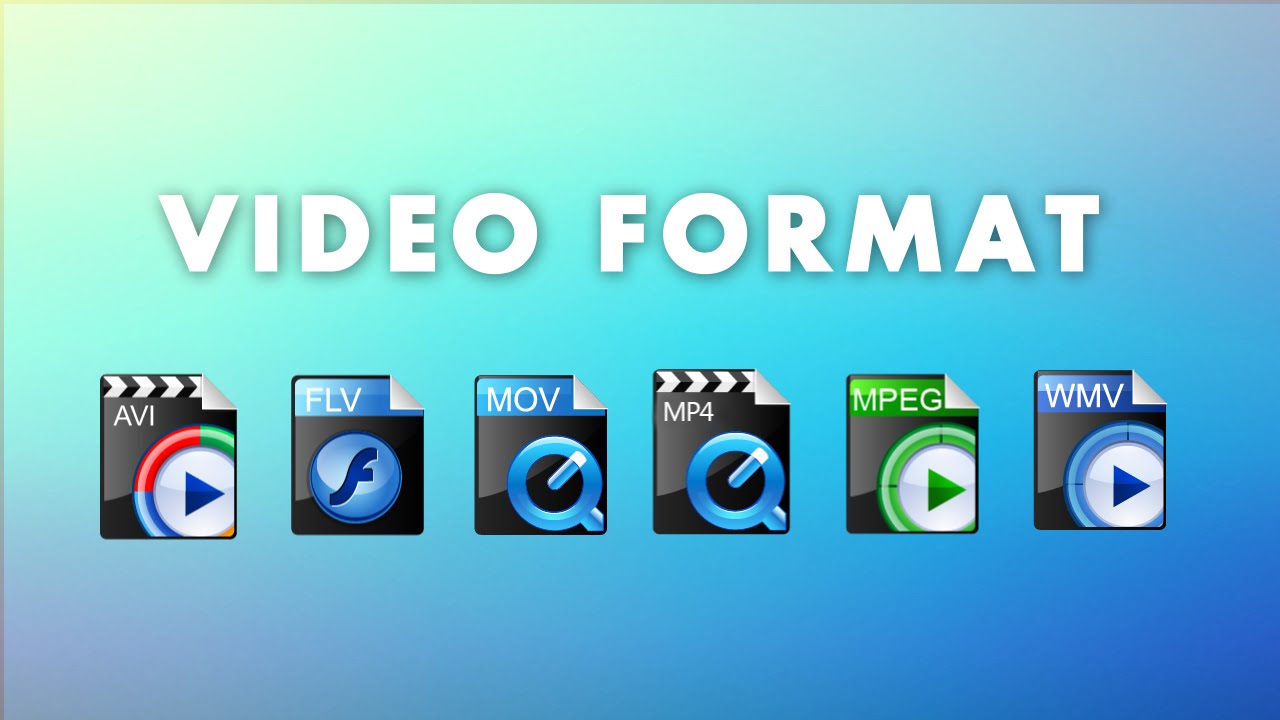
In this column, we will introduce 5 types of video formats that are common and frequently watched, mp4, mov, avi, wmv, and vob.
MP4 (Moving Image Expert Group)
Extension: mp4 (MP4)
Features: A file format that is supported as standard regardless of the operating system of any device, application, Windows or Mac. It has a high compression rate and high image quality despite its small data size, and has been converted into the mainstream of recent video formats.
MOV (QuickTime file format)
Extension: mov
Features: Mac standard video format developed by Apple Inc. QuickTime Player is required for playback on Windows.
AVI (still images audio and video)
Extension: avi
Features: Windows file format developed by Microsoft.
It was widely known from an early stage as a format for handling video with audio in Windows.
The image and audio are of high quality, but the file size is large compared to other formats.
WMV (Windows Media Video)
Extension: wmv (Wmv)
Characteristics:
Windows standard file format developed by Microsoft. It can be played with Windows Media Player.
Since it has a copy protection function called DRM (Digital Rights Management), it is also widely used in Internet video distribution services.
VOB (video object file)
Extension: vob
Features: A file format for recording video and audio on DVD-Video. It can be read and played with DVD player software. You can play from your favorite scene using the chapter menu during playback.
For troubleshooting tips!
How was it?
Many of the video extensions are unfamiliar to you and you may feel like the hurdles are high, but the video format solves the problem, like when you try to watch a recorded video on your computer and it doesn’t play well. also be a clue for.
Show the extension and check the video format ⇒ Check if the video can be played on your computer ⇒ If the format cannot be played, please download the player software or convert the image format
Playback may be possible in some ways, such as.
If you have trouble playing an image, try searching the web for keywords such as “MP4 playback”, “AVI playback”, and “*** playback (image extension)”.
Then after understanding these video formats and features, in the next column “Let’s get over the difference in file format! What’s the” how to enjoy videos on smartphones “you can know?”, Enjoy videos in your smartphone. will explain how to do it.
A story about video file formats you seem to know but don’t know
print this page.
Meet and enjoy! Video file types and characteristics
Nowadays, you can easily record videos on your smartphone or tablet, and you can easily enjoy your memories of your trip, the appearance of your grandchildren, your pet’s walk, etc. without a video camera.
I usually shoot videos unconsciously, but did you know that there are actually several formats?
Depending on the video format, it may not be possible to play it on your computer or smartphone.
However, if you understand the basics, you can enjoy the life of video without the hassle of “I can’t watch the video!”
What is the difference in the video format?
Although video files look the same at first glance, they actually come in a variety of formats.
There are many kinds of video formats like MP4, MOV, AVI, WMV, VOB, etc. , but each one has “mp4”, “mov”, “avi”, “wmv”, “vob” extensions.
* What is “extension”? Those who think that the …
is in the article “Tips” of the Japanese photographic heritage column,
“I don’t know, it seems to know. What? If I jpg, we are talking about image file format”,
has been introduced in the increase.
See also here.
Now, there are two factors that determine the difference in the types of images. It is
: -Format
compression -Data storage method
.
Video files contain data such as video and audio, and the file size is very large in its original state, so for ease of use, we “compress” the file (a technology to reduce the size).
This method of compression is called a “codec” and the file format varies depending on how it was compressed.
Also, there are many ways to store (save) video compressed with a codec, and these differences are the differences in the extension (file format).
The playable “extensions” are determined by the recording and playback devices, such as smartphones, camcorders, and DVDs, and their specifications (specifications). Depending on whether you are doing it or not, you may or may not be able to play it.
When using video, you need to select the file format taking into account its purpose and versatility, such as storage capacity and whether it can be played regardless of the software or application.
However, I am not sure if it is called video format! I think some people think that.
That should be the case, videos taken with smartphones and tablets that you regularly use are saved in a versatile format without difficult operations or procedures.
I will explain in detail the relationship between smartphones and videos in another column.
AVI MP4 What is the difference? Comparison of AVI vs MP4
“Please tell me the difference between AVI MP4. Please tell me the difference in image quality and capacity.”
“What is the difference between AVI and MP4 video file format? Since I am a beginner, are there advantages or disadvantages?
“AVI output and whether the difference from the MP4 output is something? Also more than what is directed to the video posting on YouTube.”
“In MP4 and AVI in the video type would the image quality be good?”
And the like, with Yahoo Answers and AVI. I often see this kind of problem with MP4.
AVI and MP4 are commonly used video formats in many places. However, beginners do not know much about basic video knowledge such as AVI MP4 image quality and AVI MP4 capability, so if you search the net, there is no little useful information, but because it is scattered What should I do more? ? I do not know if it is ok. Unhurriedly, the text details the comparison between AVI and MP4, aimed at those requests from users.
AVI MP4 Difference: Definition
AVI and AVI are short for “Audio Video Interleave”, Apple’s QuickTime standard for Windows that has been developed to counteract the video container format (MOV), the extension is “.avi”. Although it is a fairly old video format, it is still used by many users due to its high compression ratio and versatility, since it can use most codecs and is compatible with various environments. (You can also use a lossless compression codec.) It may be the most famous video format. Related Article: What is Windows10 AVI File Playback Player MP4? MP4 is one of the file formats for storing video data compressed in MPEG-4 format. It is specified in Part 14 of ISO / IEC 14496. MP4 is a format derived from ISO / IEC 14496 Part 12 formulated based on Apple’s QuickTime media technology file format, and has a structure that follows many of conventional QuickTime formats. If you encode it in this container, it can be played on most modern devices.