Optimizing the Volume of MP4 Videos with MP4Gain


Free Download Mp4Gain
picture

Optimizing the Volume of MP4 Videos with MP4Gain

Optimizing the Volume of MP4

The MP4 video format is a widely used format for storing and sharing videos online. However, sometimes the audio volume of an MP4 video may be too low, making it difficult to hear the audio clearly. This can be especially frustrating when watching a video on a small device, such as a smartphone, or when the background noise is high. In this article, we will discuss the best solution for increasing the volume of MP4 videos, MP4Gain.

Optimizing the Volume of MP4

Why MP4Gain is the best solution

MP4Gain is a software specifically designed for optimizing the volume of MP4 videos. It allows for easy and efficient audio normalization, making it the perfect solution for increasing the volume of your MP4 videos. With MP4Gain, you can adjust the audio levels of your entire video or just specific parts of it. It also provides you with a preview option to listen to the audio before saving the changes. Additionally, it support batch processing, which allows you to optimize the volume of multiple videos at once.

How to use MP4Gain

Using MP4Gain is very simple. First, download and install the software on your computer. Then, open the software and import the MP4 video you want to optimize the volume of. Once the video is imported, you can adjust the audio levels to your desired volume. You can also use the preview option to listen to the audio before saving the changes. Once you are satisfied with the changes, you can then save the optimized video.

Conclusion

Increasing the volume of an MP4 video can be a frustrating task, but with the help of MP4Gain, it becomes a simple and efficient process. MP4Gain is the best solution for optimizing the volume of MP4 videos, providing you with easy audio normalization and batch processing options. It is user-friendly and efficient, making it the perfect tool for anyone looking to increase the volume of their MP4 videos. So, If you are looking to optimize the volume of your MP4 videos, MP4Gain is the best solution for you.


Free Download Mp4Gain
picture


Mp4Gain Main Window
picture


Mp4Gain Features
picture


Free Download Mp4Gain
picture

What is MP4? What is MOV? Part 2

What is MP4? What is MOV? Part 2

MP4 format

Characteristics of each video format (extension)

MP4

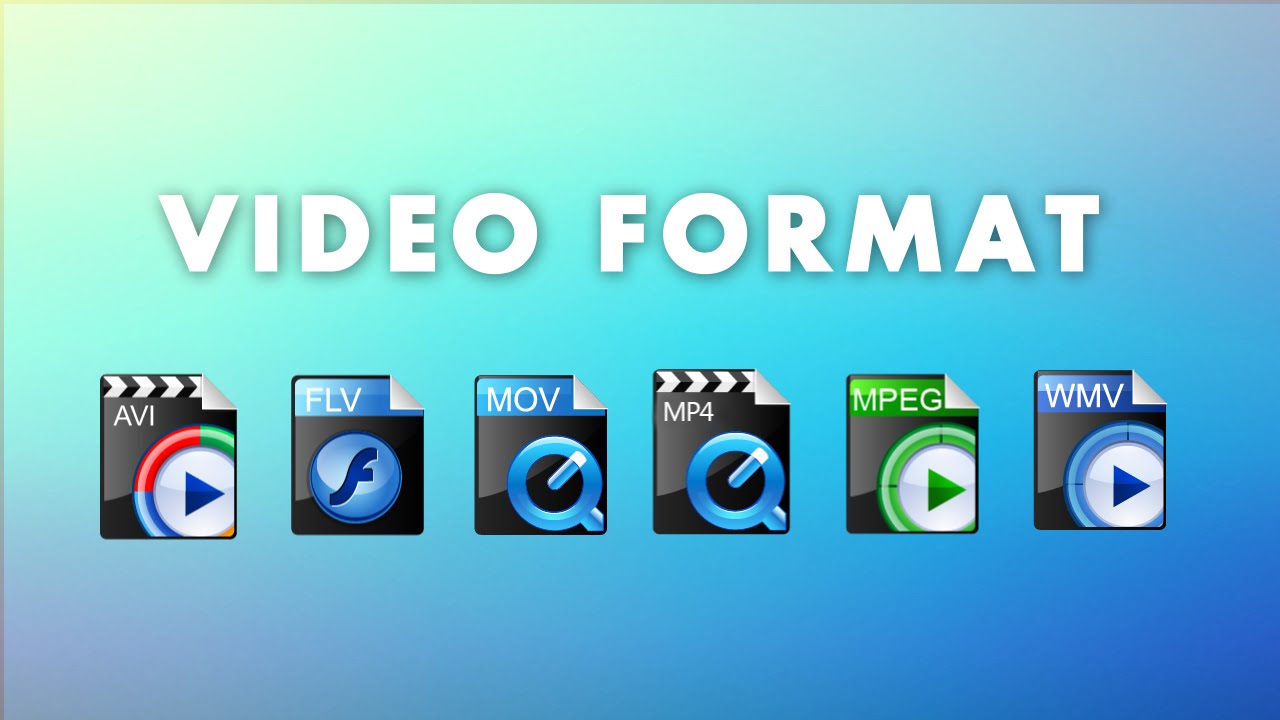
In this column, we will introduce 5 types of video formats that are common and frequently watched, mp4, mov, avi, wmv, and vob.

MP4 (Moving Image Expert Group)
Extension: mp4 (MP4)
Features: A file format that is supported as standard regardless of the operating system of any device, application, Windows or Mac. It has a high compression rate and high image quality despite its small data size, and has been converted into the mainstream of recent video formats.

MOV (QuickTime file format)
Extension: mov
Features: Mac standard video format developed by Apple Inc. QuickTime Player is required for playback on Windows.

AVI (still images audio and video)
Extension: avi
Features: Windows file format developed by Microsoft.
It was widely known from an early stage as a format for handling video with audio in Windows.
The image and audio are of high quality, but the file size is large compared to other formats.

WMV (Windows Media Video)
Extension: wmv (Wmv)
Characteristics:
Windows standard file format developed by Microsoft. It can be played with Windows Media Player.
Since it has a copy protection function called DRM (Digital Rights Management), it is also widely used in Internet video distribution services.

VOB (video object file)
Extension: vob
Features: A file format for recording video and audio on DVD-Video. It can be read and played with DVD player software. You can play from your favorite scene using the chapter menu during playback.

For troubleshooting tips!
How was it?
Many of the video extensions are unfamiliar to you and you may feel like the hurdles are high, but the video format solves the problem, like when you try to watch a recorded video on your computer and it doesn’t play well. also be a clue for.

Show the extension and check the video format ⇒ Check if the video can be played on your computer ⇒ If the format cannot be played, please download the player software or convert the image format

Playback may be possible in some ways, such as.
If you have trouble playing an image, try searching the web for keywords such as “MP4 playback”, “AVI playback”, and “*** playback (image extension)”.

Then after understanding these video formats and features, in the next column “Let’s get over the difference in file format! What’s the” how to enjoy videos on smartphones “you can know?”, Enjoy videos in your smartphone. will explain how to do it.

What is MP4? What is MOV?

What is MP4? What is MOV?

MP4

A story about video file formats you seem to know but don’t know
print this page.

MP4

Meet and enjoy! Video file types and characteristics
Nowadays, you can easily record videos on your smartphone or tablet, and you can easily enjoy your memories of your trip, the appearance of your grandchildren, your pet’s walk, etc. without a video camera.

I usually shoot videos unconsciously, but did you know that there are actually several formats?
Depending on the video format, it may not be possible to play it on your computer or smartphone.
However, if you understand the basics, you can enjoy the life of video without the hassle of “I can’t watch the video!”

What is the difference in the video format?
Although video files look the same at first glance, they actually come in a variety of formats.
There are many kinds of video formats like MP4, MOV, AVI, WMV, VOB, etc. , but each one has “mp4”, “mov”, “avi”, “wmv”, “vob” extensions.

* What is “extension”? Those who think that the …
is in the article “Tips” of the Japanese photographic heritage column,
“I don’t know, it seems to know. What? If I jpg, we are talking about image file format”,
has been introduced in the increase.
See also here.

Now, there are two factors that determine the difference in the types of images. It is
: -Format
compression -Data storage method
.

Video files contain data such as video and audio, and the file size is very large in its original state, so for ease of use, we “compress” the file (a technology to reduce the size).

This method of compression is called a “codec” and the file format varies depending on how it was compressed.
Also, there are many ways to store (save) video compressed with a codec, and these differences are the differences in the extension (file format).

The playable “extensions” are determined by the recording and playback devices, such as smartphones, camcorders, and DVDs, and their specifications (specifications). Depending on whether you are doing it or not, you may or may not be able to play it.

When using video, you need to select the file format taking into account its purpose and versatility, such as storage capacity and whether it can be played regardless of the software or application.

However, I am not sure if it is called video format! I think some people think that.
That should be the case, videos taken with smartphones and tablets that you regularly use are saved in a versatile format without difficult operations or procedures.
I will explain in detail the relationship between smartphones and videos in another column.

AVI MP4 What is the difference? Comparison of AVI vs MP4

AVI MP4 What is the difference? Comparison of AVI vs MP4

AVI vs MP4

“Please tell me the difference between AVI MP4. Please tell me the difference in image quality and capacity.”

AVI vs MP4

“What is the difference between AVI and MP4 video file format? Since I am a beginner, are there advantages or disadvantages?
“AVI output and whether the difference from the MP4 output is something? Also more than what is directed to the video posting on YouTube.”
“In MP4 and AVI in the video type would the image quality be good?”
And the like, with Yahoo Answers and AVI. I often see this kind of problem with MP4.
AVI and MP4 are commonly used video formats in many places. However, beginners do not know much about basic video knowledge such as AVI MP4 image quality and AVI MP4 capability, so if you search the net, there is no little useful information, but because it is scattered What should I do more? ? I do not know if it is ok. Unhurriedly, the text details the comparison between AVI and MP4, aimed at those requests from users.

AVI MP4 Difference: Definition

AVI and AVI are short for “Audio Video Interleave”, Apple’s QuickTime standard for Windows that has been developed to counteract the video container format (MOV), the extension is “.avi”. Although it is a fairly old video format, it is still used by many users due to its high compression ratio and versatility, since it can use most codecs and is compatible with various environments. (You can also use a lossless compression codec.) It may be the most famous video format. Related Article: What is Windows10 AVI File Playback Player MP4? MP4 is one of the file formats for storing video data compressed in MPEG-4 format. It is specified in Part 14 of ISO / IEC 14496. MP4 is a format derived from ISO / IEC 14496 Part 12 formulated based on Apple’s QuickTime media technology file format, and has a structure that follows many of conventional QuickTime formats. If you encode it in this container, it can be played on most modern devices.

What is the difference between MPEG and MP4?

What is the difference between MPEG and MP4?

MPEG4 VS. MP4

What is MPEG?

MPEG4 vs MP4

What exactly is the MPEG file format?

MPEG is an international standard and is a file format that can store information-rich videos and high-resolution videos. In addition, it is used as a file format that can be stored by digitizing voice information. In addition, data transmission and compression have been applied, enabling high-density data management.

It is widely used as the largest file useful for recording home DVD players and TV streams. At that time, even with MPEG, MPEG2 was sufficient, but with the expansion of the Internet, MPEG2 became unsatisfactory in terms of functionality and a new MPEG4 was developed. This has facilitated high-speed data transfer over the Internet. The current MP3 is the one that extracts only the audio part of MPEG1.

→ Related Article: Introduction to How to Convert MP4 to MPEG4

2. What is MP4?
MP4 looks the same as MPEG4, but there are some differences. The big difference is that MPEG4 is a file format for expressing video, and MP4 is a video file format that includes not only video but also text characters like audio and subtitles, and it is a container format. It is like a vault of.

MP4 is a file format that stores MPEG4 video and MP3 audio after combining them, and MP4 can store various types of video files. MP3 is adopted as audio, and what is included in MP4 is MPEG4 and MP4.

It has a similar but completely different file format, among which MP4 is used as the common format that can be burned on today’s DVDs. However, in the case of MP4, it is not possible to store multiple videos, audio, subtitles, etc. at the same time, which is also a part of dissatisfaction. After improving on this point, the AVCHD file format has made it possible to store multiple files at once.

3. What is the difference between MPEG and MP4?
Speaking of the difference between MPEG4 and MP4, as briefly explained in the previous section, MPEG4 and MP4 are the main formats that have changed.
MPEG has a long history, MPEG1 is the original file format for current MP3 files and null audio data files, and like video, MPEG4 is the video format stored in current MP4. In this way, the same file format is used for each video and audio, and there is no difference, but it is the file format called MP4 that handles all the video, and only the video is saved, it is MPEG4.

It is MP4 that can store audio as MP3, and MPEG1 is used as the data that is the basis of MP3. In this way, if you look at only video and audio, MPEG and MP4 contain the same, and it is no stranger. Taking this into account, it can be said that MPEG and MP4 are the same.
It seems that many people think that MPEG and MP4 are the same, but that’s not bad, but strictly speaking, MPEG and MP4 are completely different files in terms of format. When converting files, if you know this standard, it will be easy to understand when converting video files, and you can convert after understanding.

What is a video format?

What is a video format?

Mp4 file format

The video formats, the format for saving movies shot by, the “Video format” and the “container” are said to be similar.

VIDEO FORMAT

In short, it is like a “box” to store the video material you recorded, and there are several types of this box.

So if the player to display the video does not support the frame type (= video format), it cannot be displayed.

To prevent this from happening, the drone operator needs to know in advance “what is the video format to record”.

How is it different from the video codec?

Here, a similar word is “video codec”.

You may have ever heard of “H.264” and “MPEG”.

“What is the difference between the video format and the video codec?”

As you may think, the “video format” is just a “box” that contains the video, as mentioned above.

The “video codec” is a standard that “compresses” the video data contained in the box.

After all, there is no difference in the image quality and the amount of data when you change the type of video format, but on the contrary, if the video codec is different, the compression method will be different and the quality of the image and the amount of data of the final data. switch to. Will be.

* See also the differences in video codecs here.

・ What are H.264 and H.265? Differences in video codecs you should know

Video format type

So what kind of “box” is there to store video data?

The following are common video format types.

-MP4 file format “.mp4” “.m4a”

This is the most widely used video file format today.

Derived from the MOV file presented below, it was developed as an industry standard format.

The feature is that it can store anything like audio, subtitles, and 3D data, as well as video data.

Basically, it is compatible with most video players, so if you don’t know what to save, it is safe to choose an MP4 file.

-MOV file format “.mov” “.qt”

Apple standard video format. As a result, it works very well with Apple and Mac products.

Video Playback Software Since it is a standard Quicktime video format, MOV files are recommended when editing video data on MacOS.

Please note that MOV files are not compatible with Windows so some people may have problems like “I can’t see them on Windows PC”.

-WMV file format “.wmv”

Windows standard video format.

WMV files can be used when using videos mainly in Windows PC environment.

-Webm file format “.webm”

A video format developed by Google.

Since it can be used royalty-free and is intended to work on the web, we aim to keep it light and of good quality.

When you upload a video to Youtube, it will be automatically converted to this WebM file regardless of the original video format.

Which one to choose, “MP4” or “MOV”?

In this video file format, you can now select “MP4” or “MOV” in the drone settings. (* Only “MP4” is rated lower than Spark)

The normal setting is “mp4” and you don’t need to change it unless you have a specific reason.

However, after capturing the movie clip data, please do the editing on a Mac host computer, or if there is a customer designation is “mov” at the top of the set, we will take the shot.

If you shoot in the mov file format and want to convert it to mp4 later, you can convert it using the worst file conversion software, so no problem.

Choose the video file format according to your PC environment.

Finally
That you thought.

We have introduced the basic video file formats.

With the advent of the 5G era, the video market is expected to grow significantly. This is because 5G allows you to upload videos without stress.

In response to this, youtube and tiktok are also showing enthusiasm. Instagram used to look at photos, but now it also focuses on video content.

Drones provide us with amazing images. Because you can shoot from the bird’s point of view. Using a helicopter or Cessna, it was possible to shoot from the sky.

However, it is not realistic for general users to shoot because it costs a lot of money. Drones provide us with images from the sky.

What is MP4? Basic knowledge of MP4

What is MP4? Basic knowledge of MP4

MP4

What is MP4? When we play a video on a portable device like iPhone / iPad / iPod / Apple TV / PSP, we check the video file format and it turns out to be .mp4

MP4

What exactly is MP4? Next, we will explain the meaning, codec, characteristics, versatility, use, etc. of MP4.

What is MP4? .MP4 file: meaning / definition of MP4 explained in detail

MP4 is part of the MPEG-4 standard and is a digital multimedia container file format. Specifically, MP4 is a derivative format of ISO / IEC 14496 Part 12 developed based on Apple’s QuickTime media technology file format, and has a structure that follows many of the conventional QuickTime formats. The extension is .mp4, but the extension is different in some cases. That is, .m4v only for video and .m4a only for audio. It is used quite often in combination with the H.264 codec.

MP4 Features | What are the advantages and disadvantages of MP4?

MP4 has more functions than AVI, it is smaller than MKV, it has greater compatibility than FLV, and it can be compressed to the same image quality at a lower bit rate than MPEG-1 and MPEG-2, which is currently the most important. it will be said that it is a form.

The most important feature is its high convenience, which means that it is compatible with various operating systems, browsers, smartphones, tablets, mobile phones, and household appliances. It can be used on both Mac and Windows, and you can play videos without installing MP4 playback software. Speaking of the merits of MP4, it is easy to edit and has a high compression rate. Speaking of downsides, I think technically not suitable for oversized high-quality videos.

Explains MP4 codec and MP4 compatible devices
MP4 is a codec that further compresses MPEG-2. MP4 can be used by storing and using a combination of multimedia data from the following video and audio codecs.

Questions and answers about MP4

Questions and answers about MP4

Mp4

Movies recorded in the MPEG-4 format have already gained deserved popularity among a wide audience of PC users. These films usually fit on a CD and, in terms of image quality, they can compete successfully with video tapes. Not the last factor that determines the popularity of MPEG-4 discs is their price – 60-70 rubles. against 400-600 p. for the DVD. Therefore, MPEG-4 could well become a middle ground on the path of the massive transition of home users from analog VHS video recorders to the digital standard DVD.

MP4

In the Russian-language part of the Internet, you can find a large number of materials about the MPEG-4 standard, but most of them contain a description of the complexities of the process of compressing video in this format. This is, of course, a specific question that requires detailed research, but for users acting only as viewers, these articles often cannot answer the questions that arise when they want to watch movies. Another important source of information is conferences. In the “Processors”, “Video”, “Multimedia” sections, issues related to speed, quality, optimal settings and everything related to MPEG-4 are constantly raised, but the answers received often contradict each other. Someone claims that all his life he watched MPEG-4 without brakes on Pentium 200, others complain about the slideshow,

This article attempts to clarify frequently asked questions from people who have recently encountered this format, as well as to draw the attention of those who have never encountered MPEG-4 before. Hopefully, after reading this material, the reader who is not involved in video editing and compression will be able to safely say, “Now I know enough about this.”

What is MPEG?
MPEG is an abbreviation that stands for Moving Picture Experts Group (before writing a letter the first letter is not deciphered, so go to www.mpeg.org).

It is a fairly large organization, consisting of developers of audio, video and computer equipment, as well as programmers and specialists involved in the development and implementation of standards for algorithms for compression, transmission, storage and reproduction of audio and video data.

Among the developments of this group in the field of digital video recording, the most famous are:

MPEG-1 standard. It was released in 1992. Users most often associate it with movies on VideoCD. The typical consumer video format for MPEG-1 in the PAL standard is 352 * 288 pixels, 25 frames per second. The audio part is stereo audio with a sampling frequency of 44.1 kHz, compressed in MPEG-1 Layer II. A feature film recorded in this format occupies two CDs in the VideoCD standard. The picture quality of VideoCDs is on par with a consumer VHS videotape.

MPEG-2 standard. Released in 1995. Users come across this video compression format primarily when purchasing DVD with movies. The typical frame size for a PAL / SECAM video DVD movie is 720 * 576 at 25 frames per second, or 640 * 480 at 30 frames per second in the NTSC standard. Compared to MPEG-1, the audio part adds support for multi-channel sound (Dolby Digital 5.1, DTS, etc.). Increasing the bit rate and using an improved video compression algorithm have given DVD movies much better picture quality than VideoCD. MPEG-2 is also used today in digital satellite television. Home DVD players in our country are gaining popularity. The relatively high price of DVD movies plays a big role in this.

MPEG-4 standard. Its development began in the first half of the 90s of the last century. In December 1999, a launch of this format was presented, which received the official status of the ISO / IEC standard. MPEG-4 was conceived as a way to transfer data from transmission media, mainly video, over low-bandwidth channels. The standard unexpectedly gained popularity among low-budget users: the use of more complex compression algorithms made it possible to put one-and-a-half-hour to two-hour feature films in acceptable quality on a single CD. With the same bit rate and certain encoding conditions, the image quality of a movie in MPEG-4 can be comparable or even better than when using MPEG-1 or MPEG-2. However, the use of new compression algorithms also significantly increased the requirements for the computational resources necessary for decompressing high-quality images from this format.

Mpeg-4, start the countdown in Europe

Countdown to a double shutdown, which will force millions of Europeans to change their television or mount a special decoder. In fact, the first (small) television revolution is eight months away: as of January 1, digital terrestrial broadcasts will use only Mpeg-4 encoding, abandoning the now-old Mpeg-2.

 MPEG-2  MPEG-4

As of July 2022 the second (major) revolution: all transmissions will go in Dvb-t2 (the second digital terrestrial transmission standard), with Hevc encoding (which allows greater compression than simple Mpeg-4 and therefore more channels and / or better quality). A double revolution made necessary by the arrival of 5G, which from 2022 will also use the 700 Mhz frequencies that televisions now use.

video quality

It is good to arrive prepared for these dates, taking into account everything that is at stake. On the one hand, the risk not only of not being able to see terrestrial digital but also of not being able to enjoy the advantages of Hevc, soon adopted by other platforms (such as Netflix, which has already announced it).

On the other hand, the possibility of being able to have state incentives for switching to a suitable television or decoder: 25 euros per hour provided only for a small audience of users (over 75, exempt from the Rai rate and with a maximum income of 8 thousand euros per year), but in the future perhaps extendable by means of new decrees to a greater number of users. The earliest deadline: January 2020 Mpeg-4 Mpeg-4 is the normal encoding that we are used to having on internet videos since the early days of broadband, while Mpeg-2 dates back to the days of DVD. AND

He first manages to bring more content in the same space (disk or radio) and therefore even thanks to this step it will be possible to start releasing some frequencies for 5G of the 700 MHz band. The good news is that for more than one Europeans of the decade have MPEG-4, but according to Mise’s estimates there are around 10 million still stationary on MPEG-2.

Please note that the change in frequencies will be gradual, from January 2020 to December 2021, in the various regions of Italy (according to a roadmap defined by the Government). Two years in which it could also happen that, apart from the Mpeg-4 issue, due to this move it will be necessary to intervene in the condominium system for a readjustment. To understand if our TV (now prehistoric) fits into these, simply connect to the HD channels of digital terrestrial (from 501 onwards): if an error message appears and we cannot see the signal, it means that we do not have the MPEG-4.

They are high definition channels precisely because the best compression allows you to increase the amount of usable data for the same amount of space. Or to occupy less while maintaining the same amount of data (that is, the same number of channels with standard quality), which is precisely the advantage of being able to release frequencies of 700 MHz for 5G. It is enough to take a very cheap “zapper” decoder to adapt TV to MPEG-4, but perhaps it could be an opportunity for a more substantial upgrade, which looks to the future.

Second deadline: July 2022 After just over two years, in fact, we will already need support for DVBT-2 and Hevc codecs, which make signal transmission and compression even more efficient. Which means the possibility both of saving other frequencies and, above all, of changing many of the current channels to 4K. Since January 2017, all televisions integrate the two technologies by law. If we have a TV released before this date, it will be good to do an internet search to read if its specs include Dvbt-2 and Hevc.

However, if not, it may be helpful to wait a little longer before switching to a new model. Until July 2020 we do not need those two technologies for digital terrestrial; If we still do not perceive our TV as obsolete, for our uses, we must wait. If nothing else, in this way we can save money by buying a television that by then will not be so recent but will already be equipped with DVBT-2 and Hevc. It is also possible that the Government will slightly expand the audience of the beneficiaries of the television bonus . if we find, on a deadline, with several families that are not yet equipped with compatible devices. One reason to accelerate the switch to Hevc could be the adoption of Netflix. That thanks to the new codec it will be possible to give 4K even to those who have a line that is not really ultra-broadband and offer 8K content to a wider audience of people.

What is the difference between MP3 and Mp4?

MP3 and MP4, what are the differences?

Many wonder if MP4 is in all respects an “improved version” of MP3. The answer to this question is definitely “NO”, as these are two different types of file data.

mp3

In fact, MP3s refer only to the audio encoding aspect, while MP4s also store images, videos, text and subtitles, so in this case we are talking about a real digital container of different types of information.

Mp4

To better understand what the differences are between the two formats, let’s take a closer look at both.

MP3, history and functions

Designed by the Moving Picture group of experts and introduced to the world in the early 1990s, MP3, short for MPEG-1 Audio Layer 3, is an audio format that has revolutionized the concept of music and its portability.

Its operation is based on a specific lossy compression algorithm that allows to significantly reduce the volume of data useful for playing an audio track, called Lossy (translated: Loss).

Despite this compression, the end result remains faithful to the original recording for the vast majority of users.
In practice, any frequency considered imperceptible to the human ear is considered “removable”.

What does all this imply? Simple! The resulting MP3 file will be extremely smaller than the starting track, therefore, at a volume that previously could only hold 20 music files, hundreds of MP3 tracks can be stored.

MP4, history and features

The release of MP4, or MPEG4 Part 14, dates back to the early 2000s, precisely to 2002, and is used for digital video and audio broadcasts, images, and subtitles.

It is defined as a multimedia container in standard format or part of MPEG4 and does not have a standard information encoding method.

MP4 technology is based on the Apple QuickTime MOV format with, in addition, support for different MPEGs and higher quality audio expressed in AAC (Advanced Audio Coding) format.

From all this it can be understood that MP4 can be audio, video or audio + video files at the same time, also considering the possible presence of images or subtitles.

This is, for example, the most widely used format in the ever-evolving world of digital television and mobile video telephony.

Remember that the two extensions MP4 and M4A indicate the same type of file, what changes is only the extension and, in most cases, you can rename a specific file so that it is suitable for reading by the program.

Bottom line: when to use MP3 and MP4?

Finally, when should you choose an MP3 or MP4 format?

In the event that your file is exclusively an audio track, to be listened to while you are running and to be played through a small portable device, it is good to convert your songs to MP3 format.

This will take up less space on your device, preserve good audio quality, and can store many more songs in the player’s memory.

If, on the other hand, the files you are interested in are videos, perhaps accompanied by audio, images and subtitles, and they will be played on a device with a screen, the format I recommend is undoubtedly MP4.