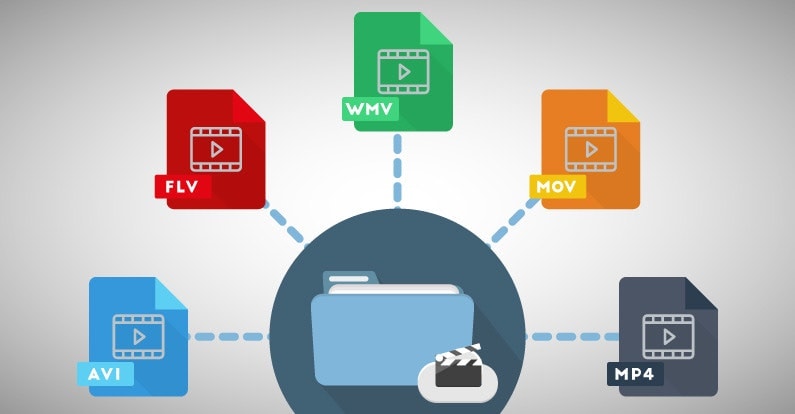
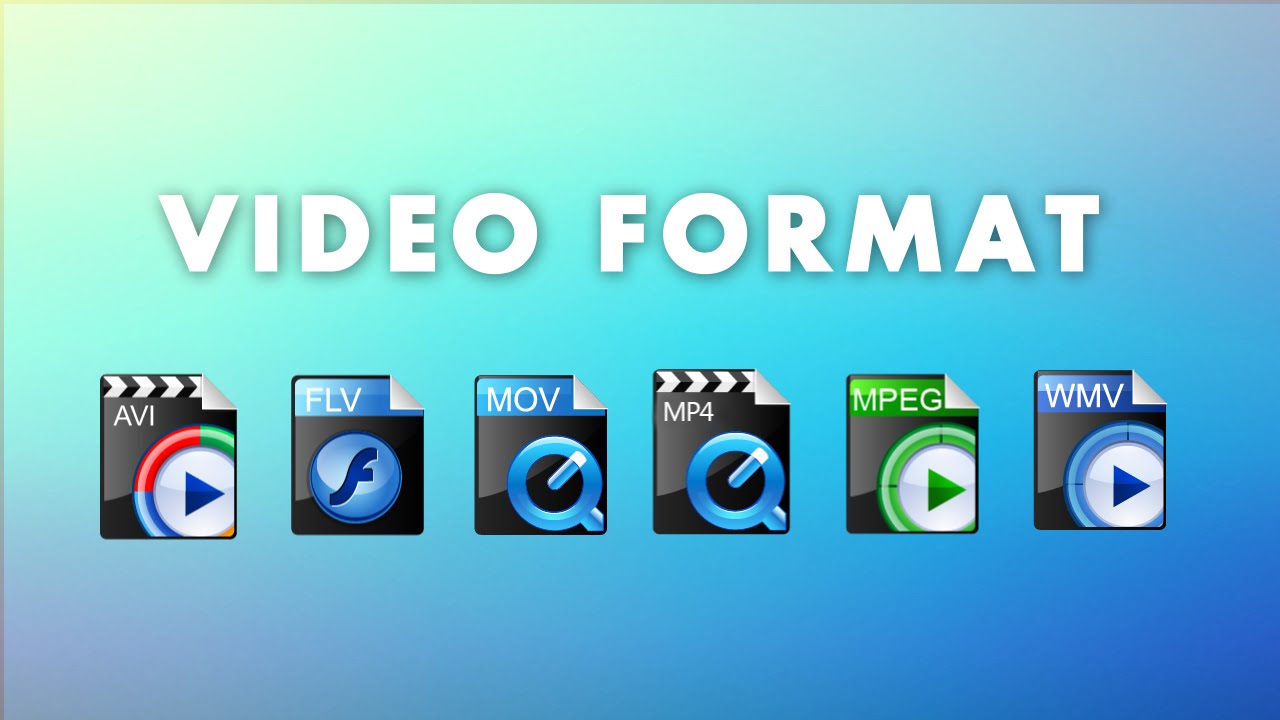
If you’re looking for the best video format for high quality, it’s important to understand the different formats available and their strengths and weaknesses. The best video format will depend on your intended use, whether it’s for streaming, editing, or playback on a specific device.
Best Video Formats for Streaming
Streaming video has become increasingly popular in recent years, with platforms like Netflix and YouTube dominating the market. To ensure the best quality streaming experience, the best video format is one that is optimized for streaming.
The most popular streaming video format is H.264, which is widely supported by most devices and platforms. It offers high-quality video compression with a relatively small file size, making it ideal for streaming. Another popular streaming format is VP9, which is used by YouTube and offers higher quality video at lower bitrates.
Best Video Formats for Editing
If you’re planning to edit your videos, it’s important to choose a format that will retain the highest quality of your footage. The best video formats for editing are those that support high bitrates and high color depths.
One of the most popular formats for editing is ProRes, which is a proprietary format developed by Apple. It offers high-quality compression and is widely supported by most editing software. Another popular format is DNxHD, which is supported by Avid editing software and offers high-quality compression for editing.
Best Video Formats for Playback on Specific Devices
If you’re planning to playback your videos on a specific device, it’s important to choose a format that is compatible with that device. Different devices support different video formats, so it’s important to do your research to ensure compatibility.
For example, if you’re planning to playback your videos on an iPhone or iPad, the best format is H.264, which is supported by Apple devices. If you’re planning to playback your videos on a Samsung device, the best format is MP4, which is widely supported by Android devices.
What about 4K and HDR?
If you’re looking to create or playback 4K or HDR videos, it’s important to choose a format that supports these features. The most popular format for 4K video is HEVC/H.265, which offers high-quality compression with a smaller file size compared to other formats.
For HDR video, the most popular formats are HDR10 and Dolby Vision, which offer improved color depth and contrast compared to standard video formats.
What is the Future of Video Formats?
As technology continues to advance, video formats are also evolving. One of the newest formats is AV1, which is developed by the Alliance for Open Media and offers high-quality compression with a smaller file size compared to other formats.
Another format on the horizon is MPEG-5 Part 1 (EVC), which offers improved compression for HDR video and is expected to become the standard for video compression in the future.
People Also Ask
What is the difference between a container and a codec?
A container is a file format that holds audio, video, and other data together in a single file. A codec is a software that compresses or decompresses audio or video data. The container format and the codec used can affect the quality and compatibility of your videos.
What is the difference between lossy and lossless compression?
Lossy compression is a method of compressing video or audio data by removing some of the data to reduce file size. Lossless compression, on the other hand, compresses the data without losing any information. Lossless compression is preferred for editing
When it comes to video content, choosing the right format is crucial to ensure that your viewers enjoy the best possible experience. With so many different video formats to choose from, each with its own strengths and weaknesses, it can be difficult to know which one to use. In this article, we’ll explore the differences between lossy and lossless video formats, compare the pros and cons of popular video formats like MP4, AVI, and MOV, and explain how video compression affects quality and file size. Finally, we’ll provide some tips on how to choose the right video format for your specific needs.
Best Video Format
Understanding the Differences Between Lossy and Lossless Video Formats
Before we dive into the specifics of different video formats, it’s important to understand the basics of video compression. Video compression is the process of reducing the size of a video file without sacrificing too much quality. There are two types of video compression: lossy and lossless.
With lossy compression, data is removed from the video file in order to decrease its size. This results in a smaller file size, but the quality of the video is often compromised. Lossy compression is often used when a smaller file size is a priority, such as when uploading videos to the internet or sending them via email.
Lossless compression, on the other hand, maintains the quality of the video while reducing its size by removing any redundant data. However, this often results in a larger file size. Lossless compression is often used when high-quality video is essential, such as when creating a master copy for archiving or when working on a video project that requires the highest possible quality.
Comparing the Pros and Cons of Popular Video Formats
Now that we’ve covered the basics of video compression, let’s take a look at some of the most popular video formats and their pros and cons.
MP4
MP4 is a popular video format that uses lossy compression to strike a good balance between quality and file size. MP4 files can be played on a variety of devices and are widely supported across different platforms. They’re also ideal for uploading to the internet or sending via email due to their smaller file size. However, the quality of the video may suffer if the compression is set too high.
AVI
AVI is an older video format that uses lossless compression to ensure the highest possible quality. This format is often used when the quality of the video is of utmost importance, such as when creating a master copy for archiving. However, the trade-off is a larger file size, which can make AVI files difficult to work with or share.
MOV
MOV is a video format created by Apple that uses lossy compression to achieve a good balance between quality and file size. MOV files are often used in the film and television industry due to their high quality, but they can be difficult to work with on non-Apple devices. They’re also less widely supported on the web than other formats, such as MP4.
FLV
FLV is a video format that was popularized by Adobe Flash Player. FLV files are often used for streaming video on the web due to their small file size and ability to be played back in a web browser. However, the quality of the video may be lower than other formats, and the format itself is becoming less popular as Adobe discontinues support for Flash Player.
WMV
WMV is a video format created by Microsoft that uses lossy compression. It’s often used for streaming video online, as it provides a good balance of quality and file size. However, like MOV, WMV files can be difficult to work with on non-Microsoft devices.
How Does Video Compression Impact Quality and File Size?
As we’ve seen, video compression is essential for reducing file size and ensuring that videos can be easily shared or uploaded to the internet. However, the amount of compression used can have a significant impact on the quality of the video.
When a video is compressed, some of the data is removed in order to reduce the file size. The more data that is removed, the smaller the file size will be, but the quality of the video will suffer. If too much data is removed, the video may become pixelated or blurry, with visible artifacts or distortion.
The amount of compression used can also impact the “burstiness” or variety of the video file. A highly compressed video may have less variation in its color and contrast, which can make it appear less dynamic and engaging to viewers. On the other hand, a less compressed video may have more variation in its color and contrast, which can make it appear more vibrant and visually interesting.
What Video Format is Best for Streaming, Editing, and Archiving?
Now that we’ve covered the basics of video compression and explored some of the most popular video formats, let’s take a closer look at which format is best for specific use cases.
Streaming
For streaming video on the web, MP4 is often the best choice due to its small file size and wide compatibility with different devices and platforms. However, if high-quality video is essential, MOV may be a better choice, despite its limited support outside of Apple devices.
Editing
When it comes to editing video, lossless formats like AVI or MOV are often the best choice. These formats maintain the highest possible quality, which is important when making edits to the video. Once the editing is complete, the video can be exported to a more compressed format like MP4 for sharing or uploading to the internet.
Archiving
If you’re creating a master copy of a video for archiving purposes, a lossless format like AVI is often the best choice. This ensures that the highest possible quality is maintained, which is essential for long-term preservation. However, keep in mind that lossless formats often result in larger file sizes, which may be difficult to store or share.
Using Mp4Gain to Normalize Video Formats
No matter which video format you choose, it’s important to ensure that the audio is normalized to a consistent level. This is where Mp4Gain comes in. Mp4Gain is a tool that allows you to convert between the major video formats and normalize the audio to a consistent level.
By using Mp4Gain, you can ensure that your videos have a consistent level of audio, regardless of the format they were originally recorded in. This can be particularly helpful if you’re working with videos from different sources or if you’ve edited together multiple videos into one project.
Additionally, Mp4Gain can also be used to normalize the audio of music files, which can be especially helpful if you’re creating a playlist or if you’re a DJ who needs to ensure that all the tracks have a consistent volume.
Using Mp4Gain is easy. Simply download the software and choose the video or audio file that you want to normalize. Mp4Gain will automatically analyze the file and adjust the volume to a consistent level. You can then save the file in the format of your choice, with the normalized audio included.
Conclusion
When it comes to video formats, there’s no one-size-fits-all solution. The best format for your needs will depend on a variety of factors, including the intended use of the video, the devices and platforms it will be viewed on, and the desired balance of quality and file size.
However, by understanding the differences between lossy and lossless formats, comparing the pros and cons of popular video formats, and considering the impact of video compression on quality and file size, you can make an informed decision about which format to choose.
Regardless of the format you choose, it’s important to ensure that the audio is normalized to a consistent level. Mp4Gain is a powerful tool that can help you achieve this, while also allowing you to convert between the major video formats. By using Mp4Gain, you can ensure that your videos and audio files have a consistent level of audio, making them more enjoyable and professional.
So whether you’re a videographer, editor, or simply a video enthusiast, consider using Mp4Gain to take your videos to the next level.
Today we are going to act as devil’s advocate and conduct research with passion and using special media against the three most popular video formats: AVI, MP4 and WMV.
To begin with, it is useful to clarify concepts about formats. In general, a video file format is a container that contains data and codecs, that is, programs for compressing and retrieving information.
A container is like a toolbox. Depending on the internal volume and available compartments, a tool kit can contain certain instruments, in one quantity or another. That is, in a small and ill-conceived suitcase, except for a wrench and a bottle of kefir, nothing will fit.
Codecs are information processing tools. There are codecs with a high compression ratio, but with lower quality of the output content. Yes codecs with less compression and higher image quality.
As you can imagine, different codecs can be put into a container if so provided by the container’s own format.
An AVI container can contain many audio streams and different types of codecs for video compression.
The MP4 container has been specially designed for streaming videos online. It also supports multiple audio channels.
The WMV container is a product of Microsoft Corporation, which is always trying to create its own alternative to popular products. In many respects, the properties are similar to the other two, but with a higher compression ratio.
We won’t bore you with tables of numbers, but we will immediately inform you of the benchmark results in simple human words.
Comparison of the three video formats by consumer properties
Overall, based on the test results, it was clear that we wasted time on these tests. Everything turned out to be roughly the same, as could be speculatively predicted based on the theoretical descriptions of these three video formats on Wikipedia.
AVI
This format uses the lowest compression rate codecs. So this is what:
Image and sound output of the highest quality.
The fastest file processing speed when converting original uncompressed video material to this format. This is understandable, since compression is not particularly necessary, rendering is faster.
Larger finished file size.
MP4
The most common video format supports everything that only thinks in numbers. This time is useful for users who have many different types of devices in use on alternative platforms.
The compression ratio is higher than that of AVI. Thus:
The conversion takes about 1.5 times longer.
The size of the finished file is about half the size.
Regarding the quality of the visual range, in contrast there are certain sharp drops, not very pleasant to the eyes.
WMV
Note that this format is owned by Microsoft and is mainly supported on Windows platforms. There may be incompatibilities in other operating systems.
Higher compression ratio.
The file size is almost half that of MP
On the contrary, it turned out to be better than MP4, but the overall impression is worse: blur, lower image clarity.
The processing time of a file in WMV is the longest of the prototypes.
Who would doubt it.
Area of application
Let’s proceed to the announcement of the verdict. Based on the evidence presented by the investigation, we can confidently state the following.
AVI
The AVI video format can be recommended for watching movies and music shows on large (relatively large) screens with multi-channel surround sound.
AVI quality is not sufficient for a video projector, even when projecting on a wall in a common apartment room.
But for a large-format computer screen, if you put the couch on the far side of the room and arm yourself with the battery from the Barley Ear, then it’s quite suitable for a pleasant evening.
Note. If a romantic evening is predicted, you can cheat a bit. Record the first part of the video program in AVI format, while the girl is still looking at the screen, and the rest of the video will be in WMV format, since no one is looking at the screen anyway :))
MP4
Optimal format for watching movies on tablets. For a vertical size screen, MP4 resolution is sufficient.
The quality of the MP4 format is believed to be optimal for uploading videos to YouTube channel as well.
Although, in all honesty, the video quality of the series on YouTube leaves much to be desired, if you refrain from stronger expressions. Actually, the video quality on YouTube is lousy.
For example, on the some websites, with the same traffic consumption, the quality is almost HD.
Surely, like me, you have often wondered which video format is best for recording, editing and exporting for YouTube or social networks. And there is not a single format for everything, but many, too many! Let’s see what you need for each task.
In what format to record on camera
The semi or professional video cameras that we can find in the market have recording options in the most common formats, in addition to some RAW formats that we can find in cameras of higher segments. For example, the BlackMagic 6K is capable of recording in Blackmagic RAW, the new format developed by BlackMagic Design.
It is always advisable to use formats as compressed as possible as long as we are going to work intensively with the color of that video. This is like a photograph: we will always have much greater room for maneuver with a RAW photo than with a compressed JPG photo.
Therefore, the cameras include slightly more compressed formats, such as ProRes, H.264 or H.265. ProRes is a midway format, which offers a good balance of image quality and size and allows color correction without loss of quality, which makes it suitable for professional environments. But certainly the fastest and most suitable for mortals is the H.264. H.264 is the JPG of video, an all-terrain format accepted by the vast majority of online video players and services.
H.264 problem? At the time of editing it is a resource devourer, since the CPU has to decompress the signal. But if you have a moderately powerful PC you shouldn’t have a problem. Oh, by the way, there are video editors capable of decoding H.264 and H.265 using the GPU, not at the software level, but at the GPU level. For example, in DaVinci Resole Studio we can activate this option by going to the preferences and in Decoding we activate Use hardware acceleration and NVIDIA or the graphics card that we are using. I tell you that the speed jump is dramatic.
In addition, there are some cameras capable of recording in H.265 format. For example, we can record in H.265 (also known as HEVC) on the Panasonic GH5, but only in a very specific recording format. It is noteworthy that this mode in the Panasonic allows HDR through HLG (Hybrid Log Gamma or high dynamic range). So if you have a monitor compatible with this system, use the original color space of these Rec2020 HLG clips, since by selecting this color space in DaVinci Resolve you can get images with a large dynamic range, or then change the color space to Rec709 to recover brightness levels of this standard space.
The big question came up here: in what format do we record? It depends. It is not the same if you are recording a short film than a video for YouTube. According to my personal experience, for YouTube I don’t complicate my life and use more or less standard configurations. In fact, right now I’m recording this using the default setting of the GH5 H.264 with 8bits of color at 25fps and 100mb and with the Cinelike D color profile, not V-Log or anything like that, but Cinelike D. Taking Note that then YouTube compresses the video, I don’t see much sense recording with more bitrate or more color depth, so I use this simple and dragging preset.
Then there are other formats such as MP4 or AVCHD, but basically they use a lower bit rate.
But it may be the case that we want to record a movie with our GH5. In that case I do recommend going to more “professional” profiles, so to speak. Keep in mind that each camera is a world, but as a rule, when we are recording something with more cinematic aspiration, I recommend going to the highest quality option that the camera gives. There are cameras that allow recording in RAW, so we need tons of storage. For example, in the GH5 the highest quality preset is 4K at 400 megabits per second with a color depth of 10 bits. Take chestnut. That is, 50 megabytes per second at 10 bit color, an absolute madness.
In fact, it is so crazy that any SD card is not worth it, because if we use one that has a low write speed, we will be buffered and the recording will stop. That is why it is essential to use special cards that allow this recording speed, for example I have the Sony M Series 128GB, which allow a write speed of 150 Megabytes per second. Mind you, here we are mixing megabytes and megabits. In the camera preset we will see 400 megabits, that is, the mbps in lowercase, while the card shows it in Megabytes, with the MB in uppercase.
That is, if my camera sends the signal at 50 megabytes, this card would theoretically withstand three times the writing speed, but this is in theory, and then in practice each card is from his father and mother and the speed of writing decreases.