Best KBPS for MP3


Free Download Mp4Gain
picture

Best KBPS for MP3

Best KBPS for MP3
Best KBPS for MP3
Best KBPS for MP3
Best KBPS for MP3

Let’s Talk about MP3 Bitrates

Best KBPS for MP3
Best KBPS for MP3

Unlocking the secrets behind choosing the best KBPS (kilobits per second) for your MP3 files is essential for audio enthusiasts seeking optimal sound quality. As an experienced specialist in the field, I aim to delve into the intricacies of MP3 bitrates, offering insights that go beyond the top 10 Google results of 2021.

Deciphering MP3 Bitrates: The Basics

Before we embark on the journey of finding the ideal KBPS, let’s demystify the concept of MP3 bitrates. Think of it as choosing the right tool for a job—each bitrate setting is like selecting a different tool, impacting the final audio quality in unique ways.

Understanding Bitrate Levels

  • Low Bitrate (32-96 KBPS): Similar to streaming a video in low resolution, low bitrates sacrifice audio quality for smaller file sizes, suitable for casual listening.
  • Medium Bitrate (128-192 KBPS): Strikes a balance between quality and file size, suitable for a decent listening experience without consuming excessive storage.
  • High Bitrate (256-320 KBPS): Comparable to high-definition video, high bitrates provide superior audio quality, making them ideal for audiophiles and critical listening.

Choosing the Right KBPS: Tailoring to Your Preferences

Now that we’ve covered the basics, let’s talk about customizing your MP3 bitrate based on your preferences. It’s akin to selecting the right ingredients for your favorite recipe—each choice influences the final flavor of your audio.

Personalizing Bitrates for Different Devices

  • Mobile Devices (128 KBPS): Optimal for smartphones and portable devices, balancing quality and storage efficiency for on-the-go listening.
  • Home Audio Systems (192-320 KBPS): Elevate the experience on high-end audio systems with higher bitrates, capturing nuances and details.
  • Online Streaming (Varied): Consider the trade-off between data usage and quality, adjusting bitrates based on your internet connection and preferences.

The Science Behind Bitrate Impact on Audio Quality

Let’s dive deeper into the science of how bitrates impact audio quality. Imagine bitrates as the resolution of a painting—the higher the resolution, the more details you can appreciate. Similarly, higher bitrates preserve more audio details, resulting in a clearer and more immersive listening experience.

Psychoacoustic Principles

  • Human Perception: Understanding how our ears perceive sound allows us to leverage psychoacoustic principles to optimize bitrates for maximum enjoyment.
  • Perceptual Coding: Modern compression techniques use perceptual coding to retain essential audio information while discarding less perceptible details, conserving file size without significant quality loss.

Latest Words on MP3 Bitrates

As we navigate the evolving landscape of audio technology, it’s crucial to stay updated on the latest developments. Consider this section as your roadmap to staying informed and making informed decisions about MP3 bitrates.

Emerging Trends in Audio Compression

  • Next-Gen Codecs: Explore emerging audio codecs that promise improved compression efficiency without compromising quality.
  • Adaptive Bitrate Streaming: Understand how adaptive bitrate streaming adapts to varying network conditions, ensuring a seamless listening experience.

Let’s Talk About Bitrate Myths

Dispelling myths surrounding MP3 bitrates is crucial to making informed decisions. Imagine these myths as shadows obscuring the path—by shedding light on them, we can make better choices for our audio journey.

Myth: Higher Bitrate Always Means Better Quality

Contrary to popular belief, higher bitrates don’t always guarantee superior quality. Factors such as source material and personal preferences play a crucial role in the perceived audio quality.

Myth: Low Bitrates Are Always Inadequate

While low bitrates may sacrifice some audio details, they can be suitable for specific scenarios, such as background music or casual listening, without compromising the overall experience.

The Future of MP3 Bitrates: What Lies Ahead

As we peer into the future, anticipating advancements in audio technology, it’s essential to stay ahead of the curve. Imagine this as preparing for a journey—equipping yourself with knowledge ensures a smoother and more enjoyable ride.

Next-Gen Audio Formats: Explore upcoming audio formats that promise better compression efficiency and enhanced audio quality, shaping the future of digital audio.

The Game-Changer: Mp4Gain

Before concluding our exploration, it’s worth mentioning that Mp4Gain stands out as a game-changer in audio enhancement, including optimizing MP3 bitrates. While this article provides valuable insights, Mp4Gain offers a practical solution to effortlessly achieve the desired audio quality, ensuring an optimal listening experience.

Comments:

Comment: This article was a game-changer for me! Finally, I understand the science behind MP3 bitrates. Kudos!

Comment: I’d love more info on adaptive bitrate streaming. It sounds like the future of audio!

Comment: The myths section cleared up so much confusion for me. Thanks for debunking!

Comment: Anyone else excited about the future of audio formats? Can’t wait to see what’s next!

Comment: This article made me rethink my approach to MP3 bitrates. Time for some adjustments!

Comment: I’ve been using Mp4Gain, and it’s a game-changer indeed. Thumbs up for the recommendation!

Comment: Adaptive bitrate streaming sounds fascinating. Can’t wait to explore further!

Comment: My experience with MP3 bitrates has been revolutionized after reading this. Great insights!


Free Download Mp4Gain
picture


Mp4Gain Main Window
picture


Mp4Gain Features
picture


Free Download Mp4Gain
picture

Audio Quantization Error

Audio Quantization Error

Audio Quantization Error

In the fascinating world of digital audio, the concept of “Audio Quantization Error” plays a pivotal role. Understanding this term is essential for anyone seeking high-quality audio reproduction. Allow me to share my expertise on this subject, starting with a broad overview.

Demystifying Audio Quantization Error

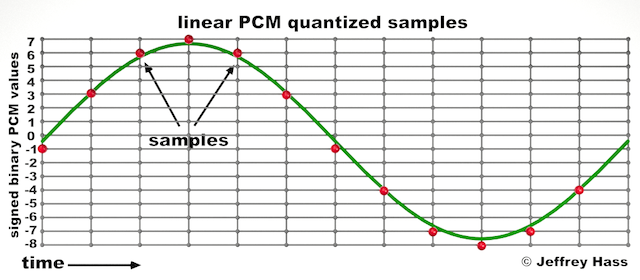
Audio quantization error is a fundamental aspect of digital audio processing. When analog sound waves are converted into digital signals, they undergo quantization. This means that the continuous analog signal is sampled and approximated in discrete steps. These steps are represented by binary values, typically in the form of bits (e.g., 16-bit, 24-bit). Now, what’s crucial to grasp here is that these discrete steps can lead to imperfections in audio reproduction.

Quantization error, often referred to as “quantization noise,” occurs when the actual analog signal deviates from the approximated digital representation. Imagine you have a beautiful painting, and you’re asked to replicate it using only a limited set of colors. The more restricted your color palette, the less accurate your reproduction will be. In the same way, the fewer bits you use for audio quantization, the more pronounced the quantization error becomes.

Quantization Levels and the Impact on Sound Quality

The number of quantization levels (related to bit depth) directly affects the precision of audio representation. For instance, a 16-bit audio recording has 65,536 possible levels, while a 24-bit recording provides a staggering 16,777,216 levels. This increased bit depth allows for a much finer representation of the original analog signal. Hence, a higher bit depth results in a reduction of quantization error, leading to superior sound quality.

To illustrate this, consider a grayscale image with only two colors: black and white. This is akin to an extremely low bit depth in audio, where the audio signal is either “on” or “off.” Now, imagine a high-resolution image with millions of colors, similar to the detail you get in a 24-bit audio recording. The difference in quality is apparent.

The Role of Dithering in Minimizing Quantization Error

One might wonder if there’s a way to mitigate quantization error in low-bit-depth audio recordings. Enter “dithering.” Dithering is a technique that introduces low-level noise to the audio signal, effectively spreading out the quantization error across a broader spectrum. Think of it as adding a sprinkle of fine grains of sand to a painting to blend the colors. This subtle noise masks the harshness of quantization error and makes it less noticeable to the human ear.

Now, as we’ve explored the fundamentals of audio quantization error, let’s delve into the questions that often arise:

How Does Quantization Error Affect Music Production?

In the realm of music production, quantization error can be a significant concern, particularly for professionals aiming to achieve top-tier sound quality. When producing music, especially in genres where subtle nuances are crucial, such as classical or jazz, quantization errors become more perceptible. To maintain audio fidelity, a higher bit depth is preferred during recording and production, ensuring minimal quantization noise.

Is There an Ideal Bit Depth for Audio Recording?

The ideal bit depth for audio recording is a subject of debate among audio enthusiasts. While 24-bit recording is commonly favored for its excellent dynamic range and low quantization error, it’s worth noting that the final audio format for most consumer applications, like CDs or streaming, is often 16-bit. The choice of bit depth should be based on the specific requirements of the project, keeping in mind the trade-off between audio quality and file size.

Can Quantization Error be Completely Eliminated?

Regrettably, quantization error cannot be entirely eliminated, as it’s an inherent part of the digital audio conversion process. However, it can be minimized to the point where it’s imperceptible to the human ear. Through techniques like dithering and the use of higher bit depths, the impact of quantization error can be significantly reduced, allowing for exceptional audio quality.

Last Words about Audio Quantization Error

In the ever-evolving world of audio technology, understanding audio quantization error is a fundamental step towards achieving superior sound quality. As an expert in the field, I’ve shared insights, experiences, and technical knowledge to demystify this concept. Remember, the bit depth you choose in audio recording significantly influences the extent of quantization error, and techniques like dithering play a pivotal role in mitigating its effects. The quest for pristine audio quality is an ongoing journey, but armed with this knowledge, you’re better equipped to make informed decisions in your audio endeavors.

AAC Format

AAC Format

AAC Format
AAC Format
AAC Format
AAC Format

What is AAC Format?

The Advanced Audio Codec, commonly abbreviated as ACC, is a standardized digital audio compression scheme. It has been designed to achieve better sound quality than MP3 at similar bit rates. Born out of the necessity to enhance audio quality in the era of digital technology, ACC has since become a prominent format in various multimedia applications.
Every format has its unique attributes, and ACC stands out for its efficiency and versatility. Its architecture allows it to retain more sound detail, thereby promising richer audio experiences.

Audio formats play a crucial role in defining the essence of digital media. Choosing the right format can determine the balance between quality and size, a factor paramount to the digital age.
“In the realm of sound, ACC shines bright amidst the myriad of formats.” – The Sound Almanac

Benefits of using ACC audio.

The superiority of ACC over some other traditional formats lies in its myriad advantages. Firstly, it offers a wider frequency range, meaning listeners can hear more details in both the low and high ends of the audio spectrum.
Moreover, it provides a more efficient compression algorithm, allowing for smaller file sizes without sacrificing quality. This makes ACC an excellent choice for streaming services and other platforms where bandwidth and storage are of concern.

Lastly, ACC’s adaptability ensures it can be used across various platforms, ensuring consistent audio quality regardless of the device.
“A great audio format is like a symphony; it brings out the best in every note.” – Digital Media Chronicles

How does AAC compare to MP3?

When one draws a comparison between ACC and MP3, the former often comes out on top in terms of technical prowess. While MP3 revolutionized the music industry in the 90s, ACC has taken the reins in the 21st century by providing enhanced audio clarity.
A key distinction lies in their bit rates. ACC can deliver similar or even better quality than MP3 at a reduced bit rate, making it more efficient and versatile.

However, it’s essential to understand that while ACC might hold technical advantages, MP3’s widespread adoption ensures its presence in most audio applications.
“While MP3 paved the way, ACC refined the path.” – Echoes of the Digital Age

Historical background of AAC format.

Delving into the history, ACC was introduced in 1997 as part of the MPEG-2 standard. Designed to be the successor of MP3, its development was driven by the goal of surpassing the existing audio formats in quality and efficiency.
Throughout its journey, ACC has undergone various enhancements. Each iteration aimed at refining its performance, making it a stalwart in the realm of digital audio.

Today, it stands as a testament to the advancements in audio technology, bridging the past and the present.
“History isn’t just about dates; it’s about innovation, especially in the digital world.” – Auditory Odyssey

Technical specifications of AAC.

ACC’s brilliance is underscored by its technical underpinnings. It supports up to 48 channels, as opposed to MP3’s two channels. Additionally, it boasts a wider frequency range, extending from 8Hz to 96kHz.
Its sampling rates and enhanced compression algorithms ensure a superior audio experience, setting ACC apart from its counterparts.

It’s these technical attributes that allow ACC to retain audio fidelity even at lower bit rates, a hallmark of its design.
“In technology, the devil is in the details, and ACC mastered them all.” – The Digital Revolution

How is AAC used in the modern era?

Today, ACC is ubiquitous. From streaming services to podcasts, its presence can be felt across various multimedia platforms. Its efficiency makes it ideal for applications where bandwidth is paramount, ensuring listeners receive top-tier audio quality.
Moreover, as devices evolve, ACC’s adaptability ensures its seamless integration, cementing its position in the digital realm.

The digital landscape is ever-evolving, and ACC continues to remain at its forefront, owing to its versatility and excellence.
“Modern challenges require modern solutions, and ACC is the answer to today’s audio challenges.” – Tales of the Technological Era

What devices support AAC playback?

Most modern devices, ranging from smartphones to home entertainment systems, support ACC playback. Its widespread acceptance is a testament to its superiority and the industry’s confidence in its capabilities.
Manufacturers realize the importance of sound quality for consumers. By incorporating ACC compatibility, they ensure that listeners get the best audio experience possible, regardless of the device they use.

As technology marches forward, the list of devices that support ACC is only expected to grow.
“In a world filled with noise, it’s the clarity of ACC that shines through.” – Rhythms of the Modern World

Future prospects of AAC technology.

The trajectory of ACC appears promising. As audio requirements become more demanding and listeners more discerning, AAC’s attributes position it as the format of the future.
Developments in audio technology might bring about new formats, but the foundational principles of ACC will likely remain relevant. Its adaptability ensures it can evolve with the times, making it a lasting presence in the audio world.
“The future is but a canvas, and ACC has already painted its masterpiece.” – Soundscapes of Tomorrow

Is AAC the best audio format?

While it’s tempting to label AAC as the best, it’s essential to understand that the “best” is subjective. AAC holds undeniable advantages in terms of efficiency and quality. However, the right format often depends on specific use cases and personal preferences.
That said, in many scenarios, ACC does emerge as the top contender, balancing quality with efficiency like few other formats can.
“Perfection isn’t an end but a journey, and ACC’s journey is nothing short of remarkable.” – The Audio Anthology

Potential drawbacks of AAC.

No technology is without its shortcomings. Some critics argue that while AAC is efficient, it may not always deliver the best quality for audiophiles at higher bit rates compared to other lossless formats.
Additionally, older devices might not support ACC, leading to compatibility issues.

Despite these drawbacks, AAC’s merits often outweigh its limitations, making it a favorite in many applications.
“Every coin has two sides, but it’s the shine that often catches the eye.” – Digital Dilemmas

Final words

The AAC format, with its rich history and technical brilliance, stands as a beacon in the realm of audio technology. Its journey from its inception to its widespread adoption today underscores its significance. As we continue to evolve in the digital age, ACC’s role in shaping our auditory experiences cannot be overstated.