AAC Format


Free Download Mp4Gain
picture

AAC Format

AAC Format
AAC Format
AAC Format
AAC Format

What is AAC Format?

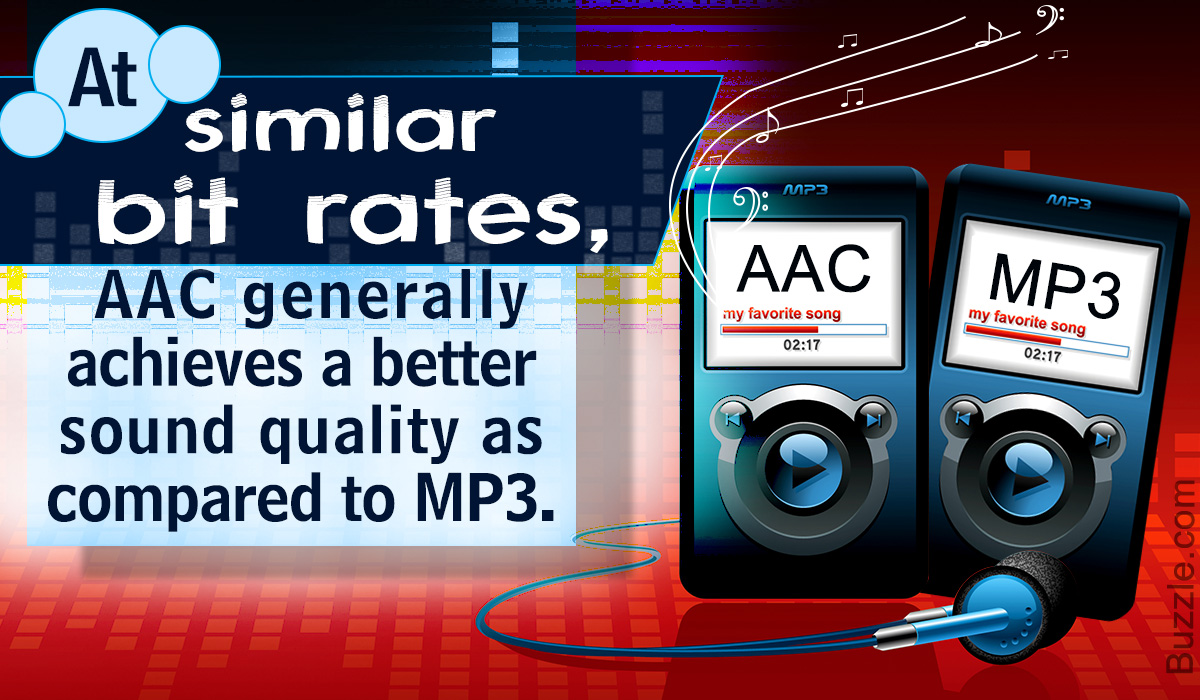
The Advanced Audio Codec, commonly abbreviated as ACC, is a standardized digital audio compression scheme. It has been designed to achieve better sound quality than MP3 at similar bit rates. Born out of the necessity to enhance audio quality in the era of digital technology, ACC has since become a prominent format in various multimedia applications.
Every format has its unique attributes, and ACC stands out for its efficiency and versatility. Its architecture allows it to retain more sound detail, thereby promising richer audio experiences.

Audio formats play a crucial role in defining the essence of digital media. Choosing the right format can determine the balance between quality and size, a factor paramount to the digital age.
“In the realm of sound, ACC shines bright amidst the myriad of formats.” – The Sound Almanac

Benefits of using ACC audio.

The superiority of ACC over some other traditional formats lies in its myriad advantages. Firstly, it offers a wider frequency range, meaning listeners can hear more details in both the low and high ends of the audio spectrum.
Moreover, it provides a more efficient compression algorithm, allowing for smaller file sizes without sacrificing quality. This makes ACC an excellent choice for streaming services and other platforms where bandwidth and storage are of concern.

Lastly, ACC’s adaptability ensures it can be used across various platforms, ensuring consistent audio quality regardless of the device.
“A great audio format is like a symphony; it brings out the best in every note.” – Digital Media Chronicles

How does AAC compare to MP3?

When one draws a comparison between ACC and MP3, the former often comes out on top in terms of technical prowess. While MP3 revolutionized the music industry in the 90s, ACC has taken the reins in the 21st century by providing enhanced audio clarity.
A key distinction lies in their bit rates. ACC can deliver similar or even better quality than MP3 at a reduced bit rate, making it more efficient and versatile.

However, it’s essential to understand that while ACC might hold technical advantages, MP3’s widespread adoption ensures its presence in most audio applications.
“While MP3 paved the way, ACC refined the path.” – Echoes of the Digital Age

Historical background of AAC format.

Delving into the history, ACC was introduced in 1997 as part of the MPEG-2 standard. Designed to be the successor of MP3, its development was driven by the goal of surpassing the existing audio formats in quality and efficiency.
Throughout its journey, ACC has undergone various enhancements. Each iteration aimed at refining its performance, making it a stalwart in the realm of digital audio.

Today, it stands as a testament to the advancements in audio technology, bridging the past and the present.
“History isn’t just about dates; it’s about innovation, especially in the digital world.” – Auditory Odyssey

Technical specifications of AAC.

ACC’s brilliance is underscored by its technical underpinnings. It supports up to 48 channels, as opposed to MP3’s two channels. Additionally, it boasts a wider frequency range, extending from 8Hz to 96kHz.
Its sampling rates and enhanced compression algorithms ensure a superior audio experience, setting ACC apart from its counterparts.

It’s these technical attributes that allow ACC to retain audio fidelity even at lower bit rates, a hallmark of its design.
“In technology, the devil is in the details, and ACC mastered them all.” – The Digital Revolution

How is AAC used in the modern era?

Today, ACC is ubiquitous. From streaming services to podcasts, its presence can be felt across various multimedia platforms. Its efficiency makes it ideal for applications where bandwidth is paramount, ensuring listeners receive top-tier audio quality.
Moreover, as devices evolve, ACC’s adaptability ensures its seamless integration, cementing its position in the digital realm.

The digital landscape is ever-evolving, and ACC continues to remain at its forefront, owing to its versatility and excellence.
“Modern challenges require modern solutions, and ACC is the answer to today’s audio challenges.” – Tales of the Technological Era

What devices support AAC playback?

Most modern devices, ranging from smartphones to home entertainment systems, support ACC playback. Its widespread acceptance is a testament to its superiority and the industry’s confidence in its capabilities.
Manufacturers realize the importance of sound quality for consumers. By incorporating ACC compatibility, they ensure that listeners get the best audio experience possible, regardless of the device they use.

As technology marches forward, the list of devices that support ACC is only expected to grow.
“In a world filled with noise, it’s the clarity of ACC that shines through.” – Rhythms of the Modern World

Future prospects of AAC technology.

The trajectory of ACC appears promising. As audio requirements become more demanding and listeners more discerning, AAC’s attributes position it as the format of the future.
Developments in audio technology might bring about new formats, but the foundational principles of ACC will likely remain relevant. Its adaptability ensures it can evolve with the times, making it a lasting presence in the audio world.
“The future is but a canvas, and ACC has already painted its masterpiece.” – Soundscapes of Tomorrow

Is AAC the best audio format?

While it’s tempting to label AAC as the best, it’s essential to understand that the “best” is subjective. AAC holds undeniable advantages in terms of efficiency and quality. However, the right format often depends on specific use cases and personal preferences.
That said, in many scenarios, ACC does emerge as the top contender, balancing quality with efficiency like few other formats can.
“Perfection isn’t an end but a journey, and ACC’s journey is nothing short of remarkable.” – The Audio Anthology

Potential drawbacks of AAC.

No technology is without its shortcomings. Some critics argue that while AAC is efficient, it may not always deliver the best quality for audiophiles at higher bit rates compared to other lossless formats.
Additionally, older devices might not support ACC, leading to compatibility issues.

Despite these drawbacks, AAC’s merits often outweigh its limitations, making it a favorite in many applications.
“Every coin has two sides, but it’s the shine that often catches the eye.” – Digital Dilemmas

Final words

The AAC format, with its rich history and technical brilliance, stands as a beacon in the realm of audio technology. Its journey from its inception to its widespread adoption today underscores its significance. As we continue to evolve in the digital age, ACC’s role in shaping our auditory experiences cannot be overstated.


Free Download Mp4Gain
picture


Mp4Gain Main Window
picture


Mp4Gain Features
picture


Free Download Mp4Gain
picture

What is the AAC format? How to Easily Convert MP4 Video to AAC

What is the AAC format? How to Easily Convert MP4 Video to AAC

AAC

Q1: “I want to extract audio data from .mp4 video, but I am wondering what output format to use, MP3 or AAC, can you tell me the difference between MP3 and AAC?”

AAC Vs. MP3

Q2: “I am looking for a tool that can convert video files to music format. There are many files that I want to convert, and if possible, please show me a tool that can quickly convert or batch convert. I would be happy if I could

There are times when it is enough to enjoy music, not as a video. For example, when you watch the music video of your favorite singer, you want to enjoy the singing voice itself instead of the video.

Also, if you turn the video into music, you can easily listen to music even with your smartphone in your pocket, and the file size will be small.

However, to convert video files to music format, you need tools that can edit media files, but today there are not so many tools that have fast conversion speed on the Internet.

This time, I will explain the difference between AAC and MP3.

What is AAC
AAC (Advanced Audio Coding) is one of the technologies for compressing audio data and is a container format for storing audio data, which was developed in 1997 as a successor to MP3.

It is mainly used as a standard format for Apple products such as iPod and iPhone, and it is not compatible with Windows compatible software, making it difficult to play and edit on those devices.

Also, there are MPEG-2 AAC and MPEG-4 AAC in the AAC format, but the latest MPEG-4 AAC is often used.

The unique features of AAC are that it supports sample rates up to 96 kHz, supports up to 48 channels, and has a fairly high data compression efficiency.

Here I will talk a bit about the difference between MPEG-2 AAC and MPEG-4 AAC.

MPEG (Moving Picture Experts Group) is a group that establishes the standards used when compressing multimedia data such as video, audio, and text. Both MPEG-2 AAC and MPEG-4 AAC are audio data compression methods specified by MPEG.

MPEG-2 AAC A popular format for digital terrestrial broadcasting, it is considerably inferior to MPEG-4 in terms of compression efficiency.

It is a widely used music standard in portable devices such as MPEG-4 AAC digital audio players and digital cameras. The compression efficiency is significantly improved from 2, and the compressed music file size is also smaller.

Difference between AAC and MP3
In this part, I will explain the difference between “AAC” and “MP3”, which are often compared to each other.

Either also “lossy compression in the form of” as it is not returned based on sound quality. When compressing the sound source at once it is a “lossy compression” characteristic.

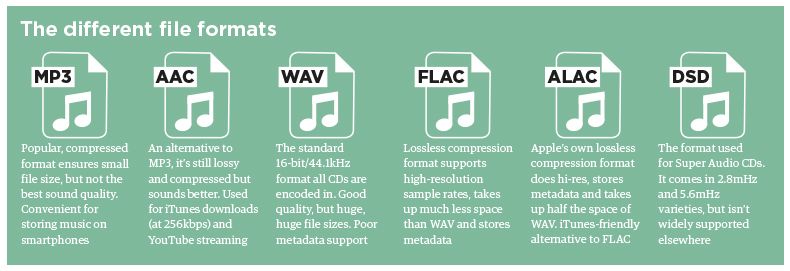
By the way, in addition to “lossy compression”, there are “lossy compression (representative: FLAC, ALAC)” and “uncompressed (representative: AIFF, AAC)” as music compression formats.

Both AAC and MP3 can compress the sound source data to about 1/10 of the original size with some deterioration in sound quality, but in terms of compression ratio, AAC is about 1.4 times higher than MP3. This means that AAC compressed files are smaller in size than MP3 files.

Therefore, for the same file size, AAC has higher sound quality than MP3, while for the same sound quality, AAC file is smaller than MP3.

However, from a bit rate point of view, if it is 128 kbps or less, AAC is by far the highest sound quality, but if it exceeds 198 kbps, MP3 will have a higher sound quality. .

PS: Bitrate is a numerical value that indicates how much audio data is packed during compression. The higher the number, the less audio data will be deleted and the higher the sound quality, but the larger the compressed file size.

What format is suitable for my music? 

Today, most of the music is listened to digitally. Or listen to your favorite songs directly through various streaming services or the files are dragged to your own mobile phone or laptop. In the second case in particular, it often happens that different music formats are used, each with its own advantages and disadvantages.

Music format

Because all music and sounds can be saved on devices in many different formats. Strictly speaking, these are audio formats that offer different sound quality and take up different amounts of storage space. Therefore, you will find below which audio format should be used and when.

Music File Formats

MP3 is well known

Anyone who has anything to do with digital music will be familiar with the MP3 format. Even the MP-3 player bears the name of this format in its day. Not surprisingly, MP3 is the most popular music format in the world. It is a lossy format that removes sounds that are inaudible to humans, so to speak, to reduce the size of the rest of the file. This means that, as a mere mortal, you won’t hear any difference in quality, but the file has gotten up to 90 percent smaller.

WAV is a proprietary Windows format

WAV is a Windows container format that saves music uncompressed. On the contrary, this means that a lot of storage space is required to save all the songs, radio plays, etc. on your devices. Therefore, this format is not recommended for large music collections.

But you can use a special program to convert your WAV files to MP3 in a few minutes and thus save and play them on all your devices without any problem. The software is free and can be used without any prior knowledge; check here.

ALAC is Apple’s music format

This format can also be saved as “.m4a” or “.m4p” and is the predominant music format in the iTunes Store. With the ALAC format, compression is lossless, ensuring that the final file has very high audio quality, but it also requires a relatively large amount of storage space. Also, files that end in “.m4p” have some copy protection measures, which is why this format is often used for commercial purposes.

Free formats like FLAC or Ogg-Vorbis

Ogg-Vorbis is an alternative audio format, which is a combination of current “Vorbis” music compression technology and the “.ogg” container. The advantage of this format is, among other things, that less storage space is used than with MP3 files and, at the same time, the quality is usually even better. However, the big problem is that the format is very little known and therefore only a few devices can reproduce this format.

With FLAC, the advantage is elsewhere. No major corporation has the threads in the background here. Therefore, there is no copy protection for any files. Furthermore, the format offers similar quality and also takes up little storage space. But even with this format, compatibility issues with many devices can quickly arise.

MP3 offers the best overall picture

It should be clear that MP3 has been the best audio format to use for years and still is today. Especially in private use, the advantages are enormous and no other format can match it. To do this, an overview again of the most important aspects of the MP3 format:

High quality
Low consumption of storage space.
Compatible with virtually any device
High level of consciousness