What is the AAC format? How to Easily Convert MP4 Video to AAC


Free Download Mp4Gain
picture

What is the AAC format? How to Easily Convert MP4 Video to AAC

AAC

Q1: “I want to extract audio data from .mp4 video, but I am wondering what output format to use, MP3 or AAC, can you tell me the difference between MP3 and AAC?”
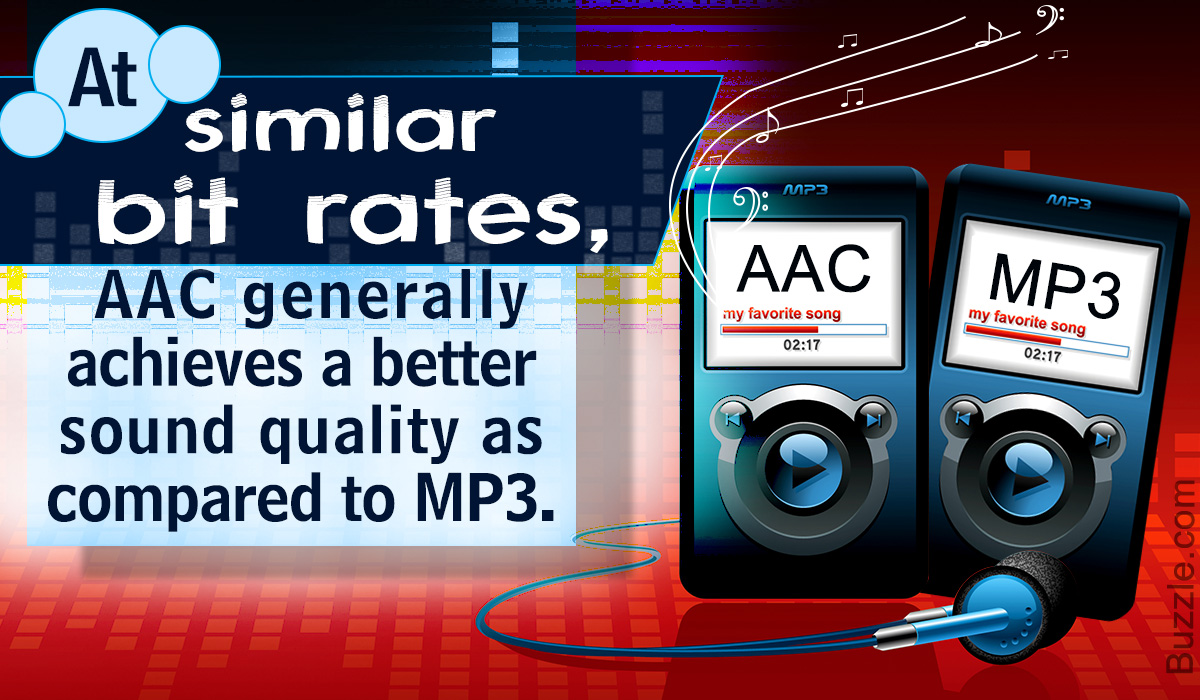
AAC Vs. MP3

Q2: “I am looking for a tool that can convert video files to music format. There are many files that I want to convert, and if possible, please show me a tool that can quickly convert or batch convert. I would be happy if I could

There are times when it is enough to enjoy music, not as a video. For example, when you watch the music video of your favorite singer, you want to enjoy the singing voice itself instead of the video.

Also, if you turn the video into music, you can easily listen to music even with your smartphone in your pocket, and the file size will be small.

However, to convert video files to music format, you need tools that can edit media files, but today there are not so many tools that have fast conversion speed on the Internet.

This time, I will explain the difference between AAC and MP3.

What is AAC
AAC (Advanced Audio Coding) is one of the technologies for compressing audio data and is a container format for storing audio data, which was developed in 1997 as a successor to MP3.

It is mainly used as a standard format for Apple products such as iPod and iPhone, and it is not compatible with Windows compatible software, making it difficult to play and edit on those devices.

Also, there are MPEG-2 AAC and MPEG-4 AAC in the AAC format, but the latest MPEG-4 AAC is often used.

The unique features of AAC are that it supports sample rates up to 96 kHz, supports up to 48 channels, and has a fairly high data compression efficiency.

Here I will talk a bit about the difference between MPEG-2 AAC and MPEG-4 AAC.

MPEG (Moving Picture Experts Group) is a group that establishes the standards used when compressing multimedia data such as video, audio, and text. Both MPEG-2 AAC and MPEG-4 AAC are audio data compression methods specified by MPEG.

MPEG-2 AAC A popular format for digital terrestrial broadcasting, it is considerably inferior to MPEG-4 in terms of compression efficiency.

It is a widely used music standard in portable devices such as MPEG-4 AAC digital audio players and digital cameras. The compression efficiency is significantly improved from 2, and the compressed music file size is also smaller.

Difference between AAC and MP3
In this part, I will explain the difference between “AAC” and “MP3”, which are often compared to each other.

Either also “lossy compression in the form of” as it is not returned based on sound quality. When compressing the sound source at once it is a “lossy compression” characteristic.

By the way, in addition to “lossy compression”, there are “lossy compression (representative: FLAC, ALAC)” and “uncompressed (representative: AIFF, AAC)” as music compression formats.

Both AAC and MP3 can compress the sound source data to about 1/10 of the original size with some deterioration in sound quality, but in terms of compression ratio, AAC is about 1.4 times higher than MP3. This means that AAC compressed files are smaller in size than MP3 files.

Therefore, for the same file size, AAC has higher sound quality than MP3, while for the same sound quality, AAC file is smaller than MP3.

However, from a bit rate point of view, if it is 128 kbps or less, AAC is by far the highest sound quality, but if it exceeds 198 kbps, MP3 will have a higher sound quality. .

PS: Bitrate is a numerical value that indicates how much audio data is packed during compression. The higher the number, the less audio data will be deleted and the higher the sound quality, but the larger the compressed file size.


Free Download Mp4Gain
picture


Mp4Gain Main Window
picture


Mp4Gain Features
picture


Free Download Mp4Gain
picture

Differences Aac plus vs MP3

When deciding which compression format to choose to take full advantage of own resources such as those of the listener in streaming broadcasts, one of these two alternatives is generally considered.

mp3 vs aac

MP3 or MPEG-1 Audio Layer 3:

It is a standard compressed digital audio format with loss, the loss of information from the mp3 format is not audible by the human ear, therefore we will not distinguish the difference between an uncompressed audio file and an mp3 file.

In addition an mp3 file manages to reduce the size of the sound file without influencing its quality, approximately 1 minute of audio in mp3 format occupies 1 MB with a quality almost equal to the quality of Cd.

These advantages have achieved that the mp3 format can be played in almost all audio players, which is the format par excellence for the exchange through the internet, one of the best options at this time to store music with good quality, and also The audio format that is most used in portable players is a standard and therefore compatibility with all media is guaranteed.

The mp3 audio format allows you to select the quality of the audio that we are going to compress, the quality of cd would be equivalent to 128 Kbps (Bit rate), but we can select the compression between 8 Kbps and 320 Kbps taking into account that the higher the transmission of data (Kbps), the greater the use of broadband resources for both the broadcast and the reception by the listener.

AACplus: MP4 / aacPlus (HE-AAC) Enconder v 1.31; Stereo
As in the mp3, in the aacplus there is a solution for the little width for the channels. This is what is known as “Parametric Stereo” and corresponds to what is known as HE-AAC v2. Unlike what happens in the case of mp3, it is not convenient to use this option in high bitrates, in this case over 48kbps.

Considerations:

Quality assessments are expressed in percentages, with 100% being the overall quality of the original file.
The valuations are merely estimates but are intended to faithfully reflect the differences in quality between the different formats to the different bitrates.
The best alternatives for each format have been marked with red, according to the relationship of quality and consumption of own resources when emitting and resources of the listeners to correctly receive the audio.
Conclusions:

The first and most important regarding the mp3 is that, even in its highest quality, it is already obsolete. In any bitrate it is surpassed by the others so it will always be preferable to perform compression to any other of the subsequent formats. Ogg Vorbis and mpc are better quality formats that far exceed the mp3 but we have not included because they are not widely used. There are also several other formats that offer better compression.
For the mp3 the best bitrate is at 128kbps or 192 kbps, with a minimal difference in quality. Above that the difference is imperceptible and inferior to it is widely discernible.
At 72/74% the AAC PLUS format beats its competitors widely in the 48 / 64kbps being the best choice in the range. It will depend on the original file, as well as the greater or lesser preponderance of the high, medium and low. The decrease in fidelity is easily noticeable but it is not too much and many people will have no problem accepting it.
Under 128kbps, the quality of the mp3 drops considerably, while in the AAC PLUS format the decrease is not as pronounced. In the latter, it can be seen that between 128 and 48kbps the decrease in quality is minimal, with a difference of only 7%. Therefore, it is not worth compressing at 128kbps or at 96kbps having the option of doing so at 48 or 64 with a minimal difference in quality.

Advantages of AAC with respect to MP3

The AAC format supports multichannel sound which is an appropriate audio codec for the surround sound of 6 or more speakers, although it is currently not the most supported codec for it. However, MP3 only allows, in its base format, stereo sound.
It can reach a sampling frequency of 96khz, used in recording studios. MP3 is designed for playback only and to reach up to 48khz.
The sound quality is considerably superior to the same birate. This means that it is possible to encode an audio file in AAC with a bitrate lower than the equivalent in MP3 while maintaining the same sound quality. An audio file in HE-AAC encoded at 48kbps can offer a quality similar to an MP3 encoded at 128kbps.
Even at very low bitrates (32kbps or less) the sound suffers little loss compared to MP3. This could be