What is the AAC format? How to Easily Convert MP4 Video to AAC


Free Download Mp4Gain
picture

What is the AAC format? How to Easily Convert MP4 Video to AAC

AAC

Q1: “I want to extract audio data from .mp4 video, but I am wondering what output format to use, MP3 or AAC, can you tell me the difference between MP3 and AAC?”
AAC Vs. MP3

Q2: “I am looking for a tool that can convert video files to music format. There are many files that I want to convert, and if possible, please show me a tool that can quickly convert or batch convert. I would be happy if I could

There are times when it is enough to enjoy music, not as a video. For example, when you watch the music video of your favorite singer, you want to enjoy the singing voice itself instead of the video.

Also, if you turn the video into music, you can easily listen to music even with your smartphone in your pocket, and the file size will be small.

However, to convert video files to music format, you need tools that can edit media files, but today there are not so many tools that have fast conversion speed on the Internet.

This time, I will explain the difference between AAC and MP3.

What is AAC
AAC (Advanced Audio Coding) is one of the technologies for compressing audio data and is a container format for storing audio data, which was developed in 1997 as a successor to MP3.

It is mainly used as a standard format for Apple products such as iPod and iPhone, and it is not compatible with Windows compatible software, making it difficult to play and edit on those devices.

Also, there are MPEG-2 AAC and MPEG-4 AAC in the AAC format, but the latest MPEG-4 AAC is often used.

The unique features of AAC are that it supports sample rates up to 96 kHz, supports up to 48 channels, and has a fairly high data compression efficiency.

Here I will talk a bit about the difference between MPEG-2 AAC and MPEG-4 AAC.

MPEG (Moving Picture Experts Group) is a group that establishes the standards used when compressing multimedia data such as video, audio, and text. Both MPEG-2 AAC and MPEG-4 AAC are audio data compression methods specified by MPEG.

MPEG-2 AAC A popular format for digital terrestrial broadcasting, it is considerably inferior to MPEG-4 in terms of compression efficiency.

It is a widely used music standard in portable devices such as MPEG-4 AAC digital audio players and digital cameras. The compression efficiency is significantly improved from 2, and the compressed music file size is also smaller.

Difference between AAC and MP3
In this part, I will explain the difference between “AAC” and “MP3”, which are often compared to each other.

Either also “lossy compression in the form of” as it is not returned based on sound quality. When compressing the sound source at once it is a “lossy compression” characteristic.

By the way, in addition to “lossy compression”, there are “lossy compression (representative: FLAC, ALAC)” and “uncompressed (representative: AIFF, AAC)” as music compression formats.

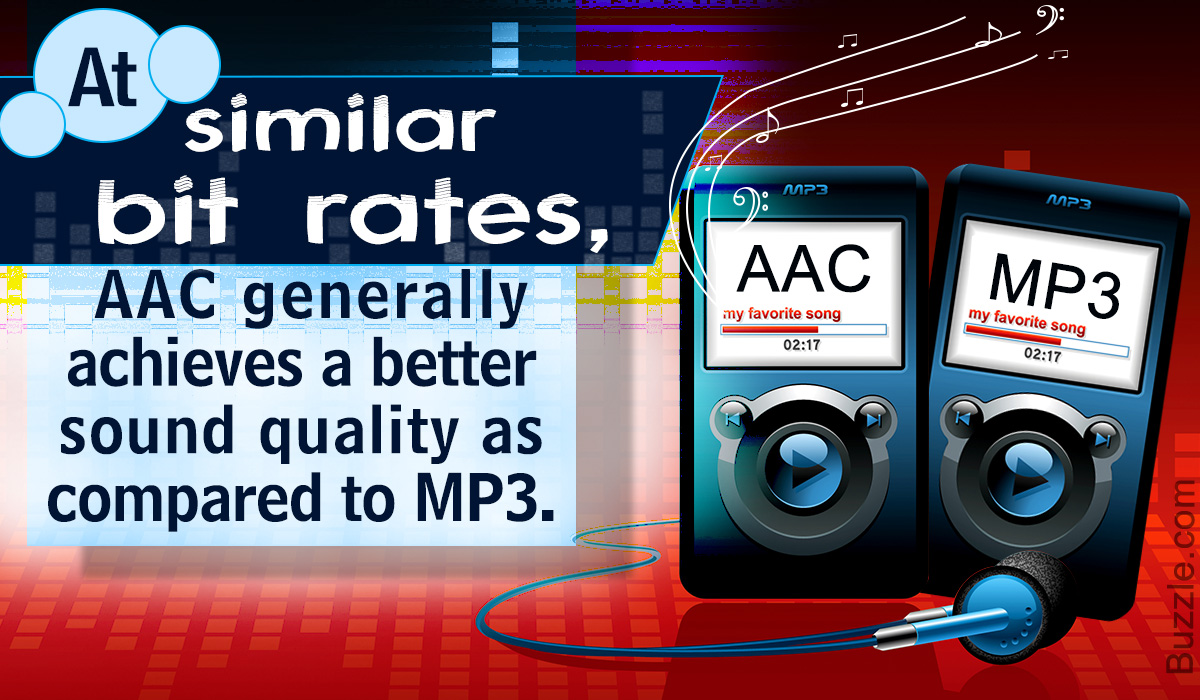
Both AAC and MP3 can compress the sound source data to about 1/10 of the original size with some deterioration in sound quality, but in terms of compression ratio, AAC is about 1.4 times higher than MP3. This means that AAC compressed files are smaller in size than MP3 files.

Therefore, for the same file size, AAC has higher sound quality than MP3, while for the same sound quality, AAC file is smaller than MP3.

However, from a bit rate point of view, if it is 128 kbps or less, AAC is by far the highest sound quality, but if it exceeds 198 kbps, MP3 will have a higher sound quality. .

PS: Bitrate is a numerical value that indicates how much audio data is packed during compression. The higher the number, the less audio data will be deleted and the higher the sound quality, but the larger the compressed file size.


Free Download Mp4Gain
picture


Mp4Gain Main Window
picture


Mp4Gain Features
picture


Free Download Mp4Gain
picture

AAC, all about the AAC format

AAC Format

What is AAC? AAC is short for Advanced Audio Coding.

This makes AAC an extremely compressed audio file. This is to save storage space. And this is achieved by dispensing with frequencies in an AAC file that are imperceptible to the human ear anyway. We speak here of the so-called audio codecs.

AAC

In this way, the AAC file works exactly the same as the MP3: in both cases, the goal is to reduce the amount of data so that it can be transferred or saved more quickly. AAC versus MP3, which is better? The AAC format does not exist that long as MP3. But does that automatically mean that the newest version is the best?

Basically, it can be said that AAC allows stronger compression with better sound quality compared to MP3. The AAC file achieves higher quality standards through error correction algorithms. Assuming the same sound output, the AAC file needs three-quarters of the storage space of an MP3 file.

AAC occupies more and more the space that MP3 files occupy. This means that more and more Internet radios are also using AAC transmissions. Several other music websites also see this audio compression as the model of the future. In addition to the standard format, many MP3 players are also designed for AAC files.

In addition, AAC formats appear in iTunes, are used on iPhone, iPad and iPod and are compatible with PlayStation and oriented to Nintendo. Playing AAC format You can play the AAC format with a standard audio player.

Common file extensions for AAC files are .acc, .mp4, .m4a, .m4p, and .m4v. Convert AAC Format If you don’t have any programs on your Windows or Mac computer that can be used to play AAC files, you can convert individual files.

You can access various offers. You can create a WAV file, a WMA file or an MP3 file from the AAC file. Is it recommended to convert the files to another format? Although it is always possible to change the file being played so that it can be listened to with a player on the mobile device or computer, this is not necessarily advisable.

Every file format conversion is accompanied by a loss of quality: regardless of whether you convert an AAC file to MP3 format or play the MP3 file as an AAC file, the audio quality suffers. Therefore, you should only do this in exceptional cases, for example if you do not have a suitable playback device or program.

Tones that the human ear cannot perceive are considered unnecessary for sound and can be eliminated. In addition to the inaudible frequencies, this means redundant sounds that are produced when they overlap.

ACC files score with high sound standards. This is also a reason why Apple’s iTunes relies on AAC files. You can also provide copy protection for files. This prevents uncontrolled distribution of sound files.

Audio file format AAC

AAC files are designed to replace MP3 files. Lossy compression gives you better sound at the same bit rates. AAC files are standardized by ISO / IEC as part of the MPEG-2 and MPEG-4 file families (originally they were members of the MPEG-2 Part 7 filegroup). AAS files contain a higher number of sample rates (compared to MP3) and up to 48 channels. Significantly improved encoding efficiency, including an increased number of filter sets. Enhanced transient signal coding accuracy. Like MP3 files, AAS files suppress sound at frequencies that a person cannot hear. This way you can reduce the file size. Compared to MP3, AAS files are much smaller.

AAC Format

Technical details of AAC files

MPEG-2 Part 7 files are represented by three types of files: Low Complexity AAC-LC, Main Type (AAC Main), and Variable Rate Files (AAC-SSR). AAS files allow temporary noise generation, uneven sampling, and repeated generation of the bitstream format (for 16 stereo channels, 16 mono channels, 16 low-frequency channels, and 16 channels for single bitstream annotation). In 1999, the MPEG-2 Part-7 format was incorporated into the MPEG-4 Part-3 format, allowing the introduction of audio object types as well as constant noise replacement technology. The AAC format is currently described in ISO / IEC 14496-3. Lossy compression uses sound masking to remove unnecessary information while maintaining quality.

Aac format

Additional information about the AAC format

Until now, the AAC format has not yet achieved mass distribution in audio media. However, in a number of parameters it exceeds all existing types of audio compression, which means that it deserves our attention.

What is this?

Let’s start with the definition: AAC is the proprietary (proprietary) option for compressing an audio file. At the same time, the quality loss when encoding is less than with MP3 at the same bit rate. Furthermore, the AAC format is a wideband algorithm for encoding audio that uses two fundamental encoding principles to greatly reduce the amount of data required to transmit high-quality digital audio. This solution is recognized as one of the highest quality implemented using lossy compression technology. The format is compatible with most modern devices, including laptops. It should be noted that ringtones in AAC format can be purchased from the iTunes store and that this store presents music that is only compressed with this solution. It should also be said that the AAC format was originally created as a successor to MP3, which can offer improved encoding quality. The solution was published in 1997 as the new seventh part of the MPEG-2 family.

All the details

Interestingly, the AAC format has a sample rate in the range of 8 to 96 kHz, as well as the number of channels in the range of 1 to 48. MP3 uses a set of hybrid filters. AAC, in turn, refers to the modified discrete cosine transform with an expanded “window” size that reaches 2048 points.

Therefore, compared to MP3, AAC is much better suited for encoding audio with complex pulse stream as well as square wave signals. The format was given the ability to dynamically change MDCT block lengths within 2048-256 points. In the case of a short or simple movement, a small 256-point “window” is used to achieve better resolution. In this case, a default 2048-point “window” is used to maximize encoding efficiency. AAC has several advantages over regular MP3. Noteworthy is the implementation of a large number of audio channels (up to 48), significant coding efficiency at constant and variable bit rates, and sample rates from 8 Hz to 96 kHz (for MP3 from 8 Hz to 48 kHz). and a more flexible special mode called Joint Stereo. The solution is “AAS +”, a codec designed for a low bit rate. It is a combination of SBR and AAC

What is the AAC format and what are the advantages over mp3?

Designated heir to MP3, it is the most widely used encoding format today. Compatible with YouTube, iPhone and Android, among others

AAC

More than twenty years of honorable career, which have allowed music to become truly “pop” and spread throughout the world, regardless of the playback device you use. This is the rather heavy legacy of MP3, a multimedia format created between the late 1980s and early 1990s by Italian engineer Leonardo Chiariglione. In its place we now find AAC, the audio file encoding standard developed by Bell Labs, Fraunhofer Institute, Dolby Labs, Sony, and Nokia at the beginning of the last century.

AAC

A lossy codec, AAC is considered a standard by both ISO (acronym for International Organization for Standardization) and IEC (acronym for International Electrotechnical Commission) and is an integral part of the MPEG-2 and MPEG-4 specifications. After a few years “in the shadow” of MP3 encoding, today AAC encoding is by far the most widespread and adopted: it is the standard or default audio format for YouTube, iPhone, iPod, iPad, Nintendo DSi, Nintendo 3DS. , iTunes, DivX Plus Web Player, PlayStation 3 and is compatible with PlayStation Vita, Wii, Sony Walkman MP3, Android and BlackBerry.

Differences from MP3 files

The reason for this success is explained by the numerous improvements that this standard presents compared to the one conceived by Chiariglione. First of all, the AAC can guarantee better audio playback quality with the same file size (and therefore bit rate). This is because AAC encoding has a greater variety of samples (8 to 96 kilohertz, as opposed to 16 to 48 kilohertz samples allowed by the MP3 format) and supports a greater number of channels of audio playback (up to 48 channels).

This is combined with the increased flexibility and flexibility of AAC encoding, which allows engineers to design and implement encoding and decoding algorithms according to their needs. This flexibility encourages real competition, leading to more efficient and effective algorithms. Translated into simple words, an audio file converted with an AAC encoder at the same bit rate will guarantee, as already mentioned, better playback quality than many other competitive lossy formats.

What is the AAC?

MP3 has practically become synonymous with online audio, as it is capable of transforming your music into small files, ideal for sharing. However, the fact of having a “reasonable” audio quality displeases many people, opening the market to other more robust formats, such as AAC (Advanced Audio Coding).

AAC (Advanced Audio Coding) Bluetooth Audio Codec

Unlike FLAC, AAC is a lossy audio compression scheme that focuses not on audiophiles, but on users who want high-quality music without sacrificing large disk space or even their portable music players to store them.

Seen by the market as a successor to MP3, this format has big names behind its development, such as Sony, AT&T, Nokia and Dolby Laboratories, and has even been standardized by renowned ISO and IEC institutes. Many of our devices already use AAC as standard, like PlayStation 3 and Portable, Nintendo Wii and DSi, Andoid devices, iPhones and iPod, being the standard format used even in iTunes.

AAC

To explain AAC’s superiority over MP3, let’s look at some points of comparison:

-AAC achieves a higher level of audio quality without increasing file size. This is measured in Kbps (Kilobits per second) and the higher this number, the more transparent the sound will be and the more space will be needed for the file. A song compressed in AAC at 96 Kbps has a clearer sound than an MP3 at 128 Kbps, which means more quality in a smaller size;
-A very important parameter to estimate the “purity” of a song is its sampling frequency, because the higher the margin, the more details are stored. While MP3 has a range of 16KHz to 48KHz, AAC ranges from 8KHz to 96KHz;
An MP3 audio file only supports 5.1 channels in MPEG-2, while AAC is capable of playing up to 48 different channels in MPEG-4;
-The above data only explains the preference of many users and companies to replace MP3, which has been standard since 1993. The only drawback seen by some manufacturers is the need to pay royalties to the Dolby Digital encoder (decoder) and AAC decoder. , but this is something that already happens with the MP3 format, so who knows with a little negotiation things will be resolved.

M4A – AAC format and characteristics

Presentation of the AAC format

AAC (Audio Advanced Coding) is an audio data compression format developed by the Fraunhofer Institute in collaboration with AT&T, Nokia, Sony and Dolby.

As with the MP3 format, it is a destruction of audio data compression, called “lossy compression” (that is, lossy compression), ie the removal of certain auditory information (for example, inaudible frequencies) to the best possible compression rate, keeping a result as close as possible to the original data.

AAC

The AAC format corresponds to the international standard “ISO / IEC 13818-7” as an extension of MPEG-2, standard of the Moving Image Expert Group (MPEG).

The AAC format was chosen by the Apple company as the primary file format on iPods or in the iTunes software.

Frequently Asked Questions: M4A – AAC Format and Features

Technical properties

AAC uses a variable bit rate encoding (Variable bit rate in English, sometimes abbreviated as VBR), that is, an encoding that allows you to adjust the number of bits used per second to encode audio data according to the complexity of current at a given moment. The algorithm used is more efficient than that of MP3, enabling smaller, higher quality files to be obtained, while requiring less resources to encode or decode.

Compared to the maximum of two channels (in stereo) supported by the MP3 format, the AAC format allows polyphonic recording of up to 48 channels. The AAC format also provides sound reproduction in the 8Hz-96.0kHz frequency band, compared to 16-48kHz for the MP3 format.

Files in AAC format, with extension .mp4 (for MPEG-4), .m4a (for MPEG-4 audio) or .m4p (for protected MPEG-4), are generally smaller than files in MP3 format.

AAC Compatibility

The AAC format is not compatible with the MP3 format, this means that you must use a player that is compatible with the format or install a specific codec so that existing players can read files in AAC format.

MP3 y AAC

However, more and more software players allow you to read files in this format, and the latest hardware MP3 players support this format.

What is the AAC format and what are the advantages compared to the mp3?

A designated heir to MP3, this is the most widely used form of encoding today. It is supported, among others, by YouTube, iPhone and Android.

AAC audio format

Over twenty years of honest career, which has allowed music to become truly “pop” and spread around the world, regardless of the playback device used. This is the rather heavy legacy of MP3, a form of multimedia created in the late 1980s and early 1990s by Italian engineer Leonardo Chiariglione. Instead, we now find the AAC, the standard for encrypting audio files developed by Bell Labs, Fraunhofer Institute, Dolby Labs, Sony and Nokia near the end of the last century.

aac format audio digital

Lossy codec, the AAC is considered a model by both ISO (an acronym for the International Organization for Standardization) and IEC (an acronym for the International Electrotechnical Commission) and is an integral part of the MPEG-2 and MPEG-4 specifications. After a few years “in the shadows” of MP3 encoding, today AAC encoding is by far the most common and adopted: it is the standard or default audio format for YouTube, iPhone, iPod, iPad, Nintendo DSi, Nintendo 3DS, iTunes, DivX Plus Web Player, PlayStation 3 and is compatible with PlayStation Vita, Wii, Sony Walkman MP3, Android and BlackBerry.

AAC – Differences with MP3 files

The reason for this success is explained by the many improvements that this model presents compared to the one developed by Chiariglione. First of all, AAC manages to guarantee better audio playback quality for the same file size (and therefore bit rates). This is because AAC encoding has a greater variety of samples (8 to 96 kilohertz compared to 16 to 48 kilohertz samples allowed by the MP3 format) and supports a larger number of audio playback channels (up to 48 channels).

AAC – Portable music player

Added to this is the increased flexibility and flexibility of AAC coding, which allows engineers to design and implement coding and decoding algorithms according to their needs. This flexibility feeds real competition, leading to more efficient and effective algorithms. Simply put, a sound file converted to an AAC encoder at the same bit rate will guarantee, as already mentioned, better playback quality than many other competing loss formats.

How to convert MP3 to AAC

The discussion about converting between MP3 and AAC files is not entirely accurate. While the second is a real audio format used in many areas, the second is an encryption algorithm that can be used by different file formats. The most well-known, in this sense, are “.m4a”, “.mp4”, “.3gp”, “.m4b” and “.m4p”. To convert MP3 to AAC, therefore, you must select one of the forms listed above.

However, converting your MP3 music collection does not require any specific action. You need to select one of the many existing audio conversion programs (or even a special web portal for file conversion) and select the tracks or albums for editing.