AAC Format


Free Download Mp4Gain
picture

AAC Format

AAC Format
AAC Format
AAC Format
AAC Format

What is AAC Format?

The Advanced Audio Codec, commonly abbreviated as ACC, is a standardized digital audio compression scheme. It has been designed to achieve better sound quality than MP3 at similar bit rates. Born out of the necessity to enhance audio quality in the era of digital technology, ACC has since become a prominent format in various multimedia applications.
Every format has its unique attributes, and ACC stands out for its efficiency and versatility. Its architecture allows it to retain more sound detail, thereby promising richer audio experiences.

Audio formats play a crucial role in defining the essence of digital media. Choosing the right format can determine the balance between quality and size, a factor paramount to the digital age.
“In the realm of sound, ACC shines bright amidst the myriad of formats.” – The Sound Almanac

Benefits of using ACC audio.

The superiority of ACC over some other traditional formats lies in its myriad advantages. Firstly, it offers a wider frequency range, meaning listeners can hear more details in both the low and high ends of the audio spectrum.
Moreover, it provides a more efficient compression algorithm, allowing for smaller file sizes without sacrificing quality. This makes ACC an excellent choice for streaming services and other platforms where bandwidth and storage are of concern.

Lastly, ACC’s adaptability ensures it can be used across various platforms, ensuring consistent audio quality regardless of the device.
“A great audio format is like a symphony; it brings out the best in every note.” – Digital Media Chronicles

How does AAC compare to MP3?

When one draws a comparison between ACC and MP3, the former often comes out on top in terms of technical prowess. While MP3 revolutionized the music industry in the 90s, ACC has taken the reins in the 21st century by providing enhanced audio clarity.
A key distinction lies in their bit rates. ACC can deliver similar or even better quality than MP3 at a reduced bit rate, making it more efficient and versatile.

However, it’s essential to understand that while ACC might hold technical advantages, MP3’s widespread adoption ensures its presence in most audio applications.
“While MP3 paved the way, ACC refined the path.” – Echoes of the Digital Age

Historical background of AAC format.

Delving into the history, ACC was introduced in 1997 as part of the MPEG-2 standard. Designed to be the successor of MP3, its development was driven by the goal of surpassing the existing audio formats in quality and efficiency.
Throughout its journey, ACC has undergone various enhancements. Each iteration aimed at refining its performance, making it a stalwart in the realm of digital audio.

Today, it stands as a testament to the advancements in audio technology, bridging the past and the present.
“History isn’t just about dates; it’s about innovation, especially in the digital world.” – Auditory Odyssey

Technical specifications of AAC.

ACC’s brilliance is underscored by its technical underpinnings. It supports up to 48 channels, as opposed to MP3’s two channels. Additionally, it boasts a wider frequency range, extending from 8Hz to 96kHz.
Its sampling rates and enhanced compression algorithms ensure a superior audio experience, setting ACC apart from its counterparts.

It’s these technical attributes that allow ACC to retain audio fidelity even at lower bit rates, a hallmark of its design.
“In technology, the devil is in the details, and ACC mastered them all.” – The Digital Revolution

How is AAC used in the modern era?

Today, ACC is ubiquitous. From streaming services to podcasts, its presence can be felt across various multimedia platforms. Its efficiency makes it ideal for applications where bandwidth is paramount, ensuring listeners receive top-tier audio quality.
Moreover, as devices evolve, ACC’s adaptability ensures its seamless integration, cementing its position in the digital realm.

The digital landscape is ever-evolving, and ACC continues to remain at its forefront, owing to its versatility and excellence.
“Modern challenges require modern solutions, and ACC is the answer to today’s audio challenges.” – Tales of the Technological Era

What devices support AAC playback?

Most modern devices, ranging from smartphones to home entertainment systems, support ACC playback. Its widespread acceptance is a testament to its superiority and the industry’s confidence in its capabilities.
Manufacturers realize the importance of sound quality for consumers. By incorporating ACC compatibility, they ensure that listeners get the best audio experience possible, regardless of the device they use.

As technology marches forward, the list of devices that support ACC is only expected to grow.
“In a world filled with noise, it’s the clarity of ACC that shines through.” – Rhythms of the Modern World

Future prospects of AAC technology.

The trajectory of ACC appears promising. As audio requirements become more demanding and listeners more discerning, AAC’s attributes position it as the format of the future.
Developments in audio technology might bring about new formats, but the foundational principles of ACC will likely remain relevant. Its adaptability ensures it can evolve with the times, making it a lasting presence in the audio world.
“The future is but a canvas, and ACC has already painted its masterpiece.” – Soundscapes of Tomorrow

Is AAC the best audio format?

While it’s tempting to label AAC as the best, it’s essential to understand that the “best” is subjective. AAC holds undeniable advantages in terms of efficiency and quality. However, the right format often depends on specific use cases and personal preferences.
That said, in many scenarios, ACC does emerge as the top contender, balancing quality with efficiency like few other formats can.
“Perfection isn’t an end but a journey, and ACC’s journey is nothing short of remarkable.” – The Audio Anthology

Potential drawbacks of AAC.

No technology is without its shortcomings. Some critics argue that while AAC is efficient, it may not always deliver the best quality for audiophiles at higher bit rates compared to other lossless formats.
Additionally, older devices might not support ACC, leading to compatibility issues.

Despite these drawbacks, AAC’s merits often outweigh its limitations, making it a favorite in many applications.
“Every coin has two sides, but it’s the shine that often catches the eye.” – Digital Dilemmas

Final words

The AAC format, with its rich history and technical brilliance, stands as a beacon in the realm of audio technology. Its journey from its inception to its widespread adoption today underscores its significance. As we continue to evolve in the digital age, ACC’s role in shaping our auditory experiences cannot be overstated.


Free Download Mp4Gain
picture


Mp4Gain Main Window
picture


Mp4Gain Features
picture


Free Download Mp4Gain
picture

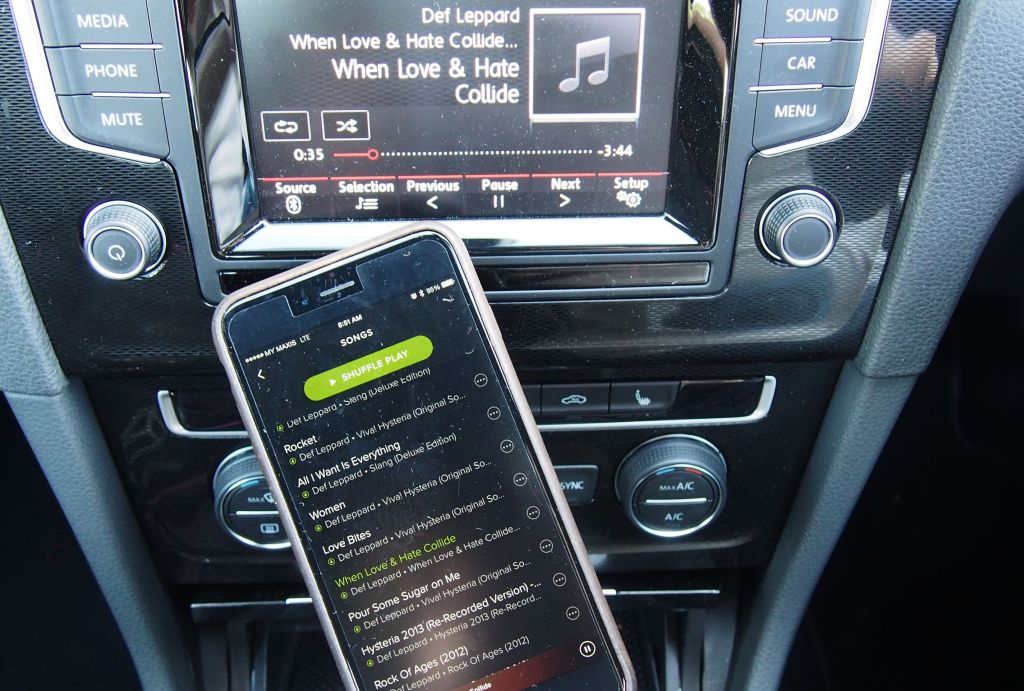
What sound quality is best for the music we listen to in the car?

What sound quality is best for the music we listen to in the car?

Listen music in the car

There are two suggestions for car music sound quality:

Listen music in the car

1. Many music lovers, who are looking for extremely high music quality, will be interested in high quality and lossless formats like OGG, FLAC or AAC.

However, due to the limited music formats that the car can recognize, music files of the above formats may not be recognized by the car.

Let alone play it.

2. In general, in the field of car music, the most commonly used formats are MP3 and WMA.

Although these formats are not as good as the ones mentioned above in terms of sound quality, they are expensive because almost all car systems can recognize them.

So, if you want to say which music file format is the best in car music, it has to be MP3 and WMA.

What sound quality is best for the music we listen to in the car?

What sound quality is best for the music we listen to in the car?

Listen music in the car

The best audio hardware equipment is one of the most important factors that determine sound quality.

Listen music in the car


This is also related to the degree of distortion of the music being played, that is, how well the sound reproduction is restored.

This directly affects the mood of the listener. Because if the sound is loud and has no sense of hierarchy,

If you listen to it for a longer time, it will irritate you or make you feel dizzy when driving.

The other is to adjust the sound effect by yourself. After all, everyone’s sense of hearing is different.

It depends on what you adjust to make it comfortable to listen to. Adjust different parameters according to different types of music.

There will be unexpected effects.

I myself belong to the latter, although I am not a professional,

But with lossless sound quality (my car supports it, but it’s not a luxury car)

It can also bring out the feeling of fat low-frequency, clear mid-range, and bright highs (this takes some skill to distinguish),

But not all cars have sound quality adjustment.

As for the best car music sound quality, as mentioned in the article above, car music can download music with sound quality wav, ape, flac,

This is lossless sound quality, better than MP3 (as long as the device supports it).

Although now it connects via Bluetooth mobile phone or Baidu Carlife

Playing music online on mobile phones has become mainstream, but there are still a small number of people,

Insist on downloading via U disk, and use the car USB interface to play music.

What is the best audio format to get the best sound quality?

What is the best audio format to get the best sound quality?

Best Audio Format

Mp3, Wav, Flac… Which one is better?

Best Audio Format

We’ve heard so many discussions about whether mp3 can sound the same as wav or flac and there are advocates for both.

There are people who staunchly defend mp3 and show and prove that an mp3 generated with certain settings can sound so similar to a WAV that not even 1% of people with ear training can distinguish it.

Others, on the contrary, argue that the method used by the mp3, causes a lot of information to be discarded in order to make the file smaller and this necessarily causes the quality to be diminished.

But everyone forgets that the number one point is to think about what kind of device or audio player we will listen to the music. Because for all these niceties mentioned above to make sense, we’ll have to have equipment that can play HD audio, otherwise we won’t easily tell one from the other.

And the truth is that most people play music on a medium quality equipment in a car on a phone or on a laptop, which makes the question of whether an mp3 sounds very different from a wav is unnecessary.

Mp4Gain is a program that manages to make audio, whatever the format, sound the best it can be.

What is the best sounding audio format? Is it MP3?

What is the best sounding audio format? Is it MP3?

Best Audio Format
Best Audio Format

The audio formats with the best sound quality are

Best Audio Format
Best Audio Format


mp3
b, wav
c, wma
d.rm

Answer: The

B wav format files are usually stored on the computer The most widely used file format is an uncompressed format, which stores the most authentic and original sampled data, that is, the sampled data of the set frequency and bit depth they are true and lossless, like 44.1 kh/16-bit audio CD quality, other frequencies and bit depths can of course be stored.

Below are other audio file formats:

1. Format

MP3 MP3 is an audio compression technology that compresses files to a small volume on the premise of losing a certain amount of high-frequency timbre data. The highest bitrate can only reach 320K. The frequency part is basically lost.

2. Format

WMA WMA is Windows Media Audio from Microsoft. The WMA format has a higher compression rate than MP3 and the generated files are smaller. It is suitable for transmission in low-speed networks many years ago.

3. Format

FLAC FLAC is lossless audio compression. Since it is lossless compression, it will not destroy any original audio data information and can restore the sound quality of the music on the CD. FLAC is very similar to MP3, but it is lossless compression.

4. The format

APE APE is similar to FLAC and is also a lossless audio compression technology.

Something very important, that we will develop in another article and that is almost always ignored when it comes to comparing audio formats, is the equipment or device that we use to play music.

That is the point from which we should start.

10 Common Audio Formats: Which Format Should I Choose?

10 Common Audio Formats: Which Format Should I Choose?

Audio Formats
Audio Formats

Audio files come in various formats and sizes, in addition to our common MP3, there are AAC, FLAC, OGG, WMA, etc.

Audio Formats
Audio Formats

Why are there so many different audio standards? What format is the best? What should you choose when saving audio files?

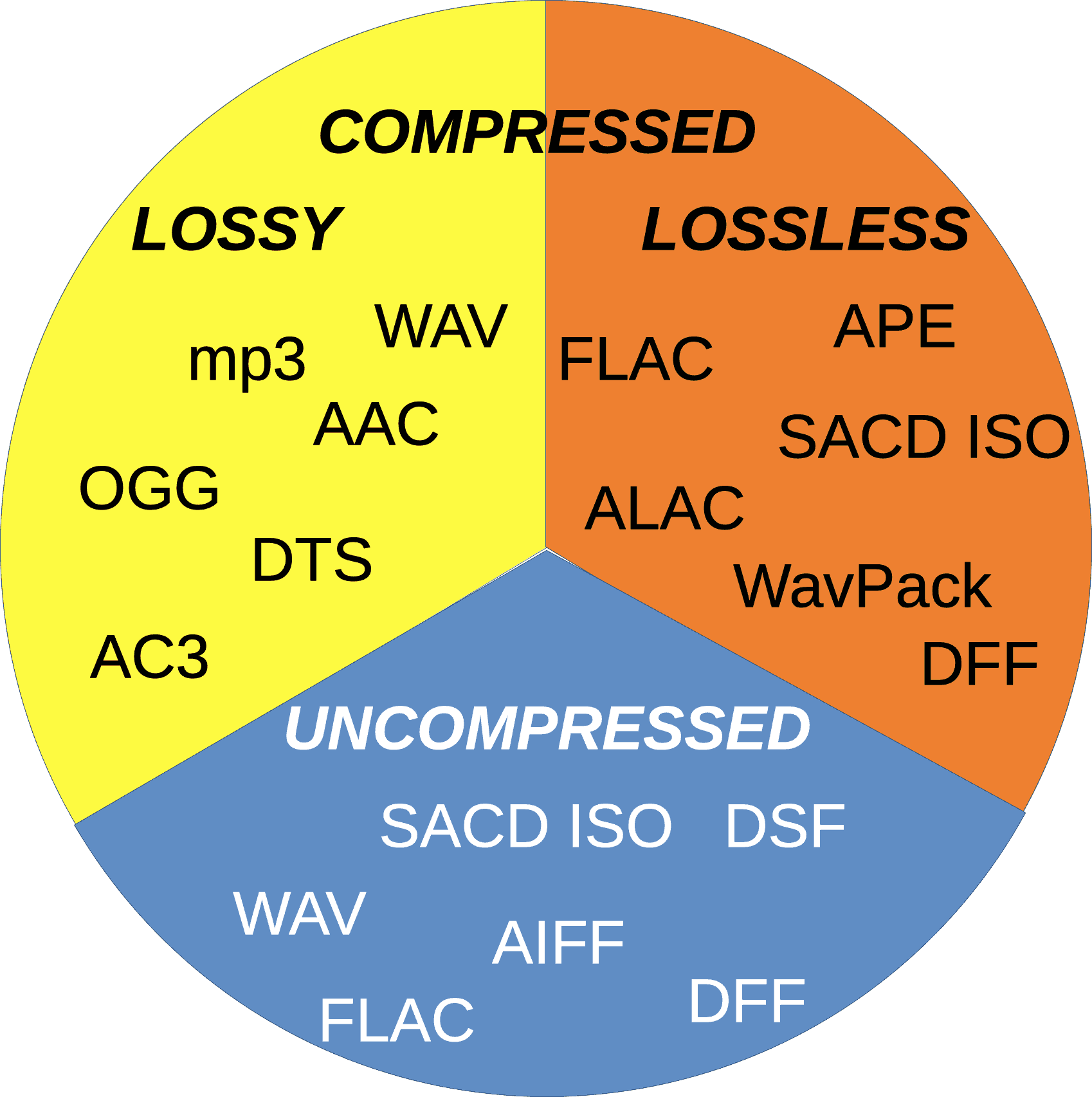
In fact, all audio formats can be divided into 3 categories, and once you understand the characteristics of each of these 3 types, you can choose one of the three, and then choose a further subdivided category according to your specific needs.

Comparison of audio formats – operation, equipment – Introduction to 10 common audio formats: which format should I choose?
uncompressed audio format
The uncompressed format preserves the original audio waveform. The so-called original audio waveform refers to the result after the sound is captured and converted to a digital signal for storage. Raw audio waveforms are stored without any post processing. From the results, such an audio file will consume a lot of space. For 24-bit (24-bit) 96 KHz audio, you need about 34 MB of storage space per minute.

Uncompressed audio format: PCM
PCM is short for Pulse-Code Modulation, which is a technical method of simulating sound using digital signals. The sounds that we can hear in nature exist in the form of physical sound waves, and in order to simulate this sound wave with a digital signal, scientists decided to sample it and record it with another wave, which is what we call a pulse.

Therefore, digital audio has two basic concepts: sample rate and bit depth. The so-called sampling rate refers to the speed of how many times the sound is sampled. The so-called bit depth refers to the space occupied by a single sample. In uncompressed formats, the product of the sample rate, bit depth, and audio duration is the space occupied by the digital signal that represents the audio content.

PCM is a format commonly used on CDs and DVDs, but its derivative LPCM is often used in practice. LPCM is short for Linear PCM, which is Linear Pulse Code Modulation. Most PCM files in use today are actually LPCM files, so there is no need to differentiate between them.

Uncompressed audio format: WAV
WAV is short for Waveform Audio File Format, which is a standard audio format developed by Microsoft and IBM in 1991.

Many people think that WAV is an uncompressed audio format, but this is not entirely true. In fact, WAV is a “wrapper” type format, a common format developed by Microsoft to use audio for various platforms. So it is possible for WAV to contain compressed audio, but this is rarely the format of choice when using compression these days.

Comparison of audio encoding formats

Comparison of audio encoding formats

audio encoding formats

Parameters and nouns

audio encoding formats

Rate/bit rate/code rate, Kbps, i.e. the volume of data contained in a transmission medium or audio file per unit of time. In general, the higher the volume, the higher the sound quality. Of course, the comparison standards are different under different compression algorithms, and the bitrate may be lower as well. The sound quality is relatively high, for example, the sound quality of aac with a medium bitrate is better than that of mp3 with a high bitrate. The CD bit rate is 1411.2 kbps and there are some lossless compressions that can come close to this value, such as flac.
The sampling rate, KHz, is the number of points that the audio acquisition device collects audio signals in unit time. In general, it is believed that the higher the sample rate of the same encoding algorithm and the same bit rate, the higher the sound quality. However, the standards of comparison between different encoding algorithms are different. Currently, 44.1 KHz and 48 KHz are more commonly used in mobile devices, and the sample rate in instant messaging is lower, possibly 16 KHz or less.
The number of channels, it is generally believed that the greater the number of channels, the more stereoscopic the sound. Real-time communication can be monophonic, and network transmission often uses two channels. Minimal mono, up to 5 channels?
Tracks, sounds made by different instruments/people, up to 48 tracks?
Compression ratio, compared to the source audio file, the volume changes after compression, such as 1/18, 1/12. Compression ratio opus>aac>ogg>mp3 (and wma)>ape>flac>wav (under the same sound source condition). The compression ratio of wma below 192kbps is higher than that of mp3.
Sound quality, lossy or lossless, can be restored to the audio source file after decoding. Sound quality comparison wav=flac=ape>aac=opus>ogg>mp3~wma
Frequency, Hz, low frequency or high frequency. Note that the human ear is more sensitive to low frequency signals. For example, the mp3 compression algorithm removes all high-frequency signals.
Hardware support, device support on the capture and playback end, mp3>wma>aac~wav~opus>flac~ogg>ape.

All the Audio Format Differences: Which One Should You Use?

All the Audio Format Differences: Which One Should You Use?

All the Audio Format

Three classifications of audio formats

All the Audio Format

Characteristics and differences of different audio formats

Which audio format is right for you?

You already know MP3, but what about AAC, FLAC, OGG or WMA? Why are there so many audio file formats and is there any best audio format?

Comparison of audio formats

Audio files come in various types and sizes. While we’re all probably familiar with MP3, what about AAC, FLAC, OGG, or WMA? Why are there so many audio standards? Is there a better audio format? Which ones are important and which ones can be ignored?

All audio formats are divided into three main categories, and once you know what the categories mean, you can choose the format within the categories that best suits your needs.

uncompressed audio format

Uncompressed audio consists of actual sound waves that have been captured and converted to digital format without any additional processing. So uncompressed audio files tend to be the most accurate, but take up a lot of disk space: about 34MB per minute for 24-bit 96KHz stereo.

Audio file format: PCM

PCM stands for Pulse Code Modulation, a digital representation of the original analog audio signal. Analog sounds exist as waveforms. To convert a waveform into digital bits, the sound must be sampled and recorded at specific intervals (or pulses).

This digital audio format has a “sample rate” (how often the samples are made) and a “bit depth” (how many bits are used to represent each sample). There is no compression involved. Digital recordings are almost accurate representations of analog sounds.