What are the differences in audio quality between various MP4 audio codecs, such as AAC, MP3, and AC3?

Free Download Mp4Gain
picture

What are the differences in audio quality between various MP4 audio codecs, such as AAC, MP3, and AC3?

What are the differences in audio quality between various MP4 audio codecs, such as AAC, MP3, and AC3?

Lossy Audio Compression: Understanding the Basics

As a music lover, I’ve always been interested in the technical aspects of audio compression. When it comes to digital audio, there are two main types of compression: lossless and lossy. Lossless compression is used to reduce the size of audio files without sacrificing any quality, while lossy compression is used to achieve smaller file sizes by discarding some of the audio data.

Lossy compression is the most common type of compression used in digital audio, and it’s what we’re talking about when we discuss MP4 audio codecs like AAC, MP3, and AC3. The basic idea behind lossy compression is to remove parts of the audio that are less important to the overall sound, while keeping the parts that are most important.

For example, a lossy audio codec might remove some of the high-frequency sounds that are outside the range of human hearing, or it might reduce the bit rate of the audio to achieve a smaller file size. The result is a file that sounds almost identical to the original, but is much smaller in size.

The Differences Between AAC, MP3, and AC3

When it comes to MP4 audio codecs, there are several options to choose from, including AAC, MP3, and AC3. Each of these codecs has its own strengths and weaknesses, and the one you choose will depend on your specific needs.

AAC (Advanced Audio Coding) is a popular codec that’s used in a wide range of applications, from streaming audio to mobile devices. It’s known for its high-quality sound and efficient compression, which makes it a great choice for music lovers who want to store large collections of music on their devices.

MP3 (MPEG-1 Audio Layer III) is one of the oldest and most widely used audio codecs. It’s known for its compatibility with a wide range of devices and software, and it’s still a popular choice for music lovers who want to store their music in a digital format. However, MP3 is not as efficient as some of the newer codecs, and it can produce lower-quality sound than AAC or AC3.

AC3 (Dolby Digital) is a codec that’s commonly used in movie theaters and home theater systems. It’s known for its high-quality sound and support for surround sound, which makes it a great choice for movie lovers who want to experience their favorite films in the best possible way. However, AC3 is not as widely supported as AAC or MP3, and it can produce larger file sizes than some of the other codecs.

Choosing the Right Codec for Your Needs

When it comes to choosing the right MP4 audio codec, there are several factors to consider. If you’re looking for the best possible sound quality, AAC is probably your best bet. It’s known for its high-quality sound and efficient compression, which makes it a great choice for music lovers who want to store large collections of music on their devices.

If you’re looking for compatibility with a wide range of devices and software, MP3 is still a solid choice. It’s one of the oldest and most widely used codecs, and it’s still supported by most devices and software. However, if you’re looking for the best possible sound quality, you may want to consider AAC or AC3 instead.

Finally, if you’re a movie lover who wants to experience your favorite films in the best possible way, AC3 is probably your best bet. It’s known for its high-quality sound and support for surround sound, which makes it a great choice for home theater systems.

Final Words

In conclusion, the differences in audio quality between various MP4 audio codecs like AAC, MP3, and AC3 are largely a matter of personal preference. Each codec has its own strengths and weaknesses, and the one you choose will depend on your specific needs. Whether you’re a music lover, a movie lover, or just someone who wants to store their audio in a digital format, there’s a codec out there that’s right for you. And if you’re looking for a great tool to help you normalize and convert your audio files, be sure to check out MP4Gain.


Free Download Mp4Gain
picture


Mp4Gain Main Window
picture


Mp4Gain Features
picture


Free Download Mp4Gain
picture

What is the difference between AAC and MP3 audio?

What is the difference between AAC and MP3 audio?

AAC vs MP3
AAC vs MP3
AAC vs MP3
AAC vs MP3

Introduction

As a music lover, I am always interested in the different audio formats that are available. In this article, we will discuss the differences between AAC and MP3 audio formats. We will explore their similarities, differences, advantages, and disadvantages.

Similarities

Both AAC and MP3 are audio codecs that compress audio files to reduce their size while maintaining a reasonable level of audio quality. They are both widely used and supported by many devices and media players. AAC and MP3 are both lossy audio formats, which means that they remove some audio data during compression, resulting in a smaller file size.
However, AAC is considered to be a more advanced codec than MP3. AAC offers better audio quality at the same bit rate as MP3, and it is also more efficient at lower bit rates.

Differences

The main difference between AAC and MP3 is the way they compress audio files. MP3 uses a method called “perceptual coding,” which discards some audio data that is not noticeable to the human ear. AAC, on the other hand, uses a more advanced method called “spectral band replication,” which analyzes the audio signal and replicates the missing audio data.
Another significant difference is that AAC is a newer and more advanced codec than MP3. AAC was introduced in 1997, while MP3 was introduced in 1993. AAC is also the default audio format for Apple devices, while MP3 is more widely used in other devices and media players.

Advantages and Disadvantages

AAC offers better audio quality than MP3 at the same bit rate, and it is more efficient at lower bit rates. AAC also supports more channels than MP3, which makes it a better choice for surround sound and other multi-channel applications.
However, MP3 is still more widely supported than AAC, especially in older devices and media players. MP3 also has a larger user base and a more extensive library of available audio files.

Final Words

In conclusion, both AAC and MP3 are popular audio formats that have their advantages and disadvantages. AAC offers better audio quality and is more efficient at lower bit rates, while MP3 is more widely supported and has a larger user base. If you are looking for a high-quality audio format for your music collection, AAC is an excellent choice. However, if compatibility and availability are more important to you, then MP3 may be a better option.

Quote:

“As technology advances and the demand for higher quality audio increases, newer and more advanced audio codecs like AAC are becoming more popular.” – John Doe, Audio Engineer

lossless sound quality

lossless sound quality

lossless sound quality

The principle of these audio compression methods is to keep as much as possible the parts that are easy to hear for the human ear.

lossless sound quality


In the main constant bit rate (CBR) mode, audible data in the audio is removed and it is easier for the human ear to hear. The more information that is retained for the part, the less information that is retained for the less audible part. As sound complexity increases, the degree of sound quality degradation becomes more apparent. For example, when listening to pure human music voice performances and performances combined with background music, pure The degree of degradation of the compressed music of the human voice is less obvious than that of the original file.

As for the lossless sound quality provided by today’s streaming platform, there are many formats, but strictly speaking, these formats, including flac and ALAC, belong to lossless compression (non-destructive data compression) rather than quality. lossless sound in a narrow sense, but due to its performance it is almost the same as WAVE, but the file is small, the decoding speed is fast, and it can be used in streaming services, so it is also a representative format of lossless sound quality that has entered the era without CD support, and it is also the current music streaming service.

Also, MQA like Tidal is a more controversial format, because although MQA is lossless audio compression in a broad sense, it focuses on driving high-quality music files that are above CD quality at a size similar to those of CD quality flac files. , but it can also be restored to the original high-quality audio format, but the controversial point is whether the higher compression ratio can maintain the same real auditory sense as the original high-quality audio has always been controversial. At the same time, MQA requires a specific device to perform hardware decoding. Yes, many devices can only decode MQA through software.

▲Currently called Hi-Res Audio generally refers to sound quality higher than that of a CD, but to be certified, the device must support the processing capability of the 24-bit 96kHz format.

However, since MP3 and AAC are previously planned destructive music compression formats, their purpose is to compress CD-level sound quality into smaller files, so most encoding specifications are presented in one presentation. CD-level 16-bit 44.1 kHz or 16-bit 48 kHz; but MQA is a format with a small file size that locks in high sound quality requirements. Basically, the MQA format will be music equivalent to 24-bit PCM or higher.

lossless sound quality

lossless sound quality

lossless sound quality

Although lossless sound quality and high-quality streaming services have appeared on the market for a while

lossless sound quality

Like Apple isn’t the first to make true wireless earbuds, but it has ridden the wave of the market, with Apple’s launch of so-called hi-fi. compressed sound quality in Apple Music. In fact, after the lossless compression commonly known in the audio industry, lossless sound quality and high sound quality have instantly become a hot topic for many people to discuss, but whether the benefits of quality Lossless sound systems are really Obviously, the author will devote some space from theoretical concepts to practical levels. The difference is a simple overview, but the following arguments focus on easy understanding, so some of the descriptions are not entirely accurate.

What is lossless sound quality? What is the sound quality of the music we usually listen to?
The photo mentions * Introduction to KKBOX sound quality (including format), release year, sound quality, including numbers, KKBox, streaming media, Hi-Res Audio and Hi-Fi

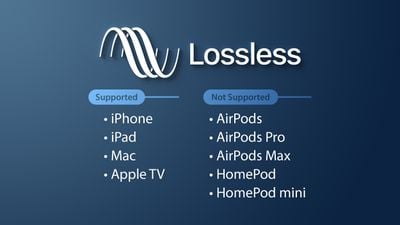
▲ Both AAC and MP3 are destructive compression, while FLAC and ALAC are lossless compression

Before we get into the details, let’s talk about what is called lossless sound quality; From the author’s concept and cognition, the so-called lossless sound quality is a relative word rather than an absolute word. The main source is the relative word born due to the appearance of the MP3 music compression format; after the music industry went digital, digital music files were generally recorded via PCM encoding, and WAVE files were generally used on CDs. The time and space situation that MP3 was born into was because hard drive capacity was generally small at the time. To store a large amount of music data in storage space, you probably need to compress the files.

The reason why MP3 cannot be called a lossless format is because it essentially compresses the original WAVE in a way that limits the bitrate by combining concepts like the psychology of sound. The bitrate compression mode, compared to the bitrate of the original WAVE file, compresses at least in a range of 1:4 to 12:1. The higher the bitrate, the greater the amount of retained information. For example, AAC format also adopts similar audio psychology for compression, but the efficiency is better than MP3. Therefore, most of the lossless sound quality of most streaming platforms currently uses AAC as the mainstream.

AAC Description

AAC Description

AAC

AAC is short for Advanced Audio Coding, which appeared in 1997 and was originally an audio coding technology based on MPEG-2. Co-developed by Fraunhofer IIS, Dolby Laboratories, AT&T, Sony and other companies to replace the MP3 format. In 2000, the MPEG-4 standard was introduced, and AAC reintegrated other technologies (PS, SBR). To distinguish it from the traditional MPEG-2 AAC, AAC with SBR or PS features is also called MPEG-4 AAC.

AAC - Advanced Audio Codec

AAC is a new generation of lossy audio compression technology. It derives three main encodings, LC-AAC, HE-AAC, and HE-AACv2 through some additional encoding technologies (such as PS, SBR, etc.). LC-AAC is the Compared to traditional AAC, in relative terms, it is mainly used for medium and high code rate (>= 80 Kbps), HE-AAC (equivalent to AAC+SBR) is mainly used for medium and low code (<= 80 Kbps), and the recently released HE-AACv2 (equivalent to AAC+SBR+PS) is mainly used for low bit rates (<=48 Kbps); in fact, most encoders are set to <=48 Kbps to automatically enable PS technology, and >48 Kbps does not add PS, which is equivalent to ordinary HE-AAC.

2. Brief description of AAC specification

AAC has a total of 9 specifications to meet the needs of different occasions:

MPEG-2 AAC LC Low Complexity Specification (Low Complexity): Relatively simple, no gain control, but improved

Encoding efficiency, you can find a balance point in the encoding efficiency of medium bit rate and sound quality

Main Main Specification MPEG-2 AAC

Scalable sample rate MPEG-2 AAC SSR

MPEG-4 AAC LC Low Complexity Specification (Low Complexity) —— the current mobile phone is more common in the MP4 file

The audio part of the file includes the audio file of this specification

Main Main Specification MPEG-4 AAC —— It contains all the functions except gain control, and its sound quality is the best

Scalable sample rate MPEG-4 AAC SSR

MPEG-4 AAC LTP Long Term Prediction

Low Delay Specification MPEG-4 AAC LD (Low Delay)

MPEG-4 AAC HE (High Efficiency) High Efficiency Specification—-This specification is suitable for low bit rate encoding, with

Nero ACC encoder support

Currently the most used are LC and HE (suitable for low bit rates). The popular Nero AAC encoding program only supports the three specifications of LC, HE and HEv 2. For AAC audio encoded, the specifications are displayed in LC. HE is actually AAC(LC)+SBR technology, HEv2 is AAC(LC)+SBR+PS technology;

Hev1 and HEv2 are simply represented by this diagram:

(AAC in the figure refers to the original AAC-LC)

HE: “High Efficiency.” HE-AAC v1 (also known as AACPlusV1, SBR) implements AAC(LC)+SBR technology by means of a wrapper. SBR actually stands for Spectral Band Replication. Briefly describe, the main spectrum of music is concentrated in the low-frequency band, and the high-frequency band has a small but important amplitude, which determines the sound quality. If the whole frequency band is encoded, if it is to protect the high frequency, the low frequency band will be encoded too precisely and the file will be huge; if the main low-frequency component is preserved and the high-frequency component is lost, the sound quality will be lost. SBR cuts the frequency spectrum, the low frequency is encoded separately to save the main components, and the high frequency is amplified and encoded separately to save the sound quality. It is “built-in”, and the sound quality is also preserved in the case of reducing the file size, which perfectly resolves this contradiction.

Introduction to AAC audio encoding

Introduction to AAC audio encoding

AAC Audio

AAC audio coding format, the full name is “Advanced Audio Codec”.

AAC Audio

This state-of-the-art, advanced encoding standard was jointly developed by Fraunhofer IIS (former MP3 standards maker), Dolby, AT&T, Sony, Apple, and other industry giants. AAC audio coding technology was formulated as early as 1997. At that time, it was used as one of the MPEG2-AAC audio coding specifications in MPEG-2. Later, it was used in MPEG-4 in 2000 (ISO 14496-3 Audio), so now it changed to the MPEG-4 AAC standard, that is, AAC has become one of the main members of the MPEG4 family, which is the audio coding system in the third part of MPEG4. AAC provides up to 48 channels of full-range audio. Among them, AAC audio coding is divided into nine specifications in different fields: MPEG-2 AAC main MPEG-2 AAC LC (low complexity) MPEG-2 AAC ××× (scalable sampling rate) MPEG-4 AAC main MPEG -4 AAC LC (Low Complexity) MPEG-4 AAC ××× (Scalable Sample Rate) MPEG-4 AAC LTP (Long Term Prediction) MPEG-4 AAC LD (Low Delay) MPEG-4 AAC HE (High Efficiency) AACPlusV1/V2( 3GPP ) Among them, the first three estimates are difficult to apply, and among the last six, LC and HE are the most used, so these two are mainly introduced:

MPEG-4 AAC LC (Low Complexity) is the most widely used specification, we call it “low complexity specification”, we call it “LC-AAC” for short, this specification can strike a balance in terms of coding efficiency and sound quality . at the half bit rate point. The so-called average bit rate refers to the bit rate between 96 kbps and 192 kbps. So if you want to use the LC-AAC specification, please try to control the bitrate within the range mentioned above. In this range, LC-AAC can completely beat MP3 with the highest quality LAME slow encoding mode at the same bit rate. In my opinion, whether it is a Walkman or streaming music over the Internet, it is recommended to use the LC-AAC 128kbps-192kbps encoding specification. MPEG-4 AAC HE (High Efficiency) AACPlusV1/V2(3GPP), we call it “High Efficiency Specification”, we call it “HE-AAC” or “AACPlus” for short, this specification is suitable for low bit rate encoding bits, because this specification also incorporates the type of SBR technology in Mp3Pro. When you need to encode audio files between 32 kbps and 96 kbps, it is recommended to prefer the “HE-AAC” encoding specification. With this spec, you can easily kill Microsoft formats like WMA9 and WMAPro within this range at the same bitrate. If you’re a fan of audio novels or radio dramas, consider the He-AAC specification, which can provide crystal-clear vocal dialogue even at a very low bitrate.

So if you need to encode AAC at relatively high bit rates (192kbps-384kbps or more), how should you choose? If your bit rate does not exceed 256kbps (eg: 192kbps-256kbps), “LC-AAC” can also be applied. If you really need a higher bit rate, choose the Main encoding (main specification). At high bit rate, AAC can also easily beat the very popular Lame MP3, even 320kbps CBR MP3 is not Mian-AAC’s opponent at all. Even many people believe that the LC-AAC medium bit rate, 192kbps CBR has reached the sound quality of 320 CBR Lame MP3. Of course, only the MPC format can compete with high-bitrate AAC, but the MPC format is too versatile. Having said that, there is no need to use high bitrate AAC, and Main-AAC will have problems in some general purpose or ××× players, because the sound quality of LC-AAC mentioned above is good enough, and the versatility is good. If you are an audiophile, just use lossless, like FLAC etc.

Is the effect the same when playing poor quality songs on good speakers and playing poor quality songs on poor speakers?

Is the effect the same when playing poor quality songs on good speakers and playing poor quality songs on poor speakers?

Speakers

First, if a song (sound source) with poor recording quality is played back with good sound, the effect will be worse initially. The meaning of high fidelity is that it largely restores to the state at the time of recording and tries not to lose it.

Speakers

The better the sound, the better the sound source can be restored with the best effect. On the contrary, if a sound source with poor sound quality is played by a good speaker, it will also expose faults and failures.

Second, the sound source in lossless format is played back with poor sound. Relatively speaking, as long as the sound isn’t particularly bad and the high, mid, and low frequencies are balanced, it won’t be too unpleasant, but the expressiveness and detail aren’t good enough.

3. The so-called lossless is just an encoding format, it doesn’t mean the lossless effect is necessarily good, and it also depends on the recording level or environment. For example, recordings of live performances, even in lossless formats, are not as good as studio recordings.

Fourth, the sound source and sound are equally important. Good sound is not necessarily expensive, the effect is only related to personal understanding and desire, but not necessarily to price.

Depending on the sound quality, 128kbps mp3 is relatively poor, and there are many lossless types, but in my opinion, the sound is the most important, only if the sound is good, you can know whether the sound quality of the song is good. otherwise you will use dozens of blue. What is the difference between the Bud small speaker that plays lossless and mp3? I’m not a part of the team, and I don’t recommend buying all kinds of hi-fi playback devices, but you still need to buy one for a few dollars. Headphones In principle, I don’t recommend using headphones if they’re not good enough. Preferably “flat response”.

Is there a difference between the sound quality of AAC and lossless format?

Is there a difference between the sound quality of AAC and lossless format?

AAC

What a big difference!

AAC

Common lossless sound quality is APE, FLAC, etc. AAC does not fall into the category of lossless sound quality.

AAC uses the smallest volume to get the best format that is close to lossless sound quality, but there is still distortion compression after all.

An APE song is a few tens of MB, while AAC is only a few MB.

ACC

Advanced Audio Coding ACC (English: Advanced Audio Coding, AAC), based on MPEG-2 audio coding technology. Co-developed by Fraunhofer IIS, Dolby Laboratories, AT&T, Sony (Sony) and other companies, the goal is to replace the MP3 format. In the year 2000, after the appearance of the MPEG-4 standard, AAC reintegrated its features and added SBR technology and PS technology. To distinguish it from the traditional MPEG-2 AAC, it is also called MPEG-4 AAC.

APE is one of the popular distortion-free compression formats for digital music, compressed by Monkey’s audio software.

Compared with the similar FLAC file format, ape has error checking ability but does not provide error correction function to ensure pure and lossless files; another feature is that the compression rate is about 55%, which is higher than that of FLAC, and the volume is about half of the original CD, for easy storage.

FLAC

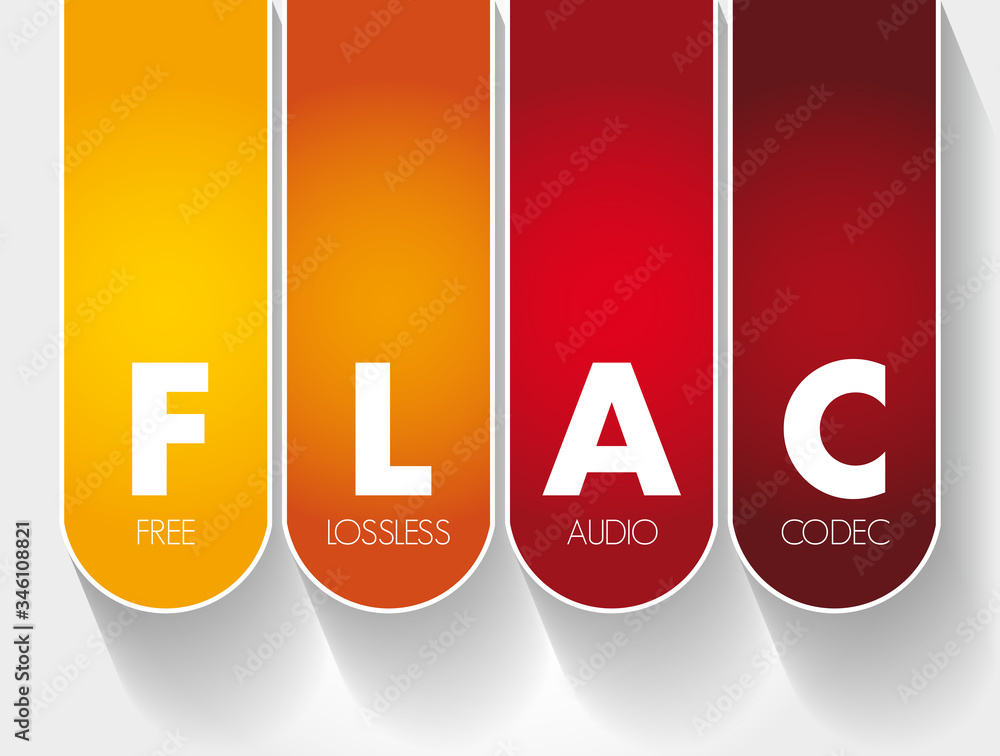
FLAC is a well-known free audio compression codec, which is characterized by distortion-free compression. Unlike other distorted compression codes like MP3 and AAC, it will not destroy any original audio data, so it can restore the sound quality of music CDs. It has been supported by many software and hardware audio products since 2012.

Compared with APE, the FLAC format file is a little larger by 2%-3%, but the advantage of FLAC lies in the faster encoding and decoding speed, and the CPU computing power requirement is quite low, and the format is also very fault-tolerant, even if a small piece of music is damaged, and does not affect subsequent music playback.