The Benefits of Lossless Audio Formats


Free Download Mp4Gain
picture

The Benefits of Lossless Audio Formats
Lossless Audio Formats

Lossless Audio Formats Explained

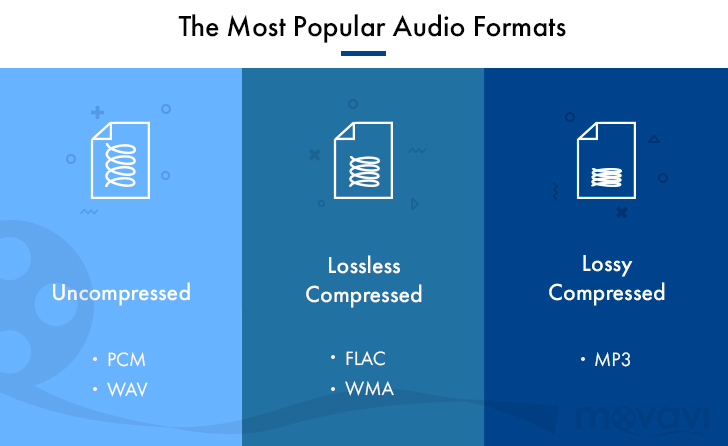
As an audiophile, I always strive to achieve the highest possible quality of sound. Lossless audio formats such as FLAC, ALAC, and WAV are my go-to choices when it comes to digital music. These formats use audio compression algorithms that preserve all the original audio data while reducing the file size. This means that the music you listen to sounds exactly as the artist intended it, without any loss of quality.
When I first discovered lossless audio formats, I was blown away by the difference in sound quality compared to lossy formats like MP3. The music was clearer, more detailed, and had a wider dynamic range. The benefits of lossless audio formats are not just limited to the listening experience, they also have practical benefits. Lossless files take up less storage space on your device than uncompressed audio files like WAV, and can be easily streamed over the internet without compromising quality.

As the famous musician David Byrne once said, “Lossless audio formats offer an uncompromising listening experience that allows you to hear every nuance of a recording. It’s like hearing the music for the first time.”

The Advantages of FLAC and ALAC

FLAC and ALAC are two of the most popular lossless audio formats. They are both open-source and free to use, which means they have a wide range of support across different devices and software. FLAC has become the de facto standard for lossless audio on the internet, while ALAC is the preferred format for Apple devices.
One of the biggest advantages of FLAC and ALAC is their ability to handle high-resolution audio. These formats can handle audio at up to 24-bit/192kHz, which is significantly higher than the 16-bit/44.1kHz standard of CD-quality audio. This means that you can listen to your favorite music with even greater detail and clarity.

In addition, FLAC and ALAC both have robust error correction capabilities. This means that if a file is corrupted during download or transfer, the audio data can still be recovered without any loss of quality. This is a major advantage over lossy formats like MP3, which cannot recover from data errors.

The Benefits of WAV

WAV is a lossless audio format that has been around since the early days of digital audio. It is the standard format for audio CDs, and is widely used in professional audio production. One of the main benefits of WAV is its compatibility with a wide range of hardware and software.
WAV files are uncompressed, which means that they retain all the original audio data. This makes them ideal for situations where maximum audio quality is required, such as mastering and archiving. In addition, WAV files can be edited without any loss of quality, making them the preferred format for audio engineers and producers.

As the great music producer Rick Rubin once said, “WAV files are the gold standard for audio quality. They offer the most accurate representation of the original recording, and are essential for anyone serious about music production.”

Final Words

In conclusion, lossless audio formats offer a superior listening experience compared to lossy formats like MP3. Whether you choose FLAC, ALAC, or WAV, you can be sure that you are getting the best possible sound quality. As an audiophile, I highly recommend using lossless audio formats for your music collection. And if you’re looking for a reliable and efficient way to normalize and convert your audio files, MP4Gain is the perfect solution.


Free Download Mp4Gain
picture


Mp4Gain Main Window
picture


Mp4Gain Features
picture


Free Download Mp4Gain
picture

lossless sound quality

lossless sound quality

lossless sound quality

The principle of these audio compression methods is to keep as much as possible the parts that are easy to hear for the human ear.

lossless sound quality


In the main constant bit rate (CBR) mode, audible data in the audio is removed and it is easier for the human ear to hear. The more information that is retained for the part, the less information that is retained for the less audible part. As sound complexity increases, the degree of sound quality degradation becomes more apparent. For example, when listening to pure human music voice performances and performances combined with background music, pure The degree of degradation of the compressed music of the human voice is less obvious than that of the original file.

As for the lossless sound quality provided by today’s streaming platform, there are many formats, but strictly speaking, these formats, including flac and ALAC, belong to lossless compression (non-destructive data compression) rather than quality. lossless sound in a narrow sense, but due to its performance it is almost the same as WAVE, but the file is small, the decoding speed is fast, and it can be used in streaming services, so it is also a representative format of lossless sound quality that has entered the era without CD support, and it is also the current music streaming service.

Also, MQA like Tidal is a more controversial format, because although MQA is lossless audio compression in a broad sense, it focuses on driving high-quality music files that are above CD quality at a size similar to those of CD quality flac files. , but it can also be restored to the original high-quality audio format, but the controversial point is whether the higher compression ratio can maintain the same real auditory sense as the original high-quality audio has always been controversial. At the same time, MQA requires a specific device to perform hardware decoding. Yes, many devices can only decode MQA through software.

▲Currently called Hi-Res Audio generally refers to sound quality higher than that of a CD, but to be certified, the device must support the processing capability of the 24-bit 96kHz format.

However, since MP3 and AAC are previously planned destructive music compression formats, their purpose is to compress CD-level sound quality into smaller files, so most encoding specifications are presented in one presentation. CD-level 16-bit 44.1 kHz or 16-bit 48 kHz; but MQA is a format with a small file size that locks in high sound quality requirements. Basically, the MQA format will be music equivalent to 24-bit PCM or higher.

lossless sound quality

lossless sound quality

lossless sound quality

Although lossless sound quality and high-quality streaming services have appeared on the market for a while

lossless sound quality

Like Apple isn’t the first to make true wireless earbuds, but it has ridden the wave of the market, with Apple’s launch of so-called hi-fi. compressed sound quality in Apple Music. In fact, after the lossless compression commonly known in the audio industry, lossless sound quality and high sound quality have instantly become a hot topic for many people to discuss, but whether the benefits of quality Lossless sound systems are really Obviously, the author will devote some space from theoretical concepts to practical levels. The difference is a simple overview, but the following arguments focus on easy understanding, so some of the descriptions are not entirely accurate.

What is lossless sound quality? What is the sound quality of the music we usually listen to?
The photo mentions * Introduction to KKBOX sound quality (including format), release year, sound quality, including numbers, KKBox, streaming media, Hi-Res Audio and Hi-Fi

▲ Both AAC and MP3 are destructive compression, while FLAC and ALAC are lossless compression

Before we get into the details, let’s talk about what is called lossless sound quality; From the author’s concept and cognition, the so-called lossless sound quality is a relative word rather than an absolute word. The main source is the relative word born due to the appearance of the MP3 music compression format; after the music industry went digital, digital music files were generally recorded via PCM encoding, and WAVE files were generally used on CDs. The time and space situation that MP3 was born into was because hard drive capacity was generally small at the time. To store a large amount of music data in storage space, you probably need to compress the files.

The reason why MP3 cannot be called a lossless format is because it essentially compresses the original WAVE in a way that limits the bitrate by combining concepts like the psychology of sound. The bitrate compression mode, compared to the bitrate of the original WAVE file, compresses at least in a range of 1:4 to 12:1. The higher the bitrate, the greater the amount of retained information. For example, AAC format also adopts similar audio psychology for compression, but the efficiency is better than MP3. Therefore, most of the lossless sound quality of most streaming platforms currently uses AAC as the mainstream.

Flac what is it and why is it better than mp3

At the end of the 90s the engineer Leonardo Chiariglione together with Hiroshi Yasuda founded the MPEG group, creator of the MP3 audio compression algorithm that revolutionized the world of audio. Since then, music has become “liquid” and no longer needs a physical medium such as cd, disk, cassette to listen to the songs.

flac vs mp3

MP3 audio files began to invade the world thanks to the Internet and sharing programs like Napster. The mp3 had the merit of “compressing” the volume of files that could be shared even with those who did not have much bandwidth, even with a 56K modem. The audio quality was excellent, but for audiophiles it was not enough. At this point the FLAC enters the scene.

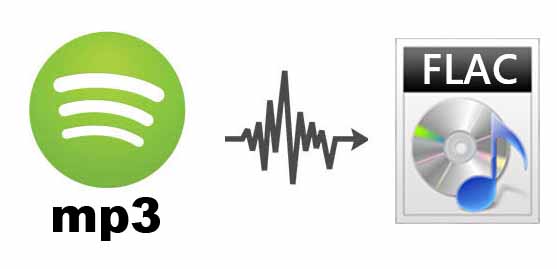
FLAC (Free Lossless Audio Codec) is a music file format that offers perfect copies of a music CD, but at half its size. It is compatible with many phones (including iPhone, with an app), portable MP3 music players, CD players, and hi-fi stereos. FLAC files are available for roughly the same price as the MP3 equivalent in online stores and they sound much better.

Today, almost all record labels sell songs in this format online and consumers can purchase lossless music from leading independent artists.

flac

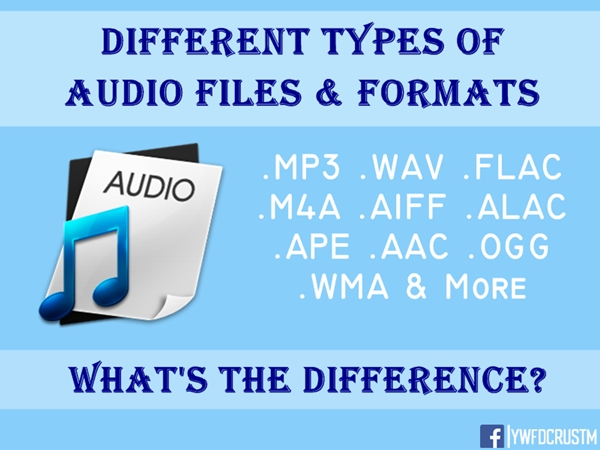
FLAC first appeared in 2001 as an open source alternative to other lossless formats that emerged at the time. These include Apple Lossless (ALAC), Microsoft WAV (Waveform Audio Format), and WMA Lossless. But these formats had drawbacks. While ALAC has a loyal following among iPod and iPhone users, it hasn’t had much circulation outside of Apple products.

The WAV format is very popular among Windows users and is compatible with iOS devices, but the problem is the file size, they are very large and cannot contain the “tag” data: artist, album name, lyrics , etc. .

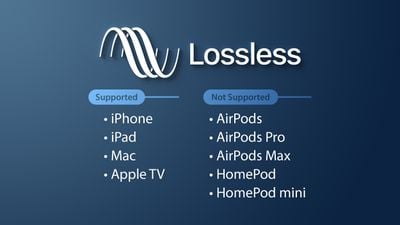
The FLAC format not only supports tags, but is also compatible with most music players. Apple is the only real obstacle, because while in 2017 there was talk of hardware support on both the iPhone 8 and X, in the end nothing was done. However, there are simple solutions for both iOS and Mac users.

WHAT IS THE DIFFERENCE BETWEEN MP3 AND FLAC?

MP3 is a lossy format, which means that parts of the music are removed to reduce the file size. It is supposed to use “psychoacoustics” to remove overlapping sounds, but it is not always successful. Drum cymbals, reverb, and guitars are generally the sounds most affected by MP3 compression and can sound really distorted when too much compression is applied, especially when it goes below 128 kbps.

Like MP3, FLAC has been embraced by the music industry as a cost-effective way to distribute CD-quality music and does not have the hearing impairments of MP3s. The FLAC is lossless, it is similar to a ZIP file, it is almost the same as the original when unzipped. Previously, the only way to get files “lossless” was through the uncompressed CD formats CDA or WAV, but neither is as space efficient as FLAC.

HOW MUCH SPACE DOES THE FLAC TAKE UP?

While FLAC files are up to six times the size of an MP3, they are half the size of a CD and can have the same increase in audio quality. Also, FLAC is not limited to just 16 bits (CD quality), it can go up to 24 bits / 192 kHz.

But regardless of whether you are using 16-bit or 24-bit quality files, FLAC has become a standard in the field of music. Despite competition from proprietary formats like MQA and DSD, FLAC remains competitive.