Advantages of FLAC Format


Free Download Mp4Gain
picture

Advantages of FLAC Format

Advantages of FLAC Format

Let’s talk about FLAC format

As an expert immersed in the audio realm, I unravel the mysteries behind the FLAC format. FLAC, or Free Lossless Audio Codec, stands tall in the digital audio landscape. In this exploration, I’ll delve into its nuances, advantages, and why it’s more than just a file format—it’s a gateway to an unparalleled audio experience.

Advantages of FLAC Format

The FLAC Difference: Beyond the Basics

Flipping the switch on conventional audio formats, FLAC introduces a revolutionary approach. It’s like upgrading from a standard bicycle to a sleek electric one—efficiency meets innovation. The “lossless” aspect of FLAC ensures that every musical nuance is preserved, offering an auditory feast that transcends the limitations of other formats.

Quality Unleashed: FLAC vs. Compressed Formats

Picture a pristine painting—FLAC delivers audio in its purest form, free from the artifacts of compression. In contrast to compressed formats, where musical details might get lost in the shuffle, FLAC opens a gateway to an unadulterated sonic landscape. It’s like experiencing a painting in high definition, where each brushstroke is vivid and distinct.

Size Matters: FLAC’s Efficient Compression

Addressing a common misconception, FLAC may seem bulky at first glance. However, its compression prowess is a marvel of efficiency. It’s akin to a well-packed suitcase—you get all your essentials without sacrificing space. FLAC achieves this balance by preserving audio quality while maintaining a manageable file size, ensuring that your digital audio library remains both expansive and accessible.

Latest words on FLAC format

Hi-Fi Haven: FLAC in the Audiophile Realm

For audiophiles seeking an unparalleled sonic journey, FLAC is the gateway to a Hi-Fi haven. It’s not just a format; it’s a pilgrimage into the nuances of sound. Imagine stepping into a concert hall—FLAC replicates that immersive experience, allowing every note, every instrument, to resonate with unmatched clarity. It’s the audiophile’s dream realized in a digital realm.

Future-Proof Fidelity: FLAC in the Digital Age

In the ever-evolving landscape of digital audio, FLAC stands as a beacon of future-proof fidelity. It’s not just about the present; it’s an investment in the sonic experiences to come. As technology advances, FLAC ensures that your audio collection remains relevant and of the highest quality. It’s like having a time capsule of musical excellence.

Unlocking Creativity: FLAC in Music Production

Behind the scenes in the studio, FLAC plays a crucial role in preserving the artist’s vision. It’s not merely a format; it’s a canvas where every musical brushstroke is faithfully captured. For musicians and producers, FLAC ensures that the intricacies of their creations are retained, paving the way for a genuine connection between artist and listener.

FLAC and Everyday Listening

Stepping into the shoes of an everyday music enthusiast, FLAC transforms the mundane into the extraordinary. It’s not just about listening; it’s about experiencing music in its purest form. Picture savoring a decadent chocolate—the richness and depth of flavor. FLAC offers a similar experience, where every note is a delectable treat for the ears.

Let’s dive deeper into FLAC

Unveiling the Myths: FLAC File Size Explained

One common misconception about FLAC is its file size. Let’s debunk the myth and explore why quality doesn’t necessarily mean sacrificing storage space. It’s like discovering the secret ingredient in a recipe—the key to understanding the efficiency of FLAC compression lies in its meticulous preservation of audio quality.

The Audiophile’s Playground: FLAC and High-Resolution Audio

Audiophiles rejoice! FLAC isn’t just a format; it’s a playground for high-resolution audio. Join me in unraveling the intricacies of why FLAC is the preferred choice for those who crave an audio experience that transcends the ordinary. It’s like stepping into a cinema with 4K resolution—the clarity is unmatched, and every sonic detail comes to life.

FLAC vs. the Competition: A Sonic Showdown

Let’s roll up our sleeves and compare FLAC with other audio formats. This isn’t just a battle of bytes; it’s a sonic showdown where FLAC emerges as the heavyweight champion. Think of it as a musical Olympics—FLAC’s lossless nature ensures it clinches the gold medal for preserving audio fidelity.

The Future Sounds FLAC: Innovations and Beyond

As we peer into the future of digital audio, FLAC continues to innovate and lead the way. It’s not just about where we are now; it’s about where we’re headed. Join me on this journey as we explore the innovations, advancements, and exciting possibilities that await in the world of FLAC. It’s like having a front-row seat to the evolution of sound.

Comments:

Comment 1: This article delves into FLAC like never before. I’m eager to upgrade my audio experience!

Nick: SonicExplorer

Comment 2: FLAC’s efficiency in file size preservation surprised me. A must-read for any music enthusiast!

Nick: MusicLover

Comment 3: Kudos for the section on FLAC in music production. It’s eye-opening how it preserves the artist’s vision.

Nick: StudioMaestro

Comment 4: FLAC vs. the competition—a sonic showdown indeed! This article nails the comparison.

Nick: SoundClash

Comment 5: The myths around FLAC file size are finally debunked! Clear and informative writing.

Nick: MythBuster

Comment 6: FLAC and high-resolution audio—a match made in audiophile heaven. I’m sold!

Nick: AudioPhreak

Comment 7: A sonic journey into the future of audio with FLAC. Exciting insights that set this article apart!

Nick: FutureListener

Comment 8: FLAC’s role in everyday listening is beautifully captured. It’s like savoring music in 4K!

Nick: MusicConnoisseur

Comment 9: This article convinced me to give FLAC a try. The comparisons and insights are spot-on!

Nick: AudioConvert

Comment 10: More articles like this, please! A refreshing take on FLAC that goes beyond the basics.

Nick: AudioExplorer


Free Download Mp4Gain
picture


Mp4Gain Main Window
picture


Mp4Gain Features
picture


Free Download Mp4Gain
picture

lossless sound quality

lossless sound quality

lossless sound quality

The principle of these audio compression methods is to keep as much as possible the parts that are easy to hear for the human ear.

lossless sound quality


In the main constant bit rate (CBR) mode, audible data in the audio is removed and it is easier for the human ear to hear. The more information that is retained for the part, the less information that is retained for the less audible part. As sound complexity increases, the degree of sound quality degradation becomes more apparent. For example, when listening to pure human music voice performances and performances combined with background music, pure The degree of degradation of the compressed music of the human voice is less obvious than that of the original file.

As for the lossless sound quality provided by today’s streaming platform, there are many formats, but strictly speaking, these formats, including flac and ALAC, belong to lossless compression (non-destructive data compression) rather than quality. lossless sound in a narrow sense, but due to its performance it is almost the same as WAVE, but the file is small, the decoding speed is fast, and it can be used in streaming services, so it is also a representative format of lossless sound quality that has entered the era without CD support, and it is also the current music streaming service.

Also, MQA like Tidal is a more controversial format, because although MQA is lossless audio compression in a broad sense, it focuses on driving high-quality music files that are above CD quality at a size similar to those of CD quality flac files. , but it can also be restored to the original high-quality audio format, but the controversial point is whether the higher compression ratio can maintain the same real auditory sense as the original high-quality audio has always been controversial. At the same time, MQA requires a specific device to perform hardware decoding. Yes, many devices can only decode MQA through software.

▲Currently called Hi-Res Audio generally refers to sound quality higher than that of a CD, but to be certified, the device must support the processing capability of the 24-bit 96kHz format.

However, since MP3 and AAC are previously planned destructive music compression formats, their purpose is to compress CD-level sound quality into smaller files, so most encoding specifications are presented in one presentation. CD-level 16-bit 44.1 kHz or 16-bit 48 kHz; but MQA is a format with a small file size that locks in high sound quality requirements. Basically, the MQA format will be music equivalent to 24-bit PCM or higher.

lossless sound quality

lossless sound quality

lossless sound quality

Although lossless sound quality and high-quality streaming services have appeared on the market for a while

lossless sound quality

Like Apple isn’t the first to make true wireless earbuds, but it has ridden the wave of the market, with Apple’s launch of so-called hi-fi. compressed sound quality in Apple Music. In fact, after the lossless compression commonly known in the audio industry, lossless sound quality and high sound quality have instantly become a hot topic for many people to discuss, but whether the benefits of quality Lossless sound systems are really Obviously, the author will devote some space from theoretical concepts to practical levels. The difference is a simple overview, but the following arguments focus on easy understanding, so some of the descriptions are not entirely accurate.

What is lossless sound quality? What is the sound quality of the music we usually listen to?
The photo mentions * Introduction to KKBOX sound quality (including format), release year, sound quality, including numbers, KKBox, streaming media, Hi-Res Audio and Hi-Fi

▲ Both AAC and MP3 are destructive compression, while FLAC and ALAC are lossless compression

Before we get into the details, let’s talk about what is called lossless sound quality; From the author’s concept and cognition, the so-called lossless sound quality is a relative word rather than an absolute word. The main source is the relative word born due to the appearance of the MP3 music compression format; after the music industry went digital, digital music files were generally recorded via PCM encoding, and WAVE files were generally used on CDs. The time and space situation that MP3 was born into was because hard drive capacity was generally small at the time. To store a large amount of music data in storage space, you probably need to compress the files.

The reason why MP3 cannot be called a lossless format is because it essentially compresses the original WAVE in a way that limits the bitrate by combining concepts like the psychology of sound. The bitrate compression mode, compared to the bitrate of the original WAVE file, compresses at least in a range of 1:4 to 12:1. The higher the bitrate, the greater the amount of retained information. For example, AAC format also adopts similar audio psychology for compression, but the efficiency is better than MP3. Therefore, most of the lossless sound quality of most streaming platforms currently uses AAC as the mainstream.

Flac what is it and why is it better than mp3

At the end of the 90s the engineer Leonardo Chiariglione together with Hiroshi Yasuda founded the MPEG group, creator of the MP3 audio compression algorithm that revolutionized the world of audio. Since then, music has become “liquid” and no longer needs a physical medium such as cd, disk, cassette to listen to the songs.

flac vs mp3

MP3 audio files began to invade the world thanks to the Internet and sharing programs like Napster. The mp3 had the merit of “compressing” the volume of files that could be shared even with those who did not have much bandwidth, even with a 56K modem. The audio quality was excellent, but for audiophiles it was not enough. At this point the FLAC enters the scene.

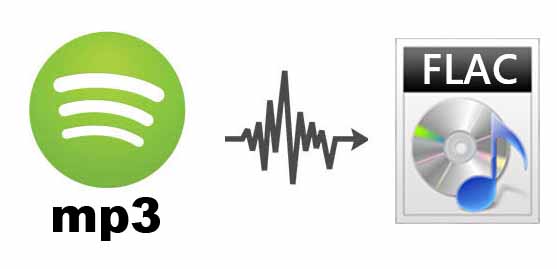
FLAC (Free Lossless Audio Codec) is a music file format that offers perfect copies of a music CD, but at half its size. It is compatible with many phones (including iPhone, with an app), portable MP3 music players, CD players, and hi-fi stereos. FLAC files are available for roughly the same price as the MP3 equivalent in online stores and they sound much better.

Today, almost all record labels sell songs in this format online and consumers can purchase lossless music from leading independent artists.

flac

FLAC first appeared in 2001 as an open source alternative to other lossless formats that emerged at the time. These include Apple Lossless (ALAC), Microsoft WAV (Waveform Audio Format), and WMA Lossless. But these formats had drawbacks. While ALAC has a loyal following among iPod and iPhone users, it hasn’t had much circulation outside of Apple products.

The WAV format is very popular among Windows users and is compatible with iOS devices, but the problem is the file size, they are very large and cannot contain the “tag” data: artist, album name, lyrics , etc. .

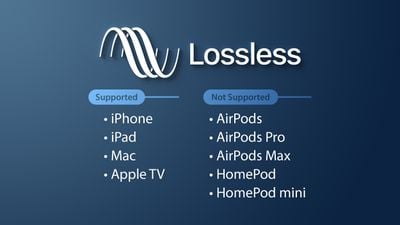
The FLAC format not only supports tags, but is also compatible with most music players. Apple is the only real obstacle, because while in 2017 there was talk of hardware support on both the iPhone 8 and X, in the end nothing was done. However, there are simple solutions for both iOS and Mac users.

WHAT IS THE DIFFERENCE BETWEEN MP3 AND FLAC?

MP3 is a lossy format, which means that parts of the music are removed to reduce the file size. It is supposed to use “psychoacoustics” to remove overlapping sounds, but it is not always successful. Drum cymbals, reverb, and guitars are generally the sounds most affected by MP3 compression and can sound really distorted when too much compression is applied, especially when it goes below 128 kbps.

Like MP3, FLAC has been embraced by the music industry as a cost-effective way to distribute CD-quality music and does not have the hearing impairments of MP3s. The FLAC is lossless, it is similar to a ZIP file, it is almost the same as the original when unzipped. Previously, the only way to get files “lossless” was through the uncompressed CD formats CDA or WAV, but neither is as space efficient as FLAC.

HOW MUCH SPACE DOES THE FLAC TAKE UP?

While FLAC files are up to six times the size of an MP3, they are half the size of a CD and can have the same increase in audio quality. Also, FLAC is not limited to just 16 bits (CD quality), it can go up to 24 bits / 192 kHz.

But regardless of whether you are using 16-bit or 24-bit quality files, FLAC has become a standard in the field of music. Despite competition from proprietary formats like MQA and DSD, FLAC remains competitive.