10 Common Audio Formats: Which Format Should I Choose?


Free Download Mp4Gain
picture

10 Common Audio Formats: Which Format Should I Choose?
Audio Formats
Audio Formats

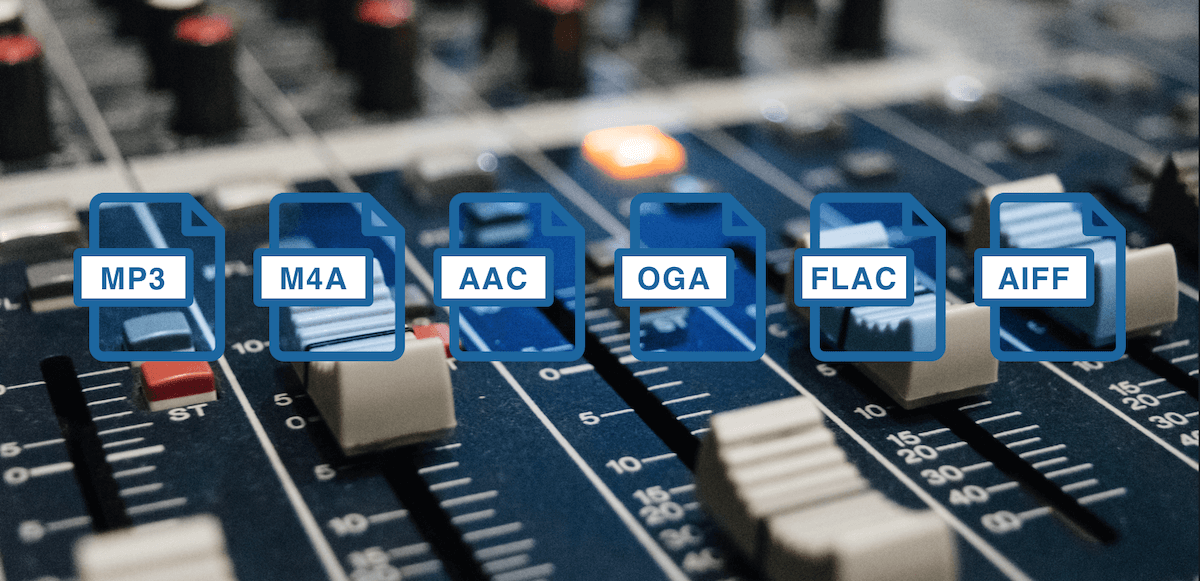
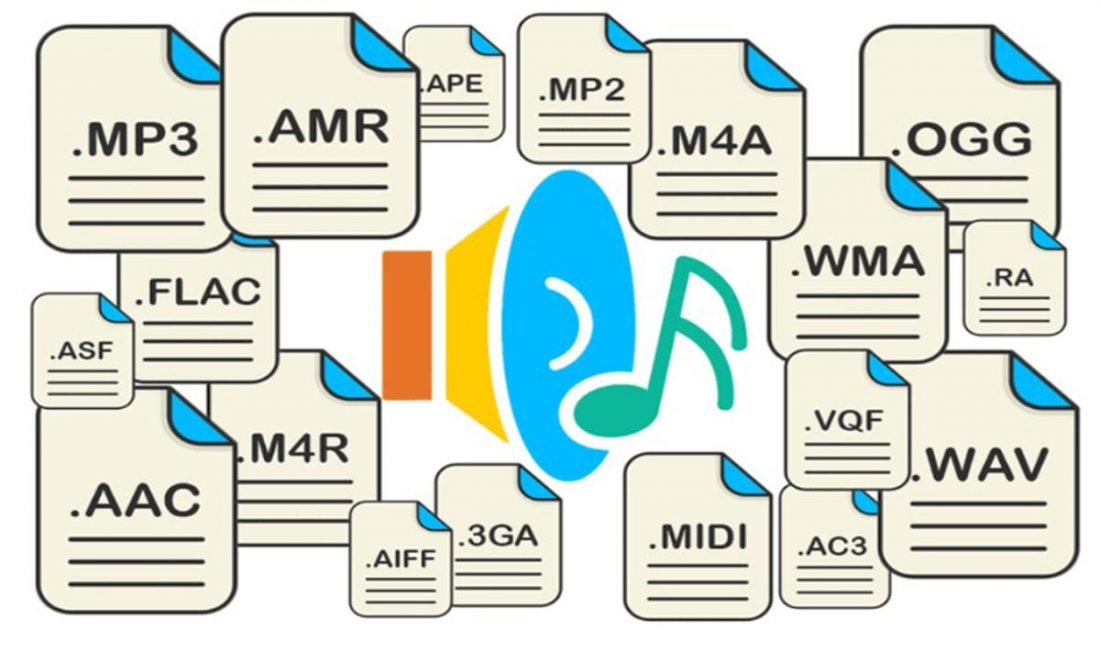
Audio files come in various formats and sizes, in addition to our common MP3, there are AAC, FLAC, OGG, WMA, etc.
Audio Formats
Audio Formats

Why are there so many different audio standards? What format is the best? What should you choose when saving audio files?

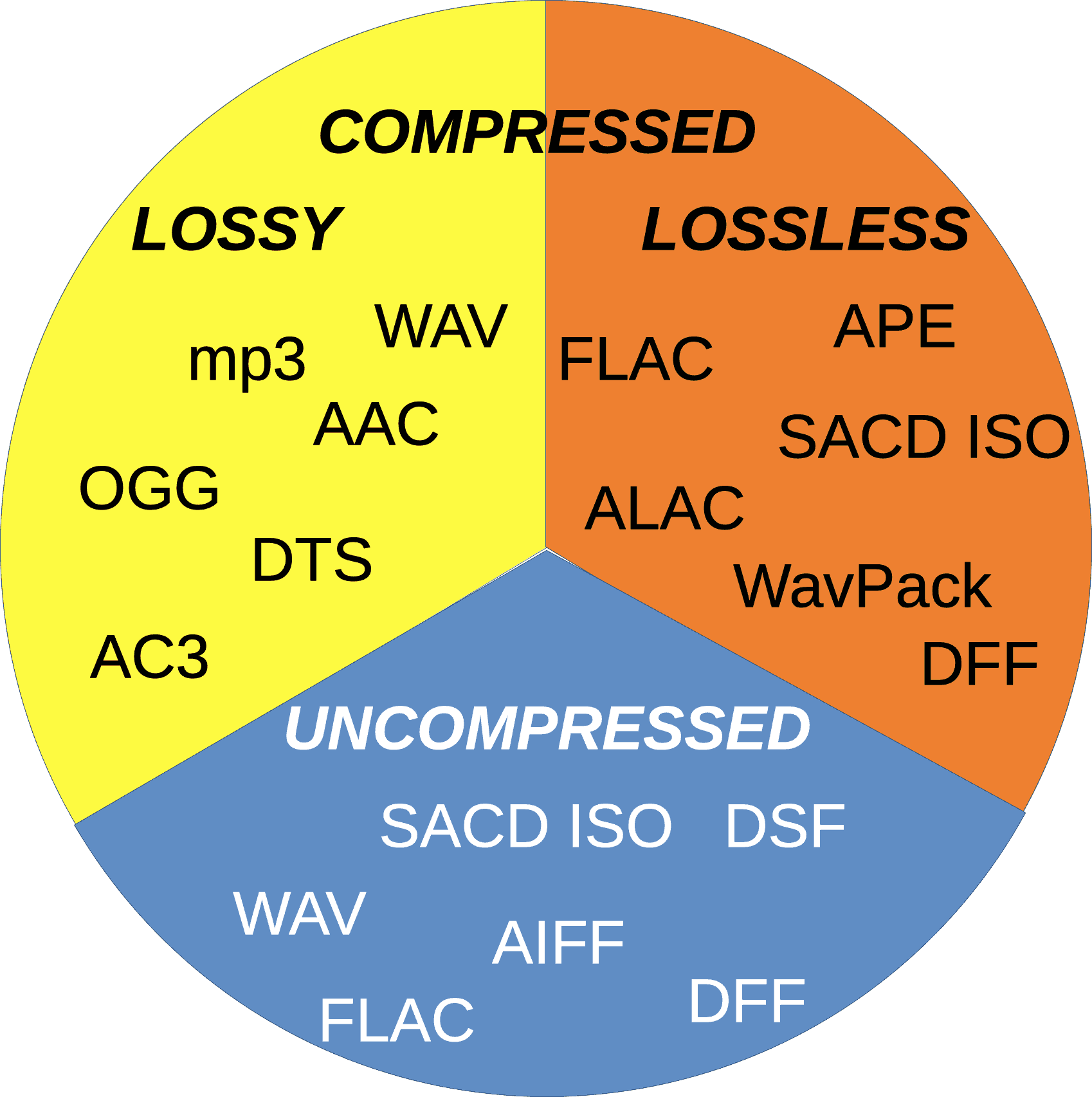
In fact, all audio formats can be divided into 3 categories, and once you understand the characteristics of each of these 3 types, you can choose one of the three, and then choose a further subdivided category according to your specific needs.

Comparison of audio formats – operation, equipment – Introduction to 10 common audio formats: which format should I choose?
uncompressed audio format
The uncompressed format preserves the original audio waveform. The so-called original audio waveform refers to the result after the sound is captured and converted to a digital signal for storage. Raw audio waveforms are stored without any post processing. From the results, such an audio file will consume a lot of space. For 24-bit (24-bit) 96 KHz audio, you need about 34 MB of storage space per minute.

Uncompressed audio format: PCM
PCM is short for Pulse-Code Modulation, which is a technical method of simulating sound using digital signals. The sounds that we can hear in nature exist in the form of physical sound waves, and in order to simulate this sound wave with a digital signal, scientists decided to sample it and record it with another wave, which is what we call a pulse.

Therefore, digital audio has two basic concepts: sample rate and bit depth. The so-called sampling rate refers to the speed of how many times the sound is sampled. The so-called bit depth refers to the space occupied by a single sample. In uncompressed formats, the product of the sample rate, bit depth, and audio duration is the space occupied by the digital signal that represents the audio content.

PCM is a format commonly used on CDs and DVDs, but its derivative LPCM is often used in practice. LPCM is short for Linear PCM, which is Linear Pulse Code Modulation. Most PCM files in use today are actually LPCM files, so there is no need to differentiate between them.

Uncompressed audio format: WAV
WAV is short for Waveform Audio File Format, which is a standard audio format developed by Microsoft and IBM in 1991.

Many people think that WAV is an uncompressed audio format, but this is not entirely true. In fact, WAV is a “wrapper” type format, a common format developed by Microsoft to use audio for various platforms. So it is possible for WAV to contain compressed audio, but this is rarely the format of choice when using compression these days.


Free Download Mp4Gain
picture


Mp4Gain Main Window
picture


Mp4Gain Features
picture


Free Download Mp4Gain
picture

Comparison of audio encoding formats

Comparison of audio encoding formats

audio encoding formats

Parameters and nouns

audio encoding formats

Rate/bit rate/code rate, Kbps, i.e. the volume of data contained in a transmission medium or audio file per unit of time. In general, the higher the volume, the higher the sound quality. Of course, the comparison standards are different under different compression algorithms, and the bitrate may be lower as well. The sound quality is relatively high, for example, the sound quality of aac with a medium bitrate is better than that of mp3 with a high bitrate. The CD bit rate is 1411.2 kbps and there are some lossless compressions that can come close to this value, such as flac.
The sampling rate, KHz, is the number of points that the audio acquisition device collects audio signals in unit time. In general, it is believed that the higher the sample rate of the same encoding algorithm and the same bit rate, the higher the sound quality. However, the standards of comparison between different encoding algorithms are different. Currently, 44.1 KHz and 48 KHz are more commonly used in mobile devices, and the sample rate in instant messaging is lower, possibly 16 KHz or less.
The number of channels, it is generally believed that the greater the number of channels, the more stereoscopic the sound. Real-time communication can be monophonic, and network transmission often uses two channels. Minimal mono, up to 5 channels?
Tracks, sounds made by different instruments/people, up to 48 tracks?
Compression ratio, compared to the source audio file, the volume changes after compression, such as 1/18, 1/12. Compression ratio opus>aac>ogg>mp3 (and wma)>ape>flac>wav (under the same sound source condition). The compression ratio of wma below 192kbps is higher than that of mp3.
Sound quality, lossy or lossless, can be restored to the audio source file after decoding. Sound quality comparison wav=flac=ape>aac=opus>ogg>mp3~wma
Frequency, Hz, low frequency or high frequency. Note that the human ear is more sensitive to low frequency signals. For example, the mp3 compression algorithm removes all high-frequency signals.
Hardware support, device support on the capture and playback end, mp3>wma>aac~wav~opus>flac~ogg>ape.

All the Audio Format Differences: Which One Should You Use?

All the Audio Format Differences: Which One Should You Use?

All the Audio Format

Three classifications of audio formats

All the Audio Format

Characteristics and differences of different audio formats

Which audio format is right for you?

You already know MP3, but what about AAC, FLAC, OGG or WMA? Why are there so many audio file formats and is there any best audio format?

Comparison of audio formats

Audio files come in various types and sizes. While we’re all probably familiar with MP3, what about AAC, FLAC, OGG, or WMA? Why are there so many audio standards? Is there a better audio format? Which ones are important and which ones can be ignored?

All audio formats are divided into three main categories, and once you know what the categories mean, you can choose the format within the categories that best suits your needs.

uncompressed audio format

Uncompressed audio consists of actual sound waves that have been captured and converted to digital format without any additional processing. So uncompressed audio files tend to be the most accurate, but take up a lot of disk space: about 34MB per minute for 24-bit 96KHz stereo.

Audio file format: PCM

PCM stands for Pulse Code Modulation, a digital representation of the original analog audio signal. Analog sounds exist as waveforms. To convert a waveform into digital bits, the sound must be sampled and recorded at specific intervals (or pulses).

This digital audio format has a “sample rate” (how often the samples are made) and a “bit depth” (how many bits are used to represent each sample). There is no compression involved. Digital recordings are almost accurate representations of analog sounds.