Structure of an mp3


Free Download Mp4Gain
picture

Structure of an mp3


Structure of an mp3
Structure of an mp3

audio compression

Structure of an mp3
Structure of an mp3


The MP3 format began in the mid-1980s and the Fraunhofer Institute in Erlangen, Germany, was committed to high-quality, low-data-rate audio coding.

MP3 audio compression includes encoding and decoding in two parts. Encoding is converting the data in the WAV file into a highly compressed bitstream format, and decoding is accepting the bitstream and reconstructing it into the WAV file.

MP3 uses the distortion algorithm of Perceptual Audio Coding (PerceptualAudioCoding). The frequency range of sound perceived by the human ear is from 20 Hz to 220 kHz. MP3 cuts out a lot of redundant signals and irrelevant signals. The encoder transforms the original sound into the frequency domain through a hybrid filter bank. Using the psychoacoustic model, it is estimated that it may simply be The perceived noise level is quantized and converted to Huffman coding to form an MP3 bitstream. The decoder is much simpler and its task is to extract the sound signal from the encoded spectral line components through inverse quantization and inverse transformation.

When compressing audio data, the original sound data is first divided into fixed blocks, and then direct MDCT is performed. MDCT itself does not perform data compression, but only converts a set of time-domain data to frequency-domain data to obtain time-domain data. In case of change, the direct MDCT converts the value of each block into 512 MDCT coefficients. Quantization compresses data, and when bits are allocated to transformed samples after quantization, it is necessary to consider making the entire quantized block the smallest, which becomes lossy compression. When decompressing, the 512 coefficients are restored to the original sound data by reverse MDCT, and the original sound data before and after are inconsistent, because redundant and irrelevant data are removed during the compression process.


MP3 file structure
MP3 files are roughly divided into three parts: TAG_V2(ID3V2), Frame, TAG_V1(ID3V1)

ID3V2 Contains information such as author, composer, album, etc., the duration is not fixed, expanding the amount of information of ID3V1
framework


A series of frames, the number is determined by the file size and frame length

The length of each frame can be variable or fixed, determined by the bit rate.

Each FRAME is divided into two parts: frame header and data entity

The frame header records the bitrate, sample rate, version, and other mp3 information, and each frame is independent of each other.

ID3V1    Contains author, composer, album and other information, length is 128BYTE


Free Download Mp4Gain
picture


Mp4Gain Main Window
picture


Mp4Gain Features
picture


Free Download Mp4Gain
picture

Structure of an mp3

Structure of an mp3


Structure of an mp3
Structure of an mp3

The full name of MP3 is MPEG Audio Layer3, which is an efficient computer audio coding scheme.

Structure of an mp3
Structure of an mp3

It converts audio files into smaller files with .MP3 extension with a higher compression ratio and basically keeps the sound quality of the original file. MP3 is part of the ISO/MPEG standard. The ISO/MPEG standard describes audio compression using a high-performance perceptual coding scheme. This standard has been continuously updated to meet the pursuit of “high quality, low volume”. MPEGLayer1, Layer2 , and Layer 3 have now formed three audio codec schemes. The compression rate of MPEGLayer3 can reach from 1:10 to 1:12. A 1M MP3 file can play for 1 minute, while a 1 minute CD-quality WAV file (44100 Hz, 16-bit, two channels, 60 seconds) will take up 10M of space. , A 650M MP3 disc should play for more than 10 hours, while a CD with the same capacity should play for about 70 minutes. The advantages of MP3 are unmatched by CD.

MPEG audio standard
MPEG (Motion Picture Experts Group) is a moving picture expert group under ISO, and the MPEG standard it creates is widely used in various multimedia. MPEG standards include video and audio standards, among which MPEG-1, MPEG-2, MPEG-2AAC, and MPEG-4 audio standards have been developed.

The MPEG-1 and MPEG-2 standards use the same family of audio codecs: Layer 1, 2, and 3. A new feature of MPEG-2 is the use of low sample rate expansion to reduce data traffic, and another feature is multi-channel expansion, which increases the number of main channels to five. The MPEG-2AAC (MPEG-2 Advanced Audio Coding) standard was released by FraunhoferIIS and AT&T in 1997, with the goal of significantly reducing data traffic. MPEG22AAC adopts the Modified Discrete Cosine Transform (MDCT) algorithm and the sampling rate can be between 8 KHz and 96 KHz. The number of channels can be between 1 and 48.

MPEG Audio Layer1, 2, and 3 use the same filter bank, bitstream structure, and header information, and the sample rate is either 32 KHz, 4411 KHz, or 48 KHz. Layer1 is designed for DCC (DigitalCompactCassette) digital compression tape, the data rate is 384kbps, Layer2 has made a compromise between complexity and performance, and the data rate has been reduced to 256kbps-192kbps. Layer 3 was designed for low data traffic from the start, and data traffic ranges from 128 kbps to 112 kbps. Layer 3 adds MDCT transform, making its frequency resolution 18 times higher than Layer 2. Layer 3 also uses EntropyCoding similar to MPEGVid2eo, reducing redundant information. The vast majority of MP3s use the MPEG21 standard.

What are MP3 files?

What are MP3 files?

What are MP3 files?


The audio format is directly related to the quality and purpose of the audio track, i.e. where and on which device it will be played and what is its purpose.

What are MP3 files?

But before you can figure out the difference between them and choose the best audio format for your music, you need to know what categories they fall into. Let’s keep going!

Uncompressed audio is like a picture, and uncompressed audio is of better quality, larger file size, safer to copy, and nearly identical in detail to the original sound.

WAV is the most widely used of these audio formats and plays music just as accurately as it records it.

compressed audio
When music is compressed, the files become smaller and can be easily stored on a device. Due to this advantage, users tend to choose compressed audio more.

However, it must be remembered that some audio formats in this category may lose quality depending on the option selected, just like MP3 and AAC.

What is the best audio format?
As we said before, the first step in deciding on an audio format is to know the final objective of the track. Whether it’s for music lessons, performances, karaoke, auditions, or recording versions, you need to understand the pros and cons of each option.

WAV
WAV (Waveform Audio File Format) is an uncompressed format and therefore requires ample storage space. This is suitable for those who already work with music, such as subject matter experts, or users who want to edit audio.

At high fidelity rates, WAV faithfully reproduces the elements and characteristics of the original soundtrack. Also, this format allows you to choose between different sample rates and bit rates and can be used on multiple platforms.

FLAC
FLAC (Free Lossless Audio Codec) is one of the most widely used compression formats by music lovers these days.

Digital audio encoding allows you to preserve its quality, but the resulting file will be smaller. Over the years, this format has become more widely used and compatible with different devices and platforms.

FLAC is free and open source, ready to use and can be easily played on smartphones and other devices.

MP3
Before deciding on the best audio format, it is worth taking a look at the most famous format in the world of music: MP3.

MP3 is one of the leading audio compression formats, and has become synonymous with the convenience and efficiency of producing files quickly, with smaller files, and at a certain level of quality.

Many devices and programs can play this format. But MP3 is difficult to use in professional audio processing and advanced audio editing.

As is known, this format exists on almost all platforms and is ideal for sharing audio.

Another interesting factor is its bitrate, although in a compressed format it can vary depending on the user’s objectives and quality improvements.

AAC Like MP3, Advanced Audio Coding (AAC) is a more efficient audio format than its predecessor.

If you need to create smaller files with less storage space, AAC is a great choice, reducing the file size for the user while maintaining a high-quality audio track.

Compatible with different platforms and devices, it is convenient to apply in different situations.

Analysis of the above audio formats leads to the conclusion that it is impossible to say which format is better than the other, just that each target has its own ideal format. So before downloading or uploading a file, check what platform the music will play on and what it is for.

What are MP3 files?

What are MP3 files?

What are MP3 files?
What are MP3 files?

A file with the .mp3 extension is a digitally encoded file format for audio files, officially based on MPEG-1 Audio Layer III or MPEG-2 Audio Layer III.

What are MP3 files?
What are MP3 files?

It was developed by the Moving Picture Experts Group (MPEG) using Layer 3 audio compression. The compression achieved by the MP3 file format is 1/10 the size of a .WAV or .AIF file. This format offers the advantage of streaming such audio files over the Internet for online listening, which was previously not possible due to the large size of audio files. The sound quality of MP3 audio files can be controlled by setting parameters such as bit rate, sample rate, common or normal stereo.

A brief history of MP3

The MP3 format was invented and developed by a German company, Fraunhofer-Gesellshart. The algorithm has licensed patents for the compression techniques it uses. Here’s a helpful MP3 schedule:

• 1987 : The Fraunhofer Institute in Germany begins research on high-quality, low-bitrate audio coding. It’s called the EUREKA project EU147, Digital Audio Broadcasting.

• January 1988: The Moving Picture Experts Group (MPEG) is formed.

• **April 1989**: Fraunhofer patented the MP3 in Germany.

• 1992-Dieter Seitzer, who helped Fraunhofer with his research, integrated his audio encoding with MPEG-1.

• 1993 – Publication of the MPEG-1 standard.

• 1994 – The MPEG-2 standard was developed and released a year later.

• November 26, 1996 : US patent for MP3 is published.

• September 1998 – Fraunhofer begins to enforce the patent. People who used the MP3 audio codec paid Fraunhofer a license fee.

• February 1999 – SubPop, a record label, releases music in MP3 format, the first to do so.

• 1999 – The first portable MP3 player appears.

File format MP3##
MP3 files consist of MP3 frames, where each frame consists of a header and a data block. Frames are not independent and generally cannot be mined at arbitrary frame boundaries. The data blocks of a file contain frequency and amplitude information about the audio. The sync word in the header identifies the start of a valid frame. This is followed by 3 bits where the first bit indicates that it is an MPEG standard and the remaining 2 bits indicate that layer 3 is used; therefore, MPEG-1 Audio Layer 3 or MP3. After this, the value will vary depending on the MP3 file. ISO/IEC 11172-3 defines the range of values for each part of the header and the header specification. Most current MP3 files contain ID3 metadata, which precedes or follows the MP3 frame, as shown. Data streams may contain an optional checksum.

What sound quality is best for the music we listen to in the car?

What sound quality is best for the music we listen to in the car?

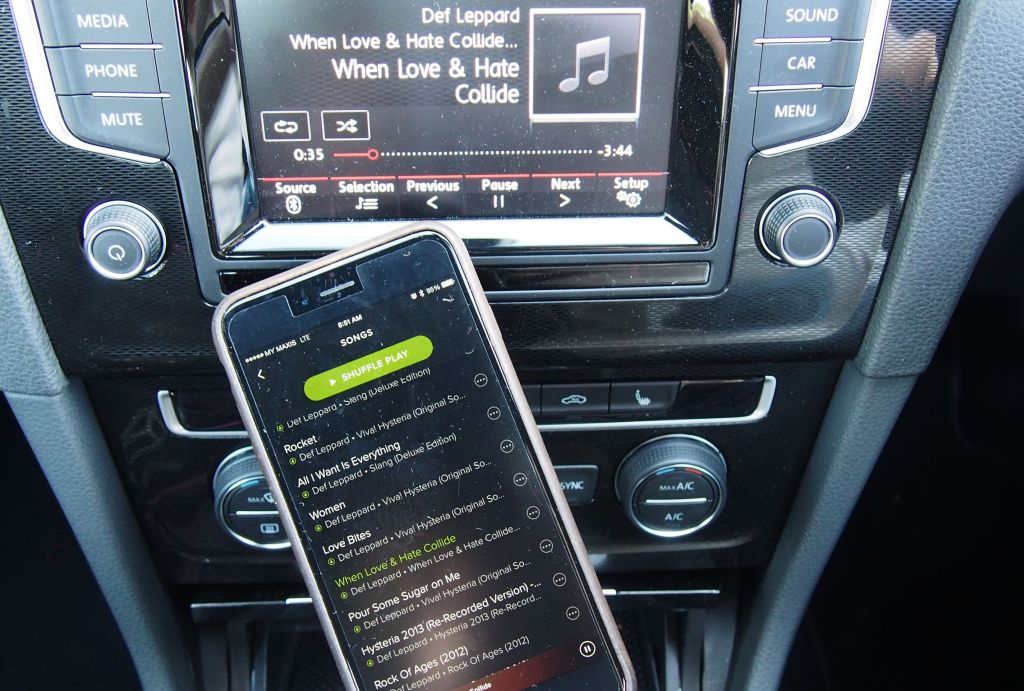
Listen music in the car

There are two suggestions for car music sound quality:

Listen music in the car

1. Many music lovers, who are looking for extremely high music quality, will be interested in high quality and lossless formats like OGG, FLAC or AAC.

However, due to the limited music formats that the car can recognize, music files of the above formats may not be recognized by the car.

Let alone play it.

2. In general, in the field of car music, the most commonly used formats are MP3 and WMA.

Although these formats are not as good as the ones mentioned above in terms of sound quality, they are expensive because almost all car systems can recognize them.

So, if you want to say which music file format is the best in car music, it has to be MP3 and WMA.

What sound quality is best for the music we listen to in the car?

What sound quality is best for the music we listen to in the car?

Listen music in the car

The best audio hardware equipment is one of the most important factors that determine sound quality.

Listen music in the car


This is also related to the degree of distortion of the music being played, that is, how well the sound reproduction is restored.

This directly affects the mood of the listener. Because if the sound is loud and has no sense of hierarchy,

If you listen to it for a longer time, it will irritate you or make you feel dizzy when driving.

The other is to adjust the sound effect by yourself. After all, everyone’s sense of hearing is different.

It depends on what you adjust to make it comfortable to listen to. Adjust different parameters according to different types of music.

There will be unexpected effects.

I myself belong to the latter, although I am not a professional,

But with lossless sound quality (my car supports it, but it’s not a luxury car)

It can also bring out the feeling of fat low-frequency, clear mid-range, and bright highs (this takes some skill to distinguish),

But not all cars have sound quality adjustment.

As for the best car music sound quality, as mentioned in the article above, car music can download music with sound quality wav, ape, flac,

This is lossless sound quality, better than MP3 (as long as the device supports it).

Although now it connects via Bluetooth mobile phone or Baidu Carlife

Playing music online on mobile phones has become mainstream, but there are still a small number of people,

Insist on downloading via U disk, and use the car USB interface to play music.

What is the best audio format to get the best sound quality?

What is the best audio format to get the best sound quality?

Best Audio Format

Mp3, Wav, Flac… Which one is better?

Best Audio Format

We’ve heard so many discussions about whether mp3 can sound the same as wav or flac and there are advocates for both.

There are people who staunchly defend mp3 and show and prove that an mp3 generated with certain settings can sound so similar to a WAV that not even 1% of people with ear training can distinguish it.

Others, on the contrary, argue that the method used by the mp3, causes a lot of information to be discarded in order to make the file smaller and this necessarily causes the quality to be diminished.

But everyone forgets that the number one point is to think about what kind of device or audio player we will listen to the music. Because for all these niceties mentioned above to make sense, we’ll have to have equipment that can play HD audio, otherwise we won’t easily tell one from the other.

And the truth is that most people play music on a medium quality equipment in a car on a phone or on a laptop, which makes the question of whether an mp3 sounds very different from a wav is unnecessary.

Mp4Gain is a program that manages to make audio, whatever the format, sound the best it can be.

What is the best sounding audio format? Is it MP3?

What is the best sounding audio format? Is it MP3?

Best Audio Format
Best Audio Format

The audio formats with the best sound quality are

Best Audio Format
Best Audio Format


mp3
b, wav
c, wma
d.rm

Answer: The

B wav format files are usually stored on the computer The most widely used file format is an uncompressed format, which stores the most authentic and original sampled data, that is, the sampled data of the set frequency and bit depth they are true and lossless, like 44.1 kh/16-bit audio CD quality, other frequencies and bit depths can of course be stored.

Below are other audio file formats:

1. Format

MP3 MP3 is an audio compression technology that compresses files to a small volume on the premise of losing a certain amount of high-frequency timbre data. The highest bitrate can only reach 320K. The frequency part is basically lost.

2. Format

WMA WMA is Windows Media Audio from Microsoft. The WMA format has a higher compression rate than MP3 and the generated files are smaller. It is suitable for transmission in low-speed networks many years ago.

3. Format

FLAC FLAC is lossless audio compression. Since it is lossless compression, it will not destroy any original audio data information and can restore the sound quality of the music on the CD. FLAC is very similar to MP3, but it is lossless compression.

4. The format

APE APE is similar to FLAC and is also a lossless audio compression technology.

Something very important, that we will develop in another article and that is almost always ignored when it comes to comparing audio formats, is the equipment or device that we use to play music.

That is the point from which we should start.

10 Common Audio Formats: Which Format Should I Choose?

10 Common Audio Formats: Which Format Should I Choose?

Audio Formats
Audio Formats

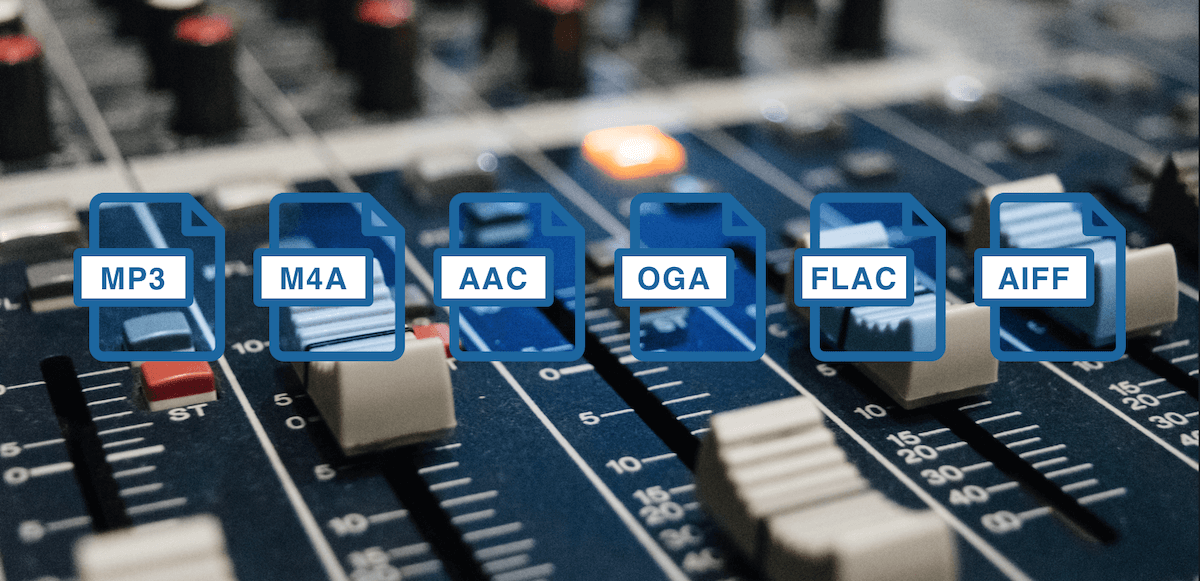
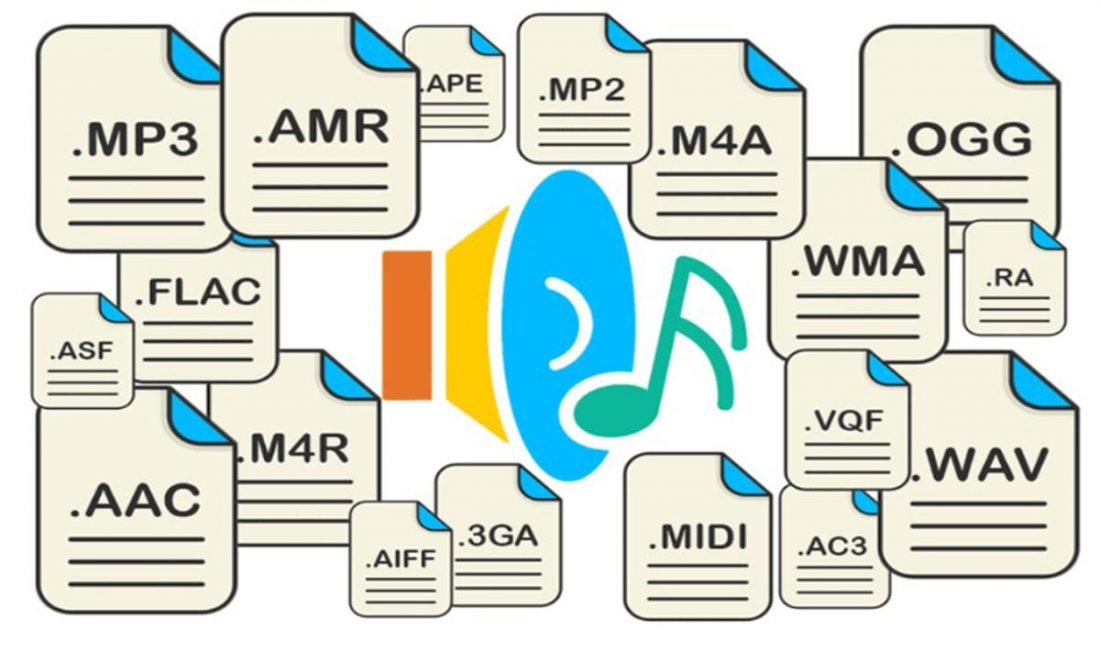
Audio files come in various formats and sizes, in addition to our common MP3, there are AAC, FLAC, OGG, WMA, etc.

Audio Formats
Audio Formats

Why are there so many different audio standards? What format is the best? What should you choose when saving audio files?

In fact, all audio formats can be divided into 3 categories, and once you understand the characteristics of each of these 3 types, you can choose one of the three, and then choose a further subdivided category according to your specific needs.

Comparison of audio formats – operation, equipment – Introduction to 10 common audio formats: which format should I choose?
uncompressed audio format
The uncompressed format preserves the original audio waveform. The so-called original audio waveform refers to the result after the sound is captured and converted to a digital signal for storage. Raw audio waveforms are stored without any post processing. From the results, such an audio file will consume a lot of space. For 24-bit (24-bit) 96 KHz audio, you need about 34 MB of storage space per minute.

Uncompressed audio format: PCM
PCM is short for Pulse-Code Modulation, which is a technical method of simulating sound using digital signals. The sounds that we can hear in nature exist in the form of physical sound waves, and in order to simulate this sound wave with a digital signal, scientists decided to sample it and record it with another wave, which is what we call a pulse.

Therefore, digital audio has two basic concepts: sample rate and bit depth. The so-called sampling rate refers to the speed of how many times the sound is sampled. The so-called bit depth refers to the space occupied by a single sample. In uncompressed formats, the product of the sample rate, bit depth, and audio duration is the space occupied by the digital signal that represents the audio content.

PCM is a format commonly used on CDs and DVDs, but its derivative LPCM is often used in practice. LPCM is short for Linear PCM, which is Linear Pulse Code Modulation. Most PCM files in use today are actually LPCM files, so there is no need to differentiate between them.

Uncompressed audio format: WAV
WAV is short for Waveform Audio File Format, which is a standard audio format developed by Microsoft and IBM in 1991.

Many people think that WAV is an uncompressed audio format, but this is not entirely true. In fact, WAV is a “wrapper” type format, a common format developed by Microsoft to use audio for various platforms. So it is possible for WAV to contain compressed audio, but this is rarely the format of choice when using compression these days.