MP3 Layer III Filter Bank Analysis


Free Download Mp4Gain
picture

MP3 Layer III Filter Bank Analysis
MP3 Layer III Filter Bank Analysis

Let’s talk about MP3 Layer III filter bank analysis

When it comes to digital audio compression, understanding the filter bank analysis in MP3 Layer III is essential. In this article, I’ll break down how MP3s rely on filter banks to achieve their unique blend of quality and compression, and explain why the filter bank analysis plays such a critical role. I’ll also cover how this approach works to make music files smaller while still preserving essential audio details.

Understanding MP3 Layer III and Filter Banks

Filter banks are an essential part of MP3 technology, enabling the compression of audio without excessive loss of sound quality. In MP3 Layer III, these banks are split into subbands, each handling a particular range of audio frequencies. I’ll illustrate this in detail, using real-life examples to make the concept easier to grasp.

How MP3 Filter Banks Work

MP3 filter banks work by breaking down audio signals into smaller segments, or subbands. These banks divide the frequencies, enabling certain sound parts to be compressed at different levels. Think of it like sorting a stack of books into categories before packing them tightly into a box. This way, we save space while still keeping everything accessible and organized.

Role of Subband Coding in MP3 Compression

Subband coding is one of the vital steps in the MP3 encoding process. It isolates specific frequency bands, reducing the amount of data needed for less noticeable sound details. Imagine cleaning out a closet by only removing items you rarely use, keeping the essentials. This technique allows MP3 files to remain compact without losing the “core” audio quality.

Why the Hybrid Filter Bank is Essential in MP3 Layer III

The hybrid filter bank is crucial to MP3 compression efficiency. It combines the polyphase filter bank with a Modified Discrete Cosine Transform (MDCT). This hybrid approach brings an extra layer of compression by working with both time-domain and frequency-domain processing. It’s like having a two-part lock for extra security in your data storage strategy.

Polyphase Filter Bank Explained

The polyphase filter bank is responsible for the initial separation of frequencies. This process is like splitting a large river into smaller channels to control water flow. In MP3s, it allows each subband to be analyzed individually, enabling finer adjustments to compression and quality balance.

Modified Discrete Cosine Transform (MDCT) and Its Purpose

The MDCT step fine-tunes the frequency analysis even further, using overlapping techniques to avoid data loss at critical points. Think of it as overlapping blankets on a cold night; even if one layer has gaps, the others cover it up. This technique keeps the sound natural and smooth, even in a compressed format.

Analysis of Long and Short Blocks in MP3

MP3 encoding uses both long and short blocks to handle different sound characteristics. Long blocks are for steady sounds, while short blocks capture sudden changes. Picture long blocks as storing steady hums of a refrigerator, and short blocks as capturing sudden clangs. Both are essential to recreate the full audio spectrum in MP3 format.

Perceptual Coding and Its Importance in MP3 Filter Bank Analysis

Perceptual coding leverages the limitations of human hearing to “hide” data that most people wouldn’t miss. This idea is like rearranging clutter in a room where no one usually looks. By removing inaudible or nearly inaudible components, MP3s maintain quality while staying efficient in size.

Benefits of Using Filter Banks in MP3 Compression

  • Reduces file size while maintaining quality.
  • Isolates specific frequencies for targeted compression.
  • Balances sound fidelity with data efficiency.

Challenges in MP3 Filter Bank Analysis

Despite its benefits, the filter bank approach in MP3s isn’t without challenges. Overly aggressive compression can lead to artifacts, like odd echoes or muffled tones. Imagine squeezing an image too small; the fine details blur. Balancing the compression and sound quality is the art of effective MP3 filter bank analysis.

Comparing MP3 Filter Banks to Other Audio Compression Methods

Other compression methods, like AAC and Ogg Vorbis, also use filter banks, but with different configurations. MP3 stands out because of its hybrid filter bank. Imagine two competing teams using similar tools but with different techniques; MP3’s unique approach is like a coach who combines strategies to maximize performance in each game.

Latest words on MP3 Layer III filter bank analysis

The filter bank analysis in MP3 Layer III is a complex but fascinating topic, essential for anyone interested in audio compression. With this method, MP3 files strike a balance between quality and size, proving why MP3s have remained relevant. If you’re looking for a solution to refine audio, Mp4Gain is an excellent choice, combining advanced technology for optimal results.

What is MP3 Layer III filter bank analysis?

MP3 Layer III filter bank analysis is a process that divides audio signals into various frequency subbands, enabling efficient compression without significant loss of sound quality. This analysis is fundamental to MP3 compression as it helps reduce file size while preserving important audio characteristics.

Frequently Asked Questions about MP3 Layer III Filter Bank Analysis

What is MP3 Layer III filter bank analysis?

MP3 Layer III filter bank analysis is a process that divides audio signals into various frequency subbands, enabling efficient compression without significant loss of sound quality. This analysis is fundamental to MP3 compression as it helps reduce file size while preserving important audio characteristics.

How do filter banks work in MP3 encoding?

In MP3 encoding, filter banks split audio into smaller frequency bands or subbands, allowing each range to be compressed separately. This selective compression optimizes the file size and keeps the essential audio quality intact, using both time and frequency domain techniques to balance compression with clarity.

Why is the hybrid filter bank important in MP3 compression?

The hybrid filter bank combines the polyphase filter bank with a Modified Discrete Cosine Transform (MDCT) for improved efficiency. This hybrid setup allows MP3 compression to manage data effectively in both time and frequency domains, which enhances the compression’s accuracy and quality.

What is the role of subband coding in MP3 Layer III?

Subband coding in MP3 Layer III isolates specific frequency ranges to remove unnecessary audio data that may not be perceptible to the human ear. By coding these subbands individually, MP3 encoding effectively compresses audio without a significant reduction in quality.

What is perceptual coding in MP3 compression?

Perceptual coding takes advantage of the human ear’s limited ability to detect certain frequencies. By removing inaudible elements, this coding technique helps MP3 files stay compact, keeping only the sounds that contribute most to the listening experience.

What challenges do filter banks face in MP3 encoding?

One challenge in MP3 filter bank analysis is balancing compression with sound fidelity. Aggressive compression can lead to artifacts or distortions. Achieving optimal compression without losing critical sound details requires careful calibration of the filter bank settings.

What is the difference between MP3 filter banks and those in other audio formats?

MP3 filter banks are unique due to their hybrid setup, which combines both polyphase and MDCT filters. Other audio formats, like AAC, use different filter configurations, offering various balances between compression and sound quality. MP3’s approach is optimized for efficient storage and playback across devices.

How do long and short blocks function in MP3 encoding?

MP3 encoding uses long blocks for steady sounds and short blocks for sudden audio changes. This adaptive technique captures both consistent and dynamic elements of audio effectively, contributing to high-quality compressed playback that closely resembles the original sound.

Why does MP3 remain popular despite newer formats?

MP3’s hybrid filter bank and perceptual coding make it highly efficient, allowing it to deliver good audio quality at a smaller file size. Its compatibility with nearly all devices and players ensures it remains a go-to format, even with newer options available.

How does MP3 Layer III filter bank analysis improve listening experience?

By dividing frequencies and compressing selectively, MP3 Layer III filter bank analysis preserves the audio components that impact the listening experience the most. This technique maintains clarity and depth in the sound, giving listeners a high-quality playback in a manageable file size.

Comments:

SoundGuy88: This article was a great read! I never really understood how filter banks worked in MP3s until now. Very informative.

LisaJ: I didn’t know MP3s used both polyphase and MDCT. Really interesting to see how this technology works behind the scenes.

TommyB: Excellent breakdown! The analogies made complex concepts easier to understand. Would love more examples like this.

SarahTech: Learned so much from this! Never thought about how MP3s manage compression in this way. Thanks for explaining it so well.

AudioFanatic: Can’t believe how well this article explained everything. This is exactly what I’ve been looking for. Keep it up!

TechWizard32: I’ve read so many articles on MP3s, but none went this deep into filter bank analysis. Great job on the details!

YasmineL: I love how this article used real-life examples. Made it a lot more relatable and easier to follow.

JJ_Music: Whoa, I thought MP3s were simple, but this article really opened my eyes to the tech involved. Kudos!

MarkD: This breakdown of filter banks was excellent! Makes me appreciate MP3s even more. Thanks for the insights!

GinaSoundWave: So glad I came across this. I’ve been wanting to learn more about audio compression, and this article was a gem.


Free Download Mp4Gain
picture


Mp4Gain Main Window
picture


Mp4Gain Features
picture


Free Download Mp4Gain
picture

Energy Compaction Techniques in MP3

Energy Compaction Techniques in MP3

Energy Compaction Techniques in MP3

Let’s Talk About Energy Compaction Techniques in MP3

Energy compaction techniques are the secret behind MP3’s ability to shrink audio files while preserving quality. When you listen to MP3s, what you might not realize is how much data gets compressed in ways that keep the sound clear and rich. As a specialist in audio encoding, I’ve worked with these techniques and seen how they save file space and bandwidth, making them essential in the world of digital audio. Through my years of experience, I’ve learned that these techniques rely on psychology and sound science to deliver that high quality in smaller file sizes. Let’s dig into how these strategies work and why they’re so effective.

Understanding Energy Compaction in Audio Compression

Energy compaction in audio means capturing the most “energy” or impactful parts of sound, then efficiently storing them. Think of a box you want to pack tightly. The idea is to keep the essential items while ditching things you won’t need. In audio, it’s similar, focusing on the frequencies that impact what we hear. Techniques like psychoacoustics and frequency masking help, concentrating on sounds our brains pick up easily while discarding what we won’t miss. This process is why MP3s retain such quality despite reduced data size.

The Science Behind Psychoacoustic Models

The psychoacoustic model is the backbone of MP3 compression, utilizing how humans perceive sound. I’ve noticed that this model’s core is auditory masking, where certain sounds cover others, allowing us to filter out less noticeable audio details. For example, in a crowded room, a loud voice drowns out quieter conversations. MP3s apply this by omitting audio frequencies masked by louder ones. This trimming down is barely perceptible but makes the file lighter without compromising the listening experience.

Frequency Masking: A Key to Efficient Compression

Frequency masking is a fascinating aspect that mimics how the human ear naturally filters sound. In audio compression, this technique reduces the data of sounds that are “hidden” by others. Imagine two musical notes, one high-pitched and soft, and the other low-pitched and loud. You’re more likely to notice the loud, low-pitched sound, while the softer one fades. MP3 compression leverages this concept to retain sounds that our ears will register while cutting those masked sounds, effectively reducing file size.

Bit Allocation and Its Role in MP3 Compression

Bit allocation is all about efficiency, deciding where to place the “energy” in an audio file. I see this as budgeting – you allocate more bits to essential areas and fewer bits to less noticeable parts. High-energy, dynamic sounds get more bits to ensure clarity, while low-energy areas get fewer. This smart allocation is a big reason MP3 files maintain quality even when compressed. It’s like highlighting the main points in a presentation, so you communicate the essentials without overloading the file.

Transform Coding: Breaking Down Sound Frequencies

Transform coding breaks audio into frequency components, simplifying the compression process. If you’ve ever used packing cubes in a suitcase, you know how they allow you to fit more while keeping things organized. Similarly, transform coding organizes sound into manageable “blocks” or frequencies. This process, usually through the Modified Discrete Cosine Transform (MDCT), rearranges and compacts data, fitting it more neatly and reducing the file size while keeping audio integrity.

The Role of Critical Band Analysis in Energy Compaction

Critical band analysis divides audio into “bands” or sections that our brains process separately. In MP3, it enhances compression by adjusting each band’s clarity. Think of critical bands as different instruments in a band, each with its role in the song. MP3 encoding uses this band separation to focus on parts of sound that we process most. The result? It delivers higher quality where our ears will notice it most, effectively maximizing audio impact while saving data.

Transform-Based Coding and MDCT in Depth

Transform-based coding through MDCT is a powerful compaction tool. It breaks down complex audio into smaller, easily encoded parts, making compression possible without losing clarity. I often think of this as slicing a pie – it’s easier to manage in sections. MP3 uses MDCT because it’s efficient for complex sounds, keeping the file size small without losing the richness. This efficiency is why MP3s perform so well, even for intricate audio like music.

Perceptual Coding: Focusing on Auditory Importance

Perceptual coding aligns with how our minds interpret sound by storing what’s essential and leaving out the rest. When I encode audio, I consider how perceptual coding can reduce unnecessary data. It’s like summarizing an article with only the main points. MP3s use this to keep files light and easy to store. By storing sounds our ears register best, perceptual coding delivers that “full” listening experience we crave.

Analyzing the Harmonic Structure in MP3 Compression

Harmonic structure in audio compression focuses on how sounds layer and interact. When encoding, MP3s maintain harmonics to keep that natural tone. Imagine hearing a piano piece: the melody and harmony intertwine to create that “piano” sound. Harmonic preservation means MP3s keep this intact, ensuring our ears enjoy the full, layered quality, even if data is reduced.

Spectral Compression for Efficient Data Reduction

Spectral compression reduces the bits used on lower-priority frequencies, focusing energy on what’s essential. This method is especially handy for music or sound with consistent tones. It’s similar to focusing a flashlight beam on a specific spot, illuminating it while dimming the rest. By emphasizing critical frequencies, MP3 compression keeps the audio’s richness intact, ensuring you don’t miss out on the sound’s fullness.

Handling Compression Artifacts in MP3

Compression artifacts can impact MP3 quality if not managed. When compressing audio, you might get “blurring” or “ringing” sounds. These occur if we go too far with reduction. Through trial and error, I’ve learned how to avoid these issues, balancing data reduction with sound quality. Techniques like noise shaping help smooth over these artifacts, keeping the listening experience pleasant.

Using Auditory Masking in MP3 Encoding

Auditory masking is an ingenious trick that capitalizes on how our brains ignore certain sounds. In MP3, we use masking to drop frequencies that softer sounds would cover. For instance, in a busy city, we focus on a friend’s voice, tuning out car engines and chatter. MP3s do this by saving on data for sounds that we wouldn’t consciously perceive, giving us high quality without the extra bits.

Bit Rate Reduction Without Quality Loss

Bit rate reduction aims to minimize data without compromising sound. It’s like trimming the fat off a steak: you keep the flavor but lose what’s unnecessary. MP3s apply this by reducing bits used on lower-priority sounds. Over the years, I’ve learned that careful tuning during compression ensures we retain sound depth and fidelity, even with a lower bit rate.

The Importance of Spectral Band Replication

Spectral band replication (SBR) helps MP3s reproduce high frequencies efficiently. Picture adjusting an equalizer to enhance treble – SBR does this, adding detail to compressed files. It’s particularly useful in improving quality for lower-bitrate files, giving us that crispness in sound that’s often missed. This technique is essential in maximizing audio output, especially in files with limited data capacity.

Practical Applications of Energy Compaction in MP3s

Energy compaction is all around us in music, podcasts, and online streaming. Each of these applications uses MP3’s compaction techniques to deliver high-quality audio with less data. It’s how we enjoy hours of music without maxing out storage space. Whether you’re listening on your phone or streaming online, energy compaction keeps things light and efficient, a real advantage for today’s digital lifestyle.

Maximizing MP3 Efficiency for Storage and Streaming

MP3 efficiency ensures we store more audio with less space. When I work on audio files, I focus on optimizing bit rate and frequency masking to ensure sound quality remains high. This balance lets us store extensive music libraries or stream smoothly on minimal bandwidth. It’s why MP3s remain a go-to choice for audio – they provide storage-friendly options without sacrificing quality.

Latest Words on Energy Compaction Techniques in MP3

Energy compaction techniques make MP3 a reliable format, giving us quality sound in a compact form. I’ve seen how these methods blend technology and psychology, creating a unique space in digital audio. By understanding the science behind compression and focusing on the parts we truly hear, MP3s continue to thrive. If you’re looking for efficient audio solutions, tools like Mp4Gain provide the tweaks and control needed to make the most of these compression techniques, enhancing your audio experience further.

Comments:

Man, this article opened my eyes about MP3! Never thought about how much goes into making files sound good even after they’re compressed. Awesome stuff!

I wish they’d gone even deeper on critical band analysis. It’s such a cool topic and super important for anyone making music or audio files.

Totally agree, learned so much. MP3s feel different now knowing how they work. Big thanks to whoever wrote this!

Could you go more in-depth about spectral band replication? Still kinda unclear on how it adds to quality on low bitrate files.

Impressive breakdown! Now I see why MP3 still rules. It’s like the ultimate file format for music. Thanks for the clarity!

This article made me realize how MP3s have stayed relevant. All those compaction techniques really make sense now. Nice!

I’m a DJ and always wondered why my MP3s sound great despite being compressed. Loved learning about frequency masking and bit allocation.

Good stuff, I only knew the basics but now understand the real tech behind MP3s. So useful, appreciate the article!

Wow, didn’t expect this much detail. Honestly makes me look at MP3s with a whole new level of respect. Solid info!

This breakdown makes MP3 compression so clear! Was just looking to understand the basics, but learned a ton.

MP3 Bit Allocation

What Are the Key Principles Behind MP3 Bit Allocation?

MP3 Bit Allocation
MP3 Bit Allocation

Latest Words on MP3 Bit Allocation

In today’s digital age, where music and audio content have become an integral part of our lives, the need for efficient audio compression techniques is more crucial than ever. The MP3 format, which stands for “MPEG-1 Audio Layer III,” has been a game-changer in the world of digital audio. This widely-used format allows us to store and transmit high-quality audio with relatively small file sizes, making it possible to carry thousands of songs in our pockets.

The magic behind the MP3 format lies in its bit allocation principles. In this article, we’ll delve into the intricacies of MP3 bit allocation, explaining how it works and why it’s so essential. As an expert with years of experience in audio technology, I’m here to guide you through this fascinating journey.

Let’s Talk About MP3 Bit Allocation

MP3 Bit Allocation
MP3 Bit Allocation

Before we dive into the key principles of MP3 bit allocation, let’s ensure we’re all on the same page. You might be wondering what “bit allocation” even means. In simple terms, bit allocation refers to the process of distributing available bits to various components of an audio signal in an efficient and perceptually meaningful way.

Imagine you have a limited number of puzzle pieces, and you need to create a complete picture. Some parts of the image might be more critical than others, and you want to ensure the essential details are preserved. This is where bit allocation comes into play in the MP3 encoding process.

Now, let’s get deeper into the principles behind MP3 bit allocation.

The Psychoacoustic Model: A Vital Component

At the core of MP3 bit allocation is the psychoacoustic model. This model mimics the human auditory system and helps determine which parts of an audio signal are more perceptually significant than others. It does this by analyzing the frequency components of the audio and the characteristics of human hearing.

Imagine you’re in a room filled with people talking at various volumes. Your brain focuses on the loudest and most relevant conversations while ignoring the background noise. Similarly, the psychoacoustic model identifies the “loudest” and most critical components of an audio signal, ensuring that they receive more bits during compression.

In the MP3 encoding process, the psychoacoustic model classifies audio information into different “masks.” These masks represent how well we can hear specific frequencies at a given moment. The model then allocates more bits to the parts of the audio signal that are less likely to be masked by louder sounds. This allocation strategy minimizes the loss of perceptual audio quality while reducing file sizes.

Masking Effect: An Everyday Analogy

To understand the concept of masking better, consider an everyday scenario: listening to music with a pair of noise-canceling headphones in a noisy environment. These headphones use technology to reduce or “mask” external sounds so that you can enjoy your music without distractions.

Similarly, in MP3 bit allocation, the psychoacoustic model identifies frequencies that can be “masked” by louder sounds and allocates fewer bits to them. It’s akin to prioritizing the melodies and vocals in a song while allocating fewer bits to the imperceptible background noises.

This approach is what makes MP3 compression so efficient. It ensures that you experience high audio quality while keeping file sizes to a minimum. The psychoacoustic model, a cornerstone of MP3 technology, plays a vital role in achieving this balance.

The Bit Reservoir: Ensuring Smooth Playback

Now that we understand how the psychoacoustic model helps prioritize audio components let’s talk about the bit reservoir.

Comments:

Comment 1.

I really enjoyed this article! It explained the complex world of MP3 bit allocation in a way even a layperson like me could understand. Great job!

Comment 2.

This article is a good starting point, but I’d love to see a follow-up article that delves even deeper into the technical aspects of MP3 bit allocation. Keep up the good work!

Comment 3.

Kudos to the author for making such a technical topic accessible. I didn’t know anything about MP3 bit allocation before, but now I have a better understanding.

Comment 4.

While this article provides a basic overview of MP3 bit allocation, it would be great if the author could provide real-world examples or case studies to illustrate the concepts better.

Comment 5.

Great explanation! It’s nice to read an article written by someone who knows their stuff. Keep writing more on audio technology, please.

Comment 6.

This article covers the fundamentals well. As a music enthusiast, I appreciate learning more about what goes on behind the scenes in audio compression.

Comment 7.

Wow, I had no idea MP3s were so complex. The part about the psychoacoustic model was fascinating. I look forward to reading more from this author.

Comment 8.

This article could benefit from more practical applications. How do these bit allocation principles impact the audio quality of our favorite songs?

Comment 9.

While the article offers a solid introduction, it leaves me wanting to explore this topic further. It’s a compelling read that piques curiosity.

Comment 10.

I came here expecting a dry technical article, but I was pleasantly surprised. The analogy with noise-canceling headphones was spot on.

Comment 11.

I appreciate the clear and concise language in this article. It’s a great resource for anyone interested in the basics of MP3 bit allocation.

Comment 12.

More, please! I can’t get enough of this topic now. Looking forward to part two. Thanks for making this accessible to the average reader.

Structure of an mp3

Structure of an mp3


Structure of an mp3
Structure of an mp3

audio compression

Structure of an mp3
Structure of an mp3


The MP3 format began in the mid-1980s and the Fraunhofer Institute in Erlangen, Germany, was committed to high-quality, low-data-rate audio coding.

MP3 audio compression includes encoding and decoding in two parts. Encoding is converting the data in the WAV file into a highly compressed bitstream format, and decoding is accepting the bitstream and reconstructing it into the WAV file.

MP3 uses the distortion algorithm of Perceptual Audio Coding (PerceptualAudioCoding). The frequency range of sound perceived by the human ear is from 20 Hz to 220 kHz. MP3 cuts out a lot of redundant signals and irrelevant signals. The encoder transforms the original sound into the frequency domain through a hybrid filter bank. Using the psychoacoustic model, it is estimated that it may simply be The perceived noise level is quantized and converted to Huffman coding to form an MP3 bitstream. The decoder is much simpler and its task is to extract the sound signal from the encoded spectral line components through inverse quantization and inverse transformation.

When compressing audio data, the original sound data is first divided into fixed blocks, and then direct MDCT is performed. MDCT itself does not perform data compression, but only converts a set of time-domain data to frequency-domain data to obtain time-domain data. In case of change, the direct MDCT converts the value of each block into 512 MDCT coefficients. Quantization compresses data, and when bits are allocated to transformed samples after quantization, it is necessary to consider making the entire quantized block the smallest, which becomes lossy compression. When decompressing, the 512 coefficients are restored to the original sound data by reverse MDCT, and the original sound data before and after are inconsistent, because redundant and irrelevant data are removed during the compression process.


MP3 file structure
MP3 files are roughly divided into three parts: TAG_V2(ID3V2), Frame, TAG_V1(ID3V1)

ID3V2 Contains information such as author, composer, album, etc., the duration is not fixed, expanding the amount of information of ID3V1
framework


A series of frames, the number is determined by the file size and frame length

The length of each frame can be variable or fixed, determined by the bit rate.

Each FRAME is divided into two parts: frame header and data entity

The frame header records the bitrate, sample rate, version, and other mp3 information, and each frame is independent of each other.

ID3V1    Contains author, composer, album and other information, length is 128BYTE

Structure of an mp3

Structure of an mp3


Structure of an mp3
Structure of an mp3

The full name of MP3 is MPEG Audio Layer3, which is an efficient computer audio coding scheme.

Structure of an mp3
Structure of an mp3

It converts audio files into smaller files with .MP3 extension with a higher compression ratio and basically keeps the sound quality of the original file. MP3 is part of the ISO/MPEG standard. The ISO/MPEG standard describes audio compression using a high-performance perceptual coding scheme. This standard has been continuously updated to meet the pursuit of “high quality, low volume”. MPEGLayer1, Layer2 , and Layer 3 have now formed three audio codec schemes. The compression rate of MPEGLayer3 can reach from 1:10 to 1:12. A 1M MP3 file can play for 1 minute, while a 1 minute CD-quality WAV file (44100 Hz, 16-bit, two channels, 60 seconds) will take up 10M of space. , A 650M MP3 disc should play for more than 10 hours, while a CD with the same capacity should play for about 70 minutes. The advantages of MP3 are unmatched by CD.

MPEG audio standard
MPEG (Motion Picture Experts Group) is a moving picture expert group under ISO, and the MPEG standard it creates is widely used in various multimedia. MPEG standards include video and audio standards, among which MPEG-1, MPEG-2, MPEG-2AAC, and MPEG-4 audio standards have been developed.

The MPEG-1 and MPEG-2 standards use the same family of audio codecs: Layer 1, 2, and 3. A new feature of MPEG-2 is the use of low sample rate expansion to reduce data traffic, and another feature is multi-channel expansion, which increases the number of main channels to five. The MPEG-2AAC (MPEG-2 Advanced Audio Coding) standard was released by FraunhoferIIS and AT&T in 1997, with the goal of significantly reducing data traffic. MPEG22AAC adopts the Modified Discrete Cosine Transform (MDCT) algorithm and the sampling rate can be between 8 KHz and 96 KHz. The number of channels can be between 1 and 48.

MPEG Audio Layer1, 2, and 3 use the same filter bank, bitstream structure, and header information, and the sample rate is either 32 KHz, 4411 KHz, or 48 KHz. Layer1 is designed for DCC (DigitalCompactCassette) digital compression tape, the data rate is 384kbps, Layer2 has made a compromise between complexity and performance, and the data rate has been reduced to 256kbps-192kbps. Layer 3 was designed for low data traffic from the start, and data traffic ranges from 128 kbps to 112 kbps. Layer 3 adds MDCT transform, making its frequency resolution 18 times higher than Layer 2. Layer 3 also uses EntropyCoding similar to MPEGVid2eo, reducing redundant information. The vast majority of MP3s use the MPEG21 standard.

What are MP3 files?

What are MP3 files?

What are MP3 files?


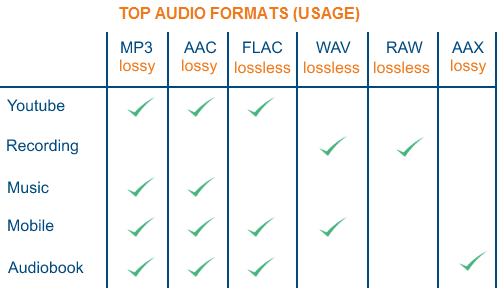
The audio format is directly related to the quality and purpose of the audio track, i.e. where and on which device it will be played and what is its purpose.

What are MP3 files?

But before you can figure out the difference between them and choose the best audio format for your music, you need to know what categories they fall into. Let’s keep going!

Uncompressed audio is like a picture, and uncompressed audio is of better quality, larger file size, safer to copy, and nearly identical in detail to the original sound.

WAV is the most widely used of these audio formats and plays music just as accurately as it records it.

compressed audio
When music is compressed, the files become smaller and can be easily stored on a device. Due to this advantage, users tend to choose compressed audio more.

However, it must be remembered that some audio formats in this category may lose quality depending on the option selected, just like MP3 and AAC.

What is the best audio format?
As we said before, the first step in deciding on an audio format is to know the final objective of the track. Whether it’s for music lessons, performances, karaoke, auditions, or recording versions, you need to understand the pros and cons of each option.

WAV
WAV (Waveform Audio File Format) is an uncompressed format and therefore requires ample storage space. This is suitable for those who already work with music, such as subject matter experts, or users who want to edit audio.

At high fidelity rates, WAV faithfully reproduces the elements and characteristics of the original soundtrack. Also, this format allows you to choose between different sample rates and bit rates and can be used on multiple platforms.

FLAC
FLAC (Free Lossless Audio Codec) is one of the most widely used compression formats by music lovers these days.

Digital audio encoding allows you to preserve its quality, but the resulting file will be smaller. Over the years, this format has become more widely used and compatible with different devices and platforms.

FLAC is free and open source, ready to use and can be easily played on smartphones and other devices.

MP3
Before deciding on the best audio format, it is worth taking a look at the most famous format in the world of music: MP3.

MP3 is one of the leading audio compression formats, and has become synonymous with the convenience and efficiency of producing files quickly, with smaller files, and at a certain level of quality.

Many devices and programs can play this format. But MP3 is difficult to use in professional audio processing and advanced audio editing.

As is known, this format exists on almost all platforms and is ideal for sharing audio.

Another interesting factor is its bitrate, although in a compressed format it can vary depending on the user’s objectives and quality improvements.

AAC Like MP3, Advanced Audio Coding (AAC) is a more efficient audio format than its predecessor.

If you need to create smaller files with less storage space, AAC is a great choice, reducing the file size for the user while maintaining a high-quality audio track.

Compatible with different platforms and devices, it is convenient to apply in different situations.

Analysis of the above audio formats leads to the conclusion that it is impossible to say which format is better than the other, just that each target has its own ideal format. So before downloading or uploading a file, check what platform the music will play on and what it is for.

What are MP3 files?

What are MP3 files?

What are MP3 files?
What are MP3 files?

A file with the .mp3 extension is a digitally encoded file format for audio files, officially based on MPEG-1 Audio Layer III or MPEG-2 Audio Layer III.

What are MP3 files?
What are MP3 files?

It was developed by the Moving Picture Experts Group (MPEG) using Layer 3 audio compression. The compression achieved by the MP3 file format is 1/10 the size of a .WAV or .AIF file. This format offers the advantage of streaming such audio files over the Internet for online listening, which was previously not possible due to the large size of audio files. The sound quality of MP3 audio files can be controlled by setting parameters such as bit rate, sample rate, common or normal stereo.

A brief history of MP3

The MP3 format was invented and developed by a German company, Fraunhofer-Gesellshart. The algorithm has licensed patents for the compression techniques it uses. Here’s a helpful MP3 schedule:

• 1987 : The Fraunhofer Institute in Germany begins research on high-quality, low-bitrate audio coding. It’s called the EUREKA project EU147, Digital Audio Broadcasting.

• January 1988: The Moving Picture Experts Group (MPEG) is formed.

• **April 1989**: Fraunhofer patented the MP3 in Germany.

• 1992-Dieter Seitzer, who helped Fraunhofer with his research, integrated his audio encoding with MPEG-1.

• 1993 – Publication of the MPEG-1 standard.

• 1994 – The MPEG-2 standard was developed and released a year later.

• November 26, 1996 : US patent for MP3 is published.

• September 1998 – Fraunhofer begins to enforce the patent. People who used the MP3 audio codec paid Fraunhofer a license fee.

• February 1999 – SubPop, a record label, releases music in MP3 format, the first to do so.

• 1999 – The first portable MP3 player appears.

File format MP3##
MP3 files consist of MP3 frames, where each frame consists of a header and a data block. Frames are not independent and generally cannot be mined at arbitrary frame boundaries. The data blocks of a file contain frequency and amplitude information about the audio. The sync word in the header identifies the start of a valid frame. This is followed by 3 bits where the first bit indicates that it is an MPEG standard and the remaining 2 bits indicate that layer 3 is used; therefore, MPEG-1 Audio Layer 3 or MP3. After this, the value will vary depending on the MP3 file. ISO/IEC 11172-3 defines the range of values for each part of the header and the header specification. Most current MP3 files contain ID3 metadata, which precedes or follows the MP3 frame, as shown. Data streams may contain an optional checksum.

MP3: complete analysis of the audio format

MP3: complete analysis of the audio format

Mp3 Audio Format
Mp3 Audio Format

WMA: WMA is the file format encoded by Windows Media Audio, developed by Microsoft.

Mp3 Audio Format
Mp3 Audio Format

WMA is not aimed at the independent market, but at the network! The competitor is the well-known Real Networks in the online media market. Microsoft claims that at a bit rate of just 64 kbps, WMA can achieve sound quality close to CD. Unlike the previous encoding, WMA supports the anti-copy function. Supports adding protection via Windows Media Rights Manager, which can limit playback time, number of playback times, and even playback machine, etc. WMA supports streaming technology, that is, play while reading, so WMA can easily realize online streaming. Because it is a Microsoft masterpiece, Microsoft has added support for WMA in Windows. WMA has excellent technical characteristics. With vigorous promotion, this format has been accepted by more and more people.

WAV: This is an old audio file format developed by Microsoft. WAV is a file format that complies with the PIFF Resource Interchange File Format specification. All WAVs have a file header, the encoding parameters of this file header audio stream. WAV does not have a strict regulation on the encoding of audio streams. In addition to PCM, almost all encodings that support the ACM specification can encode WAV audio streams. Many friends do not have this concept. Let’s take AVI as an example, because AVI and WAV are very similar in file structure, but AVI has one more video stream. There are many types of AVIs we have come into contact with, so we often need to install some decoders to watch some AVIs. DivX, which we have come into contact with a lot, is a type of video encoding. AVI can use DivX encoding to compress video streams, and of course we can also use other code compression. Similarly, WAV can also use a variety of audio codecs to compress its audio stream, but we commonly use WAV whose audio stream is processed by PCM encoding, but this does not mean that WAV can only use PCM codec, it is also you can use MP3 codec. in WAV Just like AVI, as long as the corresponding Decode is installed, you can enjoy these WAVs. On the Windows platform, WAV based on PCM encoding is the best supported audio format. All audio software can support it perfectly. Because it can meet higher sound quality requirements, WAV is also the preferred format for music creation and editing. Suitable for storing musical material. Therefore, WAV based on PCM encoding is used as an intermediate format and is often used in the conversion of other encodings, such as MP3 to WMA.

Ogg Vorbis: The so-called MP3 killer! What is the origin of Ogg Vorbis? OGG is the project name of a large multimedia development program, which will involve coding development in aspects such as video and audio. The whole purpose of the OGG project plan is to provide a completely free media encoding solution for anyone! OGG’s belief is: OPEN! FREE! The word Vorbis is the name of a “playboy” character in the fantasy novel “Small Gods” by Terry Platjat. This term became the official name for audio encoding in the OGG project. At present, Vorbis has been successfully developed and an encoder has been developed. Ogg Vorbis is a high quality audio coding scheme. Official data shows that Ogg Vorbis can achieve better sound quality than MP3 at relatively low data rates. This Ogg Vorbis encoding is also much more advanced than MP3, which was successfully developed in the 1990s. It can support multiple channels. What does this mean? This means that Ogg Vorbis can encode all channels with the support of SACD, DTSCD, DVD AUDIO ripping software (currently there is no such software), instead of MP3 it can only encode 2 channels. The rise of multi-channel music has brought revolutionary changes in music appreciation, especially when appreciating the symphony, it will bring more sense of presence. This revolutionary change cannot be adapted to MP3. Like MP3, Ogg Vorbis is a flexible and open audio codec that allows for significant sound quality adjustments and further algorithm improvements once the codec has been fixed. Therefore, its sound quality will be better and better. Just like MP3.

Detailed music format

Detailed music format

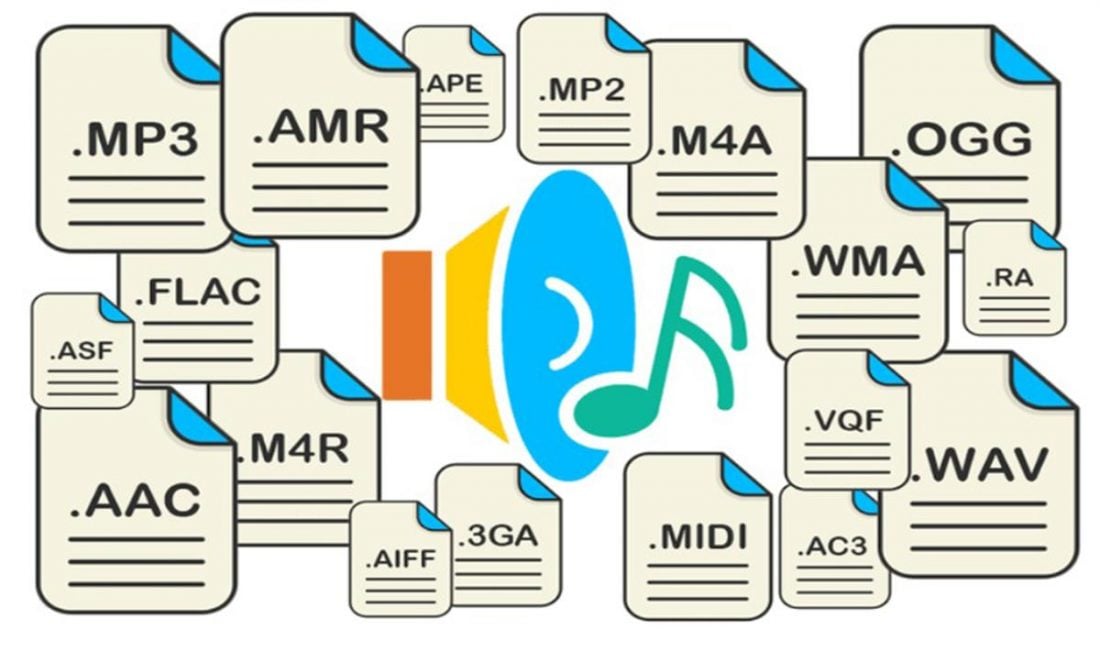
Audio File Formats
Audio File Formats

classic wave

Audio File Formats
Audio File Formats

As the most classic Windows media audio format, the WAVE file is widely used, which uses three parameters to represent sound: the number of sampled bits, the sample rate, and the number of channels.
The channels are divided into mono and stereo, and the sample rates are generally 11025 Hz (11 kHz), 22050 Hz (22 kHz), and 44100 Hz (44 kHz). The capacity occupied by the WAVE file = (sampling frequency × sampling bits × channel) × time/8 (1 byte = 8 bits).

traditional mod

MOD is a wavetable-like music format, but its structure is similar to MIDI, it uses real samples, and the volume is small. In the earlier DOS era, MOD was often used as background music for games. Modern mods can contain many audio tracks in many formats, such as S3M, NST, 669, MTM, XM, IT, XT, and RT.

midi music computer

MIDI is short for Musical Instrument Data Interface. Records the sound played by the instrument digitally (each note is recorded as a number), and then synthesizes these records via FM or wavetable during playback: FM synthesis is the sound of the instrument is simulated by mixing the multi-frequency sounds; wavetable synthesis consists of storing the sound samples of the instrument in the wavetable of the sound card and extracting the sound from the wavetable as you play.

Boss Boss MP3

It can be said that MP3 is famous, it uses MPEG Audio Layer 3 technology to compress the sound with a compression ratio of 1:10 or even 1:12, with a sampling rate of 44kHz and a bit rate of 112kbit/s. .
MP3 music is music stored in digital form. If you want to play it, you must have a corresponding digital playback and decoding system. Generally, MP3 digital music is decoded by special software and then restored to a waveform sound signal for playback output. This type of software is called For MP3 players, such as Winamp, etc.

Overlord RA series online

RA, RAM, and RM are Real’s mature network audio formats, using “streaming audio” technology, making them well suited for network streaming. Information such as copyright, singer, producer, mail and song title can be added during production.
RA can be called the supreme lord of multimedia communication on the Internet. It is suitable for streaming on the Internet and is currently the best format for listening to online music online.

VQF with high compression ratio

VQF or TwinVQ is an audio compression technology developed by Nippon Telegraph and Telephone and Yamaha Corporation.
The audio compression rate of VQF is almost twice that of standard MPEG audio and can reach approximately 1:18 or even higher. And popular compression formats like MP3 and RA are usually only around 1:12. But it still won’t affect the sound quality, when VQF compress music at 44kHz-80kbit/s audio sampling rate, its sound quality will be better than 44kHz-128kbit/s MP3, when compress at 44kHz-96kbit/s , the music is close to 44kHz-256kbit/s MP3.

MD minidisc

MD (ie MiniDisc) is a comprehensive portable music format released by SONY in 1992. The compression algorithm it uses is ATRAC technology (the compression ratio is 1:5). MD is divided into Recordable MD (Recordable, with two heads of magnetic head and laser head) and Single Play MD (Prerecorded, only laser head).
The powerful editing function is the strong point of MD. You can quickly select tracks, move tracks, merge, split, delete and edit track titles. It is more personalized than CD and you can have your own MD album at any time. MD products include MD Walkman, MD bedside audio, MD car audio, MD recording deck, MD camera gun and MD driver, etc.