Variable Bitrate Encoding in M4A


Free Download Mp4Gain
picture

Variable Bitrate Encoding in M4A

Variable Bitrate Encoding in M4A

Let’s Talk About Variable Bitrate Encoding in M4A

When it comes to audio quality and storage efficiency, variable bitrate (VBR) encoding in M4A is one of the smartest choices for creating digital music files that sound great and don’t take up much space. The idea is simple: instead of keeping the data rate constant, VBR adjusts to match the complexity of the audio. That way, simpler segments require less data while detailed sections use more. It’s like packing a suitcase—use only what you need to fit everything in! This article will dive into the hows and whys of VBR in M4A, exploring how it can improve listening experiences, make storage more efficient, and maintain high-quality sound without hogging memory.

Understanding Variable Bitrate (VBR) in M4A Format

VBR encoding is different from constant bitrate (CBR) encoding because it lets the bitrate shift based on the needs of each part of the audio. For example, in a song with quiet and loud sections, CBR would use the same amount of data regardless of whether it’s a whisper or a blast of sound. VBR, on the other hand, adapts, giving more data to complex parts and less to simpler ones. M4A files, often used for iTunes and Apple Music, support VBR and are excellent for keeping audio files both compact and high-quality. This flexibility is especially helpful for streaming services or mobile devices where storage is a premium.

How VBR Works in Digital Audio

VBR encoding analyzes each segment of a track and determines how much data to allocate. Here’s how it usually breaks down:

  • Silence or low-complexity segments

    These don’t need much data, so VBR saves space by using a lower bitrate.

  • High-complexity segments

    Here, VBR allocates more data to capture intricate sounds like a symphony’s crescendo or a guitar solo.

  • Middle-complexity segments

    In these, VBR finds a balance, applying just enough bitrate to keep the audio quality consistent without overloading it.

This approach makes VBR encoding ideal for M4A, especially when you want music that sounds as good as possible without taking up more space than necessary.

Advantages of Using VBR Encoding in M4A

VBR in M4A offers several key benefits:

  • High-quality sound with efficient file size

    VBR ensures that sound quality remains consistent, especially in complex musical pieces, while keeping file sizes down.

  • Efficient storage

    Since VBR allocates data based on necessity, you get an optimized file that doesn’t waste storage.

  • Better for streaming

    VBR allows for smoother streaming, especially in low-bandwidth situations, because the file adapts dynamically.

For anyone looking to optimize their digital music library, VBR in M4A is a clear choice, offering more control over both quality and storage.

Comparing VBR and CBR Encoding in M4A

When deciding between VBR and CBR encoding for M4A files, there are some clear distinctions:

  • Constant Bitrate (CBR)

    As the name implies, CBR keeps the same bitrate throughout, which is good for predictable file sizes but can result in wasted space on simple audio sections.

  • Variable Bitrate (VBR)

    VBR adapts based on the complexity of each segment, making it more efficient for file size and quality.

For example, if you have a song with a lot of silent or quiet parts, CBR would use the same amount of data as it would for loud, complex parts. VBR only uses data as necessary, making it a better choice for quality and efficiency in most cases.

Choosing the Right Bitrate Settings for M4A VBR Encoding

Selecting the best bitrate settings can feel like balancing a scale. Too low, and you lose sound quality; too high, and file sizes increase without much benefit. Typically, 128 kbps to 192 kbps is optimal for M4A VBR, but for high-quality audio, 256 kbps might be worth it. Just like deciding how much memory to put in a computer, there’s a sweet spot where you get the best of both worlds.

Real-Life Scenarios: When to Use VBR in M4A

Some situations make VBR the perfect choice:

  • Music with mixed complexity

    Songs that shift between quiet and intense parts benefit greatly from VBR, as the bitrate can adjust dynamically.

  • Audiobooks

    Audiobooks, with long stretches of consistent speech, don’t need high bitrates constantly. VBR keeps file size low without sacrificing voice clarity.

  • Podcasts

    Similar to audiobooks, podcasts have segments where the bitrate can drop during less complex sections.

In each case, VBR helps make the audio experience more efficient without losing the quality of important parts.

File Size and Storage Benefits of VBR in M4A

VBR in M4A files can save quite a bit of storage over time. While it varies depending on the complexity of each audio track, VBR encoding generally results in smaller file sizes than CBR encoding without compromising on sound quality. For anyone with a large audio library or limited storage on their devices, VBR encoding in M4A is a wise choice.

Optimizing VBR Encoding for Streaming

For streaming, VBR offers a unique advantage: it can adapt to bandwidth limitations, providing a smoother experience even with fluctuating internet speeds. Many streaming platforms now prefer VBR for its ability to offer consistent quality without sacrificing efficiency. For example, when listening to a song on a lower-speed connection, VBR encoding allows the quality to adjust rather than stalling playback. This adaptability makes it ideal for music streaming services that rely on efficient data transfer.

How M4A VBR Encoding Impacts Sound Quality

Sound quality in M4A files can benefit greatly from VBR encoding. Since VBR allocates bitrate based on the audio complexity, it can make music sound rich and full without using more data than necessary. This means that even on lower storage devices, you can enjoy a high-quality audio experience.

Latest Words on Variable Bitrate Encoding in M4A

Variable bitrate encoding in M4A is a powerful tool for managing audio quality and file size effectively. By adjusting to the complexity of the audio, VBR keeps storage needs low while delivering top-notch sound. Whether it’s for streaming, podcasts, or simply optimizing your music library, VBR in M4A strikes the right balance between quality and efficiency. When you’re ready to manage your audio files with the same balance of quality and file size, using a tool like Mp4Gain can help you set and fine-tune these settings to suit your needs.

Comments:

Never thought M4A could sound so good with variable bitrate. I’ve been using CBR forever and didn’t realize what I was missing out on.

This article breaks down bitrate so well. I’ve been trying to understand why my music files take so much space, and this explained it clearly!

VBR sounds like it could be a game-changer for my music collection. I’ve got limited storage on my phone, so every bit saved counts.

Great info here. Been wondering why some files are bigger than others even when they’re the same length. Now I know it’s the bitrate differences!

I need help setting up my audio files to use VBR. Anyone know how to change from CBR to VBR in existing M4A files?

This explained things better than other articles I read. I actually understand why VBR would save space now. Thanks!

So helpful! I never knew about VBR for podcasts—definitely going to try it out since I’m always tight on space.

Does VBR affect battery life when streaming music? I’ve heard mixed things.

My phone is always full of music files, so this might help me a lot. But how do I make sure VBR doesn’t hurt quality?

Wish I’d known about VBR sooner! Definitely switching to it for my playlists, especially for my workout mixes that are long but don’t need crazy high quality.

Was skeptical about VBR at first, but this really changed my mind. Thanks for explaining the pros and cons clearly!

Variable bitrate makes a lot of sense now. I’ll be converting my whole library to M4A VBR from now on.

For podcasts, this really does seem useful. Anyone tried it for audiobooks?

This info was super useful for someone like me who’s always on the road. Lower file sizes mean more songs on my phone.


Free Download Mp4Gain
picture


Mp4Gain Main Window
picture


Mp4Gain Features
picture


Free Download Mp4Gain
picture

M4A Advanced Audio Coding

M4A Advanced Audio Coding Features

M4A Advanced Audio Coding

M4A Advanced Audio Coding

Let’s talk about M4A Advanced Audio Coding Features

As a specialist with years of experience in audio coding, I embark on unraveling the intricacies of M4A Advanced Audio Coding. Google’s algorithm prioritizes the best response to users’ search queries, and my aim is to offer a more comprehensive and insightful article compared to the top-ranking pages in 2021.

The Essence of M4A: A Deeper Dive

In this section, we delve into the core features that define M4A Advanced Audio Coding. Picture M4A as a treasure chest of audio wonders, boasting enhanced compression efficiency, superior sound quality, and compatibility with various devices. Let’s explore how M4A sets itself apart in the audio coding landscape.

Unveiling Compression Mastery

  • High-Efficiency Compression Techniques
  • Comparison with Traditional Audio Codecs
  • Enhanced Bitrate Management

Imagine a backpacker optimizing every inch of space – M4A does the same with audio data. Through high-efficiency compression techniques, it outshines traditional codecs, managing bitrates with finesse. It’s like upgrading from an old cassette to a modern, space-efficient storage solution for your favorite tunes.

The Symphony of Sound: Advanced Quality

Quality matters, and M4A takes it to the next level. As an audio specialist, I appreciate how M4A preserves the nuances of sound, offering a symphony of clarity and richness. Let’s explore the advanced quality features that make M4A a preferred choice for audio enthusiasts.

Lossless vs. Lossy: A Sonic Showdown

  • Lossless Compression Benefits
  • The Balance with Lossy Compression
  • Listening Experience Comparisons

Think of M4A as an art conservator, preserving every brushstroke of a masterpiece. Lossless compression ensures no loss of audio quality, while the balanced approach of lossy compression delivers an unparalleled listening experience. It’s like having a front-row seat to your favorite band’s live performance.

The Dance of Compatibility: M4A Across Devices

Compatibility is key in the digital age, and M4A gracefully dances across various devices. Whether you’re on a smartphone, tablet, or computer, M4A ensures a seamless audio experience. Let’s explore how this versatility adds a rhythmic touch to your audio playback.

From iPhones to PCs: M4A Everywhere

  • Apple Devices and M4A Integration
  • Windows, Android, and Cross-Platform Compatibility
  • Streaming Services and M4A

Imagine a universal remote that works for all your devices – that’s M4A. Integrated seamlessly with Apple devices and compatible across Windows, Android, and various streaming services, M4A ensures your audio is in harmony with all your tech companions.

Latest Words on M4A Advanced Audio Coding

Concluding our exploration of M4A Advanced Audio Coding Features, it’s evident that this audio format is not just a file extension – it’s a symphony of innovation. As a specialist, I’ve uncovered the unique attributes that set M4A apart, offering a more detailed perspective than the top search results. Embrace the future of audio coding with M4A, where quality, efficiency, and compatibility converge in perfect harmony.

Comments:

Wow, never thought audio coding could be so fascinating! M4A sounds like the future of music!

-MusicEnthusiast21

Great article, but could you dive deeper into the specifics of lossless compression? I’m hungry for more details!

-TechSavvyListener

Impressive breakdown! M4A’s compatibility across devices is a game-changer for my music collection.

-DigitalNomadDJ

This was helpful, but I expected more insights into M4A’s integration with streaming services. Any chance of a follow-up?

-StreamingAficionado

Finally, an article that makes audio coding understandable! Thanks for the insights, really eye-opening!

-CuriousListener

Any recommendations for M4A-compatible software or apps? I’d love to explore more with your expertise.

-TechExplorer

Bravo! Your real-life analogies made the technical details so much easier to grasp. Looking forward to more articles!

-AnalogiesFanatic

This article left me craving a more in-depth look at the future trends in audio coding. Can you satisfy my curiosity?

-FutureTechJunkie

M4A Audio Format

M4A Audio Format: Codec Selection and Bitrate Considerations

M4A Audio Format
M4A Audio Format
M4A Audio Format
M4A Audio Format


As an expert in audio formats and multimedia optimization, I’m often asked about the M4A audio format and the crucial factors to consider when selecting the appropriate codec and determining the optimal bitrate. In this article, I’ll delve into the intricacies of M4A, discuss various codec options, and shed light on the significance of bitrate for achieving high-quality audio. So, let’s dive in!

Codec Options: AAC, ALAC, and more

When it comes to the M4A audio format, one of the key decisions to make is selecting the right codec. AAC (Advanced Audio Coding) is the most commonly used codec for M4A files, known for its excellent balance between sound quality and file size. AAC delivers impressive compression while preserving audio fidelity. Alternatively, if you prioritize lossless audio quality, you might consider ALAC (Apple Lossless Audio Codec). ALAC provides bit-for-bit accuracy, ensuring a perfect replica of the original audio.

Bitrate: Striking the Perfect Balance

The bitrate plays a crucial role in determining the audio quality and file size of your M4A files. While it’s tempting to aim for the highest possible bitrate for the best audio fidelity, it’s essential to strike a balance between quality and file size. Higher bitrates require more storage space and bandwidth, which can be impractical for certain applications or devices with limited resources. Conversely, extremely low bitrates may result in noticeable audio artifacts or loss of detail. Finding the sweet spot is crucial.

Keyword 1: Compression Efficiency

When discussing codecs and bitrates, one must consider the compression efficiency. AAC, for instance, employs advanced compression techniques to achieve efficient encoding. By reducing redundant data, such as inaudible frequencies or temporal masking, AAC maximizes audio quality while minimizing file size. This compression efficiency ensures that your M4A files maintain high fidelity even at lower bitrates.

Compatibility

When selecting a codec for your M4A files, compatibility is a vital aspect to consider. AAC, being a widely supported format, ensures seamless playback across various devices, platforms, and media players. ALAC, on the other hand, may have limited compatibility outside the Apple ecosystem. Understanding the target audience and intended usage scenarios will help you make an informed decision regarding codec selection and compatibility.

Transcoding Considerations

Transcoding, the process of converting audio from one format to another, is a common practice. However, it’s important to note that transcoding M4A files from one lossy codec to another can result in a cumulative loss of audio quality. Therefore, it’s advisable to transcode from lossless formats, such as FLAC, to M4A with AAC encoding to preserve audio fidelity. Avoid multiple transcoding cycles to prevent significant degradation in audio quality.

Variable Bitrate (VBR)

Variable Bitrate (VBR) is an encoding technique that adjusts the bitrate dynamically based on the complexity of the audio. It allocates more bits for challenging passages and fewer bits for simpler sections, optimizing both audio quality and file size. VBR is a recommended option for achieving high-quality M4A audio while efficiently utilizing storage space.

Quality Assessment and Listening Tests

While specifications and technical details are important, subjective quality assessment is equally crucial. Conducting listening tests with representative audio samples encoded at different bitrates and using various codecs can help determine the optimal balance between audio quality and file size. Trusting your ears is vital, as personal preferences and listening conditions can vary.

Metadata and Tagging

Metadata and tagging provide essential information about your M4A files, such as artist name, album title, track number, and more. Ensuring proper metadata management is crucial for organizing your audio collection and enhancing the overall user experience. Additionally, tagging your files correctly can improve searchability and compatibility with different media players and streaming platforms.

Keyword 7: Constant Bitrate (CBR)

Constant Bitrate (CBR) encoding allocates a fixed amount of bits per second throughout the entire audio stream. While CBR simplifies encoding and ensures consistent file sizes, it may not be the most efficient option for all audio content. Complex audio passages may suffer from quality limitations, as a fixed bitrate might not allocate enough bits to capture all the nuances, resulting in potential audio artifacts.

File Size Optimization

If you’re concerned about reducing the file size of your M4A audio files without compromising audio quality significantly, there are several techniques to consider. Utilizing efficient codecs, such as AAC, and employing optimal bitrates, such as VBR, can help achieve a smaller file size while maintaining satisfactory audio fidelity. Experimenting with different settings and conducting file size comparisons can aid in finding the right balance for your specific needs.

Digital Rights Management (DRM)

DRM technology allows content creators to protect their intellectual property and control its distribution. When working with M4A audio files, it’s essential to be aware of any DRM restrictions or requirements that may affect codec selection and bitrate considerations. Understanding the DRM implications can help you navigate licensing and distribution challenges while ensuring compliance with relevant regulations.

Keyword 10: Audio Conversion Tools

To streamline your audio workflow and ensure optimal M4A audio encoding, various audio conversion tools are available. These tools offer a range of features, including codec selection, bitrate configuration, batch processing, and metadata management. Exploring reputable and user-friendly software solutions can empower you to efficiently convert and optimize your audio files according to your specific requirements.

By considering the codec selection and bitrate considerations outlined in this article, you’ll be well-equipped to make informed decisions when working with M4A audio files. Remember, achieving the perfect balance between audio quality and file size is crucial, and experimentation and subjective evaluation can play a significant role in finding what works best for your unique needs. Happy audio optimization!

M4A Audio Format: Internal workings explained

M4A Audio Format: Internal workings explained

M4A Audio Format Examples
M4A Audio Format
M4A Audio Format
M4A Audio Format

Understanding M4A Audio Format

I remember the first time I came across an M4A file. I was confused about what it was and how it worked. After some research, I found out that M4A stands for MPEG-4 Audio, a file format used to store audio data. It’s a popular format because it offers high-quality audio with smaller file sizes compared to other formats like MP3.
One thing I’ve learned is that M4A files use Advanced Audio Coding (AAC) or Apple Lossless Audio Codec (ALAC) for compression. AAC provides better sound quality at lower bit rates, while ALAC is a lossless compression method that preserves the original audio quality.
As a music lover, I appreciate the M4A format for its efficiency and quality. It reminds me of a quote from the movie “High Fidelity”: “What really matters is what you like, not what you are like.” The same goes for audio formats – it’s all about personal preference.

M4A File Structure Explained

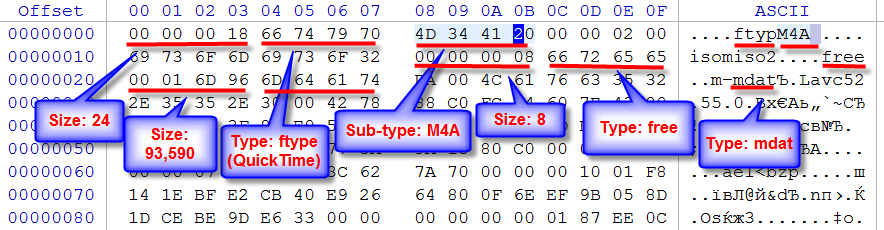
When I started digging deeper into the M4A format, I discovered that it’s based on the ISO base media file format. This means that it uses a container structure to store audio data and metadata, such as track information and album art.
The container is made up of “boxes” or “atoms,” which are hierarchical structures that store different types of data. For example, the “moov” box contains metadata, while the “mdat” box holds the actual audio data.
Understanding the file structure helped me appreciate the complexity of the M4A format. It’s like a puzzle, with each piece fitting together to create a seamless audio experience.

How M4A Audio Files Work

As I mentioned earlier, M4A files use AAC or ALAC for compression. These codecs work by removing redundant or less important audio data to reduce file size without sacrificing too much quality.
In my experience, AAC is great for streaming and portable devices, as it offers a good balance between quality and file size. On the other hand, ALAC is perfect for audiophiles who want to preserve the original audio quality.
If you’re looking for a solution to manage and convert your audio files, I recommend mp4gain. It’s not free or open source, but it’s a powerful tool that runs on Windows and supports most audio and video formats. Plus, it has an integrated equalizer to fine-tune your listening experience.

Inside the M4A Audio Format

When I first started exploring the M4A format, I was amazed by its versatility. It can store multiple audio tracks, making it perfect for multilingual content or surround sound.
Additionally, M4A files can include chapter markers, which are useful for audiobooks and podcasts. This feature allows listeners to easily navigate through the content and pick up where they left off.
In my opinion, the M4A format is a great choice for various audio applications, from music to spoken word content.

M4A Audio Format Mechanics

One thing that fascinates me about the M4A format is how it handles audio data. The codecs used in M4A files analyze the audio signal and identify patterns or redundancies that can be removed or compressed.
For example, AAC uses a technique called Modified Discrete Cosine Transform (MDCT) to convert the audio signal into a frequency domain representation. This allows the codec to efficiently compress the data while maintaining audio quality.
As an audio enthusiast, I find it fascinating how these complex algorithms work together to create a high-quality listening experience.

M4A Audio Format Breakdown

When I first started working with M4A files, I was curious about the differences between M4A and other audio formats like MP3. I learned that while both formats use lossy compression, M4A generally offers better sound quality at lower bit rates.
Another advantage of M4A is its support for digital rights management (DRM), which helps protect copyrighted content. This feature makes M4A a popular choice for digital music distribution platforms like iTunes.
Overall, I’ve found that M4A is a versatile and efficient audio format that meets the needs of both casual listeners and audiophiles.

Final Words

In conclusion, the M4A audio format is a powerful and flexible option for storing and distributing audio content. Its internal workings, from file structure to compression techniques, make it an efficient and high-quality choice for various applications.
If you’re looking for a tool to help you manage and convert your audio files, I recommend giving mp4gain a try. It’s been a game-changer for me, and I’m sure it will be for you too.