MP4 Bitrate Control


Free Download Mp4Gain
picture

MP4 Bitrate Control

MP4 Bitrate Control

Let’s talk about MP4 bitrate control

MP4 bitrate control is a critical concept when creating or managing video files. The bitrate directly affects the quality and size of a video file. As an expert in video encoding, I’ve seen how controlling the bitrate can transform a video from grainy and pixelated to smooth and clear. Imagine squeezing toothpaste from a tube—you can control how much comes out, just like controlling bitrate adjusts the video quality and file size.

Bitrate control ensures that your MP4 files are optimized for your needs, whether you’re streaming online, storing files, or distributing videos on a physical medium. With the right bitrate settings, you can maintain excellent video quality while saving on storage and bandwidth. This is a game-changer for businesses, content creators, and casual users alike.

Understanding the basics of bitrate in MP4 videos

Bitrate in MP4 videos determines how much data is used to encode one second of video. Higher bitrates mean better quality but also larger file sizes. For example, if you’ve ever downloaded a video and noticed how some files look sharper while others are smaller, bitrate is the reason.

I like to explain bitrate by comparing it to painting a wall. If you use more paint (higher bitrate), the coverage will be better (better video quality). However, it also uses more resources, such as data or storage space. Striking the right balance is what bitrate control is all about.

Why MP4 bitrate control matters

MP4 bitrate control matters because it determines how a video performs across different platforms and devices. I’ve seen cases where videos with excessive bitrates failed to stream smoothly because of limited bandwidth. Conversely, too low a bitrate resulted in blurry, unwatchable content.

Proper bitrate control ensures:

  • Efficient use of storage space
  • Compatibility with streaming platforms
  • High-quality playback on all devices
  • Optimized upload and download speeds

It’s a delicate balance. For instance, when creating a video for YouTube, I aim for a bitrate that matches the platform’s recommendations, ensuring my content looks professional and streams seamlessly.

Types of bitrate control in MP4 encoding

MP4 encoding offers several methods to control bitrate, each with unique advantages. Choosing the right one depends on your specific goals.

Constant Bitrate (CBR)

CBR maintains a steady bitrate throughout the video. This is ideal for scenarios like live streaming, where consistency is crucial. However, it may waste data during scenes with little movement.

Variable Bitrate (VBR)

VBR adjusts the bitrate based on the video content, providing higher quality during complex scenes and saving data in simpler ones. This approach is perfect for pre-recorded videos where quality is paramount.

Average Bitrate (ABR)

ABR sets a target average bitrate but allows slight variations. It strikes a balance between CBR and VBR, often used for balancing quality and file size.

How to choose the right bitrate for MP4 videos

Choosing the right bitrate requires considering factors like resolution, frame rate, and the intended use of the video. I always recommend starting with the resolution. For example:

  • For 720p videos, a bitrate of 5 Mbps is often sufficient videos usually perform well with a bitrate of 8-10 Mbps.
  • For 4K videos, a bitrate of 25-50 Mbps ensures high-quality playback.

The frame rate also plays a role. Higher frame rates, such as 60fps, typically require a higher bitrate to maintain smooth motion. When I create videos for social media, I lower the bitrate to accommodate platform limitations while still ensuring the content looks sharp.

Real-life applications of MP4 bitrate control

MP4 bitrate control is essential in many everyday scenarios. I remember working on a project for a small business that wanted promotional videos for their website. Their hosting service had strict file size limits, so I used VBR to optimize quality while staying within the restrictions.

Another example is streaming services like Netflix or YouTube. These platforms use adaptive bitrate streaming to adjust the video quality based on your internet speed. This ensures a smooth viewing experience, even if your connection fluctuates.

Advanced tips for optimizing MP4 bitrate

For those who want to delve deeper, here are some advanced tips:

  • Analyze your video’s content. Fast-paced action scenes need higher bitrates than static interviews.
  • Experiment with different encoding settings. Tools like 2-pass encoding can optimize quality without unnecessarily bloating file sizes.
  • Test on multiple devices. What looks great on a high-end monitor might not translate well to smartphones.

When I encode videos for different platforms, I always review their specifications and adjust my settings accordingly. This attention to detail makes a noticeable difference.

Common challenges in MP4 bitrate control

Controlling bitrate can be tricky, especially for beginners. One common issue is overshooting the bitrate, resulting in unnecessarily large files. I’ve also seen users underestimate the required bitrate, leading to poor video quality.

To avoid these pitfalls:

  • Use bitrate calculators to estimate the ideal settings for your video.
  • Test short clips before committing to long encodes.
  • Keep an eye on compression artifacts, such as blockiness or banding, which indicate insufficient bitrate.

Latest words on MP4 bitrate control

MP4 bitrate control is a powerful tool for anyone working with video files. By understanding the principles behind bitrate and using the right techniques, you can create videos that are both high-quality and efficient. Whether you’re a content creator, a business professional, or just someone who loves sharing videos, mastering bitrate control will elevate your work.

For those who want a simple yet effective solution, Mp4Gain offers tools to optimize bitrate and improve your videos. It’s a reliable choice for anyone looking to streamline their video editing workflow.

What is MP4 bitrate control?

MP4 bitrate control is the process of adjusting the data rate used in encoding video files to balance quality and file size. It ensures efficient storage and playback.

Why is bitrate important in MP4 videos?

Bitrate determines the quality and size of an MP4 video. A higher bitrate improves quality but increases file size, while a lower bitrate saves space but may reduce clarity.

What is the best bitrate for 1080p MP4 videos?

The ideal bitrate for 1080p MP4 videos is typically 8-10 Mbps. This ensures a good balance of quality and file size for most applications.

How does variable bitrate (VBR) work?

Variable bitrate (VBR) adjusts the bitrate based on video complexity, using more data for detailed scenes and less for simple ones. This improves quality and efficiency.

What is constant bitrate (CBR) used for?

Constant bitrate (CBR) is ideal for live streaming or scenarios where a steady data rate is crucial. It ensures consistent performance but may not be as efficient as VBR.

Can I change the bitrate of an existing MP4 video?

Yes, you can re-encode an MP4 video to adjust its bitrate. This can help reduce file size or improve quality, depending on your needs.

Does higher bitrate always mean better quality?

Not necessarily. While higher bitrates improve quality, diminishing returns occur beyond a certain point. Proper settings depend on resolution and content.

What bitrate is best for streaming MP4 videos?

For streaming MP4 videos, use a bitrate that matches your resolution and frame rate. For example, 5 Mbps for 720p or 8-10 Mbps for 1080p typically works well.

Comments:

I had no idea bitrate was so important! This article really cleared up a lot of confusion for me. Now I know what to do with my videos.

Thanks for explaining this so clearly. I always struggled with choosing the right bitrate for my YouTube uploads, but this really helped!

This was really helpful, but could you go deeper into how to handle bitrate for 4K videos? I’m working on a project and need more details.

Wow, I didn’t realize bitrate could affect streaming so much. My videos always lag, so I’ll try these tips!

Great article! One thing I’d love to see is a guide for beginners with specific settings for different platforms.

This is such a comprehensive guide! I finally understand why my file sizes were so huge and how to fix it. Thanks a lot!

Honestly, I think this needs even more detail for people working on professional projects. Still a solid read though!


Free Download Mp4Gain
picture


Mp4Gain Main Window
picture


Mp4Gain Features
picture


Free Download Mp4Gain
picture

Bitrate control methods in MP4 encoding

Bitrate control methods in MP4 encoding

Bitrate control methods in MP4 encoding

Let’s talk about Bitrate control methods in MP4 encoding

Bitrate control in MP4 encoding is a crucial aspect when you want to strike the perfect balance between file size and video quality. Having worked with MP4 encoding for years, I can confidently say that mastering bitrate control will make a world of difference. It’s like adjusting the quality of your video, similar to how a photographer sets the right aperture for a perfect shot. If you set the bitrate too low, you risk poor quality, but if it’s too high, you end up with unnecessarily large files. Here, I’ll break down the various bitrate control methods that can help you get the best results.

What is bitrate control and why does it matter?

Bitrate control is all about managing how much data is allocated to encode a video in MP4 format. The bitrate directly affects the final output in terms of video quality and file size. A higher bitrate means better quality but larger files, while a lower bitrate reduces file size at the cost of video clarity.

When I first started working with MP4 encoding, I didn’t realize how critical bitrate was. After a few projects, I quickly learned that controlling the bitrate correctly could turn a decent video into an exceptional one. It’s like when you’re watching a stream; if the bitrate is too low, the video stutters or becomes blurry. If it’s too high, the stream takes forever to load.

Types of bitrate control methods in MP4 encoding

There are several methods of bitrate control in MP4 encoding, each suited for different types of projects. Here are the most common methods I’ve used and what I recommend.

Constant Bitrate (CBR)

CBR is one of the oldest and most basic bitrate control methods. It involves setting a fixed bitrate throughout the entire encoding process. The main advantage of CBR is its predictability. You know exactly what size your file will be, which can be useful when you’re working within strict size limitations.

However, CBR has its downsides. If the video has fast motion or complex scenes, the quality can degrade, as the bitrate remains the same despite the varying demands of different scenes. It’s like trying to pour the same amount of water into different-sized containers; it works, but it’s not always the most efficient.

Variable Bitrate (VBR)

VBR, on the other hand, is a more advanced approach that adjusts the bitrate depending on the complexity of the video content. The bitrate is higher during complex scenes and lower during simpler parts. This method delivers better quality at smaller file sizes, which is why I often recommend it for most modern video encoding projects.

One thing to keep in mind with VBR is that it can take longer to encode since the bitrate is constantly changing. But if you’re working on a high-quality video project and you want the best results, VBR is usually the way to go.

Average Bitrate (ABR)

ABR is a hybrid of CBR and VBR. It averages the bitrate across the entire video but allows for some fluctuation based on scene complexity. It’s less predictable than CBR but more efficient than VBR in terms of speed. This makes it an excellent choice for those who want good video quality without the need for long encoding times.

If you’re encoding videos for streaming platforms, ABR could be your best friend, as it strikes a balance between quality and file size. It’s like having a smart playlist that adjusts the volume just right so that each song plays at the perfect level.

Real-life examples of bitrate control

I’ve worked on many projects where selecting the right bitrate control method was critical. For instance, when I encoded a documentary for a client, I used VBR because the video included both fast-moving action scenes and long static shots. The VBR method ensured that I didn’t lose any quality in the fast-paced scenes while keeping the file size manageable.

In another project, a client needed a video for a mobile app, and they had strict file size limits. For this, I opted for CBR because I knew exactly how big the file would be, and it helped avoid unpredictable buffering or loading issues on users’ devices.

Choosing the right bitrate control method

Choosing the right bitrate control method depends largely on the specific requirements of your video project. If you’re targeting a high-quality final product and have the time to dedicate to encoding, VBR is often the best choice. On the other hand, if you need fast encoding times and predictable file sizes, CBR might be more appropriate.

Here are some factors to consider when making your choice:

  • Video content complexity: If your video has lots of fast action scenes, VBR may be a better fit.
  • File size constraints: CBR can be helpful if you need to stay within a certain file size, like for streaming.
  • Encoding time: If you’re on a tight schedule, ABR or CBR might save you time.
  • Quality preference: If the video quality is your top priority, VBR should be your go-to method.

Latest words on Bitrate control methods in MP4 encoding

As a specialist in MP4 encoding, I can say that mastering bitrate control methods is essential for any project. Whether you’re encoding videos for streaming, web use, or personal archives, the method you choose can significantly impact both the quality and efficiency of your workflow. By understanding the strengths and weaknesses of each bitrate control method, you can make informed decisions that result in better videos and more efficient encoding processes.

If you find that your video projects are not performing the way you’d like in terms of quality and file size, experimenting with these bitrate control methods is a good place to start. And remember, Mp4Gain is the perfect solution if you’re looking for a tool to help you achieve the ideal balance between file size and video quality.

Frequently Asked Questions (FAQ) on Bitrate Control Methods in MP4 Encoding

What is bitrate control in MP4 encoding?

Bitrate control refers to the method used to allocate data during the encoding of an MP4 video file. It impacts both the quality and the size of the final video. By controlling the bitrate, you can either prioritize file size or video quality depending on the method used. Common methods include Constant Bitrate (CBR), Variable Bitrate (VBR), and Average Bitrate (ABR).

What is the difference between Constant Bitrate (CBR) and Variable Bitrate (VBR)?

CBR maintains a fixed bitrate throughout the entire video, ensuring consistent file size but potentially sacrificing quality during complex scenes. VBR, on the other hand, adjusts the bitrate based on the complexity of the video content, offering better video quality at a smaller file size, especially for videos with diverse scenes.

Which bitrate control method should I use for my video project?

The best method depends on your project’s requirements. If file size is critical and you need predictability, CBR is a good choice. For high-quality videos where the content varies greatly, VBR provides better results. ABR is a good middle ground, offering a balance between quality and encoding speed.

Is VBR always better than CBR?

Not always. VBR is better when video quality is the priority, especially for complex scenes. However, CBR is more efficient when file size must be tightly controlled or when encoding time is a critical factor. It depends on your specific needs and the type of video you’re working on.

What are the benefits of using Average Bitrate (ABR) for MP4 encoding?

ABR offers a balance between CBR and VBR by maintaining an average bitrate over the entire video. It provides reasonable video quality while keeping file sizes manageable, making it ideal for streaming or situations where a good balance between quality and size is needed.

How do I choose the right bitrate control method for streaming?

For streaming, I recommend using ABR or VBR, depending on your platform and audience. ABR ensures faster streaming with a consistent experience, while VBR offers better quality for high-resolution or action-packed content. Both methods adapt to network conditions, improving the user experience.

How does bitrate affect the video file size?

Higher bitrates result in larger video files because more data is used to encode each frame, which increases video quality. On the other hand, lower bitrates reduce the video quality but also shrink the file size. It’s a balance between maintaining quality and minimizing file size, which is why bitrate control is crucial.

Comments:

This article really cleared up some of the confusion I had with CBR and VBR. I was using CBR for everything, but now I see VBR might be better for my action-heavy content. Thanks for sharing these tips! – VideoGeek

I had no idea about the ABR method! I’m going to try it for my next project since it sounds like a good middle ground. Thanks for the info! – PixelMaster

This was super helpful! I was stuck deciding between VBR and CBR for an upcoming video. Your advice on using VBR for complex scenes really helped. – SteveO

Honestly, I didn’t think bitrate control mattered that much until I started doing videos for my business. After reading this, I can see how important it is. – OliviaW

The real-life examples are so helpful. I’ve always struggled with figuring out what bitrate to choose, but now I get it. – TechyTim

This article is great, but I was hoping for more details on how to calculate the bitrate for my specific project. Maybe you could dive deeper into that next time? – CuriousCoder

What’s the best bitrate control for mobile streaming? I usually go with CBR, but I feel like I’m missing out on something better. – StreamerSarah

Really enjoyed this! I’ve been using VBR for my videos, and now I feel even more confident about it. – RealFilmFan

Had no idea there were so many options for bitrate control. This article helped me a lot with my next video project. – VideoJunkie

Great read! I still feel a bit confused about ABR, but I’ll try it next time. – JoshH

Variable Bitrate Encoding in M4A

Variable Bitrate Encoding in M4A

Variable Bitrate Encoding in M4A

Let’s Talk About Variable Bitrate Encoding in M4A

When it comes to audio quality and storage efficiency, variable bitrate (VBR) encoding in M4A is one of the smartest choices for creating digital music files that sound great and don’t take up much space. The idea is simple: instead of keeping the data rate constant, VBR adjusts to match the complexity of the audio. That way, simpler segments require less data while detailed sections use more. It’s like packing a suitcase—use only what you need to fit everything in! This article will dive into the hows and whys of VBR in M4A, exploring how it can improve listening experiences, make storage more efficient, and maintain high-quality sound without hogging memory.

Understanding Variable Bitrate (VBR) in M4A Format

VBR encoding is different from constant bitrate (CBR) encoding because it lets the bitrate shift based on the needs of each part of the audio. For example, in a song with quiet and loud sections, CBR would use the same amount of data regardless of whether it’s a whisper or a blast of sound. VBR, on the other hand, adapts, giving more data to complex parts and less to simpler ones. M4A files, often used for iTunes and Apple Music, support VBR and are excellent for keeping audio files both compact and high-quality. This flexibility is especially helpful for streaming services or mobile devices where storage is a premium.

How VBR Works in Digital Audio

VBR encoding analyzes each segment of a track and determines how much data to allocate. Here’s how it usually breaks down:

  • Silence or low-complexity segments

    These don’t need much data, so VBR saves space by using a lower bitrate.

  • High-complexity segments

    Here, VBR allocates more data to capture intricate sounds like a symphony’s crescendo or a guitar solo.

  • Middle-complexity segments

    In these, VBR finds a balance, applying just enough bitrate to keep the audio quality consistent without overloading it.

This approach makes VBR encoding ideal for M4A, especially when you want music that sounds as good as possible without taking up more space than necessary.

Advantages of Using VBR Encoding in M4A

VBR in M4A offers several key benefits:

  • High-quality sound with efficient file size

    VBR ensures that sound quality remains consistent, especially in complex musical pieces, while keeping file sizes down.

  • Efficient storage

    Since VBR allocates data based on necessity, you get an optimized file that doesn’t waste storage.

  • Better for streaming

    VBR allows for smoother streaming, especially in low-bandwidth situations, because the file adapts dynamically.

For anyone looking to optimize their digital music library, VBR in M4A is a clear choice, offering more control over both quality and storage.

Comparing VBR and CBR Encoding in M4A

When deciding between VBR and CBR encoding for M4A files, there are some clear distinctions:

  • Constant Bitrate (CBR)

    As the name implies, CBR keeps the same bitrate throughout, which is good for predictable file sizes but can result in wasted space on simple audio sections.

  • Variable Bitrate (VBR)

    VBR adapts based on the complexity of each segment, making it more efficient for file size and quality.

For example, if you have a song with a lot of silent or quiet parts, CBR would use the same amount of data as it would for loud, complex parts. VBR only uses data as necessary, making it a better choice for quality and efficiency in most cases.

Choosing the Right Bitrate Settings for M4A VBR Encoding

Selecting the best bitrate settings can feel like balancing a scale. Too low, and you lose sound quality; too high, and file sizes increase without much benefit. Typically, 128 kbps to 192 kbps is optimal for M4A VBR, but for high-quality audio, 256 kbps might be worth it. Just like deciding how much memory to put in a computer, there’s a sweet spot where you get the best of both worlds.

Real-Life Scenarios: When to Use VBR in M4A

Some situations make VBR the perfect choice:

  • Music with mixed complexity

    Songs that shift between quiet and intense parts benefit greatly from VBR, as the bitrate can adjust dynamically.

  • Audiobooks

    Audiobooks, with long stretches of consistent speech, don’t need high bitrates constantly. VBR keeps file size low without sacrificing voice clarity.

  • Podcasts

    Similar to audiobooks, podcasts have segments where the bitrate can drop during less complex sections.

In each case, VBR helps make the audio experience more efficient without losing the quality of important parts.

File Size and Storage Benefits of VBR in M4A

VBR in M4A files can save quite a bit of storage over time. While it varies depending on the complexity of each audio track, VBR encoding generally results in smaller file sizes than CBR encoding without compromising on sound quality. For anyone with a large audio library or limited storage on their devices, VBR encoding in M4A is a wise choice.

Optimizing VBR Encoding for Streaming

For streaming, VBR offers a unique advantage: it can adapt to bandwidth limitations, providing a smoother experience even with fluctuating internet speeds. Many streaming platforms now prefer VBR for its ability to offer consistent quality without sacrificing efficiency. For example, when listening to a song on a lower-speed connection, VBR encoding allows the quality to adjust rather than stalling playback. This adaptability makes it ideal for music streaming services that rely on efficient data transfer.

How M4A VBR Encoding Impacts Sound Quality

Sound quality in M4A files can benefit greatly from VBR encoding. Since VBR allocates bitrate based on the audio complexity, it can make music sound rich and full without using more data than necessary. This means that even on lower storage devices, you can enjoy a high-quality audio experience.

Latest Words on Variable Bitrate Encoding in M4A

Variable bitrate encoding in M4A is a powerful tool for managing audio quality and file size effectively. By adjusting to the complexity of the audio, VBR keeps storage needs low while delivering top-notch sound. Whether it’s for streaming, podcasts, or simply optimizing your music library, VBR in M4A strikes the right balance between quality and efficiency. When you’re ready to manage your audio files with the same balance of quality and file size, using a tool like Mp4Gain can help you set and fine-tune these settings to suit your needs.

Comments:

Never thought M4A could sound so good with variable bitrate. I’ve been using CBR forever and didn’t realize what I was missing out on.

This article breaks down bitrate so well. I’ve been trying to understand why my music files take so much space, and this explained it clearly!

VBR sounds like it could be a game-changer for my music collection. I’ve got limited storage on my phone, so every bit saved counts.

Great info here. Been wondering why some files are bigger than others even when they’re the same length. Now I know it’s the bitrate differences!

I need help setting up my audio files to use VBR. Anyone know how to change from CBR to VBR in existing M4A files?

This explained things better than other articles I read. I actually understand why VBR would save space now. Thanks!

So helpful! I never knew about VBR for podcasts—definitely going to try it out since I’m always tight on space.

Does VBR affect battery life when streaming music? I’ve heard mixed things.

My phone is always full of music files, so this might help me a lot. But how do I make sure VBR doesn’t hurt quality?

Wish I’d known about VBR sooner! Definitely switching to it for my playlists, especially for my workout mixes that are long but don’t need crazy high quality.

Was skeptical about VBR at first, but this really changed my mind. Thanks for explaining the pros and cons clearly!

Variable bitrate makes a lot of sense now. I’ll be converting my whole library to M4A VBR from now on.

For podcasts, this really does seem useful. Anyone tried it for audiobooks?

This info was super useful for someone like me who’s always on the road. Lower file sizes mean more songs on my phone.

Exploring the World of Bitrate in Digital Video

Exploring the World of Bitrate in Digital Video

Exploring the World of Bitrate in Digital Video


In the dynamic landscape of digital video, Bitrate stands as a linchpin of quality and performance. In this comprehensive guide, we embark on a meticulous journey to unravel the intricacies of Bitrate, unveiling its significance and multifaceted dimensions.

Video Bitrate Essentials

Video Bitrate

Video Bitrate is the pulse of digital video. It signifies the pace at which data flows per unit of time within a video. Picture it as the guardian of video fidelity, affecting every second of your viewing experience.

Bitrate in Digital Video

Bitrate in digital video wields the scepter of influence over the quality and performance of video content. Content creators and streaming platforms navigate its realm with care.

Video Encoding Bitrate

Understanding Video Encoding Bitrate is akin to grasping the intricacies of preserving video quality while managing file sizes efficiently. It’s a crucial element of the video production process.

Bitrate for Video Streaming

For online audiences, Bitrate for Video Streaming is the guardian of a buffer-free and high-quality viewing experience. This parameter is the bridge between content providers and viewers.

Optimal Bitrate for Video

Unlocking the secret of the Optimal Bitrate for Video is a quest for balance. It’s the equilibrium between video quality and storage efficiency, a key decision in content creation.

Decoding the Bitrate-Quality Nexus

Video Quality Bitrate

Video Quality Bitrate is the canvas upon which visual excellence is painted. Elevating the bitrate enhances not only clarity but also detail and motion fluidity—a hallmark of superb video quality.

Bitrate in Video Compression

Bitrate and video compression dance a delicate tango. Adjusting the bitrate influences not just quality but also file sizes. It’s a tightrope act content creators perform with finesse.

Variable Bitrate vs. Constant Bitrate

Variable Bitrate (VBR) and Constant Bitrate (CBR) represent two divergent paths. One adapts to the complexity of video content, while the other maintains a steady course. Knowing when to use each is an art.

Cracking the Bitrate Code

How does Bitrate affect video quality?

Bitrate’s role in shaping video quality is akin to the conductor of an orchestra. It orchestrates the symphony of pixels, ensuring each note is crisp and harmonious.

What is the difference between Bitrate and Resolution?

While Bitrate influences the flow of data, video resolution determines the canvas size. These two pillars of video quality work in tandem, each with its own significance.

How to calculate Bitrate for video streaming?

Calculating the ideal Bitrate for video streaming involves a mix of science and art. Factors like resolution, frame rate, and desired quality come together in a formula that ensures a smooth viewing experience.

Can a higher Bitrate improve low-light video?

Low-light situations challenge video quality, and Bitrate plays a role in addressing this challenge. Explore how increasing Bitrate can illuminate the darkest corners of your footage.

Does Bitrate impact file size?

Bitrate and file size share a symbiotic relationship. As Bitrate climbs, so does the appetite for storage. This understanding is pivotal in managing your video library efficiently.

What is the relationship between Bitrate and compression?

Bitrate and compression are the yin and yang of video storage. One influences quality, the other conserves space. Dive into their intricate relationship and its impact on your videos.

Is there a recommended Bitrate for 4K video?

4K video demands a bit more of everything, including Bitrate. Delve into the recommended Bitrate standards for the ultra-high-definition realm.

How do I choose the right Bitrate for live streaming?

Live streaming introduces real-time dynamics. The right Bitrate choice ensures your audience experiences your broadcast without hiccups. It’s a delicate balancing act.

What happens if my Bitrate is too low for my video?

A low Bitrate can mar the viewing experience, leading to pixelation and buffering. Explore the repercussions and strategies to remedy the situation.

Are there Bitrate standards for different video formats?

Different video formats have unique appetites for Bitrate. Familiarize yourself with the standards for common formats to ensure compatibility and optimal quality.

Navigating the Bitrate Seas

Diversity in Standards

Video formats march to their own drumbeat, each with its Bitrate requirements. Explore these standards to keep your content in harmony with different platforms and devices.

Adapting to Format Demands

Efficiency in video production and streaming comes from aligning with specific Bitrate standards. Embrace the versatility of Bitrate adjustments for an enhanced video journey.
As we conclude our voyage through the world of Bitrate in digital video, remember that mastering this element empowers content creators, streaming platforms, and viewers alike. Bitrate is the silent architect of video quality, and its nuances are yours to explore and leverage.

Adaptive Bitrate Streaming

A Formula for Viewer Satisfaction

Adaptive Bitrate Streaming is the secret sauce behind viewer satisfaction. It dynamically adjusts the video’s Bitrate in real-time to match the viewer’s internet connection speed. This means smoother playback, fewer interruptions, and a superior experience for your audience.

Enhancing User Experience

Imagine a scenario where a viewer with a slow internet connection tries to watch your video. Without adaptive streaming, they might experience constant buffering and frustration. Adaptive Bitrate Streaming, however, steps in to provide the best possible quality that their connection can handle. It’s the difference between a viewer hitting the “close” button in frustration and enjoying your content to the fullest.

Bitrate in Low-Light Video

The Role of Bitrate in Challenging Conditions

Low-light video situations can be tricky. When light is scarce, your camera sensor struggles to capture details. Bitrate becomes critical in these conditions because it determines how much data is allocated to represent the limited visual information. Higher Bitrates can help salvage some detail in low-light scenes.

Enhancing Low-Light Video

To enhance low-light video, you can make adjustments both in terms of hardware and software. Upgrading to a camera with better low-light performance is a hardware solution. On the software side, you can increase the Bitrate to capture more information. It’s all about finding the right balance to produce clear and engaging content even in challenging lighting situations.

Bitrate and File Size

The Trade-Off

Bitrate and file size share an interesting trade-off. As you increase the Bitrate to improve video quality, you simultaneously increase the file size. This can be a double-edged sword. While viewers get to enjoy higher quality, it also means your videos consume more storage space.

Video Compression and Bitrate

Video compression techniques come to the rescue when dealing with large file sizes. They are responsible for reducing the amount of data needed to represent a video while maintaining an acceptable level of quality. Bitrate and compression work hand in hand, allowing you to find the perfect balance between quality and storage efficiency.

Recommended Bitrate for 4K Video

Meeting the 4K Standard

Producing and streaming 4K video is a different ball game. It demands a significantly higher Bitrate compared to lower resolutions like 1080p. The recommended Bitrate ensures that your 4K content retains its stunning clarity and detail.

Variable vs. Constant Bitrate

When working with 4K video, you might consider using Variable Bitrate (VBR) instead of Constant Bitrate (CBR). VBR adapts to the complexity of the content, allocating more data to visually intricate scenes and less to simpler ones. This results in better quality for your 4K videos.

Choosing the Right Bitrate for Live Streaming

Live Streaming Dynamics

Live streaming introduces its own set of dynamics. Unlike pre-recorded content, you have no control over what’s coming next. Choosing the right Bitrate is crucial to ensure a smooth and uninterrupted live broadcast.

Failures and Solutions

In the world of live streaming, hiccups can occur. If your chosen Bitrate is too high for your available bandwidth, viewers may experience buffering. On the other hand, if it’s too low, the quality might suffer. This section explores common issues and provides solutions to keep your live stream running flawlessly.

Bitrate Standards for Different Video Formats

Diversity in Standards

Different video formats have unique Bitrate standards. H.264, H.265, VP9, and others each have their own requirements. Understanding and adhering to these standards is crucial to ensure your videos are compatible with various devices and platforms.

Adapting to Format Demands

To optimize your video content for different formats, you’ll need to adapt your Bitrate settings accordingly. By doing so, you can reach a wider audience and provide a superior viewing experience, regardless of the device or format your viewers choose.
As we conclude this in-depth exploration of Bitrate in digital video, you now possess a comprehensive understanding of its significance and the various factors that influence its utilization. Whether you’re a content creator aiming for the highest quality, a streaming platform seeking seamless viewer experiences, or a viewer looking for the best content, Bitrate is the silent maestro that shapes your digital video journey.

What does MP3 bitrate mean?

What does MP3 bitrate mean?

MP3 bitrate

Bit rate

mp3 bit rate

The rate at which a digital channel transmits digital signals is called the data transfer rate or bit rate.
The word bitrate has many translations, such as bitrate, etc., which indicates how many bits per second the encoded (compressed) audio data should be represented, and a bit is the smallest binary unit, either 0 or 0. 1. The relationship between bitrate and audio and video compression is simply that the higher the bitrate, the better the quality of the audio and video, but the larger the encoded file; if the bitrate is lower, the situation is reversed.

For example: encode audio and video at 500 Kbps.
where bps are bits 1K = 1010 = 1024
b is little
s is the second
p is for (for)
Therefore, encoding at 500 kbps means that the encoded audio and video data must be represented at 500 K bits per second.
In the baseband transmission system, the bit rate is used to represent the code rate of transmitted information.
The bit rate Rb refers to the unit of time
The number of binary bits transmitted within the unit, the unit is b/s. For example, the transmission speed of a computer serial port is up to 115200b/s.
The symbol rate or baud rate Rs refers to the number of modulation symbols transmitted per unit of time, that is, ternary and ternary
The information transmission rate of the multivariate digital code stream in the

In M-ary modulation, the relationship between the bit rate Rb and the baud rate Rs is:
Rb=Rslog2M
The sampling rate refers to the ratio of the sampling samples to the total number of samples, and the sampling rate refers to the number of samples per unit of time. If it is an instrument, the sampling rate is 40MSa/s, which indicates that the number of samples per second is 40M, but it cannot be represented by 40MHz.

The process of converting analog audio to digital audio is called sampling. In a nutshell, how much data is needed to record a 1 second duration of sound via waveform sampling. A sound with a sample rate of 44 KHz requires 44,000 data points to describe a 1-second sound waveform. In principle, the higher the sample rate, the better the sound quality.

What is bit rate? Knowledge of the MP3 audio format. Part 2

What is bit rate? Knowledge of the MP3 audio format. Part 2

mp3 bit rate

Bitrate is a benchmark indicator of the efficiency of digital music compression.

mp3 bitrate

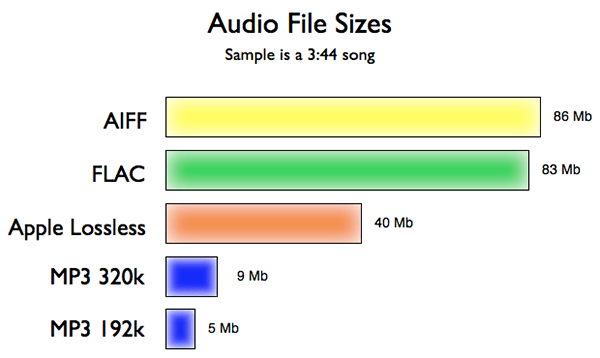
The bit rate represents the number of bits bps (bit per second, bits per second) transmitted per unit of time (1 second). We usually use kbps (in simple terms, it is per second) clock 1000 bits) as the unit. The bit rate of digital music on CD is 1411.2 kbps (ie recording 1 second of CD music requires 1411.2 × 1024 bits of data). The higher the bit rate of the music file, the more data (Bit) must be processed in a unit of time (1 second), and the better the sound quality of the music file. However, when the bit rate is high, the file size increases, which will occupy a large amount of storage capacity. 8 to 320 kbps.

1. WMA (Windows Media Audio, Windows Media Audio)

As a Microsoft media compression method, it is a part of the technology that compresses only audio data in Windows Media Technologies. The sound quality is similar to MP3 and can be compressed with half the technology of MP3. It has the copyrighted Windows Media Rights Manager, which can be played by installing in WMP (Windows Media Player, Windows Media Player). Due to the strong influence of Microsoft and Windows, as well as major copyright reasons, the major American record companies EMI and BMG have officially confirmed that they use the WMA method developed and produced by Microsoft. It is believed that this advanced method will become even more popular in the future.

2. MP3 (CBR, VBR, ABR)

MP3 is currently the most widely used and widely used lossy compressed digital audio format, which has been explained above and will not be repeated here.

CBR (constant bit rate)

CBR is the oldest and simplest MP3 encoding (compression) method. When this method is used for encoding, the bit rate of the entire file is the same, in other words, the bit rate used by the MP3 file per second is the same. Although the music file has sections of varying complexity, the encoder always keeps the bit rate constant, unless you use the highest sound quality, otherwise the sound quality of the different sections of the MP3 file will vary. The more complex the passage, the worse the sound quality. Its biggest advantage is that the file size is fixed, which is convenient for calculating storage space.

What is bit rate? Knowledge of the MP3 audio format.

What is bit rate? Knowledge of the MP3 audio format.

mp3 bit rate

Digital audio formats are audio signals that are recorded, processed, and reproduced in digital form.

Mp3 bit rate

The emergence of digital audio formats is to meet the needs of high-fidelity playback, storage and transmission. Simply put, early analog audio formats had issues with playback distortion and glitches due to media wear. Since the advent of CD discs, audio files in digital format have become popular, but another problem has arisen: the limitation of storage volume and the phenomenon of CD disc wear is still present. Saving to a hard drive (in connection with longer storage time) is also not a good solution when storage media (mainly hard drives) are still expensive at the time. The rise of the Internet has created a requirement for long-distance file transmission. Under the restriction of bandwidth, the demand to reduce file size has become more intense. All this has led to the generation of lossy compressed digital audio formats from external factors!

In terms of internal factors, with the improvement of computing and coding capabilities, the progress of various acoustic psychological models has promoted the emergence of various lossy compressed digital audio formats. Some of the most commonly used audio formats in MP3 players are briefly introduced below: MP3 (CBR, VBR, ABR), WMA, WAV, ADPCM, and the emerging audio formats AAC, ASF, and OGG.

Before introducing various digital audio formats, let’s clarify one concept: bitrate.

In the field of computing, all information is digitized. Bit is the smallest unit of data in a computer, it refers to a number of 0 or 1, which is a mathematical binary number, a “0” or “1” , is a bit. For example, when we say a 2-digit number, it means that it is a two-digit binary number, and there are 4 combinations of “00”, “01”, “10” and “11”, which represent 0, “11” in decimal respectively. 1, 2 and 3 are four numbers.

Bit rate, what is it?

Bit rate, what is it?

Bit Rate

as a feature of digital audio and video

Bit rate

Bitrate: literally, the information bit rate. It is common to use the bit rate when measuring the effective information transmission rate through the channel, that is, the “payload” transmission rate (in addition to that, the channel can transmit service information, for example, start and stop symbols for asynchronous transmission or control symbols for redundant coding). The baud rate, which takes into account the total bandwidth of the channel, is measured in baud.

Bit rate is the number of units of information required to store (transmit) one second of a stream of data (generally audio and video files). It is generally measured in ‘kbps’, kilobits per second.

The term bit rate is used in two basic meanings
: channel or device characteristic: the maximum number of bits that can be transmitted per unit of time.
– The size of the data stream transmitted in real time (the minimum size of the channel that can pass this stream without delay).
– A special case is the compressed video or audio bit rate.
Bitrate is expressed in bits per second (bit / s, bps), as well as values ​​derived with the prefixes kilo, mega, etc.

The term bit rate (in conjunction with subjective quality criteria) is often used as a characteristic to evaluate the performance of lossy compression algorithms.

Bitrate characterizes both the density of the information package and its quality. For example, out of two MP3 files compressed with different bit rates, a file with a higher bit rate will have higher sound quality (close to the original). At the same time, a file of a different format, with the same bit rate, can offer both better and worse sound quality.

On an audio CD, information is losslessly encoded at a constant 1407 kbps bit rate.

The MP3 format allows you to encode audio information with constant or variable bit rates from 32 to 320 kbps, that is, they provide five times the compression compared to CD.

Bit rate as a characteristic of digital video and audio

In streaming video and audio formats (such as MPEG and MP3) that use lossy compression, the bit rate parameter expresses the degree of compression of the stream and therefore determines the size of the channel for which it is compressed data transmission. Most of the time, the audio and video bit rate is measured in kilobits per second (kilobits per second in English – kbps), less often – in megabits per second (for video only).

There are three compression modes for data transmission:

– with a constant bit rate (constant bit rate in English – CBR)
– with a variable bit rate (variable bit rate in English – VBR)
– with an average bitrate (English Average Bitrate – ABR)

Variable and average bit rate

The codec chooses the required bit rate based on the parameters (the level of the desired quality) and, during the encoded chunk, the bit rate may change. When compressing audio, the desired bit rate is determined based on the psychoacoustic model. ABR is a variation of VBR in which the codec is compressed to a specified average value.

What is bitrate: a clear explanation for beginners

Bit Rate

Once a student was teaching a class and asked me to give him the clearest possible explanation of what bitrate meant.

Today I am going to share with you that explanation that although it does not refer to sound but an image in the background, it is the same and is very easy to understand.

bit rate

Imagine that you put me in front of a beautiful landscape full of rivers and trees, mountains and Valleys with some Villas with Fields full of flowers and animals.

There is a lot of information there if I had to make a detailed description.

Imagine that you ask me to give you a description in 4 words.

It would have to make a very general description that, being very brief, Nova contains details. Maybe I’ll say something like “a beautiful autumn landscape.”

if after that you tell me that now I will have 14 words to describe what I am seeing.
I’ll be able to give more information Although it will really continue to be very summary, but you could already give some details.
“a beautiful autumn landscape with fields and mountains that have houses, flowers and animals”

If they ask me for the following explanation and they already allow me to use 50 words, I will be able to give many more details.
Although of course I will still have to omit a lot of details.

How many words might I need to give a detailed, spoken portrait of what I am looking at?

Well, this example that I just gave of the four words at the beginning then 15 words later have maybe 500 words later is exactly what the bit rate is.

We are talking about what is the amount of information that our audio or video file can transmit per second and obviously The higher the information There will be more details and therefore a higher quality and on the contrary the lower the information the lower the details and therefore lower quality.

That’s why a bit rate of 320 thousand bits per second will have a much higher audio quality than one of 90,000 bits per second.

Because in music, images and video, the quality always depends on the amount of information.

And in the specific case of audio and video, the amount of information is measured by seconds.

This means how much information it can transmit per second, that is, how many bits it can transmit per second, which means How much information and therefore How much detail, which is synonymous with quality.

With this we will understand very easily that as well as the sampling frequency is also very important and we will explain it in another article.
The rate of bits that are transmitted per second is crucial in determining the quality that an audio or video will have.

Of course, it must be understood that the higher the bit rate per second, the larger the size of the audio file will be because the greater the amount of information stored will be, but this will result in higher quality and greater definition.

Because here the definition concept is crucial.
The higher the bit rate the higher the definition and therefore the higher the quality.

The definition would be the detail of our initial explanation, if they let me use 2000 words to describe a landscape, I will be able to give many details and define them with great clarity. And that will mention a lot of quality.

This As-is applies to audio or video files.

Surely with this explanation it has been much clearer what is the rate of bits per second and why it is important.

MP3 Bit Rate: What Does It Mean?

MP3 Bit Rate: What Does It Mean?

Meaning of bit rate and what MP3 bit rate to use

MP3 is a popular digital audio encoding format. When looking at the bit rate of an MP3, generally the higher the bit rate, the better the sound quality. A lower bit rate is only useful when space is minimal.
What does the bit rate mean

The bit rate of an MP3 file is a measure of the performance of audio data over a specified period of time. Simply put, it is the number of bits that are processed each second.
For example, audio data in an MP3 file that has been encoded with a constant bit rate (CBR) of 128 kilobits per second (kbit / s) is processed at 128,000 bits per second. For audio that has been encoded at a variable bit rate (VBR), the displayed value is an average.

The higher the bit rate, the better the sound quality will be when playing a lossy audio format tune. To put digital audio compression into perspective when it comes to bit rates, a standard audio CD, which contains uncompressed audio data, has a bit rate of 1,411 kbit / s. This is much higher than the best bit rate for MP3, which is 320 kbit / s.

Does the bit rate matter?

Unless you consider yourself an audiophile and have a top-notch pair of headphones to wear while listening to your music, the bit rate of your MP3s may not be as important.

  • If you use low-cost headphones with your iPod, you won’t be able to hear the difference in your music. Even with premium headphones, the difference between high and low bit rates is most noticeable in just a few areas:
    Some details in low bitrate MP3 may be missing.
    You may not be able to hear subtle background tracks.
    You may hear a slight distortion.
    Use an audio file converter to change the bit rate of an MP3.
    Here are some examples of how audio quality differs as bit rate increases:
    32 kbit / s: Generally used only for spoken audio
    96 kbit / s: low quality voice or transmission
    128 or 160 kbit / s: midrange bit rate quality
    192 kbit / s: medium quality bit rate
    256 kbit / s – A commonly used high quality bit rate
    320 kbit / s – The highest bit rate level MP3 supports