What is the code rate?


Free Download Mp4Gain
picture

What is the code rate?

CODE RATE

What is the bit rate for? What is frame rate? What is the resolution?

CODE RATE

Students often ask, what is the code rate? What is the bit rate for? What is frame rate? What is the resolution?

This problem of not being able to speak clearly, listening and not understanding has worried many beginners.

Today Ben Shuai specially came to solve these professional terms for you.

frame

In the video, do you know what the unit less than a second is?

That’s right, it’s what I’m going to talk about today: “framework”!

Frame: It is the smallest unit in video animation and countless frames constitute seconds.

Simply put, one frame equals one image, and a second is made up of a certain frame, that is, a certain number of images!

Play the images continuously and you will see dynamic images under the influence of the visual residue produced by your eyes.

The more frames per second, the smoother and more realistic the images we see!

We also call the number of frames in 1 second the number of frames, usually expressed in fps (FramesPer Second).


Free Download Mp4Gain
picture


Mp4Gain Main Window
picture


Mp4Gain Features
picture


Free Download Mp4Gain
picture

Bit rate

Bit rate

Bitrate

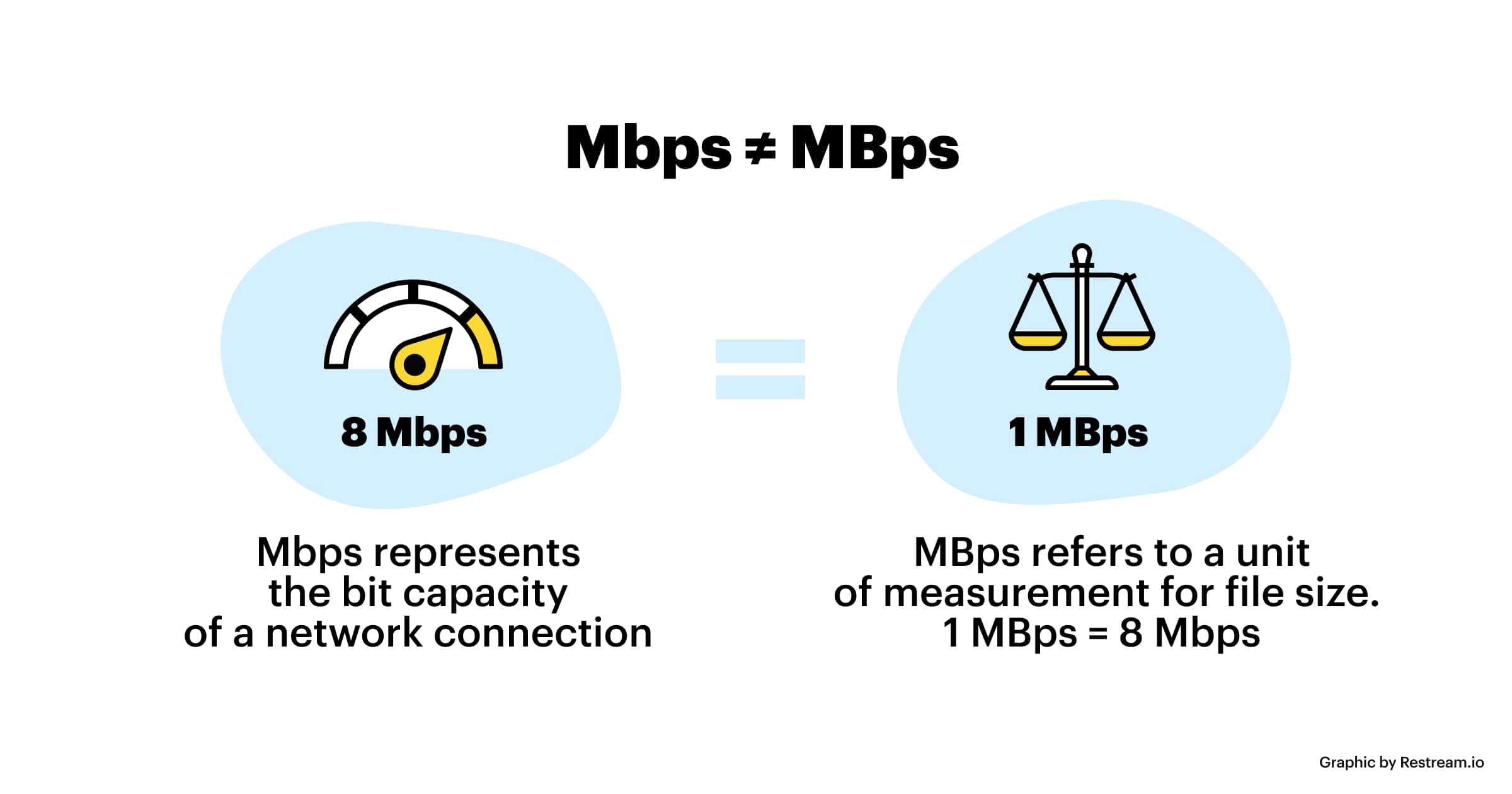
Bit rate refers to the number of bits (bit) transmitted per unit of time, in bps (bit per second).

bit rate

Bit rate is also known as “binary bit rate”, commonly known as “code rate”. Indicates the number of bits transmitted per unit of time. It is used to measure the transmission speed of digital information, often written as bit/sec. According to the number of bits occupied by each image storage frame and the transmission bit rate, the digital image information transmission speed can be calculated [1].
In modern digital communication, the transmission volume of digitized video and other information is large, so it is often measured in kilobits per second or megabits per second, which are written as kbit/sec (or kbps) and Mbit/sec. (or Mbps respectively). ). For example, the amount of information digitized from an ordinary color TV signal can reach 216 Mbit/sec. A good digital broadcast channel can transmit dozens of color TV programs, and its capacity can reach several gigabits or gigabits per second (written as Gbit/sec or Gbps) [1] .
Bitrate is often used to measure the quality of video files.
flexibility edit stream
Because each network is unique and each access line has different conditions (such as length, attenuation, crosstalk environment, etc.), access lines from different telephone companies must support different data rates. For ADSL and VDSL modems, it is best to set the data rate to one of many possible data rates. For example, DMT-based ADSL and VDSL can theoretically change the tariff at fine intervals, and CAP-based RADSL (Rate Adaptive ADSL) also provides some flexibility in tariff configuration [2].
However, telephone companies may want to limit xDSL service to a small set of rates sufficient to provide a variety of services. If a limited set of tariffs can be adapted to a wide range of services, then the management of the services in this case is simpler than in the case of variable tariffs. Telephone companies want the choice of modem speed to be under the control of the network, not the user [2] .
In this mode, the selection of the transmission rate set of the xDSL network must be prudent. In this case, there is a possibility that two adjacent systems receive traffic at very different rates and the system must be able to handle such a situation. The other model, the “best match” approach using adaptive rate ADSL (similar to a voiceband modem), is more beneficial to new network operators and Internet Service Providers (ISPs) [2] .
Transmission control method
Most bit rate control schemes consist of two parts. Part of the encoded bit stream output by the encoder is fed into a buffer. For a constant bitrate channel, the data in the buffer is fetched at a constant rate, and if the buffer is large enough, the bitrate variation caused by the MPEG picture type, etc. can be smoothed out. This is necessary for both constant bit rate transmission and variable bit rate transmission in general. However, in practice, the buffer size is always limited. The buffering process will bring a delay to the system, and this delay is proportional to the size of the buffer. Latency is often a serious issue for real-time image communication, so buffers should be kept as small as possible. That is, long-term fluctuations in bitrate due to changes in scene content or changes, etc. they cannot be softened in this way, so another part is needed. This is to send some measure of the output bitrate to the encoder to control the encoding process, thus changing the output bitrate [3] .

What does MP3 bitrate mean?

What does MP3 bitrate mean?

MP3 bitrate

Bit rate

mp3 bit rate

The rate at which a digital channel transmits digital signals is called the data transfer rate or bit rate.
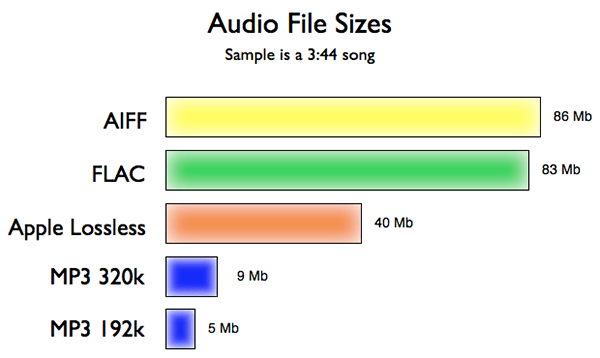
The word bitrate has many translations, such as bitrate, etc., which indicates how many bits per second the encoded (compressed) audio data should be represented, and a bit is the smallest binary unit, either 0 or 0. 1. The relationship between bitrate and audio and video compression is simply that the higher the bitrate, the better the quality of the audio and video, but the larger the encoded file; if the bitrate is lower, the situation is reversed.

For example: encode audio and video at 500 Kbps.
where bps are bits 1K = 1010 = 1024
b is little
s is the second
p is for (for)
Therefore, encoding at 500 kbps means that the encoded audio and video data must be represented at 500 K bits per second.
In the baseband transmission system, the bit rate is used to represent the code rate of transmitted information.
The bit rate Rb refers to the unit of time
The number of binary bits transmitted within the unit, the unit is b/s. For example, the transmission speed of a computer serial port is up to 115200b/s.
The symbol rate or baud rate Rs refers to the number of modulation symbols transmitted per unit of time, that is, ternary and ternary
The information transmission rate of the multivariate digital code stream in the

In M-ary modulation, the relationship between the bit rate Rb and the baud rate Rs is:
Rb=Rslog2M
The sampling rate refers to the ratio of the sampling samples to the total number of samples, and the sampling rate refers to the number of samples per unit of time. If it is an instrument, the sampling rate is 40MSa/s, which indicates that the number of samples per second is 40M, but it cannot be represented by 40MHz.

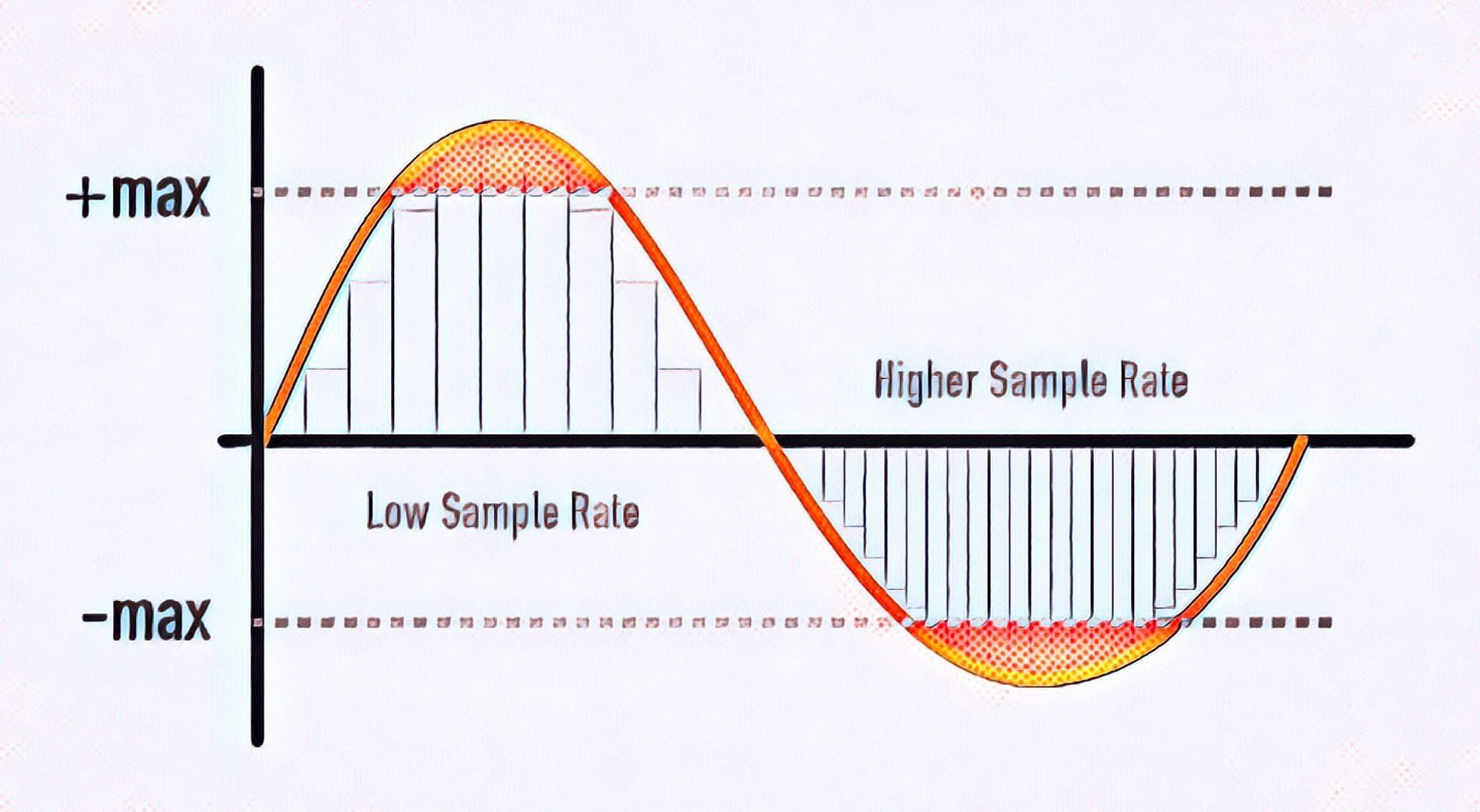
The process of converting analog audio to digital audio is called sampling. In a nutshell, how much data is needed to record a 1 second duration of sound via waveform sampling. A sound with a sample rate of 44 KHz requires 44,000 data points to describe a 1-second sound waveform. In principle, the higher the sample rate, the better the sound quality.

Quality (bit rate)

Quality (bit rate)

Bit Rate

In multimedia technology, quality is often used to judge the effect of audio, and quality here is actually bitrate.

Bit Rate

1. Introduction
2 sound control
3 encoding mode
Introductionedit transmission
The term quality is widely used.
In multimedia technology, quality is often used to judge the effect of audio, and quality here is actually bitrate.
On WINDOWS it is called “bit rate” and on some players it is described as ” bit rate “.
Quality refers to the bit rate at which digital sound is converted from analog to digital format. The higher the bitrate, the better the quality of the restored sound.
sound control edit stream
16 Kbps = phone quality
24 Kbps = increase phone quality, shortwave transmission, longwave transmission, European standard medium wave transmission
40 Kbps = American standard medium wave transmission
56Kbps=Voice
64 Kbps = boost voice (best bitrate setting for cell phone ringtones, best setting for cell phone mono MP3 players)
112 Kbps = FM stereo broadcast FM 128 Kbps = tape (best setting for mobile phone stereo MP3 player, best setting for low-end MP3 player)
160 Kbps = HIFI high fidelity (best setting for mid to high end MP3 players)
192Kbps=CD (best setting for high-end MP3 players)
256Kbps=Studio Music Studio (for music enthusiasts)
In fact, with the advancement of technology, the quality of music is also getting higher and higher, the highest quality of MP3 is 320Kbps, but some formats can achieve higher sound quality.
For example, the emerging APE audio format can provide real audiophile level lossless sound quality and smaller volume than WAV format, and its quality is usually 550kbps-950kbps.
encoding modeedit stream
VBR (Variable Bitrate) Dynamic Bitrate means there is no fixed bitrate. The compression software immediately determines which bitrate to use based on the audio data being compressed. This is a method that takes quality as a premise and takes file size into account The recommended encoding mode;
ABR Average Bit Rate (Average Bit Rate) is an interpolation parameter of VBR. LAME created this encoding mode in response to the low file volume ratio of CBR and the variable size of files generated by VBR. Within the specified file size, ABR takes every 50 frames (about 1 second for 30 frames) as a segment. High-frequency and insensitive frequencies use relatively low traffic, and low-frequency and large dynamic performance use high traffic, which can be used as VBR and CBR, a compromise option.
CBR (constant bitrate), constant bitrate means the file has one bitrate from start to finish. Compared to VBR and ABR, the compressed file size is very large and the sound quality will not improve significantly compared to VBR and ABR.

What is bit rate? Knowledge of the MP3 audio format.

What is bit rate? Knowledge of the MP3 audio format.

mp3 bit rate

Digital audio formats are audio signals that are recorded, processed, and reproduced in digital form.

Mp3 bit rate

The emergence of digital audio formats is to meet the needs of high-fidelity playback, storage and transmission. Simply put, early analog audio formats had issues with playback distortion and glitches due to media wear. Since the advent of CD discs, audio files in digital format have become popular, but another problem has arisen: the limitation of storage volume and the phenomenon of CD disc wear is still present. Saving to a hard drive (in connection with longer storage time) is also not a good solution when storage media (mainly hard drives) are still expensive at the time. The rise of the Internet has created a requirement for long-distance file transmission. Under the restriction of bandwidth, the demand to reduce file size has become more intense. All this has led to the generation of lossy compressed digital audio formats from external factors!

In terms of internal factors, with the improvement of computing and coding capabilities, the progress of various acoustic psychological models has promoted the emergence of various lossy compressed digital audio formats. Some of the most commonly used audio formats in MP3 players are briefly introduced below: MP3 (CBR, VBR, ABR), WMA, WAV, ADPCM, and the emerging audio formats AAC, ASF, and OGG.

Before introducing various digital audio formats, let’s clarify one concept: bitrate.

In the field of computing, all information is digitized. Bit is the smallest unit of data in a computer, it refers to a number of 0 or 1, which is a mathematical binary number, a “0” or “1” , is a bit. For example, when we say a 2-digit number, it means that it is a two-digit binary number, and there are 4 combinations of “00”, “01”, “10” and “11”, which represent 0, “11” in decimal respectively. 1, 2 and 3 are four numbers.

Bitrate or Kilobytes per second (kbps)


What corresponds to talk now is about the quality of these paintings. Let’s take a frame and see its quality and weight in kb … This is called bitrate or kbps which means KiloBytes per Second or Kilobytes per second, and is the measure used to determine the image quality, the higher the bitrate, the image quality will be better, but the weight of the file will be greater too. There are standards and limits for bitrate, this for the MPEG format. For a DVD, which is an MPEG2 video format, the limitation is more than 1500 and less than 8000 kbps, for VCD it is exactly 1150 kbps, and for example a MiniDV tape of a handycam uses a bitrate of over 30000, this is a lot of quality and when you go to hard disk you see the large file size. For the other formats it depends on the codec and its configuration, being able to compare in quality an MPEG2 format with 3000 kbps with an AVI with Xvid codec at 1500 kbps, this difference is given by the way in which the video is compressed, the Xvid codec It does better than the MPEG2 format.

Now, bitrate can be constant throughout the video or it can be adjusted to changing needs, this is Constant Bitrate (CBR) and Variable Bitrate (VBR), when we use Constant Bitrate all video always uses the same amount of information to show Each frame, whether you need it or not, this can make the video heavier than it could be or that it does not have the right quality in certain parts or has plenty of information where it is not needed.

Let’s see the following example, where a small video clip is shown where it requires a lot of bitrate or kbps and another part where it does not need so much, encoded in MPEG CBR and VBR. We see the difference in the weight of the files and their comparison with an Avi with DivX codec with a lower bitrate. In minute 2 another video is shown where very little bitrate is needed and as when coding in VBR or CBR it does not greatly affect the final result.

analog recording

When we use Bitrate Variable we can define the maximum and minimum to use and let the coding program scan the video and adjust the amount of information as necessary, for this you can use one or two passes (usually no more than two are used), that is, the program goes through the video once, calculates and in the next pass applies the bitrate correctly. It can also be done in a single pass, but the calculation can be wrong, this because to make the necessary bitrate changes makes use of something called keyframes or keyframes. In addition there are programs that detect scene changes and there apply keyframes to change the amount of bitrate occupied, this may be in one pass, but it may also not be as accurate as two passes.

To prevent the file from being excessively complex and heavy to process, when encoding an amount of information is allocated for video blocks, these blocks are defined by the keyframes, for example, there may be 90 frames between each keyframe, and if the video run at 30 frames per second, then the bitrate can change only every 3 seconds of video (3 seconds x
30 frames = 90 frames), and if there is a change of scene, for example, from a dark and slow shot to a scene with light and moving, if we are in the middle of a block between keyframes we will notice that the scene in motion is seen bad, with large video blocks and little definition, this can happen when the coding is done in a single pass using Bitrate Variable, so it is preferred to use 2 passes, in this way the program is responsible for detecting the change of scenes where there is need to adjust the bitrate, and accommodate the keyframes of
correct way, so that in each change the quality of the video is adjusted and seen
all right. And what happens when we have a whole video with movement, well, the bitrate remains high for most of the time, this will make a video that is heavier than another of the same duration but where the content is more static while maintaining good quality . If we use Constant Bitrate for both videos, one with a lot of movement, and another with more static content, the result will be very similar, it will only change the quality of the content, unless we use a very high bitrate to give quality to the video with movement, which it would be excessive for a video of more static scenes, which would generate a heavy file without any need. Therefore, we have videos that can be heavier than others, and videos with different qualities. This is where we need to know what should be adjusted when encoding a video and how automatic adjustments do not always give the same results, this because each video may have different coding needs.

How to improve 4K video playback on your old computer

4K video is nothing new. The first televisions with this resolution began to reach the public between 2012 and 2013, so we can talk about settled technology. Similar to what happened with high definition (720p and 1080p) about a decade ago, beyond the physical format, which requires new players, the problem for most computer users of some time ago is power and of compatibility. And solving it is not as easy as one would expect.

Until Kaby Lake, the seventh generation of Intel processors, which arrived last year, there were no desktop or portable processors capable of decoding and encoding via 10-bit video hardware under the HEVC or Google codec, VP9. This is a problem, because beyond videos that are downloaded over the internet, almost all the content that smartphones produce from now on will come under HEVC / H.265 for reasons of space optimization, and many computers have problems to reproduce them . With 4K video files under H.264 codec problems can also arise, particularly when we face a lot of bitrate files.
4k

With the solutions that we are going to provide the reproduction to jumps of video in 4K can be partially or totally solved. Without them, in some cases, the applications used did not even reproduce the first frames of the files.

PotPlayer, the player that best does it on Windows

Potplayer 4k

After testing very diverse applications of reproduction, I found several mentions in forums to PotPlayer, a free player that is essentially KMPlayer, and that has a great variety of integrated codecs, with which you can play almost any content you find on the Internet. In its adjustments, it allows a great configuration and customization in the use of the general experience and of the acceleration engines, very convenient option before the variety of equipment with different hardware that exists.

How to watch Netflix in 4K from Windows 10

Windows 10 incorporates its own codec pack, but PotPlayer allows you to overwrite them. Thus, after trying to play 4K video files from a DJI Phantom 4 Pro drone on a laptop with a first-generation quad-core i7 processor and failed in the attempt with many players, testing PotPlayer was one of the last options left, and It worked much better than the rest in a first attempt. If the played video had an H.264 codec, the playback was smooth. In contrast, the video in H.265 / HEVC format presented more problems. Diving in the configuration that we will see next, the reproduction can be improved.

After entering the preferences (F5), in Filters -> Decode video -> Configure codec / DXVA -> Configure Hardware Acceleration (DXVA), select the option “DXVA” and “Use D3D11 DXVA first”. In this way, it is achieved that the reproduction hardly has jumps. Not bad, considering we talked about a team from eight years ago.
4k

Testing from the notebook from which this is written, which has a fourth-generation i5 dual-core processor, playback is completely smooth in H.264 with any player that supports software acceleration (such as “Movies and TV”), but with H.265 the problem is that the fans raise their revolutions to the maximum, and even Windows ends up showing messages to force closure in most applications. The integrated player does not even open the file, so we will comment below. With PotPlayer, marking the hardware acceleration with the settings mentioned above, playback is completely smooth in 4K videos at 60 fps recorded with an iPhone X.

Activate support for HEVC in Windows 10

In the Fall Creators Update version, Microsoft removed the HEVC codec from Windows 10. For users who started with the Microsoft system on new computers from that version, one of the most popular so far, videos recorded with devices from Current high-end in HEVC could not be reproduced. On the contrary, those who have spent more time with Windows 10 (before Fall Creators Update) can play without problems.

How to solve it? From the Microsoft Store. The Redmond company offers the possibility of installing the HEVC codec for free (or at 0.99 cents). In this way, not only local content can be displayed in the applications integrated in the system, but also to be able to play 4K video from Netflix on computers that support it (it is necessary to have Kaby Lake processors, due to the acceleration by video hardware in 10 -bit and the DRM).