Bitrate Control Methods in MP4 Encoding


Free Download Mp4Gain
picture

Bitrate Control Methods in MP4 Encoding

Bitrate Control Methods in MP4 Encoding

Let’s talk about bitrate control methods in MP4 encoding

When we talk about bitrate control methods in MP4 encoding, it’s crucial to understand that getting the right balance between quality and file size is key. You’ve probably noticed that when watching videos online or transferring files, you need good quality without large file sizes. Well, I’ve worked in this area for years, and I can tell you firsthand that bitrate control is the secret sauce to achieving this balance. Whether you’re encoding for streaming, playback, or storage, controlling the bitrate properly ensures that your video quality is high, while your file size remains manageable. And let me tell you, the wrong bitrate settings can ruin everything, like trying to fill a gallon jug with a firehose—chaos ensues. So, let’s dive into how bitrate control works, and how you can master it.

Understanding the role of bitrate in video quality

Bitrate essentially determines the quality of your video. It’s like comparing the resolution of an old TV to a modern 4K screen. The more data you allow (higher bitrate), the clearer and sharper your video will look. But with more data comes bigger file sizes. That’s why finding the right bitrate is so important. With too low a bitrate, the video will become pixelated, much like when you try to zoom in too far on a low-resolution image. On the other hand, too high a bitrate creates unnecessarily large files that don’t offer a proportional increase in quality. It’s a fine balance.

Constant Bitrate (CBR) vs. Variable Bitrate (VBR)

When deciding how to control bitrate, you’re typically faced with two options: Constant Bitrate (CBR) or Variable Bitrate (VBR). Both have their pros and cons.

Constant Bitrate (CBR)

With CBR, you’re essentially setting a fixed bitrate for the entire video. This is like setting the speed of a car and sticking with it, no matter whether you’re driving on a straight highway or navigating a twisty mountain road. It’s predictable and ensures compatibility, especially for streaming or broadcasting. However, the downside is that CBR doesn’t account for video complexity. A simple scene with little movement uses the same amount of data as a fast-paced action scene, which can lead to inefficiencies.

Variable Bitrate (VBR)

VBR is more like driving a car with adaptive cruise control. It changes depending on the complexity of the scene. If there’s a lot of action, it increases the bitrate to preserve quality. When the scene is simple, it decreases the bitrate to save space. VBR is generally more efficient than CBR because it adjusts to the content of the video. But it also requires more processing power and can sometimes cause playback issues on devices that expect a constant rate.

Two-pass encoding: The gold standard in VBR

If you really want to optimize your bitrate control, you’ll want to consider two-pass encoding. This method involves scanning the video once to analyze its complexity, then encoding it in the second pass to allocate the appropriate bitrate. Imagine you’re packing a suitcase—you take a look at everything you need to fit inside, then adjust the way you pack to make the most efficient use of space. The result is better quality with a smaller file size. From my experience, two-pass encoding is especially useful for longer videos, where the difference in file size really adds up.

Bitrate control in MP4 encoding: Real-life examples

In real-life applications, bitrate control is everywhere, from YouTube videos to Blu-ray discs. Take streaming services, for example. Ever notice how your video adjusts when your internet slows down? That’s bitrate control at work, using VBR to change the quality dynamically. I’ve had clients frustrated because their videos were buffering, and we had to tweak the bitrate to optimize for streaming. On the other hand, in cases like creating a video for a corporate event, where quality must be consistent, CBR might be your best option to ensure a smooth playback experience on all devices.

How to choose the best bitrate for MP4 encoding

So how do you choose the best bitrate? The answer depends on what you’re trying to achieve. When I work on projects for clients, I start by asking about their priorities. Are they looking for the best possible quality, or do they need to keep file sizes small for easy sharing? If it’s the former, I’ll push the bitrate as high as the medium allows. If it’s the latter, I find that VBR with two-pass encoding offers the best balance. However, if speed and compatibility are more important than anything else, I’ll recommend CBR.

Factors to consider when choosing a bitrate

  • Resolution: Higher resolution requires higher bitrate.
  • Frame rate: More frames per second (FPS) mean more data per second.
  • Device compatibility: Some devices handle high bitrates better than others.
  • Streaming or download: Streaming requires a lower, more consistent bitrate.
  • Storage capacity: Larger bitrates take up more space.

Advanced techniques in bitrate control

If you want to take things a step further, there are advanced techniques to fine-tune your bitrate control. One method I’ve seen growing in popularity is adaptive bitrate streaming (ABR). ABR is the technology behind services like Netflix and YouTube that automatically adjust the quality of your stream based on your internet speed. I remember working with a client who was launching a video platform, and ABR was a game-changer for them. It allowed users with slower internet connections to still enjoy smooth playback, while those with high-speed connections could experience full HD or even 4K quality.

Latest words on bitrate control methods in MP4 encoding

Bitrate control is a vital part of MP4 encoding, and understanding the different methods allows you to optimize both quality and file size. Whether you go for CBR, VBR, or advanced techniques like ABR, choosing the right method depends on your specific needs and the devices your audience will use. As someone who has worked on countless video projects, I’ve found that VBR with two-pass encoding offers the best balance between quality and file size for most cases. But remember, there’s no one-size-fits-all solution. Test different settings to find the right balance for your project. And when it comes to encoding your videos, Mp4Gain offers an excellent solution to help you control the bitrate with ease and efficiency.

Comments:

Man, this article was exactly what I needed. I’ve been having trouble with my videos coming out too big even though the quality isn’t that good. I’m definitely going to try VBR with two-pass encoding now!

– VideoDude101

Great stuff! I do a lot of streaming and was wondering why my videos always end up buffering on slower connections. This article explained everything. Would love to see more about ABR though!

– StreamMaster69

This was really helpful, thanks! I’m still a little confused about choosing the right bitrate for 4K, though. Any advice?

– TechGeek42

I’ve been using CBR for everything and didn’t even know about VBR. I can’t wait to try it on my next project!

– FilmFanatic

This is the first time I’ve read about two-pass encoding explained so clearly. Really helped me understand why my files were so big for no reason.

– SarahTheEditor

Thanks for the article! I was looking for a more detailed explanation of bitrate control and this hit the spot. I’m doing some video work for a local business and file size has been a big issue for us.

– LocalMediaPro

Nice breakdown, but I think you could’ve gone a bit deeper into device compatibility. My videos play fine on my computer, but look terrible on my phone. Any tips?

– JohnVideoMan

I’ve been using Mp4Gain for my personal projects and I gotta say it really simplifies bitrate control. This article just reinforced why I use it!

– CodecKing

I didn’t even know bitrate control was this important. No wonder my last video looked so bad. I’m going to try out your suggestions for my next upload.

– FirstTimeEditor

Good article, but what about HDR videos? Do the same bitrate rules apply there?

– HDRNerd

Related keywords: mp4 encoding, bitrate control methods, CBR vs VBR, video quality, video file size, two


Free Download Mp4Gain
picture


Mp4Gain Main Window
picture


Mp4Gain Features
picture


Free Download Mp4Gain
picture

Exploring the World of Bitrate in Digital Video

Exploring the World of Bitrate in Digital Video

Exploring the World of Bitrate in Digital Video


In the dynamic landscape of digital video, Bitrate stands as a linchpin of quality and performance. In this comprehensive guide, we embark on a meticulous journey to unravel the intricacies of Bitrate, unveiling its significance and multifaceted dimensions.

Video Bitrate Essentials

Video Bitrate

Video Bitrate is the pulse of digital video. It signifies the pace at which data flows per unit of time within a video. Picture it as the guardian of video fidelity, affecting every second of your viewing experience.

Bitrate in Digital Video

Bitrate in digital video wields the scepter of influence over the quality and performance of video content. Content creators and streaming platforms navigate its realm with care.

Video Encoding Bitrate

Understanding Video Encoding Bitrate is akin to grasping the intricacies of preserving video quality while managing file sizes efficiently. It’s a crucial element of the video production process.

Bitrate for Video Streaming

For online audiences, Bitrate for Video Streaming is the guardian of a buffer-free and high-quality viewing experience. This parameter is the bridge between content providers and viewers.

Optimal Bitrate for Video

Unlocking the secret of the Optimal Bitrate for Video is a quest for balance. It’s the equilibrium between video quality and storage efficiency, a key decision in content creation.

Decoding the Bitrate-Quality Nexus

Video Quality Bitrate

Video Quality Bitrate is the canvas upon which visual excellence is painted. Elevating the bitrate enhances not only clarity but also detail and motion fluidity—a hallmark of superb video quality.

Bitrate in Video Compression

Bitrate and video compression dance a delicate tango. Adjusting the bitrate influences not just quality but also file sizes. It’s a tightrope act content creators perform with finesse.

Variable Bitrate vs. Constant Bitrate

Variable Bitrate (VBR) and Constant Bitrate (CBR) represent two divergent paths. One adapts to the complexity of video content, while the other maintains a steady course. Knowing when to use each is an art.

Cracking the Bitrate Code

How does Bitrate affect video quality?

Bitrate’s role in shaping video quality is akin to the conductor of an orchestra. It orchestrates the symphony of pixels, ensuring each note is crisp and harmonious.

What is the difference between Bitrate and Resolution?

While Bitrate influences the flow of data, video resolution determines the canvas size. These two pillars of video quality work in tandem, each with its own significance.

How to calculate Bitrate for video streaming?

Calculating the ideal Bitrate for video streaming involves a mix of science and art. Factors like resolution, frame rate, and desired quality come together in a formula that ensures a smooth viewing experience.

Can a higher Bitrate improve low-light video?

Low-light situations challenge video quality, and Bitrate plays a role in addressing this challenge. Explore how increasing Bitrate can illuminate the darkest corners of your footage.

Does Bitrate impact file size?

Bitrate and file size share a symbiotic relationship. As Bitrate climbs, so does the appetite for storage. This understanding is pivotal in managing your video library efficiently.

What is the relationship between Bitrate and compression?

Bitrate and compression are the yin and yang of video storage. One influences quality, the other conserves space. Dive into their intricate relationship and its impact on your videos.

Is there a recommended Bitrate for 4K video?

4K video demands a bit more of everything, including Bitrate. Delve into the recommended Bitrate standards for the ultra-high-definition realm.

How do I choose the right Bitrate for live streaming?

Live streaming introduces real-time dynamics. The right Bitrate choice ensures your audience experiences your broadcast without hiccups. It’s a delicate balancing act.

What happens if my Bitrate is too low for my video?

A low Bitrate can mar the viewing experience, leading to pixelation and buffering. Explore the repercussions and strategies to remedy the situation.

Are there Bitrate standards for different video formats?

Different video formats have unique appetites for Bitrate. Familiarize yourself with the standards for common formats to ensure compatibility and optimal quality.

Navigating the Bitrate Seas

Diversity in Standards

Video formats march to their own drumbeat, each with its Bitrate requirements. Explore these standards to keep your content in harmony with different platforms and devices.

Adapting to Format Demands

Efficiency in video production and streaming comes from aligning with specific Bitrate standards. Embrace the versatility of Bitrate adjustments for an enhanced video journey.
As we conclude our voyage through the world of Bitrate in digital video, remember that mastering this element empowers content creators, streaming platforms, and viewers alike. Bitrate is the silent architect of video quality, and its nuances are yours to explore and leverage.

Adaptive Bitrate Streaming

A Formula for Viewer Satisfaction

Adaptive Bitrate Streaming is the secret sauce behind viewer satisfaction. It dynamically adjusts the video’s Bitrate in real-time to match the viewer’s internet connection speed. This means smoother playback, fewer interruptions, and a superior experience for your audience.

Enhancing User Experience

Imagine a scenario where a viewer with a slow internet connection tries to watch your video. Without adaptive streaming, they might experience constant buffering and frustration. Adaptive Bitrate Streaming, however, steps in to provide the best possible quality that their connection can handle. It’s the difference between a viewer hitting the “close” button in frustration and enjoying your content to the fullest.

Bitrate in Low-Light Video

The Role of Bitrate in Challenging Conditions

Low-light video situations can be tricky. When light is scarce, your camera sensor struggles to capture details. Bitrate becomes critical in these conditions because it determines how much data is allocated to represent the limited visual information. Higher Bitrates can help salvage some detail in low-light scenes.

Enhancing Low-Light Video

To enhance low-light video, you can make adjustments both in terms of hardware and software. Upgrading to a camera with better low-light performance is a hardware solution. On the software side, you can increase the Bitrate to capture more information. It’s all about finding the right balance to produce clear and engaging content even in challenging lighting situations.

Bitrate and File Size

The Trade-Off

Bitrate and file size share an interesting trade-off. As you increase the Bitrate to improve video quality, you simultaneously increase the file size. This can be a double-edged sword. While viewers get to enjoy higher quality, it also means your videos consume more storage space.

Video Compression and Bitrate

Video compression techniques come to the rescue when dealing with large file sizes. They are responsible for reducing the amount of data needed to represent a video while maintaining an acceptable level of quality. Bitrate and compression work hand in hand, allowing you to find the perfect balance between quality and storage efficiency.

Recommended Bitrate for 4K Video

Meeting the 4K Standard

Producing and streaming 4K video is a different ball game. It demands a significantly higher Bitrate compared to lower resolutions like 1080p. The recommended Bitrate ensures that your 4K content retains its stunning clarity and detail.

Variable vs. Constant Bitrate

When working with 4K video, you might consider using Variable Bitrate (VBR) instead of Constant Bitrate (CBR). VBR adapts to the complexity of the content, allocating more data to visually intricate scenes and less to simpler ones. This results in better quality for your 4K videos.

Choosing the Right Bitrate for Live Streaming

Live Streaming Dynamics

Live streaming introduces its own set of dynamics. Unlike pre-recorded content, you have no control over what’s coming next. Choosing the right Bitrate is crucial to ensure a smooth and uninterrupted live broadcast.

Failures and Solutions

In the world of live streaming, hiccups can occur. If your chosen Bitrate is too high for your available bandwidth, viewers may experience buffering. On the other hand, if it’s too low, the quality might suffer. This section explores common issues and provides solutions to keep your live stream running flawlessly.

Bitrate Standards for Different Video Formats

Diversity in Standards

Different video formats have unique Bitrate standards. H.264, H.265, VP9, and others each have their own requirements. Understanding and adhering to these standards is crucial to ensure your videos are compatible with various devices and platforms.

Adapting to Format Demands

To optimize your video content for different formats, you’ll need to adapt your Bitrate settings accordingly. By doing so, you can reach a wider audience and provide a superior viewing experience, regardless of the device or format your viewers choose.
As we conclude this in-depth exploration of Bitrate in digital video, you now possess a comprehensive understanding of its significance and the various factors that influence its utilization. Whether you’re a content creator aiming for the highest quality, a streaming platform seeking seamless viewer experiences, or a viewer looking for the best content, Bitrate is the silent maestro that shapes your digital video journey.

The Importance of Bitrate in Digital Audio and Video

The Importance of Bitrate in Digital Audio and Video

The Importance of Bitrate in Digital Audio and Video

Have you ever watched a video that was all glitchy and the sound was all messed up? Or listened to a song and it sounded like it was being played on a scratched record? Well, that’s because of something called the bitrate.

The Importance of Bitrate in Digital Audio and Video

What is Bitrate?

Bitrate is the number of bits of information that are processed in a certain amount of time. In digital audio and video, it determines the quality of the sound and video. The higher the bitrate, the better the quality, and the more information is processed.

Why is Bitrate Important?

When you watch a video or listen to a song, the bitrate helps to determine the quality of the sound and video. The higher the bitrate, the more information is processed, and the better the quality. If the bitrate is low, then the quality will be poor and you might miss out on important details.

For example, if you’re watching a video of a concert and the bitrate is low, then you might not be able to hear the singer’s voice clearly or see the instruments being played. This can be really frustrating and ruin the whole experience for you.

How Does Bitrate Affect Digital Audio and Video?

Bitrate affects digital audio and video in several ways. For one, it affects the file size. If the bitrate is high, then the file size will be large, and if the bitrate is low, then the file size will be small.

Another way that bitrate affects digital audio and video is by affecting the quality. If the bitrate is high, then the quality will be good, and if the bitrate is low, then the quality will be poor. This can be especially noticeable when you’re watching a video with a lot of movement, like a sports game or a music video.

Finally, bitrate can also affect how long it takes to download or upload a video or audio file. If the bitrate is high, then it will take longer to download or upload, and if the bitrate is low, then it will take less time.

How to Choose the Right Bitrate for Your Digital Audio and Video

When it comes to choosing the right bitrate for your digital audio and video, there are a few things to keep in mind. First, think about what you’re using the video or audio for. If it’s for personal use, then a lower bitrate might be okay, but if it’s for professional use, then a higher bitrate is probably better.

Another thing to consider is the quality of the video or audio. If you want the best quality possible, then a higher bitrate is the way to go. But if you don’t need the best quality and just want something that’s good enough, then a lower bitrate might be fine.

Finally, think about the file size. If you don’t have a lot of storage space, then a lower bitrate might be a good choice, but if you have plenty of storage space, then a higher bitrate might be the way to go.

What does MP3 bitrate mean?

What does MP3 bitrate mean?

MP3 bitrate

Bit rate

mp3 bit rate

The rate at which a digital channel transmits digital signals is called the data transfer rate or bit rate.
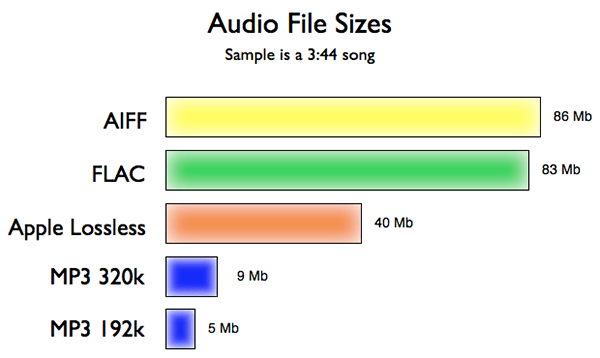
The word bitrate has many translations, such as bitrate, etc., which indicates how many bits per second the encoded (compressed) audio data should be represented, and a bit is the smallest binary unit, either 0 or 0. 1. The relationship between bitrate and audio and video compression is simply that the higher the bitrate, the better the quality of the audio and video, but the larger the encoded file; if the bitrate is lower, the situation is reversed.

For example: encode audio and video at 500 Kbps.
where bps are bits 1K = 1010 = 1024
b is little
s is the second
p is for (for)
Therefore, encoding at 500 kbps means that the encoded audio and video data must be represented at 500 K bits per second.
In the baseband transmission system, the bit rate is used to represent the code rate of transmitted information.
The bit rate Rb refers to the unit of time
The number of binary bits transmitted within the unit, the unit is b/s. For example, the transmission speed of a computer serial port is up to 115200b/s.
The symbol rate or baud rate Rs refers to the number of modulation symbols transmitted per unit of time, that is, ternary and ternary
The information transmission rate of the multivariate digital code stream in the

In M-ary modulation, the relationship between the bit rate Rb and the baud rate Rs is:
Rb=Rslog2M
The sampling rate refers to the ratio of the sampling samples to the total number of samples, and the sampling rate refers to the number of samples per unit of time. If it is an instrument, the sampling rate is 40MSa/s, which indicates that the number of samples per second is 40M, but it cannot be represented by 40MHz.

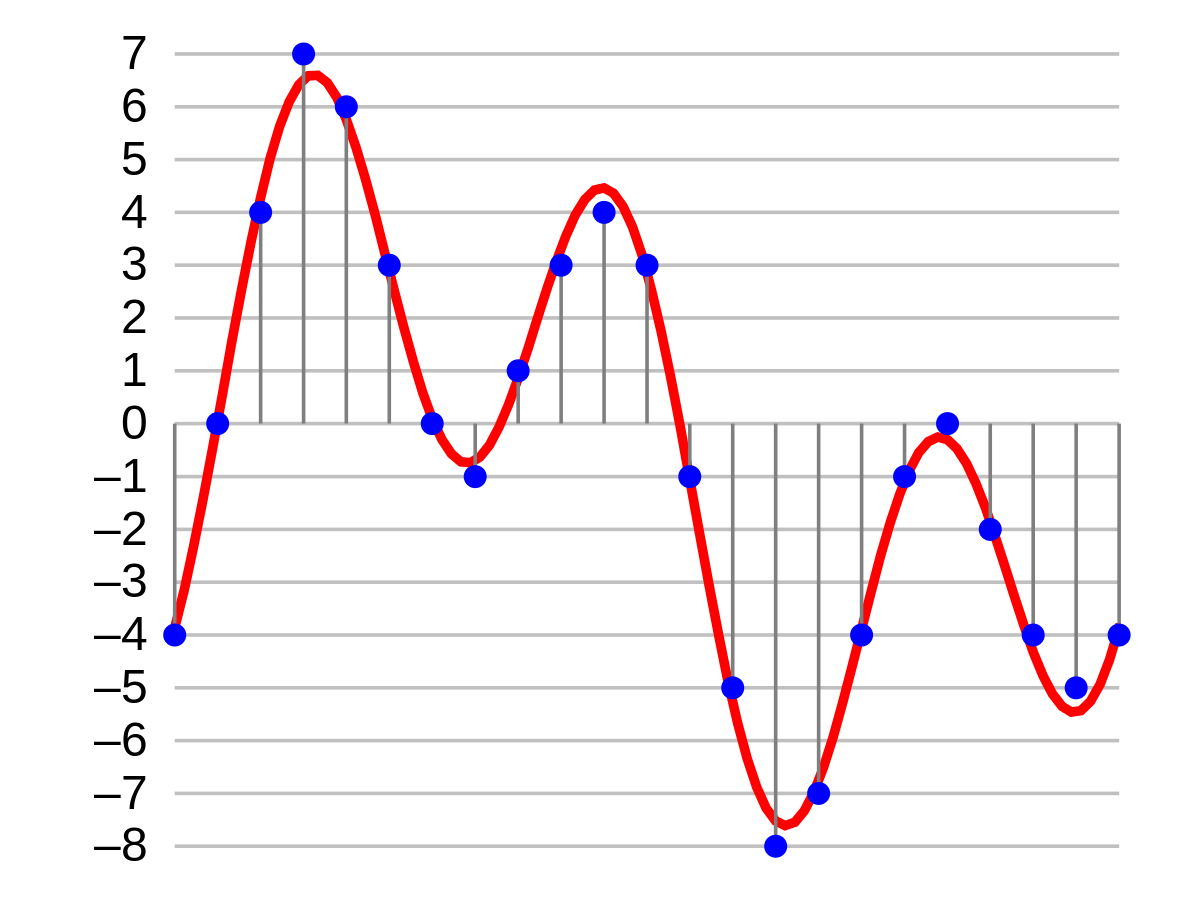
The process of converting analog audio to digital audio is called sampling. In a nutshell, how much data is needed to record a 1 second duration of sound via waveform sampling. A sound with a sample rate of 44 KHz requires 44,000 data points to describe a 1-second sound waveform. In principle, the higher the sample rate, the better the sound quality.

What is bit rate? Knowledge of the MP3 audio format. Part 2

What is bit rate? Knowledge of the MP3 audio format. Part 2

mp3 bit rate

Bitrate is a benchmark indicator of the efficiency of digital music compression.

mp3 bitrate

The bit rate represents the number of bits bps (bit per second, bits per second) transmitted per unit of time (1 second). We usually use kbps (in simple terms, it is per second) clock 1000 bits) as the unit. The bit rate of digital music on CD is 1411.2 kbps (ie recording 1 second of CD music requires 1411.2 × 1024 bits of data). The higher the bit rate of the music file, the more data (Bit) must be processed in a unit of time (1 second), and the better the sound quality of the music file. However, when the bit rate is high, the file size increases, which will occupy a large amount of storage capacity. 8 to 320 kbps.

1. WMA (Windows Media Audio, Windows Media Audio)

As a Microsoft media compression method, it is a part of the technology that compresses only audio data in Windows Media Technologies. The sound quality is similar to MP3 and can be compressed with half the technology of MP3. It has the copyrighted Windows Media Rights Manager, which can be played by installing in WMP (Windows Media Player, Windows Media Player). Due to the strong influence of Microsoft and Windows, as well as major copyright reasons, the major American record companies EMI and BMG have officially confirmed that they use the WMA method developed and produced by Microsoft. It is believed that this advanced method will become even more popular in the future.

2. MP3 (CBR, VBR, ABR)

MP3 is currently the most widely used and widely used lossy compressed digital audio format, which has been explained above and will not be repeated here.

CBR (constant bit rate)

CBR is the oldest and simplest MP3 encoding (compression) method. When this method is used for encoding, the bit rate of the entire file is the same, in other words, the bit rate used by the MP3 file per second is the same. Although the music file has sections of varying complexity, the encoder always keeps the bit rate constant, unless you use the highest sound quality, otherwise the sound quality of the different sections of the MP3 file will vary. The more complex the passage, the worse the sound quality. Its biggest advantage is that the file size is fixed, which is convenient for calculating storage space.

What is bit rate? Knowledge of the MP3 audio format.

What is bit rate? Knowledge of the MP3 audio format.

mp3 bit rate

Digital audio formats are audio signals that are recorded, processed, and reproduced in digital form.

Mp3 bit rate

The emergence of digital audio formats is to meet the needs of high-fidelity playback, storage and transmission. Simply put, early analog audio formats had issues with playback distortion and glitches due to media wear. Since the advent of CD discs, audio files in digital format have become popular, but another problem has arisen: the limitation of storage volume and the phenomenon of CD disc wear is still present. Saving to a hard drive (in connection with longer storage time) is also not a good solution when storage media (mainly hard drives) are still expensive at the time. The rise of the Internet has created a requirement for long-distance file transmission. Under the restriction of bandwidth, the demand to reduce file size has become more intense. All this has led to the generation of lossy compressed digital audio formats from external factors!

In terms of internal factors, with the improvement of computing and coding capabilities, the progress of various acoustic psychological models has promoted the emergence of various lossy compressed digital audio formats. Some of the most commonly used audio formats in MP3 players are briefly introduced below: MP3 (CBR, VBR, ABR), WMA, WAV, ADPCM, and the emerging audio formats AAC, ASF, and OGG.

Before introducing various digital audio formats, let’s clarify one concept: bitrate.

In the field of computing, all information is digitized. Bit is the smallest unit of data in a computer, it refers to a number of 0 or 1, which is a mathematical binary number, a “0” or “1” , is a bit. For example, when we say a 2-digit number, it means that it is a two-digit binary number, and there are 4 combinations of “00”, “01”, “10” and “11”, which represent 0, “11” in decimal respectively. 1, 2 and 3 are four numbers.