Psychoacoustic Models in MP3 and AAC Encoding


Free Download Mp4Gain
picture

Psychoacoustic Models in MP3 and AAC Encoding

Psychoacoustic Models in MP3 and AAC Encoding

Let’s talk about Psychoacoustic Models in MP3 and AAC Encoding

When it comes to digital audio compression, especially in MP3 and AAC formats, psychoacoustic models are the secret sauce that makes it all work. These models allow us to shrink large audio files into much smaller sizes without a noticeable loss in sound quality. In my years of working with audio encoding, I’ve seen how these models have revolutionized the way we perceive sound after compression. The core idea is simple: we don’t hear all sounds equally. Some frequencies and nuances are more noticeable than others, and psychoacoustic models exploit this fact to make compression more efficient.

Think of it like this: imagine you’re at a concert, and a loud bass guitar is playing alongside a softer violin. Your attention is drawn to the bass because it’s much louder, and the violin’s subtle details get masked. This is exactly what psychoacoustic models do—they remove or reduce sounds that are unlikely to be heard due to masking effects. In this article, I’ll walk you through how psychoacoustic models in MP3 and AAC encoding work and why they matter for audio quality and file size.

Understanding the Basics of Psychoacoustic Models

Psychoacoustic models are based on the science of how our ears and brain perceive sound. They take into account how different sounds mask each other, which frequencies we are most sensitive to, and how we interpret sound in different contexts. MP3 and AAC encoding use these models to compress audio by identifying and removing information that won’t be noticeable to the listener.

A simple analogy would be taking a photograph with a high-resolution camera and then reducing its size by removing some pixels. You won’t notice much difference in the quality of the image because you can’t see all the pixels. Similarly, these audio encoders remove frequencies or audio details that the human ear won’t detect, making the audio file smaller without compromising its perceived quality.

Frequency Masking

  • Frequency masking happens when a louder sound in one frequency range makes a softer sound in a nearby frequency range inaudible.
  • Psychoacoustic models use this to discard or reduce the quieter, masked sounds, optimizing compression.
  • For example, if a heavy guitar is playing at a loud volume, the model might remove the higher-pitched background notes that are masked by the louder guitar.

Temporal Masking

  • Temporal masking occurs when one sound, like a sharp drum hit, can mask a quieter sound that occurs immediately after it.
  • This type of masking is crucial for determining which transient sounds can be removed in compression.
  • For instance, a loud snare hit can mask a subtle violin note that comes milliseconds after, making it unnecessary to keep all the data for that note.

The Role of Psychoacoustic Models in MP3 Encoding

In MP3 encoding, psychoacoustic models play a critical role in reducing the file size while maintaining an acceptable level of sound quality. The MP3 codec was one of the first to use psychoacoustic models to exploit human hearing limitations, and it was revolutionary when it was introduced in the 1990s. The encoder divides audio into different frequency bands and applies masking principles to decide which data can be discarded.

What’s fascinating is that MP3 uses a hybrid of time-domain and frequency-domain processing. It first splits the audio into small segments and then performs a frequency analysis. Using this information, the encoder decides which frequencies can be reduced or eliminated entirely. By doing this, the model allows the MP3 format to achieve relatively small file sizes while preserving the overall listening experience.

MP3 and the Trade-off Between Compression and Quality

  • MP3 encoding sacrifices some of the finer audio details to reduce file size.
  • The trade-off is more noticeable at lower bitrates, where artifacts like compression noise or a “tinny” sound may become audible.
  • Higher bitrates, like 192 kbps or 256 kbps, provide better sound quality, though the file size increases.

AAC: The Next Generation of Psychoacoustic Modeling

While MP3 revolutionized audio compression, AAC (Advanced Audio Codec) takes things a step further. As a more advanced codec, AAC uses a refined psychoacoustic model that performs better at lower bitrates, providing higher-quality audio with less data. This is especially important for modern audio streaming services, which need to balance high-quality sound with efficient bandwidth usage.

The AAC psychoacoustic model is more sophisticated, taking into account additional factors like stereo imaging and spatial effects. It’s also more adept at handling complex audio, such as orchestral music or tracks with a wide range of dynamics. From my experience, AAC does a better job than MP3 in preserving the subtleties of sound, especially at lower bitrates, which is why I recommend it over MP3 when available.

Why AAC Outperforms MP3

  • AAC uses more advanced psychoacoustic techniques, making it more efficient at lower bitrates.
  • It better preserves transient sounds and complex audio elements, like the reverberations of a piano or the nuances of a singer’s voice.
  • With AAC, you can get excellent sound quality at 128 kbps, whereas MP3 may require 192 kbps or higher for a similar result.

How Psychoacoustic Models Help with Audio Quality at Low Bitrates

One of the most remarkable aspects of psychoacoustic models is how they enable high-quality audio at low bitrates. At lower bitrates, many codecs, including MP3 and AAC, might introduce artifacts such as distortion or loss of clarity. However, psychoacoustic models allow the encoder to focus on the most important elements of the sound—those that we are most likely to notice—while discarding the less important parts.

This is especially noticeable in AAC, where the advanced psychoacoustic model ensures that even at low bitrates, the encoding still captures essential auditory information, such as pitch, rhythm, and timbre. I’ve personally found that with AAC, even at 128 kbps, I can enjoy clear vocals and instruments without the harsh artifacts that often accompany MP3 at the same bitrate.

Latest Words on Psychoacoustic Models in MP3 and AAC Encoding

Psychoacoustic models are an integral part of both MP3 and AAC encoding, helping us achieve smaller file sizes while preserving audio quality. These models allow the encoder to reduce the file size by removing sounds that are less perceptible to the human ear, making the audio more efficient without sacrificing what matters most to the listener. While MP3 was groundbreaking in its time, AAC offers superior compression and better handling of complex audio, making it the better choice for modern audio applications.

As I’ve discussed throughout this article, these psychoacoustic models are crucial in ensuring that we can enjoy high-quality audio, even with file sizes that fit comfortably on our devices and bandwidth constraints. Whether you’re listening to your favorite album or streaming a podcast, psychoacoustic models are working behind the scenes to make your audio experience better. As the technology continues to improve, we can only expect even better performance in the future.

Frequently Asked Questions

What are psychoacoustic models in MP3 and AAC encoding?

Psychoacoustic models in MP3 and AAC encoding are based on the way humans perceive sound. These models analyze how different frequencies mask each other, allowing the codecs to remove or reduce the data for sounds that are less noticeable to the human ear. This process helps reduce file size without sacrificing audio quality. Essentially, psychoacoustic models optimize compression by focusing on the most important sounds in an audio file.

How do psychoacoustic models improve audio compression?

Psychoacoustic models improve audio compression by eliminating or reducing sounds that the human ear is less sensitive to. For example, louder sounds can mask softer ones, so the encoder can discard those quieter sounds, saving space without impacting the perceived quality of the audio. This makes it possible to compress audio files into smaller sizes while still delivering high-quality sound, especially in formats like MP3 and AAC.

What is the difference between MP3 and AAC in terms of psychoacoustic models?

The main difference between MP3 and AAC lies in the sophistication of their psychoacoustic models. AAC has a more advanced model that better handles complex audio, such as classical music or tracks with subtle dynamic changes. It also performs better at lower bitrates compared to MP3, providing higher sound quality at the same compression level. In short, AAC offers superior compression efficiency, especially when dealing with modern audio formats and streaming.

Why does AAC sound better than MP3 at lower bitrates?

AAC sounds better than MP3 at lower bitrates because it uses a more efficient psychoacoustic model. The AAC codec is designed to optimize the way it removes or reduces sounds, prioritizing the frequencies that are most important for human perception. This allows it to achieve a better balance between file size and audio quality, especially at bitrates like 128 kbps, where MP3 might begin to show noticeable artifacts.

How does temporal masking affect audio compression?

Temporal masking occurs when a loud sound at one moment in time masks a softer sound that follows it almost immediately. This effect is important for audio compression because it allows the encoder to discard these masked sounds without the listener noticing. This type of masking helps improve compression efficiency, especially in formats like MP3 and AAC, where transient sounds, like a snare hit or cymbal crash, may cover quieter background elements.

Can psychoacoustic models cause distortion in compressed audio?

While psychoacoustic models aim to reduce file size without degrading sound quality, they can sometimes introduce distortion, particularly at lower bitrates. This happens when the codec removes too much data, resulting in noticeable artifacts such as a “tinny” or metallic sound. However, with modern codecs like AAC, these artifacts are much less common, even at lower bitrates, thanks to more advanced psychoacoustic modeling.

Comments:

Wow, I had no idea how much science goes into these audio codecs. Your explanation about frequency and temporal masking really helped me understand why AAC sounds better at lower bitrates. Great article! – AudioFan77

I’ve always been a fan of MP3, but now I’m definitely considering switching to AAC for my music collection. The way you described the differences in psychoacoustic models makes it so much clearer! Thanks! – MusicJunkie88

This article is awesome! The real-life examples helped me visualize how psychoacoustic models work. I never understood how my music could sound so good at a low bitrate, but now I get it. Thanks for the great info! – SoundLover42

Can you talk more about how AAC handles high-frequency sounds compared to MP3? I’d love to know more about that! Great article though, very informative. – HighFreqFan

I didn’t realize how important these psychoacoustic models were in compressing audio. I always wondered how audio streaming services maintain such high-quality sound at lower bitrates. Now I know! – DeeJayDave

This is one of the most detailed articles on this topic I’ve found! I’ve been using AAC for a while now, but this article really made me appreciate how much better it is than MP3, especially for complex audio. – SoundEngineerX

Excellent breakdown of the differences between MP3 and AAC. I always assumed MP3 was “good enough” but now I realize AAC is the better choice, especially for lower bitrates. Thanks for clearing that up! – TechieTom

Great read, but I wish you would’ve gone deeper into how these psychoacoustic models impact the experience for listeners with hearing impairments. Any chance you can dive into that next? – ClearSound76

As a musician, I’ve always been picky about sound quality. After reading this, I’m convinced that AAC is worth the switch for my music files. Thanks for sharing your expertise! – MusicMaker24

I had no idea that psychoacoustic models were so important for compression. I always assumed audio codecs just “squished” the data and that was it! – CuriousGeorge

Very well-written article! I didn’t know much about psychoacoustics before, but now I understand why AAC sounds better at lower bitrates. Thanks for breaking it down so clearly! – TuneInExpert


Free Download Mp4Gain
picture


Mp4Gain Main Window
picture


Mp4Gain Features
picture


Free Download Mp4Gain
picture

Joint Stereo Encoding in MP3

Joint Stereo Encoding in MP3

Joint Stereo Encoding in MP3

Let’s talk about Joint Stereo Encoding in MP3

When we talk about MP3 encoding, joint stereo is one of the most fascinating and efficient techniques used to compress audio files. As someone who’s been working with audio compression for years, I can confidently say that joint stereo plays a pivotal role in optimizing sound quality while reducing file size. This is crucial, especially when you’re dealing with a large collection of music or audio files on your device. For example, think about the way your smartphone stores your favorite playlists. Without joint stereo encoding, those files would take up more space without offering any noticeable improvement in quality.

In essence, joint stereo is a method where the stereo channels (left and right) in a song are not treated as entirely separate entities but are combined in such a way that only the differences between the two are stored. This is like packing the same amount of information into a smaller suitcase without losing any of the essential items. Joint stereo encoding does this by reducing redundancy between the left and right channels, resulting in smaller files with nearly identical sound quality.

It’s important to note that joint stereo encoding is not the same as regular stereo. While regular stereo encoding treats each channel independently, joint stereo takes advantage of the similarities between the two channels to save space. The result is a more efficient encoding process that doesn’t compromise the listener’s experience.

The Mechanics of Joint Stereo Encoding

When we dive deeper into how joint stereo encoding works, it helps to visualize how stereo sound is created. Typically, stereo sound involves two channels: one for the left ear and one for the right ear. However, in many audio tracks, the left and right channels are not radically different from each other. They may have similar instruments, vocals, or background sounds.

What joint stereo encoding does is compare these two channels and only store the parts that differ between them. For the common parts, the encoder only needs to store the data once. This is similar to how two almost identical pictures could be compressed by saving just one of them and recording only the differences for the second one. The result? A significant reduction in file size without a noticeable drop in audio quality.

The Process of Joint Stereo Encoding

  • The encoder analyzes both channels to find similarities and differences.
  • Similar parts of the channels are encoded as a single signal.
  • The differences between the channels are encoded separately, reducing the file size.
  • When decoding, the differences are applied to the common signal, restoring the stereo effect.

By compressing the audio this way, joint stereo encoding ensures that the stereo effect is preserved while minimizing the data needed for storage. This is a significant advantage when you’re trying to fit hundreds or even thousands of songs on a portable device with limited storage capacity.

Types of Joint Stereo Encoding: Mid/Side and Intensity Stereo

There are different types of joint stereo encoding methods that are used depending on the audio track and desired compression level. The two primary types you’ll encounter are Mid/Side (M/S) stereo and Intensity stereo. Both methods offer unique advantages, and understanding these differences is key to choosing the right encoding approach.

Mid/Side Stereo

  • In Mid/Side stereo encoding, the audio is split into two components: the “mid” (center) and the “side” (difference between left and right).
  • The “mid” signal contains information that is common between the left and right channels, while the “side” signal holds the differences.
  • This technique is effective for music that has a strong center sound, like vocals or bass, while allowing the side information to be compressed efficiently.

In my experience, Mid/Side stereo is particularly useful for music with a lot of central elements, like pop or rock tracks where vocals are mixed at the center. By compressing the side channels, the file size shrinks while maintaining clarity in the center of the mix.

Intensity Stereo

  • Intensity stereo encoding focuses on adjusting the volume of the stereo channels based on the perceived loudness of sounds.
  • It reduces the stereo effect for quiet sounds and increases it for louder sounds.
  • This method can save space without compromising the quality of louder parts of the track.

For instance, if you have a song where the guitar solo is prominent, intensity stereo encoding may maintain a full stereo effect for the solo, but reduce the stereo spread during quieter passages, like a soft vocal section. This type of encoding is particularly effective for genres like classical or ambient music, where the dynamic range varies widely throughout the track.

The Advantages of Joint Stereo Encoding

When it comes to audio compression, joint stereo encoding provides several key benefits. I’ve seen firsthand how it allows for more efficient storage without sacrificing the quality that listeners expect from high-quality MP3 files.

Efficient Use of Storage

  • Joint stereo encoding reduces file size significantly by exploiting redundancies between the two channels.
  • This is especially beneficial for users with limited storage space, such as on smartphones or portable music players.
  • Even when file size is reduced, the audio quality remains almost identical to that of traditional stereo encoding.

For example, when I compress a collection of high-quality MP3s for a long road trip, I rely heavily on joint stereo encoding to maximize my storage space. With joint stereo, I’m able to fit hundreds of tracks on my device without having to worry about sound quality degradation.

Sound Quality Preservation

  • Joint stereo encoding preserves the overall sound quality by focusing on the differences between the stereo channels.
  • In contrast to mono encoding, joint stereo ensures that listeners still experience a rich, dynamic soundstage.
  • Most importantly, the compression doesn’t affect the stereo effect that’s essential to enjoying a full, immersive listening experience.

As someone who frequently listens to music on headphones, the stereo effect is crucial to me. I find that even with joint stereo encoding, the balance between left and right channels remains intact, providing an enjoyable experience. It’s remarkable how the technology allows for compression without affecting the auditory experience.

Considerations for Using Joint Stereo Encoding

While joint stereo encoding offers clear benefits, it’s not always the best option for every type of audio. In some situations, particularly with high-fidelity audio or tracks that require precise stereo separation, other encoding methods might be preferable.

High-Fidelity Audio

  • For audiophiles or those with high-end audio equipment, joint stereo encoding may not always be sufficient.
  • The reduced separation between left and right channels can result in a less distinct stereo image.
  • In such cases, lossless encoding or regular stereo encoding might be more suitable to maintain optimal sound quality.

For example, when I listen to classical music or jazz with a wide stereo image, I often opt for uncompressed or higher bit-rate stereo encoding to preserve the detailed spatial arrangement of instruments. Joint stereo, while efficient, may compromise some of the subtle nuances in these genres.

Low-Bitrate Audio

  • At lower bitrates, joint stereo encoding can still provide excellent results in terms of file size reduction without a major loss in quality.
  • However, the compression artifacts may become more noticeable at bitrates lower than 128 kbps.
  • In these situations, a higher bitrate or alternative encoding techniques may be needed to preserve audio fidelity.

If you’re encoding audio for streaming or casual listening, lower bitrates with joint stereo encoding might be a good balance. But when I’m encoding for professional use or high-quality playback, I prefer to use higher bitrates to ensure that the audio remains as close to the original as possible.

Latest Words on Joint Stereo Encoding in MP3

Joint stereo encoding has transformed the way we experience and store audio, offering a balance between quality and compression. Whether you’re a casual listener, a music enthusiast, or a professional audio engineer, understanding the benefits and limitations of joint stereo encoding is crucial for making informed decisions about how you encode and manage your audio files.

With its ability to optimize space and preserve sound quality, joint stereo encoding is one of the most valuable tools in audio compression. As I’ve demonstrated in this article, it’s an essential technique for anyone looking to maximize storage and maintain an excellent listening experience, especially for music that doesn’t rely heavily on complex stereo separation.

While it’s not a one-size-fits-all solution, joint stereo encoding offers significant advantages in most scenarios, particularly for everyday music listening. However, for those with more specialized needs, other encoding methods may be worth exploring. In all cases, it’s important to consider your specific requirements and select the encoding technique that best meets them.

When it comes to MP3 encoding, joint stereo is one of the most effective ways to achieve high-quality audio at a smaller file size, and it remains a staple of audio compression today.

Frequently Asked Questions about Joint Stereo Encoding in MP3

What is Joint Stereo Encoding in MP3?

Joint stereo encoding in MP3 is a compression technique that reduces file size while preserving sound quality. It works by encoding the similarities between the left and right audio channels as a single signal, while only storing the differences separately. This method allows for more efficient use of space without sacrificing the stereo effect, making it ideal for music and audio tracks with similar left and right channels.

How does Joint Stereo Encoding work?

Joint stereo encoding works by analyzing both the left and right channels of audio to identify the parts that are similar. The encoder then stores the common information only once, and the differences between the two channels are encoded separately. When decoding, the differences are applied to the common signal, restoring the full stereo effect for the listener.

What are the different types of Joint Stereo Encoding?

There are two main types of joint stereo encoding: Mid/Side stereo and Intensity stereo. In Mid/Side encoding, the audio is split into a central “mid” signal and a “side” signal that carries the differences between the left and right channels. Intensity stereo adjusts the stereo effect based on the perceived loudness of the audio, reducing the stereo separation for quieter sounds and enhancing it for louder ones.

What are the advantages of using Joint Stereo Encoding?

Joint stereo encoding offers several benefits, including reduced file sizes while maintaining high audio quality. It is especially useful for portable devices with limited storage, as it maximizes space without sacrificing the stereo effect. Joint stereo ensures that audio files retain their immersive listening experience, even at lower bitrates.

Can Joint Stereo Encoding affect audio quality?

At most bitrates, joint stereo encoding does not significantly affect audio quality. However, at lower bitrates, compression artifacts may become noticeable, especially in tracks with complex stereo separation. For high-fidelity audio or genres requiring precise stereo positioning, lossless encoding or standard stereo encoding might be a better option.

Is Joint Stereo Encoding suitable for all types of music?

Joint stereo encoding is highly effective for most types of music, especially tracks where the left and right channels share significant similarities, such as pop, rock, and electronic music. However, for genres like classical or ambient music, where a wide stereo image is essential, other encoding methods or higher bitrates might be preferable to preserve the full stereo effect.

What is the best bitrate for Joint Stereo Encoding?

For most listeners, a bitrate of 128 kbps to 192 kbps is sufficient when using joint stereo encoding. At these bitrates, the file sizes are reduced significantly, while the sound quality remains good. For higher-quality audio, especially in genres where detailed stereo separation is important, higher bitrates such as 256 kbps or 320 kbps are recommended.

How does Joint Stereo Encoding compare to Mono or Stereo Encoding?

Mono encoding combines the left and right channels into a single channel, drastically reducing file size but at the cost of losing the stereo effect. Regular stereo encoding treats both channels independently, resulting in larger file sizes compared to joint stereo. Joint stereo encoding strikes a balance, maintaining a full stereo experience while reducing file size by exploiting the similarities between the two channels.

Comments:

This article really opened my eyes to how joint stereo encoding works. I’ve been using MP3s for years, but I never really understood the technical side of it. Thanks for explaining everything so clearly! – Mike R.

I had no idea about Mid/Side stereo until I read this! It sounds like a great way to compress audio without losing quality. I might try it next time I’m encoding music. – Sarah J.

It’s amazing how joint stereo can save so much space without compromising sound quality. I’ve always used stereo encoding, but now I’m going to give joint stereo a try. – Tom H.

I’ve always wondered why MP3 files are smaller but still sound good. This article explained it perfectly. – Dave L.

I’ve used joint stereo for a while now, but I didn’t realize how much it can impact sound quality at lower bitrates. This article definitely helped me understand it better. – Emily G.

I’ve been encoding a lot of audio for a podcast, and the tips on joint stereo were super helpful. I’m going to implement this on my next set of files. – John K.

Interesting read! I didn’t know that joint stereo could be problematic for audiophiles. I’m going to keep that in mind when working with high-quality audio. – Chris M.

This is one of the most detailed explanations of joint stereo I’ve read. Very helpful! – Jenna T.

Thanks for the insights! I’ve always been curious about how compression works, and now I understand joint stereo much better. – Mark F.

I never realized that the differences between the left and right channels could be compressed so efficiently. I’ll have to try joint stereo next time I encode something. – Alex B.

I appreciate the real-life examples you used. They made the technical details so much easier to understand. – Rick D.

I’ve been having issues with audio quality at low bitrates. This article really helped explain why that happens and how joint stereo can help. – Steve A.

I was always confused about the difference between stereo and joint stereo. This article cleared things up! – Olivia P.

Great breakdown of the different joint stereo types! I’m definitely going to experiment with Mid/Side encoding next time. – Greg W.

MP3 Layer III Filter Bank Analysis

MP3 Layer III Filter Bank Analysis

MP3 Layer III Filter Bank Analysis

Let’s talk about MP3 Layer III filter bank analysis

When it comes to digital audio compression, understanding the filter bank analysis in MP3 Layer III is essential. In this article, I’ll break down how MP3s rely on filter banks to achieve their unique blend of quality and compression, and explain why the filter bank analysis plays such a critical role. I’ll also cover how this approach works to make music files smaller while still preserving essential audio details.

Understanding MP3 Layer III and Filter Banks

Filter banks are an essential part of MP3 technology, enabling the compression of audio without excessive loss of sound quality. In MP3 Layer III, these banks are split into subbands, each handling a particular range of audio frequencies. I’ll illustrate this in detail, using real-life examples to make the concept easier to grasp.

How MP3 Filter Banks Work

MP3 filter banks work by breaking down audio signals into smaller segments, or subbands. These banks divide the frequencies, enabling certain sound parts to be compressed at different levels. Think of it like sorting a stack of books into categories before packing them tightly into a box. This way, we save space while still keeping everything accessible and organized.

Role of Subband Coding in MP3 Compression

Subband coding is one of the vital steps in the MP3 encoding process. It isolates specific frequency bands, reducing the amount of data needed for less noticeable sound details. Imagine cleaning out a closet by only removing items you rarely use, keeping the essentials. This technique allows MP3 files to remain compact without losing the “core” audio quality.

Why the Hybrid Filter Bank is Essential in MP3 Layer III

The hybrid filter bank is crucial to MP3 compression efficiency. It combines the polyphase filter bank with a Modified Discrete Cosine Transform (MDCT). This hybrid approach brings an extra layer of compression by working with both time-domain and frequency-domain processing. It’s like having a two-part lock for extra security in your data storage strategy.

Polyphase Filter Bank Explained

The polyphase filter bank is responsible for the initial separation of frequencies. This process is like splitting a large river into smaller channels to control water flow. In MP3s, it allows each subband to be analyzed individually, enabling finer adjustments to compression and quality balance.

Modified Discrete Cosine Transform (MDCT) and Its Purpose

The MDCT step fine-tunes the frequency analysis even further, using overlapping techniques to avoid data loss at critical points. Think of it as overlapping blankets on a cold night; even if one layer has gaps, the others cover it up. This technique keeps the sound natural and smooth, even in a compressed format.

Analysis of Long and Short Blocks in MP3

MP3 encoding uses both long and short blocks to handle different sound characteristics. Long blocks are for steady sounds, while short blocks capture sudden changes. Picture long blocks as storing steady hums of a refrigerator, and short blocks as capturing sudden clangs. Both are essential to recreate the full audio spectrum in MP3 format.

Perceptual Coding and Its Importance in MP3 Filter Bank Analysis

Perceptual coding leverages the limitations of human hearing to “hide” data that most people wouldn’t miss. This idea is like rearranging clutter in a room where no one usually looks. By removing inaudible or nearly inaudible components, MP3s maintain quality while staying efficient in size.

Benefits of Using Filter Banks in MP3 Compression

  • Reduces file size while maintaining quality.
  • Isolates specific frequencies for targeted compression.
  • Balances sound fidelity with data efficiency.

Challenges in MP3 Filter Bank Analysis

Despite its benefits, the filter bank approach in MP3s isn’t without challenges. Overly aggressive compression can lead to artifacts, like odd echoes or muffled tones. Imagine squeezing an image too small; the fine details blur. Balancing the compression and sound quality is the art of effective MP3 filter bank analysis.

Comparing MP3 Filter Banks to Other Audio Compression Methods

Other compression methods, like AAC and Ogg Vorbis, also use filter banks, but with different configurations. MP3 stands out because of its hybrid filter bank. Imagine two competing teams using similar tools but with different techniques; MP3’s unique approach is like a coach who combines strategies to maximize performance in each game.

Latest words on MP3 Layer III filter bank analysis

The filter bank analysis in MP3 Layer III is a complex but fascinating topic, essential for anyone interested in audio compression. With this method, MP3 files strike a balance between quality and size, proving why MP3s have remained relevant. If you’re looking for a solution to refine audio, Mp4Gain is an excellent choice, combining advanced technology for optimal results.

What is MP3 Layer III filter bank analysis?

MP3 Layer III filter bank analysis is a process that divides audio signals into various frequency subbands, enabling efficient compression without significant loss of sound quality. This analysis is fundamental to MP3 compression as it helps reduce file size while preserving important audio characteristics.

Frequently Asked Questions about MP3 Layer III Filter Bank Analysis

What is MP3 Layer III filter bank analysis?

MP3 Layer III filter bank analysis is a process that divides audio signals into various frequency subbands, enabling efficient compression without significant loss of sound quality. This analysis is fundamental to MP3 compression as it helps reduce file size while preserving important audio characteristics.

How do filter banks work in MP3 encoding?

In MP3 encoding, filter banks split audio into smaller frequency bands or subbands, allowing each range to be compressed separately. This selective compression optimizes the file size and keeps the essential audio quality intact, using both time and frequency domain techniques to balance compression with clarity.

Why is the hybrid filter bank important in MP3 compression?

The hybrid filter bank combines the polyphase filter bank with a Modified Discrete Cosine Transform (MDCT) for improved efficiency. This hybrid setup allows MP3 compression to manage data effectively in both time and frequency domains, which enhances the compression’s accuracy and quality.

What is the role of subband coding in MP3 Layer III?

Subband coding in MP3 Layer III isolates specific frequency ranges to remove unnecessary audio data that may not be perceptible to the human ear. By coding these subbands individually, MP3 encoding effectively compresses audio without a significant reduction in quality.

What is perceptual coding in MP3 compression?

Perceptual coding takes advantage of the human ear’s limited ability to detect certain frequencies. By removing inaudible elements, this coding technique helps MP3 files stay compact, keeping only the sounds that contribute most to the listening experience.

What challenges do filter banks face in MP3 encoding?

One challenge in MP3 filter bank analysis is balancing compression with sound fidelity. Aggressive compression can lead to artifacts or distortions. Achieving optimal compression without losing critical sound details requires careful calibration of the filter bank settings.

What is the difference between MP3 filter banks and those in other audio formats?

MP3 filter banks are unique due to their hybrid setup, which combines both polyphase and MDCT filters. Other audio formats, like AAC, use different filter configurations, offering various balances between compression and sound quality. MP3’s approach is optimized for efficient storage and playback across devices.

How do long and short blocks function in MP3 encoding?

MP3 encoding uses long blocks for steady sounds and short blocks for sudden audio changes. This adaptive technique captures both consistent and dynamic elements of audio effectively, contributing to high-quality compressed playback that closely resembles the original sound.

Why does MP3 remain popular despite newer formats?

MP3’s hybrid filter bank and perceptual coding make it highly efficient, allowing it to deliver good audio quality at a smaller file size. Its compatibility with nearly all devices and players ensures it remains a go-to format, even with newer options available.

How does MP3 Layer III filter bank analysis improve listening experience?

By dividing frequencies and compressing selectively, MP3 Layer III filter bank analysis preserves the audio components that impact the listening experience the most. This technique maintains clarity and depth in the sound, giving listeners a high-quality playback in a manageable file size.

Comments:

SoundGuy88: This article was a great read! I never really understood how filter banks worked in MP3s until now. Very informative.

LisaJ: I didn’t know MP3s used both polyphase and MDCT. Really interesting to see how this technology works behind the scenes.

TommyB: Excellent breakdown! The analogies made complex concepts easier to understand. Would love more examples like this.

SarahTech: Learned so much from this! Never thought about how MP3s manage compression in this way. Thanks for explaining it so well.

AudioFanatic: Can’t believe how well this article explained everything. This is exactly what I’ve been looking for. Keep it up!

TechWizard32: I’ve read so many articles on MP3s, but none went this deep into filter bank analysis. Great job on the details!

YasmineL: I love how this article used real-life examples. Made it a lot more relatable and easier to follow.

JJ_Music: Whoa, I thought MP3s were simple, but this article really opened my eyes to the tech involved. Kudos!

MarkD: This breakdown of filter banks was excellent! Makes me appreciate MP3s even more. Thanks for the insights!

GinaSoundWave: So glad I came across this. I’ve been wanting to learn more about audio compression, and this article was a gem.

MP3 Bit Allocation

What Are the Key Principles Behind MP3 Bit Allocation?

MP3 Bit Allocation
MP3 Bit Allocation

Latest Words on MP3 Bit Allocation

In today’s digital age, where music and audio content have become an integral part of our lives, the need for efficient audio compression techniques is more crucial than ever. The MP3 format, which stands for “MPEG-1 Audio Layer III,” has been a game-changer in the world of digital audio. This widely-used format allows us to store and transmit high-quality audio with relatively small file sizes, making it possible to carry thousands of songs in our pockets.

The magic behind the MP3 format lies in its bit allocation principles. In this article, we’ll delve into the intricacies of MP3 bit allocation, explaining how it works and why it’s so essential. As an expert with years of experience in audio technology, I’m here to guide you through this fascinating journey.

Let’s Talk About MP3 Bit Allocation

MP3 Bit Allocation
MP3 Bit Allocation

Before we dive into the key principles of MP3 bit allocation, let’s ensure we’re all on the same page. You might be wondering what “bit allocation” even means. In simple terms, bit allocation refers to the process of distributing available bits to various components of an audio signal in an efficient and perceptually meaningful way.

Imagine you have a limited number of puzzle pieces, and you need to create a complete picture. Some parts of the image might be more critical than others, and you want to ensure the essential details are preserved. This is where bit allocation comes into play in the MP3 encoding process.

Now, let’s get deeper into the principles behind MP3 bit allocation.

The Psychoacoustic Model: A Vital Component

At the core of MP3 bit allocation is the psychoacoustic model. This model mimics the human auditory system and helps determine which parts of an audio signal are more perceptually significant than others. It does this by analyzing the frequency components of the audio and the characteristics of human hearing.

Imagine you’re in a room filled with people talking at various volumes. Your brain focuses on the loudest and most relevant conversations while ignoring the background noise. Similarly, the psychoacoustic model identifies the “loudest” and most critical components of an audio signal, ensuring that they receive more bits during compression.

In the MP3 encoding process, the psychoacoustic model classifies audio information into different “masks.” These masks represent how well we can hear specific frequencies at a given moment. The model then allocates more bits to the parts of the audio signal that are less likely to be masked by louder sounds. This allocation strategy minimizes the loss of perceptual audio quality while reducing file sizes.

Masking Effect: An Everyday Analogy

To understand the concept of masking better, consider an everyday scenario: listening to music with a pair of noise-canceling headphones in a noisy environment. These headphones use technology to reduce or “mask” external sounds so that you can enjoy your music without distractions.

Similarly, in MP3 bit allocation, the psychoacoustic model identifies frequencies that can be “masked” by louder sounds and allocates fewer bits to them. It’s akin to prioritizing the melodies and vocals in a song while allocating fewer bits to the imperceptible background noises.

This approach is what makes MP3 compression so efficient. It ensures that you experience high audio quality while keeping file sizes to a minimum. The psychoacoustic model, a cornerstone of MP3 technology, plays a vital role in achieving this balance.

The Bit Reservoir: Ensuring Smooth Playback

Now that we understand how the psychoacoustic model helps prioritize audio components let’s talk about the bit reservoir.

Comments:

Comment 1.

I really enjoyed this article! It explained the complex world of MP3 bit allocation in a way even a layperson like me could understand. Great job!

Comment 2.

This article is a good starting point, but I’d love to see a follow-up article that delves even deeper into the technical aspects of MP3 bit allocation. Keep up the good work!

Comment 3.

Kudos to the author for making such a technical topic accessible. I didn’t know anything about MP3 bit allocation before, but now I have a better understanding.

Comment 4.

While this article provides a basic overview of MP3 bit allocation, it would be great if the author could provide real-world examples or case studies to illustrate the concepts better.

Comment 5.

Great explanation! It’s nice to read an article written by someone who knows their stuff. Keep writing more on audio technology, please.

Comment 6.

This article covers the fundamentals well. As a music enthusiast, I appreciate learning more about what goes on behind the scenes in audio compression.

Comment 7.

Wow, I had no idea MP3s were so complex. The part about the psychoacoustic model was fascinating. I look forward to reading more from this author.

Comment 8.

This article could benefit from more practical applications. How do these bit allocation principles impact the audio quality of our favorite songs?

Comment 9.

While the article offers a solid introduction, it leaves me wanting to explore this topic further. It’s a compelling read that piques curiosity.

Comment 10.

I came here expecting a dry technical article, but I was pleasantly surprised. The analogy with noise-canceling headphones was spot on.

Comment 11.

I appreciate the clear and concise language in this article. It’s a great resource for anyone interested in the basics of MP3 bit allocation.

Comment 12.

More, please! I can’t get enough of this topic now. Looking forward to part two. Thanks for making this accessible to the average reader.

YouTubeToMp3

YouTubeToMp3


youtubetomp3
youtubetomp3


youtubetomp3
youtubetomp3

When it comes to enjoying music or podcasts, YouTube is a treasure trove of content. But what if you want to listen to your favorite YouTube videos as MP3 audio files? YouTube to MP3 conversion offers a solution. In this article, we’ll explore this topic comprehensively, diving into the methods, tools, legal considerations, and best practices for converting YouTube videos to MP3 files.

Understanding YouTubetoMP3 Conversion

YouTube to MP3 conversion is the process of extracting audio from YouTube videos and saving it in the MP3 format. This allows you to enjoy the content on your preferred audio player or device. However, it’s essential to understand the legal and ethical aspects of this process, as well as the different methods available.

Benefits and Use Cases

youtubetomp3
youtubetomp3

People convert YouTube videos to MP3 for various reasons. It’s a convenient way to create a personal music library or listen to podcasts on the go. For instance, imagine you have a long road trip planned, and you want to listen to your favorite songs without worrying about data connectivity.

John, a music enthusiast, recalls a recent camping trip. “I downloaded a playlist of nature sounds from YouTube to MP3 to create a relaxing ambiance for our camping trip. It was a great way to enjoy the sounds of nature without worrying about internet access.”

YouTube’s Policies and Copyright Issues

YouTube has specific terms of service that users must abide by. Downloading or converting content without proper authorization may violate these terms. Additionally, copyright laws must be respected when converting YouTube videos to MP3. Unauthorized use of copyrighted material can lead to legal consequences.

Tools and Software for YouTubetoMP3 Conversion

There are various tools and software available for YouTube to MP3 conversion. When choosing a converter, it’s crucial to select a reputable and secure option. Let’s take a closer look at how to use a popular conversion tool:

Download and install the tool on your computer.
Copy the URL of the YouTube video you want to convert.
Paste the URL into the converter.
Select the MP3 format and desired quality settings.
Click the “Convert” button to initiate the process.
Audio Quality and Formats

The quality of the MP3 file you obtain through conversion depends on factors like bitrate and sampling rate. The higher the bitrate, the better the audio quality, but it also results in a larger file size. Users should strike a balance between quality and file size based on their preferences.

Safety and Security

While converting YouTube videos to MP3 is popular, it comes with security risks. Some converters and download sites may contain malware or lead to scams. To ensure safety, only use well-established and reputable converters. Additionally, be cautious when clicking on ads or pop-ups while downloading.

Legal Alternatives

There are legal alternatives to YouTube to MP3 conversion. Music streaming services like Spotify, Apple Music, and Amazon Music offer vast libraries, and you can subscribe for a monthly fee. These platforms provide legal access to a wide range of music.

User Experiences and Recommendations

User experiences with YouTube to MP3 conversion vary. Some users prefer the convenience and cost-effectiveness, while others opt for legal alternatives to support artists and avoid legal complications. It’s essential to make an informed choice based on your needs and ethical considerations.

Future Trends

The world of audio conversion is continually evolving. Emerging technologies are making it easier to access and enjoy music legally and efficiently. Keep an eye on developments in this field, as they may impact the way you consume and share audio content.

Last words about Youtubetomp3

In conclusion, YouTube to MP3 conversion can be a valuable tool for personal audio enjoyment, but it comes with legal and ethical considerations. Choose your conversion tools wisely, prioritize safety, and consider legal alternatives. The future of audio conversion is exciting, so stay informed about the latest trends.

Comments:

Comments:

“I’ve been using YouTube to MP3 converters for years, and I agree that safety is crucial. Always double-check the source!” – MusicLover87

“This article provides a balanced perspective on YouTube to MP3 conversion. I appreciate the legal alternatives section.” – LegalEagle

“I’d love to see more information on the technical side of audio quality in MP3 conversion. Great article otherwise!” – TechEnthusiast

“I converted a YouTube concert to MP3 for my road trip last summer, and it was a game-changer. The article covers all the essential points.” – RoadTripper

“I didn’t know the legal aspects were so complex. Thanks for shedding light on this issue.” – CuriousListener

Critical Bandwidths in MP3

Calculating Critical Bandwidths in MP3 Compression

Critical Bandwidths in MP3

As an expert in the realm of MP3 compression and audio technology, I’m here to unravel the intricate world of critical bandwidths in MP3 compression. Understanding this concept is pivotal in achieving optimal audio quality while minimizing file size. Let’s dive into the details and explore this fascinating topic.

What Are Critical Bandwidths in MP3 Compression?

Critical bandwidths, often referred to as critical bands, are a fundamental concept in the field of psychoacoustics. They relate to the way our ears perceive different frequencies and play a vital role in audio compression, particularly in the MP3 format. To put it simply, critical bandwidths represent the range of frequencies that our ears can distinguish and process.

Real-Life Example: Think of critical bandwidths as a set of buckets, each representing a range of frequencies. Our ears can only fill a limited number of buckets at once, and these buckets are wider for low frequencies and narrower for high frequencies.

MP3 compression exploits the knowledge of critical bandwidths to remove audio information that falls outside the range of human hearing. This selective approach allows for significant data reduction while retaining audio quality. It’s akin to trimming the fat while preserving the meat, resulting in a leaner audio file.

How Are Critical Bandwidths Determined?

Critical bandwidths are not fixed; they vary depending on the specific frequency and the environment in which the sound is heard. Psychoacoustic studies have led to the development of critical bandwidth curves, which provide a graphical representation of how our ears perceive different frequencies.

Real-Life Example: Imagine you’re in a noisy café, trying to listen to a conversation. Your ears focus on the frequency range of the voices while ignoring the surrounding noise. This selective attention is similar to how critical bandwidths work in audio compression.

In the context of MP3 compression, these critical bandwidth curves are used to determine which parts of the audio spectrum can be discarded without a noticeable impact on the listening experience. This fine-tuned approach ensures that the compression process is both efficient and transparent to our ears.

Balancing Compression and Quality

The art of MP3 compression lies in finding the delicate balance between reducing file size and maintaining audio quality. Critical bandwidths are a crucial tool in achieving this equilibrium. By identifying and preserving the most relevant audio information while discarding what falls outside the critical bandwidths, MP3 compression delivers impressive results.

Real-Life Example: Consider the act of watching a high-definition movie on your smartphone while saving data. The device adjusts the video quality based on the screen size and your internet speed, providing a smooth viewing experience without unnecessary data consumption. MP3 compression operates in a similar fashion, optimizing audio for digital consumption.

In essence, critical bandwidths in MP3 compression serve as a guide to ensure that the compression process is as imperceptible as possible to the human ear. By focusing on the audio information that matters most, we can enjoy high-quality audio experiences with smaller file sizes.

Last Words about Critical Bandwidths in MP3 Compression

In my journey through the realm of audio compression, I’ve come to appreciate the profound impact of critical bandwidths. These frequency ranges shape the way we perceive sound and play a pivotal role in the world of MP3 compression. By understanding this concept, we can navigate the intricacies of audio technology, striking a harmonious balance between quality and efficiency.

What is the difference between 128k and 320k music? Part 2

What is the difference between 128k and 320k music? Part 2

DJs: Understanding Bitrate & Audio Quality - On The Rise DJ Academy

Bit Rate, Sample Rate, Lossless, MP3, FLAC, APE, 320kb, 192kb, 128kb, 44.1khz, CBR, VBR. Does this bunch of various names make you both familiar and unknown?

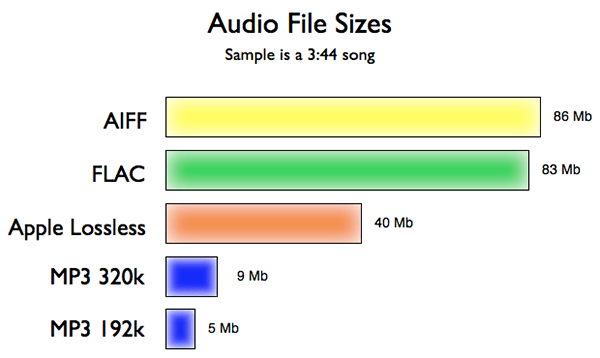
Audio File Sizes
Audio File Sizes

The higher the bitrate, the better the sound quality. Lossless music is the highest sound quality, right? So, let’s start with the sound collection.

【Audio composition】

Nowadays, when we talk about audio, everything is digital audio. Digital audio consists of three parts: sample rate, sample precision, and number of sound channels.

Sample Rate: Both the sample rate, which refers to the number of samples per second when recording the sound, expressed in Hertz (Hz).

Sampling Precision: Refers to the dynamic range of the recorded sound, measured in bits (Bit).

Sound channel: the number of channels (1-8).


In simple terms, we can think of a sound wave as a curve. We know that the curve is made up of points, and the sampling rate is the number of points in the middle of the length per second (the horizontal axis in the figure above). Sampling precision is the number of points in the dynamic range (upper vertical axis). The finer the positioning of these two dimensions, the greater the true sound restoration and the better the sound quality. Of course, the larger the audio file will be. The customer mentioned by the above colleague said that the latest Hi-Res Audio format released by SONY is a 6-channel 192kHz/24-bit recorded audio file. The size of the lossless format, of course, will be more than 200 megabytes.

The sampling frequency is approximately the following depending on the type of use (k is the thousand-bit symbol, 1khz=1000hz):

8khz – used for phones etc, is enough to record human voices.

22.05khz: transmission use frequency.

44.1kb: Audio CD.

48khz: used in DVD and digital TV.

96khz-192khz: used for DVD-Audio, Blu-ray HD, etc.

The common range of sample precision is 8 bits to 32 bits, with 16 bits generally used on CD.

Having said that, my friends are starting to get confused. It’s not the bitrate that determines the sound quality, so why is everyone saying that 320kb sound quality is better than 128kb?

What is the difference between 128k and 320k music?

What is the difference between 128k and 320k music?

Mp3 Bit Rate
Mp3 Bit Rate

192k is a turning point. Below 192K, the sound quality is relatively damaged, especially the high-frequency part above 16Khz will be cut off.

Mp3 Bit Rate
Mp3 Bit Rate

In short, mp3 above 192k, ordinary home equipment can no longer hear the difference in CD sound quality, except for golden ears and hi-fi equipment. Of course, these data are not 100% reliable. There are always people on the internet sharing fake mp3 above 192K. In fact, they are converting low bitrate music to high bitrate through software, but the sound quality will not improve. Windows Media Player compresses the resulting mp3 is absolutely wonderful. No matter how high the compressed bitrate is, it will cut perfectly at around 16K, so if you want to compress MP3 yourself, don’t use Windows Media Player.


Well, in fact, the bit rate should be said to be another dimension, it is a compression of audio files.

Nowadays, most of the audio formats that we use regularly are based on the original “WAV” file of the audio CD (44.1khz sampling rate, 16bit sampling precision, 2ch). The original recorded sound data is stored in an array, which is in PCM format, while WAV format is an encoding format developed by Microsoft, and its function is to play the PCM format data through encoding.

Since the data in WAV basically completely restores the PCM data, MP3, AAC and other lossless encoding formats are basically recompressed based on the WAV files. Therefore, we can simply think that WAV is the original audio format and other audio formats are compressed formats.

When it comes to compression, storage and transmission are inseparable. The purpose of compression is to improve storage and transmission. Therefore, before we talk about compression, we need to understand the basic units of computers.

We all know that the computer is a binary number system, and the files stored by the computer are made up of two numbers, 0 and 1. Therefore, the computer’s transmission is based on each number, and each number is called 1 ” bit”. For example, for an audio piece, its basic data is “0,1,1,1,0,1, 1 ,0”, and when transmitting, these numbers are transmitted one by one. The sampling precision mentioned above is this unit.

Why are MP3 bitrates often multiples of 32? Part 2

Why are MP3 bitrates often multiples of 32? Part 2

MP3 bitrate
MP3 bitrate


Technically, there is nothing to limit the MP3 bitrate to a multiple of 2, as variable bitrate encoding can be used, or a custom bitrate can be achieved using some flags not used in the MPEG specification (although it must be implemented manually).

MP3 bitrate
MP3 bitrate


For MP3 to be MPEG-compliant, and therefore compatible with most MP3 decoders, it must have a bitrate defined by the specification, so all CBR-encoded MP3 files must have a bitrate that is a multiple of two.

Depending on the resource, VBR can be encoded by changing the bitrate between a fixed rate above each frame, or it can be encoded by sharing the available bits in adjacent frames (effectively generating a non-standard bitrate for the two frames combined). The length of a given frame depends on the sampling rate, there are 1152 samples per frame. There is nothing to limit the size of the frame itself, nor is there any limit to making the frame size base 2 (i.e. a 128 kbit/s MP3 with a 44.1 kHz sample rate would have a frame size of 417 bytes).

In the end, a file encoded at 126 kbps sounds worse than a file encoded at 128 kbps, and likewise a file encoded at 131 kbps sounds better. However, MP3s are encoded for compression according to the psychoacoustic model of a specific encoder. The amount by which a file sounds “better” or “worse” at a given bitrate depends largely on the algorithm used to implement the model; however, in general, higher bit rates can hold more data, likely reproducing Build a more accurate raw stream audio signal

I strongly suspect that the reason the MPEG standard specifies multiples of 2 is because binary computers can often optimize math involving both themselves and programmers.
This is a begging question. Don’t you think there is a mathematical/arithmetic reason for the chosen bitrate value? Or doesn’t the mere presence of VBR justify any limits on possible bitrates?
@slhck I’ve just updated my answer to provide more relevant details, please let me know if this answers all questions.
MPEG 1 Layer-III (mp3) files are streams of frames.

This web page details the data structure of the framework.

As you can see, only 4 bits are allocated to determine the bitrate. When designing a format for live streaming, you don’t want to waste more space than describing the stream.

I’m not sure exactly why 4 bits was determined to be a good compromise between space footprint and “bitrate resolution” – for the particular bitrate chosen, they were probably chosen based on the lowest and highest quality range that the engineer considered acceptable. mp3 algorithm.

Probably most MP3 players read one frame at a time, probably trying to “early” buffer at least one frame when decoding/playing the current frame.

The size of the frame and possibly the RAM allocated to it is as follows:

FrameSize = 144 * BitRate / SampleRate when the padding bit is cleared.
FrameSize = (144 * BitRate / SampleRate) + 1When the padding bit is set.
Higher bit rate/sample rate = more RAM required.

128 Kbps is probably popular as it is the default setting for many encoders.

Also, a colleague gave me insight into the discussion: 128 Kbps also roughly translates to “minutes in a minute” (unverified though), probably has something to do with that as well.

When “raw” data is logged, that data is buffered in chunks. These blocks will obviously be powers of two. It’s conceptually easier if you have an integer number of blocks per second.