Variable bitrate vs constant bitrate in audio formats


Free Download Mp4Gain
picture

Variable bitrate vs constant bitrate in audio formats

Variable bitrate vs constant bitrate in audio formats

Let’s talk about variable bitrate vs constant bitrate in audio formats

When I first learned about audio formats, the terms “variable bitrate” (VBR) and “constant bitrate” (CBR) seemed complex. But understanding them makes all the difference if you care about sound quality, file size, or streaming performance. VBR and CBR refer to how data is allocated during encoding, and they have very different impacts on how your audio sounds and behaves.

CBR uses a consistent amount of data per second throughout an audio file. For example, if you encode a file at 320 kbps, it stays that way from beginning to end, even during silent or low-complexity parts. In contrast, VBR adjusts the bitrate dynamically, allocating more data to complex sections and less to simpler ones. Think of it like pouring water into different-sized containers: VBR adapts, while CBR pours the same amount, regardless of the container’s size.

This difference matters because VBR often achieves better audio quality at smaller file sizes. For instance, I’ve encoded podcasts and noticed that VBR creates smaller files without losing clarity. On the other hand, CBR is better for scenarios where consistency matters, such as live streaming or ensuring compatibility with older devices.

The pros and cons of constant bitrate (CBR)

CBR’s biggest strength is predictability. When you know a file will always use a set amount of data per second, it’s easier to estimate file sizes and ensure smooth streaming. This is why many broadcasters and streaming platforms prefer CBR. If you’ve ever streamed music or video over a shaky internet connection, you’ve likely benefited from CBR’s reliability.

However, CBR isn’t perfect. Its inflexibility can lead to wasted space. Silent sections or simple sounds don’t need the same data as a complex guitar solo, but CBR still allocates the same bitrate to both. This inefficiency is like packing a suitcase with only one size of clothing, even if you’re only traveling for a weekend. It works, but it’s not always practical.

Still, I find CBR valuable when working with older devices or software. Many of these systems don’t handle VBR well, leading to playback issues or glitches. For example, I once encoded music for an older MP3 player and had to choose CBR to avoid compatibility problems.

Why variable bitrate (VBR) stands out

VBR shines when you want to balance quality and file size. By adjusting the bitrate based on the complexity of the audio, it ensures that you’re not wasting data on simple parts of a track. This efficiency means that VBR often delivers higher quality at smaller file sizes compared to CBR.

One real-life example is encoding music with a wide dynamic range, like classical symphonies. These pieces have quiet moments and loud crescendos, and VBR adapts perfectly. During silent pauses, it uses less data, but when the orchestra swells, it ramps up the bitrate to preserve every detail. It’s like using a zoom lens that adjusts automatically based on what you’re photographing.

However, there are challenges. VBR files can be harder to stream because the data rate isn’t consistent. If you’re on a slow or unreliable network, this fluctuation might cause buffering. Still, for offline listening or storage, VBR is often my go-to choice. It’s especially useful for audiophiles or anyone looking to save space without compromising on quality.

How to choose between CBR and VBR

Deciding between VBR and CBR depends on your needs. If you’re streaming, CBR is often the better option because it ensures steady playback. Streaming services like Spotify use a version of CBR for this reason—it prevents interruptions, even on slower networks.

On the other hand, if you’re archiving music or creating downloadable files, VBR is typically more efficient. I’ve seen this firsthand when managing large music libraries. By using VBR, I’ve saved gigabytes of space without losing noticeable quality. It’s ideal for personal collections or professional audio projects where storage and sound matter.

For those who work with video files, the same principles apply. If you’re editing videos or uploading them to platforms, consider whether you need consistency (CBR) or flexibility (VBR). Each has its place, and understanding the trade-offs is key.

Latest words on variable bitrate vs constant bitrate in audio formats

Variable bitrate and constant bitrate serve different purposes, and there’s no one-size-fits-all answer. If you value compatibility and predictability, CBR is the way to go. But if you prioritize efficiency and quality, VBR might be your best bet. In my experience, choosing between them comes down to the specific use case.

For those who need precise control over their audio files, tools like Mp4Gain can help you fine-tune these parameters. Whether you’re working with music, podcasts, or video, optimizing bitrate ensures the best possible experience for your listeners.

FAQ about variable bitrate vs constant bitrate in audio formats

What is constant bitrate (CBR)?

Constant bitrate means the audio file uses the same amount of data per second throughout its duration, ensuring predictable file sizes and steady streaming.

What is variable bitrate (VBR)?

Variable bitrate adjusts the data rate based on the complexity of the audio, resulting in better quality and smaller file sizes compared to CBR.

Which is better for streaming, CBR or VBR?

CBR is better for streaming because it provides a consistent data rate, ensuring smoother playback and fewer interruptions on slow networks.

Does VBR affect sound quality?

VBR often improves sound quality by allocating more data to complex sections of audio while saving data on simpler parts.

Are VBR files compatible with all devices?

Not all devices support VBR. Older hardware or software might struggle to play VBR files, making CBR a safer choice in such cases.

How does CBR handle silent sections?

CBR allocates the same amount of data to silent sections as it does to complex audio, which can lead to wasted space.

Can I convert CBR to VBR?

Yes, you can convert CBR to VBR using audio conversion tools, but the quality improvement might be minimal if the original file is already compressed.

What bitrate is best for podcasts?

For podcasts, VBR is often best because it reduces file sizes while maintaining clear audio quality for speech.

Why is CBR preferred for live streaming?

CBR provides a stable bitrate, preventing buffering and ensuring consistent quality during live streaming sessions.

Which bitrate is better for music files?

VBR is generally better for music files as it adapts to the audio’s complexity, providing better quality while reducing file size.

Comments:

This was super helpful. I was always confused about what bitrate to use, but now I feel like I get it. Thanks for breaking it down!

Honestly, I still don’t know if VBR works with my old MP3 player. Gonna give it a try but would’ve loved more details about compatibility issues!

I didn’t know VBR was so efficient. I have tons of music files taking up space. Will definitely look into this to save some storage.

Great explanation, but I feel like the article should have talked more about the impact of different bitrates on streaming services.

This was an awesome read! I never understood the difference between CBR and VBR until now. You nailed it. Thanks for sharing!

Can someone confirm if this works for audiobooks? I’ve been looking to compress my files but don’t want to lose clarity.

Wow, I didn’t even realize that bitrate could make such a difference. Definitely learned something new today. Thanks!

Good article, but I wish you talked more about using these bitrates for videos. Are the principles the same for MP4 files?

Thanks for explaining this in simple terms. I always thought VBR was just for professionals, but now I’ll use it for my music files.

Honestly, this article saved me hours of research. So much better than the generic stuff I’ve read elsewhere!

I still don’t fully understand how to set the right VBR settings. Could you add a guide on how to configure it properly?

This was super helpful. Can you also talk about how these bitrates affect battery usage on portable devices?

I appreciate the effort, but I feel like some sections could’ve gone into more detail about lossless vs lossy formats alongside CBR and VBR.


Free Download Mp4Gain
picture


Mp4Gain Main Window
picture


Mp4Gain Features
picture


Free Download Mp4Gain
picture

Lossy vs Lossless Data Representation in MP3

Lossy vs Lossless Data Representation in MP3

Let’s talk about lossy vs lossless data representation in MP3

When we discuss MP3 audio, one of the most debated topics is the difference between lossy and lossless data representation. As someone who has spent years studying audio formats, I’ve encountered countless situations where understanding these differences made all the difference. Lossy compression is designed to reduce file size by removing data that is considered less perceptible to the human ear. On the other hand, lossless compression preserves every bit of audio information, even though the file sizes are larger.

Imagine a high-quality photograph being compressed for storage. If you save it as a smaller file, some details—like subtle textures—might get blurred or lost entirely. This is similar to lossy compression in MP3. Lossless compression is like folding a large map so you can carry it in your pocket and then unfolding it to reveal every detail when you need it. Both have unique applications, and choosing between them depends on your priorities, like audio quality or storage capacity.

What is lossy data representation?

Lossy data representation is all about efficiency. It works by removing audio data that our ears might not notice is missing. The MP3 format uses psychoacoustic models to determine which sounds are less critical based on how we perceive audio. For example, if two sounds are playing at the same time and one is much louder, the quieter sound might be eliminated during lossy compression.

I’ve tested this extensively in my studio. A typical MP3 file compressed at 128 kbps sounds clear to many listeners, but if you pay close attention with high-end headphones, subtle details like background reverb or high-frequency harmonics might be missing. That’s because lossy compression prioritizes reducing file size over preserving every nuance of the original audio.

How does lossless data representation work?

Lossless compression, on the other hand, doesn’t remove any data. Instead, it uses algorithms to reduce file size without losing any information. Think of it like packing a suitcase more efficiently without leaving anything behind. Formats like FLAC or WAV are excellent examples of lossless audio compression.

In practice, I’ve noticed that lossless audio sounds identical to the original recording. If you’re working on music production or you’re an audiophile, lossless compression is essential because it ensures that no detail is compromised. However, this comes with a trade-off: lossless files are much larger, sometimes five to ten times the size of lossy MP3s.

When is lossy compression useful?

Lossy compression shines in situations where storage space or bandwidth is limited. Streaming platforms like Spotify and YouTube rely heavily on lossy formats to deliver music and video efficiently to millions of users. If you’re commuting and streaming over a mobile network, you might not notice the slight reduction in quality compared to a lossless file.

I’ve also seen its impact in file sharing. Back when we used CDs and flash drives to transfer files, lossy MP3s were a lifesaver. A single gigabyte of storage could hold hundreds of songs, making it convenient for music lovers.

  • Streaming platforms benefit from smaller file sizes.
  • Ideal for casual listening on standard devices.
  • Allows faster downloads and less buffering during playback.

Why is lossless compression preferred by professionals?

Lossless compression is often the gold standard for professionals in music and sound design. In my studio, I always work with lossless files during production. This ensures that the final product retains every detail when mastered. Imagine painting a masterpiece—if you start with a high-resolution canvas, every brushstroke stands out.

When archiving music or creating remixes, lossless files are invaluable because they preserve all the nuances of the original track. Even though these files require more storage, the quality is well worth the investment for critical applications.

  • Perfect for audio editing and production.
  • Essential for preserving original recordings.
  • Provides unmatched audio clarity and detail.

How does MP3 manage lossy compression so effectively?

MP3 stands out for its clever use of perceptual coding. It takes advantage of the way our brains process sound, removing data that we’re unlikely to notice. This includes masking, where a loud sound can make nearby quieter sounds inaudible. By focusing on what we can actually hear, MP3 files achieve impressive compression ratios.

I’ve tested MP3 encoding on various devices and noticed how it maintains quality despite reducing file size. For example, a three-minute song might shrink from 30 MB in WAV format to just 3 MB as an MP3 at 128 kbps. This balance between quality and size is why MP3 became the dominant audio format for decades.

What are the limitations of lossy MP3 files?

While MP3 files are convenient, they come with drawbacks. High levels of compression can introduce audible artifacts like ringing or a hollow sound. These issues become more noticeable on high-end audio systems or when editing the files further.

For instance, I’ve encountered situations where a client wanted to enhance the bass in an MP3 track. Because some low-frequency data had already been removed during compression, boosting the bass revealed unwanted distortions. This limitation makes lossy MP3s less suitable for professional applications.

Which is better for everyday use?

The choice between lossy and lossless depends on your needs. If you’re streaming music on a smartphone or sharing files quickly, lossy MP3s are the practical option. They sound great on most headphones and speakers, especially in everyday environments like a car or gym.

However, if you’re a music enthusiast with a high-quality audio setup, you’ll likely notice the difference in a lossless file. I always recommend lossless formats for anyone who values audio fidelity or plans to archive their music collection for future use.

Latest words on lossy vs lossless data representation in MP3

In the debate between lossy and lossless, there’s no one-size-fits-all answer. Each has its place depending on the context. As someone deeply immersed in audio production, I’ve seen firsthand how lossy MP3s revolutionized the way we consume music. But I also recognize the unmatched quality of lossless formats for critical applications.

If you’re serious about audio quality and want to optimize your files for both lossy and lossless use cases, tools like Mp4Gain can make the process seamless.

FAQs about Lossy vs Lossless Data Representation in MP3

What is lossy compression in MP3?

Lossy compression reduces file size by removing less noticeable audio data, using perceptual models to maintain acceptable quality.

How does lossless audio differ from lossy audio?

Lossless audio retains all original data for perfect fidelity, while lossy audio sacrifices some data for smaller file sizes.

Why is MP3 considered lossy?

MP3 uses lossy compression to reduce file size by removing inaudible or less noticeable parts of the audio.

Can you hear the difference between lossy and lossless files?

On high-end audio systems, the differences are noticeable, especially in the finer details and dynamic range of lossless files.

Are lossless files always better than lossy?

Lossless files offer better quality but require more storage. Lossy files are better for casual use due to their smaller size.

What is the main advantage of lossy compression?

The main advantage is significantly smaller file sizes, making it ideal for streaming and portable devices.

Do streaming platforms use lossy or lossless formats?

Most platforms use lossy formats to optimize streaming efficiency, but some offer lossless options for premium users.

Why do audiophiles prefer lossless formats?

Audiophiles prefer lossless formats for their superior sound quality and faithful reproduction of original recordings.

Is MP3 still relevant in 2025?

Yes, MP3 remains popular due to its compatibility and efficiency, despite newer formats offering better quality at smaller sizes.

What’s the best tool to convert files between lossy and lossless formats?

Mp4Gain is a great tool for optimizing and converting audio files while maintaining the best quality for any format.

Comments:

Finally, someone explained lossy and lossless in a way I can understand. Great article, very useful!

Wait, so if I rip my CDs to MP3, am I losing quality? I feel like I need a better explanation of what actually gets lost!

This was super helpful. I was confused about lossy vs lossless, especially for archiving my vinyl collection.

I think lossless is overkill for most people, but this article gave me a new appreciation for why it matters. Thanks!

Why don’t more streaming platforms offer lossless as a default? I’d love better sound quality without needing expensive gear.

Great write-up! One question though, how does lossy compression handle live recordings? Are they more affected?

Honestly, I didn’t think I’d notice the difference, but after trying lossless, it’s hard to go back. Thanks for explaining this so clearly!

Can you do a follow-up article on how to best optimize files for lossless storage? I’m trying to build a music archive!

I like how you used examples to explain complex stuff. Made it much easier to follow.

This is the most in-depth guide I’ve read. Still, I’d love more tips on managing file sizes without sacrificing too much quality.

Long-term prediction in AAC and MP3

Long-term prediction in AAC and MP3

Long-term prediction in AAC and MP3

Let’s talk about long-term prediction in AAC and MP3

Long-term prediction in AAC and MP3 is the key to achieving efficient compression without sacrificing audio quality. As someone who has studied this area extensively, I can tell you that understanding how these algorithms work can transform the way we perceive digital audio. Imagine you’re trying to fit all your favorite songs into a small storage space. Long-term prediction helps achieve this by identifying patterns in sound and encoding them more efficiently.

Both AAC and MP3 rely on long-term prediction to optimize compression. By analyzing repetitive audio signals, such as sustained musical notes or rhythmic beats, these codecs predict and encode them efficiently. Think of it as saving space on a bookshelf by stacking similar-sized books together. This concept, though simple in analogy, involves highly sophisticated mathematical modeling in practice.

How long-term prediction works in AAC

In AAC, long-term prediction focuses on analyzing correlations within audio frames over time. Picture a choir singing in harmony; their voices often follow predictable patterns. AAC identifies these patterns, using them to reduce redundant data storage. This technique is especially effective for tonal and harmonic sounds.

AAC employs tools like predictive filters that estimate future audio samples based on past ones. If you’ve ever noticed how your phone predicts the next word when you’re typing, this is a similar idea but applied to audio. By predicting and storing only the differences, AAC achieves higher compression rates. This is why AAC files often sound better than MP3 at similar bitrates.

Long-term prediction in MP3 encoding

MP3 also utilizes long-term prediction, but its approach is slightly less advanced than AAC’s. While MP3’s algorithms identify repetitive audio signals, they lack the precision of AAC in capturing subtle tonal variations. Imagine trying to sketch a landscape using only a few colors; MP3 manages this but sometimes loses finer details.

In MP3, long-term prediction focuses on reducing redundancy in stationary sounds, such as sustained chords. For example, if you’re listening to a classical symphony, MP3 might encode the sustained violin notes by predicting their behavior. This method works well for simpler audio structures but struggles with more complex ones, where AAC excels.

Comparing the efficiency of AAC and MP3

AAC outshines MP3 in terms of long-term prediction efficiency. This difference is evident when you compare the sound quality of a 128 kbps AAC file to that of a 128 kbps MP3 file. AAC delivers a richer and more accurate audio experience. It’s like comparing high-definition video to standard definition; both show the same content, but the former provides much more detail.

AAC’s advantage lies in its use of prediction filters and enhanced psychoacoustic modeling. These tools enable AAC to better handle complex audio textures, such as overlapping voices or intricate instrumental arrangements. MP3, while efficient for its time, often struggles to maintain fidelity in such scenarios.

The role of psychoacoustics in prediction

Psychoacoustics is the science of how we perceive sound, and it plays a crucial role in both AAC and MP3. By understanding what sounds the human ear prioritizes, these codecs optimize what to encode in detail and what to discard. Imagine listening to a band at a concert; your brain naturally focuses on the lead singer’s voice while ignoring background chatter. Psychoacoustic modeling mimics this process.

AAC uses advanced psychoacoustic techniques to complement its long-term prediction, ensuring a more natural listening experience. MP3 also employs psychoacoustics but lacks AAC’s ability to adapt dynamically to complex audio. This difference highlights why AAC is the preferred choice for modern streaming platforms.

Real-life applications of long-term prediction

Long-term prediction isn’t just a theoretical concept; it has practical applications that impact our daily lives. Streaming services like Spotify and Apple Music rely on AAC’s predictive capabilities to deliver high-quality audio while minimizing data usage. If you’ve ever streamed music on a weak internet connection and been amazed by the clarity, you can thank AAC’s long-term prediction for that.

MP3, while less advanced, remains popular for legacy systems and portable devices. Its simplicity and widespread support make it a reliable choice for older hardware, such as car stereos and CD players. Understanding these real-life scenarios helps us appreciate the importance of long-term prediction in digital audio.

Challenges in long-term prediction

Long-term prediction isn’t perfect; it has its limitations. Complex and unpredictable sounds, such as applause or sudden instrument changes, can challenge even the most advanced algorithms. These sounds are like trying to predict a series of random numbers; the lack of pattern makes accurate prediction nearly impossible.

AAC addresses these challenges better than MP3 by using flexible prediction models that adapt to varying audio signals. However, both codecs can struggle with extremely dynamic content, such as live recordings or experimental music. This is an area where future advancements in audio compression could make significant strides.

Future trends in audio compression

The future of long-term prediction in audio compression lies in leveraging machine learning and artificial intelligence. Imagine a codec that learns from your listening habits, optimizing audio quality for your favorite genres. These technologies could revolutionize how we experience digital sound.

While AAC and MP3 have set the foundation, emerging formats like Opus and xHE-AAC are already pushing the boundaries. These codecs build on the principles of long-term prediction while introducing new methods to handle complex audio. As an expert, I believe we are on the cusp of a new era in audio technology.

Latest words on long-term prediction in AAC and MP3

Long-term prediction in AAC and MP3 is a fascinating blend of science and art. By analyzing and predicting audio patterns, these codecs achieve impressive compression rates while maintaining quality. From streaming music to preserving cherished recordings, long-term prediction impacts our lives in ways we often take for granted.

For those looking to optimize their audio files, Mp4Gain offers an excellent solution to enhance and normalize sound. By understanding the principles of long-term prediction, we can better appreciate the technology that brings music to our ears.

FAQ about long-term prediction in AAC and MP3

What is long-term prediction in audio compression?

Long-term prediction identifies patterns in audio signals to reduce redundancy and improve compression efficiency.

How does AAC use long-term prediction?

AAC uses predictive filters to estimate future audio samples based on past patterns, ensuring better compression and quality.

What makes AAC more efficient than MP3?

AAC uses advanced prediction and psychoacoustic modeling, offering better handling of complex audio textures than MP3.

Why is long-term prediction important?

It enables efficient audio compression by reducing redundant data while preserving quality, saving storage space.

Can MP3 handle complex audio well?

MP3 can struggle with complex audio due to its less advanced prediction models compared to AAC.

What is psychoacoustics in audio codecs?

Psychoacoustics studies sound perception, helping codecs focus on encoding sounds the human ear prioritizes.

Are there limitations to long-term prediction?

Yes, unpredictable sounds like applause can challenge prediction models, causing less efficient compression.

What future technologies could improve long-term prediction?

Machine learning and AI could enhance prediction models, adapting dynamically to complex audio signals.

Why is AAC preferred for streaming?

AAC offers superior compression and sound quality, making it ideal for delivering clear audio on streaming platforms.

Comments:

I had no idea long-term prediction made such a big difference in audio quality. Really insightful article!

Great breakdown! I always wondered why AAC sounded better than MP3 at lower bitrates.

Can you go deeper into how psychoacoustics works in AAC? This is fascinating but I want more details!

This article answered so many of my questions about audio codecs. Keep up the great work!

Wow, I finally understand why streaming sounds so good even on slow internet. Thanks for explaining!

Interesting stuff, but I’d love to see a comparison chart between AAC, MP3, and other codecs.

Man, this is the clearest explanation of audio compression I’ve ever read. Thanks for making it simple!

MP3 Bitrate Comparison: 128 kbps vs 320 kbps

MP3 Bitrate Comparison: 128 kbps vs 320 kbps

MP3 Bitrate Comparison: 128 kbps vs 320 kbps

Let’s talk about MP3 bitrate comparison: 128 kbps vs 320 kbps

In the world of MP3, the battle between 128 kbps and 320 kbps bitrates is a big topic. As a specialist, I get asked all the time about which bitrate delivers the best balance between quality and file size. For someone seeking a rich listening experience, knowing the difference between these bitrates is essential. Let’s dig deeper into each bitrate’s strengths, drawbacks, and when one might work better than the other.

Understanding Bitrate in MP3 Files

Bitrate is a major player in audio quality. In simple terms, bitrate represents the amount of data processed over a specific time frame. For MP3 files, it’s measured in kilobits per second (kbps). Think of it like a water pipe: the higher the bitrate, the wider the pipe, letting more “data” flow through, meaning you get more audio detail and quality. But with all that comes larger file sizes, which may not be ideal for everyone.

The Benefits and Drawbacks of 128 kbps

128 kbps has long been a standard for MP3 files, especially in the early days of digital music when storage was limited. But does it still hold up?

Advantages of 128 kbps

  • Smaller File Size – Great for portable devices or limited storage space.
  • Faster Downloads – Quick download times on slower internet connections.
  • Good for Speech – Sufficient for audiobooks or podcasts where music quality isn’t crucial.

Drawbacks of 128 kbps

  • Loss of Audio Detail – Some subtle sounds get lost due to compression.
  • Noticeable Artifacts – More likely to have audio “glitches” or “artifacts” in complex songs.
  • Limited Range – Highs and lows in sound may feel “clipped” or flat.

What 320 kbps Offers for Audio Enthusiasts

On the flip side, 320 kbps is the go-to for anyone wanting a “full” listening experience. It’s like getting a high-definition version of a video – everything sounds sharper, fuller, and richer. But that improvement comes with its own set of considerations.

Advantages of 320 kbps

  • Superior Sound Quality – Preserves more audio details and nuances.
  • Better for Music – Ideal for complex tracks, with a better balance between lows, mids, and highs.
  • High Dynamic Range – Provides a broader range of sounds, from quiet tones to powerful beats.

Drawbacks of 320 kbps

  • Large File Size – Not ideal if storage space is an issue.
  • Longer Download Times – Requires faster internet to avoid long waits.
  • Overkill for Casual Listening – The quality may go unnoticed on basic speakers or headphones.

Sound Quality Comparison: 128 kbps vs 320 kbps

When we get down to the nitty-gritty, 128 kbps and 320 kbps provide vastly different experiences. At 128 kbps, audio quality is functional but compressed. Imagine watching a movie in standard definition versus high definition – that’s the kind of difference we’re talking about. At 320 kbps, you get more detail, clarity, and richness, especially in the mid to high ranges where a lot of music “lives.”

Impact on Storage and File Sizes

For many people, file size is just as important as sound quality. The difference between 128 kbps and 320 kbps is significant: a song at 128 kbps might take up about 3 MB, while the same track at 320 kbps could use up to 10 MB. This means fewer songs on a smaller device at the higher bitrate, but if quality matters more than quantity, 320 kbps wins.

Choosing the Right Bitrate for Different Scenarios

The right bitrate often depends on what you’re using it for. If you’re setting up a playlist for a road trip with limited data, 128 kbps might be perfect. But if you’re crafting a high-quality playlist for your home sound system, 320 kbps is likely worth the extra space.

Compatibility and Playback Differences

Most modern devices can handle both 128 kbps and 320 kbps, but there are situations where compatibility matters. Some older devices might struggle with larger 320 kbps files, and streaming services often compress tracks to reduce buffering. Knowing your device’s limits can help guide your choice.

Popular Use Cases for 128 kbps vs 320 kbps

When 128 kbps is Ideal

  • For Portable Listening – Smaller files allow for a bigger music library.
  • When Data Usage is a Concern – Limited internet data can make lower bitrates appealing.
  • For Voice-Only Content – Audiobooks, podcasts, and news broadcasts don’t require high-quality audio.

When 320 kbps is Worth It

  • For High-Quality Music – Perfect for critical listening on good speakers or headphones.
  • When Storage is Not an Issue – Allows for top audio quality without worrying about space.
  • For Professional Audio Needs – Ideal for DJs, music producers, or any scenario needing pristine sound.

Final Thoughts on MP3 Bitrate Choices

Deciding between 128 kbps and 320 kbps can feel tricky, but it boils down to balancing quality and convenience. In my experience, I’ve found that higher bitrates give you more life-like sound, especially when using quality playback devices. Yet, 128 kbps remains a practical choice for everyday use, especially on portable devices with limited storage. Ultimately, the best bitrate for you depends on your priorities and listening habits.

Latest Words on MP3 bitrate comparison: 128 kbps vs 320 kbps

Both 128 kbps and 320 kbps have their place in the MP3 world, but each serves a different need. If you value sound clarity, 320 kbps is worth the extra space. On the other hand, if convenience and file size take priority, 128 kbps still provides a reliable listening experience. For anyone serious about audio quality, Mp4Gain provides solutions that can enhance and normalize MP3 playback, ensuring your music always sounds its best.

MP3 Bitrate Comparison: 128 kbps vs 320 kbps – Frequently Asked Questions

What is the difference between 128 kbps and 320 kbps in MP3 files?

The main difference between 128 kbps and 320 kbps MP3 files is the audio quality and file size. At 128 kbps, the file is more compressed, resulting in lower quality and smaller file sizes, ideal for casual listening and saving space. At 320 kbps, the audio is less compressed, preserving more detail for high-quality sound, but with larger file sizes. Higher bitrates, like 320 kbps, offer richer sound with clearer highs and lows, making it better for those prioritizing audio quality.

Is 128 kbps good enough for listening to music?

Yes, 128 kbps is suitable for everyday listening, especially on standard speakers or headphones where subtle details may not be noticeable. It’s particularly useful for casual listeners and mobile devices with limited storage, as it saves space. However, if you’re looking for a fuller sound experience, especially on high-end equipment, 320 kbps may be a better choice.

Does 320 kbps MP3 quality sound better than 128 kbps?

Yes, 320 kbps MP3 files generally sound better than 128 kbps due to the higher bitrate, which preserves more audio detail. This results in clearer, richer sound, especially noticeable in complex music tracks with varied instruments and frequencies. For audiophiles and music enthusiasts, the difference is significant, although casual listeners may not notice as much difference on standard audio devices.

How much storage space does a 128 kbps MP3 use compared to a 320 kbps MP3?

A 128 kbps MP3 file typically takes up around 1 MB per minute of audio, while a 320 kbps file can use up to 2.5 MB per minute. This means 320 kbps files are more than twice the size of 128 kbps files, which can impact storage significantly if you have a large music library. For people with storage limitations, 128 kbps offers a better balance between quality and space efficiency.

When should I choose 128 kbps instead of 320 kbps?

Choosing 128 kbps is ideal when you need to save space, have limited data, or are listening on basic audio equipment where fine details in sound may not be noticeable. This bitrate is also suitable for podcasts, audiobooks, and other spoken content where audio fidelity is less critical. However, for music, especially with complex sound, 320 kbps can enhance the listening experience.

Does 320 kbps MP3 quality make a difference on all devices?

The improvement in audio quality with 320 kbps MP3 is most noticeable on high-quality audio equipment. Standard headphones or speakers may not showcase the difference as clearly, but on quality headphones or sound systems, the enhanced depth and clarity of 320 kbps is significant. For portable devices or casual listening, 128 kbps may be sufficient, while 320 kbps excels on setups designed for high-quality audio playback.

Is there a downside to using 320 kbps MP3 files?

The main downside of 320 kbps MP3 files is their larger size, which can fill up storage space quickly, especially on devices with limited capacity. Additionally, they require more bandwidth for streaming and take longer to download compared to 128 kbps files. For users who prioritize storage and speed, 128 kbps may be more practical, while 320 kbps is better for users focused on quality.

Can I convert 128 kbps MP3 to 320 kbps to improve quality?

No, converting a 128 kbps MP3 to 320 kbps will not improve its quality. Once audio data is compressed at 128 kbps, the lost details cannot be recovered by converting it to a higher bitrate. This process only increases the file size without any enhancement in quality. For the best sound quality, always start with a high-bitrate file or the original source.

Comments:

DaveT: I used to think 128 kbps was fine until I got a new set of headphones! Now I can really hear the difference. Great breakdown, this article really helped clarify why 320 kbps is worth the extra space for me.

MusicFan88: Interesting stuff! I didn’t realize how much I was missing with 128 kbps. I might start switching my files to 320 kbps for better quality.

JoeyB: My internet is slow, so I still use 128 kbps files for streaming. Honestly, this article explains why it’s a good compromise even if I lose a bit of quality.

Sophie91: Wow, this article is really thorough! I’ve been torn between saving space and getting good sound quality. This breakdown makes it easy to decide when 320 kbps is worth it.

LisaC: As a podcast junkie, 128 kbps works fine for me, but I can definitely tell the difference with music. Nice article explaining all this so clearly!

TomAudio: Finally, someone explains this in a way that makes sense. I’ve been struggling to decide, but now I think I’ll go with 320 kbps for my main playlist. Thanks for this!

Redman: This explains why my music sounds flat at 128 kbps. Going to try out 320 kbps for my favorite tracks, thanks for the insights!

AliceG: Great article! I always thought 128 kbps was good enough, but now I’m really curious to hear the difference with 320 kbps.

AudioSnob: Can’t listen to 128 kbps anymore, once you go 320 kbps you never go back. Glad someone’s explaining it so clearly for everyone else.

RyanK: Awesome breakdown, this actually made me realize why my speakers sound weird sometimes. Going to check out Mp4Gain too, sounds like a good option!

MelMusic: I’m a DJ, so 320 kbps is a must. Never realized how much of a difference it made until I upgraded my system. Thanks for this comprehensive guide!

JohnnyD: I’ve never been able to hear much difference but this article makes me think I need better headphones! Maybe I’ll upgrade to 320 kbps soon.

BigBen: Just what I needed to read! 320 kbps seems like a no-brainer now for my playlists. Thanks for laying it out so well!

SaraM: Finally understand why my friend keeps pushing me to switch to 320 kbps. Great explanation, easy to follow!

MP3 Bitrate Calculation Methods

MP3 Bitrate Calculation Methods

MP3 Bitrate
MP3 Bitrate
MP3 Bitrate
MP3 Bitrate

What is MP3 Bitrate?

MP3 bitrate is the amount of data that is used to encode an MP3 audio file. The higher the bitrate, the higher the quality of the audio file. However, higher bitrates also result in larger file sizes.

How is MP3 Bitrate Calculated?

MP3 bitrate is calculated using a variety of factors, including the complexity of the audio signal, the desired quality of the audio file, and the target file size.

What are the Different Types of MP3 Bitrate Calculation Methods?

There are two main types of MP3 bitrate calculation methods:

  • Constant bitrate (CBR): This method uses a constant bitrate for the entire audio file. This results in a consistent audio quality throughout the file, but it can also result in larger file sizes for complex audio signals.
  • Variable bitrate (VBR): This method uses a variable bitrate, which means that the bitrate changes depending on the complexity of the audio signal. This results in smaller file sizes for complex audio signals, but it can also result in a slight variation in audio quality.

Which MP3 Bitrate Calculation Method is Best?

The best MP3 bitrate calculation method depends on your needs. If you need a consistent audio quality throughout the file, then CBR is the best option. If you are more concerned about file size, then VBR is the best option.

How to Choose the Right MP3 Bitrate for Your Needs

When choosing the right MP3 bitrate for your needs, you should consider the following factors:

  • The type of audio signal: Complex audio signals, such as those that contain a lot of high-frequency content, require a higher bitrate than simple audio signals.
  • The desired quality of the audio file: If you want the highest possible quality, then you should use a higher bitrate. If you are more concerned about file size, then you can use a lower bitrate.
  • The target file size: If you have a specific file size in mind, then you can use a bitrate calculator to determine the bitrate that you need.

Conclusion

MP3 bitrate is an important factor to consider when encoding audio files. By understanding the different types of MP3 bitrate calculation methods and how to choose the right bitrate for your needs, you can ensure that your audio files sound great and have a reasonable file size.

Here are some additional details about the different types of MP3 bitrate calculation methods:

  • Constant bitrate (CBR): This method is the simplest to understand and implement. It is also the most reliable, as it ensures that the audio quality is consistent throughout the file. However, it can result in larger file sizes for complex audio signals.
  • Variable bitrate (VBR): This method is more complex than CBR, but it can result in smaller file sizes for complex audio signals. This is because VBR allows the encoder to use a lower bitrate for less complex parts of the audio signal, and a higher bitrate for more complex parts of the audio signal. However, VBR can result in a slight variation in audio quality, depending on the complexity of the audio signal.

Ultimately, the best MP3 bitrate calculation method for you depends on your specific needs. If you need a consistent audio quality throughout the file, then CBR is the best option. If you are more concerned about file size, then VBR is the best option.

The Differences Between 128 kbps, 256 kbps, and 320 kbps MP3s

The Differences Between 128 kbps, 256 kbps, and 320 kbps MP3s

mp3 kbps
mp3 kbps

When it comes to MP3s, bitrate is one of the most important factors to consider. Bitrate is the number of bits that are processed per second and is typically measured in kilobits per second (kbps). Common bitrates for MP3s include 128 kbps, 256 kbps, and 320 kbps, but what exactly do these numbers mean, and how do they affect the overall quality of the audio?

mp3 kbps
mp3 kbps

128 kbps

128 kbps is a standard bitrate for MP3s and is considered to be a good balance between file size and sound quality. At this bitrate, a four-minute song will take up approximately 4 megabytes of space. Audio encoded at 128 kbps will sound decent on most devices, but it may not be suitable for those who are particularly picky about sound quality. It is often used in streaming services and online platforms because of the small file size which allows for faster streaming and less data consumption.

256 kbps

Compared to 128 kbps, 256 kbps offers a significant improvement in sound quality. The increased bitrate means that more data is used to represent the audio, resulting in a more accurate representation of the original recording. A four-minute song at 256 kbps will take up approximately 8 megabytes of space. This bitrate is recommended for music enthusiasts who want to enjoy a higher quality sound without having to sacrifice too much storage space.

320 kbps

320 kbps is considered the highest quality bitrate for MP3s and offers the best representation of the original audio. The increased bitrate means that even more data is used to represent the audio, resulting in a near-perfect representation of the original recording. A four-minute song at 320 kbps will take up approximately 10 megabytes of space. This bitrate is recommended for audiophiles or professional musicians who want to ensure that their music sounds as close to the original recording as possible. However, due to the large file size, it may not be practical for streaming or online platforms.

Compression

When converting audio to an MP3, the file is compressed to make it smaller in size. However, this process can cause a loss of audio quality, especially at lower bitrates. The higher the bitrate, the less compression is applied and the better the audio quality will be. For example, a 128 kbps MP3 will have more compression than a 256 kbps MP3, resulting in a lower quality sound.

Conclusion

In conclusion, the bitrate of an MP3 can have a big impact on the overall sound quality. 128 kbps is a good balance between file size and sound quality, while 256 kbps offers a significant improvement in sound quality. 320 kbps offers the best representation of the original audio, but the large file size may not be practical for streaming or online platforms. To optimize the sound quality of your MP3s, one of the best solutions is MP4Gain, that optimizes the audio of your files, making them sound better than ever before.

The bitrate and its relationship with the audio quality in an MP3

The bitrate and its relationship with the audio quality in an MP3

The bitrate and its relationship with the audio quality in an MP3

The bitrate is a measure of the amount of audio information that is encoded per second in a compressed audio file, such as an MP3. Bit rate is measured in kilobits per second (kbps).

The bitrate and its relationship with the audio quality in an MP3

The higher the bitrate, the higher the audio quality. However, a larger file size will also be required to store the same amount of audio time. Therefore, it is important to choose a suitable bitrate to balance quality and file size.

For music files, a bitrate of at least 128 kbps is recommended for decent sound quality. However, if you want higher sound quality, you can go for a higher bitrate, such as 256 kbps or even 320 kbps.

For voice audio files, a bit rate of 64 kbps is sufficient for clear sound quality. However, if you want higher sound quality, you can go for a higher bitrate, such as 96 kbps or 128 kbps.

In short, bitrate is an important factor in the audio quality of an MP3 file. It is important to choose a suitable bitrate to balance quality and file size.

Also, it’s important to note that bitrate isn’t the only factor that affects the audio quality of an MP3. Other important factors include the sample rate and the number of channels. The sample rate refers to the number of times the sound is measured per second, while the number of channels refers to the number of audio channels in the file.

For example, an audio file with a bit rate of 128 kbps and a sample rate of 44.1 kHz and 2 audio channels will have higher sound quality than a file with the same bit rate but a sample rate of 22 kHz and 1 audio channel.

In conclusion, if you want to get the best audio quality from an MP3 file, it’s important not only to choose a suitable bitrate, but also to consider the sample rate and number of channels. It is advisable to choose an optimal combination of these factors to obtain the best sound quality.

In addition, it is important to mention that there are other audio formats, such as WAV, FLAC, AIFF, which, unlike MP3, are not compressed, which means that they do not lose audio quality to the compression process. However, these formats often have much larger file sizes than compressed formats like MP3.

So, if you want the best audio quality, it’s recommended to use uncompressed formats like WAV or FLAC, but it’s also important to consider storage space and compatibility with different devices and audio players. In case of opting for compressed formats, it is important to choose an appropriate bitrate and take into account other factors such as the sampling frequency and the number of channels.

In summary, bitrate is an important factor in the audio quality of an MP3 file, but it is not the only factor to consider. It is important to choose a suitable bitrate, as well as take into account the sample rate and the number of channels to obtain the best sound quality. In addition, there are other uncompressed audio formats that offer higher sound quality, but also have a larger file size.

MP3 file format

MP3 file format

MP3 file format
MP3 file format

The full name of MP3 is MPEG-1 or MPEG-2 Audio Layer III, which is a popular format for digital audio coding and lossy compression of minor parts, to achieve the purpose of compressing into smaller files.

MP3 file format
MP3 file format

source
The MP3 format was invented in the mid-1980s by a group of engineers at the Fraunhofer research organization in Erlangen, Germany, and standardized in 1991. The association is committed to research in low-rate, high-quality sound coding of data. Although MP3 is a lossy compression format, for the listening experience of most users, the sound quality of MP3 does not have a noticeable decrease compared to the original uncompressed audio.

Later, with the popularization of the MP3, it had an impact and influence in the music industry.

MPEG audio standard
MPEG (Motion Picture Experts Group) is a moving picture expert group under ISO, and the MPEG standard formulated by it is widely used in various multimedia. MPEG standards include video and audio standards, from which MPEG-1, MPEG-2, MPEG-2AAC, and MPEG-4 audio standards have been developed.

The MPEG-1 and MPEG-2 standards use the same family of audio codecs: Layer1, 2, 3. A new feature of MPEG-2 is the use of low sample rate expansion to reduce data traffic, and another feature is multi-channel expansion, which increases the number of main channels to five. The MPEG-2AAC (MPEG-2 Advanced Audio Coding) standard was launched by FraunhoferIIS and AT&T in 1997 to significantly reduce data traffic. The Modified Discrete Co2sine Transform (MDCT) algorithm adopted by MPEG22AAC, the sampling rate It can be between 8KHz and 96KHz, and the number of channels can be between 1-48.

All three layers of MPEG Audio Layer1, 2, and 3 use the same filter bank, bitstream structure, and header information, and the sample rate is either 32 KHz, 4411 KHz, or 48 KHz.

Layer1 is designed for DCC (DigitalCompactCassette) digital compression tape, with a data rate of 384kbps.
Layer2 balances complexity and performance, and data traffic drops to 256kbps-192kbps.
Layer3 was designed for low data traffic from the beginning, and the data traffic is 128Kbps-112Kbps. Layer3 adds MDCT transform, which makes its frequency resolution 18 times than Layer 2. Layer3 also uses EntropyCoding similar to MPEGVid2eo Redundant information is reduced.
Currently, most MP3s use the MPEG21 standard.

Change the bit rate of an MP3 file

Change the bit rate of an MP3 file

mp3 bit rate
mp3 bit rate

Do you want to change the bit rate of an MP3 file?

mp3 bit rate
mp3 bit rate

This can be useful, for example, if you need to reduce the size of an MP3 file. A 320 kbps MP3 file, the highest bit rate allowed for an MP3 file, can be lowered to 192 kbps to significantly reduce the size of the MP3 file.

There will be some loss in quality, but the difference will be negligible to most listeners using standard speakers or headphones. If you’re an audiophile, chances are you’ll never use the MP3 format outside of expensive audio equipment.

Most likely, you are using a lossless format, such as compressed or uncompressed PCM audio, WAV, AIFF, FLAC, ALAC, or APE. Uncompressed PCM audio files are approximately 10 times larger than CD-quality MP3 files.

The MP3 format is a lossy format, which means sacrificing audio quality to keep file sizes relatively small. Almost all sites will tell you that you shouldn’t convert lossless audio files to MP3 unless you can afford to lose some audio quality.

Almost all the time. The only time it might make sense is if you have a bitrate audio file in a low quality format like WAV. For example, it might make sense to convert a 96 kbps WAV file to MP3, but only if you choose a bit rate of 192 kbps or higher. A higher bit rate in an MP3 file will allow it to maintain the same quality as a WAV file even though it has a lower bit rate.
The second thing to read is that you should never switch to a lower bitrate. bitrate stream to a higher bitrate stream and hope it sounds better. You cannot gain quality by increasing the bit rate. This is absolutely true. If you try to convert the bitrate, it will actually reduce the quality of the MP3 file.

What is the difference between 128k and 320k music? Part 2

What is the difference between 128k and 320k music? Part 2

DJs: Understanding Bitrate & Audio Quality - On The Rise DJ Academy

Bit Rate, Sample Rate, Lossless, MP3, FLAC, APE, 320kb, 192kb, 128kb, 44.1khz, CBR, VBR. Does this bunch of various names make you both familiar and unknown?

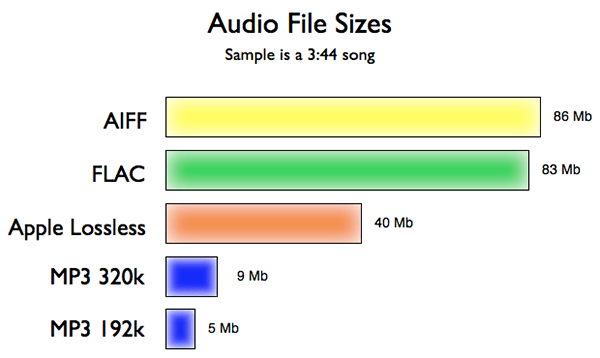
Audio File Sizes
Audio File Sizes

The higher the bitrate, the better the sound quality. Lossless music is the highest sound quality, right? So, let’s start with the sound collection.

【Audio composition】

Nowadays, when we talk about audio, everything is digital audio. Digital audio consists of three parts: sample rate, sample precision, and number of sound channels.

Sample Rate: Both the sample rate, which refers to the number of samples per second when recording the sound, expressed in Hertz (Hz).

Sampling Precision: Refers to the dynamic range of the recorded sound, measured in bits (Bit).

Sound channel: the number of channels (1-8).


In simple terms, we can think of a sound wave as a curve. We know that the curve is made up of points, and the sampling rate is the number of points in the middle of the length per second (the horizontal axis in the figure above). Sampling precision is the number of points in the dynamic range (upper vertical axis). The finer the positioning of these two dimensions, the greater the true sound restoration and the better the sound quality. Of course, the larger the audio file will be. The customer mentioned by the above colleague said that the latest Hi-Res Audio format released by SONY is a 6-channel 192kHz/24-bit recorded audio file. The size of the lossless format, of course, will be more than 200 megabytes.

The sampling frequency is approximately the following depending on the type of use (k is the thousand-bit symbol, 1khz=1000hz):

8khz – used for phones etc, is enough to record human voices.

22.05khz: transmission use frequency.

44.1kb: Audio CD.

48khz: used in DVD and digital TV.

96khz-192khz: used for DVD-Audio, Blu-ray HD, etc.

The common range of sample precision is 8 bits to 32 bits, with 16 bits generally used on CD.

Having said that, my friends are starting to get confused. It’s not the bitrate that determines the sound quality, so why is everyone saying that 320kb sound quality is better than 128kb?