Long-term prediction in AAC and MP3


Free Download Mp4Gain
picture

Long-term prediction in AAC and MP3

Long-term prediction in AAC and MP3

Let’s talk about long-term prediction in AAC and MP3

Long-term prediction in AAC and MP3 is the key to achieving efficient compression without sacrificing audio quality. As someone who has studied this area extensively, I can tell you that understanding how these algorithms work can transform the way we perceive digital audio. Imagine you’re trying to fit all your favorite songs into a small storage space. Long-term prediction helps achieve this by identifying patterns in sound and encoding them more efficiently.

Both AAC and MP3 rely on long-term prediction to optimize compression. By analyzing repetitive audio signals, such as sustained musical notes or rhythmic beats, these codecs predict and encode them efficiently. Think of it as saving space on a bookshelf by stacking similar-sized books together. This concept, though simple in analogy, involves highly sophisticated mathematical modeling in practice.

How long-term prediction works in AAC

In AAC, long-term prediction focuses on analyzing correlations within audio frames over time. Picture a choir singing in harmony; their voices often follow predictable patterns. AAC identifies these patterns, using them to reduce redundant data storage. This technique is especially effective for tonal and harmonic sounds.

AAC employs tools like predictive filters that estimate future audio samples based on past ones. If you’ve ever noticed how your phone predicts the next word when you’re typing, this is a similar idea but applied to audio. By predicting and storing only the differences, AAC achieves higher compression rates. This is why AAC files often sound better than MP3 at similar bitrates.

Long-term prediction in MP3 encoding

MP3 also utilizes long-term prediction, but its approach is slightly less advanced than AAC’s. While MP3’s algorithms identify repetitive audio signals, they lack the precision of AAC in capturing subtle tonal variations. Imagine trying to sketch a landscape using only a few colors; MP3 manages this but sometimes loses finer details.

In MP3, long-term prediction focuses on reducing redundancy in stationary sounds, such as sustained chords. For example, if you’re listening to a classical symphony, MP3 might encode the sustained violin notes by predicting their behavior. This method works well for simpler audio structures but struggles with more complex ones, where AAC excels.

Comparing the efficiency of AAC and MP3

AAC outshines MP3 in terms of long-term prediction efficiency. This difference is evident when you compare the sound quality of a 128 kbps AAC file to that of a 128 kbps MP3 file. AAC delivers a richer and more accurate audio experience. It’s like comparing high-definition video to standard definition; both show the same content, but the former provides much more detail.

AAC’s advantage lies in its use of prediction filters and enhanced psychoacoustic modeling. These tools enable AAC to better handle complex audio textures, such as overlapping voices or intricate instrumental arrangements. MP3, while efficient for its time, often struggles to maintain fidelity in such scenarios.

The role of psychoacoustics in prediction

Psychoacoustics is the science of how we perceive sound, and it plays a crucial role in both AAC and MP3. By understanding what sounds the human ear prioritizes, these codecs optimize what to encode in detail and what to discard. Imagine listening to a band at a concert; your brain naturally focuses on the lead singer’s voice while ignoring background chatter. Psychoacoustic modeling mimics this process.

AAC uses advanced psychoacoustic techniques to complement its long-term prediction, ensuring a more natural listening experience. MP3 also employs psychoacoustics but lacks AAC’s ability to adapt dynamically to complex audio. This difference highlights why AAC is the preferred choice for modern streaming platforms.

Real-life applications of long-term prediction

Long-term prediction isn’t just a theoretical concept; it has practical applications that impact our daily lives. Streaming services like Spotify and Apple Music rely on AAC’s predictive capabilities to deliver high-quality audio while minimizing data usage. If you’ve ever streamed music on a weak internet connection and been amazed by the clarity, you can thank AAC’s long-term prediction for that.

MP3, while less advanced, remains popular for legacy systems and portable devices. Its simplicity and widespread support make it a reliable choice for older hardware, such as car stereos and CD players. Understanding these real-life scenarios helps us appreciate the importance of long-term prediction in digital audio.

Challenges in long-term prediction

Long-term prediction isn’t perfect; it has its limitations. Complex and unpredictable sounds, such as applause or sudden instrument changes, can challenge even the most advanced algorithms. These sounds are like trying to predict a series of random numbers; the lack of pattern makes accurate prediction nearly impossible.

AAC addresses these challenges better than MP3 by using flexible prediction models that adapt to varying audio signals. However, both codecs can struggle with extremely dynamic content, such as live recordings or experimental music. This is an area where future advancements in audio compression could make significant strides.

Future trends in audio compression

The future of long-term prediction in audio compression lies in leveraging machine learning and artificial intelligence. Imagine a codec that learns from your listening habits, optimizing audio quality for your favorite genres. These technologies could revolutionize how we experience digital sound.

While AAC and MP3 have set the foundation, emerging formats like Opus and xHE-AAC are already pushing the boundaries. These codecs build on the principles of long-term prediction while introducing new methods to handle complex audio. As an expert, I believe we are on the cusp of a new era in audio technology.

Latest words on long-term prediction in AAC and MP3

Long-term prediction in AAC and MP3 is a fascinating blend of science and art. By analyzing and predicting audio patterns, these codecs achieve impressive compression rates while maintaining quality. From streaming music to preserving cherished recordings, long-term prediction impacts our lives in ways we often take for granted.

For those looking to optimize their audio files, Mp4Gain offers an excellent solution to enhance and normalize sound. By understanding the principles of long-term prediction, we can better appreciate the technology that brings music to our ears.

FAQ about long-term prediction in AAC and MP3

What is long-term prediction in audio compression?

Long-term prediction identifies patterns in audio signals to reduce redundancy and improve compression efficiency.

How does AAC use long-term prediction?

AAC uses predictive filters to estimate future audio samples based on past patterns, ensuring better compression and quality.

What makes AAC more efficient than MP3?

AAC uses advanced prediction and psychoacoustic modeling, offering better handling of complex audio textures than MP3.

Why is long-term prediction important?

It enables efficient audio compression by reducing redundant data while preserving quality, saving storage space.

Can MP3 handle complex audio well?

MP3 can struggle with complex audio due to its less advanced prediction models compared to AAC.

What is psychoacoustics in audio codecs?

Psychoacoustics studies sound perception, helping codecs focus on encoding sounds the human ear prioritizes.

Are there limitations to long-term prediction?

Yes, unpredictable sounds like applause can challenge prediction models, causing less efficient compression.

What future technologies could improve long-term prediction?

Machine learning and AI could enhance prediction models, adapting dynamically to complex audio signals.

Why is AAC preferred for streaming?

AAC offers superior compression and sound quality, making it ideal for delivering clear audio on streaming platforms.

Comments:

I had no idea long-term prediction made such a big difference in audio quality. Really insightful article!

Great breakdown! I always wondered why AAC sounded better than MP3 at lower bitrates.

Can you go deeper into how psychoacoustics works in AAC? This is fascinating but I want more details!

This article answered so many of my questions about audio codecs. Keep up the great work!

Wow, I finally understand why streaming sounds so good even on slow internet. Thanks for explaining!

Interesting stuff, but I’d love to see a comparison chart between AAC, MP3, and other codecs.

Man, this is the clearest explanation of audio compression I’ve ever read. Thanks for making it simple!


Free Download Mp4Gain
picture


Mp4Gain Main Window
picture


Mp4Gain Features
picture


Free Download Mp4Gain
picture

Comparison of AAC and MP3 compression

Comparison of AAC and MP3 Compression

Comparison of AAC and MP3 compression

Let’s talk about AAC and MP3 compression

When I first began exploring audio compression, the difference between AAC and MP3 stood out as crucial. Both are popular, but AAC often feels like the more efficient option. It’s like comparing an old-school flip phone to a modern smartphone—they both work, but one offers so much more with the same resources. AAC provides higher sound quality at similar bitrates, which makes it a favorite for streaming services and high-quality playback.

MP3, however, has been around longer and is compatible with virtually every device. I’ve used MP3 files on ancient MP3 players that AAC wouldn’t even recognize. But as audio technology evolves, AAC is becoming the go-to choice for those who value efficiency and superior sound.

How does audio compression work?

Compression works by removing parts of the audio that most people won’t notice. Imagine you’re cleaning out your closet—you toss items you haven’t used in years, freeing up space without really losing anything important. That’s essentially what AAC and MP3 do with audio data. They strip out redundant or less noticeable sounds to shrink the file size.

MP3 uses an older algorithm, which means it’s like using a blunt tool. AAC, on the other hand, employs advanced techniques to preserve more detail. When I listen to an AAC file, I often catch subtle nuances like soft background harmonies that might disappear in an MP3 version.

Sound quality differences between AAC and MP3

When I compare AAC and MP3 at the same bitrate, AAC consistently sounds better. For example, at 128 kbps, AAC audio feels fuller and richer, while MP3 can sound flat or distorted. It’s like the difference between watching a high-definition video and a blurry old VHS tape—both convey the same message, but one does it with far more clarity.

In real-life situations, like playing music in my car or through my phone’s speakers, AAC handles compression artifacts better. MP3 files often introduce a noticeable hiss or clipping in quieter passages, which can be distracting if you’re a music enthusiast like me.

Device compatibility and support

MP3 wins when it comes to compatibility. It’s the universal format that works on everything from 90s-era CD players to modern smartphones. I’ve even found old alarm clocks with MP3 support. AAC, however, isn’t always as widely supported, especially on older hardware.

That said, most newer devices and platforms, like iPhones, Android phones, and streaming services like Spotify, fully support AAC. If you’re living in the modern tech world, AAC compatibility likely won’t be an issue.

Bitrate efficiency: AAC vs. MP3

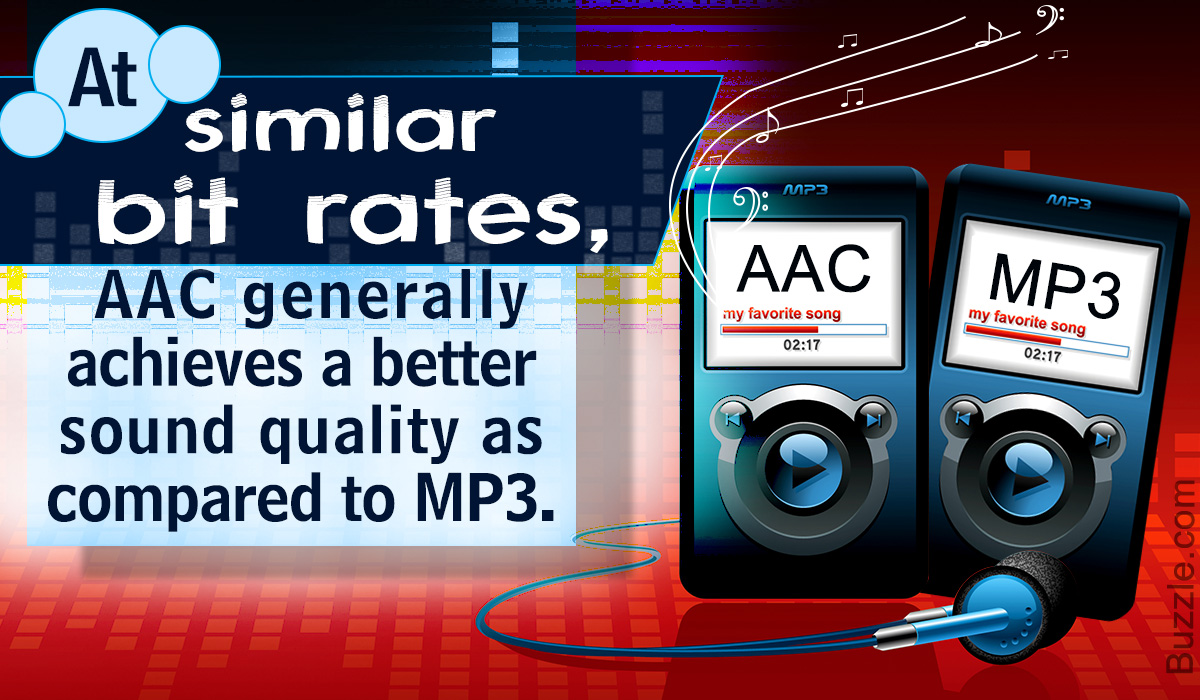
AAC is more efficient than MP3 at delivering high-quality audio at lower bitrates. Think of it like a fuel-efficient car—AAC gets more “miles per gallon.” At 96 kbps, AAC can sound as good as or better than MP3 at 128 kbps. This is why streaming platforms and digital radio stations prefer AAC; it saves bandwidth while maintaining quality.

I’ve tested this myself by converting the same song into both formats at different bitrates. AAC consistently performed better, preserving details like crisp vocals and dynamic bass lines that MP3 often muddled.

Use cases for AAC and MP3

Both formats have their ideal use cases. MP3 is perfect for older devices or situations where compatibility is critical. For instance, I still use MP3 for transferring music to a friend’s vintage MP3 player or for simple tasks like ringtones.

AAC shines in modern applications, particularly streaming. Apple Music and YouTube use AAC to deliver high-quality audio efficiently. It’s also great for personal libraries if you prioritize quality over universal compatibility.

  • MP3: Best for older hardware and universal compatibility.
  • AAC: Ideal for streaming, modern devices, and high-quality playback.

File size comparison

When I tested file sizes, AAC files were generally smaller than MP3 files at the same perceived quality level. For example, a three-minute song at 128 kbps might take up 3 MB as an MP3 but only 2.5 MB as AAC. Over a large library, this adds up to significant space savings.

It’s like packing a suitcase—AAC is the expert packer who fits everything neatly, while MP3 takes up more room with less care for efficiency.

Encoding speed and performance

Encoding AAC files tends to be slightly slower than MP3 because of its more advanced algorithm. However, in real-world use, this difference is negligible unless you’re encoding hundreds of files at once. I’ve converted albums into both formats, and while AAC took a bit longer, the improved quality made the wait worthwhile.

Which format is better for streaming?

Streaming platforms almost universally prefer AAC. Its efficiency means smoother playback with less buffering, even on slower internet connections. I’ve noticed that AAC streams maintain consistent quality, while MP3 streams can dip or distort under the same conditions.

For streaming, AAC also supports features like HE-AAC, which optimizes audio even further for low-bandwidth scenarios. It’s why platforms like Netflix and YouTube rely on AAC for their audio streams.

Latest words on AAC and MP3 compression

If you’re deciding between AAC and MP3, consider your needs. AAC offers better quality at smaller file sizes and is perfect for modern devices and streaming. MP3, while older, remains reliable and universally compatible. Personally, I’ve transitioned most of my library to AAC, as it delivers superior sound for my listening setup.

For those looking to manage and optimize audio files, tools like Mp4Gain can help you analyze and convert formats efficiently. It’s an excellent way to ensure your files are ready for any playback scenario.

FAQ

Which format offers better audio quality, AAC or MP3?

AAC typically offers better audio quality than MP3 at the same bitrate, delivering richer and clearer sound.

Is AAC better than MP3 for streaming?

Yes, AAC is more efficient and widely used for streaming due to its ability to deliver high-quality audio at lower bitrates.

Can all devices play AAC files?

Most modern devices support AAC, but older hardware might only recognize MP3 files.

Why is AAC more efficient than MP3?

AAC uses advanced compression techniques to retain more audio detail at lower bitrates compared to MP3.

Comments:

Wow, I didn’t know AAC could save that much space without sacrificing quality. Thanks for the detailed comparison!

I’ve always used MP3 for compatibility, but maybe it’s time to switch to AAC for my streaming playlists. Good info here.

Can you explain more about HE-AAC? I feel like it wasn’t covered enough in the article. Thanks in advance!

Great article! I’ve been debating which format to use for my music library. This helped a lot.

I tried converting some MP3 files to AAC, but they didn’t sound much better. Is that normal?


MP3 vs. AAC

MP3 vs. AAC: Audio Quality Comparison

MP3 vs. AAC
MP3 vs. AAC
MP3 vs. AAC
MP3 vs. AAC

MP3 Audio Compression

MP3, or MPEG Audio Layer-3, is a widely-used audio format known for its efficient compression. It uses perceptual coding techniques to discard certain audio frequencies that are less perceptible to the human ear. This compression allows for smaller file sizes while maintaining an acceptable level of audio quality.

AAC Audio Codec

AAC, or Advanced Audio Coding, is a successor to MP3 and offers improved audio quality at similar bitrates. AAC utilizes more advanced compression algorithms, including perceptual noise shaping and temporal noise shaping, resulting in better sound reproduction and higher fidelity compared to MP3.

Differences in Audio Quality

When comparing MP3 and AAC in terms of audio quality, there are several factors to consider. AAC generally provides better sound quality than MP3 at similar bitrates. This is because AAC is capable of preserving more audio details and nuances, resulting in a more accurate reproduction of the original sound.

Bitrate Efficiency

One advantage of MP3 over AAC is its superior bitrate efficiency. MP3 achieves good audio quality while keeping file sizes relatively small. This makes it suitable for applications with limited storage or low bandwidth, such as online music streaming or portable audio players.

Transparent Compression

AAC is often considered a “transparent” audio codec, meaning it can achieve audio quality indistinguishable from the original source, even at lower bitrates. This makes AAC a preferred choice for high-quality audio applications, such as digital music distribution and professional audio production.

Compatibility and Support

MP3 enjoys broad compatibility across various devices and platforms due to its widespread adoption. It is supported by virtually all audio players, software, and hardware devices. AAC, on the other hand, may require specific codecs or software support, although it has gained significant popularity and compatibility in recent years.

Application Considerations

Choosing between MP3 and AAC depends on the specific application and user preferences. If file size and compatibility are the primary concerns, MP3 may be the preferred choice. However, for applications where audio quality is paramount, such as music production or high-fidelity audio playback, AAC offers a superior option.

Transcoding and Conversion

Transcoding or converting audio files from one format to another may result in some loss of audio quality. If transcoding from MP3 to AAC, the original MP3 compression artifacts may be retained or exacerbated. It is generally recommended to use the highest-quality source file available to maintain audio fidelity.

Subjective Listening Tests

Subjective listening tests involving trained listeners have consistently shown that AAC often provides better audio quality compared to MP3 at similar bitrates. However, individual preferences can vary, and some listeners may not perceive significant differences between the two formats in certain scenarios.

Choosing the Right Format

Ultimately, the choice between MP3 and AAC depends on factors such as the intended use, available storage or bandwidth, desired audio quality, and compatibility requirements. Evaluating these factors and conducting listening tests can help determine the most suitable audio format for a specific application or use case.

Optimizing Audio Quality

To optimize audio quality, it is important to consider not only the choice of audio format but also factors such as the source recording quality, mastering techniques, and the playback equipment used. Additionally, using higher bitrates

AAC improvements over MP3

Advanced Audio Coding is designed to be the successor to MPEG-1 Audio Layer 3, known as MP3 format, which was specified by ISO / IEC at 11172-3 (MPEG-1 Audio) and 13818-3 (MPEG-2 Audio).

AAC

Blind tests in the late 1990s showed that AAC demonstrated higher sound quality and transparency than MP3 for files encoded with the same bitrate.

The improvements include:

higher sampling frequencies (8-96 kHz) than MP3 format (16 to 48 kHz);
up to 48 channels (MP3 supports up to two channels in MPEG-1 mode and up to 5.1 channels in MPEG-2 mode);
Arbitrary bit rates and variable frame length. Standardized constant bit rate with bit deposit);
higher efficiency and simpler filter bank (instead of hybrid MP3 encoding, AAC uses pure MDCT);
higher coding efficiency for stationary signals (AAC uses a block size of 1024 or 960 samples, allowing more efficient coding of sample blocks than MP3 576);

Aac Logo Vectors Free Download
higher coding precision for transient signals (AAC uses a block equal to 128 or 120 samples, allowing more precise coding of blocks of MP3 192 samples);
possibility of using derivatives of the Kaiser-Bessel window function to eliminate spectral dispersion at the expense of enlarging the main lobe;
much better management of audio frequencies above 16 kHz;
more flexible joint stereo (different methods can be used in different frequency ranges);
additional modules (tools) added to increase compression efficiency: TNS, Back Prediction, PNS, etc. These modules can be combined to form different encoding profiles.
In general, the AAC format allows developers more flexibility in codec design than MP3 and corrects many of the design choices made in the original MPEG-1 audio specification. This increased flexibility often leads to multiple simultaneous encoding strategies and consequently more efficient compression. However, in terms of whether AAC is better than MP3, the advantages of AAC are not entirely conclusive, and the MP3 specification, while dated, has proven surprisingly robust despite notable flaws. AAC and HE-AAC are better than MP3 at low bit rates (typically less than 128 kilobits per second). This is especially true at very low bit rates where superior stereo, pure MDCT encoding, and better transform window sizes let MP3 compete.

While the MP3 format has almost universal hardware and software support, mainly because MP3 was the format of choice during the crucial early years of music sharing / distribution over the Internet, AAC is a strong competitor due to some unwavering support from the industry.

How AAC works

AAC is a wideband audio coding algorithm that takes advantage of two main coding strategies to dramatically reduce the amount of data required to represent high-quality digital audio:

Components of the signals that are perceptually irrelevant are discarded.
Excess in the encoded audio signal is removed.
The actual encoding process consists of the following steps:

The signal is converted from the time domain to the frequency domain using the Forward Modified Discrete Cosine Transform (MDCT). This is done using filter banks that take an adequate number of time samples and convert them to frequency samples.
The signal in the frequency domain is quantized based on a psychoacoustic model and encoded.
Internal error correction codes are added.
The signal is stored or transmitted.
To avoid corrupted samples, a modern implementation of the luhn mod N formula is applied to each frame.
The MPEG-4 audio standard does not define a single or small set of highly efficient compression schemes, but rather a complex set of tools to perform a wide range of bitrate encoding operations, from low speech to audio encoding. high quality and musical synthesis.

The ‘MPEG-4 family audio coding algorithm covers the range from low speech coding bit rate (up to 2 kbit / s) to high quality audio coding (at 64 kbit / s per channel and higher).
AAC offers sample rates between 8 kHz and 96 kHz and any number of channels between 1 and 48.
In contrast to MP3’s hybrid filter bank, AAC uses Modified Discrete Cosine Transform (MDCT) in conjunction with increasing window lengths of 1024 or 960 points.