What is an AAC (Advanced Audio Coding) file?

AAC (Advanced Audio Coding) file is a type of compressed audio file like MP3. It is said that the size can be reduced to about 1/20 that of an uncompressed file while maintaining the audible sound quality of a music CD.

The AAC format is classified into several types such as LC-AAC and HE-AAC according to their specifications and functions, but it seems that there are few situations in which it is necessary to distinguish between them when using them.
AAC Features
Compression performance
AAC can reduce file size compared to uncompressed audio files. However, the sound before compression cannot be fully reproduced (lossy compression). It also supports CBR and VBR (for details, see What’s the difference between CBR / VBR / ABR in audio / video conversion?).
The unique characteristics of the AAC format include support for sample rates up to 96 kHz and support for up to
48 channels.
Comparison with MP3
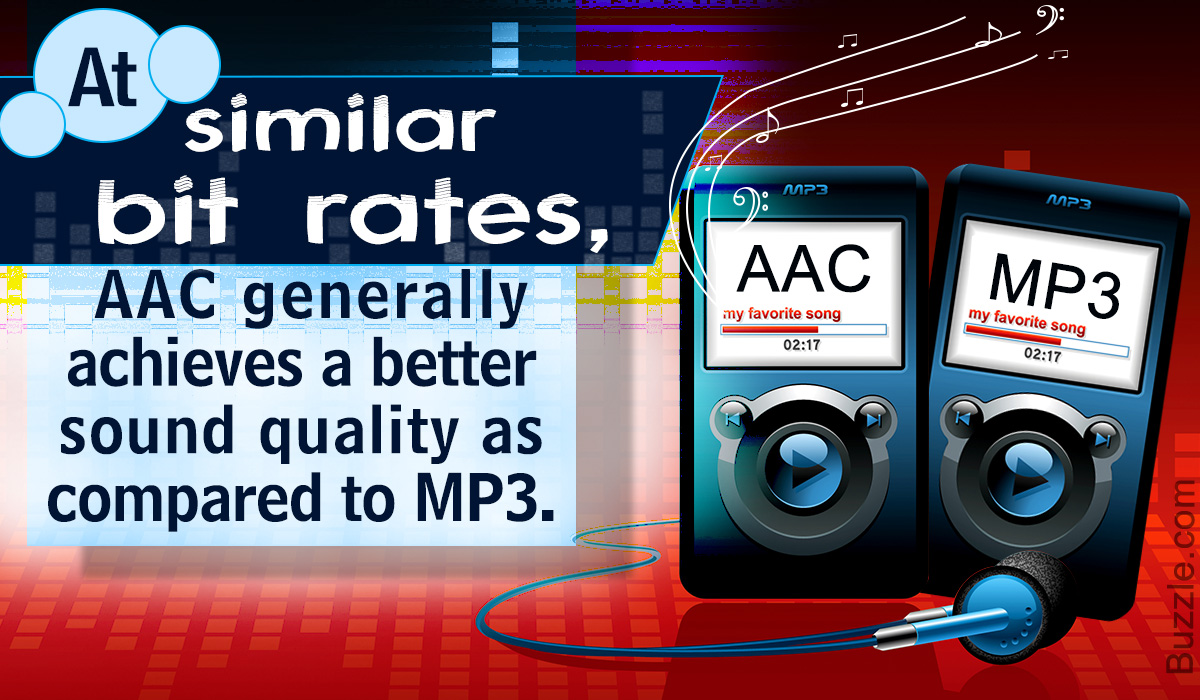
AAC has better compression performance than MP3. When the bit rate is the same, AAC is said to have better audible sound quality. Another way of looking at it is that AAC can reduce the file size if the audible sound quality is the same. This aspect is also one of the reasons why it is attracting attention as an alternative format to MP3.
Compatible portable player
The AAC format has started to be adopted by many portable music players such as the Apple iPod and the SIREN DP350.
It can also be played on Sony mobile game consoles and PSPs. In addition, the AAC format is also used in “Chaku-Uta Full” for mobile phones, and it is attracting a lot of attention as an audio compression format to replace MP3. Recently, it can also be played on the Nintendo DS, and the amount of hardware adopted is increasing one after another.
Other lossy compression formats
Lossy compression formats other than AAC include:
MP3 (MPEG 1 Audio Layer 3)
Ogg (Ogg Vorbis)
WMA (Windows Media Audio)
ATRAC (TRansform Adaptive Acoustic Coding)