Psychoacoustic Models in MP3 and AAC Encoding


Free Download Mp4Gain
picture

Psychoacoustic Models in MP3 and AAC Encoding

Psychoacoustic Models in MP3 and AAC Encoding

Let’s talk about Psychoacoustic Models in MP3 and AAC Encoding

When it comes to digital audio compression, especially in MP3 and AAC formats, psychoacoustic models are the secret sauce that makes it all work. These models allow us to shrink large audio files into much smaller sizes without a noticeable loss in sound quality. In my years of working with audio encoding, I’ve seen how these models have revolutionized the way we perceive sound after compression. The core idea is simple: we don’t hear all sounds equally. Some frequencies and nuances are more noticeable than others, and psychoacoustic models exploit this fact to make compression more efficient.

Think of it like this: imagine you’re at a concert, and a loud bass guitar is playing alongside a softer violin. Your attention is drawn to the bass because it’s much louder, and the violin’s subtle details get masked. This is exactly what psychoacoustic models do—they remove or reduce sounds that are unlikely to be heard due to masking effects. In this article, I’ll walk you through how psychoacoustic models in MP3 and AAC encoding work and why they matter for audio quality and file size.

Understanding the Basics of Psychoacoustic Models

Psychoacoustic models are based on the science of how our ears and brain perceive sound. They take into account how different sounds mask each other, which frequencies we are most sensitive to, and how we interpret sound in different contexts. MP3 and AAC encoding use these models to compress audio by identifying and removing information that won’t be noticeable to the listener.

A simple analogy would be taking a photograph with a high-resolution camera and then reducing its size by removing some pixels. You won’t notice much difference in the quality of the image because you can’t see all the pixels. Similarly, these audio encoders remove frequencies or audio details that the human ear won’t detect, making the audio file smaller without compromising its perceived quality.

Frequency Masking

  • Frequency masking happens when a louder sound in one frequency range makes a softer sound in a nearby frequency range inaudible.
  • Psychoacoustic models use this to discard or reduce the quieter, masked sounds, optimizing compression.
  • For example, if a heavy guitar is playing at a loud volume, the model might remove the higher-pitched background notes that are masked by the louder guitar.

Temporal Masking

  • Temporal masking occurs when one sound, like a sharp drum hit, can mask a quieter sound that occurs immediately after it.
  • This type of masking is crucial for determining which transient sounds can be removed in compression.
  • For instance, a loud snare hit can mask a subtle violin note that comes milliseconds after, making it unnecessary to keep all the data for that note.

The Role of Psychoacoustic Models in MP3 Encoding

In MP3 encoding, psychoacoustic models play a critical role in reducing the file size while maintaining an acceptable level of sound quality. The MP3 codec was one of the first to use psychoacoustic models to exploit human hearing limitations, and it was revolutionary when it was introduced in the 1990s. The encoder divides audio into different frequency bands and applies masking principles to decide which data can be discarded.

What’s fascinating is that MP3 uses a hybrid of time-domain and frequency-domain processing. It first splits the audio into small segments and then performs a frequency analysis. Using this information, the encoder decides which frequencies can be reduced or eliminated entirely. By doing this, the model allows the MP3 format to achieve relatively small file sizes while preserving the overall listening experience.

MP3 and the Trade-off Between Compression and Quality

  • MP3 encoding sacrifices some of the finer audio details to reduce file size.
  • The trade-off is more noticeable at lower bitrates, where artifacts like compression noise or a “tinny” sound may become audible.
  • Higher bitrates, like 192 kbps or 256 kbps, provide better sound quality, though the file size increases.

AAC: The Next Generation of Psychoacoustic Modeling

While MP3 revolutionized audio compression, AAC (Advanced Audio Codec) takes things a step further. As a more advanced codec, AAC uses a refined psychoacoustic model that performs better at lower bitrates, providing higher-quality audio with less data. This is especially important for modern audio streaming services, which need to balance high-quality sound with efficient bandwidth usage.

The AAC psychoacoustic model is more sophisticated, taking into account additional factors like stereo imaging and spatial effects. It’s also more adept at handling complex audio, such as orchestral music or tracks with a wide range of dynamics. From my experience, AAC does a better job than MP3 in preserving the subtleties of sound, especially at lower bitrates, which is why I recommend it over MP3 when available.

Why AAC Outperforms MP3

  • AAC uses more advanced psychoacoustic techniques, making it more efficient at lower bitrates.
  • It better preserves transient sounds and complex audio elements, like the reverberations of a piano or the nuances of a singer’s voice.
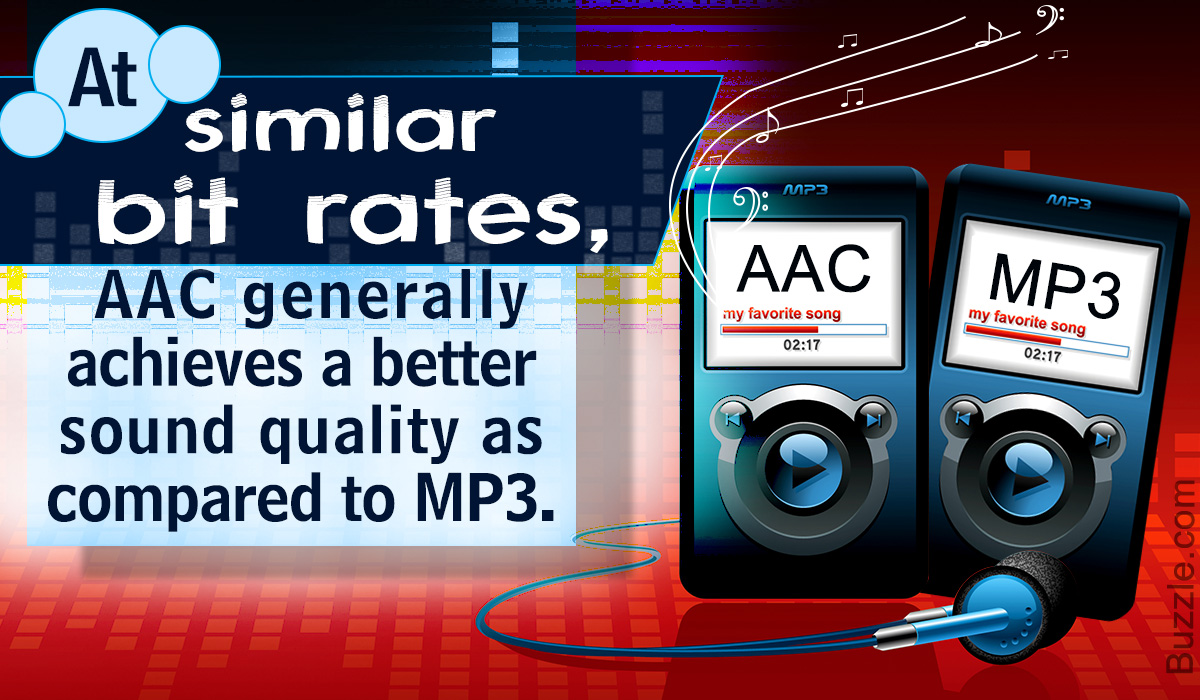
  • With AAC, you can get excellent sound quality at 128 kbps, whereas MP3 may require 192 kbps or higher for a similar result.

How Psychoacoustic Models Help with Audio Quality at Low Bitrates

One of the most remarkable aspects of psychoacoustic models is how they enable high-quality audio at low bitrates. At lower bitrates, many codecs, including MP3 and AAC, might introduce artifacts such as distortion or loss of clarity. However, psychoacoustic models allow the encoder to focus on the most important elements of the sound—those that we are most likely to notice—while discarding the less important parts.

This is especially noticeable in AAC, where the advanced psychoacoustic model ensures that even at low bitrates, the encoding still captures essential auditory information, such as pitch, rhythm, and timbre. I’ve personally found that with AAC, even at 128 kbps, I can enjoy clear vocals and instruments without the harsh artifacts that often accompany MP3 at the same bitrate.

Latest Words on Psychoacoustic Models in MP3 and AAC Encoding

Psychoacoustic models are an integral part of both MP3 and AAC encoding, helping us achieve smaller file sizes while preserving audio quality. These models allow the encoder to reduce the file size by removing sounds that are less perceptible to the human ear, making the audio more efficient without sacrificing what matters most to the listener. While MP3 was groundbreaking in its time, AAC offers superior compression and better handling of complex audio, making it the better choice for modern audio applications.

As I’ve discussed throughout this article, these psychoacoustic models are crucial in ensuring that we can enjoy high-quality audio, even with file sizes that fit comfortably on our devices and bandwidth constraints. Whether you’re listening to your favorite album or streaming a podcast, psychoacoustic models are working behind the scenes to make your audio experience better. As the technology continues to improve, we can only expect even better performance in the future.

Frequently Asked Questions

What are psychoacoustic models in MP3 and AAC encoding?

Psychoacoustic models in MP3 and AAC encoding are based on the way humans perceive sound. These models analyze how different frequencies mask each other, allowing the codecs to remove or reduce the data for sounds that are less noticeable to the human ear. This process helps reduce file size without sacrificing audio quality. Essentially, psychoacoustic models optimize compression by focusing on the most important sounds in an audio file.

How do psychoacoustic models improve audio compression?

Psychoacoustic models improve audio compression by eliminating or reducing sounds that the human ear is less sensitive to. For example, louder sounds can mask softer ones, so the encoder can discard those quieter sounds, saving space without impacting the perceived quality of the audio. This makes it possible to compress audio files into smaller sizes while still delivering high-quality sound, especially in formats like MP3 and AAC.

What is the difference between MP3 and AAC in terms of psychoacoustic models?

The main difference between MP3 and AAC lies in the sophistication of their psychoacoustic models. AAC has a more advanced model that better handles complex audio, such as classical music or tracks with subtle dynamic changes. It also performs better at lower bitrates compared to MP3, providing higher sound quality at the same compression level. In short, AAC offers superior compression efficiency, especially when dealing with modern audio formats and streaming.

Why does AAC sound better than MP3 at lower bitrates?

AAC sounds better than MP3 at lower bitrates because it uses a more efficient psychoacoustic model. The AAC codec is designed to optimize the way it removes or reduces sounds, prioritizing the frequencies that are most important for human perception. This allows it to achieve a better balance between file size and audio quality, especially at bitrates like 128 kbps, where MP3 might begin to show noticeable artifacts.

How does temporal masking affect audio compression?

Temporal masking occurs when a loud sound at one moment in time masks a softer sound that follows it almost immediately. This effect is important for audio compression because it allows the encoder to discard these masked sounds without the listener noticing. This type of masking helps improve compression efficiency, especially in formats like MP3 and AAC, where transient sounds, like a snare hit or cymbal crash, may cover quieter background elements.

Can psychoacoustic models cause distortion in compressed audio?

While psychoacoustic models aim to reduce file size without degrading sound quality, they can sometimes introduce distortion, particularly at lower bitrates. This happens when the codec removes too much data, resulting in noticeable artifacts such as a “tinny” or metallic sound. However, with modern codecs like AAC, these artifacts are much less common, even at lower bitrates, thanks to more advanced psychoacoustic modeling.

Comments:

Wow, I had no idea how much science goes into these audio codecs. Your explanation about frequency and temporal masking really helped me understand why AAC sounds better at lower bitrates. Great article! – AudioFan77

I’ve always been a fan of MP3, but now I’m definitely considering switching to AAC for my music collection. The way you described the differences in psychoacoustic models makes it so much clearer! Thanks! – MusicJunkie88

This article is awesome! The real-life examples helped me visualize how psychoacoustic models work. I never understood how my music could sound so good at a low bitrate, but now I get it. Thanks for the great info! – SoundLover42

Can you talk more about how AAC handles high-frequency sounds compared to MP3? I’d love to know more about that! Great article though, very informative. – HighFreqFan

I didn’t realize how important these psychoacoustic models were in compressing audio. I always wondered how audio streaming services maintain such high-quality sound at lower bitrates. Now I know! – DeeJayDave

This is one of the most detailed articles on this topic I’ve found! I’ve been using AAC for a while now, but this article really made me appreciate how much better it is than MP3, especially for complex audio. – SoundEngineerX

Excellent breakdown of the differences between MP3 and AAC. I always assumed MP3 was “good enough” but now I realize AAC is the better choice, especially for lower bitrates. Thanks for clearing that up! – TechieTom

Great read, but I wish you would’ve gone deeper into how these psychoacoustic models impact the experience for listeners with hearing impairments. Any chance you can dive into that next? – ClearSound76

As a musician, I’ve always been picky about sound quality. After reading this, I’m convinced that AAC is worth the switch for my music files. Thanks for sharing your expertise! – MusicMaker24

I had no idea that psychoacoustic models were so important for compression. I always assumed audio codecs just “squished” the data and that was it! – CuriousGeorge

Very well-written article! I didn’t know much about psychoacoustics before, but now I understand why AAC sounds better at lower bitrates. Thanks for breaking it down so clearly! – TuneInExpert


Free Download Mp4Gain
picture


Mp4Gain Main Window
picture


Mp4Gain Features
picture


Free Download Mp4Gain
picture

Find out in detail what is the MP3 and ACC music format

Find out in detail what is the MP3 and ACC music format

MP3 o AAC

Songs have become part of our daily life and we rarely listen to a single song during our day, during our breaks or in our free time. New music never stops appearing and it is likely that on many occasions we would like to download these songs.

MP3 VS AAC

Many of us listen to hundreds of songs by our favorite bands every day, and we may never really analyze the format of each song in detail. We have heard of the existing formats, but we really do not know the benefits of each of them and their characteristics.

For this reason, Solvetic on this day will analyze in detail the two most common formats at a musical level, such as MP3 and ACC.

What is AAC?

AAC (Advanced Audio Coding) is a new audio format developed by the Fraunhofer Institute in Germany in collaboration with companies such as AT&T, Nokia, Sony and Dolby.

AAC, whose extension is m4a, is responsible for compressing a part of the audio files of an element called lossy compression, that is, some data that affects its optimal quality since inaudible frequencies are removed from the audio element, etc.

This AAC format is based on the international standard ISO / IEC 13818-7 and is basically an extension of MPEG-2. It is important to note that Apple chose AAC as the default format for the iPod and for iTunes, demonstrating its high level of quality.

Among its main characteristics we find:

It uses a bit rate encoding variable called VBR, which adapts the number of bits used in one second to encrypt the audio data.
Supports up to 48 channels for polyphonic sounds
It offers frequencies ranging from 8Hz to 96.0kHz.
They are smaller in MP3 size
AAC focuses on broadband usage
Provide high quality sound
As we can see little by little, AAC is establishing itself as one of the best music formats of the time.

What is MP3

MP3 (Motion Picture Experts Group) is an audio format that delivers quality while drastically reducing file size.

MP3 uses a lossy algorithm with which we can reduce the size of an element without losing its quality. This format, like AAC, was developed at the Fraunhofer Institute in Germany. MP3 has the ability to compress using a lower or higher bit rate, which will affect the sound quality.

Its main characteristics are:

Supports frequencies from 16 to 48 kHz
Allows compression of the audio object with a ratio of 11: 1
With the MP3 format, music is divided 44,100 times per second and each of these parts is 16 bits.
MP3 can contain tags with information about the included file
With these concepts in mind, we will see that AAC and MP3 behave in certain situations.

Audio file size

Both formats perform the function of reducing the size of the original file while maintaining sound quality. At this point AAC reduces the file size more than MP3, for example a 20MB MP3 file will weigh 16MB in AAC format.

compatibility

As we already mentioned, the ACC is being implemented by Apple for its devices, and therefore there is no doubt that the most compatible format is MP3, since since the 90s it has accompanied us on various devices such as cell phones, audio systems, televisions. , team. calculations, etc.

Sound quality

In this regard, AAC surpasses Mp3 for technical reasons such as a higher audio frequency, a higher level of audio compression to eliminate elements that affect its quality, better encoding, among other things.

Next, we will see the relationship between these two audio files:

The death of the MP3 has been mentioned in some places, but this is not really the case where the licenses of this format have stopped being active, so the MP3 will continue to be active in many of the songs we listen to, and there is no doubt that that ACC will gradually gain strength until it surpasses it. MP3 medium term, but for now, AAC users can enjoy and appreciate AAC.

Let’s continue enjoying our favorite songs and remember that the purpose of these files is to offer quality sound in a small storage space.

AAC vs mp3 quality

AAC vs mp3 quality

MP3 vs AAC

Answer 1 :
Q: What is the difference between AAC and MP3?

AAC vs MP3

The other answers here helped to talk about the technical differences between the two lossy compression formats.

I’ll take a different tactic with this answer and explain how they sound different to the ear.

To explain the difference in abbreviated form, at any given bitrate, AAC will sound better in the higher ranges, while MP3 will sound better in the lower ranges.

MP3 compression adds a specific sound to the sound. This is very noticeable at bit rates of 128 kbps and below; everything sounds confusing. At higher bit rates like 256 kbps (where it’s hard to hear) or 320 kbps (where you need high-end hardware to listen to artifacts), MP3 compression is much less of a problem.

AAC compression is much better at high frequencies. “AAC” in AAC is that music sounds weak, especially at low bit rates. If you like music with significant low frequency content (drums, electronic drums, bass, bass, etc.), you will miss some of that bass in AAC files; they just sound like they lack solidity. However, as with MP3, the higher the bit rate, the less problem you will be able to hear.

At any bit rate below 256 kbps, I personally prefer AAC. The lack of solidity in AAC compressed music is less undesirable than in Futz with MP3 compression.

At 320 kbps, these artifacts are very difficult to hear in any compression format, so the fact that MP3 is more compatible in most cases gives this compression algorithm an advantage.

But we also live in today’s world where conventional hard drives have more than 12 terabytes. A completely uncompressed album (that is, AIFF or WAV format) is less than 650 megabytes in size. (** grip calculator **) You can put 18,461 uncompressed WAV or AIFF albums on a 12TB hard drive. So why do we continue to use MP3 and AAC today?

Answer 2:
Both are compressed audio files, and although the audio quality is fairly similar, the AAC format was designed to improve over MP3 in the following ways:

Higher sampling frequency (8 kHz to 96 kHz) than MP3 (16 kHz to 48 kHz)
Up to 48 channels (MP3 supports up to two channels in MPEG-1 mode and up to 5.1 channels in MPEG-2 mode)
Arbitrary bit rates and variable frame length. A constant bit rate standardized with a bit pool.
Higher efficiency and simpler filter bank (uses pure MDCT instead of hybrid MP3 encoding)
Higher encoding efficiency for stationary signals (AAC uses a block size of 1024 or 960 samples, which can be encoded more efficiently than 576 MP3 blocks)
Higher encoding precision for transition signals (AAC uses 128 or 120 sample block size, which provides more precise encoding than 192 MP3 sample blocks)
You can use a Kaiser-Bessel derived window function to eliminate spectral leakage by enlarging the main lobe
Much better handling of audio frequencies above 16 kHz
More flexible articulation stereo (different methods can be used in different frequency ranges)
Add additional modules (tools) to improve compression efficiency: TNS, inverse prediction, PNS, etc. These modules can be combined to create different encoding profiles.

Answer 3:
Both are lossy codecs, aimed at significantly reducing file size without affecting sound quality as much as you might think.

AAC is 2 generations younger than MP3, so by then the algorithms had improved significantly, and most tests confirmed that 256 kbps AAC sounds just as good, if not better than 320 kbps MP3, which is why Apple chose this file format for iTunes.

AAC supports higher sample rates than MP3, although I’ve recently seen some weird MP3 implementations (incompatible with just about everything) that do this too.

After all, storage and internet speed are not an issue, lossy compression should be gone by now in favor of FLAC or ALAC. It seems that some bad habits are very difficult to break. 🙂

Answer 4:
AAC stands for Advanced Audio Coding. It was developed by the same people who invented MP3 and is destined to be its successor. Audio in AAC is better than MP3 in almost all cases.

It is more efficient than MP3 in terms of file size precision (bit rate). In other words, an AAC encoded song will sound as good or better than an MP3 encoded with the same bit rate. Therefore, encoding a file at 256 kbps AAC will give you better sound and smaller file size than MP3 at 320 kbps.

AAC vs MP3: which one sounds better?

AAC vs MP3: which one sounds better?

AAC Vs. MP3

AAC and MP3 are now widespread and established in the hardware and software markets. AAC is often touted as the successor to MP3. But is the successor really better? We tell you who sounds better and why.

MP3 to AAC

What are AAC and MP3?

You are probably familiar with AAC and MP3 from your music downloads, audiobooks and audio software for ripping audio CDs or compressing WAV or AIFF files.
Both formats are lossy audio codecs. In a special practical tip, we will explain what exactly a codec is.
Sound in AAC format is often hidden behind M4A and MP4 file extensions.
In a practical advice we explain in detail the differences between MP3 and MP4.
MP3 and AAC are both based on psychoacoustic models of loudness and masking that were developed in the 1960s by Eberhard Zwicker, for example.
Although there are newer and more precise models, the innovations since MP3 mainly reside in more sophisticated signal processing.

AAC vs. MP3: which one sounds better?

AAC is newer than MP3. Does newer mean better? At least the AAC innovations compared to MP3 have the potential for significantly stronger compression with the same sound quality or, conversely, significantly better sound quality with the same compression:
As described above, both codecs are based on practically the same psychoacoustic models.
However, AAC allows more flexible window sizes to better react to transient or stationary signals, depending on the signal.

Unlike MP3, AAC also offers more flexible windows. Used sensibly, this can improve frequency accuracy in applied spectrum analysis.
AAC also allows for frequency-dependent stereo ensemble. This can save quite a bit of storage space with little effort, as the low frequencies in audiobooks, music, and movie sound are often kept mono.
Since AAC offers significantly more flexibility on the encoder side, even a good MP3 encoder cannot keep up with a good AAC encoder.

On the other hand, a poorly conceived AAC encoder can also sound significantly worse than an MP3 of the same size. If you encode an MP3 optimally, the result can compete with many AAC encoders.

However, in our 2003 audio encoder quality comparison test, AAC wins, followed by Warning, OGG over MP3.
Also in our 2005 AAC encoder audio codec test from Nero also wins.
AAC is also more flexible than MP3 for the user. For example, AAC supports sample rates from 8 to 96 kHz, MP3 only from 16 to 48 kHz. If you go for 96 kHz music DVDs, even the highest quality MP3 won’t give you a good sample rate.
AAC also supports up to 48 channels, MP3 only 5.1. In AAC, in theory, it could also encode audio material for 7.1 sound, high-order ambisonics, Dolby Atmos, and Auro-3D.

By the way, there is an important rule to keep in mind: converting an MP3 to AAC or vice versa is quite detrimental to the audio quality. You should only convert for compatibility reasons, if, for example, your portable MP3 player does not support the AAC format.

AAC improvements over MP3

Advanced Audio Coding is designed to be the successor to MPEG-1 Audio Layer 3, known as MP3 format, which was specified by ISO / IEC at 11172-3 (MPEG-1 Audio) and 13818-3 (MPEG-2 Audio).

AAC

Blind tests in the late 1990s showed that AAC demonstrated higher sound quality and transparency than MP3 for files encoded with the same bitrate.

The improvements include:

higher sampling frequencies (8-96 kHz) than MP3 format (16 to 48 kHz);
up to 48 channels (MP3 supports up to two channels in MPEG-1 mode and up to 5.1 channels in MPEG-2 mode);
Arbitrary bit rates and variable frame length. Standardized constant bit rate with bit deposit);
higher efficiency and simpler filter bank (instead of hybrid MP3 encoding, AAC uses pure MDCT);
higher coding efficiency for stationary signals (AAC uses a block size of 1024 or 960 samples, allowing more efficient coding of sample blocks than MP3 576);

Aac Logo Vectors Free Download
higher coding precision for transient signals (AAC uses a block equal to 128 or 120 samples, allowing more precise coding of blocks of MP3 192 samples);
possibility of using derivatives of the Kaiser-Bessel window function to eliminate spectral dispersion at the expense of enlarging the main lobe;
much better management of audio frequencies above 16 kHz;
more flexible joint stereo (different methods can be used in different frequency ranges);
additional modules (tools) added to increase compression efficiency: TNS, Back Prediction, PNS, etc. These modules can be combined to form different encoding profiles.
In general, the AAC format allows developers more flexibility in codec design than MP3 and corrects many of the design choices made in the original MPEG-1 audio specification. This increased flexibility often leads to multiple simultaneous encoding strategies and consequently more efficient compression. However, in terms of whether AAC is better than MP3, the advantages of AAC are not entirely conclusive, and the MP3 specification, while dated, has proven surprisingly robust despite notable flaws. AAC and HE-AAC are better than MP3 at low bit rates (typically less than 128 kilobits per second). This is especially true at very low bit rates where superior stereo, pure MDCT encoding, and better transform window sizes let MP3 compete.

While the MP3 format has almost universal hardware and software support, mainly because MP3 was the format of choice during the crucial early years of music sharing / distribution over the Internet, AAC is a strong competitor due to some unwavering support from the industry.

How AAC works

AAC is a wideband audio coding algorithm that takes advantage of two main coding strategies to dramatically reduce the amount of data required to represent high-quality digital audio:

Components of the signals that are perceptually irrelevant are discarded.
Excess in the encoded audio signal is removed.
The actual encoding process consists of the following steps:

The signal is converted from the time domain to the frequency domain using the Forward Modified Discrete Cosine Transform (MDCT). This is done using filter banks that take an adequate number of time samples and convert them to frequency samples.
The signal in the frequency domain is quantized based on a psychoacoustic model and encoded.
Internal error correction codes are added.
The signal is stored or transmitted.
To avoid corrupted samples, a modern implementation of the luhn mod N formula is applied to each frame.
The MPEG-4 audio standard does not define a single or small set of highly efficient compression schemes, but rather a complex set of tools to perform a wide range of bitrate encoding operations, from low speech to audio encoding. high quality and musical synthesis.

The ‘MPEG-4 family audio coding algorithm covers the range from low speech coding bit rate (up to 2 kbit / s) to high quality audio coding (at 64 kbit / s per channel and higher).
AAC offers sample rates between 8 kHz and 96 kHz and any number of channels between 1 and 48.
In contrast to MP3’s hybrid filter bank, AAC uses Modified Discrete Cosine Transform (MDCT) in conjunction with increasing window lengths of 1024 or 960 points.