Psychoacoustic Threshold Estimation in MP3


Free Download Mp4Gain
picture

Psychoacoustic Threshold Estimation in MP3

Psychoacoustic Threshold Estimation in MP3

Let’s talk about Psychoacoustic Threshold Estimation in MP3

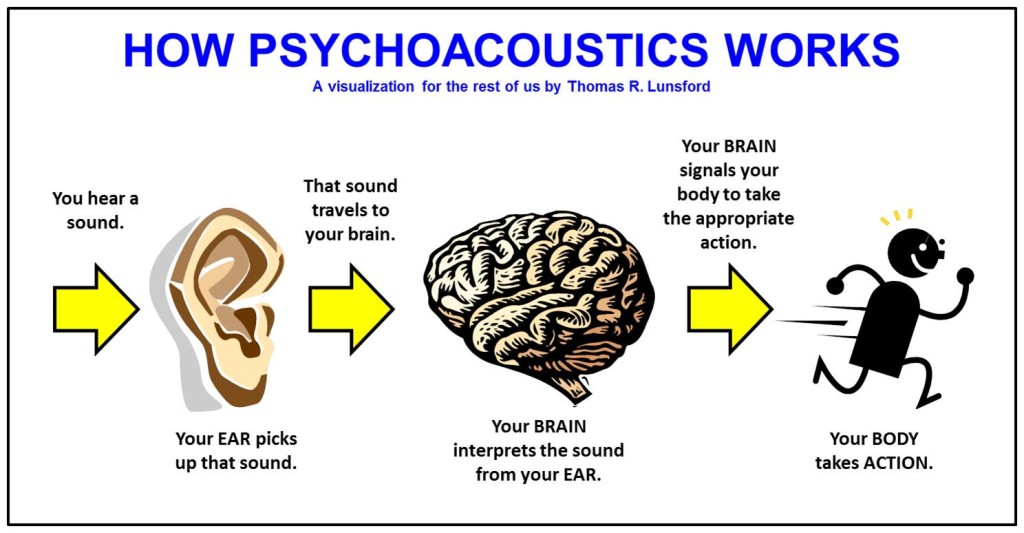
Psychoacoustic threshold estimation in MP3 encoding is a crucial element for efficient compression. In my experience, this process plays a significant role in how audio is perceived by listeners after compression. It’s based on the principles of psychoacoustics, which examine how humans perceive sound. Essentially, psychoacoustic models allow MP3 encoding to remove parts of the audio that are inaudible to the human ear, making the file size smaller without compromising perceived quality. To understand it better, think of how you might ignore background noise when focusing on a conversation in a crowded room. Similarly, MP3 compression removes sounds that would not be heard by a listener under normal conditions.

In MP3 encoding, threshold estimation is done by analyzing the signal’s frequency spectrum. The human ear is more sensitive to certain frequencies and less sensitive to others. By determining which parts of the audio are inaudible based on these sensitivities, MP3 compression algorithms can selectively remove these frequencies. The result is a compressed file that maintains the most important parts of the sound while discarding unnecessary details.

The Role of Psychoacoustics in MP3 Compression

When discussing MP3 compression, psychoacoustics comes into play to ensure the best balance between sound quality and file size. It’s as though I’m packing a suitcase for a trip—choosing the essentials and leaving behind the non-essentials. In MP3 encoding, psychoacoustic models aim to identify which audio frequencies are masked by others, allowing them to be discarded without a noticeable loss in quality.

These psychoacoustic models use data about human hearing perception. For instance, our ears are more sensitive to mid-range frequencies than to low or high frequencies. When encoding an MP3, the algorithm uses this knowledge to reduce the representation of low and high frequencies, especially if they are masked by louder sounds in the mid-range. This approach reduces the file size, making it more efficient while maintaining an acceptable sound quality.

Psychoacoustic Models: Key Techniques for Estimation

Psychoacoustic models are essential for estimating thresholds in MP3 encoding. The two main models used in MP3 compression are the MPEG-1 Layer III and the more complex MPEG-2 Layer III. These models implement specific techniques to determine which parts of the audio signal can be discarded without affecting the perceived quality.

  • Critical Bands: The human ear perceives sounds in frequency groups called critical bands. Each critical band includes frequencies that are close enough together that they affect each other’s perception. When encoding, psychoacoustic models assess these bands and eliminate those that won’t affect the listener’s experience.
  • Masking Effect: This is a phenomenon where a louder sound makes it difficult to hear a quieter sound. The MP3 encoder uses this principle to discard sounds masked by others, reducing the file size.
  • Threshold of Hearing: The threshold of hearing refers to the quietest sound that the average human ear can detect. Sounds below this threshold are effectively inaudible and can be removed during encoding.

Practical Example: How Psychoacoustic Threshold Estimation Works

Imagine you’re listening to your favorite song on your smartphone. The song is compressed into an MP3 file, but somehow it still sounds amazing. What’s happening behind the scenes is the psychoacoustic threshold estimation. For example, if you’re listening to a powerful guitar solo, the MP3 algorithm may eliminate some of the higher frequencies from the background sounds like drums or cymbals that are masked by the louder guitar notes.

From my experience, it’s much like watching a movie with a powerful soundtrack. When the action is intense, the quieter background sounds fade into the background. The MP3 encoder mimics this behavior, focusing on what’s essential to the listener’s perception of the music and discarding less important details. It’s a brilliant way to optimize audio files while preserving the listening experience.

The Benefits of Psychoacoustic Threshold Estimation in MP3

The main benefit of psychoacoustic threshold estimation is the reduction in file size. The more efficient the compression, the smaller the file size, which makes it easier to store and stream audio. This is particularly crucial in a world where bandwidth is often limited, and storage space can be at a premium.

Another benefit is the preservation of sound quality. As an audio professional, I’ve found that effective psychoacoustic modeling ensures that what’s important to the listener remains intact. The algorithm removes what isn’t necessary, but it does so without compromising the overall experience. For example, it’s as if you’re cleaning up a painting by removing minor smudges that no one would notice anyway. The final image (or audio) still looks great but is lighter.

Latest Words on Psychoacoustic Threshold Estimation in MP3

Psychoacoustic threshold estimation is an essential process for MP3 compression. It ensures that audio files are as small as possible while maintaining the best possible quality. From my expertise, understanding psychoacoustics is key to understanding how modern audio compression works. These methods allow for the efficient storage of high-quality sound without sacrificing too much bandwidth or space.

At the end of the day, MP3 encoding wouldn’t be nearly as efficient or effective without psychoacoustic threshold estimation. It’s a fascinating blend of human perception and technology that allows us to enjoy high-quality audio in a convenient format. In cases where precise audio management is critical, using specialized software can further enhance the quality of the compressed file, and Mp4Gain offers a reliable option in this area.

What is psychoacoustic threshold estimation in MP3 encoding?

Psychoacoustic threshold estimation in MP3 encoding is the process of determining which parts of an audio signal are inaudible to the human ear and can be discarded to reduce file size without affecting perceived sound quality.

How does psychoacoustic modeling affect MP3 compression?

Psychoacoustic modeling reduces MP3 file sizes by removing audio frequencies that are masked by louder sounds, ensuring only the most essential elements of the sound are preserved for optimal listening quality.

What is the masking effect in psychoacoustics?

The masking effect is when louder sounds make it difficult to hear quieter ones. MP3 encoders exploit this effect to remove inaudible sounds, making the file more efficient without sacrificing quality.

Why are some frequencies removed in MP3 compression?

Some frequencies are removed in MP3 compression because they are outside the human ear’s sensitivity range or are masked by louder sounds, making them unnecessary for a high-quality listening experience.

How do critical bands influence MP3 encoding?

Critical bands are frequency ranges that the human ear perceives as a group. MP3 encoders use this information to determine which sounds in a frequency band are crucial and which can be discarded without affecting quality.

What are the benefits of psychoacoustic threshold estimation for MP3 files?

The main benefit of psychoacoustic threshold estimation is reduced file size while maintaining sound quality. This is particularly important for efficient storage and streaming of audio files.

How does psychoacoustic modeling enhance listening experience?

Psychoacoustic modeling enhances the listening experience by focusing on the most important frequencies and discarding unnecessary ones, resulting in a clear, high-quality sound that doesn’t take up much storage space.

What is the threshold of hearing in psychoacoustics?

The threshold of hearing refers to the faintest sound that can be perceived by the average human ear. Sounds below this threshold are removed during MP3 encoding because they are inaudible.

How does psychoacoustic threshold estimation improve MP3 file size efficiency?

Psychoacoustic threshold estimation improves MP3 file size efficiency by removing audio frequencies that would go unnoticed by the listener, making the file smaller without sacrificing quality.

Comments:

I’ve always been amazed by how much smaller MP3 files are compared to other formats. This article really breaks down why that is so clearly! The psychoacoustic principles are fascinating.

– AudioFan99

Really interesting read! I never realized that so much of the sound is actually removed when encoding an MP3. This helps explain why high-quality audio formats like FLAC sound so much better.

– MusicLover123

I had no idea that psychoacoustic models played such a big role in MP3 quality. I wonder how much it varies across different types of audio, like classical versus rock music.

– CuriousJoe

Great explanation! Would love to know more about how these models evolve over time and how they’ve impacted newer audio formats.

– SoundGeek2024

I’ve been looking for a deeper dive into how MP3 compression works, and this article really filled in the gaps. So cool to see the science behind it!

– TechieGuy


Free Download Mp4Gain
picture


Mp4Gain Main Window
picture


Mp4Gain Features
picture


Free Download Mp4Gain
picture

Quantization Noise in MP3 Compression

Quantization Noise in MP3 Compression

Quantization Noise in MP3 Compression

Let’s talk about Quantization Noise in MP3 Compression

When I first delved into MP3 compression, the term “quantization noise” fascinated me. Imagine packing a suitcase for a long trip but only being allowed to take half your belongings. Quantization noise is the audio equivalent of the compromises you make. In MP3 compression, it’s the unintended artifact introduced when we reduce the precision of sound data to achieve smaller file sizes. This process happens during audio quantization, which determines how audio signals are represented as digital values.

Quantization noise results from rounding or truncating these values, effectively discarding some audio information. The key is ensuring that the noise introduced is less noticeable to human ears. Over my years of studying audio technology, I’ve seen how clever psychoacoustic models in MP3 compression manage this. By focusing on what we *don’t* hear, compression algorithms minimize perceived noise.

Understanding How Quantization Works

Quantization in MP3 compression is a simplification process. Think of it like converting a high-definition photograph into a pixelated image. Each color pixel represents a range of original tones, just as audio quantization maps a range of sound amplitudes into discrete levels. But instead of affecting our eyes, it affects our ears.

To make this efficient, MP3 uses variable quantization levels across frequency bands. Higher precision is reserved for frequencies more noticeable to humans, while less critical bands are treated with coarser quantization. It’s like putting more effort into cooking a main course than a side dish—you focus resources where they matter most.

The Role of Psychoacoustics in Minimizing Quantization Noise

MP3 compression relies heavily on psychoacoustics to hide quantization noise. Our brains are surprisingly forgiving with sound, especially when louder frequencies mask quieter ones. This phenomenon, called “auditory masking,” allows MP3 encoders to allocate fewer bits to frequencies hidden under dominant sounds.

For example, if you’re at a concert with loud drums, you might not hear someone snapping their fingers nearby. Encoders exploit this by prioritizing the drums and reducing data for the snaps. I’ve tested files where masking thresholds were pushed to the limit, and it’s astonishing how well our ears adapt, even though technical imperfections are present.

How Bitrate Affects Quantization Noise

Bitrate is a critical factor in MP3 compression. Higher bitrates mean more data for each second of audio, resulting in finer quantization and less noise. At lower bitrates, sacrifices are necessary, leading to more noticeable quantization artifacts.

I recall comparing a 320 kbps MP3 to a 128 kbps version of the same song. The higher bitrate felt richer, with clearer details, especially in complex sections like orchestras. Lower bitrates often introduced a “swishy” sound, particularly in cymbals or high-pitched vocals, where quantization noise became more apparent.

Quantization Noise and Complex Audio Tracks

Complex tracks, like symphonies or live recordings, highlight the limitations of MP3 compression. These tracks have a broad dynamic range and intricate harmonics, making it harder to mask quantization noise. I’ve worked with live concert recordings where even small quantization errors stood out, especially in quiet passages.

To address this, advanced encoders use adaptive quantization. This technique analyzes the audio in real time, allocating resources dynamically. Think of it as adjusting a camera’s focus based on the subject’s distance, ensuring clarity where it’s needed most.

Real-Life Examples of Quantization Noise

Quantization noise becomes evident in low-quality MP3s or poorly encoded files. One memorable example for me was an audiobook. The narrator’s voice sounded slightly robotic, especially on the “S” sounds. This artifact occurred because the compression algorithm couldn’t adequately represent the subtle frequencies in human speech.

Another example is in old pop songs with prominent cymbals. On lower-bitrate MP3s, the cymbals often sound like static instead of a crisp shimmer. It’s a stark reminder of how sensitive our ears are to high frequencies and how challenging it is to maintain their integrity during compression.

Reducing Quantization Noise in MP3 Files

To reduce quantization noise, higher bitrates or lossless formats like FLAC are the best solutions. But within MP3, some tricks can help:

  • Using a higher-quality encoder ensures better psychoacoustic modeling.
  • Encoding with variable bitrate (VBR) adjusts the bitrate dynamically, reducing noise in complex sections.
  • Applying noise shaping techniques during encoding can push noise into less noticeable frequency ranges.

These strategies significantly improve perceived audio quality, even at lower file sizes.

Advanced Techniques for Handling Quantization Noise

Modern MP3 encoders employ sophisticated methods to mitigate quantization noise. Temporal noise shaping, for instance, redistributes noise across time to make it less perceptible. Picture spreading a tablespoon of salt evenly over a meal instead of dumping it all in one bite. The overall effect is much less jarring.

Another approach is perceptual noise substitution, where the encoder replaces certain noise patterns with psychoacoustically similar ones. This trick works surprisingly well and often makes the noise seem intentional or musical.

When Quantization Noise Becomes a Problem

Quantization noise becomes problematic when it interferes with the listening experience. If you’ve ever heard a garbled podcast or a distorted song, you’ve experienced this firsthand. It’s especially noticeable in quiet sections of a track, where masking effects are minimal.

In my experience, quantization noise is most distracting in solo instrument recordings or acapella tracks. These genres lack the masking benefits of complex, layered sounds, making artifacts painfully obvious.

Latest Words on Quantization Noise in MP3 Compression

Quantization noise in MP3 compression is an inevitable trade-off for smaller file sizes, but it doesn’t have to ruin your audio experience. By understanding how it works and choosing the right encoding settings, you can minimize its impact. For anyone dealing with MP3 files, Mp4Gain offers an excellent way to optimize and enhance audio quality effortlessly.

What is quantization noise in MP3 compression?

Quantization noise is the unintended distortion introduced during MP3 compression when audio data is rounded or truncated to reduce file size. It’s most noticeable in low-quality MP3s.

How does psychoacoustics reduce quantization noise?

Psychoacoustics minimizes quantization noise by exploiting auditory masking, focusing encoding precision on frequencies that are most noticeable to human ears.

What are the best settings to reduce quantization noise?

Use higher bitrates, variable bitrate encoding, and high-quality encoders. These settings prioritize audio fidelity and reduce noticeable artifacts.

Why is quantization noise more noticeable in low-bitrate MP3s?

Low-bitrate MP3s allocate fewer data bits to represent audio, resulting in coarser quantization and more audible noise, especially in complex or high-frequency sounds.

Comments:

Wow, this really breaks down the technical side of MP3 compression. I never knew how much work went into reducing quantization noise. Thanks for explaining it so clearly!

Very interesting article! I’ve always wondered why some MP3s sound worse than others, and now I get it. The explanation about bitrates was super helpful.

I still don’t fully understand how psychoacoustics works. Could you maybe go deeper into that? It’s fascinating but still confusing to me.

This is great info. I’ve noticed the “swishy” sound in cymbals you mentioned in my older MP3s. I’ll definitely look into encoding with higher bitrates now.

Honestly, I think MP3 compression is outdated with all the lossless options available now. But this article made me appreciate how clever the process actually is.

Psychoacoustic Models in MP3 and AAC Encoding

Psychoacoustic Models in MP3 and AAC Encoding

Psychoacoustic Models in MP3 and AAC Encoding

Let’s talk about Psychoacoustic Models in MP3 and AAC Encoding

When it comes to digital audio compression, especially in MP3 and AAC formats, psychoacoustic models are the secret sauce that makes it all work. These models allow us to shrink large audio files into much smaller sizes without a noticeable loss in sound quality. In my years of working with audio encoding, I’ve seen how these models have revolutionized the way we perceive sound after compression. The core idea is simple: we don’t hear all sounds equally. Some frequencies and nuances are more noticeable than others, and psychoacoustic models exploit this fact to make compression more efficient.

Think of it like this: imagine you’re at a concert, and a loud bass guitar is playing alongside a softer violin. Your attention is drawn to the bass because it’s much louder, and the violin’s subtle details get masked. This is exactly what psychoacoustic models do—they remove or reduce sounds that are unlikely to be heard due to masking effects. In this article, I’ll walk you through how psychoacoustic models in MP3 and AAC encoding work and why they matter for audio quality and file size.

Understanding the Basics of Psychoacoustic Models

Psychoacoustic models are based on the science of how our ears and brain perceive sound. They take into account how different sounds mask each other, which frequencies we are most sensitive to, and how we interpret sound in different contexts. MP3 and AAC encoding use these models to compress audio by identifying and removing information that won’t be noticeable to the listener.

A simple analogy would be taking a photograph with a high-resolution camera and then reducing its size by removing some pixels. You won’t notice much difference in the quality of the image because you can’t see all the pixels. Similarly, these audio encoders remove frequencies or audio details that the human ear won’t detect, making the audio file smaller without compromising its perceived quality.

Frequency Masking

  • Frequency masking happens when a louder sound in one frequency range makes a softer sound in a nearby frequency range inaudible.
  • Psychoacoustic models use this to discard or reduce the quieter, masked sounds, optimizing compression.
  • For example, if a heavy guitar is playing at a loud volume, the model might remove the higher-pitched background notes that are masked by the louder guitar.

Temporal Masking

  • Temporal masking occurs when one sound, like a sharp drum hit, can mask a quieter sound that occurs immediately after it.
  • This type of masking is crucial for determining which transient sounds can be removed in compression.
  • For instance, a loud snare hit can mask a subtle violin note that comes milliseconds after, making it unnecessary to keep all the data for that note.

The Role of Psychoacoustic Models in MP3 Encoding

In MP3 encoding, psychoacoustic models play a critical role in reducing the file size while maintaining an acceptable level of sound quality. The MP3 codec was one of the first to use psychoacoustic models to exploit human hearing limitations, and it was revolutionary when it was introduced in the 1990s. The encoder divides audio into different frequency bands and applies masking principles to decide which data can be discarded.

What’s fascinating is that MP3 uses a hybrid of time-domain and frequency-domain processing. It first splits the audio into small segments and then performs a frequency analysis. Using this information, the encoder decides which frequencies can be reduced or eliminated entirely. By doing this, the model allows the MP3 format to achieve relatively small file sizes while preserving the overall listening experience.

MP3 and the Trade-off Between Compression and Quality

  • MP3 encoding sacrifices some of the finer audio details to reduce file size.
  • The trade-off is more noticeable at lower bitrates, where artifacts like compression noise or a “tinny” sound may become audible.
  • Higher bitrates, like 192 kbps or 256 kbps, provide better sound quality, though the file size increases.

AAC: The Next Generation of Psychoacoustic Modeling

While MP3 revolutionized audio compression, AAC (Advanced Audio Codec) takes things a step further. As a more advanced codec, AAC uses a refined psychoacoustic model that performs better at lower bitrates, providing higher-quality audio with less data. This is especially important for modern audio streaming services, which need to balance high-quality sound with efficient bandwidth usage.

The AAC psychoacoustic model is more sophisticated, taking into account additional factors like stereo imaging and spatial effects. It’s also more adept at handling complex audio, such as orchestral music or tracks with a wide range of dynamics. From my experience, AAC does a better job than MP3 in preserving the subtleties of sound, especially at lower bitrates, which is why I recommend it over MP3 when available.

Why AAC Outperforms MP3

  • AAC uses more advanced psychoacoustic techniques, making it more efficient at lower bitrates.
  • It better preserves transient sounds and complex audio elements, like the reverberations of a piano or the nuances of a singer’s voice.
  • With AAC, you can get excellent sound quality at 128 kbps, whereas MP3 may require 192 kbps or higher for a similar result.

How Psychoacoustic Models Help with Audio Quality at Low Bitrates

One of the most remarkable aspects of psychoacoustic models is how they enable high-quality audio at low bitrates. At lower bitrates, many codecs, including MP3 and AAC, might introduce artifacts such as distortion or loss of clarity. However, psychoacoustic models allow the encoder to focus on the most important elements of the sound—those that we are most likely to notice—while discarding the less important parts.

This is especially noticeable in AAC, where the advanced psychoacoustic model ensures that even at low bitrates, the encoding still captures essential auditory information, such as pitch, rhythm, and timbre. I’ve personally found that with AAC, even at 128 kbps, I can enjoy clear vocals and instruments without the harsh artifacts that often accompany MP3 at the same bitrate.

Latest Words on Psychoacoustic Models in MP3 and AAC Encoding

Psychoacoustic models are an integral part of both MP3 and AAC encoding, helping us achieve smaller file sizes while preserving audio quality. These models allow the encoder to reduce the file size by removing sounds that are less perceptible to the human ear, making the audio more efficient without sacrificing what matters most to the listener. While MP3 was groundbreaking in its time, AAC offers superior compression and better handling of complex audio, making it the better choice for modern audio applications.

As I’ve discussed throughout this article, these psychoacoustic models are crucial in ensuring that we can enjoy high-quality audio, even with file sizes that fit comfortably on our devices and bandwidth constraints. Whether you’re listening to your favorite album or streaming a podcast, psychoacoustic models are working behind the scenes to make your audio experience better. As the technology continues to improve, we can only expect even better performance in the future.

Frequently Asked Questions

What are psychoacoustic models in MP3 and AAC encoding?

Psychoacoustic models in MP3 and AAC encoding are based on the way humans perceive sound. These models analyze how different frequencies mask each other, allowing the codecs to remove or reduce the data for sounds that are less noticeable to the human ear. This process helps reduce file size without sacrificing audio quality. Essentially, psychoacoustic models optimize compression by focusing on the most important sounds in an audio file.

How do psychoacoustic models improve audio compression?

Psychoacoustic models improve audio compression by eliminating or reducing sounds that the human ear is less sensitive to. For example, louder sounds can mask softer ones, so the encoder can discard those quieter sounds, saving space without impacting the perceived quality of the audio. This makes it possible to compress audio files into smaller sizes while still delivering high-quality sound, especially in formats like MP3 and AAC.

What is the difference between MP3 and AAC in terms of psychoacoustic models?

The main difference between MP3 and AAC lies in the sophistication of their psychoacoustic models. AAC has a more advanced model that better handles complex audio, such as classical music or tracks with subtle dynamic changes. It also performs better at lower bitrates compared to MP3, providing higher sound quality at the same compression level. In short, AAC offers superior compression efficiency, especially when dealing with modern audio formats and streaming.

Why does AAC sound better than MP3 at lower bitrates?

AAC sounds better than MP3 at lower bitrates because it uses a more efficient psychoacoustic model. The AAC codec is designed to optimize the way it removes or reduces sounds, prioritizing the frequencies that are most important for human perception. This allows it to achieve a better balance between file size and audio quality, especially at bitrates like 128 kbps, where MP3 might begin to show noticeable artifacts.

How does temporal masking affect audio compression?

Temporal masking occurs when a loud sound at one moment in time masks a softer sound that follows it almost immediately. This effect is important for audio compression because it allows the encoder to discard these masked sounds without the listener noticing. This type of masking helps improve compression efficiency, especially in formats like MP3 and AAC, where transient sounds, like a snare hit or cymbal crash, may cover quieter background elements.

Can psychoacoustic models cause distortion in compressed audio?

While psychoacoustic models aim to reduce file size without degrading sound quality, they can sometimes introduce distortion, particularly at lower bitrates. This happens when the codec removes too much data, resulting in noticeable artifacts such as a “tinny” or metallic sound. However, with modern codecs like AAC, these artifacts are much less common, even at lower bitrates, thanks to more advanced psychoacoustic modeling.

Comments:

Wow, I had no idea how much science goes into these audio codecs. Your explanation about frequency and temporal masking really helped me understand why AAC sounds better at lower bitrates. Great article! – AudioFan77

I’ve always been a fan of MP3, but now I’m definitely considering switching to AAC for my music collection. The way you described the differences in psychoacoustic models makes it so much clearer! Thanks! – MusicJunkie88

This article is awesome! The real-life examples helped me visualize how psychoacoustic models work. I never understood how my music could sound so good at a low bitrate, but now I get it. Thanks for the great info! – SoundLover42

Can you talk more about how AAC handles high-frequency sounds compared to MP3? I’d love to know more about that! Great article though, very informative. – HighFreqFan

I didn’t realize how important these psychoacoustic models were in compressing audio. I always wondered how audio streaming services maintain such high-quality sound at lower bitrates. Now I know! – DeeJayDave

This is one of the most detailed articles on this topic I’ve found! I’ve been using AAC for a while now, but this article really made me appreciate how much better it is than MP3, especially for complex audio. – SoundEngineerX

Excellent breakdown of the differences between MP3 and AAC. I always assumed MP3 was “good enough” but now I realize AAC is the better choice, especially for lower bitrates. Thanks for clearing that up! – TechieTom

Great read, but I wish you would’ve gone deeper into how these psychoacoustic models impact the experience for listeners with hearing impairments. Any chance you can dive into that next? – ClearSound76

As a musician, I’ve always been picky about sound quality. After reading this, I’m convinced that AAC is worth the switch for my music files. Thanks for sharing your expertise! – MusicMaker24

I had no idea that psychoacoustic models were so important for compression. I always assumed audio codecs just “squished” the data and that was it! – CuriousGeorge

Very well-written article! I didn’t know much about psychoacoustics before, but now I understand why AAC sounds better at lower bitrates. Thanks for breaking it down so clearly! – TuneInExpert

Mp4 – Understanding Psychoacoustic Masking in MP4 Audio Compression

Understanding Psychoacoustic Masking in MP4 Audio Compression

Understanding Psychoacoustic Masking in MP4 Audio Compression

Understanding Psychoacoustic Masking in MP4 Audio Compression

Let’s talk about Psychoacoustic Masking in MP4 Audio Compression

Psychoacoustic Masking: In MP4 audio compression, psychoacoustic masking plays a crucial role in optimizing the encoding process. Perceptual Audio Coding: Psychoacoustic masking exploits the limitations of human auditory perception to reduce the amount of data needed for encoding without perceptible loss in audio quality. Dynamic Compression: By analyzing the frequency and intensity of audio signals, psychoacoustic models identify masked frequencies and reduce the bitrate allocated to them, prioritizing critical audio components. Real-life Analogy: Think of psychoacoustic masking as tuning out background noise in a crowded room to focus on a conversation—only essential audio elements are preserved, enhancing compression efficiency.

Key Concepts in Psychoacoustic Masking

Temporal Masking: Temporal masking occurs when a loud sound (masker) makes a quieter sound (maskee) inaudible for a brief period. Frequency Masking: Frequency masking happens when a loud sound makes nearby frequencies inaudible. Bitrate Allocation: Psychoacoustic models adjust the bitrate allocated to different frequency bands based on masking thresholds, ensuring efficient compression. Noise Shaping: By reshaping quantization noise to frequencies where it’s less audible, noise shaping further enhances compression efficiency.

Integration in MP4 Audio Compression

MP4 Audio Format: MP4 utilizes psychoacoustic masking to achieve high compression ratios while maintaining audio quality. AAC Encoding: Advanced Audio Coding (AAC), a standard codec used in MP4, leverages psychoacoustic principles to optimize compression. Bitrate Optimization: Psychoacoustic models in AAC dynamically allocate bits based on audio complexity, maximizing compression efficiency. Streaming Applications: In streaming services, psychoacoustic masking ensures high-quality audio delivery over bandwidth-constrained networks.

Latest Insights into Psychoacoustic Masking

Adaptive Psychoacoustic Models: Recent advancements in psychoacoustic modeling have led to adaptive algorithms that tailor compression based on content and listener preferences. Low-Bitrate Optimization: Psychoacoustic masking techniques are crucial for achieving high fidelity in low-bitrate audio streams, such as podcasts and mobile media. Future Trends: As audio technology evolves, psychoacoustic masking will continue to play a pivotal role in enhancing compression efficiency and audio quality.

Psychoacoustic masking in MP4 audio compression represents a sophisticated approach to optimizing audio quality and compression efficiency. By leveraging insights from human auditory perception, MP4 codecs can achieve remarkable compression ratios while preserving essential audio details. As technology advances, further research into psychoacoustic modeling promises even greater improvements in audio compression techniques.

Comments:

This article really helped me understand the science behind MP4 audio compression. I never knew how important psychoacoustic masking was!

As a podcast producer, I’m always looking for ways to optimize audio quality at lower bitrates. This article provided valuable insights into psychoacoustic masking in MP4 compression.

Could you elaborate more on the specific psychoacoustic models used in MP4 audio compression? I’m fascinated by the technical details behind the encoding process.

Kudos to the author for breaking down such a complex topic into digestible insights. Psychoacoustic masking is truly a game-changer in audio compression.

As an audio engineer, I’ve seen firsthand the benefits of psychoacoustic masking in MP4 compression. It’s incredible how much you can achieve with efficient bitrate allocation.

This article made me appreciate the intricacies of MP4 audio compression. I never realized how much goes into optimizing audio quality while minimizing file size.

Psychoacoustic masking is like magic trickery for audio compression. Thanks for shedding light on this fascinating topic!

MP3 Psychoacoustics Sound Masking

MP3 Psychoacoustics Sound Masking

MP3 Psychoacoustics Sound Masking

Introduction to Sound Masking

MP3 psychoacoustics sound masking is a technique used in audio encoding to reduce the amount of data required to represent an audio signal while maintaining a high level of perceived audio quality. It involves the use of psychoacoustic principles to remove or reduce parts of the audio signal that are not perceived by the human ear. The technique is commonly used in the creation of compressed audio files, such as those in the MP3 format.

The Science of Psychoacoustics

Psychoacoustics is the study of how the human ear and brain process sound. It involves the investigation of the physical and psychological factors that affect the perception of sound. One of the key principles of psychoacoustics is the concept of masking.

Masking occurs when one sound is made less audible by the presence of another sound. This effect can occur in two ways: simultaneous masking, where the masking sound occurs at the same time as the sound being masked, and temporal masking, where the masking sound occurs shortly before or after the sound being masked.

Sound Masking Techniques

There are several techniques used in sound masking, including:

  • Frequency Masking: This technique involves reducing or removing sounds that are outside the range of human hearing or that are masked by other sounds within the same frequency range.
  • Temporal Masking: This technique involves reducing or removing sounds that occur shortly before or after other sounds that are more audible.
  • Amplitude Masking: This technique involves reducing or removing sounds that are masked by louder sounds.
  • Masking Noise: This technique involves adding a low-level noise to the audio signal to mask unwanted sounds.

MP3 Compression

MP3 compression uses psychoacoustic principles to reduce the amount of data required to represent an audio signal. The technique works by analyzing the audio signal and identifying parts that are masked by other sounds or are outside the range of human hearing. These parts of the audio signal are then removed or reduced in volume, resulting in a smaller file size without a significant loss in audio quality.

The Benefits of MP3 Compression

There are several benefits of using MP3 compression for audio files:

  • Smaller File Sizes: MP3 compression allows for significantly smaller file sizes compared to uncompressed audio files, making it easier to store and share audio files.
  • Faster Streaming: Smaller file sizes also mean that audio files can be streamed more quickly over the internet, reducing buffering times and improving the overall user experience.
  • Compatibility: MP3 is a widely used audio format that is supported by most audio players and devices.

FAQ

What is the difference between MP3 and other audio formats?

MP3 is a lossy audio format, meaning that it uses compression to reduce the amount of data required to represent an audio signal. Other formats, such as WAV and FLAC, are lossless, meaning that they do not use compression and therefore result in larger file sizes but higher audio quality.

How much data can be saved with MP3 compression?

The amount of data that can be saved with MP3 compression varies depending on the complexity of the audio signal and the desired level of audio quality. In general, MP3 compression can result in file sizes that are 50-75% smaller than uncompressed audio files.

Can MP3 compression affect audio quality?

Yes,