Audio Psychoacoustics


Free Download Mp4Gain
picture

Audio Psychoacoustics: Understanding How We Hear

Audio Psychoacoustics

Introduction to Psychoacoustics

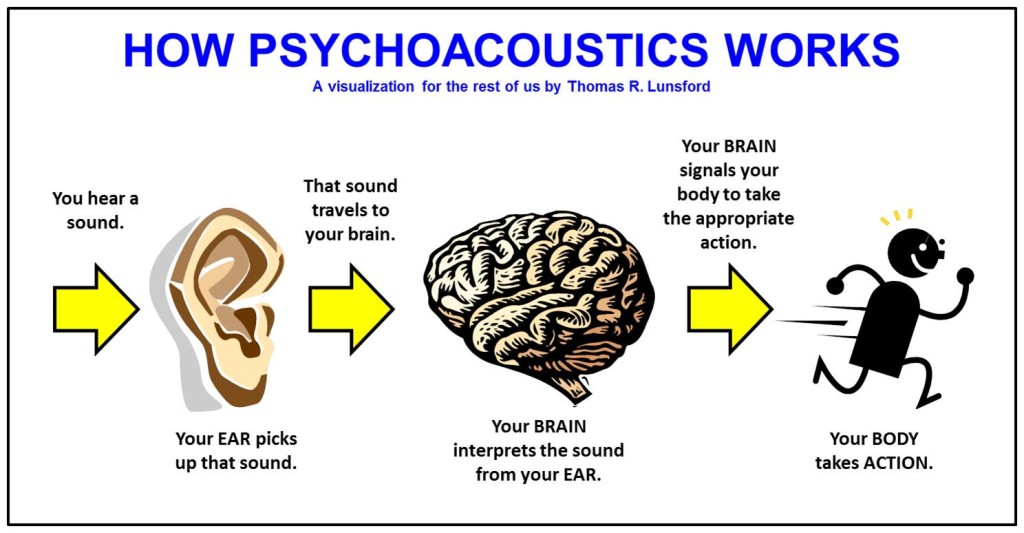
Audio psychoacoustics is the study of how humans perceive and process sound. This includes the physiological and psychological aspects of hearing, as well as the cognitive and emotional responses that result from it. As an expert in this field, I will provide a detailed explanation of the topic, including the various theories and principles that underpin it.

The Physiology of Hearing

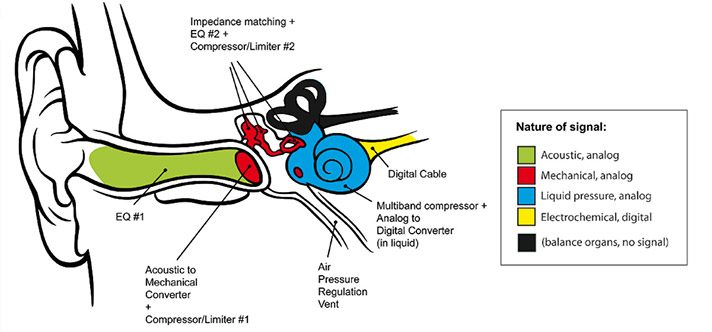
To understand how sound is processed by the human ear, it is important to first understand the basic anatomy of the ear. The ear is made up of three main parts: the outer ear, middle ear, and inner ear. The outer ear consists of the pinna, ear canal, and eardrum, which work together to capture and transmit sound waves to the middle ear. The middle ear contains the three smallest bones in the human body, the malleus, incus, and stapes, which amplify and transmit the sound waves to the inner ear. The inner ear is made up of the cochlea, which contains tiny hair cells that convert the sound waves into electrical impulses that are sent to the brain for processing.

Psychoacoustic Principles

Psychoacoustics is concerned with how the human brain processes sound signals. One of the key principles of psychoacoustics is the concept of loudness, which refers to the perceived volume of a sound. The human ear is capable of detecting a wide range of sound levels, from the faintest whisper to the loudest explosion. Another important principle is pitch, which refers to the perceived frequency of a sound. The human ear can detect frequencies ranging from around 20 Hz to 20,000 Hz.

Masking and Perception

Masking is a psychoacoustic phenomenon where the presence of one sound makes it more difficult to perceive another sound. This can occur when two sounds are played at the same time, or when one sound is played immediately after another. Masking can occur in both the frequency domain (when two sounds have overlapping frequencies) and the temporal domain (when one sound occurs immediately before or after another). Understanding masking is important in fields such as audio engineering and sound design, where it is necessary to minimize the impact of masking on the listener’s perception of sound.

Audio Compression and Psychoacoustics

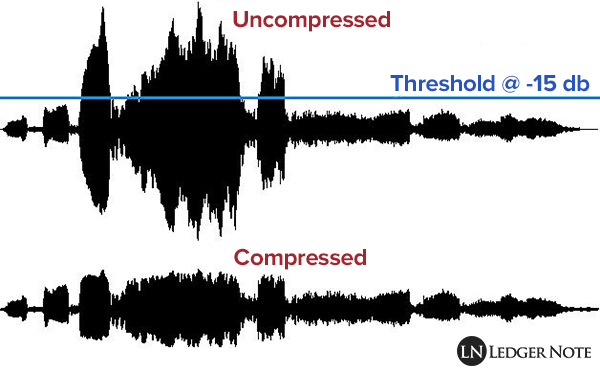
Audio compression is the process of reducing the size of an audio file by removing redundant or irrelevant data. One of the most common forms of audio compression is lossy compression, which works by removing data that is not perceived by the human ear. This is achieved by taking advantage of psychoacoustic principles such as masking and frequency masking. By removing sounds that are masked by other sounds, lossy compression algorithms can significantly reduce the size of an audio file without perceptible loss in quality.

Applications of Psychoacoustics

Psychoacoustics has a wide range of applications in fields such as audio engineering, music production, and sound design. By understanding how humans perceive and process sound, audio professionals can create more effective and engaging audio experiences for listeners. For example, understanding masking can help audio engineers to design more effective soundtracks for films and video games. Similarly, understanding how humans perceive loudness and pitch can help music producers to create more impactful and emotionally engaging music.

FAQ

Q: What is binaural audio?

Binaural audio is a type of audio recording that is designed to be listened to with headphones. It is created using two microphones that are placed inside a simulated head, with each microphone positioned at the location of one of the ears.

This creates a stereo image that closely replicates the way humans perceive sound in real life, allowing for a more immersive and realistic listening experience. Binaural audio is often used in virtual reality and video game audio, where a sense of spatial awareness is important.

Q: How does psychoacoustics relate to audio engineering?

Psychoacoustics plays an important role in audio engineering, as it provides a framework for understanding how humans perceive and process sound. This understanding can be used to create more effective and engaging audio experiences for listeners. For example, by understanding the principles of loudness and masking, audio engineers can design soundtracks that effectively communicate the intended emotional impact of a scene.

Q: How does audio compression affect sound quality?

Audio compression can affect sound quality by removing data that is perceived as irrelevant or redundant by the human ear. Lossy compression algorithms can reduce the size of an audio file by removing sounds that are masked by other sounds, without a perceptible loss in quality. However, if too much data is removed, the resulting file can sound noticeably compressed or distorted. For this reason, it is important to strike a balance between file size and sound quality when compressing audio.

Q: Can psychoacoustics be used to improve hearing aid technology?

Yes, psychoacoustics can be used to improve hearing aid technology by providing a better understanding of how humans perceive and process sound. This understanding can be used to design hearing aids that better replicate the natural hearing process, resulting in a more natural and effective listening experience for the wearer.

Q: What is the importance of psychoacoustics in sound design?

Psychoacoustics is important in sound design because it provides a framework for understanding how humans perceive and respond to sound. This understanding can be used to create more effective and engaging soundscapes that effectively communicate the intended emotional impact of a scene. For example, understanding the principles of masking can help sound designers to create more immersive and detailed soundscapes for films and video games.

Q: How can understanding psychoacoustics help with audio editing?

Understanding psychoacoustics can help with audio editing by providing a better understanding of how humans perceive and respond to sound. This understanding can be used to make more effective and impactful edits that effectively communicate the intended emotional impact of a scene. For example, understanding the principles of loudness can help audio editors to make more effective cuts and transitions in a soundtrack.

Q: How does the environment affect psychoacoustics?

The environment can have a significant impact on psychoacoustics, as it can affect the way that sound waves are transmitted and perceived. For example, the acoustics of a room can affect the way that sounds are reflected and absorbed, leading to changes in loudness and perceived pitch. Understanding the environmental factors that affect psychoacoustics is important in fields such as audio engineering and sound design, where it is necessary to create audio experiences that are effective in a wide range of environments.

Q: How does masking affect speech intelligibility?

Masking can affect speech intelligibility by making it more difficult to distinguish individual sounds and words in a sentence. This can occur when a speech signal is masked by other sounds that have overlapping frequencies, making it more difficult for the brain to isolate and process the speech signal. Understanding masking is important in fields such as audio engineering and sound design, where it is necessary to ensure that speech is clear and intelligible in a wide range of environments.


Free Download Mp4Gain
picture


Mp4Gain Main Window
picture


Mp4Gain Features
picture


Free Download Mp4Gain
picture

MP3 Basics: Psychoacoustics

MP3 Basics: Psychoacoustics

Psychoacoustics

Ten hours of music on one CD. And that’s without any audible loss of quality. MP3 makes it possible. but how does it work?
The core of MP3 is a compression process that filters out unnecessary information. With MPEG audio, filtering out superfluous information means reducing data that the human ear cannot or barely perceives. The basis for this is psychoacoustics. This science is about how the human ear perceives sound and is the key to MP3 technology.

Psychoacoustics

Imagine you are at the disco. Music resounds from huge boxes. This is hard work on the ear, as sound levels of 110 dB and more are achieved. Due to the extreme volume, it is almost impossible to speak unless you are yelling at yourself. In acoustics, this is called masking. To eliminate masking, the sound level of speech must be raised so high that the interfering signal (in this case loud music) no longer covers it.

Psychoacoustics is just one part of MP3 encoding. The audio signal goes through many more stations. In figure 2 you can see the basic structure of an MP3 encoder.

An audio signal passes through a filter bank that divides the signal into individual areas (subbands). At the same time, the audio signal goes through the psychoacoustic model. Here, the masking threshold is determined for each component with the help of the discrete Fourier transform (DFT). The psychoacoustic model specifies, among other things, the maximum allowable quantization error with which encoding can still be performed without the human ear being perceived. To do this, you specify the number of encoding bits that are required to reduce the quantization noise to such an extent that it becomes (almost) inaudible. In the last step, the data, the previously divided subbands, is processed (formatted) in such a way that a stream of bits is obtained that a decoder can decipher.

Psychoacoustic in mp3

Psychoacoustics is the study of a person’s subjective perception of sounds. Today, it is used in computer engineering, acoustic engineering, education, medicine, marketing and, of course, it is used in music.

how mp3 works

Musicians try to create a new acoustic atmosphere by distancing themselves from real sound perception, while scientists and engineers emphasize the features of auditory perception and truly audible components for analyzing and designing acoustic instruments and equipment.

mp3 compression

Sound is made up of pressure waves propagating through the air, but how are these waves received and converted into thoughts in our brains? In fact, what we hear depends not only on the physiological properties associated with ear formation, but also has psychological consequences. In the psychoacoustic model, dismissal and insignificance are the two “key” concepts that describe the reasons why a certain amount of audio data is considered insignificant, that is, they can be removed without compromising sound quality.

There is a threshold beyond which the human ear does not perceive the frequency of sound, sounds exceeding this threshold create a release effect. Obviously, trained ears will tend to perceive more complex sounds and higher frequencies.

This makes the redundancy threshold a subjective point of reference within certain limits, which means that a certain redundancy effect will have to be maintained in order to guarantee quality sound, so digital information inevitably exists. Once a high-quality redundancy threshold is set, it will be possible to remove frequencies and sound waves above this threshold, and sound perception will not change. When released, a number of sound elements remain important in reproducing the complexity of the sound and are beneficial to perception and quality, but non-compliance is a more radical criterion for sound units that are completely invisible and therefore useless and completely removable.

In practice, this simplifies the process of recording and storing sound. Lost audio compression is based on redundancy and non-compliance criteria, allowing you to remove most audio signals without compromising audio quality.

Unreasonable compression is based on the fact that, depending on the context of the sound, the same sound element may become very appropriate or may be completely ignored. For example, if a cell phone rings in the church during a silent prayer, those involved will clearly perceive the sound, and at the disco the same sound will be confused with the main context of the sound.

As a result, L ‘psychoacoustic analysis makes it possible to drastically reduce a high-quality file (10 or 12 times smaller) and therefore compressions, which significantly reduce the quality. These cuts are typical of MP3s. Thus, the psychoacoustic model shows that low-frequency waves are not noticeable in high-frequency waves because they are covered by higher-intensity waves.

This effect, called masking, tends to focus more on certain sounds depending on the context, and is based on the ear’s ability to adapt to background noise. In addition, there is a special masking associated with the reception time of low and high frequency sounds. Although a low-frequency sound is obtained, if it is immediately followed by a high-frequency sound, the first sound will be canceled by the second sound, so this effect is called reverse masking.

In contrast, masking forward features the elimination of low-frequency sound after high-frequency sound. The difference between the first two MPEG formats (Moving Picture Esperts Group: International Audio and Video Coding Code) and the MP3 format is based on these two masking effects.

In fact, in early MPEG formats, only frequency masking (1 audio and 2 audio layers) was taken into account, while MP3 also takes into account the third level of forward and backward masking (3 audio levels). The peculiarity of the MP3 model there is that it is the most perfect way to remove sound. From the initial recording, it extracts sounds and frequencies, extracting tones and time to eliminate unnecessary.

Do you know what is the psychoacoustic model in MP3 format?

Easy tutorial: how to normalize the volume of an audio track.

The MP3 was developed by the Moving Picture Experts Group (MPEG) to be part of the MPEG-1 standard and the newer and more widespread MPEG-2. An MP3 created using 128 kbit / s compression will be about 11 times smaller than its namesake CD. An MP3 can also be compressed using a higher or lower bit rate per second, directly resulting in lower final audio quality and the resulting file size.

psychoacoustic model

Compression is based on the reduction of the irrelevant dynamic range, i.e. the inability of the auditory system to detect quantization errors under masking conditions. This standard divides the signal into frequency bands which approach the critical bands, on the basis of wp, then quantifies each sub-band according to the noise detection threshold in this band. The psychoacoustic model is a modification of that used in Scheme II and uses a method called polynomial prediction. It analyzes the audio signal and calculates the amount of noise that can be introduced as a function of the frequency, that is to say calculates the “masking amount” or the masking threshold as a function of the frequency.

psychoacoustic model

The encoder uses this information to decide how best to spend the available bits. This standard proposes two psychoacoustic models of different complexity: model I is less complex than psychoacoustic model II and considerably simplifies the calculations. Studies show that the distortion generated is imperceptible to the experienced ear in an optimal environment from 192 kbps and under normal conditions. “Good” (unless you have high quality audio equipment where the lack of bass is excessively noticeable and the “fry” sound in the treble is highlighted). People experienced in the audio part of digital audio files, especially music, from 192 to 256 kbps are enough to hear well, but compression at 320 kbps is optimal for any listener. [appointment required]. Most of the music circulating on the Internet is encoded between 128 and 192 kbps, although today due to the increase in bandwidth, it is more and more common to share files with high quality. maximum compression.