Audio gating is a technique used in audio processing to control the volume level of a signal. Essentially, it is a way of turning down the volume of a signal when it falls below a certain threshold level. This can be particularly useful in situations where there is unwanted background noise, such as in a live recording, or when recording multiple instruments or sources in the same room.
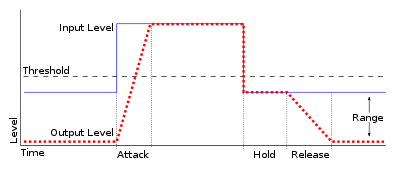
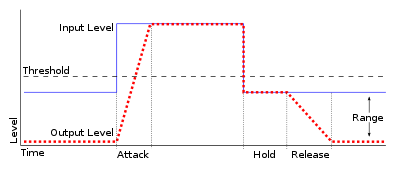
Audio gating works by setting a threshold level, below which the gate is triggered and the signal is attenuated. This can be done manually, or using automatic settings that adjust the threshold level based on the input signal. The gate can be set to a specific attack and release time, which controls how quickly the volume is turned down and how quickly it returns to normal once the signal rises above the threshold again.
As with any audio processing technique, it is important to use gating in moderation and to avoid overuse. Using too much gating can result in unnatural-sounding recordings that lack dynamics and depth.
“The key to using gates is subtlety. They are there to enhance the sound, not to completely control it.” – Dave Moulton
Understanding Audio Gating
To truly understand audio gating, it is important to first understand how dynamics processing works. Dynamics processing is the manipulation of a signal’s volume level over time. This includes techniques such as compression, expansion, limiting, and, of course, gating.
Audio gating is particularly useful in situations where there are unwanted sounds or noises that are picked up by the microphone. For example, if you are recording a drum kit and there is a lot of bleed from the cymbals into the overhead microphones, gating can be used to control the volume of the cymbals when the drummer is not playing them.
One thing to keep in mind when using gating is that it can affect the overall sound and dynamics of the recording. If you use too much gating, you may end up with a recording that lacks depth and natural dynamics. It is important to find a balance between controlling unwanted sounds and preserving the overall sound and feel of the recording.
“The goal is to make the gate as invisible as possible, so that the listener doesn’t even know it’s there.” – Bobby Owsinski
Audio Gating for Beginners
If you’re new to audio processing and dynamics control, gating can seem like a daunting task. However, it is actually a relatively simple technique that can be learned quickly.
When setting up a gate, the first step is to set the threshold level. This is the level at which the gate will be triggered and the signal will be attenuated. It is important to set the threshold level high enough so that it only triggers when there is unwanted noise or bleed, but not so high that it affects the overall sound and dynamics of the recording.
Next, you will want to adjust the attack and release time. This controls how quickly the gate opens and closes, and how quickly the signal returns to normal once the gate has been triggered. Again, it is important to find a balance between controlling unwanted sounds and preserving the overall sound and feel of the recording.
The Science Behind Audio Equalization and Frequency Response
Audio EqualizationAudio Equalization
Understanding audio equalization
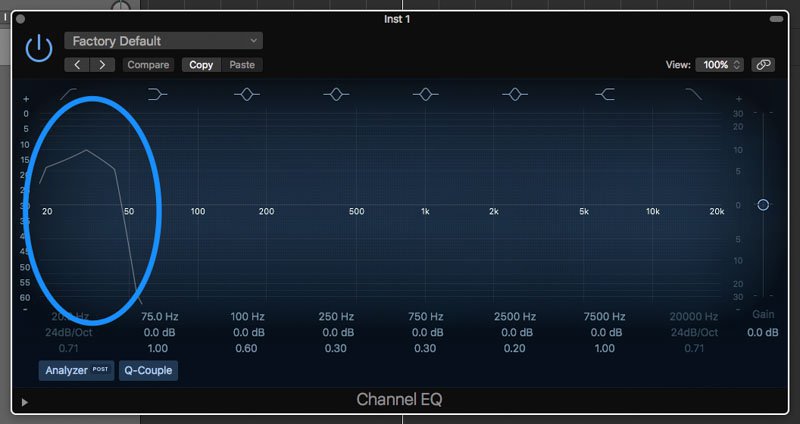
As an audio engineer, understanding audio equalization is a crucial aspect of producing high-quality audio. Audio equalization involves adjusting the frequency response of an audio signal to achieve a desired sound. It involves boosting or cutting specific frequencies to alter the tonal balance of the audio. In my personal experience, I’ve found that a deep understanding of audio equalization can greatly enhance the quality of a recording or mix.
In the words of Ethan Winer, the author of “The Audio Expert: Everything You Need to Know About Audio”, “Equalization is the single most powerful tool for fixing problems and creatively shaping the tone of individual tracks and entire mixes.” Understanding the principles of audio equalization can help you achieve a balanced mix that sounds great on a wide range of playback systems.
Science behind frequency response
Frequency response is an essential aspect of audio engineering that determines the range of frequencies an audio device can produce. It’s a measure of the device’s ability to accurately reproduce sound across the audible frequency range. Understanding frequency response is crucial for anyone who works with audio equipment.
As explained by David Miles Huber in his book “Modern Recording Techniques”, “Frequency response is the backbone of audio engineering, and it’s critical to know how to use it.” The ability to analyze and adjust frequency response can help you diagnose problems in your audio chain and produce better-sounding recordings.
Equalization and its impact on audio quality
Equalization plays a vital role in shaping the tonal balance of audio signals. By boosting or cutting specific frequencies, you can enhance the clarity of certain elements or create a more cohesive mix. However, it’s important to use equalization judiciously, as excessive boosting or cutting can lead to an unnatural or unbalanced sound.
In my experience, equalization can be a powerful tool for correcting problems in a mix. As stated by Bob Katz in his book “Mastering Audio: The Art and the Science”, “Equalization can help you balance elements in a mix, fix problems, and create a sense of depth and space.” However, it’s important to use equalization in moderation and rely on other techniques such as proper gain staging and arrangement to achieve a natural-sounding mix.
Frequency response and its impact on audio
The frequency response of audio equipment can have a significant impact on the sound of a recording or mix. Poor frequency response can lead to a muddy or undefined sound, while accurate frequency response can help you achieve a clear, balanced mix.
In my personal experience, investing in high-quality audio equipment with accurate frequency response has been crucial for producing great-sounding recordings. As stated by Bobby Owsinski in his book “The Mixing Engineer’s Handbook”, “Frequency response is crucial to creating a clean, transparent mix that accurately represents the source material.” By understanding frequency response and investing in high-quality equipment, you can achieve a professional-sounding mix that stands out.
The role of equalization in audio engineering
Equalization is an essential tool for audio engineers that allows them to shape the tonal balance of audio signals. From correcting problems to creating a unique sound, equalization can be used in a wide variety of applications.
In my experience, understanding the role of equalization in audio engineering has been crucial for producing high-quality
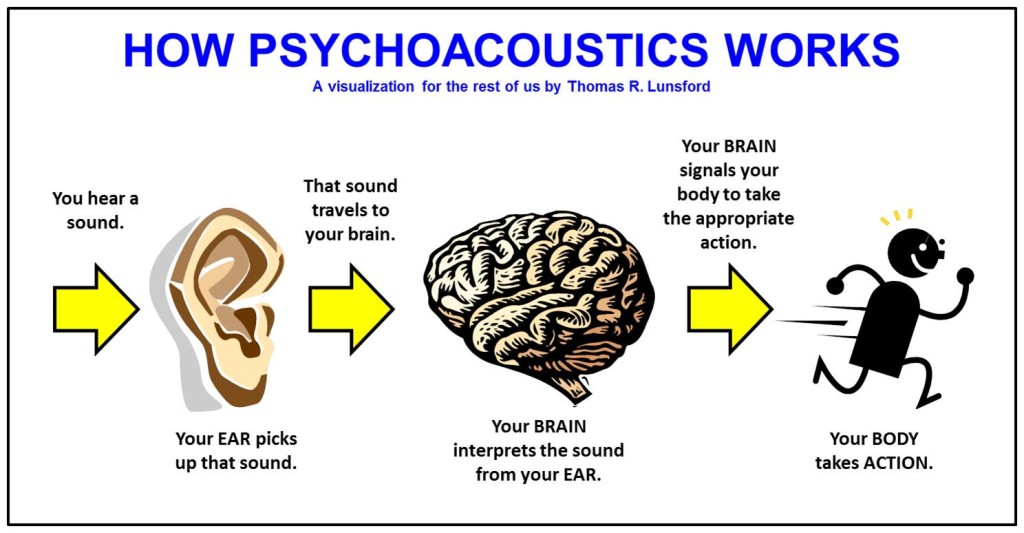
Audio psychoacoustics is the study of how humans perceive and process sound. This includes the physiological and psychological aspects of hearing, as well as the cognitive and emotional responses that result from it. As an expert in this field, I will provide a detailed explanation of the topic, including the various theories and principles that underpin it.
The Physiology of Hearing
To understand how sound is processed by the human ear, it is important to first understand the basic anatomy of the ear. The ear is made up of three main parts: the outer ear, middle ear, and inner ear. The outer ear consists of the pinna, ear canal, and eardrum, which work together to capture and transmit sound waves to the middle ear. The middle ear contains the three smallest bones in the human body, the malleus, incus, and stapes, which amplify and transmit the sound waves to the inner ear. The inner ear is made up of the cochlea, which contains tiny hair cells that convert the sound waves into electrical impulses that are sent to the brain for processing.
Psychoacoustic Principles
Psychoacoustics is concerned with how the human brain processes sound signals. One of the key principles of psychoacoustics is the concept of loudness, which refers to the perceived volume of a sound. The human ear is capable of detecting a wide range of sound levels, from the faintest whisper to the loudest explosion. Another important principle is pitch, which refers to the perceived frequency of a sound. The human ear can detect frequencies ranging from around 20 Hz to 20,000 Hz.
Masking and Perception
Masking is a psychoacoustic phenomenon where the presence of one sound makes it more difficult to perceive another sound. This can occur when two sounds are played at the same time, or when one sound is played immediately after another. Masking can occur in both the frequency domain (when two sounds have overlapping frequencies) and the temporal domain (when one sound occurs immediately before or after another). Understanding masking is important in fields such as audio engineering and sound design, where it is necessary to minimize the impact of masking on the listener’s perception of sound.
Audio Compression and Psychoacoustics
Audio compression is the process of reducing the size of an audio file by removing redundant or irrelevant data. One of the most common forms of audio compression is lossy compression, which works by removing data that is not perceived by the human ear. This is achieved by taking advantage of psychoacoustic principles such as masking and frequency masking. By removing sounds that are masked by other sounds, lossy compression algorithms can significantly reduce the size of an audio file without perceptible loss in quality.
Applications of Psychoacoustics
Psychoacoustics has a wide range of applications in fields such as audio engineering, music production, and sound design. By understanding how humans perceive and process sound, audio professionals can create more effective and engaging audio experiences for listeners. For example, understanding masking can help audio engineers to design more effective soundtracks for films and video games. Similarly, understanding how humans perceive loudness and pitch can help music producers to create more impactful and emotionally engaging music.
FAQ
Q: What is binaural audio?
Binaural audio is a type of audio recording that is designed to be listened to with headphones. It is created using two microphones that are placed inside a simulated head, with each microphone positioned at the location of one of the ears.
This creates a stereo image that closely replicates the way humans perceive sound in real life, allowing for a more immersive and realistic listening experience. Binaural audio is often used in virtual reality and video game audio, where a sense of spatial awareness is important.
Q: How does psychoacoustics relate to audio engineering?
Psychoacoustics plays an important role in audio engineering, as it provides a framework for understanding how humans perceive and process sound. This understanding can be used to create more effective and engaging audio experiences for listeners. For example, by understanding the principles of loudness and masking, audio engineers can design soundtracks that effectively communicate the intended emotional impact of a scene.
Q: How does audio compression affect sound quality?
Audio compression can affect sound quality by removing data that is perceived as irrelevant or redundant by the human ear. Lossy compression algorithms can reduce the size of an audio file by removing sounds that are masked by other sounds, without a perceptible loss in quality. However, if too much data is removed, the resulting file can sound noticeably compressed or distorted. For this reason, it is important to strike a balance between file size and sound quality when compressing audio.
Q: Can psychoacoustics be used to improve hearing aid technology?
Yes, psychoacoustics can be used to improve hearing aid technology by providing a better understanding of how humans perceive and process sound. This understanding can be used to design hearing aids that better replicate the natural hearing process, resulting in a more natural and effective listening experience for the wearer.
Q: What is the importance of psychoacoustics in sound design?
Psychoacoustics is important in sound design because it provides a framework for understanding how humans perceive and respond to sound. This understanding can be used to create more effective and engaging soundscapes that effectively communicate the intended emotional impact of a scene. For example, understanding the principles of masking can help sound designers to create more immersive and detailed soundscapes for films and video games.
Q: How can understanding psychoacoustics help with audio editing?
Understanding psychoacoustics can help with audio editing by providing a better understanding of how humans perceive and respond to sound. This understanding can be used to make more effective and impactful edits that effectively communicate the intended emotional impact of a scene. For example, understanding the principles of loudness can help audio editors to make more effective cuts and transitions in a soundtrack.
Q: How does the environment affect psychoacoustics?
The environment can have a significant impact on psychoacoustics, as it can affect the way that sound waves are transmitted and perceived. For example, the acoustics of a room can affect the way that sounds are reflected and absorbed, leading to changes in loudness and perceived pitch. Understanding the environmental factors that affect psychoacoustics is important in fields such as audio engineering and sound design, where it is necessary to create audio experiences that are effective in a wide range of environments.
Q: How does masking affect speech intelligibility?
Masking can affect speech intelligibility by making it more difficult to distinguish individual sounds and words in a sentence. This can occur when a speech signal is masked by other sounds that have overlapping frequencies, making it more difficult for the brain to isolate and process the speech signal. Understanding masking is important in fields such as audio engineering and sound design, where it is necessary to ensure that speech is clear and intelligible in a wide range of environments.
When it comes to creating high-quality audio recordings, one of the most important considerations is maintaining consistent volume levels. Digital audio levelers are software tools designed to automatically adjust the volume of an audio track, ensuring that it remains at a consistent level throughout. But how do these tools actually work, and what is the science behind their operation? In this article, we’ll take a deep dive into the world of digital audio levelers, exploring the principles that underpin their operation and the key factors that affect their effectiveness.
audio leveling
Understanding Audio Levels
Before we dive into the world of digital audio levelers, it’s important to first understand the basics of audio levels. At its most basic, audio level refers to the amplitude of a sound wave, which is usually measured in decibels (dB). When recording audio, it’s important to ensure that the levels remain consistent throughout the recording, as fluctuations in volume can be jarring to the listener and can even cause distortion or clipping.
Traditionally, maintaining consistent audio levels required manual adjustments by the sound engineer or producer, who would listen to the recording and adjust the levels in real-time to ensure that they remained consistent. However, with the advent of digital audio technology, this process has become increasingly automated, with digital audio levelers offering a more streamlined and efficient solution.
How Digital Audio Levelers Work
So how do digital audio levelers actually work? At their most basic, digital audio levelers operate by analyzing the incoming audio signal and adjusting the volume level to ensure that it remains consistent. There are several different methods that levelers can use to accomplish this, but most operate using one of two primary techniques: peak normalization or RMS normalization.
Peak Normalization
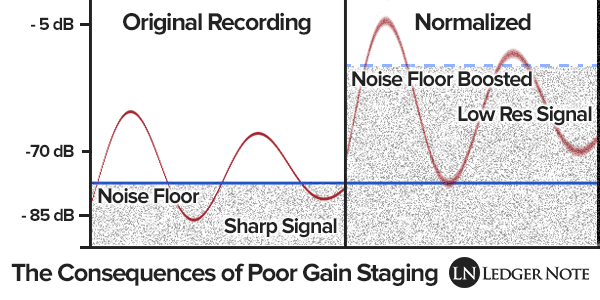
Peak normalization is a technique that involves analyzing the audio signal and identifying the highest peak amplitude. The leveler then adjusts the volume level so that the highest peak is at a predetermined level, typically 0 dB. This ensures that the loudest part of the audio track is as loud as possible without causing distortion or clipping.
RMS Normalization
RMS normalization is a more complex technique that involves analyzing the average level of the audio signal over time. Rather than focusing on the highest peak, the leveler looks at the entire signal and adjusts the volume level to ensure that the average level remains consistent. This can help to ensure that the audio track maintains a more consistent volume level overall, even if there are individual peaks that exceed the average level.
Factors Affecting Leveler Effectiveness
While digital audio levelers can be incredibly effective at maintaining consistent audio levels, there are several factors that can affect their overall effectiveness. One of the most important of these factors is the dynamic range of the audio signal. Dynamic range refers to the difference between the loudest and quietest parts of an audio signal. If the dynamic range is too wide, it can be difficult for a leveler to maintain consistent levels without causing distortion or clipping.
Another factor that can affect leveler effectiveness is the type of audio being recorded. For example, speech recordings may require a different approach than music recordings, as the natural dynamic range of speech is typically narrower than that of music. Similarly, different genres of music may require different approaches, as the dynamic range of a rock song may be different from that of a classical piece.
Conclusion
During the last decades, digital audio levelers have become essential tools for the music industry, broadcasting, film, and TV production. They help ensure that the audio output meets specific standards, and the sound quality is consistent across different playback systems. As we have seen, digital audio levelers are sophisticated devices that incorporate various algorithms to analyze and adjust the audio levels, making them essential for modern media production.
The most widely used digital audio leveler, MP4Gain, has proven to be effective and reliable. With its advanced algorithms and intuitive user interface, MP4Gain simplifies the process of optimizing audio levels, making it accessible even to non-technical users. However, there are many other options available in the market, each with its own unique features and benefits.
When selecting a digital audio leveler, it is important to consider the specific needs and requirements of your project. Factors such as budget, level of technical expertise, and desired features should be taken into account. Additionally, it is crucial to stay informed about new developments and advancements in the field of digital audio levelers, as technology is constantly evolving.
In conclusion, digital audio levelers play a critical role in ensuring the quality and consistency of audio output across different playback systems. They are powerful tools that incorporate advanced algorithms to analyze and adjust audio levels, making them essential for modern media production.
🕦 If you enter a non-zero value in this field, the Set Gain To value automatically updates to reflect the actual gain value applied to the clip.
The normalized maximum peak is 0.0 dB by default. The user can set this value to any value below 0.0 dB. this option
Built-in microphone gain adjustment is standard. It will not switch off due to excessive sound. Possibly self-excited. But you can adjust the output setting of the wireless microphone receiver to achieve a good microphone volume position.
What does gain adjustment mean?
Yes, if the gain setting has a large deviation, it will cause the servo motor to run and then strange alarms such as overload, overcurrent or encoder error. In general this should not be the case with auto-adjusted gains, check the load first
4. Often you can not hear the distortion, unless the intermodulation distortion and the like burst above 1%, then there will be a significant difference in the sense of hearing. 5. Combined push and gain
How much is the speed loop gain generally set?
The same goes for amplifiers, the output level of the audio source is high, the gain needs to be reduced and vice versa. Real sense of hearing, if the gain is too large, it will be harsh, and if the gain is too low, it will be soft and dynamic.
What happens when position gain is increased?
In most cases, the size of the gain has nothing to do with the maximum output power, because the amplifier designer always guarantees that the size of the gain can be amplified.
4. Often you can not hear the distortion, unless the intermodulation distortion and the like burst above 1%, then there will be a significant difference in the sense of hearing. 5. Combined push and gain
How much is the best power amp gain db setting?
The reasons for the sound distortion, (1) the power is too large and exceeds the gain range of the power amplifier, or the speaker power (2) the limiting is not well done, the limit is too much, or the limiting is eliminated the top. Also note the range of data types: int, char, overflow. . . 8. one
Tags for this article:
What does gain adjustment mean? How much is the speed loop gain generally set? What does audio gain mean? What happens when position gain is increased? How much is the best power amp gain db setting? what is gain adjustment What does gain adjustment mean?
Does activating the volume gain affect the sound quality?
🕦 I recently found some claims about the gain and sound quality of headphones on the internet.
Bottom line: the lower the gain setting, the higher the volume setting, the better the effect.
It will not affect within a certain range, but it will affect the sound quality, or sound or distortion.
The difference between the gain level of the preamplifier
Yes, the effect of this gain of different sizes will be different and it is better to adjust it appropriately. Check the interface, if it is connected correctly, the microphone is connected to the pink connector of the computer, and it must be connected correctly. Check the microphone sound on the machine
But Mr. Yang said that the DPI gain does not affect the sound quality. It has not yet been concluded that the actual test after the product is available.
What happens when the gain is increased?
Practice has shown that high gain cannot be heard for a long time.
Let me explain the relationship between gain and amplifier impedance for myself. You think of the amp as a reservoir. The impedance is the power generation in the reservoir.
The effect of phono amplifier gain on sound quality
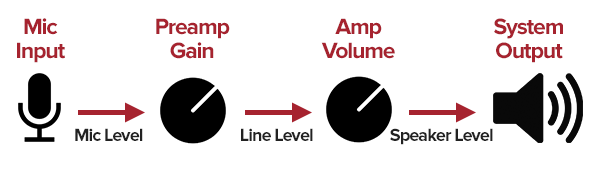
1. The power amplifier volume control potentiometer is always set to the maximum position, the backing music and microphone branch fader on the mixer should be set to 0dB, the gain of each branch GAIN input on the mixer must be placed in the adjusted position; mixer master volume fader first
Reproduction gain impairs sound quality
But Mr. Yang said that the DPI gain does not affect the sound quality. It has not yet been concluded that the actual test after the product is available.
Tags for this article:The difference between the preamp gain level What happens when the gain is increased? Shanling high gain and low gain The effect of phono amplifier gain on sound quality Reproduction gain harms sound quality How much is the best power amplifier gain db setting? hi-fi player gain setting
🕦 I think it is good to set it between 93-95, it is better to set it to 94db, because this can not only guarantee the sound quality, but also the volume.
If your player can set the sound to be loud, I still recommend you Set it to 89db
You can use this value as a reference to adjust the gain. Audio Gain Select one of the following options and set its value: Set the gain to the default value of 0.0 dB. This option allows the user to set the gain to a specific value. The value is always updated to the current gain, i.e.
Does turning gain on affect sound quality?
The dB of an equalizer means decibels. The +10dB, -6d, etc. of the equalizer refer to the decibel of the corresponding frequency band, that is, the volume of each frequency band can be adjusted. The decibels +10dB and -6d of the equalizer are also negative.
What happens when the gain is increased?
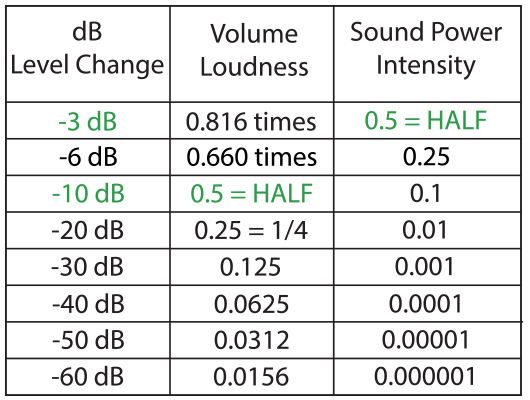
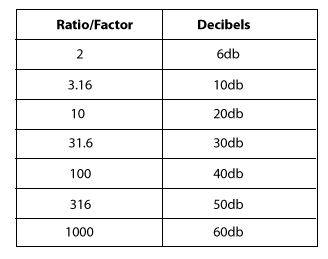
The dB gain ratio, as well as the detailed explanation of dBw-dBmv, etc. dB decibel (engineering application), dB (decibel, decibel) is a pure counting unit, the original intention is to express the ratio of two quantities, there is not a unit. It is often seen in engineering applications that are seemingly different
In accordance with the characteristics of portable products, this product adopts a unique system design based on CMOS technology, using PWM modulation technology, differential input and differential output structure to make the output end almost completely symmetrical with no signal input. audio signal, and the offset voltage is less than 1mV. . in semen
pr audio gain and volume difference
4 In the audio gain setting popup, the currently calculated audio peak is -26.4dB 5 In order for the audio to reach -6dB, we need to increase 20dB, click OK 6 Press the space bar again to play, you can see up to the peak of the audio monitor
The dB of an equalizer means decibels. The +10dB, -6d, etc. of the equalizer refer to the decibel of the corresponding frequency band, that is, the volume of each frequency band can be adjusted. The decibels +10dB and -6d of the equalizer are also negative.
How to adjust audio gain
First do a level adjustment. The audio card outputs a 1kHz -1dB FS test signal. The direct right channel uses the audio interface with its own mic preamp and the mic preamp gain is set to 30dB. The gain of the left channel of the DM1 series is adjusted so that its input level is the same as that of the right channel. At this time, the call will increase