What is Audio Gating and How Does It Work?


Free Download Mp4Gain
picture

What is Audio Gating and How Does It Work?
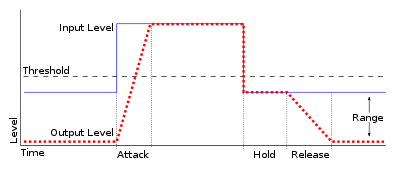
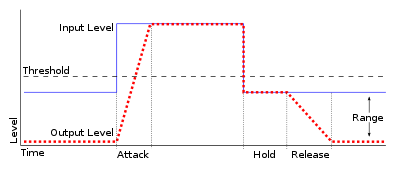
Audio Gating
Audio Gating
Audio Gating
Audio Gating

Audio Gating Explained

Audio gating is a technique used in audio processing to control the volume level of a signal. Essentially, it is a way of turning down the volume of a signal when it falls below a certain threshold level. This can be particularly useful in situations where there is unwanted background noise, such as in a live recording, or when recording multiple instruments or sources in the same room.

Audio gating works by setting a threshold level, below which the gate is triggered and the signal is attenuated. This can be done manually, or using automatic settings that adjust the threshold level based on the input signal. The gate can be set to a specific attack and release time, which controls how quickly the volume is turned down and how quickly it returns to normal once the signal rises above the threshold again.

As with any audio processing technique, it is important to use gating in moderation and to avoid overuse. Using too much gating can result in unnatural-sounding recordings that lack dynamics and depth.

“The key to using gates is subtlety. They are there to enhance the sound, not to completely control it.” – Dave Moulton

Understanding Audio Gating

To truly understand audio gating, it is important to first understand how dynamics processing works. Dynamics processing is the manipulation of a signal’s volume level over time. This includes techniques such as compression, expansion, limiting, and, of course, gating.

Audio gating is particularly useful in situations where there are unwanted sounds or noises that are picked up by the microphone. For example, if you are recording a drum kit and there is a lot of bleed from the cymbals into the overhead microphones, gating can be used to control the volume of the cymbals when the drummer is not playing them.

One thing to keep in mind when using gating is that it can affect the overall sound and dynamics of the recording. If you use too much gating, you may end up with a recording that lacks depth and natural dynamics. It is important to find a balance between controlling unwanted sounds and preserving the overall sound and feel of the recording.

“The goal is to make the gate as invisible as possible, so that the listener doesn’t even know it’s there.” – Bobby Owsinski

Audio Gating for Beginners

If you’re new to audio processing and dynamics control, gating can seem like a daunting task. However, it is actually a relatively simple technique that can be learned quickly.

When setting up a gate, the first step is to set the threshold level. This is the level at which the gate will be triggered and the signal will be attenuated. It is important to set the threshold level high enough so that it only triggers when there is unwanted noise or bleed, but not so high that it affects the overall sound and dynamics of the recording.

Next, you will want to adjust the attack and release time. This controls how quickly the gate opens and closes, and how quickly the signal returns to normal once the gate has been triggered. Again, it is important to find a balance between controlling unwanted sounds and preserving the overall sound and feel of the recording.


Free Download Mp4Gain
picture


Mp4Gain Main Window
picture


Mp4Gain Features
picture


Free Download Mp4Gain
picture

SPOTIFY REDUCES THE VOLUME, THE MUSIC CONTINUES TO GIVE STEPS TO RECOVER THE DYNAMIC RANGE

The 90s were the stage of music transformation. The industry began a war based on the excessive increase in the volume of the songs so that they stood out in the listener over the competition. They had realized that people paid more attention to those songs that sounded louder. Why did this happen and happen? The human ear does not understand or perceive peak levels. Perceive loudness levels (the intensity with which a sound is perceived). The human ear receives better frequencies between 20Hz and 20Khz, the higher the frequency level, the better the sound will be perceived, since, apparently, a greater level of detail will be appreciated, but it does not imply that it is a better sound. The auditory system is not linear, so it requires a greater volume at high and low frequencies to give the same sense of loudness as in the media. With this pretext the record companies were increasingly increasing the sound of the records. Isophonic curves are curves that relate how the ear listens, depending on the pressure and frequency.


The average level of the CDs in 1990 was -12 dB. Then, in 1995 the level rose to -6 dB. In 2000, the CDs reached an average level of -3 dB. As the level of the CDs increased, the dynamic range was reduced to have a nuanced and distorted music, but this is not the only problem. Mixes with low dynamic range are counterproductive and can cause long-term problems and damage to hearing such as hearing fatigue or hearing loss.

What is dynamic range and why was it reduced?

As we have explained previously, the interest of the record companies focused on increasing the number of sales and to achieve this, they had to attract the attention of the listeners and the only way was to increase the volume. This fact was called the Loudness War. For the music to sound louder, at a higher volume, the songs had to be compressed and thereby eliminate the peaks of the highs creating distortion and misunderstanding of the music since it did not sound as originally been created The highs and lows are no longer so distant, the music is heard at a higher volume, but the nuances have ceased to be appreciated. Thus the dynamic range disappeared or, in other words, what gives music life and difference.
This phenomenon is much closer if we talk about the volume of television ads that appeared after a program. The sound increased excessively with respect to the volume of the program. The United States was the first country to realize and create an international LUFS scale (Loudness Units relative to Full Scale) to measure the volume of sound and avoid differentiation between the volume of programs and advertisements. LUFS is equivalent to decibel and an algorithm similar to our way of listening is used to calculate it.

Digital music has a factory volume cap, which experts have called a digital zero. If this volume is exceeded, distortion results. Distortion has been possible due to compressors and digital limiters that reduced the dynamic range in favor of increasing the volume.

The professionals of the sound began to see in this excessive increase of the volume a very serious problem that had to be solved, beyond mere technical questions, and associations like Pleasurize Music Foundation or the Turn me up! that fight against this type of practices to avoid continuing to increase the volume and compress the music indiscriminately.

The most famous streaming music platform with the largest number of subscribers is Spotify and seems to have realized that the rise in indiscriminate volume does not benefit anyone. This is why Spotify has lowered its sound level to -14LUFS, while previously playing to -12LUFS. Apple music is in -16 LUFS and Youtube and Tidal in -14. The AES (Audio Engineering Society) places the standard between -20 and -16 LUFS.

But what advantages does the sound have dynamic range if the volume is lower?

Well, once we have read the text we can almost take them out automatically:

– Clean sound
– Without saturation
– Reach the listener more effectively
– You can distinguish nuances and sound
– More beneficial to our ears.

The sound can always be improved and it is not necessary to compress the songs, this is known and understood by all those who mainly look for quality. Not being able to listen to a song because we are in a noisy environment such as the subway or the city center has an easy solution since we could connect a DAC to any device. This action will give more dynamism to the music and we can also increase the volume without fear