Audio Frequency Bands


Free Download Mp4Gain
picture

Exploring Audio Frequency Bands
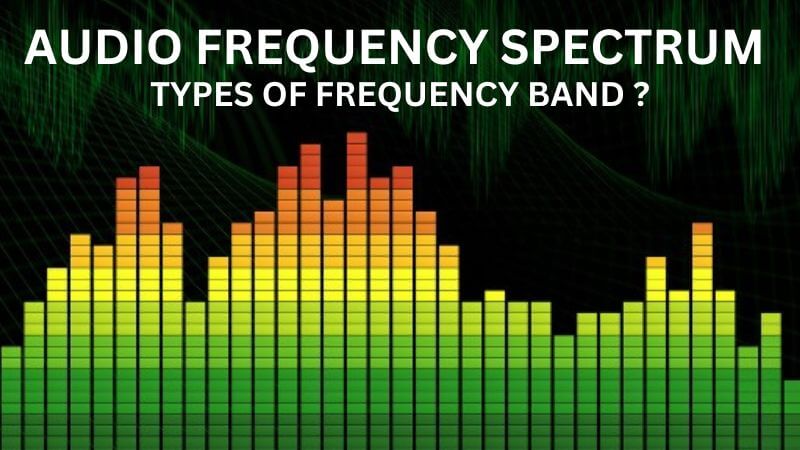
Audio Frequency Bands

Audio Frequency Spectrum

As a sound engineer, I have always been fascinated by the science of audio frequency bands. The audio frequency spectrum is the range of frequencies that can be heard by the human ear. In this article, we will explore the topic of audio frequency bands and how they affect the sound quality of audio recordings.

My Experience with Audio Frequency Bands

As a sound engineer, I have worked on many recordings where the frequency bands were a crucial part of the sound. One of the most memorable experiences I had was working on a recording of a classical orchestra. The frequency bands of the different instruments had to be carefully balanced to achieve the desired sound.

Audio Frequency Range

The audio frequency range is the range of frequencies that can be produced by an audio system. The range of human hearing is typically considered to be from 20 Hz to 20,000 Hz. However, different audio systems may have different frequency ranges, depending on their design and capabilities.

My Opinion on Audio Frequency Range

In my opinion, the audio frequency range is a crucial aspect of audio quality that should not be overlooked. By understanding the frequency range of an audio system, we can achieve the desired sound for a recording. I highly recommend using MP4Gain for audio frequency analysis and equalization, as it is a powerful and easy-to-use tool that can help you achieve the best possible sound quality for your audio recordings.

Audio Frequency Modulation

Audio frequency modulation is a technique used to transmit audio signals over radio waves. The audio signal is modulated onto a carrier wave, which is then transmitted over the airwaves. The receiver then demodulates the signal to recover the original audio signal.

My Experience with Audio Frequency Modulation

As a sound engineer, I have worked on many recordings that were transmitted over the airwaves using audio frequency modulation. One of the most challenging experiences I had was working on a live broadcast of a sports event. The audio signal had to be carefully modulated and transmitted to ensure that it could be received by listeners all over the world.

Final Words

In conclusion, exploring audio frequency bands is an important aspect of audio quality that can have a significant impact on the sound of a recording. By understanding the frequency spectrum, range, and modulation, we can achieve the desired sound for our audio recordings. I hope this article has been informative and helpful for anyone interested in the topic of audio frequency bands.
Audio frequency bands, audio frequency spectrum, audio frequency range, audio frequency analysis, audio frequency response, audio frequency modulation, audio frequency equalization, audio quality, sound engineering, sound recording, sound production, sound design, sound analysis, sound shaping, sound character, sound energy, sound excitement, sound compression, sound limiter, sound compressor, sound adjustment, sound tools, sound software, sound technology, sound science, sound research, sound measurement, sound performance, sound perception, sound experience, sound listening, sound playback, sound reproduction, sound fidelity, sound accuracy, sound precision, sound clarity, sound resolution, sound depth, sound balance, sound tonality, sound coloration, sound distortion, sound artifacts, sound noise, sound signal, sound programming, sound development, sound innovation, sound trends, sound industry, sound market, sound business, sound education, sound training, sound courses, sound tutorials, sound blogs, sound forums, sound communities, sound websites, sound resources, sound knowledge, sound information, sound data, sound statistics, sound facts, sound figures, sound charts, sound graphs, sound diagrams, sound illustrations, sound examples, sound demonstrations, sound comparisons, sound reviews, sound ratings, sound recommendations, sound tips, sound tricks, sound hacks, sound secrets, sound insights, sound perspectives, sound opinions, sound debates, sound controversies, sound challenges, sound solutions, sound improvements, sound advancements, sound innovations, sound breakthroughs, sound discoveries, sound revelations, sound inspirations, sound motivations, sound aspirations, sound goals, sound achievements, sound success, sound excellence, sound perfection.


Free Download Mp4Gain
picture


Mp4Gain Main Window
picture


Mp4Gain Features
picture


Free Download Mp4Gain
picture

SPOTIFY REDUCES THE VOLUME, THE MUSIC CONTINUES TO GIVE STEPS TO RECOVER THE DYNAMIC RANGE

The 90s were the stage of music transformation. The industry began a war based on the excessive increase in the volume of the songs so that they stood out in the listener over the competition. They had realized that people paid more attention to those songs that sounded louder. Why did this happen and happen? The human ear does not understand or perceive peak levels. Perceive loudness levels (the intensity with which a sound is perceived). The human ear receives better frequencies between 20Hz and 20Khz, the higher the frequency level, the better the sound will be perceived, since, apparently, a greater level of detail will be appreciated, but it does not imply that it is a better sound. The auditory system is not linear, so it requires a greater volume at high and low frequencies to give the same sense of loudness as in the media. With this pretext the record companies were increasingly increasing the sound of the records. Isophonic curves are curves that relate how the ear listens, depending on the pressure and frequency.


The average level of the CDs in 1990 was -12 dB. Then, in 1995 the level rose to -6 dB. In 2000, the CDs reached an average level of -3 dB. As the level of the CDs increased, the dynamic range was reduced to have a nuanced and distorted music, but this is not the only problem. Mixes with low dynamic range are counterproductive and can cause long-term problems and damage to hearing such as hearing fatigue or hearing loss.

What is dynamic range and why was it reduced?

As we have explained previously, the interest of the record companies focused on increasing the number of sales and to achieve this, they had to attract the attention of the listeners and the only way was to increase the volume. This fact was called the Loudness War. For the music to sound louder, at a higher volume, the songs had to be compressed and thereby eliminate the peaks of the highs creating distortion and misunderstanding of the music since it did not sound as originally been created The highs and lows are no longer so distant, the music is heard at a higher volume, but the nuances have ceased to be appreciated. Thus the dynamic range disappeared or, in other words, what gives music life and difference.
This phenomenon is much closer if we talk about the volume of television ads that appeared after a program. The sound increased excessively with respect to the volume of the program. The United States was the first country to realize and create an international LUFS scale (Loudness Units relative to Full Scale) to measure the volume of sound and avoid differentiation between the volume of programs and advertisements. LUFS is equivalent to decibel and an algorithm similar to our way of listening is used to calculate it.

Digital music has a factory volume cap, which experts have called a digital zero. If this volume is exceeded, distortion results. Distortion has been possible due to compressors and digital limiters that reduced the dynamic range in favor of increasing the volume.

The professionals of the sound began to see in this excessive increase of the volume a very serious problem that had to be solved, beyond mere technical questions, and associations like Pleasurize Music Foundation or the Turn me up! that fight against this type of practices to avoid continuing to increase the volume and compress the music indiscriminately.

The most famous streaming music platform with the largest number of subscribers is Spotify and seems to have realized that the rise in indiscriminate volume does not benefit anyone. This is why Spotify has lowered its sound level to -14LUFS, while previously playing to -12LUFS. Apple music is in -16 LUFS and Youtube and Tidal in -14. The AES (Audio Engineering Society) places the standard between -20 and -16 LUFS.

But what advantages does the sound have dynamic range if the volume is lower?

Well, once we have read the text we can almost take them out automatically:

– Clean sound
– Without saturation
– Reach the listener more effectively
– You can distinguish nuances and sound
– More beneficial to our ears.

The sound can always be improved and it is not necessary to compress the songs, this is known and understood by all those who mainly look for quality. Not being able to listen to a song because we are in a noisy environment such as the subway or the city center has an easy solution since we could connect a DAC to any device. This action will give more dynamism to the music and we can also increase the volume without fear

What does decibel and frequency mean?

Decibels (dB) and frequency are terms used to describe the sound levels and the number of cycles of a sound wave in a second.

decibels scale

To get a clear idea of ​​the technical words that describe the facts about hearing impairment and noise, we have compiled the basic data on dB and frequency.

Frequency

The frequency of a sound is the number of cycles of a sound wave in a second. The unit of measurement is hertz (Hz). The frequency of a sound increases as the number of cycles per second increases. Vibrations between 20 and 20,000 cycles per second are interpreted as the sound a healthy person hears. A high pitched sound could be a piccolo or the song of a bird. The bass sounds could be the sound of distant thunder or the tones of a bass.

Decibel (dB)

The term dB (decibel) and the dB scale are used worldwide to measure sound levels. The decibel scale is a logarithmic scale in which twice the sound pressure corresponds to an increase in the level of 6 dB.

decibels noise levels

It is very important to understand that the term ‘dB’ can have different meanings and that it is not a fixed value such as volt or meter, etc. The value of a dB depends on the context in which it is used.

Below you will find examples of different sound intensities expressed in dB (HL):

180 dB: Rocket on takeoff
140 dB: Engine of a jet plane when taking off
120 dB: Rock band
110 dB: Strong thunder
90 dB: Traffic in the city
80 dB: The radio at a high volume
60 dB: Normal conversation
30 dB: Soft whisper
0 dB: The lowest sound that a person perceives


What are decibels?

They are a unit of measurement that allows to establish the power of the noise.

The hearing threshold is 0 decibels and the pain threshold is approximately 120.

The noise level is measured in decibels (dB), a sound unit equivalent to one tenth of the Bell, a measure of sound power that expresses the difference between two sounds whose intensities are in a ratio of 10 to 1.

The decibel is a mathematical relationship of the logarithmic type where if a noise increases 3 dB, it means that the perceived sound energy is doubled.

The hearing threshold is at 0 dB, and the pain threshold is around 120 dB. However, the ear does not respond equally to all frequencies of a noise, that is, we hear certain sounds better than others depending on their frequency.

For this reason the decibel A (dBA) was defined, a unit of sound level measured with a previous filter that removes part of the low and very high frequencies. Thus, before the measurement, only the most harmful sounds for the ear are preserved, which is why the exposure measured in dBA is a good indicator of auditory risk.

The weakest sound that a healthy ear can hear or detect has an amplitude of a twentieth millionth of a Pascal, something like 5,000,000,000 times less than normal atmospheric pressure. It is considered that no more than 30 decibels should be registered so that a person can sleep well, while 120 decibels constitute the threshold of the bearable