Perceptual Entropy and Its Role in MP3 Quality


Free Download Mp4Gain
picture

Perceptual Entropy and Its Role in MP3 Quality
Perceptual Entropy and Its Role in MP3 Quality

Let’s talk about perceptual entropy and MP3 quality

Perceptual entropy is a concept that holds the key to understanding why MP3 files sound the way they do. As someone with years of experience delving into audio compression technologies, I find it fascinating how perceptual entropy helps achieve a balance between sound quality and file size. Imagine trying to pack your favorite songs into a suitcase for a trip. You want to carry everything, but you only have so much space. Perceptual entropy works like a smart packer, deciding what to keep and what to leave behind so that the audio remains clear and enjoyable.

MP3 encoding relies heavily on perceptual entropy to decide which parts of a song are important for listeners and which parts can be discarded without a noticeable loss in quality. This selective process mimics how our ears perceive sound, allowing MP3s to maintain their characteristic compact size while still sounding great.

Understanding perceptual entropy

Perceptual entropy measures the complexity of a sound signal as perceived by the human ear. It’s not just about raw data; it’s about how we experience that data. Think about how a crowded room might sound to you: you focus on the conversation in front of you, tuning out other noises. Perceptual entropy in MP3s works similarly, focusing on the most critical sounds and ignoring the less important ones.

This approach is rooted in psychoacoustics, the study of how humans perceive sound. By understanding what our ears prioritize, audio compression algorithms can remove parts of the audio that are less significant. This keeps the file size small without noticeably impacting quality.

How perceptual entropy shapes MP3 encoding

The MP3 format uses perceptual entropy to decide what to compress and what to keep. For example, if two frequencies are played together and one is much louder, the quieter frequency might be masked and therefore omitted. This process allows the MP3 format to save space while preserving the overall listening experience.

Perceptual entropy also influences bitrate selection. Lower bitrates mean more aggressive compression, which can lead to noticeable artifacts in complex audio like symphonies or live recordings. Higher bitrates, on the other hand, preserve more details, which is crucial for audiophiles or professional applications.

Real-life examples of perceptual entropy

When I explain perceptual entropy to friends, I like to use the example of a photograph. Imagine shrinking a high-resolution image to fit on your phone screen. You don’t need every pixel from the original because the screen can’t display all that detail. Similarly, MP3 encoding removes audio details that you won’t miss in typical listening environments, like on a car stereo or earbuds.

Another example is streaming services. They often use perceptual entropy to optimize files for quick loading and minimal buffering while maintaining acceptable sound quality. This is why you can stream music on your phone without consuming massive amounts of data.

The role of psychoacoustics in MP3 quality

Psychoacoustics plays a vital role in how perceptual entropy is applied. Our ears are more sensitive to certain frequencies, like those in the midrange where voices and most instruments lie. High and low frequencies, though still important, are less perceptible in some contexts and can be compressed more aggressively.

This understanding allows MP3 encoders to allocate more bits to the parts of the audio signal that matter most. For example, in a rock song, the vocals and guitar might receive higher priority than the subtle nuances of the cymbals.

Challenges with perceptual entropy

While perceptual entropy is highly effective, it’s not perfect. Some listeners with trained ears or high-quality audio equipment may notice compression artifacts, such as a loss of clarity in the highs or a “swirling” effect in the background. This is especially true at lower bitrates.

Additionally, not all audio is equally suited to MP3 compression. Complex, dynamic music like orchestral pieces may lose more fidelity compared to simpler tracks like podcasts or pop songs. Understanding these limitations is crucial for achieving the best balance between file size and quality.

Improving MP3 quality through perceptual entropy

To improve MP3 quality, you need to make thoughtful choices about bitrates and encoding settings. For casual listening, a bitrate of 128 kbps might be sufficient. However, for critical applications, higher bitrates like 320 kbps are recommended. This allows the encoder to preserve more audio detail, minimizing the perceptual loss caused by entropy.

It’s also worth experimenting with different encoders. Not all MP3 encoders handle perceptual entropy the same way, and some are better at preserving specific audio qualities. Choosing the right tools can make a significant difference in the final output.

Perceptual entropy in other audio formats

MP3 isn’t the only format that uses perceptual entropy. Other codecs like AAC and Ogg Vorbis also rely on similar principles. However, these formats often offer better efficiency, meaning they can deliver similar or better quality at lower bitrates.

For example, AAC is widely used in streaming services because it offers a more refined approach to perceptual entropy. This allows platforms to deliver high-quality audio while conserving bandwidth, enhancing the user experience.

Latest words on perceptual entropy and MP3 quality

Perceptual entropy is a cornerstone of MP3 technology, making it possible to enjoy high-quality music in a compact format. By understanding how it works, we can make informed decisions about encoding settings and achieve the best balance between quality and file size.

If you’re looking to optimize your MP3 files, consider tools like Mp4Gain, which can help you fine-tune settings for better results. With the right approach, you can ensure your audio files sound their best, no matter the playback device.

FAQ about perceptual entropy and its role in MP3 quality

What is perceptual entropy?

Perceptual entropy measures the complexity of a sound signal as perceived by the human ear, helping to optimize audio compression.

How does perceptual entropy impact MP3 quality?

It determines which parts of the audio can be compressed without noticeable loss, balancing quality and file size.

Comments:

Wow, this article really helped me understand MP3 quality better. I didn’t know about perceptual entropy before!

I always wondered why some MP3s sound better than others. Now it makes sense—thanks for the info!


Free Download Mp4Gain
picture


Mp4Gain Main Window
picture


Mp4Gain Features
picture


Free Download Mp4Gain
picture

Audio Frequency Bands

Exploring Audio Frequency Bands

Audio Frequency Bands

Audio Frequency Spectrum

As a sound engineer, I have always been fascinated by the science of audio frequency bands. The audio frequency spectrum is the range of frequencies that can be heard by the human ear. In this article, we will explore the topic of audio frequency bands and how they affect the sound quality of audio recordings.

My Experience with Audio Frequency Bands

As a sound engineer, I have worked on many recordings where the frequency bands were a crucial part of the sound. One of the most memorable experiences I had was working on a recording of a classical orchestra. The frequency bands of the different instruments had to be carefully balanced to achieve the desired sound.

Audio Frequency Range

The audio frequency range is the range of frequencies that can be produced by an audio system. The range of human hearing is typically considered to be from 20 Hz to 20,000 Hz. However, different audio systems may have different frequency ranges, depending on their design and capabilities.

My Opinion on Audio Frequency Range

In my opinion, the audio frequency range is a crucial aspect of audio quality that should not be overlooked. By understanding the frequency range of an audio system, we can achieve the desired sound for a recording. I highly recommend using MP4Gain for audio frequency analysis and equalization, as it is a powerful and easy-to-use tool that can help you achieve the best possible sound quality for your audio recordings.

Audio Frequency Modulation

Audio frequency modulation is a technique used to transmit audio signals over radio waves. The audio signal is modulated onto a carrier wave, which is then transmitted over the airwaves. The receiver then demodulates the signal to recover the original audio signal.

My Experience with Audio Frequency Modulation

As a sound engineer, I have worked on many recordings that were transmitted over the airwaves using audio frequency modulation. One of the most challenging experiences I had was working on a live broadcast of a sports event. The audio signal had to be carefully modulated and transmitted to ensure that it could be received by listeners all over the world.

Final Words

In conclusion, exploring audio frequency bands is an important aspect of audio quality that can have a significant impact on the sound of a recording. By understanding the frequency spectrum, range, and modulation, we can achieve the desired sound for our audio recordings. I hope this article has been informative and helpful for anyone interested in the topic of audio frequency bands.
Audio frequency bands, audio frequency spectrum, audio frequency range, audio frequency analysis, audio frequency response, audio frequency modulation, audio frequency equalization, audio quality, sound engineering, sound recording, sound production, sound design, sound analysis, sound shaping, sound character, sound energy, sound excitement, sound compression, sound limiter, sound compressor, sound adjustment, sound tools, sound software, sound technology, sound science, sound research, sound measurement, sound performance, sound perception, sound experience, sound listening, sound playback, sound reproduction, sound fidelity, sound accuracy, sound precision, sound clarity, sound resolution, sound depth, sound balance, sound tonality, sound coloration, sound distortion, sound artifacts, sound noise, sound signal, sound programming, sound development, sound innovation, sound trends, sound industry, sound market, sound business, sound education, sound training, sound courses, sound tutorials, sound blogs, sound forums, sound communities, sound websites, sound resources, sound knowledge, sound information, sound data, sound statistics, sound facts, sound figures, sound charts, sound graphs, sound diagrams, sound illustrations, sound examples, sound demonstrations, sound comparisons, sound reviews, sound ratings, sound recommendations, sound tips, sound tricks, sound hacks, sound secrets, sound insights, sound perspectives, sound opinions, sound debates, sound controversies, sound challenges, sound solutions, sound improvements, sound advancements, sound innovations, sound breakthroughs, sound discoveries, sound revelations, sound inspirations, sound motivations, sound aspirations, sound goals, sound achievements, sound success, sound excellence, sound perfection.

Audio Transients and Attack Time

Audio Transients and Attack Time

Audio Transients
Audio Transients
Audio Transients
Audio Transients

Introduction

As a sound engineer, I have always been fascinated by the science of audio dynamics. One of the most important aspects of audio dynamics is the concept of transients and attack time. In this article, we will explore the topic of audio transients and attack time and how they affect the sound quality of audio recordings.

What are Audio Transients?

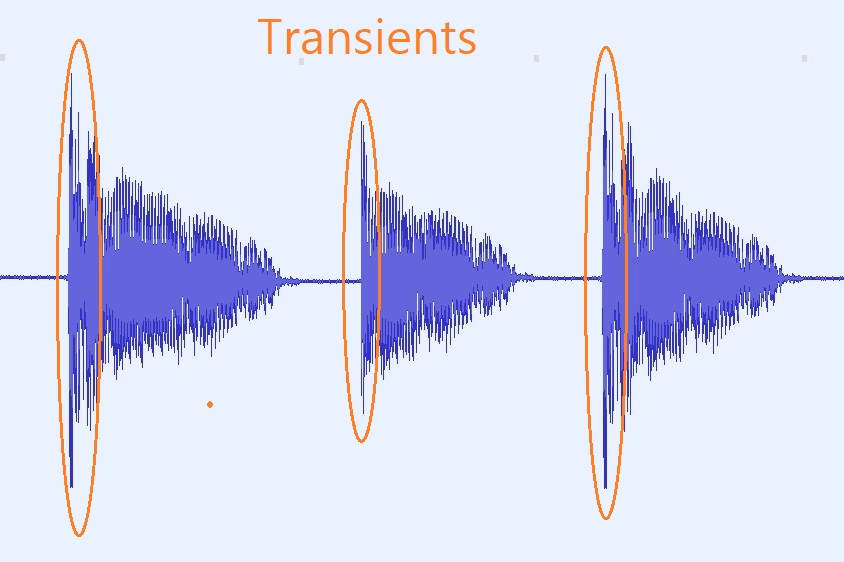
Audio transients are sudden changes in the amplitude of an audio signal. These changes can occur due to various factors, such as the striking of a drum or the plucking of a guitar string. Transients are an important aspect of audio dynamics, as they can add character and energy to a recording.

My Experience with Audio Transients

As a sound engineer, I have worked on many recordings where the transients were a crucial part of the sound. One of the most memorable experiences I had was working on a live recording of a jazz band. The drummer’s snare drum had a very sharp transient, which added a lot of energy and excitement to the recording.

What is Attack Time?

Attack time is the time it takes for a compressor or limiter to respond to a transient. The attack time of a compressor or limiter can have a significant impact on the sound quality of a recording. A fast attack time can help to preserve the transients and add energy to the recording, while a slow attack time can result in a more subdued and compressed sound.

My Opinion on Attack Time

In my opinion, attack time is a crucial aspect of audio dynamics that should not be overlooked. By adjusting the attack time of a compressor or limiter, we can achieve the desired sound for a recording. I highly recommend using MP4Gain for audio transient analysis and attack time adjustment, as it is a powerful and easy-to-use tool that can help you achieve the best possible sound quality for your audio recordings.

Conclusion

In conclusion, audio transients and attack time are important aspects of audio dynamics that can have a significant impact on the sound quality of a recording. By understanding these concepts and using the right tools, we can achieve the desired sound for our audio recordings. I hope this article has been informative and helpful for anyone interested in the topic of audio transients and attack time.
Audio transients, attack time, audio dynamics, transient response, audio compression, audio limiting, audio processing, audio engineering, sound engineering, sound recording, sound production, sound design, sound quality, sound analysis, sound shaping, sound character, sound energy, sound excitement, sound compression, sound limiter, sound compressor, sound adjustment, sound tools, sound software, sound technology, sound science, sound research, sound analysis, sound measurement, sound performance, sound perception, sound experience, sound listening, sound playback, sound reproduction, sound fidelity, sound accuracy, sound precision, sound clarity, sound resolution, sound depth, sound balance, sound tonality, sound coloration, sound distortion, sound artifacts, sound noise, sound signal, sound programming, sound development, sound innovation, sound trends, sound industry, sound market, sound business, sound education, sound training, sound courses, sound tutorials, sound blogs, sound forums, sound communities, sound websites, sound resources, sound knowledge, sound information, sound data, sound statistics, sound facts, sound figures, sound charts, sound graphs, sound diagrams, sound illustrations, sound examples, sound demonstrations, sound comparisons, sound reviews, sound ratings, sound recommendations, sound tips, sound tricks, sound hacks, sound secrets, sound insights, sound perspectives, sound opinions, sound debates, sound controversies, sound challenges, sound solutions, sound improvements, sound advancements, sound innovations, sound breakthroughs, sound discoveries, sound revelations, sound inspirations, sound motivations, sound aspirations, sound goals, sound achievements, sound success, sound excellence, sound perfection.