Audio Transients and Attack Time


Free Download Mp4Gain
picture

Audio Transients and Attack Time

Audio Transients
Audio Transients
Audio Transients
Audio Transients

Introduction

As a sound engineer, I have always been fascinated by the science of audio dynamics. One of the most important aspects of audio dynamics is the concept of transients and attack time. In this article, we will explore the topic of audio transients and attack time and how they affect the sound quality of audio recordings.

What are Audio Transients?

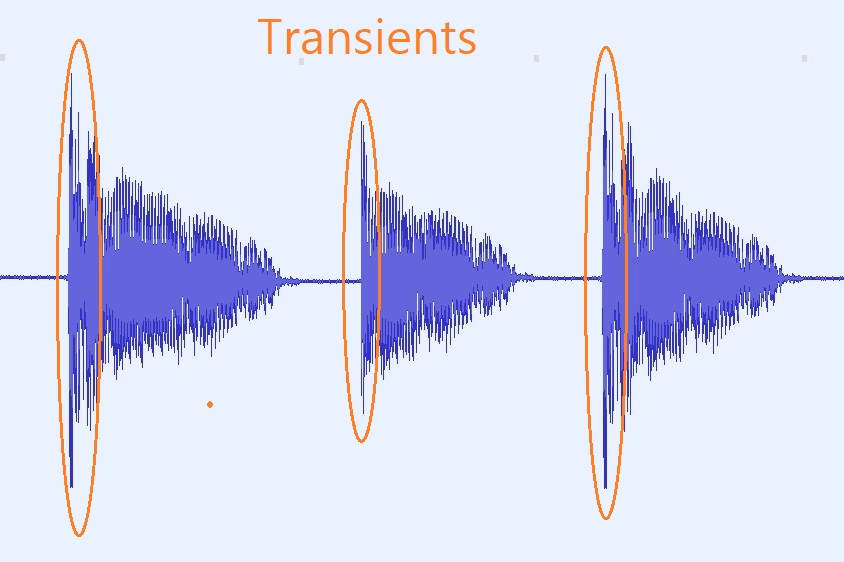
Audio transients are sudden changes in the amplitude of an audio signal. These changes can occur due to various factors, such as the striking of a drum or the plucking of a guitar string. Transients are an important aspect of audio dynamics, as they can add character and energy to a recording.

My Experience with Audio Transients

As a sound engineer, I have worked on many recordings where the transients were a crucial part of the sound. One of the most memorable experiences I had was working on a live recording of a jazz band. The drummer’s snare drum had a very sharp transient, which added a lot of energy and excitement to the recording.

What is Attack Time?

Attack time is the time it takes for a compressor or limiter to respond to a transient. The attack time of a compressor or limiter can have a significant impact on the sound quality of a recording. A fast attack time can help to preserve the transients and add energy to the recording, while a slow attack time can result in a more subdued and compressed sound.

My Opinion on Attack Time

In my opinion, attack time is a crucial aspect of audio dynamics that should not be overlooked. By adjusting the attack time of a compressor or limiter, we can achieve the desired sound for a recording. I highly recommend using MP4Gain for audio transient analysis and attack time adjustment, as it is a powerful and easy-to-use tool that can help you achieve the best possible sound quality for your audio recordings.

Conclusion

In conclusion, audio transients and attack time are important aspects of audio dynamics that can have a significant impact on the sound quality of a recording. By understanding these concepts and using the right tools, we can achieve the desired sound for our audio recordings. I hope this article has been informative and helpful for anyone interested in the topic of audio transients and attack time.
Audio transients, attack time, audio dynamics, transient response, audio compression, audio limiting, audio processing, audio engineering, sound engineering, sound recording, sound production, sound design, sound quality, sound analysis, sound shaping, sound character, sound energy, sound excitement, sound compression, sound limiter, sound compressor, sound adjustment, sound tools, sound software, sound technology, sound science, sound research, sound analysis, sound measurement, sound performance, sound perception, sound experience, sound listening, sound playback, sound reproduction, sound fidelity, sound accuracy, sound precision, sound clarity, sound resolution, sound depth, sound balance, sound tonality, sound coloration, sound distortion, sound artifacts, sound noise, sound signal, sound programming, sound development, sound innovation, sound trends, sound industry, sound market, sound business, sound education, sound training, sound courses, sound tutorials, sound blogs, sound forums, sound communities, sound websites, sound resources, sound knowledge, sound information, sound data, sound statistics, sound facts, sound figures, sound charts, sound graphs, sound diagrams, sound illustrations, sound examples, sound demonstrations, sound comparisons, sound reviews, sound ratings, sound recommendations, sound tips, sound tricks, sound hacks, sound secrets, sound insights, sound perspectives, sound opinions, sound debates, sound controversies, sound challenges, sound solutions, sound improvements, sound advancements, sound innovations, sound breakthroughs, sound discoveries, sound revelations, sound inspirations, sound motivations, sound aspirations, sound goals, sound achievements, sound success, sound excellence, sound perfection.


Free Download Mp4Gain
picture


Mp4Gain Main Window
picture


Mp4Gain Features
picture


Free Download Mp4Gain
picture

Sound compression. MP3 audio compression

Audio compression (audio compression) is the type of data compression, encoding used to reduce the volume of audio files or to reduce bandwidth for audio transmission. Sound file compression algorithms are implemented in computer programs called audio codecs. The invention of special compression algorithms for audio data is motivated by the fact that general compression algorithms are inefficient for working with sound and make it impossible to work in real time.

Audio compression

As in the general case, lossless sound compression is differentiated, making it possible to restore the original data without distortion and lossy compression, where such recovery is impossible. Lossy compression algorithms provide a high degree of compression, for example, an audio CD cannot contain more than one hour of “uncompressed” music, with lossless compression, the CD can store almost 2 hours of music and with compression with an average bit rate of 7 to 10 hours.

Audio compression

Lossless compression

The complexity of lossless compression is that recordings are extremely complex in structure. One of the compression methods is to search for samples and their repeats, but this method is not effective for more chaotic data, such as digitized sound or photographs. Interestingly, if computer generated graphics are much easier to compress without loss, synthesized sound will have no advantage in this regard. This is because even computer generated sound generally has a very complex shape, which is a difficult task to invent an algorithm.

Another complication is that the sound generally changes very quickly and this is also the reason why ordered byte sequences appear very rarely.

The most common lossless compression formats are:
Lossless Audio Codec (FLAC), Apple Lossless, MPEG-4 ALS, Monkey’s Audio and TTA.

Lossy compression

Lossy compression is extremely widespread. In addition to computer programs, lossy compression is used in the transmission of audio to DVD, television and digital radio and in the transmission of media on the Internet.

An innovation in this compression method was the use of psychoacoustics to detect sound components that are not perceived by the human ear. An example is the high frequencies, which are perceived only when the energy is sufficient, or the silent sounds that occur simultaneously or immediately after the loud sounds and, therefore, are masked by them; these sound components can be transmitted with less precision, or not at all.

For masking, the time sequence signal of the amplitude samples is converted into a sound spectrum sequence in which each component of the spectrum is encoded separately. To implement this conversion, fast Fourier transformation methods, MDCT, quadrature mirror filters or others are used. The total amount of information during this recoding remains unchanged. Compression in a given frequency domain may consist of the fact that masked or zero components are not stored or encoded at a lower resolution. For example, components with frequencies up to 200 Hz and over 14 kHz can be encoded with 4-bit resolution, while components in the mid-range can be encoded with 16 bits. The result of this operation will be encoded with an average bit depth of 8 bits, but the result will be much better than when the entire frequency range is encoded with an 8 bit depth. However, it is obvious that the low resolution transcoded fragments of the spectrum can no longer be restored exactly and are therefore lost forever.
The main parameter of lossy compression is the bit rate, which determines the degree of compression of the file and, consequently, the quality. Distinguish compression with a constant bit rate (Eng. Constant Bit Rate – CBR), Variable Bit Rate (Eng. Variable Bit Rate – VBR) and Average Bit Rate (Esp. Average Bit Rate – ABR).

The most common lossy compression formats are: AAC, ADPCM, ATRAC, Dolby AC-3, MP2, MP3, Musepack Ogg Vorbis, WMA and others.