How to make MP4 audio volume consistent


Free Download Mp4Gain
picture

How to make MP4 audio volume consistent

How to make MP4 audio volume consistent

Let’s talk about achieving uniform audio in MP4s. As someone who works with audio daily, I understand the frustration of inconsistent sound levels. Inconsistent audio can disrupt the viewing experience. This comprehensive guide provides solutions for balanced sound in your MP4 files. I’ll share professional insights and practical tips, making even complex concepts accessible to everyone.

The Importance of Balanced Audio in MP4s

Consistent sound enhances the viewing experience significantly. Imagine watching a movie where whispers are barely audible, and explosions make you jump. Unbalanced audio is distracting. Consistent volume creates a more immersive and enjoyable experience. It also demonstrates professionalism and improves accessibility for viewers with hearing impairments.

Understanding the Fundamentals of Audio Leveling

Leveling audio involves adjusting sound levels to achieve a consistent target loudness. It’s like fine-tuning a musical instrument to achieve a more harmonious sound. Peak normalization maximizes loudness without clipping, while loudness normalization targets perceived loudness. Both methods aim to create a more uniform and pleasant listening experience.

Practical Steps for Consistent MP4 Audio

Achieving balanced sound involves a few key steps. I’ll outline them here, providing clear examples to guide you. Each step contributes to a polished final product. These actionable steps yield professional results.

  • Analyze Existing Audio: Begin by assessing the current loudness range. I often use visualization tools to see the peaks and valleys in the waveform, identifying areas needing adjustment. It’s like examining a map before starting a journey.
  • Adjust Levels Carefully: Utilize audio editing tools to carefully raise quiet passages and lower overly loud ones. Avoid clipping, which introduces distortion. It’s similar to adjusting the seasoning in a dish for optimal flavor.
  • Monitor and Refine: Use loudness meters and your ears to monitor the results. Listen on different devices, like headphones and speakers, to ensure consistent playback across platforms. This final check is like taste-testing a recipe before serving it.

Ensuring Seamless Audio Transitions

Abrupt volume changes can be jarring. Smooth transitions are essential for maintaining viewer engagement. Gradual fades and crossfades prevent jarring shifts between scenes or audio segments. Properly implemented transitions maintain a consistent and professional feel. This creates seamlessness in the audio experience.

Advanced Techniques for Consistent Audio

More advanced methods, beyond basic leveling, can help you to achieve a uniform feel and optimize the sound across various platforms:

  • Dynamic Range Compression: Gently reduces the difference between the loudest and quietest parts of the audio, creating a more even overall volume. This is similar to using a compressor in music production to smooth out the dynamics of an instrument.
  • Equalization (EQ): Adjusts the balance of different frequencies in the audio, helping to clarify dialogue or reduce harshness. It’s like fine-tuning the tone controls on a stereo system to customize the sound.

Optimizing Your Workflow

Optimizing the process saves a great deal of time, specifically when managing numerous MP4s. The techniques I’ve perfected over the years are designed to help you build efficiency in your process and deliver top results. Streamlining ensures consistently high quality output.

  • Create Presets or Templates: Once you’ve established settings that work well, save them as presets or templates. This saves time when working on similar projects. It’s like having a pre-made recipe for your favorite dish.
  • Batch Processing: Many tools offer batch processing capabilities, allowing you to apply your adjustments to multiple files simultaneously. This streamlines the process significantly, especially when working with large volumes of media. Think of it like cooking multiple dishes in the oven at once.

Troubleshooting Common Issues

Even with the best planning, sometimes issues arise when dealing with audio. In my experience, most issues can be identified and resolved quickly. These solutions tackle those common headaches.

  • Audio Too Quiet: If the audio is consistently too low, check the input gain during recording or increase the amplification during editing. It’s like turning up the microphone volume before a speech.
  • Audio Too Loud/Distorted: Conversely, if the audio is too loud, it can cause distortion or clipping. Reduce the gain or apply compression to manage peaks. It’s like lowering the volume on a speaker to prevent crackling.
  • Inconsistent Levels Within a File: If certain sections are louder than others, carefully adjust those sections individually using automation or gain adjustments. This targeted approach is like fine-tuning individual instruments in a musical mix.

Understanding the Role of Codecs

The codec used to encode your sound heavily impacts resulting storage and final perceived tones. Different codecs operate using varied methods. Each has unique characteristics. Codec selection is a key factor in sonic fidelity.

  • AAC (Advanced Audio Coding): The most common codec used with MP4s. AAC offers a good balance between file size and sound quality, making it suitable for a wide range of applications. I often recommend this codec for its versatility.
  • Other Audio Codecs: Alternatives such as MP3 or Apple Lossless exist, each with its trade-offs in terms of quality and file dimensions. Selecting one codec over another comes down to making a balanced decision that meets specific project requirements.

Latest words on How to make MP4 audio volume consistent

Consistent MP4 audio enhances the listening experience. Following these tips and techniques you can improve your content. Balanced sound not only sounds more professional. But it also makes your videos more accessible. Consistent audio demonstrates attention to detail, setting your productions apart. While tools like MP4Gain can help streamline the process, a deep understanding of these principles is essential for achieving truly professional results.

FAQ about How to make MP4 audio volume consistent

Why do my MP4 videos have inconsistent audio levels?

Uneven volume within MP4s can stem from various factors: source material discrepancies, incorrect recording levels, or issues during editing or processing. Identifying the root cause helps apply the proper solution.

What are some indicators of inconsistent volume?

Frequent manual volume changes during playback, dialogue that’s hard to hear in some scenes, or overly loud music or sound effects. These indicate normalization steps are needed.

How does normalization improve my videos?

Normalized volume creates a more professional product by eliminating jarring shifts in loudness. It enhances viewer engagement and improves accessibility, especially for those with hearing sensitivities.

What are common techniques for leveling sound?

Peak normalization boosts the loudest part of the audio without introducing distortion. Loudness normalization aims for a consistent perceived volume. These are the most often used options.

How can I make smooth transitions between scenes?

Gradual fades and crossfades prevent jarring changes. This smoothing process contributes significantly to a polished, professional feel.

What are some advanced audio editing techniques?

Dynamic range compression smooths out the loudness variations within your audio. Equalization adjusts tonal balance, impacting dialogue clarity, and music quality.

What if my MP4 audio is too quiet?

Increase the gain during editing, being careful to avoid clipping. If possible, re-record the audio at a higher input level to capture a stronger signal from the start.

What should I do if the audio is too loud or distorted?

Reduce the gain during editing or apply compression to control peaks and avoid clipping, which introduces distortion. These measures create more manageable sound.

How can I ensure consistent loudness across multiple MP4 files?

Use batch processing features in sound tools. Batch processing applies your preferred normalization settings to multiple files at once. This creates uniformity across a large batch.

How does the audio codec affect file size and quality?

Different codecs have varying compression ratios and quality characteristics. AAC offers a balance between file size and audio fidelity. Lossless codecs like FLAC provide perfect sonic replication but result in larger files. Codec choice is a crucial aspect.

Comments:

Wow, this is a really helpful article! I’ve been struggling with uneven audio in my videos, and this gives me a much better understanding of how to fix it. Thanks!

Great explanation of audio normalization. I didn’t realize there were different types, like peak and loudness normalization. That makes total sense. Thanks for clarifying.

The tip about listening on different devices is spot on. I usually just check my audio on my computer speakers, but now I see why it’s important to test on headphones and other devices too.

I’m glad you mentioned accessibility. It’s something I’ve been trying to be more mindful of in my videos. Consistent audio levels are definitely a big part of that. Cheers.

This is super detailed, maybe a little *too* detailed. I just want a simple way to make my videos sound better. Is there a quick and easy method you can recommend?

Batch processing is a lifesaver! I edit a lot of videos, and the thought of manually adjusting audio levels for each one was daunting. Thanks for the tip!

I still don’t get the whole “codec” thing. Can you explain that in simpler terms? Like, what codec should I be using for my MP4 videos?

This was a game-changer for my video editing workflow. Thanks for the practical advice and clear explanations!

Great article, really comprehensive! Just a suggestion – could you add a section on how to normalize audio in different video editing software programs? That would be very helpful.

This article needs more cowbell! Just kidding. Seriously though, great job. Thanks for the informative read.


Free Download Mp4Gain
picture


Mp4Gain Main Window
picture


Mp4Gain Features
picture


Free Download Mp4Gain
picture

Perceptual Entropy and Its Role in MP3 Quality

Perceptual Entropy and Its Role in MP3 Quality

Perceptual Entropy and Its Role in MP3 Quality

Let’s talk about perceptual entropy and MP3 quality

Perceptual entropy is a concept that holds the key to understanding why MP3 files sound the way they do. As someone with years of experience delving into audio compression technologies, I find it fascinating how perceptual entropy helps achieve a balance between sound quality and file size. Imagine trying to pack your favorite songs into a suitcase for a trip. You want to carry everything, but you only have so much space. Perceptual entropy works like a smart packer, deciding what to keep and what to leave behind so that the audio remains clear and enjoyable.

MP3 encoding relies heavily on perceptual entropy to decide which parts of a song are important for listeners and which parts can be discarded without a noticeable loss in quality. This selective process mimics how our ears perceive sound, allowing MP3s to maintain their characteristic compact size while still sounding great.

Understanding perceptual entropy

Perceptual entropy measures the complexity of a sound signal as perceived by the human ear. It’s not just about raw data; it’s about how we experience that data. Think about how a crowded room might sound to you: you focus on the conversation in front of you, tuning out other noises. Perceptual entropy in MP3s works similarly, focusing on the most critical sounds and ignoring the less important ones.

This approach is rooted in psychoacoustics, the study of how humans perceive sound. By understanding what our ears prioritize, audio compression algorithms can remove parts of the audio that are less significant. This keeps the file size small without noticeably impacting quality.

How perceptual entropy shapes MP3 encoding

The MP3 format uses perceptual entropy to decide what to compress and what to keep. For example, if two frequencies are played together and one is much louder, the quieter frequency might be masked and therefore omitted. This process allows the MP3 format to save space while preserving the overall listening experience.

Perceptual entropy also influences bitrate selection. Lower bitrates mean more aggressive compression, which can lead to noticeable artifacts in complex audio like symphonies or live recordings. Higher bitrates, on the other hand, preserve more details, which is crucial for audiophiles or professional applications.

Real-life examples of perceptual entropy

When I explain perceptual entropy to friends, I like to use the example of a photograph. Imagine shrinking a high-resolution image to fit on your phone screen. You don’t need every pixel from the original because the screen can’t display all that detail. Similarly, MP3 encoding removes audio details that you won’t miss in typical listening environments, like on a car stereo or earbuds.

Another example is streaming services. They often use perceptual entropy to optimize files for quick loading and minimal buffering while maintaining acceptable sound quality. This is why you can stream music on your phone without consuming massive amounts of data.

The role of psychoacoustics in MP3 quality

Psychoacoustics plays a vital role in how perceptual entropy is applied. Our ears are more sensitive to certain frequencies, like those in the midrange where voices and most instruments lie. High and low frequencies, though still important, are less perceptible in some contexts and can be compressed more aggressively.

This understanding allows MP3 encoders to allocate more bits to the parts of the audio signal that matter most. For example, in a rock song, the vocals and guitar might receive higher priority than the subtle nuances of the cymbals.

Challenges with perceptual entropy

While perceptual entropy is highly effective, it’s not perfect. Some listeners with trained ears or high-quality audio equipment may notice compression artifacts, such as a loss of clarity in the highs or a “swirling” effect in the background. This is especially true at lower bitrates.

Additionally, not all audio is equally suited to MP3 compression. Complex, dynamic music like orchestral pieces may lose more fidelity compared to simpler tracks like podcasts or pop songs. Understanding these limitations is crucial for achieving the best balance between file size and quality.

Improving MP3 quality through perceptual entropy

To improve MP3 quality, you need to make thoughtful choices about bitrates and encoding settings. For casual listening, a bitrate of 128 kbps might be sufficient. However, for critical applications, higher bitrates like 320 kbps are recommended. This allows the encoder to preserve more audio detail, minimizing the perceptual loss caused by entropy.

It’s also worth experimenting with different encoders. Not all MP3 encoders handle perceptual entropy the same way, and some are better at preserving specific audio qualities. Choosing the right tools can make a significant difference in the final output.

Perceptual entropy in other audio formats

MP3 isn’t the only format that uses perceptual entropy. Other codecs like AAC and Ogg Vorbis also rely on similar principles. However, these formats often offer better efficiency, meaning they can deliver similar or better quality at lower bitrates.

For example, AAC is widely used in streaming services because it offers a more refined approach to perceptual entropy. This allows platforms to deliver high-quality audio while conserving bandwidth, enhancing the user experience.

Latest words on perceptual entropy and MP3 quality

Perceptual entropy is a cornerstone of MP3 technology, making it possible to enjoy high-quality music in a compact format. By understanding how it works, we can make informed decisions about encoding settings and achieve the best balance between quality and file size.

If you’re looking to optimize your MP3 files, consider tools like Mp4Gain, which can help you fine-tune settings for better results. With the right approach, you can ensure your audio files sound their best, no matter the playback device.

FAQ about perceptual entropy and its role in MP3 quality

What is perceptual entropy?

Perceptual entropy measures the complexity of a sound signal as perceived by the human ear, helping to optimize audio compression.

How does perceptual entropy impact MP3 quality?

It determines which parts of the audio can be compressed without noticeable loss, balancing quality and file size.

Comments:

Wow, this article really helped me understand MP3 quality better. I didn’t know about perceptual entropy before!

I always wondered why some MP3s sound better than others. Now it makes sense—thanks for the info!

Compression artifacts in MP3 and MP4

Compression artifacts in MP3 and MP4

Compression artifacts in MP3 and MP4

Let’s talk about compression artifacts in MP3 and MP4

When we think about digital audio and video, MP3 and MP4 are the first formats that come to mind. But one challenge that often gets overlooked is compression artifacts. These artifacts degrade audio or video quality, making it less enjoyable or even irritating. As an expert who has worked with audio and video files extensively, I’ve seen firsthand how these artifacts appear and affect the final product. Let me explain this in simple terms and show you how to minimize them for better quality.

Compression artifacts are like smudges on a window—when you reduce file sizes, details get lost, and what remains is distorted. Imagine saving space in your home by squashing boxes; the boxes may fit, but their contents could get damaged. MP3 and MP4 use lossy compression, meaning they throw away data deemed unnecessary, leading to these imperfections.

What are compression artifacts?

Compression artifacts are the unwanted distortions introduced when reducing file sizes. For MP3 audio, this might mean muffled sounds, harsh treble, or missing details. For MP4 video, you might see blocky visuals, color banding, or ghosting effects. These artifacts appear because the algorithms prioritize smaller file sizes over perfect quality.

Take MP3, for instance. To save space, certain sound frequencies are removed, but this often strips richness from the music. It’s like listening to your favorite band through a thin wall—you hear it, but it’s just not the same. MP4 works similarly with video, where fine details, like subtle textures or gradients, are sacrificed.

How do MP3 compression artifacts affect audio quality?

The impact of compression on audio is noticeable, especially if you’re using good headphones or speakers. I’ve often been frustrated by the tinny sound of an MP3 track with a low bitrate. Compression artifacts in audio usually show up as:

  • Metallic, robotic sounds in vocals.
  • Swishing noises during silent or low-volume parts.
  • Lack of bass or muffled instruments.
  • A sudden drop in clarity during complex music sections.

Imagine listening to a symphony orchestra where some instruments disappear or blend unnaturally. That’s the result of lossy compression trying to simplify the sound spectrum.

How do MP4 compression artifacts impact video quality?

With video, compression artifacts are visual glitches that distract from the viewing experience. I’ve seen this happen often in action-packed scenes or dark sequences in movies. Here are common MP4 artifacts:

  • Blocky pixels appearing in fast-moving scenes.
  • Color banding, where gradients appear as harsh lines instead of smooth transitions.
  • Ghosting, where previous frames leave a faint trace.
  • Smudged or blurry details in textures and backgrounds.

Imagine watching a wildlife documentary and noticing the sky isn’t a smooth gradient but has distinct color bands. That’s an artifact caused by over-compression.

Why do compression artifacts occur in MP3 and MP4?

Compression artifacts result from reducing file sizes by discarding redundant or less noticeable data. This process relies on psychoacoustics for MP3 (understanding what sounds humans don’t notice) and visual perception for MP4. However, these algorithms aren’t perfect.

Let’s compare this to summarizing a book. If you cut out too much, you lose important context, leaving the summary fragmented. Similarly, when compression goes too far, artifacts are inevitable.

How to reduce MP3 and MP4 compression artifacts

If you care about quality, there are ways to minimize these issues. Over the years, I’ve experimented with several approaches, and here’s what I recommend:

  • Choose higher bitrates: For MP3s, 320 kbps offers much better sound. For MP4, use higher bitrates to preserve video details.
  • Use lossless formats: When quality matters most, FLAC for audio and ProRes for video are ideal.
  • Opt for advanced codecs: AAC for audio and HEVC (H.265) for video offer better compression efficiency with fewer artifacts.
  • Test playback on high-quality devices: Use good headphones or displays to spot issues before finalizing your files.
  • Avoid multiple compressions: Repeatedly compressing the same file worsens artifacts. Work with original files whenever possible.

How to identify compression artifacts in your files

One skill I’ve developed is spotting compression artifacts quickly. It’s not hard once you know what to look for:

  • For MP3s, listen to cymbals or vocals—they’re often the first to reveal distortions.
  • In MP4s, check fast-moving scenes or areas with gradients like skies or shadows.
  • Compare with uncompressed originals: A/B testing makes artifacts obvious.

It’s like spotting a fake painting—you notice inconsistencies when you compare it to the real thing.

Latest words on compression artifacts in MP3 and MP4

Compression artifacts are a trade-off between convenience and quality. Understanding why they occur and how to reduce them is essential for anyone serious about audio or video. Over the years, I’ve learned that while artifacts can’t always be avoided, careful choices in settings and formats make a big difference.

If you’re struggling with audio and video quality, Mp4Gain offers a reliable way to enhance files and reduce noticeable artifacts. But remember, no software can fully recover what’s lost in extreme compression, so start with the highest quality possible.

FAQs about compression artifacts in MP3 and MP4

What are compression artifacts?

Compression artifacts are distortions or glitches caused by reducing file sizes in audio and video formats like MP3 and MP4. These include sound loss, blocky visuals, and color banding.

How do compression artifacts affect audio?

In audio, artifacts result in metallic sounds, muffled details, or distorted vocals. This happens when certain frequencies are removed during compression.

What causes compression artifacts in MP4 videos?

MP4 artifacts appear due to aggressive compression, leading to blocky visuals, color banding, and ghosting effects. Fast-moving scenes are most affected.

Can I avoid compression artifacts?

You can reduce artifacts by using higher bitrates, lossless formats, and advanced codecs. Avoid compressing files multiple times for best results.

What is the best bitrate to avoid MP3 artifacts?

A bitrate of 320 kbps is ideal for MP3 files. It minimizes artifacts while maintaining reasonable file sizes.

Why do gradients look bad in compressed videos?

Compression reduces data for smooth transitions, resulting in color banding where gradients appear as harsh lines instead of seamless blends.

Is lossy compression always bad?

Lossy compression is not inherently bad. It balances file size and quality but should be used carefully to avoid noticeable artifacts.

Can compression artifacts be fixed?

Artifacts can be reduced but not entirely fixed. Tools like Mp4Gain help enhance quality, but prevention is better than repair.

What is psychoacoustics in MP3 compression?

Psychoacoustics is the science behind MP3 compression, removing sounds the human ear is less likely to notice to save space.

Why are MP4 artifacts worse in fast-moving scenes?

Fast-moving scenes contain more data, making compression harder. Algorithms struggle to maintain detail, causing blocky artifacts.

Comments:

Wow, this explains so much! I’ve always wondered why my music sounds weird on cheap earphones. Now I know it’s compression artifacts. Great article!

Super helpful! But can you talk more about lossless formats like FLAC? I’m curious about how they compare to MP3 and MP4. Thanks!

This is exactly what I needed to read. I’ve been having trouble with blurry textures in my videos, and now I know what’s causing it.

The info is great, but I wish there were more examples of software to fix artifacts. Still, a great read overall!

Honestly, I didn’t know artifacts were a thing until I started editing videos. This article makes it so clear and easy to understand!

Audio Frequency Bands

Exploring Audio Frequency Bands

Audio Frequency Bands

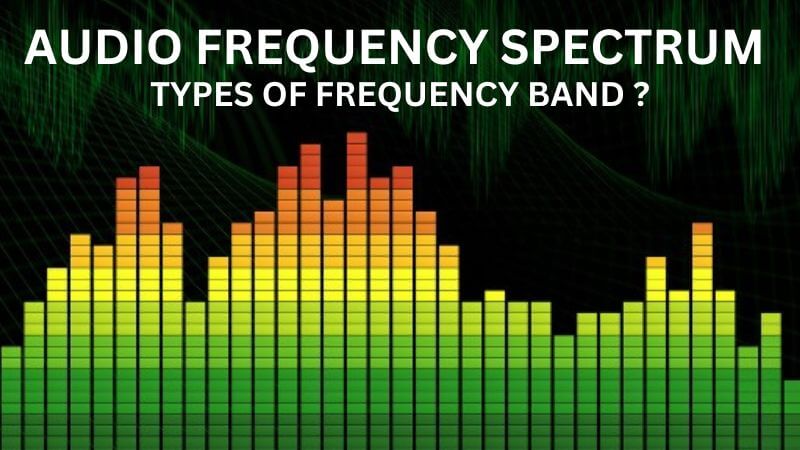
Audio Frequency Spectrum

As a sound engineer, I have always been fascinated by the science of audio frequency bands. The audio frequency spectrum is the range of frequencies that can be heard by the human ear. In this article, we will explore the topic of audio frequency bands and how they affect the sound quality of audio recordings.

My Experience with Audio Frequency Bands

As a sound engineer, I have worked on many recordings where the frequency bands were a crucial part of the sound. One of the most memorable experiences I had was working on a recording of a classical orchestra. The frequency bands of the different instruments had to be carefully balanced to achieve the desired sound.

Audio Frequency Range

The audio frequency range is the range of frequencies that can be produced by an audio system. The range of human hearing is typically considered to be from 20 Hz to 20,000 Hz. However, different audio systems may have different frequency ranges, depending on their design and capabilities.

My Opinion on Audio Frequency Range

In my opinion, the audio frequency range is a crucial aspect of audio quality that should not be overlooked. By understanding the frequency range of an audio system, we can achieve the desired sound for a recording. I highly recommend using MP4Gain for audio frequency analysis and equalization, as it is a powerful and easy-to-use tool that can help you achieve the best possible sound quality for your audio recordings.

Audio Frequency Modulation

Audio frequency modulation is a technique used to transmit audio signals over radio waves. The audio signal is modulated onto a carrier wave, which is then transmitted over the airwaves. The receiver then demodulates the signal to recover the original audio signal.

My Experience with Audio Frequency Modulation

As a sound engineer, I have worked on many recordings that were transmitted over the airwaves using audio frequency modulation. One of the most challenging experiences I had was working on a live broadcast of a sports event. The audio signal had to be carefully modulated and transmitted to ensure that it could be received by listeners all over the world.

Final Words

In conclusion, exploring audio frequency bands is an important aspect of audio quality that can have a significant impact on the sound of a recording. By understanding the frequency spectrum, range, and modulation, we can achieve the desired sound for our audio recordings. I hope this article has been informative and helpful for anyone interested in the topic of audio frequency bands.
Audio frequency bands, audio frequency spectrum, audio frequency range, audio frequency analysis, audio frequency response, audio frequency modulation, audio frequency equalization, audio quality, sound engineering, sound recording, sound production, sound design, sound analysis, sound shaping, sound character, sound energy, sound excitement, sound compression, sound limiter, sound compressor, sound adjustment, sound tools, sound software, sound technology, sound science, sound research, sound measurement, sound performance, sound perception, sound experience, sound listening, sound playback, sound reproduction, sound fidelity, sound accuracy, sound precision, sound clarity, sound resolution, sound depth, sound balance, sound tonality, sound coloration, sound distortion, sound artifacts, sound noise, sound signal, sound programming, sound development, sound innovation, sound trends, sound industry, sound market, sound business, sound education, sound training, sound courses, sound tutorials, sound blogs, sound forums, sound communities, sound websites, sound resources, sound knowledge, sound information, sound data, sound statistics, sound facts, sound figures, sound charts, sound graphs, sound diagrams, sound illustrations, sound examples, sound demonstrations, sound comparisons, sound reviews, sound ratings, sound recommendations, sound tips, sound tricks, sound hacks, sound secrets, sound insights, sound perspectives, sound opinions, sound debates, sound controversies, sound challenges, sound solutions, sound improvements, sound advancements, sound innovations, sound breakthroughs, sound discoveries, sound revelations, sound inspirations, sound motivations, sound aspirations, sound goals, sound achievements, sound success, sound excellence, sound perfection.

Audio Transients and Attack Time

Audio Transients and Attack Time

Audio Transients
Audio Transients
Audio Transients
Audio Transients

Introduction

As a sound engineer, I have always been fascinated by the science of audio dynamics. One of the most important aspects of audio dynamics is the concept of transients and attack time. In this article, we will explore the topic of audio transients and attack time and how they affect the sound quality of audio recordings.

What are Audio Transients?

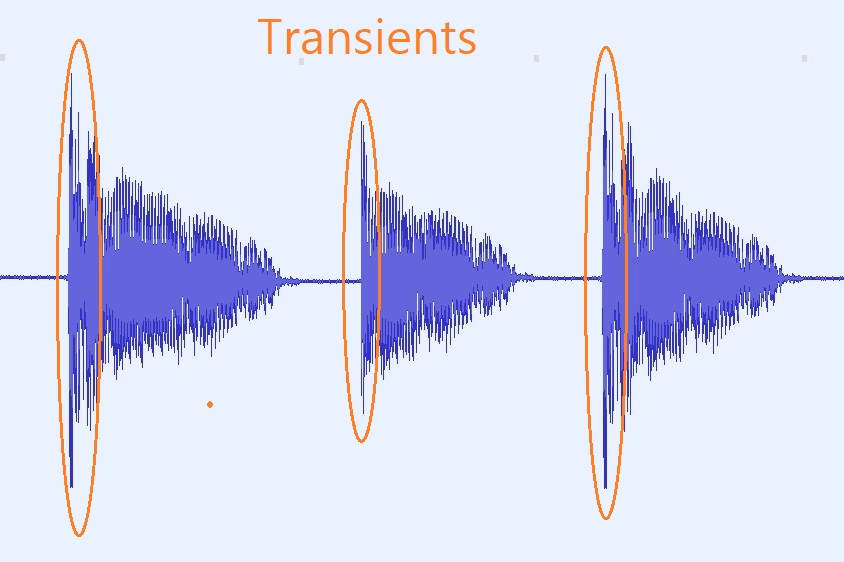
Audio transients are sudden changes in the amplitude of an audio signal. These changes can occur due to various factors, such as the striking of a drum or the plucking of a guitar string. Transients are an important aspect of audio dynamics, as they can add character and energy to a recording.

My Experience with Audio Transients

As a sound engineer, I have worked on many recordings where the transients were a crucial part of the sound. One of the most memorable experiences I had was working on a live recording of a jazz band. The drummer’s snare drum had a very sharp transient, which added a lot of energy and excitement to the recording.

What is Attack Time?

Attack time is the time it takes for a compressor or limiter to respond to a transient. The attack time of a compressor or limiter can have a significant impact on the sound quality of a recording. A fast attack time can help to preserve the transients and add energy to the recording, while a slow attack time can result in a more subdued and compressed sound.

My Opinion on Attack Time

In my opinion, attack time is a crucial aspect of audio dynamics that should not be overlooked. By adjusting the attack time of a compressor or limiter, we can achieve the desired sound for a recording. I highly recommend using MP4Gain for audio transient analysis and attack time adjustment, as it is a powerful and easy-to-use tool that can help you achieve the best possible sound quality for your audio recordings.

Conclusion

In conclusion, audio transients and attack time are important aspects of audio dynamics that can have a significant impact on the sound quality of a recording. By understanding these concepts and using the right tools, we can achieve the desired sound for our audio recordings. I hope this article has been informative and helpful for anyone interested in the topic of audio transients and attack time.
Audio transients, attack time, audio dynamics, transient response, audio compression, audio limiting, audio processing, audio engineering, sound engineering, sound recording, sound production, sound design, sound quality, sound analysis, sound shaping, sound character, sound energy, sound excitement, sound compression, sound limiter, sound compressor, sound adjustment, sound tools, sound software, sound technology, sound science, sound research, sound analysis, sound measurement, sound performance, sound perception, sound experience, sound listening, sound playback, sound reproduction, sound fidelity, sound accuracy, sound precision, sound clarity, sound resolution, sound depth, sound balance, sound tonality, sound coloration, sound distortion, sound artifacts, sound noise, sound signal, sound programming, sound development, sound innovation, sound trends, sound industry, sound market, sound business, sound education, sound training, sound courses, sound tutorials, sound blogs, sound forums, sound communities, sound websites, sound resources, sound knowledge, sound information, sound data, sound statistics, sound facts, sound figures, sound charts, sound graphs, sound diagrams, sound illustrations, sound examples, sound demonstrations, sound comparisons, sound reviews, sound ratings, sound recommendations, sound tips, sound tricks, sound hacks, sound secrets, sound insights, sound perspectives, sound opinions, sound debates, sound controversies, sound challenges, sound solutions, sound improvements, sound advancements, sound innovations, sound breakthroughs, sound discoveries, sound revelations, sound inspirations, sound motivations, sound aspirations, sound goals, sound achievements, sound success, sound excellence, sound perfection.