The threshold of hearing and decibels in an mp3


Free Download Mp4Gain
picture

The threshold of hearing and decibels in an mp3

Very often people talk about the term normalize the volume of music.

But there are several concepts that we must be fairly clear to understand which program works best to achieve this standardization and even to know how to take advantage of the program.

We as creators of the mp4gain have had to delve deeply into the fields of acoustics as well as psychoacoustics and with terms that people are not entirely clear about how decibels are.
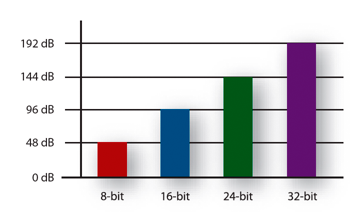
In other words, it is perfectly normal for the common user to wish that all their audio or video files have a similar volume and an even volume gain level, that they have a similar loudness so that they do not give the impression that the volume increases. and go down with each video or with each song.

We consider it important to provide a brief explanation of the decibel term to clarify some concepts and to help them better understand which program works best and how to get more out of that program, which for us is mp4gain.

The threshold of hearing

We call the intensity threshold of hearing what a sound needs to have to be captured by the human ear.
It is important to be clear that the threshold is not the same for all frequencies. What the human ear can perceive. And this is a point where it stands out clearly in Mp4gain, because in its algorithm we have taken into account that different frequencies have different thresholds. Therefore they must be treated differently. Since the lowest sounds have a higher threshold unlike the higher frequencies columbar is normally 0 decibels.

With the above understood, it will be understood why the idea of ​​simply measuring the peaks of a song and then increasing the volume of the entire song As much as possible so as not to saturate those volume peaks, is a very primitive concept that gives very bad results .

Normalizing the volume of a song or video is something really much more complex, which has to be done by frequency widths and taking into account many other points such as the masking used by some formats such as MP3.

All this explanation seeks that the user understands what to solve the problem that he has, What is basically that he wants to match the volume levels of his different audio or video files, to the needed increasingly refined algorithms to achieve truly important results.

Also the mp4gain offers another series of functionalities such as modifying the Pitch of a song Without modifying its speed or vice versa


Free Download Mp4Gain
picture


Mp4Gain Main Window
picture


Mp4Gain Features
picture


Free Download Mp4Gain
picture

What does decibel and frequency mean?

Decibels (dB) and frequency are terms used to describe the sound levels and the number of cycles of a sound wave in a second.

decibels scale

To get a clear idea of ​​the technical words that describe the facts about hearing impairment and noise, we have compiled the basic data on dB and frequency.

Frequency

The frequency of a sound is the number of cycles of a sound wave in a second. The unit of measurement is hertz (Hz). The frequency of a sound increases as the number of cycles per second increases. Vibrations between 20 and 20,000 cycles per second are interpreted as the sound a healthy person hears. A high pitched sound could be a piccolo or the song of a bird. The bass sounds could be the sound of distant thunder or the tones of a bass.

Decibel (dB)

The term dB (decibel) and the dB scale are used worldwide to measure sound levels. The decibel scale is a logarithmic scale in which twice the sound pressure corresponds to an increase in the level of 6 dB.

decibels noise levels

It is very important to understand that the term ‘dB’ can have different meanings and that it is not a fixed value such as volt or meter, etc. The value of a dB depends on the context in which it is used.

Below you will find examples of different sound intensities expressed in dB (HL):

180 dB: Rocket on takeoff
140 dB: Engine of a jet plane when taking off
120 dB: Rock band
110 dB: Strong thunder
90 dB: Traffic in the city
80 dB: The radio at a high volume
60 dB: Normal conversation
30 dB: Soft whisper
0 dB: The lowest sound that a person perceives


What are decibels?

They are a unit of measurement that allows to establish the power of the noise.

The hearing threshold is 0 decibels and the pain threshold is approximately 120.

The noise level is measured in decibels (dB), a sound unit equivalent to one tenth of the Bell, a measure of sound power that expresses the difference between two sounds whose intensities are in a ratio of 10 to 1.

The decibel is a mathematical relationship of the logarithmic type where if a noise increases 3 dB, it means that the perceived sound energy is doubled.

The hearing threshold is at 0 dB, and the pain threshold is around 120 dB. However, the ear does not respond equally to all frequencies of a noise, that is, we hear certain sounds better than others depending on their frequency.

For this reason the decibel A (dBA) was defined, a unit of sound level measured with a previous filter that removes part of the low and very high frequencies. Thus, before the measurement, only the most harmful sounds for the ear are preserved, which is why the exposure measured in dBA is a good indicator of auditory risk.

The weakest sound that a healthy ear can hear or detect has an amplitude of a twentieth millionth of a Pascal, something like 5,000,000,000 times less than normal atmospheric pressure. It is considered that no more than 30 decibels should be registered so that a person can sleep well, while 120 decibels constitute the threshold of the bearable