The threshold of hearing and decibels in an mp3


Free Download Mp4Gain
picture

The threshold of hearing and decibels in an mp3

Very often people talk about the term normalize the volume of music.

But there are several concepts that we must be fairly clear to understand which program works best to achieve this standardization and even to know how to take advantage of the program.

We as creators of the mp4gain have had to delve deeply into the fields of acoustics as well as psychoacoustics and with terms that people are not entirely clear about how decibels are.
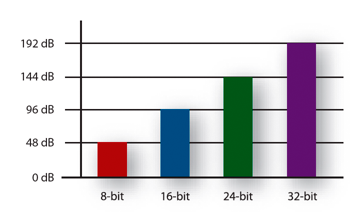
In other words, it is perfectly normal for the common user to wish that all their audio or video files have a similar volume and an even volume gain level, that they have a similar loudness so that they do not give the impression that the volume increases. and go down with each video or with each song.

We consider it important to provide a brief explanation of the decibel term to clarify some concepts and to help them better understand which program works best and how to get more out of that program, which for us is mp4gain.

The threshold of hearing

We call the intensity threshold of hearing what a sound needs to have to be captured by the human ear.
It is important to be clear that the threshold is not the same for all frequencies. What the human ear can perceive. And this is a point where it stands out clearly in Mp4gain, because in its algorithm we have taken into account that different frequencies have different thresholds. Therefore they must be treated differently. Since the lowest sounds have a higher threshold unlike the higher frequencies columbar is normally 0 decibels.

With the above understood, it will be understood why the idea of ​​simply measuring the peaks of a song and then increasing the volume of the entire song As much as possible so as not to saturate those volume peaks, is a very primitive concept that gives very bad results .

Normalizing the volume of a song or video is something really much more complex, which has to be done by frequency widths and taking into account many other points such as the masking used by some formats such as MP3.

All this explanation seeks that the user understands what to solve the problem that he has, What is basically that he wants to match the volume levels of his different audio or video files, to the needed increasingly refined algorithms to achieve truly important results.

Also the mp4gain offers another series of functionalities such as modifying the Pitch of a song Without modifying its speed or vice versa


Free Download Mp4Gain
picture


Mp4Gain Main Window
picture


Mp4Gain Features
picture


Free Download Mp4Gain
picture

Decibels: Understanding Decibels part 2

As you know the level of a digital audio signal should not exceed 0 db, in case it does distortions will occur. Normally the signal has an average level of -x db; but it is its highest peaks that should not exceed 0 dbs. That is, you can have a signal with an average level of -5 dbs but with a level of peaks of -2db, which prevents those peaks from raising the signal by more than 2 db.

decibels

Normalize is to increase the volume of a shot until the highest point of it is 0 dB.
It is assumed that when recording, for example, a voice shot, you have regulated the gain so that it does not saturate (0 dB pass). Most likely, that shot has not reached its maximum volume. When you normalize you climb to the maximum just before the highest peak saturates.
It is the same as raising the fader of the corresponding track until you reach 0 dB, but the normalize option calculates it automatically.
Necessary? Well, I guess not always. But it doesn’t hurt to know if you’ve reached the highest possible volume of a track.

There are cases in which it is very useful. Imagine that when you make a song you record a guitar shot and then start applying equalizers, compressors, etc. But you decide to make more shots, to see if they come out better (almost always this way). If each recording has different volumes, you must adjust everything for each shot (for example the compressor threshold). But if you have normalized after each recording, just replace one audio jack with another, since its volume is the same. In some posts you can read things like: “test set the threshold to -20 dB”. The one who gives that advice assumes that the track is normalized, because if it actually sounds much lower, what that compressor does will have nothing to do. In addition, some functions, such as noise reducers, are optimized for standard shots.
If you get used to normalize the newly recorded tracks, the values ​​that you will use in all types of plugins (or hardware tackle) will be similar. You can create your presets and apply them quickly.
It is assumed that normalizing does not change the quality of the recording.
Some people think that the background noise is also increased, but that is normal given that the volume is rising. The important thing is that everything goes up in the same proportion. Maybe you would have to do tests to check

What is a decibel?

A decibel (dB) is a unit of measure that is used to express, in a logarithmic way, the relationship between two values. In the world of acoustics it is about the relationship between two levels of sound pressure.

Decibel is composed of two words:

deci: that means one tenth.
bel: which is a unit named after Alexander Graham Bell, the inventor of the telephone.
The bel is a unit of sound and a decibel (dB) is one tenth of a bel.
So, in acoustics, a decibel is a unit used to measure the sound pressure level (SPL) based on a reference level.

The human ear is sensitive to a wide range of sound levels ranging from 0 dB, which means total silence for the human ear, up to 130 dB, which causes pain.

To get an idea:

-Smooth human breathing, which is heard only when we are very close, reaches about 10 dB.
-A normal conversation can be around 60 dB.
-A vacuum reaches up to 80 dB.
-An ambulance siren is around 120 dB when we are close to it.
-A volume of 140 dB can cause damage to the ear, if it is supported for a period of time.
-Exposure to 150 dB can burst the eardrums. And the sound above this level can be very harmful and even lethal.