Dynamic Range in Audio


Free Download Mp4Gain
picture

Understanding Dynamic Range in Audio
Dynamic Range in Audio

What is Dynamic Range in Audio?

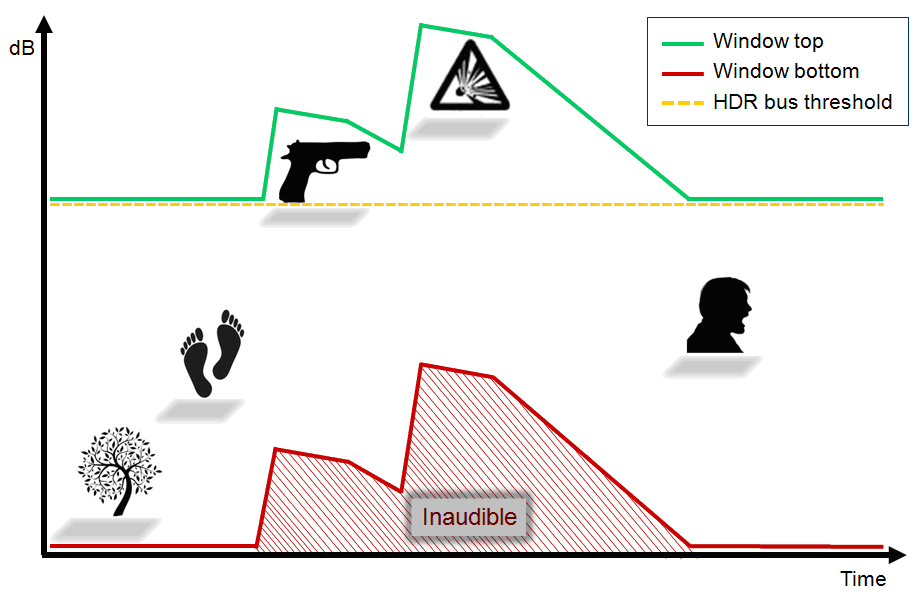
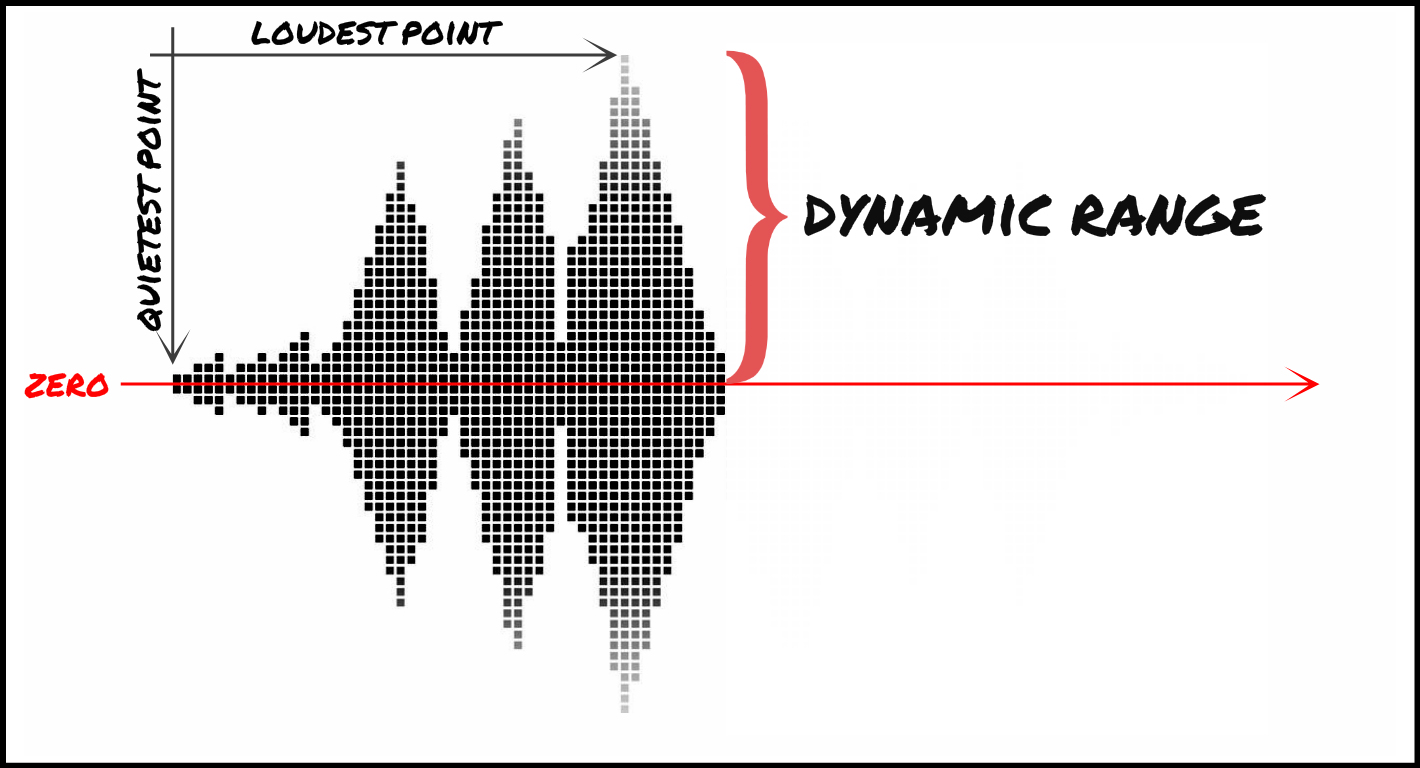
Dynamic range refers to the difference between the loudest and quietest parts of an audio signal. It is an important aspect of sound engineering that determines the quality of sound produced. As an audio engineer, I have come across numerous situations where the dynamic range of a recording was too wide or too narrow, making it difficult to produce a high-quality mix.

In the book “The Mixing Engineer’s Handbook” by Bobby Owsinski, he states: “The dynamic range is what gives a recording its emotional impact. Too much and it becomes tiresome, too little and it becomes boring.” This perfectly illustrates the importance of understanding and mastering dynamic range in audio.

When working with audio, it is important to use tools such as compressors, limiters, and expanders to manage the dynamic range. These tools can help reduce the difference between the loudest and quietest parts of a recording, resulting in a more balanced sound.

How does Dynamic Range Compression work?

Dynamic Range Compression (DRC) is a technique used in audio engineering to reduce the dynamic range of a recording. This is achieved by reducing the volume of the loudest parts of the recording while leaving the quieter parts unchanged.

DRC is commonly used in music production to create a consistent volume level throughout a song. It is also used in broadcasting to ensure that the volume of advertisements is consistent with the volume of the program being aired.

In the movie “Whiplash,” the character Terence Fletcher, played by J.K. Simmons, says, “There are no two words in the English language more harmful than ‘good job’.” While this quote is not related to audio engineering, it perfectly illustrates the idea behind dynamic range compression. By reducing the difference between the loudest and quietest parts of a recording, we create a more consistent and balanced sound.

Why is Understanding Dynamic Range important?

Understanding dynamic range is important for anyone working with audio. It allows us to create high-quality recordings that are both pleasing to the ear and emotionally impactful.

As a personal anecdote, I once recorded a live concert where the dynamic range was too wide. The quiet parts of the recording were barely audible, while the loud parts were painfully loud. After mastering the recording and reducing the dynamic range, the final product was much more enjoyable to listen to.

In conclusion, dynamic range is a crucial aspect of sound engineering that should not be overlooked. By understanding how it works and using the right tools, we can create recordings that are both balanced and emotionally impactful.

Final Words

When it comes to audio engineering, mastering dynamic range is key to creating high-quality recordings. By using tools such as compressors and limiters, we can reduce the difference between the loudest and quietest parts of a recording, resulting in a more balanced sound. As an audio engineer, I have seen firsthand the importance of mastering dynamic range, and I urge anyone working with audio to take the time to understand it fully.


Free Download Mp4Gain
picture


Mp4Gain Main Window
picture


Mp4Gain Features
picture


Free Download Mp4Gain
picture

discussion on dynamic range compression.

discussion on dynamic range compression.

dynamic range

Dynamic range compression is a scapegoat for poor musical sound, but heavily compressed music isn’t a new trend – listen to Motown albums from the sixties. The same can be said of the Led Zeppelin classics or the younger Wilco and Radiohead albums.

Dynamic Range

Records, especially older ones that were recorded and produced before 1982, were less likely to get mixed up and get louder. They reproduce natural music with a natural dynamic range that is preserved on record and lost in most standard or high definition digital formats.

Of course, there are exceptions – listen to Steven Wilson’s recently released album from MA Recordings or Reference Recordings and you’ll hear how good digital sound can be. But this is rare, most modern recordings are tall and compressed.

Music compression has been the subject of serious criticism lately, but I would say that almost all of your favorite recordings are compressed. Some of them are less, some more, but they are still compressed. Dynamic range compression is a scapegoat for poor musical sound, but heavily compressed music isn’t a new trend – listen to Motown albums from the sixties. The same can be said of the Led Zeppelin classics or the younger Wilco and Radiohead albums. Dynamic range compression reduces the natural ratio between the loudest and lowest recorded sounds, so whispers can be as loud as screams. It’s pretty hard to find pop music from the last 50 years that hasn’t been compressed.

I recently had a nice chat with Tape Op founder and editor Larry Crane about the good, bad and bad aspects of compression. Larry Crane has worked with bands and artists such as Stefan Marcus, Cat Power, Sleater-Kinney, Jenny Lewis, M. Ward, The Go-Betweens, Jason Little, Eliot Smith, Quasi, and Richmond Fontaine. He also runs the Jackpot recording studio! in Portland, Oregon, home to The Breeders, The Decemberists, Eddie Vedder, Pavement, REM, She & Him and many, many more.

Crane agreed with my arguments, but added: “The compression conversation needs to be approached from two different sides: are we talking about compressing the entire track in the mixing and mastering process, or compressing individual music tracks (instruments and vocals) in the recording and mixing process? “That’s right, compression is applied at all stages of music production, so some of the dynamic range may have been lost long ago when the mastering engineer performed the last run. If you don’t have access to the multitrack master copy, the two tracks after mixing, and the final master copy, then you won’t be able to understand why the recording sounds like this.

As an example of surprisingly unnatural sound, but still great songs, I cite Spoon They Want My Soul’s album, released in 2014. Crane laughs and says he listens to it in the car because he sounds great there. Which brings us to another answer to the question why music is compressed: because compression and the extra “clarity” make it sound better in noisy places.

Larry Crane at work. Photo by Jason Quigley

When people say they like the sound of an audio recording, I think they like music, as if sound and music are inseparable terms. But for me, I differentiate these concepts. From a music lover’s point of view, the sound may be harsh and raw, but that won’t matter to most listeners.

Many are in a hurry to accuse mastering engineers of abusing compression, but compression is applied directly during recording, during mixing, and only then during mastering. If you have not been personally present at each of these stages, then you will not be able to know what the instruments and voices sounded like at the beginning of the process.

Crane was on fire: “If a musician deliberately wants to make the sound crazy and distorted like Guided by Voices records, then there is nothing wrong with that: desire always outweighs sound quality.” The performer’s voice is almost always compressed, the same goes for bass, drums, guitars, and synthesizers. Compression keeps vocal volume at the desired level throughout the song or stands out slightly from other sounds.

Compression done correctly can make the drums sound more lively or intentionally strange. In order for the music to sound good, you must be able to use the instruments necessary for this. That’s why it takes years to figure out how to use compression and not go overboard.

SPOTIFY REDUCES THE VOLUME, THE MUSIC CONTINUES TO GIVE STEPS TO RECOVER THE DYNAMIC RANGE

The 90s were the stage of music transformation. The industry began a war based on the excessive increase in the volume of the songs so that they stood out in the listener over the competition. They had realized that people paid more attention to those songs that sounded louder. Why did this happen and happen? The human ear does not understand or perceive peak levels. Perceive loudness levels (the intensity with which a sound is perceived). The human ear receives better frequencies between 20Hz and 20Khz, the higher the frequency level, the better the sound will be perceived, since, apparently, a greater level of detail will be appreciated, but it does not imply that it is a better sound. The auditory system is not linear, so it requires a greater volume at high and low frequencies to give the same sense of loudness as in the media. With this pretext the record companies were increasingly increasing the sound of the records. Isophonic curves are curves that relate how the ear listens, depending on the pressure and frequency.


The average level of the CDs in 1990 was -12 dB. Then, in 1995 the level rose to -6 dB. In 2000, the CDs reached an average level of -3 dB. As the level of the CDs increased, the dynamic range was reduced to have a nuanced and distorted music, but this is not the only problem. Mixes with low dynamic range are counterproductive and can cause long-term problems and damage to hearing such as hearing fatigue or hearing loss.

What is dynamic range and why was it reduced?

As we have explained previously, the interest of the record companies focused on increasing the number of sales and to achieve this, they had to attract the attention of the listeners and the only way was to increase the volume. This fact was called the Loudness War. For the music to sound louder, at a higher volume, the songs had to be compressed and thereby eliminate the peaks of the highs creating distortion and misunderstanding of the music since it did not sound as originally been created The highs and lows are no longer so distant, the music is heard at a higher volume, but the nuances have ceased to be appreciated. Thus the dynamic range disappeared or, in other words, what gives music life and difference.
This phenomenon is much closer if we talk about the volume of television ads that appeared after a program. The sound increased excessively with respect to the volume of the program. The United States was the first country to realize and create an international LUFS scale (Loudness Units relative to Full Scale) to measure the volume of sound and avoid differentiation between the volume of programs and advertisements. LUFS is equivalent to decibel and an algorithm similar to our way of listening is used to calculate it.

Digital music has a factory volume cap, which experts have called a digital zero. If this volume is exceeded, distortion results. Distortion has been possible due to compressors and digital limiters that reduced the dynamic range in favor of increasing the volume.

The professionals of the sound began to see in this excessive increase of the volume a very serious problem that had to be solved, beyond mere technical questions, and associations like Pleasurize Music Foundation or the Turn me up! that fight against this type of practices to avoid continuing to increase the volume and compress the music indiscriminately.

The most famous streaming music platform with the largest number of subscribers is Spotify and seems to have realized that the rise in indiscriminate volume does not benefit anyone. This is why Spotify has lowered its sound level to -14LUFS, while previously playing to -12LUFS. Apple music is in -16 LUFS and Youtube and Tidal in -14. The AES (Audio Engineering Society) places the standard between -20 and -16 LUFS.

But what advantages does the sound have dynamic range if the volume is lower?

Well, once we have read the text we can almost take them out automatically:

– Clean sound
– Without saturation
– Reach the listener more effectively
– You can distinguish nuances and sound
– More beneficial to our ears.

The sound can always be improved and it is not necessary to compress the songs, this is known and understood by all those who mainly look for quality. Not being able to listen to a song because we are in a noisy environment such as the subway or the city center has an easy solution since we could connect a DAC to any device. This action will give more dynamism to the music and we can also increase the volume without fear