Dynamic Range in Audio


Free Download Mp4Gain
picture

Understanding Dynamic Range in Audio
Dynamic Range in Audio

What is Dynamic Range in Audio?

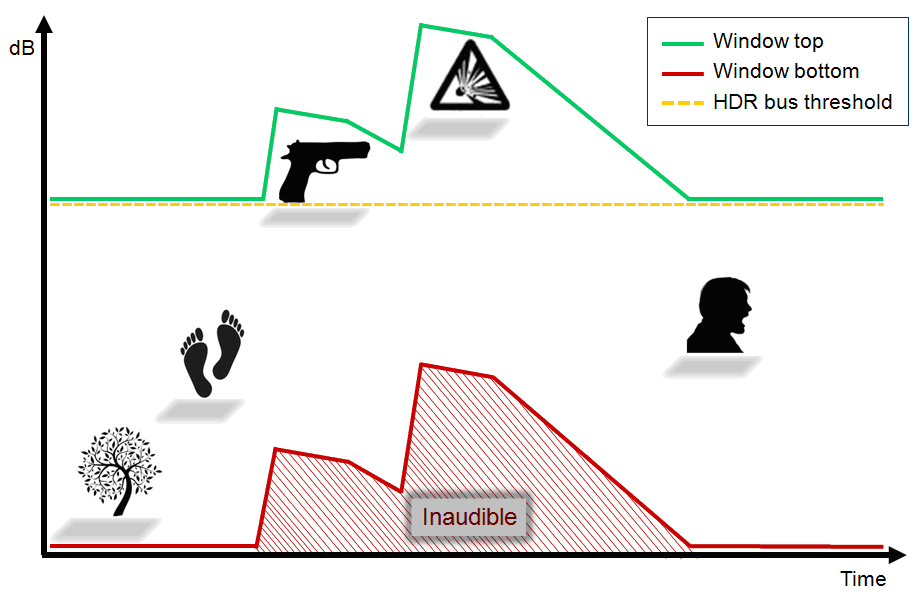
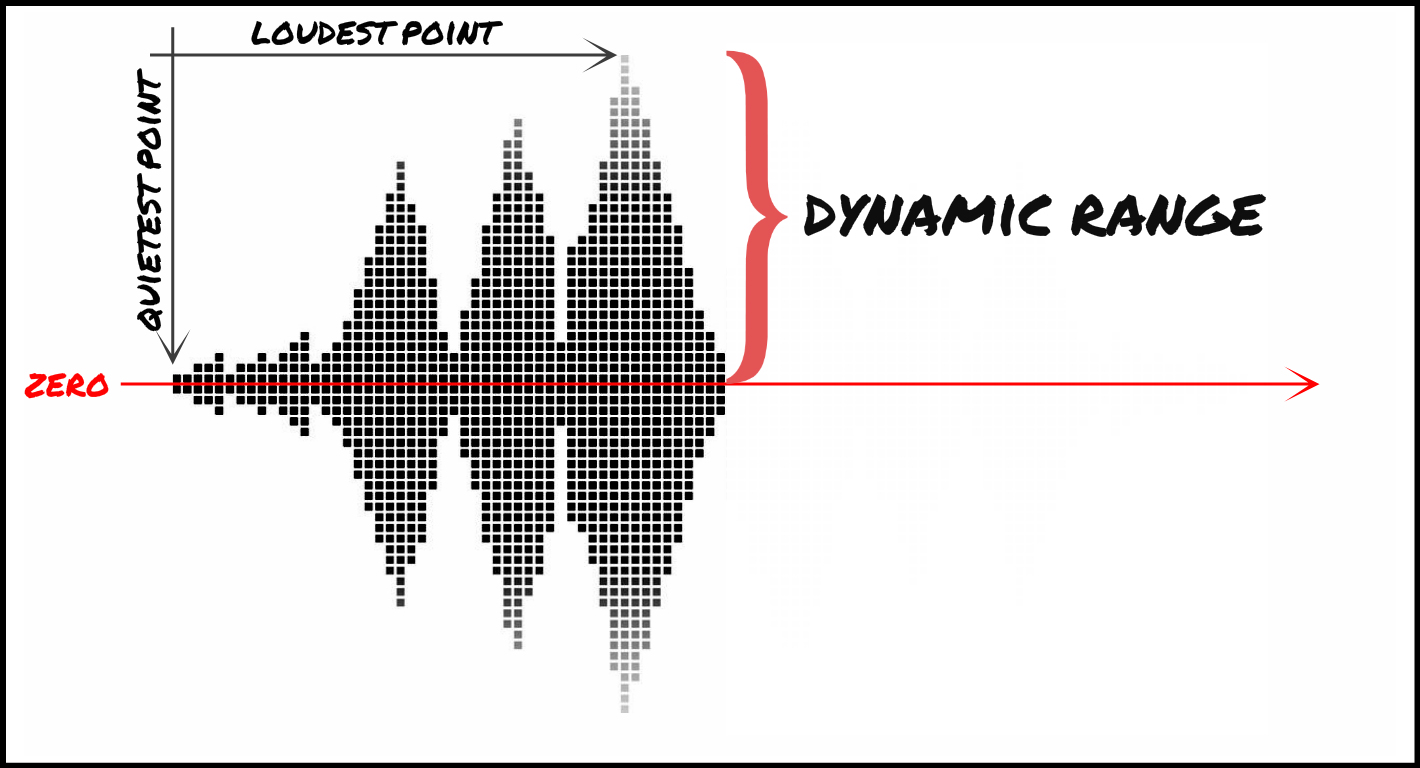
Dynamic range refers to the difference between the loudest and quietest parts of an audio signal. It is an important aspect of sound engineering that determines the quality of sound produced. As an audio engineer, I have come across numerous situations where the dynamic range of a recording was too wide or too narrow, making it difficult to produce a high-quality mix.

In the book “The Mixing Engineer’s Handbook” by Bobby Owsinski, he states: “The dynamic range is what gives a recording its emotional impact. Too much and it becomes tiresome, too little and it becomes boring.” This perfectly illustrates the importance of understanding and mastering dynamic range in audio.

When working with audio, it is important to use tools such as compressors, limiters, and expanders to manage the dynamic range. These tools can help reduce the difference between the loudest and quietest parts of a recording, resulting in a more balanced sound.

How does Dynamic Range Compression work?

Dynamic Range Compression (DRC) is a technique used in audio engineering to reduce the dynamic range of a recording. This is achieved by reducing the volume of the loudest parts of the recording while leaving the quieter parts unchanged.

DRC is commonly used in music production to create a consistent volume level throughout a song. It is also used in broadcasting to ensure that the volume of advertisements is consistent with the volume of the program being aired.

In the movie “Whiplash,” the character Terence Fletcher, played by J.K. Simmons, says, “There are no two words in the English language more harmful than ‘good job’.” While this quote is not related to audio engineering, it perfectly illustrates the idea behind dynamic range compression. By reducing the difference between the loudest and quietest parts of a recording, we create a more consistent and balanced sound.

Why is Understanding Dynamic Range important?

Understanding dynamic range is important for anyone working with audio. It allows us to create high-quality recordings that are both pleasing to the ear and emotionally impactful.

As a personal anecdote, I once recorded a live concert where the dynamic range was too wide. The quiet parts of the recording were barely audible, while the loud parts were painfully loud. After mastering the recording and reducing the dynamic range, the final product was much more enjoyable to listen to.

In conclusion, dynamic range is a crucial aspect of sound engineering that should not be overlooked. By understanding how it works and using the right tools, we can create recordings that are both balanced and emotionally impactful.

Final Words

When it comes to audio engineering, mastering dynamic range is key to creating high-quality recordings. By using tools such as compressors and limiters, we can reduce the difference between the loudest and quietest parts of a recording, resulting in a more balanced sound. As an audio engineer, I have seen firsthand the importance of mastering dynamic range, and I urge anyone working with audio to take the time to understand it fully.


Free Download Mp4Gain
picture


Mp4Gain Main Window
picture


Mp4Gain Features
picture


Free Download Mp4Gain
picture

discussion on dynamic range compression.

discussion on dynamic range compression.

dynamic range

Dynamic range compression is a scapegoat for poor musical sound, but heavily compressed music isn’t a new trend – listen to Motown albums from the sixties. The same can be said of the Led Zeppelin classics or the younger Wilco and Radiohead albums.

Dynamic Range

Records, especially older ones that were recorded and produced before 1982, were less likely to get mixed up and get louder. They reproduce natural music with a natural dynamic range that is preserved on record and lost in most standard or high definition digital formats.

Of course, there are exceptions – listen to Steven Wilson’s recently released album from MA Recordings or Reference Recordings and you’ll hear how good digital sound can be. But this is rare, most modern recordings are tall and compressed.

Music compression has been the subject of serious criticism lately, but I would say that almost all of your favorite recordings are compressed. Some of them are less, some more, but they are still compressed. Dynamic range compression is a scapegoat for poor musical sound, but heavily compressed music isn’t a new trend – listen to Motown albums from the sixties. The same can be said of the Led Zeppelin classics or the younger Wilco and Radiohead albums. Dynamic range compression reduces the natural ratio between the loudest and lowest recorded sounds, so whispers can be as loud as screams. It’s pretty hard to find pop music from the last 50 years that hasn’t been compressed.

I recently had a nice chat with Tape Op founder and editor Larry Crane about the good, bad and bad aspects of compression. Larry Crane has worked with bands and artists such as Stefan Marcus, Cat Power, Sleater-Kinney, Jenny Lewis, M. Ward, The Go-Betweens, Jason Little, Eliot Smith, Quasi, and Richmond Fontaine. He also runs the Jackpot recording studio! in Portland, Oregon, home to The Breeders, The Decemberists, Eddie Vedder, Pavement, REM, She & Him and many, many more.

Crane agreed with my arguments, but added: “The compression conversation needs to be approached from two different sides: are we talking about compressing the entire track in the mixing and mastering process, or compressing individual music tracks (instruments and vocals) in the recording and mixing process? “That’s right, compression is applied at all stages of music production, so some of the dynamic range may have been lost long ago when the mastering engineer performed the last run. If you don’t have access to the multitrack master copy, the two tracks after mixing, and the final master copy, then you won’t be able to understand why the recording sounds like this.

As an example of surprisingly unnatural sound, but still great songs, I cite Spoon They Want My Soul’s album, released in 2014. Crane laughs and says he listens to it in the car because he sounds great there. Which brings us to another answer to the question why music is compressed: because compression and the extra “clarity” make it sound better in noisy places.

Larry Crane at work. Photo by Jason Quigley

When people say they like the sound of an audio recording, I think they like music, as if sound and music are inseparable terms. But for me, I differentiate these concepts. From a music lover’s point of view, the sound may be harsh and raw, but that won’t matter to most listeners.

Many are in a hurry to accuse mastering engineers of abusing compression, but compression is applied directly during recording, during mixing, and only then during mastering. If you have not been personally present at each of these stages, then you will not be able to know what the instruments and voices sounded like at the beginning of the process.

Crane was on fire: “If a musician deliberately wants to make the sound crazy and distorted like Guided by Voices records, then there is nothing wrong with that: desire always outweighs sound quality.” The performer’s voice is almost always compressed, the same goes for bass, drums, guitars, and synthesizers. Compression keeps vocal volume at the desired level throughout the song or stands out slightly from other sounds.

Compression done correctly can make the drums sound more lively or intentionally strange. In order for the music to sound good, you must be able to use the instruments necessary for this. That’s why it takes years to figure out how to use compression and not go overboard.

Better 16 bit or 24 bit? Which audio sampling rate should I choose?

Record 16 bit or 24 bit, what changes?

16 or 24 bits

Today we live in the middle of the digital age, which has made the total distribution of music possible. Thanks to this, we can download an entire album “free” from the Internet in a few minutes. The benefits of the digital age were really impressive, but today we’re not going to talk about it, but rather focus the discussion on what the ideal recording is, choose between 16 bit or 24 bit and identify the sound differences between the two registration modes with the case’s various useful tips . The times when everything was recorded in analogue are far away. Think of the sound of Pink Floyd’s “Dark Side of the Moon”, “In the Court of the Crimson King” by King CrimsonO, Lonely Hearts Sergeant Pepper’s club band by The Beatles.

16 or 24 bits

We live in a time when digital is the master, but it is true that analog resists and can offer much higher quality. Let’s see what the differences between these two recording modes are between 16 and 24 bit. Before we start the decision with rather challenging speeches, we need to know what the word “bit” means, which indicates the amount of information in each sample and describes its resolution. Let us take a few explanatory examples: 16 bit is the sound depth used on audio CDs, while 24 bit is the definition of audio that can be achieved on an audio DVD. Now think about it: The CD generally has a storage capacity of around 700 MB instead of a 4.7 GB audio DVD, okay?

How are the audio files played?

We can say that a set of digital information is converted into an analog signal, which allows the sound waveform to be reproduced. Among the advantages that we undoubtedly have for an absolutely perfect sound cleaning, the digital audio file takes up considerably less space than the analog one, or rather we can determine the size of the file that we want to record or capture.

Let’s start with the recent past, when the widespread frequency on compact discs was 16 bit and 44,100 Hz, all albums and collections were recorded on audio CDs. This limit began to exceed thanks to the launch of new devices. Like drum machines, for example, the bits began to gradually increase from 16 to 18, 20 to 24 bits.

Today it is evident that an audio interface can work with 24 bits, including other alternatives to the recording mode, which can be performed at frequencies of 44.1, 48, 88.2, 96 to 192 kHz. Digital systems convert an analog signal to a digital format to store and transmit data using PCM (pulse code modulation). This quality is given by two factors, the first being determined by the bit depth and the second by the recorded frequency of samples. The first factor, bit depth, indicates the number of bits used that quantify the number of levels that characterize a tone in a second. In other words, the more bits a sound has, the more it is defined in level (for example, 16,536 levels are available per second for 16-bit recording.) We can say that the higher the sampling frequency, the more the sound area becomes defined, with the result that the transformation of the signal from analog to digital would be more accurate.
That means we can conclude with one consideration, ie the greater the bit depth, the greater the sampling frequency and the more audio information is stored, the more defined the audio quality. The development and continuous search for effective systems is a subject in which many studies are carried out.

Now we will delve deeper and deeper into our discussion by analyzing the different modes of audio resolution that enable sound quality and size. Suppose the larger the sound you want, the larger the file size.

What are Flac files?

FLAC is an acronym that stands for Free Lossless Audio Codec. As the English terms indicate, this literally means that it is a type of coding with which a signal can be read and written without data loss and which differs from the “lossy” types (Ogg Vorbis, MP3 or AAC). FLAC was deliberately designed and developed to compress audio files, which was not the case with other encoding types such as ZIP and gzip. For this reason, significant compressions can be achieved, which can be reduced from 30 to 50%