How does the bit depth impact the dynamic range and audio fidelity in digital formats?


Free Download Mp4Gain
picture

How does the bit depth impact the dynamic range and audio fidelity in digital formats?

audio bit depth
audio bit depth
audio bit depth
audio bit depth

Bit depth’s influence on dynamic range and audio quality

I remember when I first started learning about digital audio formats, I was curious about how bit depth affected the overall sound quality. It turns out that bit depth plays a significant role in determining the dynamic range and audio fidelity of digital audio files. The higher the bit depth, the more accurately the audio signal can be represented, resulting in a more detailed and accurate sound.

As a musician, I’ve always been fascinated by the science behind sound. I once read a quote from the famous composer John Cage that said, “There is no such thing as an empty space or an empty time. There is always something to see, something to hear.” This idea resonates with me, as it highlights the importance of capturing every nuance of sound in digital audio formats.

In my experience, working with higher bit depths has allowed me to create richer, more immersive audio experiences for my listeners. The increased dynamic range and audio fidelity make a noticeable difference in the final product.

How bit depth affects audio fidelity in digital formats

When I first started experimenting with digital audio, I didn’t realize how crucial bit depth was to the overall sound quality. Bit depth refers to the number of bits used to represent each audio sample in a digital file. The more bits used, the greater the audio fidelity, as there are more possible values to represent the audio signal.

I recall watching a documentary about the history of digital audio, where an expert explained that “the higher the bit depth, the closer the digital representation is to the original analog signal.” This made me realize the importance of using higher bit depths to achieve the best possible audio quality.

In my own projects, I’ve found that using a higher bit depth results in a more accurate and detailed sound. It’s especially noticeable when working with complex audio material, where the nuances of the sound can be more easily captured and preserved.

The role of bit depth in digital audio dynamic range

Dynamic range is another critical aspect of digital audio quality that is directly influenced by bit depth. The dynamic range refers to the difference between the quietest and loudest parts of an audio signal. A higher bit depth allows for a greater dynamic range, as there are more possible values to represent the varying levels of loudness.

I’ve always been a fan of movies with powerful soundtracks, and I remember a quote from the film “Amadeus” that stuck with me: “Music is not just about notes, but also the spaces between them.” This idea applies to dynamic range as well, as it’s essential to capture the full spectrum of sound, from the quietest whispers to the loudest explosions.

In my own audio projects, I’ve noticed that working with higher bit depths allows me to create more dynamic and expressive soundscapes. The increased dynamic range provides a more immersive and engaging listening experience for my audience.

Final words

In conclusion, bit depth plays a crucial role in determining the dynamic range and audio fidelity of digital audio formats. A higher bit depth allows for a more accurate representation of the audio signal, resulting in a more detailed and immersive sound. As a musician and audio enthusiast, I’ve found that working with higher bit depths has significantly improved the quality of my projects.

If you’re looking to enhance the audio quality of your own projects, I highly recommend using a tool like mp4gain. While it’s not free or open-source, and only runs on Windows, it’s a powerful normalizer and converter for major audio and video formats. With its integrated equalizer, mp4gain can help you achieve the best possible audio quality for your projects.


Free Download Mp4Gain
picture


Mp4Gain Main Window
picture


Mp4Gain Features
picture


Free Download Mp4Gain
picture

Digital Audio Dynamic Range: What You Need to Know

Digital Audio Dynamic Range: What You Need to Know

dynamic range
dynamic range
dynamic range
dynamic range

Digital audio dynamic range is an important aspect of audio production that affects the quality and clarity of audio. In this article, we’ll explore the basics of dynamic range, how it applies to digital audio, and what you need to know to ensure that your audio recordings have optimal dynamic range.

What is Dynamic Range?

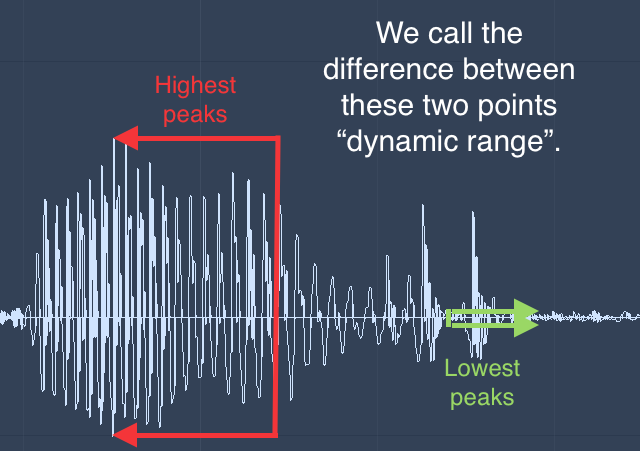
Dynamic range refers to the range of volume levels in an audio signal. It is the difference between the quietest and loudest parts of the audio signal. A wider dynamic range means that the audio signal can capture a greater range of sound levels, resulting in a more realistic and dynamic sound.

In audio production, dynamic range is typically measured in decibels (dB). The dynamic range of an audio signal is the difference between the peak level (the loudest part of the signal) and the noise floor (the quietest part of the signal).

Dynamic Range in Digital Audio

Dynamic range is particularly important in digital audio because digital audio signals are made up of discrete values or “samples” that represent the amplitude of the audio signal at a specific point in time. The number of bits used to represent each sample determines the dynamic range of the audio signal.

For example, a 16-bit audio signal can represent 65,536 different amplitude levels, resulting in a dynamic range of about 96 dB. In contrast, a 24-bit audio signal can represent 16,777,216 different amplitude levels, resulting in a dynamic range of about 144 dB. This is why 24-bit audio is often preferred for professional audio production.

Factors That Affect Dynamic Range

There are several factors that can affect the dynamic range of a digital audio signal:

  1. Recording environment: The recording environment can have a significant impact on dynamic range. A noisy recording environment can increase the noise floor of the recording, reducing the overall dynamic range.
  2. Microphone placement: The placement of the microphone can also affect dynamic range. A poorly placed microphone may capture too much ambient noise, reducing the dynamic range of the recording.
  3. Audio processing: The processing of the audio signal can also affect dynamic range. Compression and limiting can be used to increase the apparent loudness of an audio signal, but they can also reduce dynamic range if used excessively.
  4. Playback system: The dynamic range of a recording can also be affected by the playback system. A low-quality playback system may not be able to reproduce the full dynamic range of the recording.

How to Ensure Optimal Dynamic Range

To ensure optimal dynamic range in your digital audio recordings, there are several things you can do:

  1. Choose the right recording environment: Choose a quiet environment with good acoustics to minimize the noise floor of your recordings.
  2. Use proper microphone placement: Use proper microphone placement to capture the sound source while minimizing ambient noise.
  3. Use appropriate audio processing: Use compression and limiting sparingly to maintain dynamic range while still achieving the desired loudness.
  4. Use high-quality playback systems: Use high-quality headphones or speakers to ensure that the full dynamic range of the recording is reproduced.

FAQs

Here are some frequently asked questions about digital audio dynamic range:

What is dynamic range?

Dynamic range refers to the difference between the quietest and loudest parts of an audio signal. A high dynamic range means that the signal has a large difference between the quietest and loudest parts, while a low dynamic range means that the signal has a small difference between the quietest and loudest parts.

What is the importance of dynamic range in digital audio?

Dynamic range is crucial in digital audio because it affects the quality of the sound. If the dynamic range is too small, the sound can become compressed and lose detail. On the other hand, if the dynamic range is too large, the sound can become distorted and lose clarity. A well-balanced dynamic range ensures that the sound is clear, detailed, and realistic.

How is dynamic range measured?

Dynamic range is measured in decibels (dB). The difference between the quietest and loudest parts of the audio signal is measured in dB, and this value is used to determine the dynamic range of the signal. A higher dynamic range is indicated by a higher dB value.

What is compression and how does it affect dynamic range?

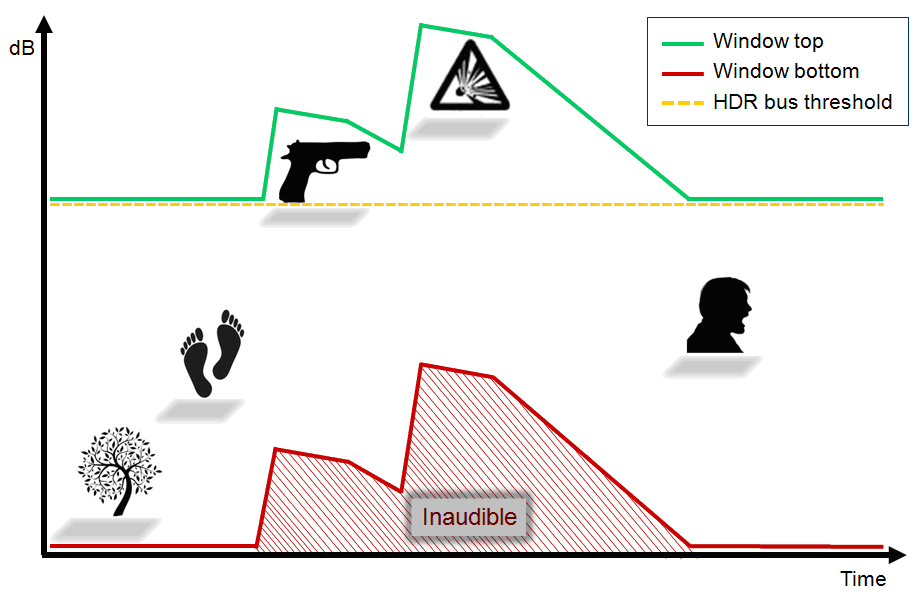
Compression is a technique used in digital audio to reduce the dynamic range of a signal. This is done by reducing the volume of the loudest parts of the signal and increasing the volume of the quietest parts of the signal. Compression can be useful in some cases, such as when recording vocals or instruments with a wide dynamic range. However, excessive compression can result in a loss of detail and clarity in the sound.

What is limiting and how does it affect dynamic range?

Limiting is a technique used in digital audio to prevent the signal from exceeding a certain level. This is done by reducing the volume of the loudest parts of the signal when they reach a certain threshold. Limiting can be useful in preventing distortion in a signal, but it can also reduce the dynamic range of the signal if used excessively.

What is normalization and how does it affect dynamic range?

Normalization is a technique used in digital audio to adjust the overall volume of a signal to a standard level. This is done by increasing or decreasing the volume of the entire signal to match a predetermined level. Normalization can be useful in bringing the volume of a signal up to a standard level, but it can also reduce the dynamic range of the signal if used excessively.

What is MP4Gain and how can it help with digital audio dynamic range?

MP4Gain is a software application that allows users to adjust the volume of MP3 and MP4 audio files. It can help with digital audio dynamic range by allowing users to adjust the volume of the audio signal to a level that balances dynamic range while ensuring the sound is clear and detailed. It can also help prevent distortion and loss of detail caused by excessive compression, limiting, or normalization.

Conclusion

Digital audio dynamic range is an important aspect of audio production and playback. It affects the quality and clarity of the sound and can impact the overall listening experience. By understanding the principles of dynamic range and the techniques used to manipulate it, audio producers and engineers can create high-quality, well-balanced audio that is clear, detailed, and realistic. While compression, limiting, and normalization can be useful tools in digital audio, they should be used judiciously to avoid distorting or compressing the sound excessively. By maintaining a well-balanced dynamic range, audio producers and engineers can ensure that their audio recordings are of the highest quality possible.

discussion on dynamic range compression.

discussion on dynamic range compression.

dynamic range

Dynamic range compression is a scapegoat for poor musical sound, but heavily compressed music isn’t a new trend – listen to Motown albums from the sixties. The same can be said of the Led Zeppelin classics or the younger Wilco and Radiohead albums.

Dynamic Range

Records, especially older ones that were recorded and produced before 1982, were less likely to get mixed up and get louder. They reproduce natural music with a natural dynamic range that is preserved on record and lost in most standard or high definition digital formats.

Of course, there are exceptions – listen to Steven Wilson’s recently released album from MA Recordings or Reference Recordings and you’ll hear how good digital sound can be. But this is rare, most modern recordings are tall and compressed.

Music compression has been the subject of serious criticism lately, but I would say that almost all of your favorite recordings are compressed. Some of them are less, some more, but they are still compressed. Dynamic range compression is a scapegoat for poor musical sound, but heavily compressed music isn’t a new trend – listen to Motown albums from the sixties. The same can be said of the Led Zeppelin classics or the younger Wilco and Radiohead albums. Dynamic range compression reduces the natural ratio between the loudest and lowest recorded sounds, so whispers can be as loud as screams. It’s pretty hard to find pop music from the last 50 years that hasn’t been compressed.

I recently had a nice chat with Tape Op founder and editor Larry Crane about the good, bad and bad aspects of compression. Larry Crane has worked with bands and artists such as Stefan Marcus, Cat Power, Sleater-Kinney, Jenny Lewis, M. Ward, The Go-Betweens, Jason Little, Eliot Smith, Quasi, and Richmond Fontaine. He also runs the Jackpot recording studio! in Portland, Oregon, home to The Breeders, The Decemberists, Eddie Vedder, Pavement, REM, She & Him and many, many more.

Crane agreed with my arguments, but added: “The compression conversation needs to be approached from two different sides: are we talking about compressing the entire track in the mixing and mastering process, or compressing individual music tracks (instruments and vocals) in the recording and mixing process? “That’s right, compression is applied at all stages of music production, so some of the dynamic range may have been lost long ago when the mastering engineer performed the last run. If you don’t have access to the multitrack master copy, the two tracks after mixing, and the final master copy, then you won’t be able to understand why the recording sounds like this.

As an example of surprisingly unnatural sound, but still great songs, I cite Spoon They Want My Soul’s album, released in 2014. Crane laughs and says he listens to it in the car because he sounds great there. Which brings us to another answer to the question why music is compressed: because compression and the extra “clarity” make it sound better in noisy places.

Larry Crane at work. Photo by Jason Quigley

When people say they like the sound of an audio recording, I think they like music, as if sound and music are inseparable terms. But for me, I differentiate these concepts. From a music lover’s point of view, the sound may be harsh and raw, but that won’t matter to most listeners.

Many are in a hurry to accuse mastering engineers of abusing compression, but compression is applied directly during recording, during mixing, and only then during mastering. If you have not been personally present at each of these stages, then you will not be able to know what the instruments and voices sounded like at the beginning of the process.

Crane was on fire: “If a musician deliberately wants to make the sound crazy and distorted like Guided by Voices records, then there is nothing wrong with that: desire always outweighs sound quality.” The performer’s voice is almost always compressed, the same goes for bass, drums, guitars, and synthesizers. Compression keeps vocal volume at the desired level throughout the song or stands out slightly from other sounds.

Compression done correctly can make the drums sound more lively or intentionally strange. In order for the music to sound good, you must be able to use the instruments necessary for this. That’s why it takes years to figure out how to use compression and not go overboard.