What is Audio Smoothing?
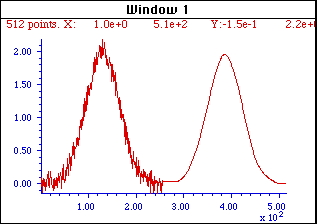
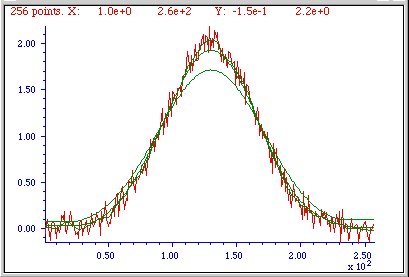
Audio smoothing is a process of reducing the noise and distortion in an audio signal. This is done by averaging the values of neighboring samples, which helps to smooth out any sharp changes in the signal.
Audio smoothing can be used to improve the quality of audio recordings, as it can help to reduce background noise and make the sound more natural. It can also be used to improve the sound of digital audio files, as it can help to reduce quantization noise and make the sound more smooth and even.
There are a number of different ways to perform audio smoothing. One common method is to use a moving average filter. A moving average filter averages the values of a window of neighboring samples, and then outputs the average value. The size of the window determines how much smoothing is applied.
Another common method for audio smoothing is to use a low-pass filter. A low-pass filter removes high-frequency components from the signal, which helps to reduce noise and distortion. The cutoff frequency of the filter determines which frequencies are removed.
Audio smoothing can be a useful tool for improving the quality of audio recordings and digital audio files. It can help to reduce noise and distortion, and make the sound more natural and smooth.
What are the benefits of audio smoothing?
There are a number of benefits to using audio smoothing. Some of the most common benefits include:
- Reduced noise: Audio smoothing can help to reduce noise in an audio signal. This is because the averaging process helps to smooth out any sharp changes in the signal, which can make the noise less noticeable.
- Improved sound quality: Audio smoothing can help to improve the sound quality of an audio signal. This is because the smoothing process can help to reduce distortion and make the sound more natural.
- Increased clarity: Audio smoothing can help to increase the clarity of an audio signal. This is because the smoothing process can help to remove any unwanted noise or distortion, which can make the signal easier to understand.
How does audio smoothing work?
Audio smoothing works by averaging the values of neighboring samples in an audio signal. This helps to smooth out any sharp changes in the signal, which can make the noise less noticeable and improve the overall sound quality.
There are a number of different ways to perform audio smoothing. One common method is to use a moving average filter. A moving average filter averages the values of a window of neighboring samples, and then outputs the average value. The size of the window determines how much smoothing is applied.
Another common method for audio smoothing is to use a low-pass filter. A low-pass filter removes high-frequency components from the signal, which helps to reduce noise and distortion. The cutoff frequency of the filter determines which frequencies are removed.
How to use audio smoothing
Audio smoothing can be used in a variety of different ways. Some of the most common applications include:
- Recording: Audio smoothing can be used to improve the sound quality of audio recordings. This is especially useful for recordings that are made in noisy environments.
- Editing: Audio smoothing can be used to edit audio files. This can be used to remove noise or distortion, or to smooth out the sound of a recording.
- Mastering: Audio smoothing can be used to master audio files. This can be used to improve the overall sound quality of a recording, or to make the sound more consistent.
Tips for using audio smoothing
When using audio smoothing, there are a few things to keep in mind:
- Start with a low setting: When you first start using audio smoothing, it is best to start with a low setting. This will help you to get a feel for how the smoothing process affects the sound of the audio signal.
- Experiment with different settings: Once you have a basic understanding of how audio smoothing works, you can experiment with different settings to see how they affect the sound of the audio signal.
- Be careful not to over-smooth: It is important to be careful not to over-smooth the audio signal. This can result in a loss of detail and make the sound sound unnatural.
Conclusion
Audio smoothing is a useful tool that can be used to improve the quality of audio recordings and digital audio files. It can help to reduce noise and distortion, and make the sound more natural and smooth. When used correctly, audio smoothing can be a valuable part of your audio production workflow.