Which format has the best sound quality for music?


Free Download Mp4Gain
picture

Which format has the best sound quality for music?

Music Format
Music Format


PCM, the highest level in audio files, is the ancestor of all digital audio (not including analog), with the highest fidelity and high volume.
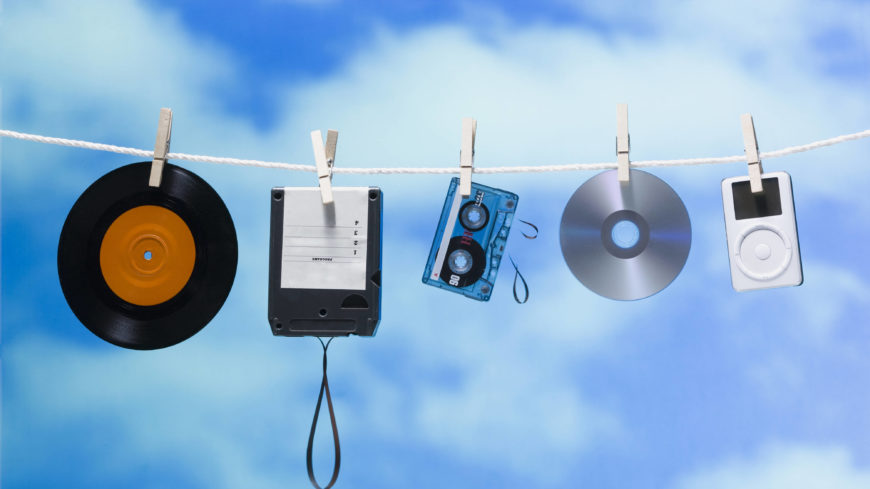
Music Format
Music Format

Common formats include pcm and cda, which are primarily used to burn records as CD files. CD is not a format, it is a standard, please refer to the official red book published by SONY (Sony) for details. It could be on a common CD-ROM, which was later modified) and cannot be saved as format.
Therefore, it must be said that PCM format has the best sound quality, but its volume is extremely large, so it generally uses WAV as the original file to save audio files, the quality is also quite high, the loss is almost quite small, but the volume is relatively large. This is a format developed and illustrated by Microsoft, which is suitable for Windows operating systems and can also be used on the latest MAC systems. Extension: .wav
is the original audio format dedicated to the MAC system, it is AIFF, the extension is Aiff, which was independently developed by Apple and is very common on Mac. That said, this is the best format (except PCM) on a Mac.
On Unix and Java platforms (which mostly refer to SUN platforms), the corresponding format is AU and the extension is au. It is currently the standard audio format under Unix and Java.
The above formats are all original file formats, which are usually huge in size. In order to facilitate transmission on computers, people have developed compression formats. Compression is divided into lossy compression and lossless compression. Obviously, lossy compression has a higher compression rate, but it requires The problem to be solved is how to solve the sound quality problem. The usual practice is to sacrifice the part that the human ear cannot hear, but the human ear is very different, so it is difficult to care for all people. Among the song formats, the best ones are flac (lossless, flac extension), Monkey’s Audio (lossless, ape extension), DTS (multichannel, mainly used with DVD, dtc/wav extension), AC3 (released by Dolby, multichannel surround , realistic sense of presence, extension ac3), AAC (loaded, good sound quality, extension Aac or mp4), WMV (this is also a video format, an improved version of wma and asf, quality is comparable High, extension wmv), as well as MusePack (mpc extension, completely free) and MP3Pro (mp3 extension) are also quite good, these formats are quite high in sound quality, even for users who require not bad sound. Also, the most popular formats are mp3 and ogg, as well as SONY’s special ATRAC/ATRAC3 format, which is dedicated to MD. These effects are also good and are more common on the Internet, but the effect is obviously not as good as the formats mentioned above.
As for rm and wma, because the compression is too high, the sound quality is really unflattering, especially those that circulate on the Internet, which are lost and cannot be lost anymore, so it is highly discouraged.


Free Download Mp4Gain
picture


Mp4Gain Main Window
picture


Mp4Gain Features
picture


Free Download Mp4Gain
picture

What music format has the best sound quality?

What music format has the best sound quality?

Music Format
Music Format

When I want to download songs, I always feel that the sound quality is not so pure, it seems a bit muddy, what format is good to listen to?

Music Format
Music Format

There are three lossless music quality formats: ape, wav and flac.

APE is one of the popular lossless compression formats for digital music. Due to its early appearance, it has a wide user base all over the world, especially in mainland China. Lossless compression formats such as APE use a more refined recording method to reduce volume, and the restored data is the same as the original file, ensuring file integrity.

WAV is a sound file format developed by Microsoft. It complies with the RIF file specification and is used to store audio information resources on the Windows platform. It is widely compatible with the Windows platform and its applications. This format supports a variety of compression types. algorithms and supports multiple WAV file with standard format is the same as CD format, with 44.1K sampling frequency and 16-bit quantization number, so the sound file quality is almost the Same as CD.

Chinese translation FLAC is a lossless audio compression coding. FLAC is a well-known free audio compression codec, which is characterized by lossless compression. Unlike other lossy compression codes such as MP3 and AAC, it does not destroy any original audio data, so it can restore the sound quality of music discs. It has been compatible with many software and hardware audio products (such as CDs, etc.) since 2012.

Digital audio format guide.

Digital audio format guide.

Since digital music has become popular, its fans have gradually developed the desire to hear it in the best possible quality.
For a time, the technical limits and the costs prevented us from achieving this goal, which is no longer an illusion.

audio formats

The music streaming services market has never been so successful and we talk a lot about it in this article, but there are so many digital music formats … we’ve made this guide for clarity.

The teacher recorded in the studio is recorded at the resolution that defines the artist, but then the album we hear can be converted into a large number of more or less compressed formats, which, as shown in this infographic, into two large families are divided. . ::

Lossy audio formats: If the quality and the data contained are inferior to the original file, which leads to loss of detail, but to the benefit of the lightness of the file. These formats are widely used by streaming services like Spotify and take up less space.

Lossless: If the quality of the generated file matches that of the original master, without loss of quality, however, they require storage systems such as NAS and are not ideal for streaming via a mobile device connection.

losseless

Let’s start with the first Lossy family (AAC, MP3, Ogg Vorbis and WMA)

AAC

Advanced Audio Coding (MPEG-4) is the standard standard used by Apple for iTunes. Nostalgic people who had an iPod will remember that when CDs were imported into their MAC, the files were converted to this format. At the same bit rate, it takes up the same space as an MP3, but the conversion can be of higher quality.

MP3

An acronym for Moving Picture Expert Group-1/2 Audio Layer 3 is the world’s most widely used compressed audio format and was first introduced in 1998. The compression algorithm removes some details from the audio track that you can hardly hear The human ear By compressing a WAV file, you get an MP3 file that is up to 90 times lighter than the original. This depends on the bit rates or the amount of digital information (bits) that are transmitted or recorded in a unit of time. They can vary between 32 (poor quality) and 320 KB (excellent quality) per second.

OGG Vorbis

It’s an open source format with a quality comparable to MP3 that was unknown until recently, but is now used by services like Spotify. OGG is the file extension, while Vorbis is the compression algorithm.

WMA

Windows Media Player is the format invented by Microsoft in response to the MP3 standard. The quality is the same, but has the disadvantage that it is only compatible with devices of this brand.

Now let’s discover the features of the lossless family (FLAC, ALAC, AIFF, WAV and DSD).

FLAC

Free lossless audio codec. It is the most widely used open source format for downloading music without loss of quality compared to the original source. A fairly attentive ear can easily tell the difference from a smaller format, lower quality file.
iTunes does not support playback of this format because it uses its (ALAC).

A THE C.

The Apple Lossless Audio Codec or FLAC for the Apple world is only ideal if you use Apple branded devices, even if it does not correspond to the FLAC in terms of weight.

AIFF

This audio swap file format is also owned by Apple, which was developed based on the Electronic Arts swap file format and is particularly suitable for audiophiles and music producers. It has essentially the same properties as the WAV format, but without compression, and is used by artists because it can also be used to embed metadata such as text, notes or other information in the file.

WAV

The WAVE audio file format, introduced by Microsoft and IBM in 1991, continues to be used and represents what you get when you import a music CD to your Microsoft computer. When playing back a file of this format that can also be read by a MAC, a special function is used in the Intel CPU. These are very heavy files that reach a maximum of 2 GB and reproduce the sounds in a very faithful manner.

DSD

Direct Stream Digital is a registered trademark of Philips and Sony, developed for the Super Audio CD. An encoding method is used that uses a single bit instead of predicting a higher bit depth, but at a much higher sampling rate to record, store, and reproduce extremely high sound quality. The original sampling rate was 2,822 MHz and its format is known as DSD64

THE BEST AUDIO FORMAT

Sound as well as the image is a fundamental piece in an audiovisual production.

If you had to choose between these two extreme situations with which one you would stay.

A good image resolution, but with a sound of poor quality.
Poor image quality, but with a clear and defined sound.
The ideal is to have a good balance of quality between image and sound.

An audio format is a multimedia container that saves data an audio file.

Each of these has its own characteristics and capabilities to be able to be reproduced in one or another system.

They have a series of properties that greatly influence the quality of the file, including the speed or frequency of sampling and the bit depth of information.

AUDIO FORMATS ACCORDING TO ITS QUALITY

The best way to classify the large number of audio formats that exist, is depending on whether they have quality loss or not when compared to the original source of Sound.

Depending on this, we have:

Audio files without loss of compressed and uncompressed.
Files with loss of quality.

UNCOMPRESSED AUDIO FORMATS

These files contain the audio in the highest original recording quality even when it is processed and stored on a computer.

The main drawback is that they are relatively large, which means storing less audio files on a hard drive.

Two examples of uncompressed formats are WAV and AIFF.

The .WAV (Waveform Audio File Format) property of IBM and Microsoft is relatively similar to the AIFF (Audio Interchange File Format) co-developed by Apple Inc.

Both formats can be used in both operating systems.

They are very similar, the difference is that AIFF files allow metadata to be stored inside, that is, additional information such as:

Artist name.
Cover of the disk.
Copyright.
Different notes.
Not being compressed, they take up too much space, but without a doubt to edit the sound is the most successful option.

AUDIO FORMATS COMPRESSED WITHOUT LOSS

These types of formats achieve thanks to a series of algorithms smaller files without losing quality.

HOW CAN THEY COMPRESS WITHOUT LOSING QUALITY?

Uncompressed formats encode both the sound of a recording and the silences, a few seconds of sound from an audio file will weigh the same as the same seconds of silence.

These types of formats compress the file making the silence occupy almost no size.

Among these formats we have the FLAC (Free Lossless Audio Codec) which is the most popular, created by Windows, the ALAC (Apple Lossless Audio Codec) that was created by Apple Inc. and the APE format of Monkey’s Audio.

The three formats are very similar, the fundamental difference will be in its compatibility with the different players.

The FLAC file is the most popular because it is compatible with Windows and macOS, the ALAC created by Apple Inc is very exclusive and practically only works if we play it on iTunes.

Finally, the APE, a format only available in Windows that manages to compress more than the FLAC and the ALAC, but has the disadvantage that it is only compatible with a small number of players.

AUDIO FORMATS COMPRESSED WITH LOSS

Finally, we have compressed formats with loss of quality where you get a file that occupies less space by discarding some frequencies in the sound, usually parts of the audio that are inaudible to the human ear.

Among these formats we have the popular MP3, AAC, OGG and MP2 among others.

The MP3 file (MPEG Audio Layer III) is the standard format for sharing music on the network and the most popular of all since it is compatible with virtually all music players, making this the first option to choose between sounds at a loss.

AAC (Advanced Audio Coding) is similar to MP3, although a little more efficient, which means that files take up less space and have the same sound quality as MP3. It is a format widely used in iTunes and YouTube.

OGG (Vorbis) is a very popular open source compressed format in the spotify music application.

The MP2 is still used especially in radio and television transmissions, but it can be said that in other areas it has already been completely replaced by the MP3 that achieves greater compression with the same quality.