Do you know what is the best audio format? (for musicians and listeners)


Free Download Mp4Gain
picture

Maybe you are a musician who has had the hard work of learning sound theory, writing and arranging your music, practicing, recording, and now you want to show your work to the world. What is the best audio format to distribute your recording? Or maybe you are a music lover looking for the best way to organize your collection. It may be that your collection comes from CDs or vinyl or even digitally downloaded. What is the best audio format to store your collection?
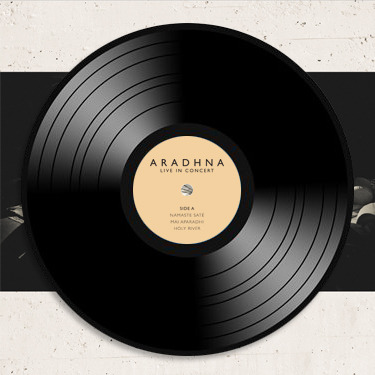
vinyl

Choosing the right file format is important. On the one hand, the selected format affects the fidelity of the sound. However, the selected format also limits which devices can play your files. In this guide, we explain the different audio formats available, what they offer and how they are used in the best possible way. First, let’s understand what digital audio files are.

In short, what is the best audio format for you?
To choose the best audio file format you need, think about the purpose of each file. Here are some common uses with suggestions for the best audio formats for each:

If you are an artist …


Do you record a CD with your work? WAV! Conventional CDs use WAV, so export your music from DAW to Wav (or other lossless and then convert properly) and use these files to burn to CD. If you compress CDs from a factory, export in wav but in the original sampling rate and bit depth settings. Leave these settings to them.
Do you share your music with the public? Lossy! You want a smaller file size and maximum compatibility with them from your listeners. Any device plays an MP3 file and is easy to share online.
Should you distribute your music with Magroove or another aggregator for streaming services and online music stores? Streaming services have their own conversion systems, and each one works in a different format (the vast majority, lossy), so you probably won’t get a lossless song. Get a good mp3 that survives encoding (and is easier to load) and save Lossless versions somewhere, whether burning to CD or distributing to acts overseas!
If you are a listener or a collector …
Are you archiving your music? FLAC with maximum compression! A lossless compressed format such as FLAC or ALAC lets you store your files efficiently without losing sound quality. Records in the original multimedia format settings. CD, for example, 16-bit, 44.1 kHz.
Do you digitize music from a vinyl? Record at least in a lossless format. Read about the recording / conversion settings, especially sample rate and bit depth, and understand what lossless quality you need.


Free Download Mp4Gain
picture


Mp4Gain Main Window
picture


Mp4Gain Features
picture


Free Download Mp4Gain
picture

THE BEST AUDIO FORMAT

Sound as well as the image is a fundamental piece in an audiovisual production.

If you had to choose between these two extreme situations with which one you would stay.

A good image resolution, but with a sound of poor quality.
Poor image quality, but with a clear and defined sound.
The ideal is to have a good balance of quality between image and sound.

An audio format is a multimedia container that saves data an audio file.

Each of these has its own characteristics and capabilities to be able to be reproduced in one or another system.

They have a series of properties that greatly influence the quality of the file, including the speed or frequency of sampling and the bit depth of information.

AUDIO FORMATS ACCORDING TO ITS QUALITY

The best way to classify the large number of audio formats that exist, is depending on whether they have quality loss or not when compared to the original source of Sound.

Depending on this, we have:

Audio files without loss of compressed and uncompressed.
Files with loss of quality.

UNCOMPRESSED AUDIO FORMATS

These files contain the audio in the highest original recording quality even when it is processed and stored on a computer.

The main drawback is that they are relatively large, which means storing less audio files on a hard drive.

Two examples of uncompressed formats are WAV and AIFF.

The .WAV (Waveform Audio File Format) property of IBM and Microsoft is relatively similar to the AIFF (Audio Interchange File Format) co-developed by Apple Inc.

Both formats can be used in both operating systems.

They are very similar, the difference is that AIFF files allow metadata to be stored inside, that is, additional information such as:

Artist name.
Cover of the disk.
Copyright.
Different notes.
Not being compressed, they take up too much space, but without a doubt to edit the sound is the most successful option.

AUDIO FORMATS COMPRESSED WITHOUT LOSS

These types of formats achieve thanks to a series of algorithms smaller files without losing quality.

HOW CAN THEY COMPRESS WITHOUT LOSING QUALITY?

Uncompressed formats encode both the sound of a recording and the silences, a few seconds of sound from an audio file will weigh the same as the same seconds of silence.

These types of formats compress the file making the silence occupy almost no size.

Among these formats we have the FLAC (Free Lossless Audio Codec) which is the most popular, created by Windows, the ALAC (Apple Lossless Audio Codec) that was created by Apple Inc. and the APE format of Monkey’s Audio.

The three formats are very similar, the fundamental difference will be in its compatibility with the different players.

The FLAC file is the most popular because it is compatible with Windows and macOS, the ALAC created by Apple Inc is very exclusive and practically only works if we play it on iTunes.

Finally, the APE, a format only available in Windows that manages to compress more than the FLAC and the ALAC, but has the disadvantage that it is only compatible with a small number of players.

AUDIO FORMATS COMPRESSED WITH LOSS

Finally, we have compressed formats with loss of quality where you get a file that occupies less space by discarding some frequencies in the sound, usually parts of the audio that are inaudible to the human ear.

Among these formats we have the popular MP3, AAC, OGG and MP2 among others.

The MP3 file (MPEG Audio Layer III) is the standard format for sharing music on the network and the most popular of all since it is compatible with virtually all music players, making this the first option to choose between sounds at a loss.

AAC (Advanced Audio Coding) is similar to MP3, although a little more efficient, which means that files take up less space and have the same sound quality as MP3. It is a format widely used in iTunes and YouTube.

OGG (Vorbis) is a very popular open source compressed format in the spotify music application.

The MP2 is still used especially in radio and television transmissions, but it can be said that in other areas it has already been completely replaced by the MP3 that achieves greater compression with the same quality.