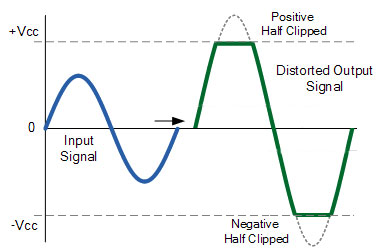
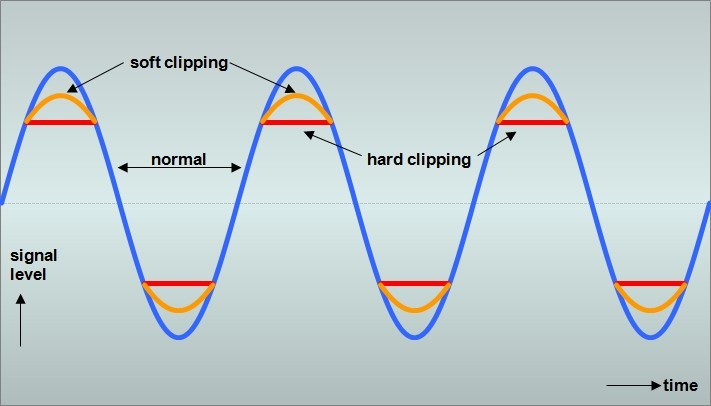
As an audio enthusiast, I always strive for the best possible sound quality. However, sometimes even the best recording can suffer from audio clipping. Audio clipping occurs when the audio signal exceeds the maximum amplitude that a system can handle, resulting in a distorted and unpleasant sound. In this article, I will discuss the causes of audio clipping, how to prevent it, and the solutions available to fix it.
Causes of Audio Clipping
One of the main causes of audio clipping is recording at too high of a volume. This can cause the audio signal to exceed the maximum amplitude, resulting in a distorted sound. Another cause of audio clipping is using audio equipment that cannot handle the volume levels being produced, such as low-quality microphones or speakers. Lastly, mixing and mastering can also cause audio clipping if the levels are not properly balanced.
To illustrate this point, let me share my experience. Once, I was recording a live concert, and I noticed that the audio was distorting. After some investigation, I realized that the recording was clipping due to the high volume levels. I had to adjust the microphone levels and the gain to prevent further audio clipping.
How to Prevent Audio Clipping
Preventing audio clipping starts with proper recording techniques. Make sure to record at an appropriate volume level and use high-quality equipment that can handle the volume levels. Proper mixing and mastering can also help prevent audio clipping. Additionally, using a limiter can help prevent clipping by limiting the maximum amplitude of the audio signal.
As a personal anecdote, I was once mixing a track and noticed that the levels were too high, resulting in audio clipping. I had to adjust the levels and use a limiter to prevent further clipping.
Audio Clipping Solutions
If you have already recorded audio that is suffering from clipping, there are solutions available to fix it. One solution is to use an audio editor to manually remove the clipped sections. Another solution is to use a normalizer or compressor to even out the volume levels and prevent further clipping.
Personally, I have found that using a normalizer, such as mp4gain, is an effective solution for fixing audio clipping. Mp4gain is a Windows-based software that can normalize and convert audio and video files while maintaining the highest sound quality. It also has an integrated equalizer that allows for further adjustments.
In conclusion, audio clipping is a common problem in the world of audio, but it is preventable and fixable. Proper recording techniques, mixing and mastering, and the use of a limiter can help prevent audio clipping. If you do run into audio clipping, solutions such as manually removing clipped sections, using a normalizer or compressor, or using software such as mp4gain can help fix the problem.
Final Words
In my experience, the best way to prevent audio clipping is to record at an appropriate volume level and use high-quality equipment. Mixing and mastering techniques can also help prevent clipping. However, if you do encounter audio clipping, there are solutions available to fix it. Whether it’s manually removing clipped sections, using a normalizer or compressor, or using software such as mp4gain, you can fix the problem and achieve the best possible sound quality.
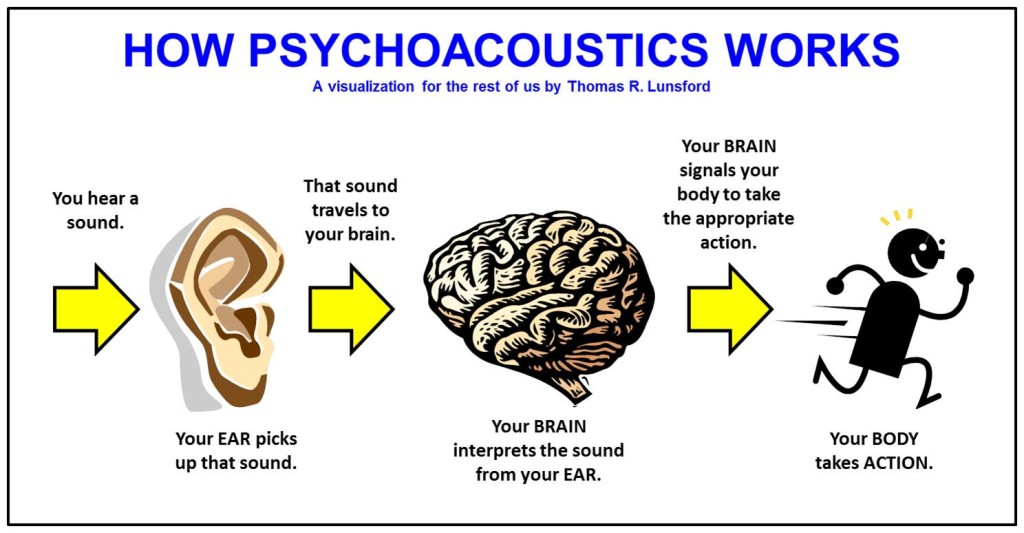
Audio psychoacoustics is the study of how humans perceive and process sound. This includes the physiological and psychological aspects of hearing, as well as the cognitive and emotional responses that result from it. As an expert in this field, I will provide a detailed explanation of the topic, including the various theories and principles that underpin it.
The Physiology of Hearing
To understand how sound is processed by the human ear, it is important to first understand the basic anatomy of the ear. The ear is made up of three main parts: the outer ear, middle ear, and inner ear. The outer ear consists of the pinna, ear canal, and eardrum, which work together to capture and transmit sound waves to the middle ear. The middle ear contains the three smallest bones in the human body, the malleus, incus, and stapes, which amplify and transmit the sound waves to the inner ear. The inner ear is made up of the cochlea, which contains tiny hair cells that convert the sound waves into electrical impulses that are sent to the brain for processing.
Psychoacoustic Principles
Psychoacoustics is concerned with how the human brain processes sound signals. One of the key principles of psychoacoustics is the concept of loudness, which refers to the perceived volume of a sound. The human ear is capable of detecting a wide range of sound levels, from the faintest whisper to the loudest explosion. Another important principle is pitch, which refers to the perceived frequency of a sound. The human ear can detect frequencies ranging from around 20 Hz to 20,000 Hz.
Masking and Perception
Masking is a psychoacoustic phenomenon where the presence of one sound makes it more difficult to perceive another sound. This can occur when two sounds are played at the same time, or when one sound is played immediately after another. Masking can occur in both the frequency domain (when two sounds have overlapping frequencies) and the temporal domain (when one sound occurs immediately before or after another). Understanding masking is important in fields such as audio engineering and sound design, where it is necessary to minimize the impact of masking on the listener’s perception of sound.
Audio Compression and Psychoacoustics
Audio compression is the process of reducing the size of an audio file by removing redundant or irrelevant data. One of the most common forms of audio compression is lossy compression, which works by removing data that is not perceived by the human ear. This is achieved by taking advantage of psychoacoustic principles such as masking and frequency masking. By removing sounds that are masked by other sounds, lossy compression algorithms can significantly reduce the size of an audio file without perceptible loss in quality.
Applications of Psychoacoustics
Psychoacoustics has a wide range of applications in fields such as audio engineering, music production, and sound design. By understanding how humans perceive and process sound, audio professionals can create more effective and engaging audio experiences for listeners. For example, understanding masking can help audio engineers to design more effective soundtracks for films and video games. Similarly, understanding how humans perceive loudness and pitch can help music producers to create more impactful and emotionally engaging music.
FAQ
Q: What is binaural audio?
Binaural audio is a type of audio recording that is designed to be listened to with headphones. It is created using two microphones that are placed inside a simulated head, with each microphone positioned at the location of one of the ears.
This creates a stereo image that closely replicates the way humans perceive sound in real life, allowing for a more immersive and realistic listening experience. Binaural audio is often used in virtual reality and video game audio, where a sense of spatial awareness is important.
Q: How does psychoacoustics relate to audio engineering?
Psychoacoustics plays an important role in audio engineering, as it provides a framework for understanding how humans perceive and process sound. This understanding can be used to create more effective and engaging audio experiences for listeners. For example, by understanding the principles of loudness and masking, audio engineers can design soundtracks that effectively communicate the intended emotional impact of a scene.
Q: How does audio compression affect sound quality?
Audio compression can affect sound quality by removing data that is perceived as irrelevant or redundant by the human ear. Lossy compression algorithms can reduce the size of an audio file by removing sounds that are masked by other sounds, without a perceptible loss in quality. However, if too much data is removed, the resulting file can sound noticeably compressed or distorted. For this reason, it is important to strike a balance between file size and sound quality when compressing audio.
Q: Can psychoacoustics be used to improve hearing aid technology?
Yes, psychoacoustics can be used to improve hearing aid technology by providing a better understanding of how humans perceive and process sound. This understanding can be used to design hearing aids that better replicate the natural hearing process, resulting in a more natural and effective listening experience for the wearer.
Q: What is the importance of psychoacoustics in sound design?
Psychoacoustics is important in sound design because it provides a framework for understanding how humans perceive and respond to sound. This understanding can be used to create more effective and engaging soundscapes that effectively communicate the intended emotional impact of a scene. For example, understanding the principles of masking can help sound designers to create more immersive and detailed soundscapes for films and video games.
Q: How can understanding psychoacoustics help with audio editing?
Understanding psychoacoustics can help with audio editing by providing a better understanding of how humans perceive and respond to sound. This understanding can be used to make more effective and impactful edits that effectively communicate the intended emotional impact of a scene. For example, understanding the principles of loudness can help audio editors to make more effective cuts and transitions in a soundtrack.
Q: How does the environment affect psychoacoustics?
The environment can have a significant impact on psychoacoustics, as it can affect the way that sound waves are transmitted and perceived. For example, the acoustics of a room can affect the way that sounds are reflected and absorbed, leading to changes in loudness and perceived pitch. Understanding the environmental factors that affect psychoacoustics is important in fields such as audio engineering and sound design, where it is necessary to create audio experiences that are effective in a wide range of environments.
Q: How does masking affect speech intelligibility?
Masking can affect speech intelligibility by making it more difficult to distinguish individual sounds and words in a sentence. This can occur when a speech signal is masked by other sounds that have overlapping frequencies, making it more difficult for the brain to isolate and process the speech signal. Understanding masking is important in fields such as audio engineering and sound design, where it is necessary to ensure that speech is clear and intelligible in a wide range of environments.