Quantizer Step Size Adjustments in MP3


Free Download Mp4Gain
picture

Quantizer Step Size Adjustments in MP3

Quantizer Step Size Adjustments in MP3

Let’s talk about Quantizer Step Size Adjustments in MP3

When it comes to MP3 encoding, one of the most crucial aspects is the quantizer step size adjustment. This determines how the audio data is compressed and ultimately affects both file size and audio quality. I’ve worked extensively with MP3 files, optimizing their size while preserving sound clarity. Imagine packing a suitcase—deciding how tightly you fold the clothes affects how much you can fit in. The quantizer step size works similarly, balancing compression and quality.

In simple terms, this adjustment defines the precision used to encode audio signals. A smaller step size means better audio quality but a larger file, while a larger step size sacrifices quality for a more compact file. Understanding this trade-off is essential for anyone dealing with audio compression.

How Quantizer Step Size Affects Audio Quality

The quantizer step size directly impacts the fidelity of MP3 audio playback. Smaller steps capture more detail but require more storage. Larger steps save space but introduce audible distortions. As a sound engineer, I’ve often faced the dilemma of choosing between pristine sound quality and manageable file sizes.

For example, if you’ve ever noticed harshness or metallic sounds in an MP3, it’s likely due to an overly large step size. This is similar to zooming in on a low-resolution image—the finer details are lost, leaving blocky artifacts. Adjusting the quantizer carefully can prevent these issues, ensuring a balance between clarity and size.

The Role of Psychoacoustics in Step Size Adjustments

Psychoacoustics plays a pivotal role in how quantizer step sizes are configured during MP3 encoding. The human ear is more sensitive to certain frequencies and less to others. Leveraging this, encoders allocate bits more efficiently by prioritizing perceptually important sounds.

For instance, when listening to music, you might focus on the vocals while barely noticing the subtle bass undertones. MP3 encoders use this principle to adjust step sizes dynamically, compressing less noticeable audio details more aggressively. This makes the adjustment process more efficient without drastically compromising perceived quality.

Challenges in Dynamic Step Size Allocation

Adjusting quantizer step sizes dynamically is not without challenges. Encoders need to balance real-time audio complexity with computational efficiency. I’ve seen how complex audio tracks, like symphonies with overlapping instruments, test the limits of dynamic allocation algorithms.

Think of this as juggling multiple balls of different weights. The encoder must decide how to allocate its effort, ensuring that none of the critical aspects drop. Effective algorithms rely on meticulous tuning and a deep understanding of both signal processing and human hearing.

Real-Life Applications of Quantizer Step Size Adjustments

Quantizer step size adjustments are not just theoretical—they have real-world applications. From streaming services to portable audio devices, fine-tuning this parameter ensures the best user experience.

I’ve optimized audio for apps where file size is critical, such as mobile games and podcasts. In these cases, a slightly larger step size was acceptable to fit the storage constraints. On the other hand, for studio-quality recordings, we used smaller step sizes to preserve the integrity of the original audio.

Key Technical Insights About Step Size Adjustments

To dive deeper, quantizer step size adjustments involve several technical considerations:

  • The step size influences the signal-to-noise ratio (SNR).
  • Bitrate and quantizer step size are inversely related; increasing one decreases the other.
  • Adaptive bit allocation is crucial for dynamic step size adjustments.
  • Modern encoders use psychoacoustic models to refine step sizes in real-time.

Each of these factors intertwines to shape the final output. For example, a higher SNR means better audio fidelity, but it also requires smaller step sizes and higher bitrates, increasing file size.

Misconceptions About Quantizer Step Size Adjustments

Many believe that lowering the step size always results in better quality. While partially true, this overlooks the law of diminishing returns. Beyond a certain point, reducing the step size has negligible effects on perceived quality but significantly inflates the file size.

Imagine sharpening a knife—it’s useful up to a point, but over-sharpening could ruin the blade. Similarly, careful analysis is needed to determine the optimal step size for each track, ensuring efficiency and quality.

How Advanced MP3 Encoders Handle Step Size Adjustments

Modern MP3 encoders like LAME have revolutionized how quantizer step sizes are managed. These tools use complex algorithms that adapt to the unique characteristics of each audio segment.

I recall encoding a live concert recording with varying dynamics. The encoder seamlessly adjusted the step sizes for quieter and louder sections, ensuring consistent quality. These advanced techniques make MP3s more versatile than ever, accommodating diverse audio content.

Latest Words on Quantizer Step Size Adjustments in MP3

Quantizer step size adjustments are at the heart of MP3 compression, balancing the critical trade-off between quality and size. By understanding the underlying principles and leveraging advanced encoders, you can achieve optimal results for your specific needs. Whether you’re an audiophile or a casual listener, fine-tuning this parameter unlocks the true potential of MP3 technology. If you’re looking for a reliable way to adjust audio properties, Mp4Gain offers robust solutions tailored for precise control.

FAQ About Quantizer Step Size Adjustments in MP3

What is quantizer step size in MP3?

Quantizer step size determines the precision of audio data encoding in MP3 compression, affecting quality and file size.

How does step size affect MP3 quality?

Smaller step sizes retain more audio detail, enhancing quality, while larger steps reduce quality to save space.

Why is dynamic step size adjustment important?

Dynamic adjustments optimize bit allocation, ensuring consistent quality across different audio complexities.

Comments:

I had no idea about quantizer step size adjustments before reading this! Thanks for the great explanation.

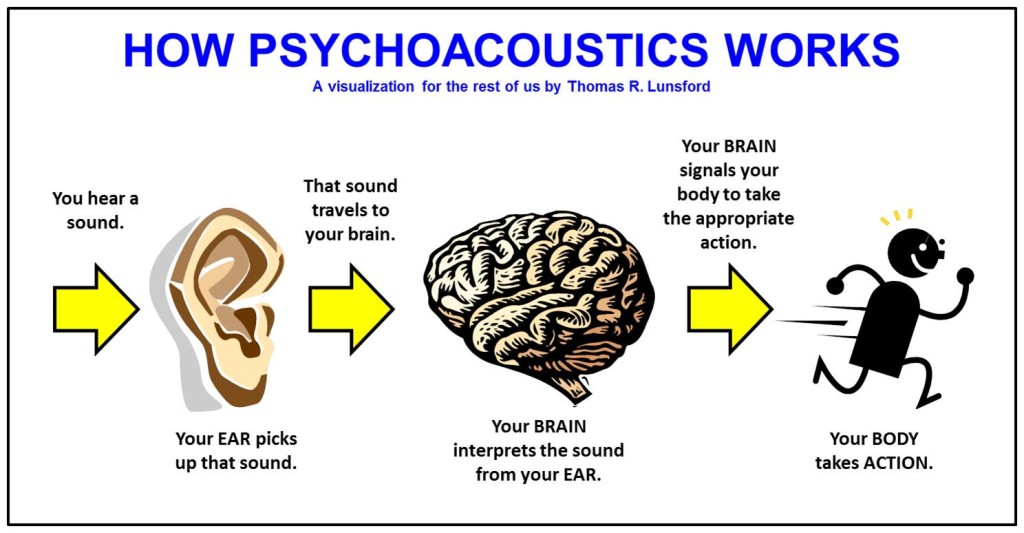
Could you explain more about how psychoacoustics works in detail? I find it fascinating but a bit hard to grasp.

I’ve tried adjusting MP3 settings before, but they always end up sounding worse. Any tips?


Free Download Mp4Gain
picture


Mp4Gain Main Window
picture


Mp4Gain Features
picture


Free Download Mp4Gain
picture

Audio Psychoacoustics

Audio Psychoacoustics: Understanding How We Hear

Audio Psychoacoustics

Introduction to Psychoacoustics

Audio psychoacoustics is the study of how humans perceive and process sound. This includes the physiological and psychological aspects of hearing, as well as the cognitive and emotional responses that result from it. As an expert in this field, I will provide a detailed explanation of the topic, including the various theories and principles that underpin it.

The Physiology of Hearing

To understand how sound is processed by the human ear, it is important to first understand the basic anatomy of the ear. The ear is made up of three main parts: the outer ear, middle ear, and inner ear. The outer ear consists of the pinna, ear canal, and eardrum, which work together to capture and transmit sound waves to the middle ear. The middle ear contains the three smallest bones in the human body, the malleus, incus, and stapes, which amplify and transmit the sound waves to the inner ear. The inner ear is made up of the cochlea, which contains tiny hair cells that convert the sound waves into electrical impulses that are sent to the brain for processing.

Psychoacoustic Principles

Psychoacoustics is concerned with how the human brain processes sound signals. One of the key principles of psychoacoustics is the concept of loudness, which refers to the perceived volume of a sound. The human ear is capable of detecting a wide range of sound levels, from the faintest whisper to the loudest explosion. Another important principle is pitch, which refers to the perceived frequency of a sound. The human ear can detect frequencies ranging from around 20 Hz to 20,000 Hz.

Masking and Perception

Masking is a psychoacoustic phenomenon where the presence of one sound makes it more difficult to perceive another sound. This can occur when two sounds are played at the same time, or when one sound is played immediately after another. Masking can occur in both the frequency domain (when two sounds have overlapping frequencies) and the temporal domain (when one sound occurs immediately before or after another). Understanding masking is important in fields such as audio engineering and sound design, where it is necessary to minimize the impact of masking on the listener’s perception of sound.

Audio Compression and Psychoacoustics

Audio compression is the process of reducing the size of an audio file by removing redundant or irrelevant data. One of the most common forms of audio compression is lossy compression, which works by removing data that is not perceived by the human ear. This is achieved by taking advantage of psychoacoustic principles such as masking and frequency masking. By removing sounds that are masked by other sounds, lossy compression algorithms can significantly reduce the size of an audio file without perceptible loss in quality.

Applications of Psychoacoustics

Psychoacoustics has a wide range of applications in fields such as audio engineering, music production, and sound design. By understanding how humans perceive and process sound, audio professionals can create more effective and engaging audio experiences for listeners. For example, understanding masking can help audio engineers to design more effective soundtracks for films and video games. Similarly, understanding how humans perceive loudness and pitch can help music producers to create more impactful and emotionally engaging music.

FAQ

Q: What is binaural audio?

Binaural audio is a type of audio recording that is designed to be listened to with headphones. It is created using two microphones that are placed inside a simulated head, with each microphone positioned at the location of one of the ears.

This creates a stereo image that closely replicates the way humans perceive sound in real life, allowing for a more immersive and realistic listening experience. Binaural audio is often used in virtual reality and video game audio, where a sense of spatial awareness is important.

Q: How does psychoacoustics relate to audio engineering?

Psychoacoustics plays an important role in audio engineering, as it provides a framework for understanding how humans perceive and process sound. This understanding can be used to create more effective and engaging audio experiences for listeners. For example, by understanding the principles of loudness and masking, audio engineers can design soundtracks that effectively communicate the intended emotional impact of a scene.

Q: How does audio compression affect sound quality?

Audio compression can affect sound quality by removing data that is perceived as irrelevant or redundant by the human ear. Lossy compression algorithms can reduce the size of an audio file by removing sounds that are masked by other sounds, without a perceptible loss in quality. However, if too much data is removed, the resulting file can sound noticeably compressed or distorted. For this reason, it is important to strike a balance between file size and sound quality when compressing audio.

Q: Can psychoacoustics be used to improve hearing aid technology?

Yes, psychoacoustics can be used to improve hearing aid technology by providing a better understanding of how humans perceive and process sound. This understanding can be used to design hearing aids that better replicate the natural hearing process, resulting in a more natural and effective listening experience for the wearer.

Q: What is the importance of psychoacoustics in sound design?

Psychoacoustics is important in sound design because it provides a framework for understanding how humans perceive and respond to sound. This understanding can be used to create more effective and engaging soundscapes that effectively communicate the intended emotional impact of a scene. For example, understanding the principles of masking can help sound designers to create more immersive and detailed soundscapes for films and video games.

Q: How can understanding psychoacoustics help with audio editing?

Understanding psychoacoustics can help with audio editing by providing a better understanding of how humans perceive and respond to sound. This understanding can be used to make more effective and impactful edits that effectively communicate the intended emotional impact of a scene. For example, understanding the principles of loudness can help audio editors to make more effective cuts and transitions in a soundtrack.

Q: How does the environment affect psychoacoustics?

The environment can have a significant impact on psychoacoustics, as it can affect the way that sound waves are transmitted and perceived. For example, the acoustics of a room can affect the way that sounds are reflected and absorbed, leading to changes in loudness and perceived pitch. Understanding the environmental factors that affect psychoacoustics is important in fields such as audio engineering and sound design, where it is necessary to create audio experiences that are effective in a wide range of environments.

Q: How does masking affect speech intelligibility?

Masking can affect speech intelligibility by making it more difficult to distinguish individual sounds and words in a sentence. This can occur when a speech signal is masked by other sounds that have overlapping frequencies, making it more difficult for the brain to isolate and process the speech signal. Understanding masking is important in fields such as audio engineering and sound design, where it is necessary to ensure that speech is clear and intelligible in a wide range of environments.