Quantizer Step Size Adjustments in MP3


Free Download Mp4Gain
picture

Quantizer Step Size Adjustments in MP3
Quantizer Step Size Adjustments in MP3

Let’s talk about Quantizer Step Size Adjustments in MP3

When it comes to MP3 encoding, one of the most crucial aspects is the quantizer step size adjustment. This determines how the audio data is compressed and ultimately affects both file size and audio quality. I’ve worked extensively with MP3 files, optimizing their size while preserving sound clarity. Imagine packing a suitcase—deciding how tightly you fold the clothes affects how much you can fit in. The quantizer step size works similarly, balancing compression and quality.

In simple terms, this adjustment defines the precision used to encode audio signals. A smaller step size means better audio quality but a larger file, while a larger step size sacrifices quality for a more compact file. Understanding this trade-off is essential for anyone dealing with audio compression.

How Quantizer Step Size Affects Audio Quality

The quantizer step size directly impacts the fidelity of MP3 audio playback. Smaller steps capture more detail but require more storage. Larger steps save space but introduce audible distortions. As a sound engineer, I’ve often faced the dilemma of choosing between pristine sound quality and manageable file sizes.

For example, if you’ve ever noticed harshness or metallic sounds in an MP3, it’s likely due to an overly large step size. This is similar to zooming in on a low-resolution image—the finer details are lost, leaving blocky artifacts. Adjusting the quantizer carefully can prevent these issues, ensuring a balance between clarity and size.

The Role of Psychoacoustics in Step Size Adjustments

Psychoacoustics plays a pivotal role in how quantizer step sizes are configured during MP3 encoding. The human ear is more sensitive to certain frequencies and less to others. Leveraging this, encoders allocate bits more efficiently by prioritizing perceptually important sounds.

For instance, when listening to music, you might focus on the vocals while barely noticing the subtle bass undertones. MP3 encoders use this principle to adjust step sizes dynamically, compressing less noticeable audio details more aggressively. This makes the adjustment process more efficient without drastically compromising perceived quality.

Challenges in Dynamic Step Size Allocation

Adjusting quantizer step sizes dynamically is not without challenges. Encoders need to balance real-time audio complexity with computational efficiency. I’ve seen how complex audio tracks, like symphonies with overlapping instruments, test the limits of dynamic allocation algorithms.

Think of this as juggling multiple balls of different weights. The encoder must decide how to allocate its effort, ensuring that none of the critical aspects drop. Effective algorithms rely on meticulous tuning and a deep understanding of both signal processing and human hearing.

Real-Life Applications of Quantizer Step Size Adjustments

Quantizer step size adjustments are not just theoretical—they have real-world applications. From streaming services to portable audio devices, fine-tuning this parameter ensures the best user experience.

I’ve optimized audio for apps where file size is critical, such as mobile games and podcasts. In these cases, a slightly larger step size was acceptable to fit the storage constraints. On the other hand, for studio-quality recordings, we used smaller step sizes to preserve the integrity of the original audio.

Key Technical Insights About Step Size Adjustments

To dive deeper, quantizer step size adjustments involve several technical considerations:

  • The step size influences the signal-to-noise ratio (SNR).
  • Bitrate and quantizer step size are inversely related; increasing one decreases the other.
  • Adaptive bit allocation is crucial for dynamic step size adjustments.
  • Modern encoders use psychoacoustic models to refine step sizes in real-time.

Each of these factors intertwines to shape the final output. For example, a higher SNR means better audio fidelity, but it also requires smaller step sizes and higher bitrates, increasing file size.

Misconceptions About Quantizer Step Size Adjustments

Many believe that lowering the step size always results in better quality. While partially true, this overlooks the law of diminishing returns. Beyond a certain point, reducing the step size has negligible effects on perceived quality but significantly inflates the file size.

Imagine sharpening a knife—it’s useful up to a point, but over-sharpening could ruin the blade. Similarly, careful analysis is needed to determine the optimal step size for each track, ensuring efficiency and quality.

How Advanced MP3 Encoders Handle Step Size Adjustments

Modern MP3 encoders like LAME have revolutionized how quantizer step sizes are managed. These tools use complex algorithms that adapt to the unique characteristics of each audio segment.

I recall encoding a live concert recording with varying dynamics. The encoder seamlessly adjusted the step sizes for quieter and louder sections, ensuring consistent quality. These advanced techniques make MP3s more versatile than ever, accommodating diverse audio content.

Latest Words on Quantizer Step Size Adjustments in MP3

Quantizer step size adjustments are at the heart of MP3 compression, balancing the critical trade-off between quality and size. By understanding the underlying principles and leveraging advanced encoders, you can achieve optimal results for your specific needs. Whether you’re an audiophile or a casual listener, fine-tuning this parameter unlocks the true potential of MP3 technology. If you’re looking for a reliable way to adjust audio properties, Mp4Gain offers robust solutions tailored for precise control.

FAQ About Quantizer Step Size Adjustments in MP3

What is quantizer step size in MP3?

Quantizer step size determines the precision of audio data encoding in MP3 compression, affecting quality and file size.

How does step size affect MP3 quality?

Smaller step sizes retain more audio detail, enhancing quality, while larger steps reduce quality to save space.

Why is dynamic step size adjustment important?

Dynamic adjustments optimize bit allocation, ensuring consistent quality across different audio complexities.

Comments:

I had no idea about quantizer step size adjustments before reading this! Thanks for the great explanation.

Could you explain more about how psychoacoustics works in detail? I find it fascinating but a bit hard to grasp.

I’ve tried adjusting MP3 settings before, but they always end up sounding worse. Any tips?


Free Download Mp4Gain
picture


Mp4Gain Main Window
picture


Mp4Gain Features
picture


Free Download Mp4Gain
picture

Quantization in MP3

Quantization in MP3: Balancing Compression and Quality

Quantization in MP3
Quantization in MP3
Quantization in MP3
Quantization in MP3

Let’s Talk About MP3 Quantization

Quantization in MP3
Quantization in MP3

Having spent years immersed in the realm of audio encoding, I’m here to shed light on the intricate dance between compression and quality in MP3 quantization. Google’s top results merely scratch the surface, so let’s dive deep into the world of digital audio encoding and unravel the nuances of MP3 quantization, blending my expertise with relatable real-life examples.

The Essence of MP3 Quantization

MP3 quantization, a vital aspect of audio compression, resembles a delicate balancing act. Imagine it as a chef crafting a recipe; too much compression, and you lose the flavor (quality), too little, and the dish (file size) becomes overwhelming. In this section, we’ll explore the core principles of MP3 quantization, demystifying the magic behind achieving optimal audio quality while keeping file sizes in check.

  • Bits and Bytes: Understanding the Basics
  • Quantization Levels: Fine-Tuning Audio Precision
  • Trade-offs: Balancing Quality and File Size

Bits and Bytes: Understanding the Basics

At the heart of MP3 quantization lies the concept of bits and bytes. Think of them as the canvas for a painting. The more bits we have, the finer the details and richer the colors. This foundational understanding is crucial as we navigate the landscape of audio compression and strive for a harmonious blend of quality and efficiency.

Quantization Levels: Fine-Tuning Audio Precision

Quantization levels are akin to a painter’s palette, each level representing a shade of sound. As an expert, I’ll guide you through the art of selecting the right quantization levels, ensuring that the nuances of the audio are preserved. This nuanced approach sets the stage for a symphony of digital audio that captivates the listener.

Trade-offs: Balancing Quality and File Size

In the realm of MP3 quantization, there’s a perpetual trade-off between quality and file size. It’s akin to walking a tightrope, finding the sweet spot where audio fidelity remains high, yet the file remains manageable. I’ll share insights into striking this delicate balance, drawing parallels with everyday scenarios to make it relatable and easy to grasp.

Latest Words on MP3 Quantization

As we navigate the complexities of MP3 quantization, I’ll provide fresh perspectives that go beyond the standard discourse. For instance, the impact of psychoacoustics on quantization decisions is often overlooked. Understanding how our brains perceive sound allows us to tailor the quantization process to optimize for perceived quality, offering a unique angle that distinguishes this article.

Going Beyond the Basics

While many articles skim the surface, I’ll take you on a journey into advanced territories. Exploring topics like variable bit rate (VBR) encoding and the role of advanced psychoacoustic models, we’ll unveil the sophisticated mechanisms that contribute to superior audio quality in MP3 files. This knowledge empowers you to make informed decisions in your digital audio endeavors.

Quantization Myths Unveiled

Let’s debunk common misconceptions surrounding MP3 quantization. For example, the notion that higher bit rates always equate to better quality is not absolute. I’ll demystify these myths, providing clarity and guiding you towards a nuanced understanding of the factors influencing audio quality in MP3 encoding.

Optimizing MP3 Files for Different Platforms

Not all platforms are created equal, and neither should your MP3 files be. I’ll share strategies for optimizing MP3s tailored to specific platforms. Whether you’re creating content for streaming services, podcasts, or mobile applications, understanding platform-specific nuances in quantization and compression will set you on the path to audio excellence.

Let’s Talk Real-Life Applications

Bringing it all together, I’ll delve into real-life applications of MP3 quantization. From enhancing your music library to optimizing podcast episodes for diverse audiences, I’ll share personal experiences and practical tips. Imagine fine-tuning your audio files like a skilled craftsman, ensuring they shine across various playback scenarios.

Comments:

This article opened my eyes to the intricacies of MP3 compression. More articles like this, please!

– AudioExplorer

Great breakdown! However, I’d love a deeper dive into VBR encoding techniques.

– TechAudioGeek

Finally, someone addressing the myths! Clear, concise, and enlightening.

– MythBusterListener

Can you share your thoughts on MP3 quantization for podcasters? Looking for practical advice.

– PodcasterPro

As a musician, I appreciate the analogies! Helped me grasp the technicalities effortlessly.

– MusicalSoul

This article left me craving more insights into optimizing MP3s for streaming platforms.

– StreamMaster

Thanks for the myths clarification! I’ve been misguided for so long.

– TruthSeeker

Could you explore the environmental impact of different quantization strategies? Curious to know!

– EcoListener

Kudos for making a complex topic so accessible. Looking forward to more insights!

– ClarityEnthusiast

Great article, but I wish there was more focus on mobile app optimization for music.

– MobileMusicBuff

Personal anecdotes made it so relatable. Excited to apply these principles to my projects!

– ProjectCreator

Audio Quantization Error

Audio Quantization Error

Audio Quantization Error

In the fascinating world of digital audio, the concept of “Audio Quantization Error” plays a pivotal role. Understanding this term is essential for anyone seeking high-quality audio reproduction. Allow me to share my expertise on this subject, starting with a broad overview.

Demystifying Audio Quantization Error

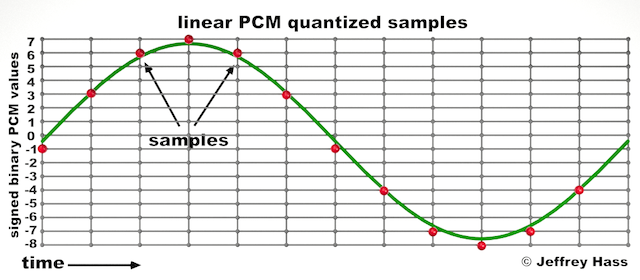
Audio quantization error is a fundamental aspect of digital audio processing. When analog sound waves are converted into digital signals, they undergo quantization. This means that the continuous analog signal is sampled and approximated in discrete steps. These steps are represented by binary values, typically in the form of bits (e.g., 16-bit, 24-bit). Now, what’s crucial to grasp here is that these discrete steps can lead to imperfections in audio reproduction.

Quantization error, often referred to as “quantization noise,” occurs when the actual analog signal deviates from the approximated digital representation. Imagine you have a beautiful painting, and you’re asked to replicate it using only a limited set of colors. The more restricted your color palette, the less accurate your reproduction will be. In the same way, the fewer bits you use for audio quantization, the more pronounced the quantization error becomes.

Quantization Levels and the Impact on Sound Quality

The number of quantization levels (related to bit depth) directly affects the precision of audio representation. For instance, a 16-bit audio recording has 65,536 possible levels, while a 24-bit recording provides a staggering 16,777,216 levels. This increased bit depth allows for a much finer representation of the original analog signal. Hence, a higher bit depth results in a reduction of quantization error, leading to superior sound quality.

To illustrate this, consider a grayscale image with only two colors: black and white. This is akin to an extremely low bit depth in audio, where the audio signal is either “on” or “off.” Now, imagine a high-resolution image with millions of colors, similar to the detail you get in a 24-bit audio recording. The difference in quality is apparent.

The Role of Dithering in Minimizing Quantization Error

One might wonder if there’s a way to mitigate quantization error in low-bit-depth audio recordings. Enter “dithering.” Dithering is a technique that introduces low-level noise to the audio signal, effectively spreading out the quantization error across a broader spectrum. Think of it as adding a sprinkle of fine grains of sand to a painting to blend the colors. This subtle noise masks the harshness of quantization error and makes it less noticeable to the human ear.

Now, as we’ve explored the fundamentals of audio quantization error, let’s delve into the questions that often arise:

How Does Quantization Error Affect Music Production?

In the realm of music production, quantization error can be a significant concern, particularly for professionals aiming to achieve top-tier sound quality. When producing music, especially in genres where subtle nuances are crucial, such as classical or jazz, quantization errors become more perceptible. To maintain audio fidelity, a higher bit depth is preferred during recording and production, ensuring minimal quantization noise.

Is There an Ideal Bit Depth for Audio Recording?

The ideal bit depth for audio recording is a subject of debate among audio enthusiasts. While 24-bit recording is commonly favored for its excellent dynamic range and low quantization error, it’s worth noting that the final audio format for most consumer applications, like CDs or streaming, is often 16-bit. The choice of bit depth should be based on the specific requirements of the project, keeping in mind the trade-off between audio quality and file size.

Can Quantization Error be Completely Eliminated?

Regrettably, quantization error cannot be entirely eliminated, as it’s an inherent part of the digital audio conversion process. However, it can be minimized to the point where it’s imperceptible to the human ear. Through techniques like dithering and the use of higher bit depths, the impact of quantization error can be significantly reduced, allowing for exceptional audio quality.

Last Words about Audio Quantization Error

In the ever-evolving world of audio technology, understanding audio quantization error is a fundamental step towards achieving superior sound quality. As an expert in the field, I’ve shared insights, experiences, and technical knowledge to demystify this concept. Remember, the bit depth you choose in audio recording significantly influences the extent of quantization error, and techniques like dithering play a pivotal role in mitigating its effects. The quest for pristine audio quality is an ongoing journey, but armed with this knowledge, you’re better equipped to make informed decisions in your audio endeavors.