Impact of Bit Depth in WAV Files


Free Download Mp4Gain
picture

Analyzing the Impact of Bit Depth in WAV Files

Impact of Bit Depth in WAV Files

Let’s talk about Bit Depth

Impact of Bit Depth in WAV Files

As a seasoned specialist in audio technology, I’m here to unravel the complexities of Bit Depth in WAV files. Imagine the Bit Depth as the palette of colors available to an artist. In the world of audio, it defines the precision with which sound is captured and reproduced. Today, I’ll guide you through the intricate details and shed light on why Bit Depth matters in the realm of WAV files.

Decoding the Basics: What is Bit Depth?

Let’s kick things off by demystifying the term “Bit Depth.” Picture it as the resolution of a photograph. Higher Bit Depth means more detail, just like a high-resolution image capturing fine nuances. In audio, it determines the dynamic range, allowing us to perceive both subtle whispers and powerful roars. Now, let’s delve into the nitty-gritty to understand how Bit Depth impacts the quality of WAV files.

  • Resolution analogy: photograph vs. audio
  • Dynamic range and perception

The Impact of Bit Depth on Audio Quality

Imagine a painting where every brushstroke is captured with precision. Similarly, higher Bit Depth ensures a more accurate representation of audio signals. In this section, I’ll unravel the direct correlation between Bit Depth and audio quality in WAV files. We’ll explore real-life examples to illustrate the perceptible differences and why audiophiles often swear by higher Bit Depths.

  • Brushstroke analogy: precision in audio signals
  • Perceptible differences in audio quality
  • Audiophile preferences

Unveiling the Bit Depths: 16-bit vs. 24-bit

Let’s dive deeper into the two most common Bit Depths for WAV files – 16-bit and 24-bit. Picture it as choosing between a regular and an HD version of a video. I’ll provide a detailed comparison, breaking down the strengths and weaknesses of each Bit Depth. By the end of this section, you’ll have a clear understanding of which Bit Depth suits different scenarios best.

  • Comparison to video quality choices
  • Detailed breakdown of 16-bit vs. 24-bit
  • Best use cases for each Bit Depth

The Technical Landscape: Bit Depth in Audio Production

Now, let’s shift our focus to the professional realm of audio production. Imagine Bit Depth as the precision tools in a surgeon’s hands. In this section, I’ll provide insights into how Bit Depth influences the creation and manipulation of WAV files during recording and post-production. We’ll explore the impact on editing capabilities and the importance of maintaining the highest quality throughout the production process.

  • Precision tools analogy: surgeon vs. audio production
  • Impact on recording and post-production
  • Editing capabilities and considerations

Latest Words on Bit Depth

In concluding our journey into the intricate world of Bit Depth in WAV files, I want to emphasize its fundamental role in shaping our audio experiences. Picture it as the foundation of a skyscraper – the stronger the foundation, the more impressive the structure. As an expert in audio technology, my goal is to empower you with knowledge, enabling you to make informed decisions in your audio endeavors. Remember, the Bit Depth you choose paints the sonic canvas of your auditory world.

Comments:

This article blew my mind! Finally, a clear explanation of Bit Depth. Can’t wait to apply this to my music production. 🎶

Great breakdown! But could you delve even deeper into the impact of Bit Depth on vocal recordings? I’m hungry for more details!

Bit Depth, the unsung hero of audio quality. Thanks for bringing it into the spotlight. Who knew it could make such a difference?

As a podcast producer, this article was a game-changer. It clarified so many doubts. Kudos to the expert behind this!

Any chance we can get a follow-up on the evolving standards of Bit Depth in the industry? Excited to stay updated!

This article made me appreciate the nuances of audio quality. Bit Depth is like the secret sauce for a perfect sound recipe.

Expert-level breakdown without the jargon. This is the kind of content we need more of. Cheers!

Bit Depth 101! Finally, a resource that explains it without making my head spin. Time to share this gem!

Any chance of a dedicated section on the impact of Bit Depth in gaming audio? It’s a crucial aspect for gamers like me!

After reading this, I can’t imagine compromising on Bit Depth anymore. It’s the key to unlocking true audio fidelity!

Who knew Bit Depth had such a profound impact? This article opened my eyes to the science behind audio quality. Well done!

Bit Depth is like the superhero of audio. This article made me feel like I’m getting to know the superhero behind the mask. Awesome stuff!

Such a comprehensive guide! Now, I’m curious about the impact of Bit Depth on live concert recordings. Anyone else wondering?


Free Download Mp4Gain
picture


Mp4Gain Main Window
picture


Mp4Gain Features
picture


Free Download Mp4Gain
picture

Audio Quantization Error

Audio Quantization Error

Audio Quantization Error

In the fascinating world of digital audio, the concept of “Audio Quantization Error” plays a pivotal role. Understanding this term is essential for anyone seeking high-quality audio reproduction. Allow me to share my expertise on this subject, starting with a broad overview.

Demystifying Audio Quantization Error

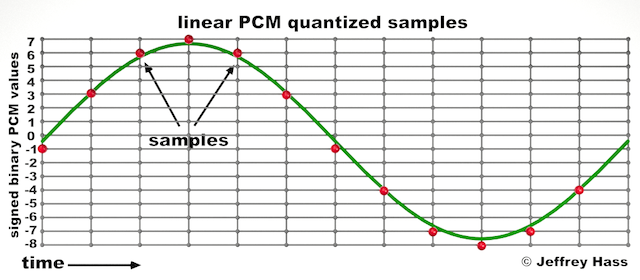
Audio quantization error is a fundamental aspect of digital audio processing. When analog sound waves are converted into digital signals, they undergo quantization. This means that the continuous analog signal is sampled and approximated in discrete steps. These steps are represented by binary values, typically in the form of bits (e.g., 16-bit, 24-bit). Now, what’s crucial to grasp here is that these discrete steps can lead to imperfections in audio reproduction.

Quantization error, often referred to as “quantization noise,” occurs when the actual analog signal deviates from the approximated digital representation. Imagine you have a beautiful painting, and you’re asked to replicate it using only a limited set of colors. The more restricted your color palette, the less accurate your reproduction will be. In the same way, the fewer bits you use for audio quantization, the more pronounced the quantization error becomes.

Quantization Levels and the Impact on Sound Quality

The number of quantization levels (related to bit depth) directly affects the precision of audio representation. For instance, a 16-bit audio recording has 65,536 possible levels, while a 24-bit recording provides a staggering 16,777,216 levels. This increased bit depth allows for a much finer representation of the original analog signal. Hence, a higher bit depth results in a reduction of quantization error, leading to superior sound quality.

To illustrate this, consider a grayscale image with only two colors: black and white. This is akin to an extremely low bit depth in audio, where the audio signal is either “on” or “off.” Now, imagine a high-resolution image with millions of colors, similar to the detail you get in a 24-bit audio recording. The difference in quality is apparent.

The Role of Dithering in Minimizing Quantization Error

One might wonder if there’s a way to mitigate quantization error in low-bit-depth audio recordings. Enter “dithering.” Dithering is a technique that introduces low-level noise to the audio signal, effectively spreading out the quantization error across a broader spectrum. Think of it as adding a sprinkle of fine grains of sand to a painting to blend the colors. This subtle noise masks the harshness of quantization error and makes it less noticeable to the human ear.

Now, as we’ve explored the fundamentals of audio quantization error, let’s delve into the questions that often arise:

How Does Quantization Error Affect Music Production?

In the realm of music production, quantization error can be a significant concern, particularly for professionals aiming to achieve top-tier sound quality. When producing music, especially in genres where subtle nuances are crucial, such as classical or jazz, quantization errors become more perceptible. To maintain audio fidelity, a higher bit depth is preferred during recording and production, ensuring minimal quantization noise.

Is There an Ideal Bit Depth for Audio Recording?

The ideal bit depth for audio recording is a subject of debate among audio enthusiasts. While 24-bit recording is commonly favored for its excellent dynamic range and low quantization error, it’s worth noting that the final audio format for most consumer applications, like CDs or streaming, is often 16-bit. The choice of bit depth should be based on the specific requirements of the project, keeping in mind the trade-off between audio quality and file size.

Can Quantization Error be Completely Eliminated?

Regrettably, quantization error cannot be entirely eliminated, as it’s an inherent part of the digital audio conversion process. However, it can be minimized to the point where it’s imperceptible to the human ear. Through techniques like dithering and the use of higher bit depths, the impact of quantization error can be significantly reduced, allowing for exceptional audio quality.

Last Words about Audio Quantization Error

In the ever-evolving world of audio technology, understanding audio quantization error is a fundamental step towards achieving superior sound quality. As an expert in the field, I’ve shared insights, experiences, and technical knowledge to demystify this concept. Remember, the bit depth you choose in audio recording significantly influences the extent of quantization error, and techniques like dithering play a pivotal role in mitigating its effects. The quest for pristine audio quality is an ongoing journey, but armed with this knowledge, you’re better equipped to make informed decisions in your audio endeavors.