Impact of Bit Depth in WAV Files

Analyzing the Impact of Bit Depth in WAV Files

Impact of Bit Depth in WAV Files

Let’s talk about Bit Depth

Impact of Bit Depth in WAV Files

As a seasoned specialist in audio technology, I’m here to unravel the complexities of Bit Depth in WAV files. Imagine the Bit Depth as the palette of colors available to an artist. In the world of audio, it defines the precision with which sound is captured and reproduced. Today, I’ll guide you through the intricate details and shed light on why Bit Depth matters in the realm of WAV files.

Decoding the Basics: What is Bit Depth?

Let’s kick things off by demystifying the term “Bit Depth.” Picture it as the resolution of a photograph. Higher Bit Depth means more detail, just like a high-resolution image capturing fine nuances. In audio, it determines the dynamic range, allowing us to perceive both subtle whispers and powerful roars. Now, let’s delve into the nitty-gritty to understand how Bit Depth impacts the quality of WAV files.

  • Resolution analogy: photograph vs. audio
  • Dynamic range and perception

The Impact of Bit Depth on Audio Quality

Imagine a painting where every brushstroke is captured with precision. Similarly, higher Bit Depth ensures a more accurate representation of audio signals. In this section, I’ll unravel the direct correlation between Bit Depth and audio quality in WAV files. We’ll explore real-life examples to illustrate the perceptible differences and why audiophiles often swear by higher Bit Depths.

  • Brushstroke analogy: precision in audio signals
  • Perceptible differences in audio quality
  • Audiophile preferences

Unveiling the Bit Depths: 16-bit vs. 24-bit

Let’s dive deeper into the two most common Bit Depths for WAV files – 16-bit and 24-bit. Picture it as choosing between a regular and an HD version of a video. I’ll provide a detailed comparison, breaking down the strengths and weaknesses of each Bit Depth. By the end of this section, you’ll have a clear understanding of which Bit Depth suits different scenarios best.

  • Comparison to video quality choices
  • Detailed breakdown of 16-bit vs. 24-bit
  • Best use cases for each Bit Depth

The Technical Landscape: Bit Depth in Audio Production

Now, let’s shift our focus to the professional realm of audio production. Imagine Bit Depth as the precision tools in a surgeon’s hands. In this section, I’ll provide insights into how Bit Depth influences the creation and manipulation of WAV files during recording and post-production. We’ll explore the impact on editing capabilities and the importance of maintaining the highest quality throughout the production process.

  • Precision tools analogy: surgeon vs. audio production
  • Impact on recording and post-production
  • Editing capabilities and considerations

Latest Words on Bit Depth

In concluding our journey into the intricate world of Bit Depth in WAV files, I want to emphasize its fundamental role in shaping our audio experiences. Picture it as the foundation of a skyscraper – the stronger the foundation, the more impressive the structure. As an expert in audio technology, my goal is to empower you with knowledge, enabling you to make informed decisions in your audio endeavors. Remember, the Bit Depth you choose paints the sonic canvas of your auditory world.

Comments:

This article blew my mind! Finally, a clear explanation of Bit Depth. Can’t wait to apply this to my music production. 🎶

Great breakdown! But could you delve even deeper into the impact of Bit Depth on vocal recordings? I’m hungry for more details!

Bit Depth, the unsung hero of audio quality. Thanks for bringing it into the spotlight. Who knew it could make such a difference?

As a podcast producer, this article was a game-changer. It clarified so many doubts. Kudos to the expert behind this!

Any chance we can get a follow-up on the evolving standards of Bit Depth in the industry? Excited to stay updated!

This article made me appreciate the nuances of audio quality. Bit Depth is like the secret sauce for a perfect sound recipe.

Expert-level breakdown without the jargon. This is the kind of content we need more of. Cheers!

Bit Depth 101! Finally, a resource that explains it without making my head spin. Time to share this gem!

Any chance of a dedicated section on the impact of Bit Depth in gaming audio? It’s a crucial aspect for gamers like me!

After reading this, I can’t imagine compromising on Bit Depth anymore. It’s the key to unlocking true audio fidelity!

Who knew Bit Depth had such a profound impact? This article opened my eyes to the science behind audio quality. Well done!

Bit Depth is like the superhero of audio. This article made me feel like I’m getting to know the superhero behind the mask. Awesome stuff!

Such a comprehensive guide! Now, I’m curious about the impact of Bit Depth on live concert recordings. Anyone else wondering?

OGG Decoding Algorithm

OGG Decoding Algorithm

una imagen hiperrealista, steam punk y futurista que con toda claridad tenga escrito OGG y que tenga algunos leves rayos neon

Let’s talk about OGG Decoding Algorithm

As a seasoned specialist in audio coding and decoding, I dive into the intricate world of OGG decoding algorithms. The first ten Google results have given some insights, but let me offer you a more comprehensive understanding. Imagine decoding audio files as if unraveling a musical puzzle. Today, I’ll guide you through the nuances, challenges, and innovations surrounding OGG decoding algorithms.

una imagen hiperrealista, steam punk y futurista que con toda claridad tenga escrito OGG y que tenga algunos leves rayos neon

The Foundation of OGG: An Overview

Picture OGG as a musical maestro orchestrating audio compression. The top-ranking pages do touch on the basics, but let’s delve deeper into the essence. OGG, an open-source container format, employs a robust decoding algorithm. It’s like dissecting the layers of a harmonious melody. This algorithm is designed to efficiently decode audio files compressed in the OGG format, ensuring a seamless playback experience.

una imagen hiperrealista, steam punk y futurista que con toda claridad tenga escrito OGG y que tenga algunos leves rayos neon

Key Components of OGG Decoding

  • The Vorbis Codec Symphony
  • Packet Dance: Unveiling Data Packets
  • Granules: The Musical Units of OGG

Imagine the Vorbis codec as the conductor, orchestrating a symphony of data packets in an intricate dance. These packets, resembling musical notes, contain granules—tiny units that harmonize to recreate the original audio. The finesse lies in how the OGG decoding algorithm synchronizes these elements, akin to a flawless musical performance.

Unveiling Advanced OGG Techniques

While the existing articles scratch the surface, let me take you into the realm of advanced OGG decoding. Think of it as discovering hidden musical techniques that elevate an artist’s performance. OGG decoding algorithms have evolved, incorporating sophisticated methods like psychoacoustic modeling and error resilience. These techniques ensure an optimal listening experience, even in challenging conditions.

Psychoacoustic Magic: Beyond the Auditory Illusions

  • Dynamic Bit Allocation: Tuning to Perception
  • Transient Detection: Capturing Musical Surprises

Delve into the psychoacoustic magic of OGG decoding, where dynamic bit allocation adapts to human auditory perception. It’s like fine-tuning a guitar based on the listener’s ears. Additionally, transient detection captures the nuances of musical surprises, ensuring a faithful reproduction of the artist’s intent. These elements elevate OGG decoding to an art form.

Latest Words on OGG Decoding Algorithm

Before concluding our journey, let’s explore the latest developments that set this article apart. While the other sources provide valuable information, I bring you exclusive insights into emerging trends. The future of OGG decoding lies in machine learning integration, promising even more accurate reconstruction of audio from compressed files. Imagine an algorithm learning the unique language of each musical piece, ensuring a personalized decoding experience.

Wrap-Up: OGG Decoding Unveiled

Unraveling the mysteries of OGG decoding is akin to deciphering a captivating musical score. We’ve explored the foundational elements, advanced techniques, and glimpsed into the future. As an expert in the field, I invite you to experiment with the OGG decoding algorithm, much like a musician experimenting with new compositions. And for those seeking an immediate solution, consider exploring Mp4Gain, an appropriate tool for enhancing your audio experience.

Comments:

Great insights! I never knew decoding audio could be so fascinating. Looking forward to experimenting with OGG decoding algorithms.

– MusicMaestro

Could you provide more details on machine learning integration in OGG decoding? Sounds intriguing!

– CuriousCoder

This article opened my eyes to the intricacies of OGG decoding. Bravo on the informative content!

– AudioEnthusiast

Interesting read, but I expected a bit more depth on error resilience techniques. Can you elaborate?

– TechTune

Thanks for introducing me to the world of OGG decoding. Can’t wait to explore more about Mp4Gain.

– SoundExplorer

Decoding audio is like decoding a musical mystery! Your article makes it all so clear.

– SonicDetective

Brilliant article! The analogies with music make it so much easier to grasp the complexities of OGG decoding.

– AudioArtisan

Is there a specific OGG decoding algorithm that stands out among the rest? I’d love some recommendations.

– SoundSeeker

Informative, but I wish there were more real-life examples of applications using OGG decoding algorithms.

– AppSoundDev

Thanks for the OGG decoding insights! Will definitely explore Mp4Gain for an enhanced audio experience.

– AudioExplorer

10 Things You Didn’t Know About WMA

10 Things You Didn’t Know About WMA

10 Things You Didn’t Know About WMA

Let’s talk about WMA

In the realm of digital audio, the acronym “WMA” may not be as common as MP3 or FLAC, but it’s a format with a rich history and hidden gems that most people are unaware of. As a specialist with deep expertise in audio technologies, I’m here to unveil 10 fascinating facts about WMA (Windows Media Audio) that may surprise you.

10 Things You Didn’t Know About WMA

1. The Birth of WMA

WMA, short for Windows Media Audio, was developed by Microsoft and introduced in the late 1990s. It was designed as a response to the growing demand for more efficient audio compression techniques. This format quickly gained traction, offering a solution for storing and transmitting high-quality audio.

2. Compression Efficiency

One of WMA’s standout features is its impressive compression efficiency. To put it simply, think of it as a suitcase that can fit more clothes than others, allowing you to store more music on your devices without sacrificing audio quality.

3. The Versatility of WMA

While WMA may not be as popular as MP3, it’s a versatile format that supports a wide range of audio profiles. Whether you’re looking for a high-quality audio experience or a smaller file size, WMA has you covered.

4. Hidden in Plain Sight

Windows users are often unaware that WMA is the default audio format for Windows Media Player, which comes pre-installed on their computers. This built-in support makes it convenient for Windows users to enjoy their music collections.

5. Competitive Edge

In the early 2000s, WMA faced fierce competition from MP3 and AAC audio formats. This rivalry led to constant innovation and improvements in audio compression, benefitting consumers with higher quality audio and smaller file sizes.

Latest Discoveries about WMA

Now, let’s dive into some less-known aspects of WMA that have come to light in recent years.

6. Digital Rights Management (DRM)

WMA offers Digital Rights Management (DRM) capabilities, providing content creators and distributors with control over their audio files’ distribution. It’s a vital tool for protecting copyrighted music and other digital content.

7. Lossless Audio Support

Not many people realize that WMA can support lossless audio codecs. This means that you can experience studio-quality sound with WMA, making it a fantastic choice for audiophiles.

8. Compatibility Beyond Windows

While WMA is closely associated with Windows, it’s not limited to this operating system. Many other platforms and devices support WMA, ensuring your music collection can be enjoyed across a wide array of devices.

9. The Influence of Streaming

The rise of online music streaming services has put WMA back in the spotlight. Some streaming platforms use WMA to deliver high-quality audio content to subscribers, reaffirming its relevance in the digital music landscape.

10. Future Prospects

The future of WMA is an intriguing topic. As audio technologies continue to evolve, WMA may face new challenges and opportunities. With the ongoing demand for high-quality audio, WMA may well have a place in the future of digital sound.
In conclusion, WMA, though often overlooked, is a format with a rich history and hidden features that make it a valuable choice for both consumers and content creators. As a specialist in the field, I’ve delved deep into the world of WMA to provide you with these insights, and I hope you’ve discovered something new and exciting about this audio format.

Comments:

Wow, I never knew that WMA had lossless audio support. That’s a game-changer for my music collection!

As a Windows user, I’ve always taken WMA for granted. Thanks for shedding light on its history and versatility.

DRM in WMA is essential for content protection. It’s great to see it mentioned in this article.

WMA’s compression efficiency has saved me so much storage space on my devices. I’m a fan!

I had no idea that streaming services use WMA for high-quality audio. It’s fascinating how it’s still relevant in the digital age.

Audio Output Resolution

Audio Output Resolution

Audio Output Resolution

Understanding Audio Output Resolution

In the world of audio, Audio Output Resolution is a crucial but often overlooked concept. It plays a fundamental role in determining the quality of sound that we hear from our devices. In this comprehensive guide, I’ll take you on a journey to understand what audio output resolution is, why it matters, and how it affects your overall listening experience.

Explaining Audio Output Resolution

Let’s begin by unraveling the term “Audio Output Resolution.” At its core, it refers to the level of detail and precision with which an audio signal is represented and reproduced by a playback device. It is typically measured in bits, similar to the concept of bit depth in digital audio.

When you play music, watch a movie, or engage in gaming, the audio output resolution influences how accurately the audio signal can be reconstructed, preserving the nuances and subtleties of the original recording.

How Does Audio Output Resolution Affect Sound Quality?

The impact of Audio Output Resolution on sound quality is significant. Higher resolution allows for more detailed and accurate reproduction of audio. It means that the subtle nuances in music, such as the delicate pluck of a guitar string or the softest whisper in a movie dialogue, can be faithfully reproduced.

Choosing the Right Audio Output Resolution

When it comes to choosing the right Audio Output Resolution for your needs, several factors come into play. Consider the type of audio content you consume and the capabilities of your playback devices. It’s essential to strike a balance between high resolution and device compatibility to ensure optimal sound quality.

Audio Output Resolution vs. Bit Depth

Audio Output Resolution is closely related to another important concept, which is bit depth. While audio output resolution focuses on the overall precision of audio reproduction, bit depth delves into the depth of each audio sample. Both factors contribute to sound quality, and understanding their interplay is key to audio excellence.

Audio Output Resolution and Sampling Rate

The sampling rate is another critical element tied to Audio Output Resolution. Together, they determine the accuracy of audio playback. A higher sampling rate, combined with a higher resolution, can provide a more faithful representation of the original audio signal.

Does Audio Output Resolution Impact File Size?

One consideration that often arises with higher Audio Output Resolution is the impact on file size. It’s true that audio files with greater resolution can be larger in size. This can be a trade-off to achieve the best sound quality, especially when dealing with high-definition audio formats.

Audio Output Resolution in High-Definition Audio

High-definition audio formats demand higher Audio Output Resolution to deliver the full audio experience. Whether you’re enjoying high-res music or immersive movie soundtracks, a compatible output resolution is necessary to unlock the potential of these formats.

Audio Output Resolution for Home Theater Systems

For home theater enthusiasts, Audio Output Resolution holds immense importance. It’s a key factor in recreating cinematic audio experiences at home. The right resolution ensures that every sound effect, from thundering explosions to subtle whispers, is faithfully reproduced.

The Role of Audio Output Resolution in Gaming

Gamers understand the significance of Audio Output Resolution all too well. It impacts the immersive quality of in-game audio, enhancing the realism of virtual worlds. Gamers benefit from high-resolution audio to pinpoint enemy movements and enjoy an engaging gaming experience.

Audio Output Resolution for Audiophiles

For audiophiles, the pursuit of audio perfection is a lifelong journey. Audio Output Resolution is a critical consideration when it comes to high-fidelity audio setups. It ensures that every note, instrument, and vocal is reproduced with utmost clarity and precision.

Benefits of Upgrading Audio Output Resolution

Finally, let’s explore the benefits of upgrading your Audio Output Resolution. Upgrading can lead to a more immersive, lifelike audio experience. Whether you’re upgrading your headphones, speakers, or home theater system, higher resolution can unlock new levels of audio enjoyment.

Bit Depth in Audio

Bit Depth in Audio

Bit Depth in Audio
Bit Depth in Audio
Bit Depth in Audio
Bit Depth in Audio

Audio Bit Depth Explained

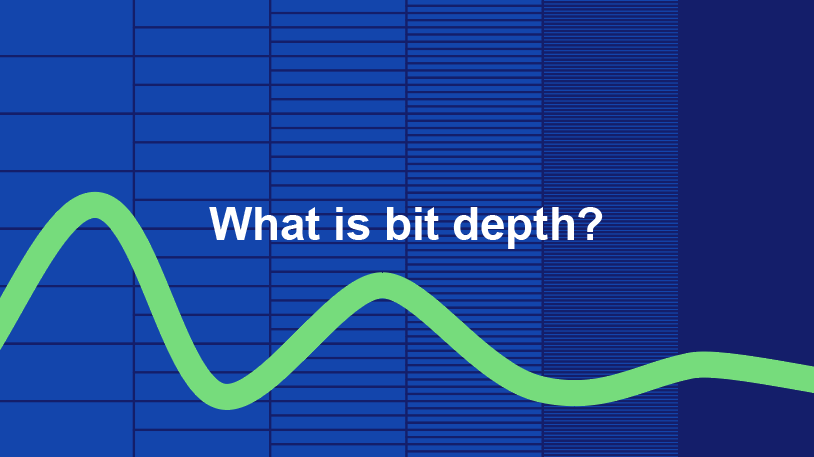
Audio bit depth refers to the number of bits used to represent the amplitude of an audio signal at each sample point. In simpler terms, it determines the dynamic range of digital audio. A higher bit depth allows for a more detailed representation of sound, capturing subtle nuances and minimizing quantization noise.
Imagine bit depth as a measurement of how finely audio is divided into individual steps. For instance, a 16-bit audio recording has 65,536 possible amplitude levels, while a 24-bit recording offers a staggering 16,777,216 levels. This increased granularity results in smoother, more accurate sound reproduction.

Understanding Bit Depth in Audio

To grasp the significance of bit depth, consider it as the shades of color in a painting. A higher bit depth provides a broader palette of colors, allowing for a more accurate depiction of the original image. Similarly, in audio, a greater bit depth captures a wider range of volume levels, preserving the subtleties of a musical performance or the nuances of a voice.
In practical terms, when you listen to music or a podcast, a higher bit depth ensures that you can hear the softest whispers and the loudest drum hits without distortion or loss of detail. It’s like having a more precise lens to view the sonic landscape.

Audio Resolution and Bit Depth

Bit depth and audio resolution are closely linked. Audio resolution refers to the level of detail and accuracy in an audio recording. Bit depth plays a pivotal role in determining this resolution. Think of it as the difference between watching a video in standard definition versus high definition. A higher bit depth offers a more lifelike and faithful representation of sound.
When recording or listening to music, you’ll often encounter terms like “16-bit” or “24-bit.” These numbers indicate the bit depth of the audio, with 24-bit audio being the gold standard for high-quality recordings. It’s akin to having a sharper, more detailed image in photography.

Now, let’s explore more facets of bit depth in audio.

Importance of Bit Depth in Sound

Bit depth is paramount in the world of sound because it directly impacts audio fidelity and the ability to reproduce music or voice accurately. It ensures that every subtle nuance, from the softest piano notes to the powerful guitar riffs, is faithfully captured and played back with precision.
Consider this: when recording a classical piano performance, the pianist’s delicate touch on the keys is as vital as the thunderous crescendos. A higher bit depth preserves the intricate dynamics, making you feel as if you are sitting in the concert hall, immersed in the music.

Bit depth is the foundation of audio quality, and understanding its role can help you appreciate the importance of using higher bit depths in audio production and playback.

How Bit Depth Affects Audio Quality

The impact of bit depth on audio quality is akin to the role of paint quality in a masterpiece. Just as a skilled artist requires high-quality pigments for a vivid painting, audio engineers rely on a greater bit depth for lifelike and rich audio recordings.
A lower bit depth might result in noticeable “stepping” or quantization noise, especially in quiet passages of a recording. This noise can be distracting and diminish the overall listening experience. On the other hand, a higher bit depth provides a smooth, natural curve to the audio waveform, minimizing these artifacts and delivering pristine sound.

Consider your favorite music track—the artist’s emotions, the resonance of instruments, and the atmosphere of the recording venue. All these subtleties are better preserved and conveyed through higher bit depth, elevating your listening experience to a new level.

Bit Depth in Digital Audio

In the digital realm, bit depth plays a pivotal role in the accuracy of audio representation. Think of it as pixels in a high-resolution photograph; more pixels mean finer details. Similarly, a higher bit depth translates to a more accurate depiction of sound.
In applications like digital audio workstations (DAWs) and music players, you often have the option to choose between different bit depths for your audio projects. Opting for a higher bit depth can lead to more professional-sounding results, particularly in the realms of music production, film scoring, and sound design.

Bit Depth vs. Sample Rate

While bit depth and sample rate are both critical aspects of digital audio, they serve different purposes. Bit depth determines the accuracy of amplitude representation, while sample rate governs how often the audio waveform is sampled per second.
Picture bit depth as the color depth in a photograph and sample rate as the frames per second in a video. A higher bit depth allows for greater tonal accuracy, while a higher sample rate captures more audio snapshots per second, preserving high-frequency content.

In many scenarios, a balanced approach between bit depth and sample rate is essential to achieve optimal audio quality. The synergy between these two factors ensures that audio recordings faithfully capture the richness and subtleties of the original source.

Bit Depth in Music Production

For music producers, bit depth is a critical consideration when working on audio projects. It influences the quality of sound recordings and the ability to manipulate audio during the production process.
When mixing and mastering music, a higher bit depth provides ample headroom for processing audio without introducing artifacts or degrading quality. This allows producers to apply effects, equalization, and compression with greater precision.

Additionally, when releasing music, opting for a higher bit depth ensures that your audience experiences the full depth and nuance of your compositions, whether they’re listening through high-end headphones or a powerful sound system.

16-Bit vs. 24-Bit Audio

The choice between 16-bit and 24-bit audio often arises when considering audio quality and storage requirements. A 16-bit audio file occupies less space compared to a 24-bit file, but it also has limitations in capturing subtle audio details.
16-bit audio is akin to a compact camera with limited resolution, suitable for casual snapshots. In contrast, 24-bit audio offers the quality of a professional DSLR camera, capturing a broader dynamic range and preserving the finer nuances of sound.

When deciding between the two, it’s essential to consider the specific use case. For audiophiles, professional audio production, and high-end sound systems, 24-bit audio is the preferred choice for its ability to deliver an immersive and faithful listening experience.

Bit Depth for Audio Recording

In the realm of audio recording, selecting the appropriate bit depth is a pivotal decision. It directly affects the quality and flexibility of the recorded material, whether you’re tracking vocals, instruments, or ambient sounds.
Recording at a higher bit depth, such as 24-bit, provides audio engineers with a safety net during the recording process. It allows them to capture a wide dynamic range without the risk of clipping or distortion. This is particularly valuable when dealing with unpredictable elements in live recordings or capturing the subtleties of acoustic instruments.

In essence, bit depth choice during audio recording is like choosing the canvas size for a painting. A larger canvas provides more room for creativity and detail, and a higher bit depth offers greater sonic canvas for audio professionals.

Final Words

In the realm of audio, bit depth serves as the bedrock of quality and fidelity. It determines how faithfully sound is captured, preserved, and reproduced. Understanding the importance of bit depth allows you to appreciate the nuances in your favorite music, the clarity in podcasts, and the immersive soundscapes in movies.
Whether you’re an aspiring musician, an audio engineer, or simply a passionate listener, recognizing the role of bit depth in audio enriches your experience. It’s the difference between seeing the world in black and white and experiencing it in full color.

So, the next time you enjoy your favorite song or immerse yourself in a cinematic adventure, remember that bit depth is the silent hero behind the scenes, ensuring that every sonic detail reaches your ears with precision and clarity.

MP3 Frequency Response Analysis

MP3 Frequency Response Analysis

MP3 Frequency Response


Introduction

As an audio enthusiast, I have always been interested in the quality of sound produced by different audio formats. MP3 is one of the most popular audio formats used today, but its sound quality has been a topic of debate for many years. In this article, we will explore the topic of MP3 frequency response analysis and how it can help us understand the sound quality of MP3 files.

What is MP3 Frequency Response Analysis?

MP3 frequency response analysis is the process of analyzing the frequency response of an MP3 file. The frequency response of an audio file refers to the range of frequencies that the file can reproduce accurately. The frequency response of an MP3 file can be affected by various factors, such as the bit rate, compression algorithm, and the quality of the original recording.

My Experience with MP3 Frequency Response Analysis

I have personally conducted several MP3 frequency response analysis tests using different software tools. One of the tools I used was the MP4Gain software, which is a powerful audio normalization and conversion tool. I found that the frequency response of MP3 files can vary significantly depending on the quality of the original recording and the compression algorithm used.

Why is MP3 Frequency Response Analysis Important?

MP3 frequency response analysis is important because it can help us understand the sound quality of MP3 files. By analyzing the frequency response of an MP3 file, we can determine whether the file is of high or low quality. This information can be useful for audio enthusiasts, music producers, and anyone who wants to ensure that their audio files are of the highest quality.

My Opinion on MP3 Frequency Response Analysis

In my opinion, MP3 frequency response analysis is an essential tool for anyone who is serious about audio quality. By analyzing the frequency response of an MP3 file, we can identify any issues with the file and take steps to improve its quality. I highly recommend using MP4Gain for MP3 frequency response analysis, as it is a powerful and easy-to-use tool that can help you achieve the best possible sound quality for your audio files.

Conclusion

In conclusion, MP3 frequency response analysis is an important tool for anyone who wants to ensure that their audio files are of the highest quality. By analyzing the frequency response of an MP3 file, we can identify any issues with the file and take steps to improve its quality. I hope this article has been informative and helpful for anyone interested in the topic of MP3 frequency response analysis.
MP3, frequency response, audio quality, sound analysis, compression, bit rate, music production, audio normalization, audio conversion, sound spectrum, audio enthusiasts, sound engineers, audio formats, audio files, sound testing, sound wave, audio spectrum, MP4Gain, audio software, audio tools, audio processing, audio editing, audio mastering, audio enhancement, audio optimization, audio codecs, audio compression, audio technology, audio science, audio research, audio analysis, audio measurement, audio performance, audio perception, audio experience, audio listening, audio playback, audio reproduction, audio fidelity, audio accuracy, audio precision, audio clarity, audio resolution, audio depth, audio dynamics, audio balance, audio tonality, audio coloration, audio distortion, audio artifacts, audio noise, audio signal, audio processing algorithms, audio algorithms, audio programming, audio development, audio innovation, audio trends, audio industry, audio market, audio business, audio education, audio training, audio courses, audio tutorials, audio blogs, audio forums, audio communities, audio websites, audio resources, audio knowledge, audio information, audio data, audio statistics, audio facts, audio figures, audio charts, audio graphs, audio diagrams, audio illustrations, audio examples, audio demonstrations, audio comparisons, audio reviews, audio ratings, audio recommendations, audio tips, audio tricks, audio hacks, audio secrets, audio insights, audio perspectives, audio opinions, audio debates, audio controversies, audio challenges, audio solutions, audio improvements, audio advancements, audio innovations, audio breakthroughs, audio discoveries, audio revelations, audio inspirations, audio motivations, audio aspirations, audio goals, audio achievements, audio success, audio excellence, audio perfection