As an audio specialist with years of hands-on experience, let’s demystify the world of dynamic range compression. Imagine it as a volume guardian—ensuring loud parts aren’t too loud while making quiet parts more audible. It’s like having a skilled conductor ensuring every instrument in an orchestra is heard.
Unlocking the Basics of Dynamic Range Compression
In the realm of audio, understanding the essentials is crucial. Dynamic range compression acts as the mediator between soft and loud sounds, maintaining a consistent volume. Picture a storyteller modulating their voice to captivate an audience, making sure every detail is heard, whether a whisper or a roar.
The Mechanics: How Dynamic Range Compression Works
Now, let’s delve into the technicalities. Dynamic range compression involves two primary components: the threshold and the ratio. It’s comparable to a security system—once the sound breaches the threshold, the ratio determines how much it’s restrained. In simple terms, it’s your audio bodyguard, ensuring no sudden spikes or drops catch…
Comments:
This article really clarified dynamic range compression for me. I never thought of it as an audio bodyguard, but it makes perfect sense now!
Could you provide more examples of how dynamic range compression is used in professional audio settings? I’m eager to apply this knowledge to my own projects.
Kudos to the writer for explaining complex audio concepts in such an accessible way. Looking forward to more insights!
Impact of Bit Depth in WAV FilesImpact of Bit Depth in WAV Files
Let’s talk about Bit Depth
Impact of Bit Depth in WAV Files
As a seasoned specialist in audio technology, I’m here to unravel the complexities of Bit Depth in WAV files. Imagine the Bit Depth as the palette of colors available to an artist. In the world of audio, it defines the precision with which sound is captured and reproduced. Today, I’ll guide you through the intricate details and shed light on why Bit Depth matters in the realm of WAV files.
Decoding the Basics: What is Bit Depth?
Let’s kick things off by demystifying the term “Bit Depth.” Picture it as the resolution of a photograph. Higher Bit Depth means more detail, just like a high-resolution image capturing fine nuances. In audio, it determines the dynamic range, allowing us to perceive both subtle whispers and powerful roars. Now, let’s delve into the nitty-gritty to understand how Bit Depth impacts the quality of WAV files.
Resolution analogy: photograph vs. audio
Dynamic range and perception
The Impact of Bit Depth on Audio Quality
Imagine a painting where every brushstroke is captured with precision. Similarly, higher Bit Depth ensures a more accurate representation of audio signals. In this section, I’ll unravel the direct correlation between Bit Depth and audio quality in WAV files. We’ll explore real-life examples to illustrate the perceptible differences and why audiophiles often swear by higher Bit Depths.
Brushstroke analogy: precision in audio signals
Perceptible differences in audio quality
Audiophile preferences
Unveiling the Bit Depths: 16-bit vs. 24-bit
Let’s dive deeper into the two most common Bit Depths for WAV files – 16-bit and 24-bit. Picture it as choosing between a regular and an HD version of a video. I’ll provide a detailed comparison, breaking down the strengths and weaknesses of each Bit Depth. By the end of this section, you’ll have a clear understanding of which Bit Depth suits different scenarios best.
Comparison to video quality choices
Detailed breakdown of 16-bit vs. 24-bit
Best use cases for each Bit Depth
The Technical Landscape: Bit Depth in Audio Production
Now, let’s shift our focus to the professional realm of audio production. Imagine Bit Depth as the precision tools in a surgeon’s hands. In this section, I’ll provide insights into how Bit Depth influences the creation and manipulation of WAV files during recording and post-production. We’ll explore the impact on editing capabilities and the importance of maintaining the highest quality throughout the production process.
Precision tools analogy: surgeon vs. audio production
Impact on recording and post-production
Editing capabilities and considerations
Latest Words on Bit Depth
In concluding our journey into the intricate world of Bit Depth in WAV files, I want to emphasize its fundamental role in shaping our audio experiences. Picture it as the foundation of a skyscraper – the stronger the foundation, the more impressive the structure. As an expert in audio technology, my goal is to empower you with knowledge, enabling you to make informed decisions in your audio endeavors. Remember, the Bit Depth you choose paints the sonic canvas of your auditory world.
Comments:
This article blew my mind! Finally, a clear explanation of Bit Depth. Can’t wait to apply this to my music production. 🎶
Great breakdown! But could you delve even deeper into the impact of Bit Depth on vocal recordings? I’m hungry for more details!
Bit Depth, the unsung hero of audio quality. Thanks for bringing it into the spotlight. Who knew it could make such a difference?
As a podcast producer, this article was a game-changer. It clarified so many doubts. Kudos to the expert behind this!
Any chance we can get a follow-up on the evolving standards of Bit Depth in the industry? Excited to stay updated!
This article made me appreciate the nuances of audio quality. Bit Depth is like the secret sauce for a perfect sound recipe.
Expert-level breakdown without the jargon. This is the kind of content we need more of. Cheers!
Bit Depth 101! Finally, a resource that explains it without making my head spin. Time to share this gem!
Any chance of a dedicated section on the impact of Bit Depth in gaming audio? It’s a crucial aspect for gamers like me!
After reading this, I can’t imagine compromising on Bit Depth anymore. It’s the key to unlocking true audio fidelity!
Who knew Bit Depth had such a profound impact? This article opened my eyes to the science behind audio quality. Well done!
Bit Depth is like the superhero of audio. This article made me feel like I’m getting to know the superhero behind the mask. Awesome stuff!
Such a comprehensive guide! Now, I’m curious about the impact of Bit Depth on live concert recordings. Anyone else wondering?
10 Things You Didn’t Know About FLAC10 Things You Didn’t Know About FLAC
Let’s talk about FLAC
As a specialist with years of experience in the world of audio, I’m thrilled to delve into the captivating universe of FLAC. Most of us have heard of MP3, the widely used audio format, but FLAC remains a hidden gem for many. In this article, I’m here to unveil the lesser-known facets of FLAC, helping you understand why it’s a superior choice for audio enthusiasts and everyday music lovers alike.
10 Things You Didn’t Know About FLAC
Lossless Audio: What’s the Fuss?
When we talk about FLAC, we’re referring to “Free Lossless Audio Codec.” The term “lossless” is the key here. Unlike MP3, which is a “lossy” audio format, FLAC preserves every bit of audio data during compression. Think of it as a high-resolution photograph compared to a heavily compressed one. With FLAC, you’re getting the best possible audio quality without any loss in fidelity.
Perfect Preservation of Sound
One of the remarkable aspects of FLAC is its commitment to preserving sound exactly as it was recorded. It’s like a digital audio museum, where every note, instrument, and vocal is displayed in its purest form. Whether you’re listening to a symphony orchestra or your favorite rock band, FLAC ensures that you hear every nuance and detail with pristine clarity.
CD-Quality Audio, Minus the CDs
Remember those shiny discs called CDs? They were the gold standard for audio quality in the past. FLAC, however, offers CD-quality audio without the need for physical discs. You can enjoy the same level of audio excellence as a CD, but in a convenient digital format. It’s like having a virtual CD library in your pocket.
Hi-Res Audio: Beyond CD Quality
If CD-quality audio isn’t enough, FLAC has you covered. It supports high-resolution audio, surpassing the quality of CDs. With FLAC, you can immerse yourself in studio-quality recordings, feeling like you’re right there in the recording studio or at a live concert. It’s like having a 4K TV for your ears.
Multi-Platform Compatibility
You might be concerned about compatibility, but FLAC is remarkably versatile. It plays nicely with various platforms and devices, from Windows and macOS to Android and iOS. So, whether you’re at your computer, on the go with your smartphone, or even at home with your hi-fi system, FLAC has your back. It’s like a universal remote for audio.
Metadata and Album Art Galore
FLAC doesn’t just stop at audio quality; it’s also a pro at handling metadata and album art. When you open a FLAC file, you’re not just getting the music – you’re treated to artist names, song titles, album information, and even the album cover art. It’s like a digital music museum with all the exhibition details at your fingertips.
Archiving and Restoration Magic
Ever worried about your precious music collection getting damaged or lost? FLAC acts as a guardian angel for your audio treasures. You can use it to create perfect archives of your music, ensuring that no quality is lost. And if you ever need to restore your music, FLAC is there to save the day, providing audio as good as new.
Streaming in Hi-Fi Glory
With the rise of music streaming, many services offer a Hi-Fi or lossless tier. What’s powering that superior audio quality? You guessed it – FLAC. Services like Tidal and Deezer HiFi use FLAC to deliver pristine sound to your ears. It’s like having a personal concert streamed directly to your device.
It’s Not Just for Audiophiles
While FLAC is a favorite among audiophiles, it’s not exclusive to them. Anyone who appreciates great sound can benefit from FLAC. Whether you’re a casual music listener or a dedicated music lover, you’ll notice the difference in audio quality. It’s like upgrading from standard definition to 4K – once you experience it, you won’t want to go back.
FLAC: The Green Audio Format
Did you know that FLAC is also environmentally friendly? By preserving audio quality without the need for physical media, it reduces the carbon footprint associated with CD production and transportation. It’s like listening to your music while helping the planet breathe a little easier.
Unleashing the Full Potential of FLAC
Before we wrap up, I should mention that there are tools and software like Mp4Gain that can enhance your FLAC experience. They allow you to manage your FLAC library efficiently and ensure that your audio quality is top-notch. While I’ve explored the wonders of FLAC, these tools are the final piece of the puzzle to unleash its full potential.
Latest Words on FLAC
In a world of audio formats, FLAC shines as a beacon of uncompromised quality. It offers a listening experience that’s second to none, whether you’re a casual listener or a hardcore audiophile. As technology evolves, FLAC remains at the forefront of high-quality audio, promising a future filled with sonic perfection.
Comments:
Comment: I never realized how much detail gets lost in other formats until I switched to FLAC. It’s like hearing my favorite songs for the first time!
Author: SonicExplorer
Comment: This article opened my eyes to the world of FLAC. I had no idea it was so versatile and accessible. Great read!
Author: MusicLover123
Comment: I’d love to see a follow-up article on the best devices and software for enjoying FLAC to the fullest.
Author: TechEnthusiast
Comment: FLAC is like a hidden treasure in the world of music. I’m excited to explore it further now!
Author: AudioAdventurer
Comment: This article made me appreciate the environmental aspect of FLAC. It’s a win-win for my ears and the planet!
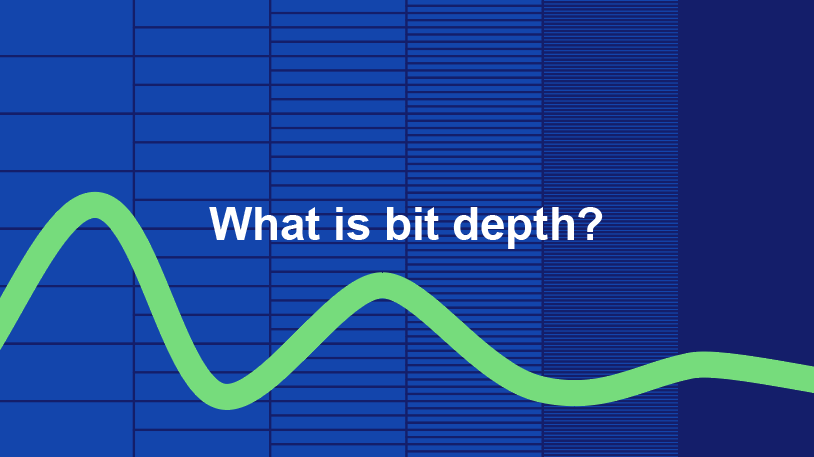
Audio bit depth refers to the number of bits used to represent the amplitude of an audio signal at each sample point. In simpler terms, it determines the dynamic range of digital audio. A higher bit depth allows for a more detailed representation of sound, capturing subtle nuances and minimizing quantization noise.
Imagine bit depth as a measurement of how finely audio is divided into individual steps. For instance, a 16-bit audio recording has 65,536 possible amplitude levels, while a 24-bit recording offers a staggering 16,777,216 levels. This increased granularity results in smoother, more accurate sound reproduction.
Understanding Bit Depth in Audio
To grasp the significance of bit depth, consider it as the shades of color in a painting. A higher bit depth provides a broader palette of colors, allowing for a more accurate depiction of the original image. Similarly, in audio, a greater bit depth captures a wider range of volume levels, preserving the subtleties of a musical performance or the nuances of a voice.
In practical terms, when you listen to music or a podcast, a higher bit depth ensures that you can hear the softest whispers and the loudest drum hits without distortion or loss of detail. It’s like having a more precise lens to view the sonic landscape.
Audio Resolution and Bit Depth
Bit depth and audio resolution are closely linked. Audio resolution refers to the level of detail and accuracy in an audio recording. Bit depth plays a pivotal role in determining this resolution. Think of it as the difference between watching a video in standard definition versus high definition. A higher bit depth offers a more lifelike and faithful representation of sound.
When recording or listening to music, you’ll often encounter terms like “16-bit” or “24-bit.” These numbers indicate the bit depth of the audio, with 24-bit audio being the gold standard for high-quality recordings. It’s akin to having a sharper, more detailed image in photography.
Now, let’s explore more facets of bit depth in audio.
Importance of Bit Depth in Sound
Bit depth is paramount in the world of sound because it directly impacts audio fidelity and the ability to reproduce music or voice accurately. It ensures that every subtle nuance, from the softest piano notes to the powerful guitar riffs, is faithfully captured and played back with precision.
Consider this: when recording a classical piano performance, the pianist’s delicate touch on the keys is as vital as the thunderous crescendos. A higher bit depth preserves the intricate dynamics, making you feel as if you are sitting in the concert hall, immersed in the music.
Bit depth is the foundation of audio quality, and understanding its role can help you appreciate the importance of using higher bit depths in audio production and playback.
How Bit Depth Affects Audio Quality
The impact of bit depth on audio quality is akin to the role of paint quality in a masterpiece. Just as a skilled artist requires high-quality pigments for a vivid painting, audio engineers rely on a greater bit depth for lifelike and rich audio recordings.
A lower bit depth might result in noticeable “stepping” or quantization noise, especially in quiet passages of a recording. This noise can be distracting and diminish the overall listening experience. On the other hand, a higher bit depth provides a smooth, natural curve to the audio waveform, minimizing these artifacts and delivering pristine sound.
Consider your favorite music track—the artist’s emotions, the resonance of instruments, and the atmosphere of the recording venue. All these subtleties are better preserved and conveyed through higher bit depth, elevating your listening experience to a new level.
Bit Depth in Digital Audio
In the digital realm, bit depth plays a pivotal role in the accuracy of audio representation. Think of it as pixels in a high-resolution photograph; more pixels mean finer details. Similarly, a higher bit depth translates to a more accurate depiction of sound.
In applications like digital audio workstations (DAWs) and music players, you often have the option to choose between different bit depths for your audio projects. Opting for a higher bit depth can lead to more professional-sounding results, particularly in the realms of music production, film scoring, and sound design.
Bit Depth vs. Sample Rate
While bit depth and sample rate are both critical aspects of digital audio, they serve different purposes. Bit depth determines the accuracy of amplitude representation, while sample rate governs how often the audio waveform is sampled per second.
Picture bit depth as the color depth in a photograph and sample rate as the frames per second in a video. A higher bit depth allows for greater tonal accuracy, while a higher sample rate captures more audio snapshots per second, preserving high-frequency content.
In many scenarios, a balanced approach between bit depth and sample rate is essential to achieve optimal audio quality. The synergy between these two factors ensures that audio recordings faithfully capture the richness and subtleties of the original source.
Bit Depth in Music Production
For music producers, bit depth is a critical consideration when working on audio projects. It influences the quality of sound recordings and the ability to manipulate audio during the production process.
When mixing and mastering music, a higher bit depth provides ample headroom for processing audio without introducing artifacts or degrading quality. This allows producers to apply effects, equalization, and compression with greater precision.
Additionally, when releasing music, opting for a higher bit depth ensures that your audience experiences the full depth and nuance of your compositions, whether they’re listening through high-end headphones or a powerful sound system.
16-Bit vs. 24-Bit Audio
The choice between 16-bit and 24-bit audio often arises when considering audio quality and storage requirements. A 16-bit audio file occupies less space compared to a 24-bit file, but it also has limitations in capturing subtle audio details.
16-bit audio is akin to a compact camera with limited resolution, suitable for casual snapshots. In contrast, 24-bit audio offers the quality of a professional DSLR camera, capturing a broader dynamic range and preserving the finer nuances of sound.
When deciding between the two, it’s essential to consider the specific use case. For audiophiles, professional audio production, and high-end sound systems, 24-bit audio is the preferred choice for its ability to deliver an immersive and faithful listening experience.
Bit Depth for Audio Recording
In the realm of audio recording, selecting the appropriate bit depth is a pivotal decision. It directly affects the quality and flexibility of the recorded material, whether you’re tracking vocals, instruments, or ambient sounds.
Recording at a higher bit depth, such as 24-bit, provides audio engineers with a safety net during the recording process. It allows them to capture a wide dynamic range without the risk of clipping or distortion. This is particularly valuable when dealing with unpredictable elements in live recordings or capturing the subtleties of acoustic instruments.
In essence, bit depth choice during audio recording is like choosing the canvas size for a painting. A larger canvas provides more room for creativity and detail, and a higher bit depth offers greater sonic canvas for audio professionals.
Final Words
In the realm of audio, bit depth serves as the bedrock of quality and fidelity. It determines how faithfully sound is captured, preserved, and reproduced. Understanding the importance of bit depth allows you to appreciate the nuances in your favorite music, the clarity in podcasts, and the immersive soundscapes in movies.
Whether you’re an aspiring musician, an audio engineer, or simply a passionate listener, recognizing the role of bit depth in audio enriches your experience. It’s the difference between seeing the world in black and white and experiencing it in full color.
So, the next time you enjoy your favorite song or immerse yourself in a cinematic adventure, remember that bit depth is the silent hero behind the scenes, ensuring that every sonic detail reaches your ears with precision and clarity.


Comments:
This article really clarified dynamic range compression for me. I never thought of it as an audio bodyguard, but it makes perfect sense now!
Could you provide more examples of how dynamic range compression is used in professional audio settings? I’m eager to apply this knowledge to my own projects.
Kudos to the writer for explaining complex audio concepts in such an accessible way. Looking forward to more insights!